Term Three at School
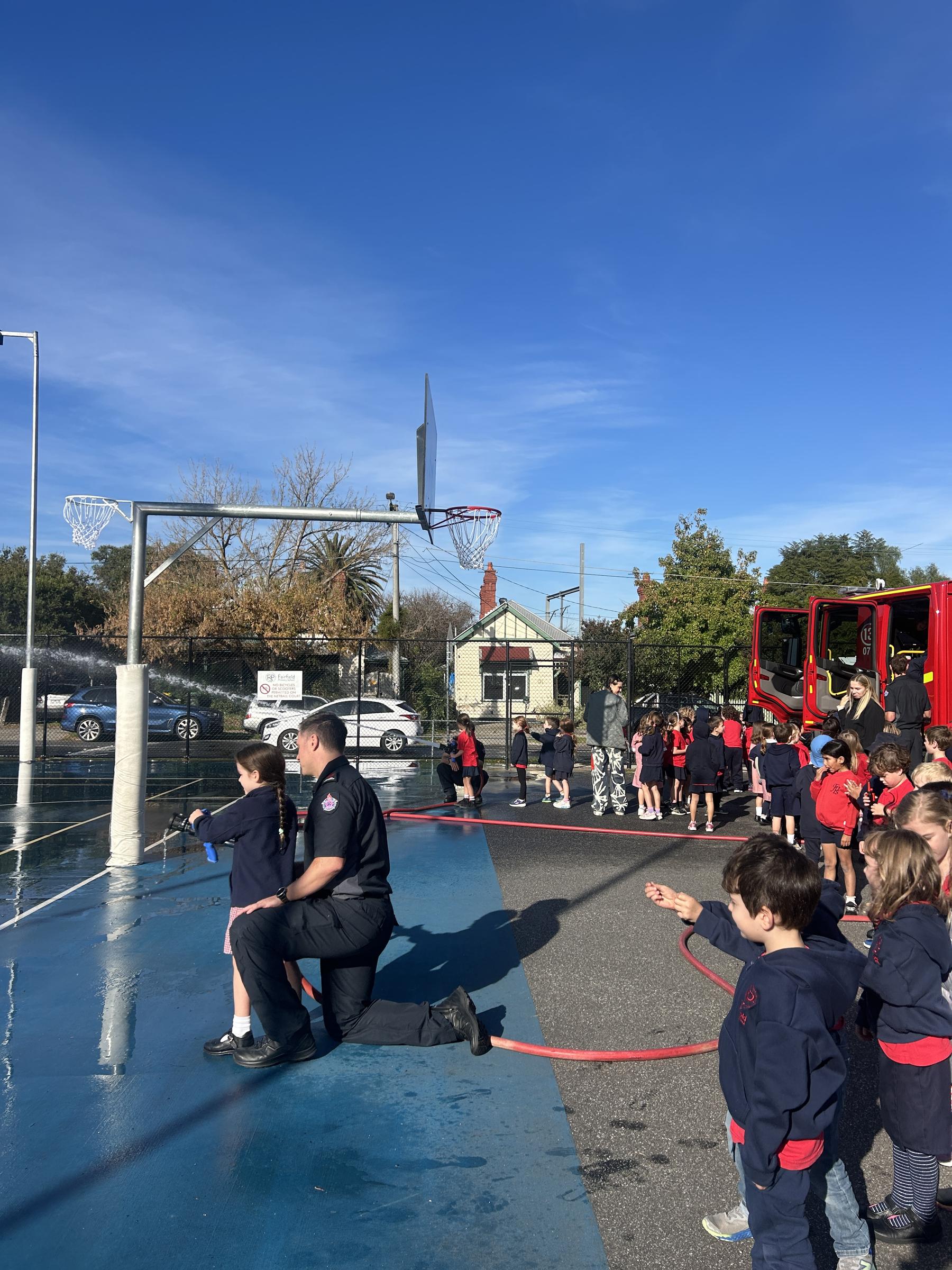
Growing as Learners!
Wow! We cannot believe we are already halfway through the year! The Foundation students have continued to grow as capable and independent learners. They are showing increasing confidence when completing learning tasks and have worked hard to take responsibility for their own learning by following classroom routines and expectations. Students have been resilient in working independently and have become more confident in managing transitions throughout the day. We are so proud of the positive attitude, effort and growth our students have displayed so far this year. We are so excited to see what they continue to achieve this term!
Welcome Tash
We also welcome Tash Corbisieri who has joined our Foundation team! We are so excited to have her on board and know she will be a wonderful addition in the Foundation B classroom. We look forward to Tash getting to know our students and families throughout the year.
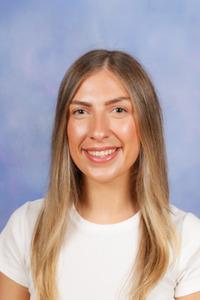
Lucy - FA
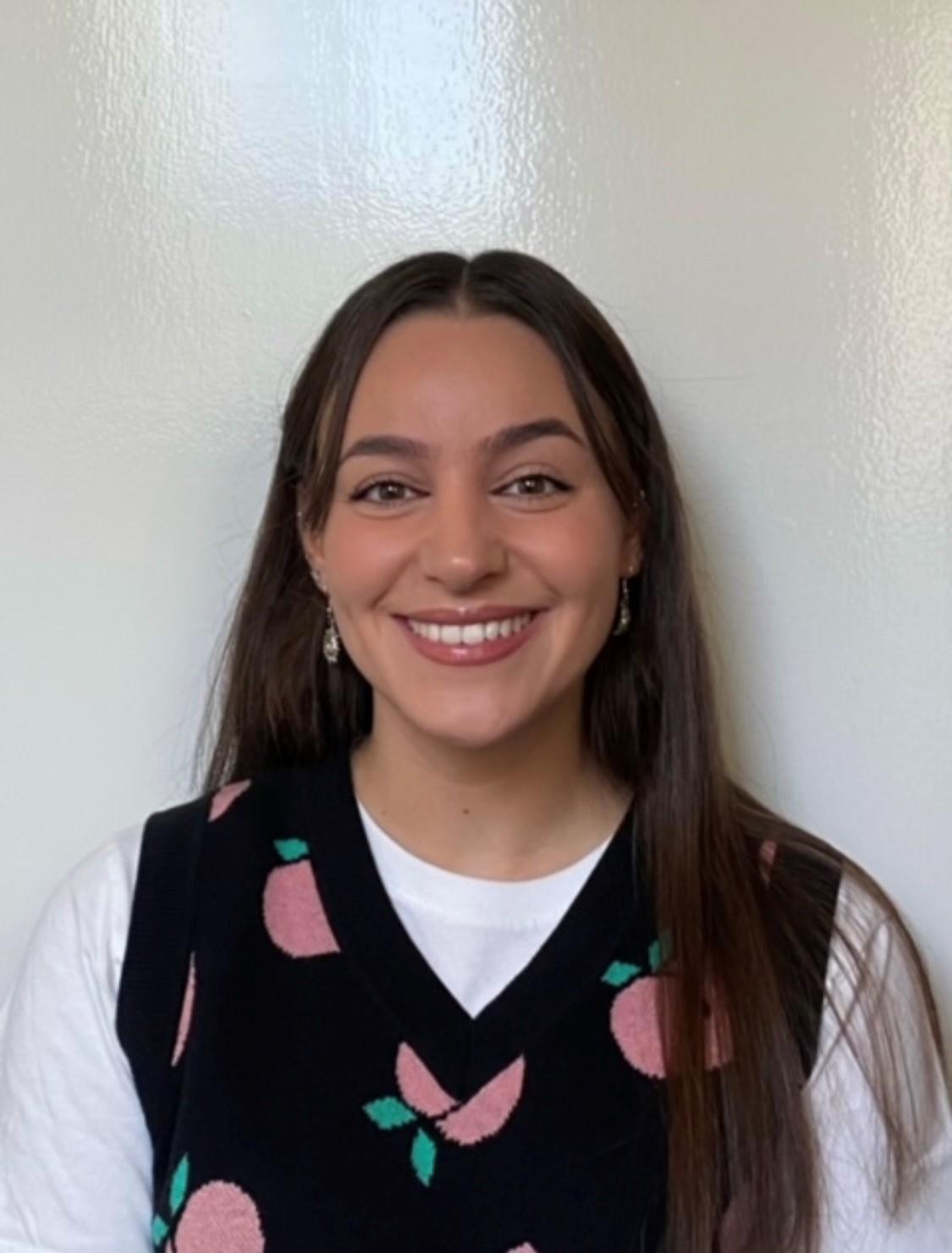
Tash - FB
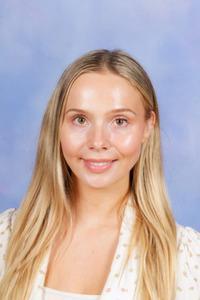
Katie - FC
Lucy - FA
Tash - FB
Katie - FC
Literacy Block
This term our topic is Geography, and over the term the students will be exploring places and animals that are unique to Australia and other continents around the world. Students will be exploring different ways that people are connected to and care for Country.
Reading
Students begin each literacy block reviewing sounds they have previously learnt. So far, we have reviewed the floss letters (-ff, -ll, -ss, -zz). These letter pairs are used after a short vowel sound e.g. bill, sniff, buzz.
As a class, we focus on several activities which strengthen their phonemic awareness, spelling, recognition of heart words, fluency, and decoding skills. We are currently focusing on the stage 5 sounds from Little Learners Love Literacy, where the students are introduced to common consonant blends at the beginning (dr-, br-, fl-, cr-) and end (-lk, -nt, -sk, -mp) of words. We have also been learning to decode multiple syllable words e.g. backpack, rabbit and little.
Later in the term we will begin to explore some digraphs (-ck, ch, sh, th, ng). The focus on digraphs is to learn that two letters can work together to make one sound.
Students read to partners or out loud by themselves to focus on their reading fluency. As a class we model fluent reading by using digital texts from the Little Learners Love Literacy collections. We also read a picture book each week, where we focus on vocabulary and comprehension. Some of the words students have been introduced to so far include, sacred and regeneration.
Things you can do at home to support this learning:
- Read every night, filling in their Little Learner reading diaries together and tracking how many days they have read.
- Encourage real life opportunities for reading; birthday cards, shopping lists, messages to friends or family.
- Notice environmental print such as signs at the supermarket, writing on cereal boxes, and street signs.
Writing
There are lots of skills required when learning how to write. Practising handwriting helps to lessen the mental load when students are expressing their ideas. Students are working on using dotted thirds to form their lower case letters, focusing on knowing where the letter begins and in what direction they write to form the letter correctly.
During writing opportunities, students are continually reviewing and building upon their understanding of sentence structure, knowing that a sentence must contain a noun (who) and verb (do). Last term we worked on expanding their sentences to make them more interesting by adding detail such as where or when an event occurred.
This term students will be introduced to the idea of finishing complex sentences by using the conjunctions ‘because’, or ‘but’ e.g., ‘We had cake because it was my birthday’ and ‘I wanted to go to the park but it was raining’.
We are aiming for students to write more than one sentence about the same topic or subject, working to develop their stamina and create more detailed and interesting texts.
Throughout these activities, we are consistently reviewing and explicitly teaching how to use finger spaces in between words, when to use full stops and how to use capital letters (at the start of a name, place, or at the beginning of a sentence).
Some of the writing strategies that we are working on in the classroom are:
- Brainstorming ideas by drawing a picture or discussing the sentence with a friend or a teacher.
- Focusing on using lowercase letters.
- Mapping each word by its sounds, and writing a letter (or letters) to match. This may show up as invented spelling, such as ‘prte’ for ‘party’, which is an indication of strong phonemic awareness.
- Ending the sentence with punctuation.
- Using their finger to mark a space between each word.
Numeracy
This term students begin to explore addition and subtraction. This builds on the knowledge and skills they developed when learning about place value and subitising.
We have been broadening students' number sense by looking at ‘part/part/whole’ of numbers. For example, 8 could be broken into 2 parts: 4 and 4, 2 and 6, 3 and 5, 7 and 1. Students explore these ‘parts’, how they make a ‘whole’, and write addition and subtraction equations appropriately.
Initially, we use stories and concrete materials to assist students to understand that we are creating a larger number when adding two parts together to make a whole. For example, ‘I had 6 apples, I picked 4 more. How many apples do I have?’ When solving addition problems, students can count forwards, use unifix, use a number line, use their fingers or a tens frame, use a drawing, or draw upon tens facts that they know.
Similarly, when introducing subtraction, concrete materials and stories are used to highlight that when we take-away/minus/subtract we are removing part of the group resulting in a smaller number. For example, ‘There were 9 coins in my pocket but I lost 5 of them. How many coins did I have left?’ When solving subtraction problems, students can count backwards, use a numberline, count up to find the difference, use their fingers or a tens frame, or draw the problem.
Students will also be exploring non-number subject areas of location and measurement. Students will develop their understanding of informal measurement, measuring the length of objects and comparing them to one another.
Students will describe the location of objects in space, in relation to themselves or other objects. Students will investigate the language of location. For example; above, below, behind, in front, left and right.
Towards the end of the term, students will revise what they have learnt throughout the year; counting strategies, place value knowledge, addition and subtraction strategies. Through the use of the maths proficiencies (fluency, reasoning, understanding and problem solving), they will apply their knowledge in open ended experiences.
Things you can do at home to support his learning:
- Explore numbers in the environment ie: prices at the shops, letter boxes, number plates. You could even turn the numbers on number plates into 2 or 3 digit numbers and talk about the value of each digit.
- Play games at home ie: card games, Monopoly, Snakes and Ladders.
- Write numbers with chalk or other special writing tools.
- Count groups of items at home (making predictions first). Ask how many would there be if I took one away?
- Looking at the score when watching footy (or other sports) and noticing any counting patterns.
- Estimating and comparing large amounts of items
- Comparing numbers as ‘bigger’ or ‘smaller’ and talking about how you know which is which.
- Create simple real life addition problems at home. 'If Grandpa comes over for dinner, we need one more plate. How many plates do we need to put out?'
Resilience, Rights and Respectful Relationships
As part of the Resilience, Rights and Respectful Relationships (RRRR) program, Foundation students are developing their ‘Positive Coping,’ ‘Problem Solving,’ and ‘Stress Management’ strategies.
Specialist Subjects
Performing Arts
Foundation students will be using pitched Orff instruments to create simple musical arrangements integrating singing and movement. Students will also be starting to learn to read notation on the treble clef.
Physical Education
Foundation students will continue to develop their balance and jumping skills while participating in jumping activities. Students will continue to practise their fundamental motor skills such as dribbling and two hand throws.
Science
This term our Foundation students are moving on to physical science, exploring how sound can make materials vibrate and vibrating materials can make sound.
Visual Arts
For the Hero’s Gallery at Art For All, inspired by Vincent Namatjira, students will create a “Hero” work using pastel and dye. They will decorate it with threads and ribbons.
Students will also explore textile art, investigating fabrics, fibres, weaving and how textiles can be part of the creative process.
French
Bonjour tout le monde! I'm Kristen, your new French specialist teacher from Canada and I’m so excited to get started with everyone this term! This term our Foundation students are exploring the sounds and rhythms of French through song, dance and craft, learning to recognise and compare French sounds with English.
Here's to a terrific third term!
Lucy, Tash, Katie & the Specialist Teachers