Literacy News
Tracey James (P-2), Elizabeth Whiting (3-6) - Literacy Leaders














Literacy News
Tracey James (P-2), Elizabeth Whiting (3-6) - Literacy Leaders
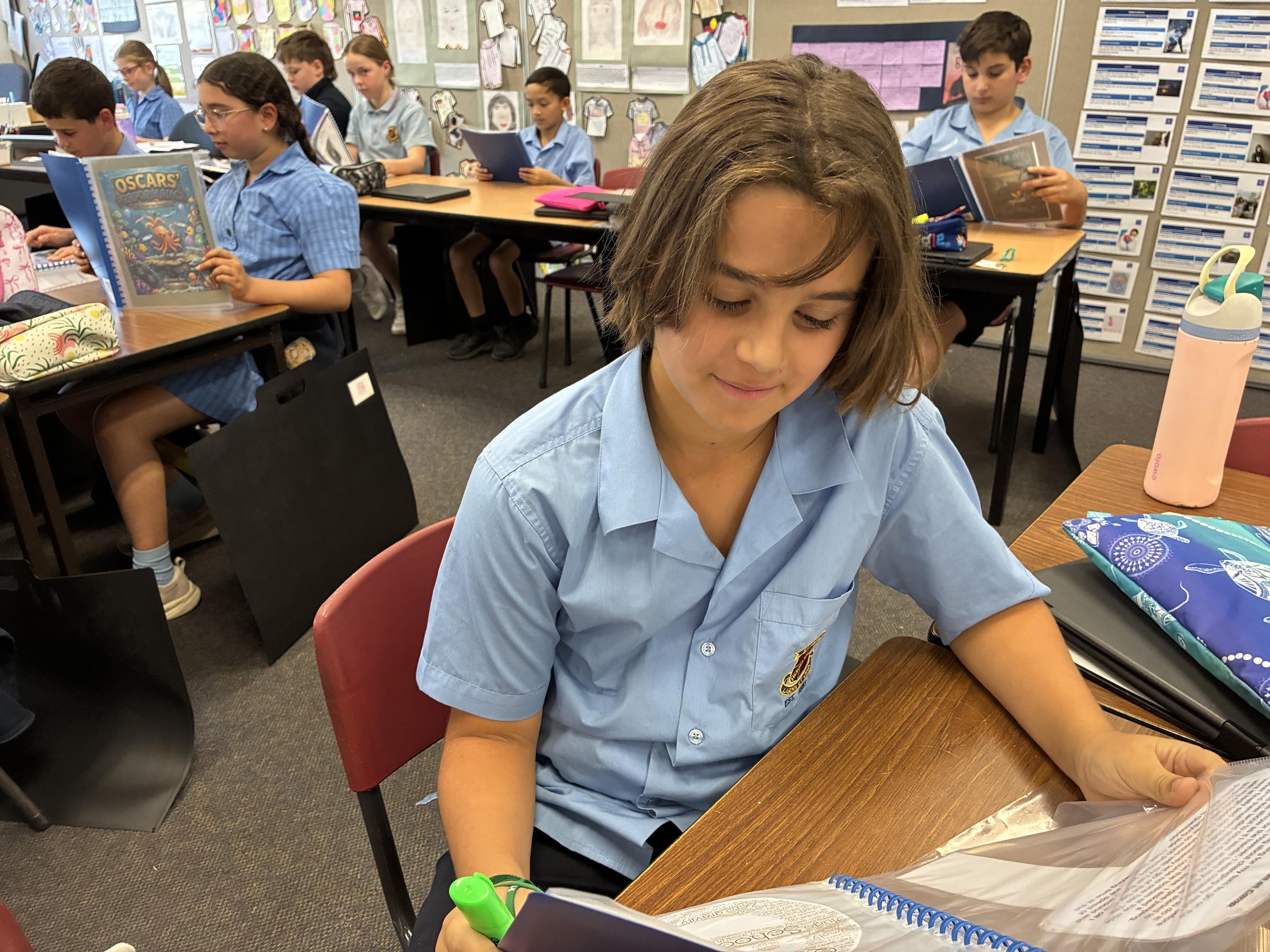
Throughout the year, students from Prep to Year 6 have been introduced to a wide range of important literacy concepts and skills. As we move towards the end of the school year, teachers are placing a particular focus on revision and consolidation, revisiting previously taught concepts in Reading and Writing to strengthen students’ understanding and support their ongoing learning.
You may hear your child mention that they are doing reviews or revision of learnt concepts at school. This is an important part of effective teaching and learning. Rather than simply moving on to new content, revisiting familiar concepts gives students valuable opportunities to practise, recall and strengthen what they have already been taught.
In Reading and Writing, this includes revisiting key spelling patterns, phonics knowledge, high-frequency and tricky words, vocabulary, punctuation, grammar and sentence structure. As students progress through the year levels, revision becomes increasingly sophisticated, allowing them to apply their knowledge to more complex reading and writing tasks.
Why is revision so important?
Learning something once does not necessarily mean that a student will remember it or be able to apply it independently in the future. Research into how the brain learns highlights the importance of revisiting information over time. This helps strengthen the connections in the brain, making it easier for students to retrieve knowledge when they need it.
Revision also helps manage cognitive load. When students are still working hard to remember basic skills and concepts, there is less mental capacity available for more complex learning. By consolidating foundational knowledge, such as spelling patterns, grammatical rules and reading skills, students become more confident and automatic in their application. This frees up their working memory to focus on deeper understanding, comprehension and more sophisticated writing.
Building knowledge that lasts
Our aim is not simply for students to learn something for a lesson or assessment, but to develop knowledge and skills that they can confidently draw upon in the future. Regular revision supports retrieval, strengthens long-term memory and helps students make connections between previously taught concepts and new learning.
So, if your child tells you they are doing reviews or going over things they have already learnt, you can reassure them that this is a valuable part of their learning journey. Revisiting familiar concepts is not going backwards; it is an important step towards becoming confident, capable and independent readers and writers.