Term 4 Learning Summary
English
In Reading and Viewing, students will deepen their understanding of persuasive letters, poetry and information reports. They will explore a range of texts such as Can You See Me? and Once,exploring how authors communicate ideas, themes and perspectives. In Term Four, students will analyse poetry; comparing how language devices are implemented to elicit imagery. They will explore a range of speeches, examining the impact of language features for their intended audience.
In Writing, students will apply their understanding of a range of text types by experimenting with authorial choices and language features to communicate ideas and perspectives. Students will have the opportunity to craft their persuasive letters, poems, graduation speeches, and information reports with clarity and creativity. They will build their ability to compose poetry using figurative language and imagery, applying their understanding of audience and purpose to write their graduation speeches.
In Speaking and Listening, students will enhance their communication skills through discussions and shared reading experiences. They will refine their listening skills by comparing different perspectives during discussions. Students will further develop their speaking skills by presenting their graduation speeches to their class in a celebration of their achievements.
Key Vocabulary:
Imagery, visualisation, inference, prediction, devices, audience, purpose, structure, tone, volume, perspective, point of view, argument, call to action.
How can you support your child’s English learning at home?
- Share famous speeches that may have impacted your own childhood. Explain to your child how this was inspirational for you.
- Notice and discuss poetic devices during everyday tasks such as identifying descriptive language in songs on the radio.
- Ask your child about the class novel they are reading. Is it similar to other texts they have previously read? Why/why not?
- Engage in discussions about your child’s writing topics to help them explore and refine their ideas.
- Encourage students to revise and edit their learning focusing on structure of responses.
Mathematics
During Term 4, students will continue to develop their mathematical understanding and skills through different curriculum strands and will be given the opportunity to transfer skills during rich mathematical tasks involving multiple content areas.
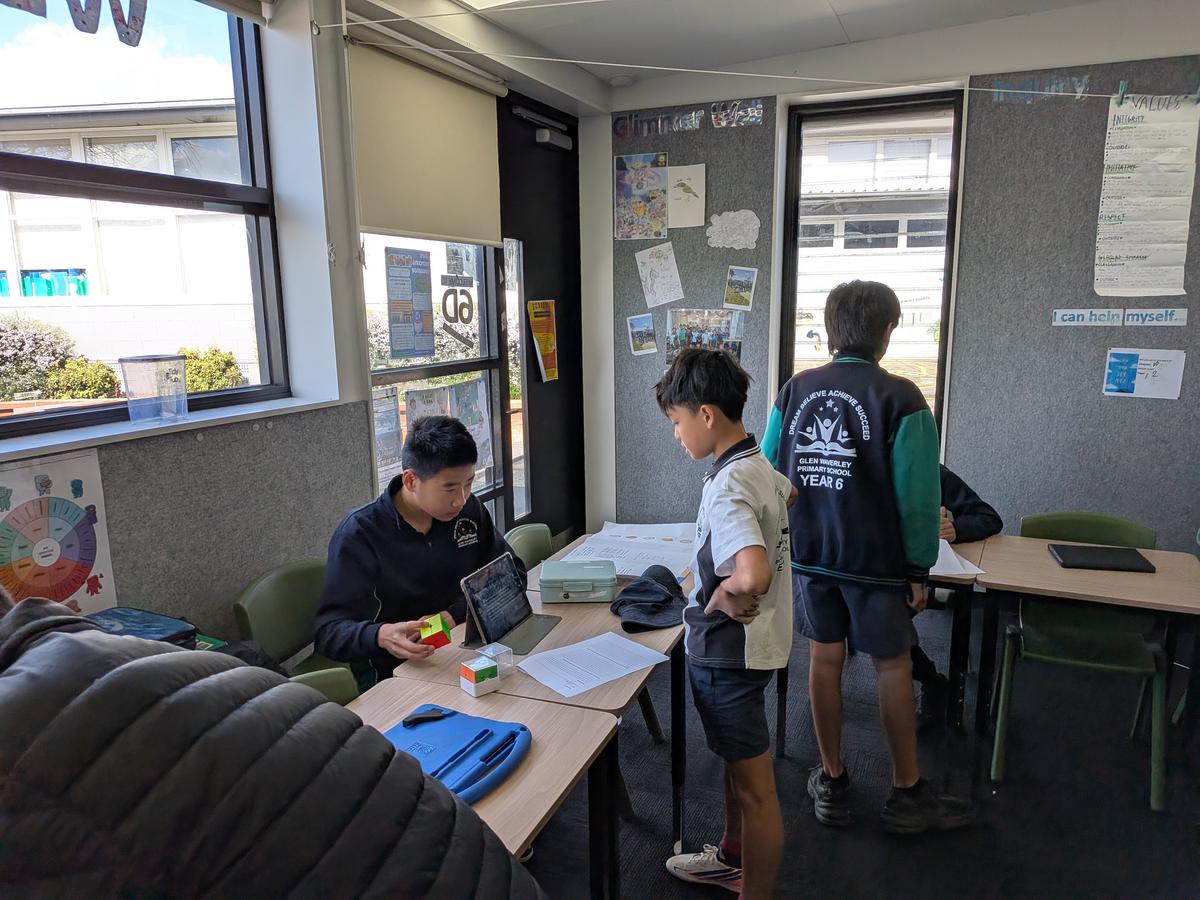
In Measurement, students will consolidate their understanding of formulas to calculate the area of two-dimensional shapes and the surface area of three-dimensional shapes. They will then apply this understanding to calculate the volume of different objects.
In Space, students will explore the properties of geometric figures, using side and angle properties to classify polygons. They will solve problems using the interior angle sums of triangles and quadrilaterals. Students will also apply and describe transformations using coordinates on the Cartesian plane, including translations, reflections and rotations.
In Statistics, students will deepen their understanding of data sets. They will determine different averages and describe displays of numerical data in terms of the shape, centre and spread.
Mathematics Key Vocabulary:
Mean, median, mode, ratio, perimeter, area, volume, capacity, transformation, reflection, rotation, vector, equilateral, isosceles, scalene triangle.
How can you support your child’s Mathematics learning at home?
- Identify shapes and objects around the home. Ask your child how they would classify them.
- Explore real-life examples of area, volume, and capacity – e.g. in the garden or when buying products by volume.
- Find examples of symmetry (line and rotational).
Inquiry
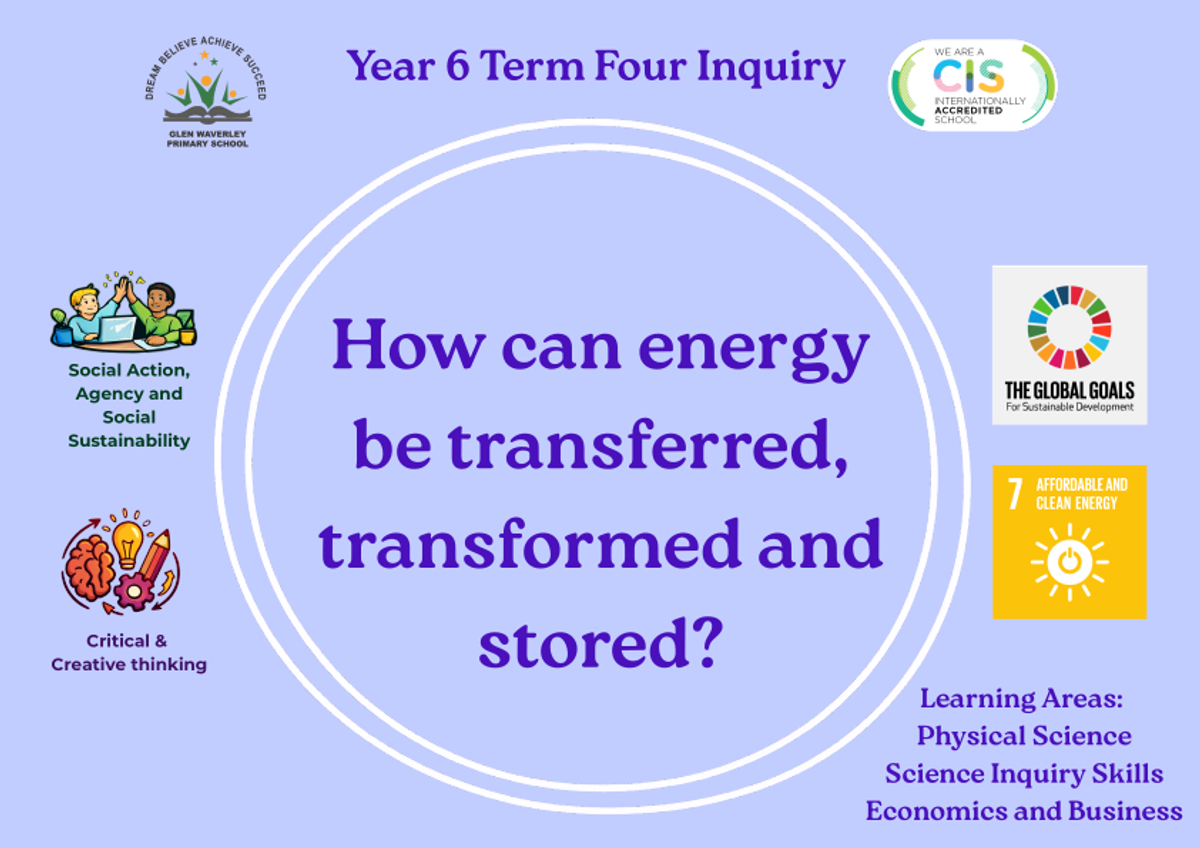
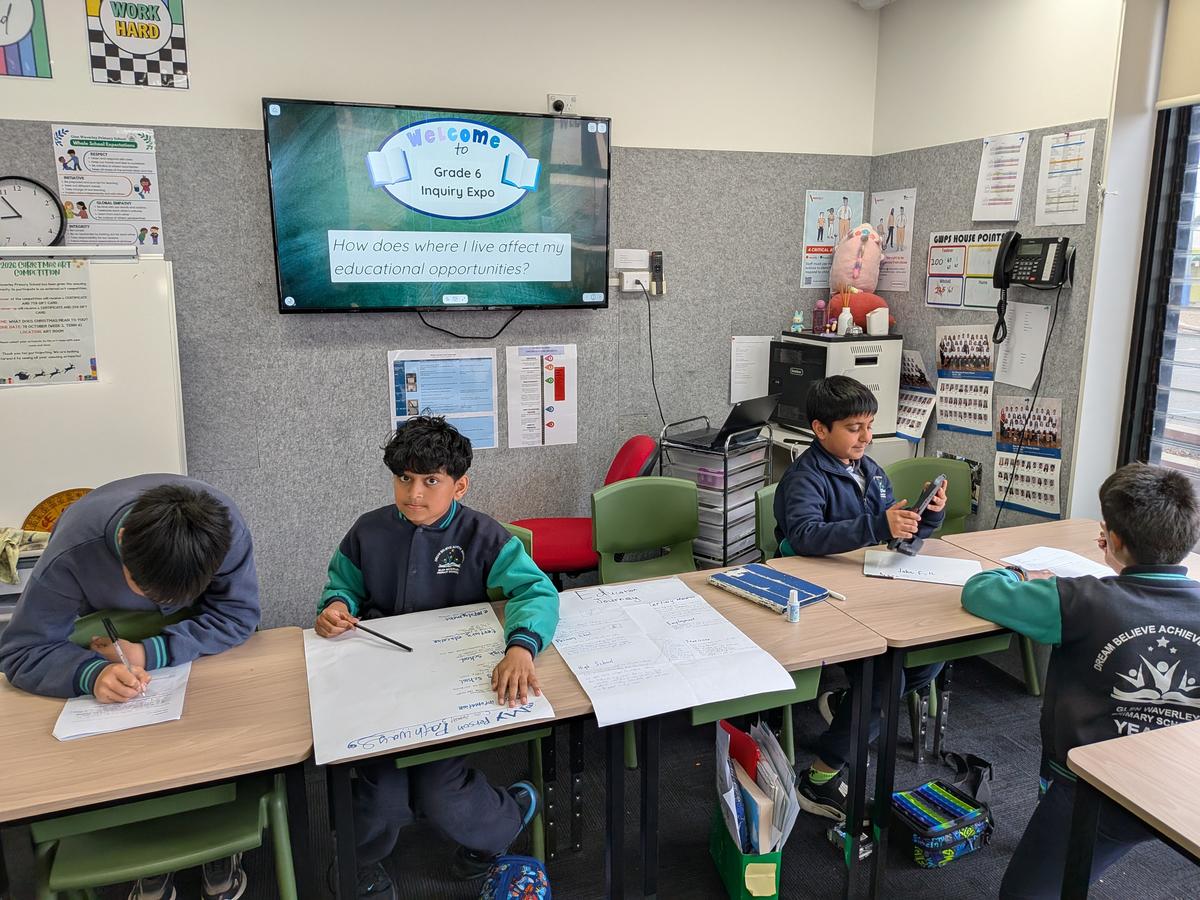
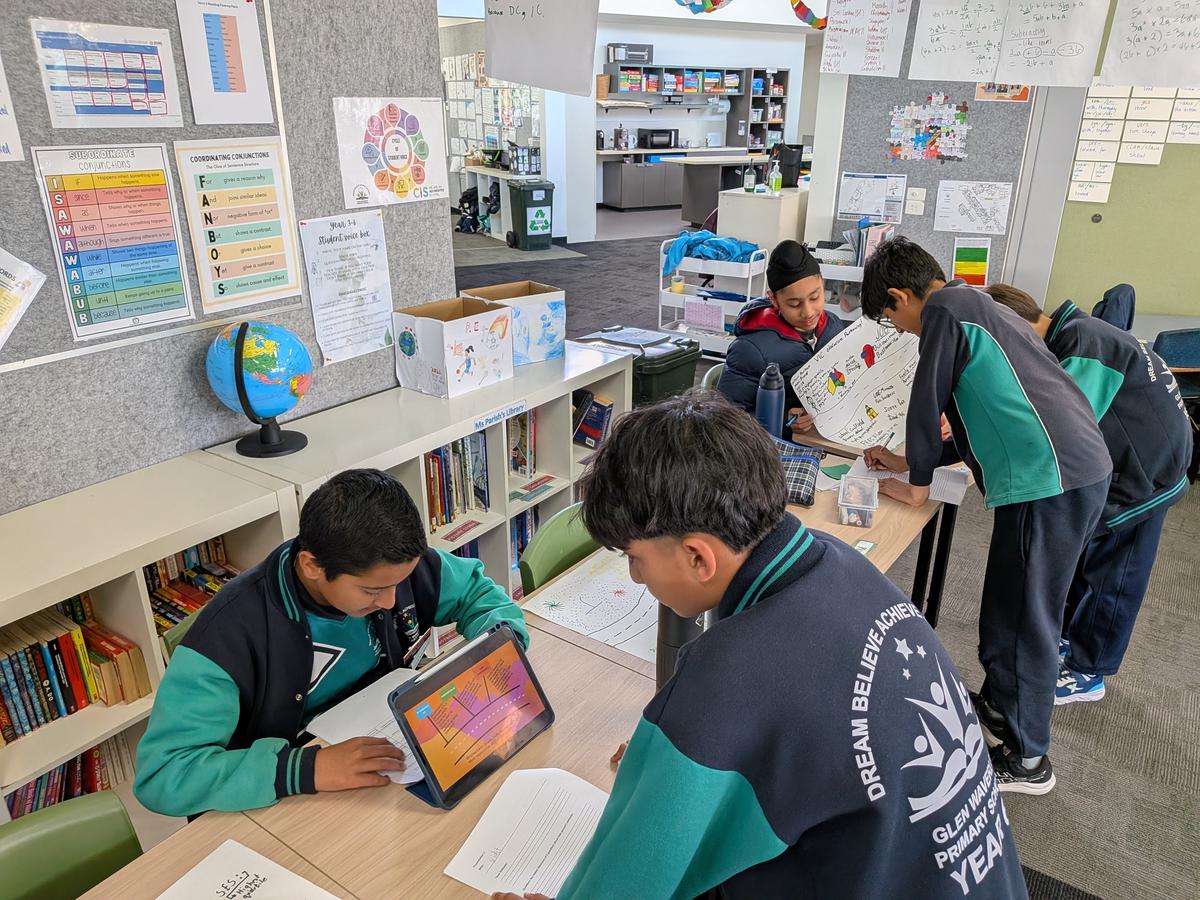
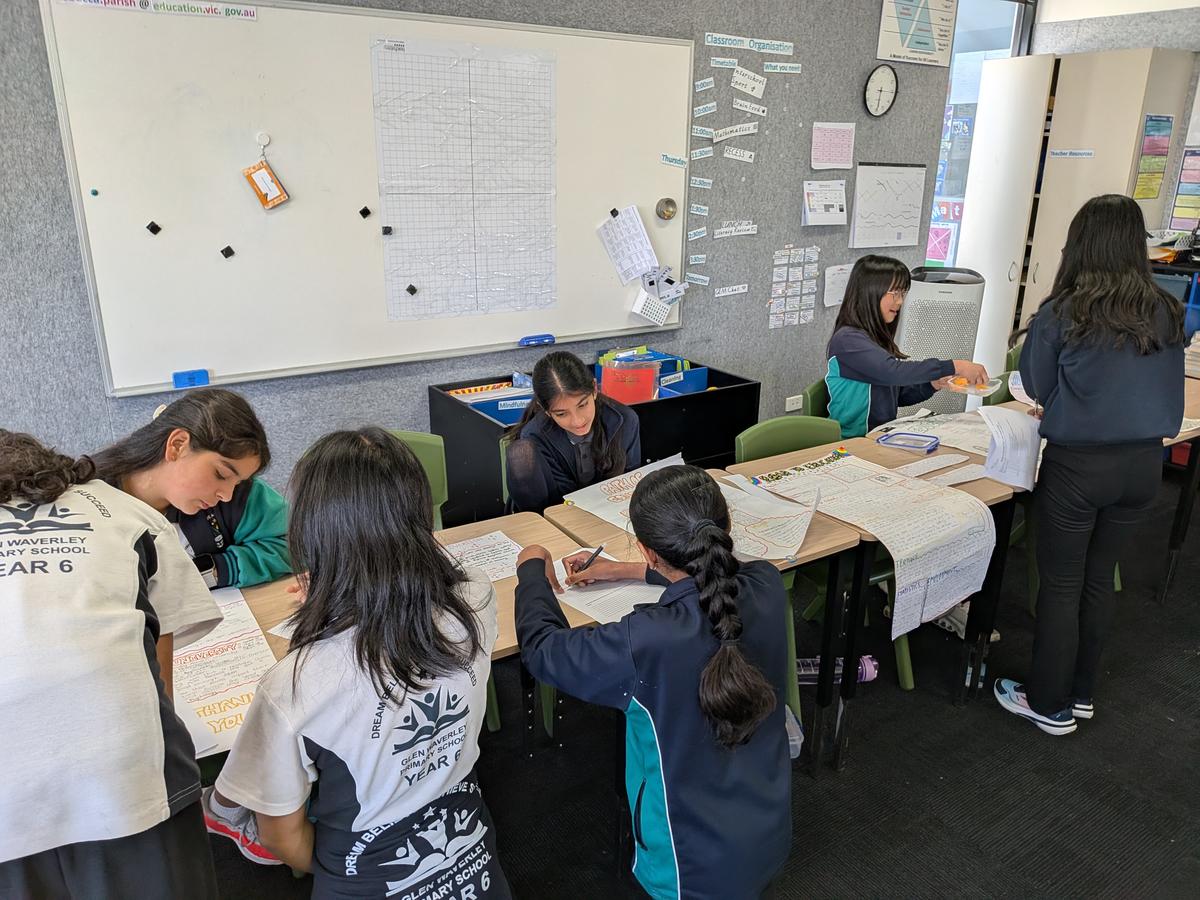
During Term Four, students will explore the inquiry question, ‘How can energy be generated and transformed?’ They will begin the unit with a focus on light, including sources of light, light-related phenomena and their relevant physical properties. Students will then connect this learning to the broader concept of energy by investigating different types of energy and the processes involved in its generation and transformation into electricity.
In connection to Global Goal 7, Clean and Affordable Energy, students will delve into ethical issues related to energy at both a local and global level. They will further their understanding of the challenges different communities face in terms of access, equity and sustainability of energy use and consumption.
As their transfer of learning, students will apply Science Inquiry skills to formulate a challenge question related to energy use in the world and begin collecting data as part of the STEAM process. Finally, they will create designs and prototypes to address the challenge problem and, through a critical and creative lens, evaluate their proposed ideas.
Inquiry Key Vocabulary: energy (potential, kinetic, chemical, thermal, etc.), light, concave/convex, insulator/conductor, sustainability, generate/transform, energy consumption
How can you support your child’s Inquiry learning at home?
- Explore the label and energy ratings on your household appliances. Discuss strategies for improving the energy efficiency of your home and reducing energy consumption.
- Unpack your utilities bill with your child (electricity, gas, water). Discuss the features of a bill and the processes involved in monitoring usage and paying for them.
- Find opportunities to discuss energy-related issues that are raised in the news or other contemporary media. What is the issue? Who is involved? What are their different perspectives?
Wellbeing
The Resilience Project
During Term Four, students will continue to participate in The Resilience Project, focusing on exploring the key principles of Gratitude, Empathy, Mindfulness and Emotional Literacy. To develop students’ lifelong wellbeing habits, positive coping strategies and their own emotional responses to build resilience, confidence and connection. Through engaging classroom discussions, reflective journaling, and activities that promote kindness and self-awareness, students are learning practical strategies to support their mental health and strengthen their resilience. Within each TRP session, we will focus strongly on building interpersonal skills, fostering social connections, and strengthening resilience, supporting students in developing the skills needed to transition to secondary school. Students will delve into emotions they are currently feeling about their transition to high school and also reflect on how they can prepare for the transition and identify their support network.
Cyber Safety Project
During Term Four, students will continue to develop their understanding of the critical values of responsibility, integrity, strength, and empathy to guide their behaviour and decision-making when using digital technologies and interacting online. They will explore online social etiquette and consider the impact of social protocols on digital citizenship. Practice spreading kindness to others and investigate the impact of spreading kindness online. Students will also think critically about ways digital content may have been selected and manipulated before being shared online
If you wish to support your child’s learning in Wellbeing this term, you can:
- Ensure that your child’s schedule outside of school has a healthy balance of academics, exercise and leisure.
- Conduct daily wellbeing check-ins with your child. Ask them what GEM chat prompts they used at school and see how your family would respond.
- As a family, practice some of the brain break and mindfulness activities that your child has learned at school, such as guided meditation, human knot game and so forth.
- Provide opportunities for social connection with both friends and family.
- Ensure your child is getting adequate sleep (10 hours per night).
- Manage your child screen’s time.
We encourage families to continue conversations at home around GEM principles and Cyber Safety. Our families have access to the Resilience ProjectHome - TRP@HOME portal along with the Cyber Safety Project homeResources - Cyber Safety Project. Working together supports learners in applying these strategies beyond the classroom and helps strengthen their wellbeing across all aspects of their lives.