







Wellbeing

School Wide Positive Behaviour Achievements
After evaluating our 2026 SWPBS Action Plan and 2026 Annual Implementation Plan, I am proud to say that we have achieved all goals set for this year. We have recorded high results in the student Atttitude to Schools Survey in key wellbeing areas - scoring 88% of students feeling connected to school, 97% of students feeling that classroom behaviour is managed well, and 97% of students feeling a sense of inclusion.
Our staff have resoundingly acknowledged the strength we have in implementing this framework, with 100% surveyed agreeing that we all have an understanding of behaviour management processes and protocols, that the standard of professional development has built their capacity to work within the framework and that our feedback and reward system is having a posotive impact on student wellbeing.
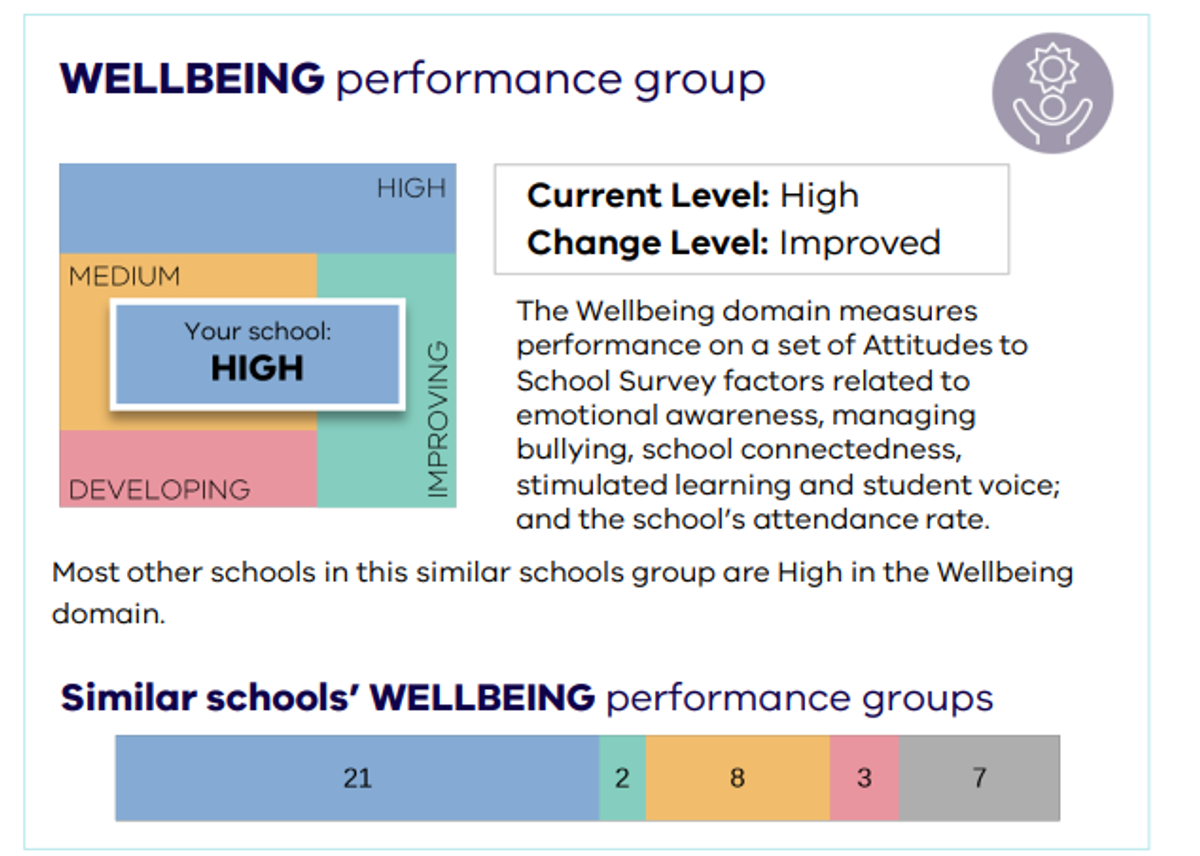
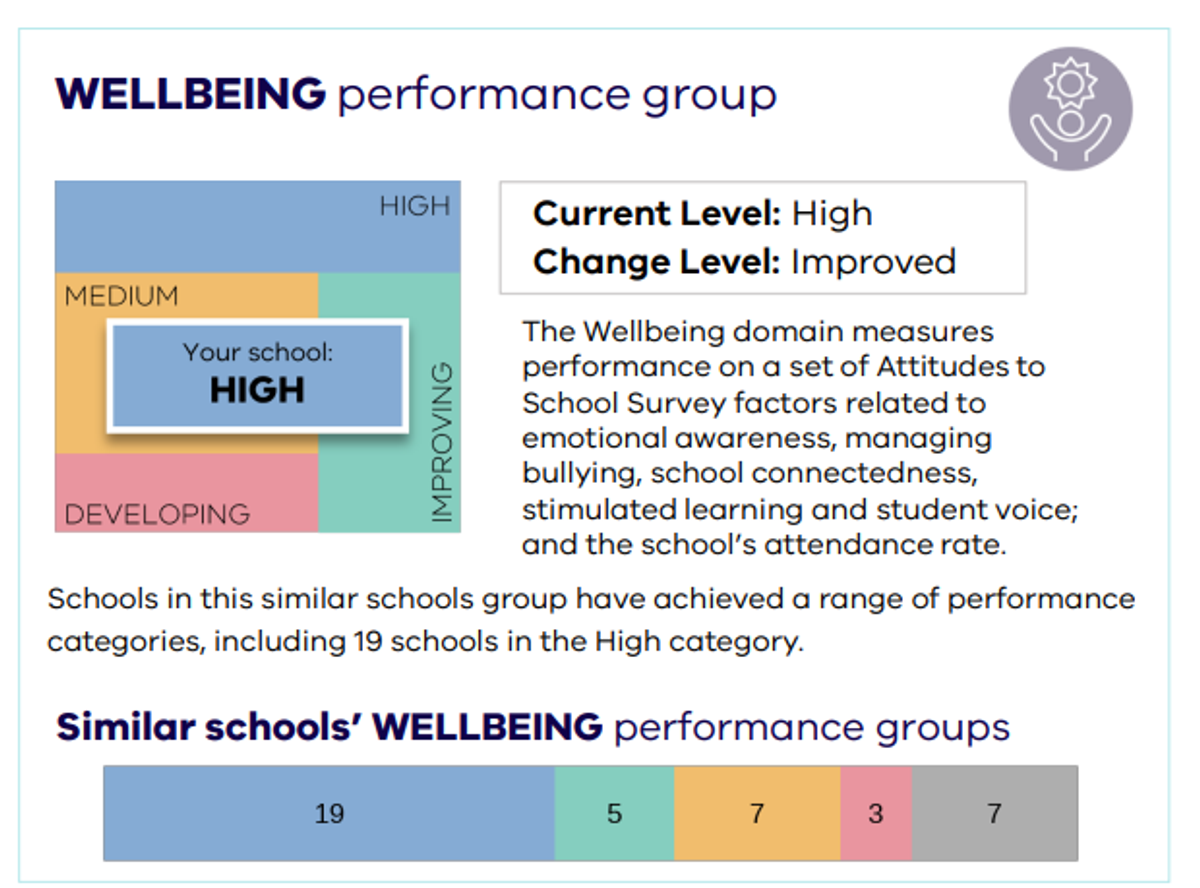
Further proof of our success is in the results of our School Performance Reports from both 2025 and 2026. We have maintained HIGH performance in Wellbeing for the past two years, demonstrating improvement from 2025 to 2026.
2025 RESULTS
2025 RESULTS
2026 RESULTS
2026 RESULTS
As a school community we should all be extremely proud of these achievements, and rest assured in ourselves that we are setting up our children to feel safe and happy at school.
I have also been informed that we are eligible to apply for the Silver Level Award for SWPBS. Last year we achieved Blue level. In applying for this award, it means that we have skipped Bronze and gone straight to Silver. Our SWPBS Coach Lisa Douglas has congratulated us on the depth to which we have embedded our approach.
Next year, we go for Gold!
Resilience, Rights and Respectful Relationships Curriculum
Please ensure that you have read my last newsletter post about upcoming lessons in Resilience, Rights and Respecftful Relationships.
We will be covering Topics 7 Gender and Identity and Topic 8 Positive Gender Realtions.
These lessons support child safety, inclusion and wellbeing by helping children understand respectful behaviour, personal boundaries and the importance of treating others with kindness and respect. Through age-appropriate activities, discussions and stories, students learn that everyone deserves to feel safe, valued and included at school and in their community. The learning also helps children recognise unfair behaviour, seek help from trusted adults when needed, and develop the skills to build positive, respectful relationships. These are important protective factors that contribute to creating safe environments for all children.
Parents and carers can support this learning by encouraging respectful conversations at home, modelling positive relationships, and reinforcing the message that every child has the right to feel safe, respected and heard.
Warm regards,
Kate Steele
PRINCIPAL