Literacy Update



















 St Fidelis' Catholic Primary School
Reading at home: building background knowledge
This week, we are focusing on background knowledge and how it helps children understand what they read.
Background knowledge is what children already know about the world. It includes their experiences, the information they have learnt, places they have visited, people they know and topics they have discussed.
When children read, they connect new information to what they already know. This helps them understand ideas, make connections and follow what is happening in a text.
For example, a child who has visited a farm and learnt about farm animals may find a text about farming easier to understand. They already have some knowledge of the topic and can use it to make sense of new information.
Children may sometimes struggle with a text not because they cannot read the words, but because they are unfamiliar with the topic or the ideas being discussed.
How can you help at home?
Talk about everyday experiences. Discuss what your child sees and does when you go shopping, cook a meal, visit a park, attend a sporting event or travel somewhere new. Explain what is happening and encourage questions.
Read about different topics. Alongside storybooks, explore information books about animals, nature, science, history, geography, transport and other areas of interest.
Discuss what your child already knows. Before reading a book, look at the title, pictures and headings. Ask, "What do you already know about this?" or "Have you seen anything like this before?"
Introduce unfamiliar topics. If a book is about something your child has never experienced, take time to explain the basic ideas. You might look at photographs, watch an age-appropriate educational video or read another book about the subject.
Visit places and explore interests. Libraries, museums, local attractions and community events provide opportunities for children to learn about the world. You can also build knowledge through cooking, gardening, playing games and exploring nature.
Encourage questions. If your child wants to know how something works or why something happens, explore the answer together. Look for books or reliable information that help answer their questions.
Why does this matter when reading?
Texts often assume that readers already know something about the topic. A story might refer to a particular place, event, animal or activity without explaining every detail. Background knowledge helps children understand these references and connect different parts of a text.
Building knowledge also helps children learn new vocabulary. When children learn about a topic, they encounter words and ideas associated with it, making future reading about that topic easier to understand.
Children do not need to have experienced everything they read about. Books are also a way to learn about unfamiliar places, people, events and ideas.
Remember: Children build background knowledge through everyday experiences, conversation, reading and learning about the world. You do not need to be an expert. Exploring topics together and encouraging questions are valuable ways to support your child's learning.
Next week, we will look at oral language and how talking and listening help children develop the language they need to understand and discuss texts.
Scholastic Book Club – Issue 8
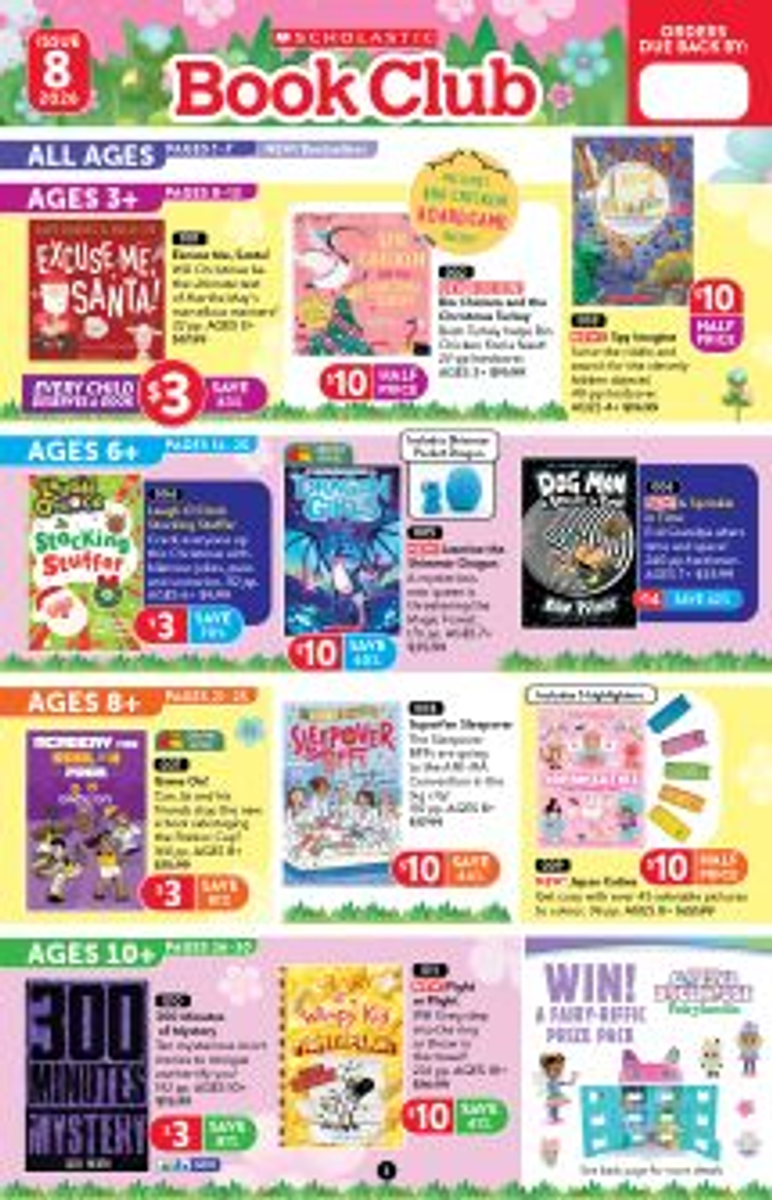

Scholastic Book Club Issue 8 has arrived. There are lots of wonderful books and exciting reads to explore, with something to suit all ages and interests.
Please check your child's school bag for their Book Club catalogue. If you would like to purchase any books, orders need to be completed online.
https://scholastic.com.au/media/15820/bc_8-26_issuu.pdf
Bernadette Parnis
Literacy Leader