STEM News
STEM Teachers: Shannon & Tom

STEM News
STEM Teachers: Shannon & Tom
Dear Parents and Carers,
Welcome back for Semester 2. This term our STEM learning shifts from physics to chemistry, as students start investigating materials, states of matter, and the tiny particles that make up everything around us.
Another big welcome to our new STEM teacher, Sasha Pollnitz, who is taking over from Shannon as she goes on maternity leave from the end of July. Sasha is in her fourth year of teaching and has previously worked as both a PE teacher and a classroom teacher. She is excited to help students explore and solve problems through hands-on learning. Outside of school, Sasha coaches and plays lacrosse for Newport Lacrosse Club.
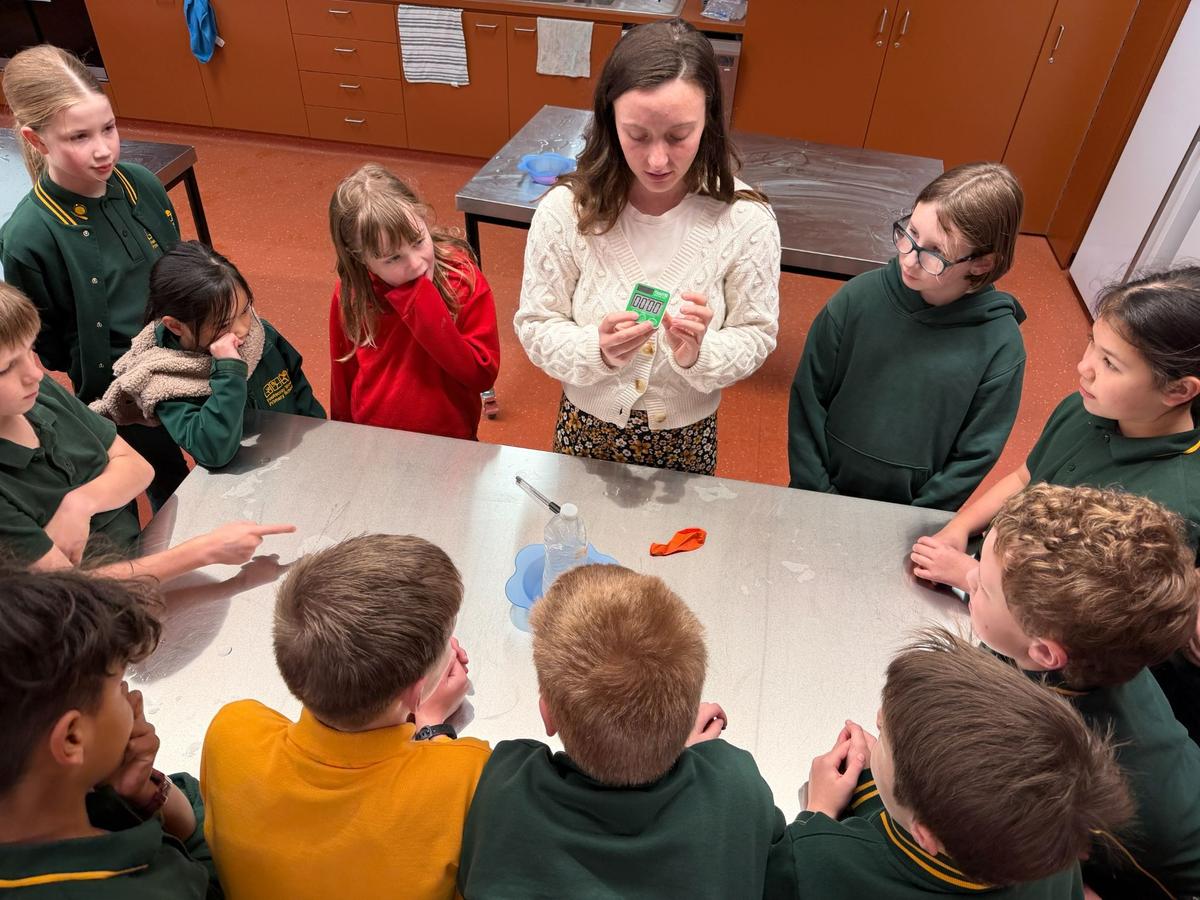
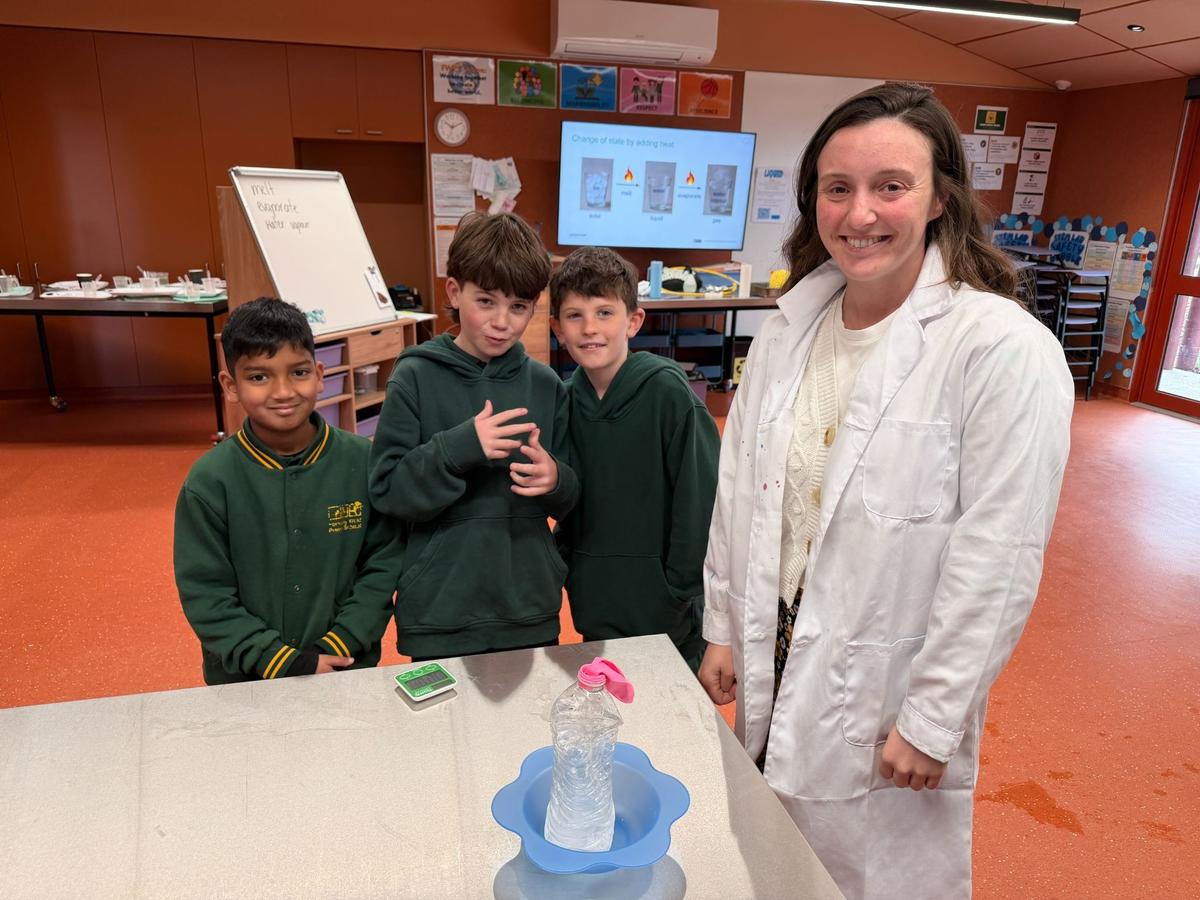
We hope you enjoyed seeing the physics projects come home last term:
Year 5/6 laser mazes - many of these may not have made it home as students chose the sustainable option to recycle and return parts to the STEM label for reuse in future lessons.
Thank you again to every family who donated recycled materials, they made these builds possible. We couldn't run our design projects without your support!
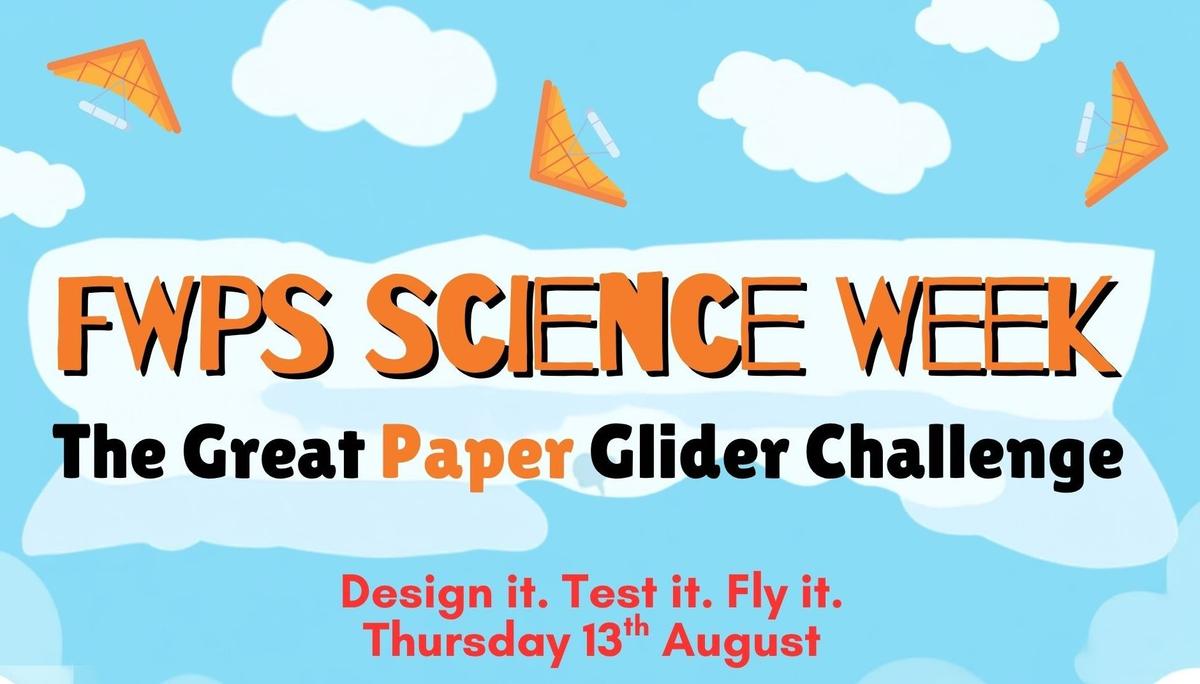
We have Science Week to look forward to in Week 5. This year, we have an exciting STEM challenge to build a paper glider which your family might like to work on at home. We will also have our usual daily science quiz with winning grades announced at Friday Assembly along with a presentation of some of our best paper glider designs. Look out for more details on Compass!
We kicked off Chemistry with a whole-school lesson called "The Mystery Reaction," using an Elephant Toothpaste demonstration and a bicarb-and-vinegar balloon inflation to hook students in. Every class made predictions, watched the reaction unfold, then talked through what they observed, before we even used the word "chemistry."
SEMESTER 1 LEARNING FOCUS
Foundation (Prep) - Exploring Materials
Students explore the materials that make up everyday objects, using their senses to observe and describe properties like "hard," "soft," "rough," "smooth," "bendy" and "shiny." Through hands-on sorting and testing, they build the observation skills that are the foundation of chemistry.
Year 1 - Changing Materials & Mixtures
Students investigate different types of materials, then explore what happens when materials are combined into mixtures. Through a materials scavenger hunt and hands-on mixing, they discover that some materials mix evenly, some don't mix at all, and some seem to disappear when they dissolve.
Year 2 - Combining Materials & Mixtures
Building on Year 1, students compare the properties of materials for a purpose and explain how a mixture can differ from the materials it's made from. They investigate which materials dissolve, mix evenly or stay separate, and test how changing the amount of each material affects a mixture, like finding the ideal recipe for a dough.
Year 3 - States of Matter
Students investigate solids, liquids and gases, describing their observable properties and how heating or cooling can cause a material to change state. They build vocabulary like "melt," "freeze," "evaporate" and "condense" through hands-on investigations.
Year 4 - Heat and Changing States
Students explore how adding or removing heat changes solids, liquids and gases, and compare how different materials respond to heating and cooling. They connect this to real-world uses, such as choosing materials for particular jobs.
Year 5 - Particles and Matter
Students are introduced to particle theory, learning that the properties of solids, liquids and gases can be explained by how tightly packed their particles are and how much they move. They also explore how mixtures and solutions form.
Year 6 - Mixtures and Solutions
Building on particle theory, students analyse how particles interact within mixtures and solutions and investigate how these interactions affect whether, and how, a mixture can be separated, dissolved or evaporated.
VOCABULARY GLOSSARIES FOR HOME
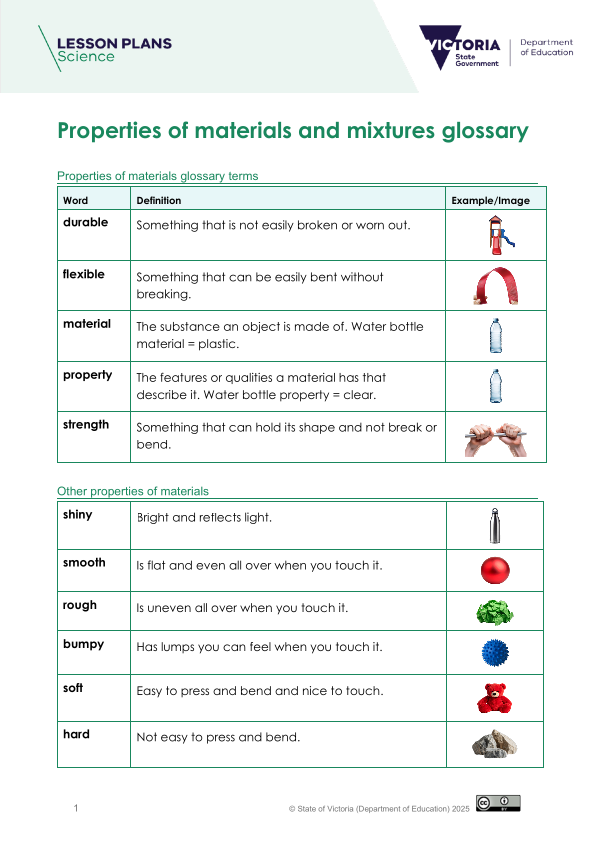
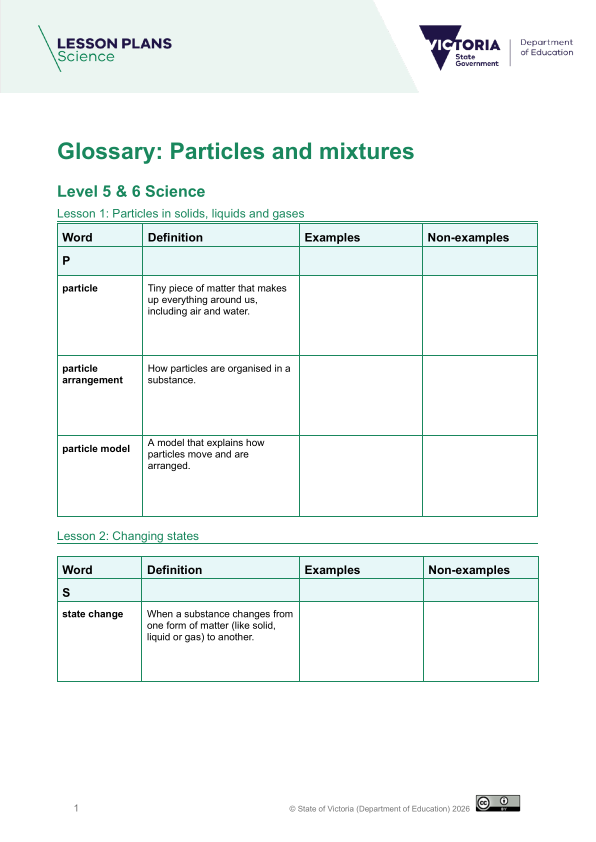
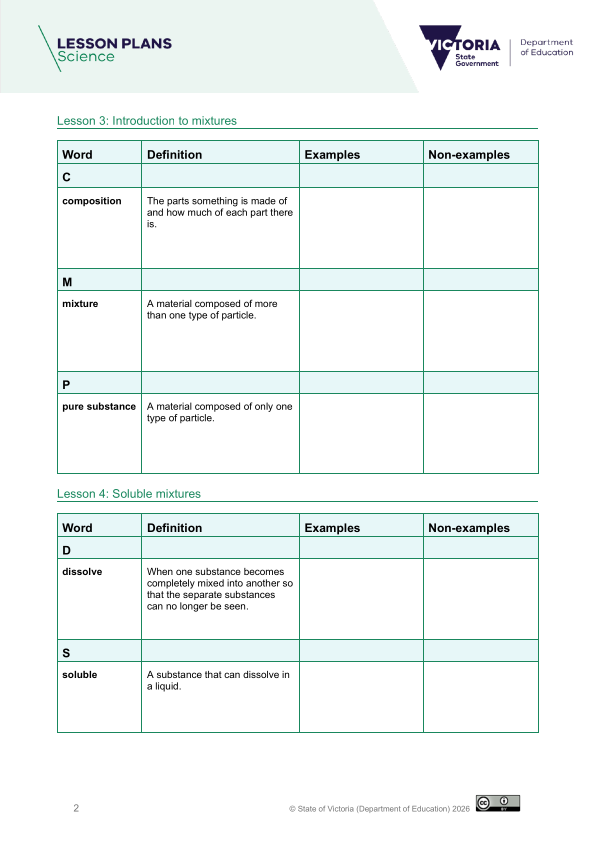
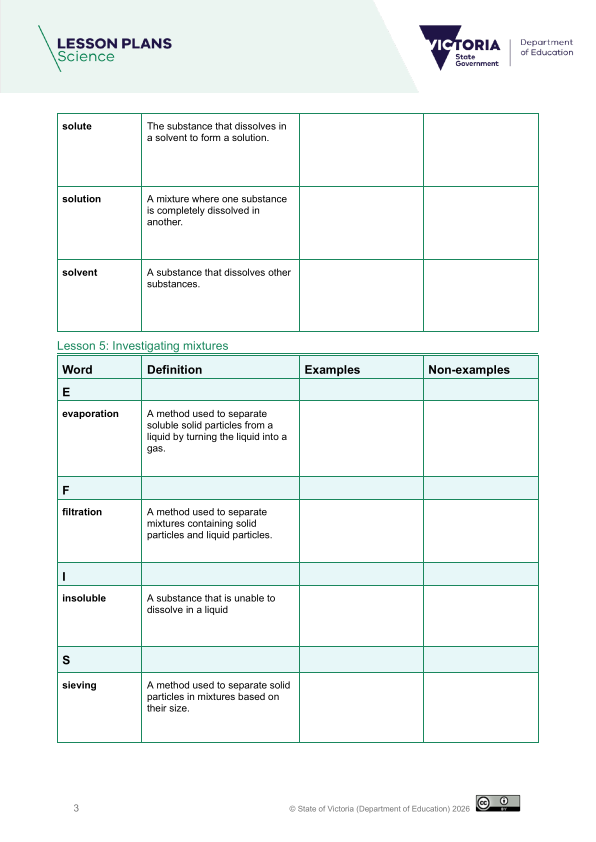
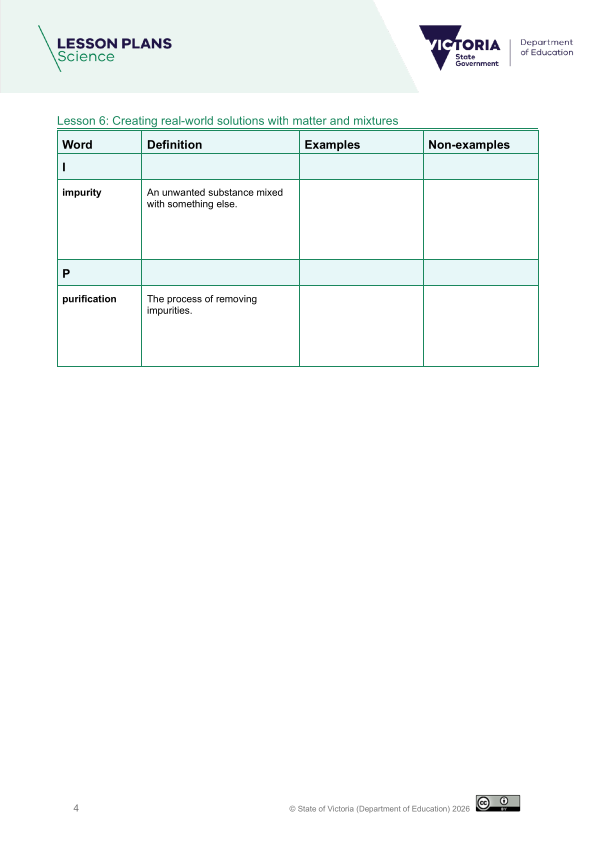
To support learning at home, we've attached year-level vocabulary glossaries from the Victorian Department of Education's ARC resources. These explain the scientific terms students use in STEM and provide opportunities for families to discuss concepts together.
You might want to:
Prep - Materials Glossary
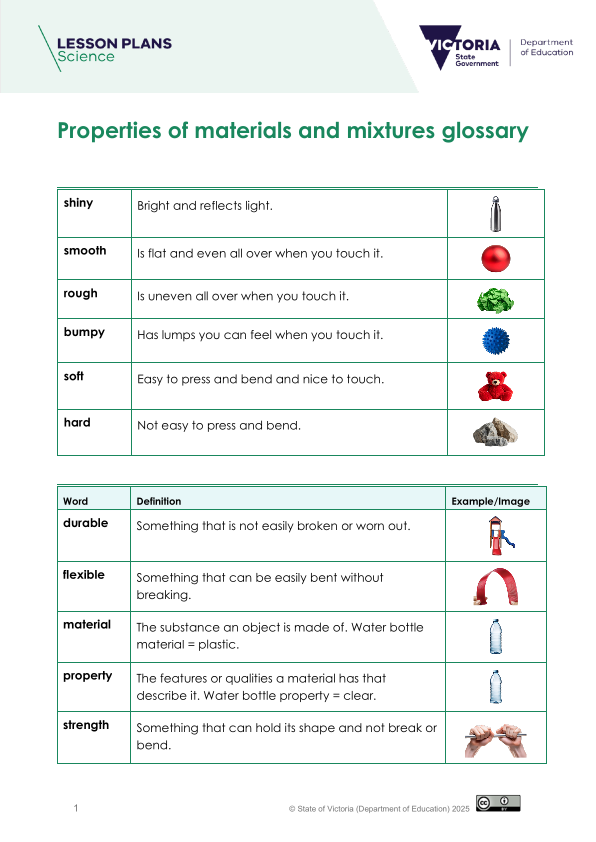
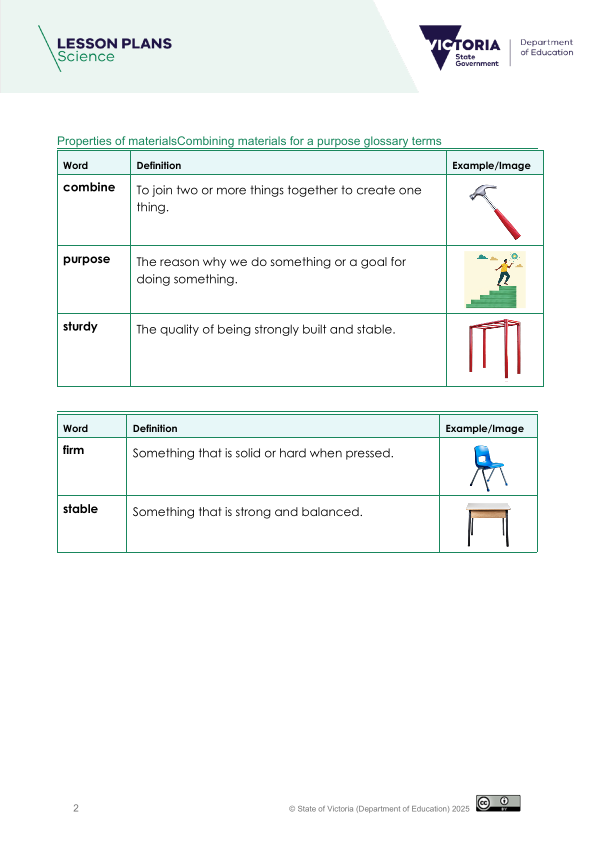
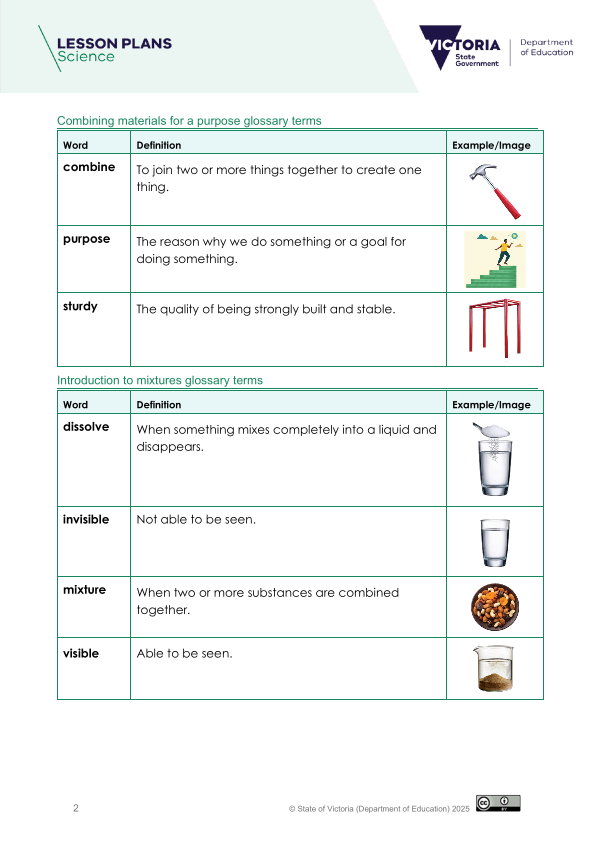
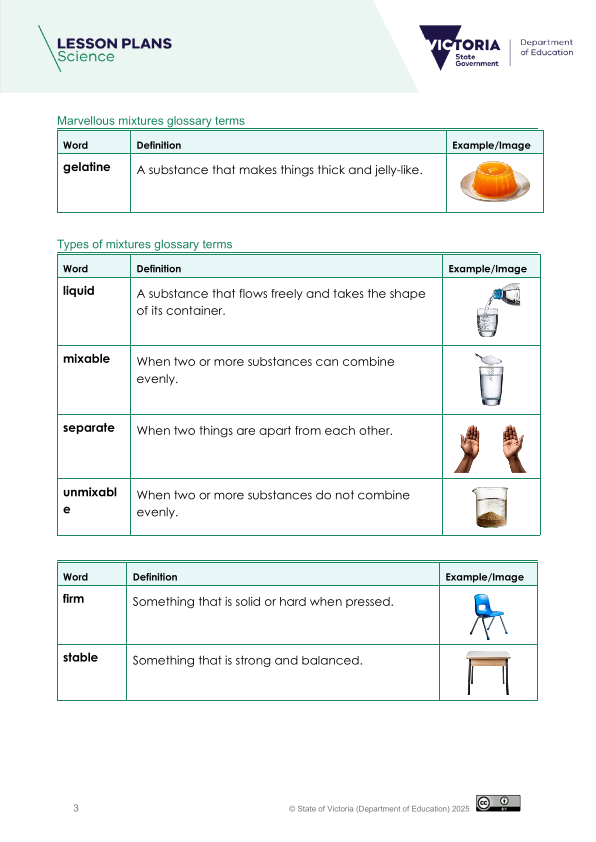
Year 1 & 2 - Materials & Mixtures Glossary
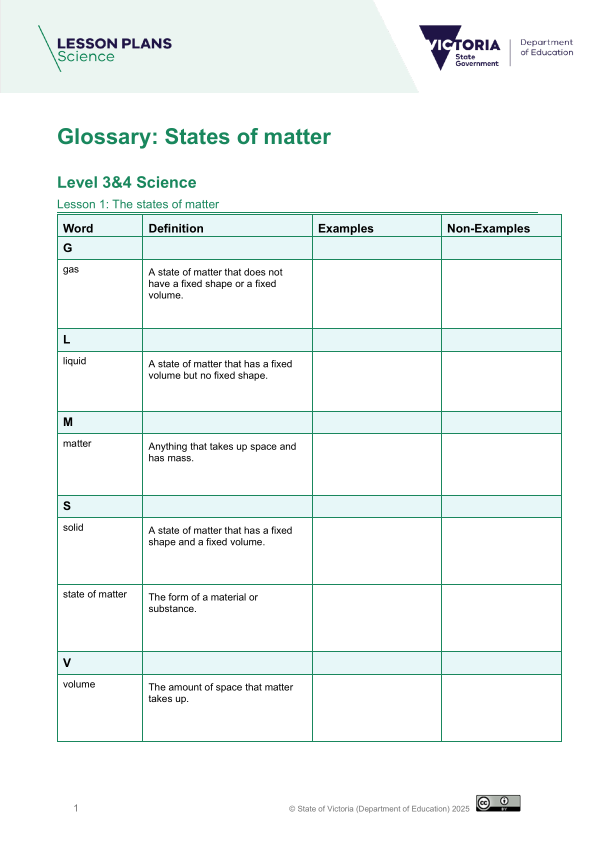
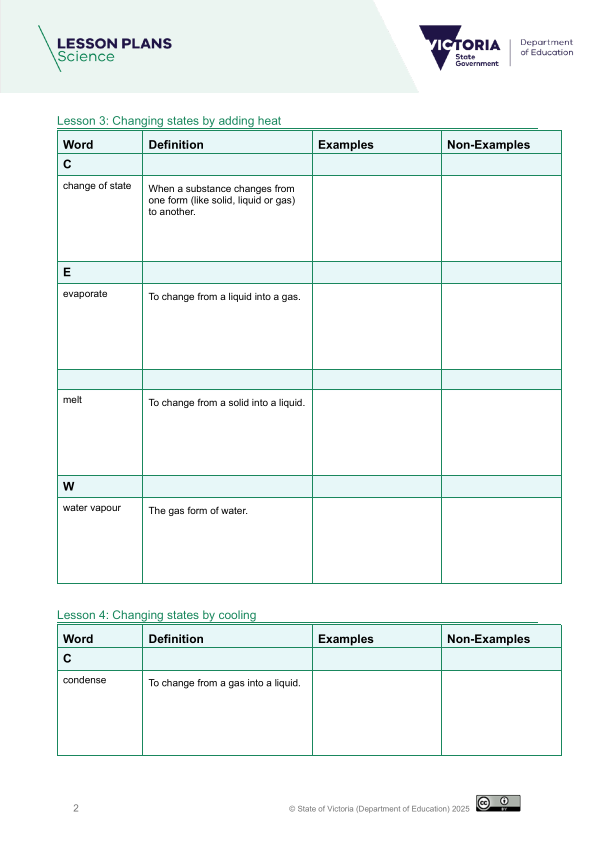
Year 3 & 4 - States of Matter Glossary
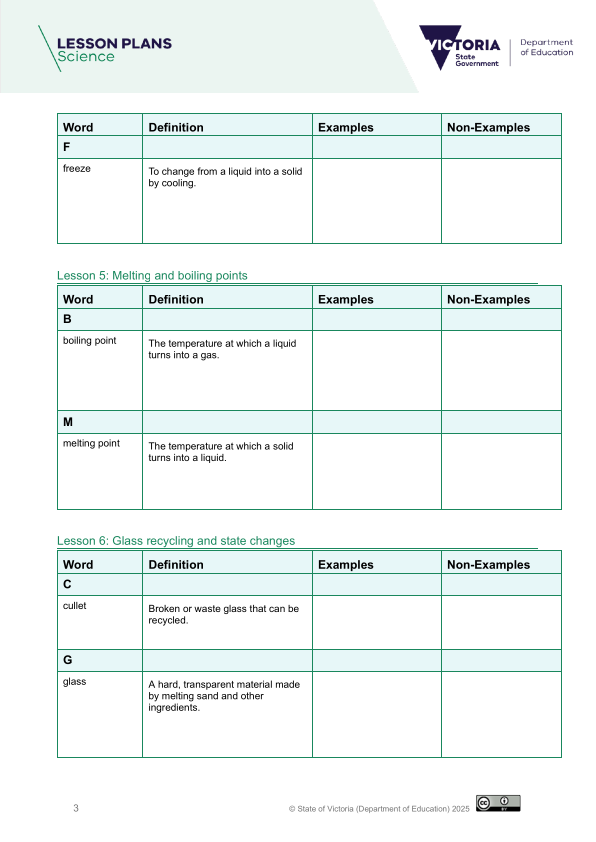
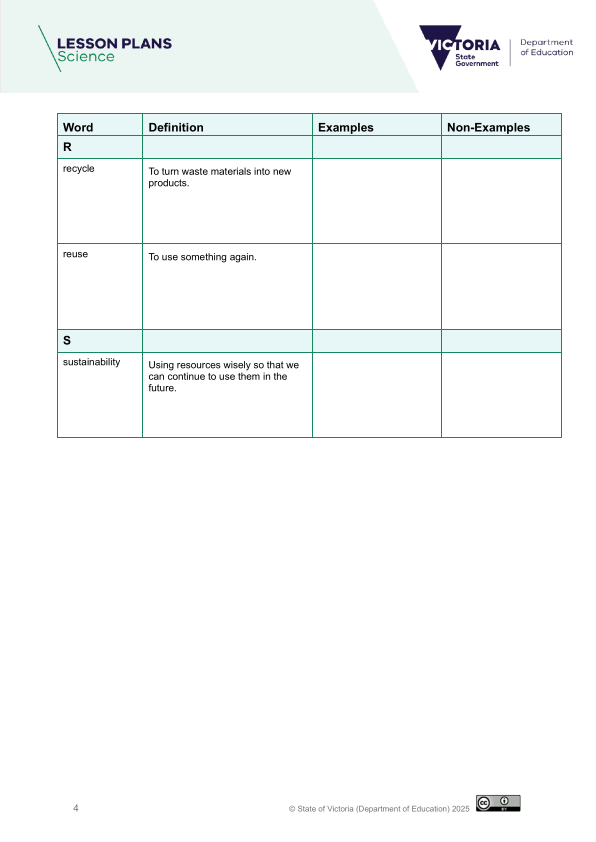
Year 5 & 6 - Particles & Mixtures Glossary
How You Can Support Your Child's STEM Learning
• Ask about the investigations they've conducted in STEM Lab
• Look for real-world examples of concepts at home
• Discuss the glossary terms together and find examples around your home
• Encourage safe experimentation and curiosity
• Celebrate their scientific thinking and problem-solving efforts
We're proud of the work our FWPS scientists have participated in so far this year and are thrilled to be exploring chemistry concepts this term and through our design project next term.
Shannon Mason, Sasha Pollnitz & Tom Li
STEM Teachers