Literacy News
Building Strong Readers and Writers at SKiPPS
Week 4: Phonics – Connecting Sounds and Letters
In our previous weeks, we explored phonological & phonemic awareness - the ability to hear and work with the sounds in spoken language. The next step in learning to read is making a connection between those sounds and the letters that represent them.
This is called phonics.
Phonics is the relationship between sounds (phonemes) and the letters or groups of letters (graphemes) that represent those sounds. It gives children the knowledge they need to decode unfamiliar words when reading and accurately spell words when writing.
Put simply:
Phonemic awareness is about hearing sounds. Phonics is about connecting those sounds to letters.
For example:
- A child with phonemic awareness can hear that map contains three sounds: /m/ /a/ /p/.
- A child using phonics understands that those sounds are represented by the letters m-a-p.
Why This Matters for Learning
Unlike spoken language, reading is not something the brain naturally develops through exposure alone. Children need to be explicitly taught how our written language system works.
Phonics provides children with the "code" they need to unlock words. When students understand the relationships between sounds and letters, they can read new words more independently and accurately.
Learning becomes stronger when skills are taught in a clear sequence, with regular opportunities for practice and review. Just like learning musical notes or sporting skills, children build confidence when they are shown what to do, practise regularly and receive feedback along the way.
What Does Effective Phonics Instruction Look Like?
Effective phonics instruction is:
Explicit - Teachers clearly explain and model new learning. Students are shown the relationship between sounds and letters rather than expected to discover these patterns independently.
Systematic - New knowledge is introduced in a carefully planned sequence, building from simpler concepts to more complex ones.
Cumulative - Previously taught knowledge is regularly revisited and practised so that students remember and can apply what they have learned.
Applied - Students use their phonics knowledge when reading and writing, allowing skills to transfer into authentic literacy experiences.
At SKiPPS
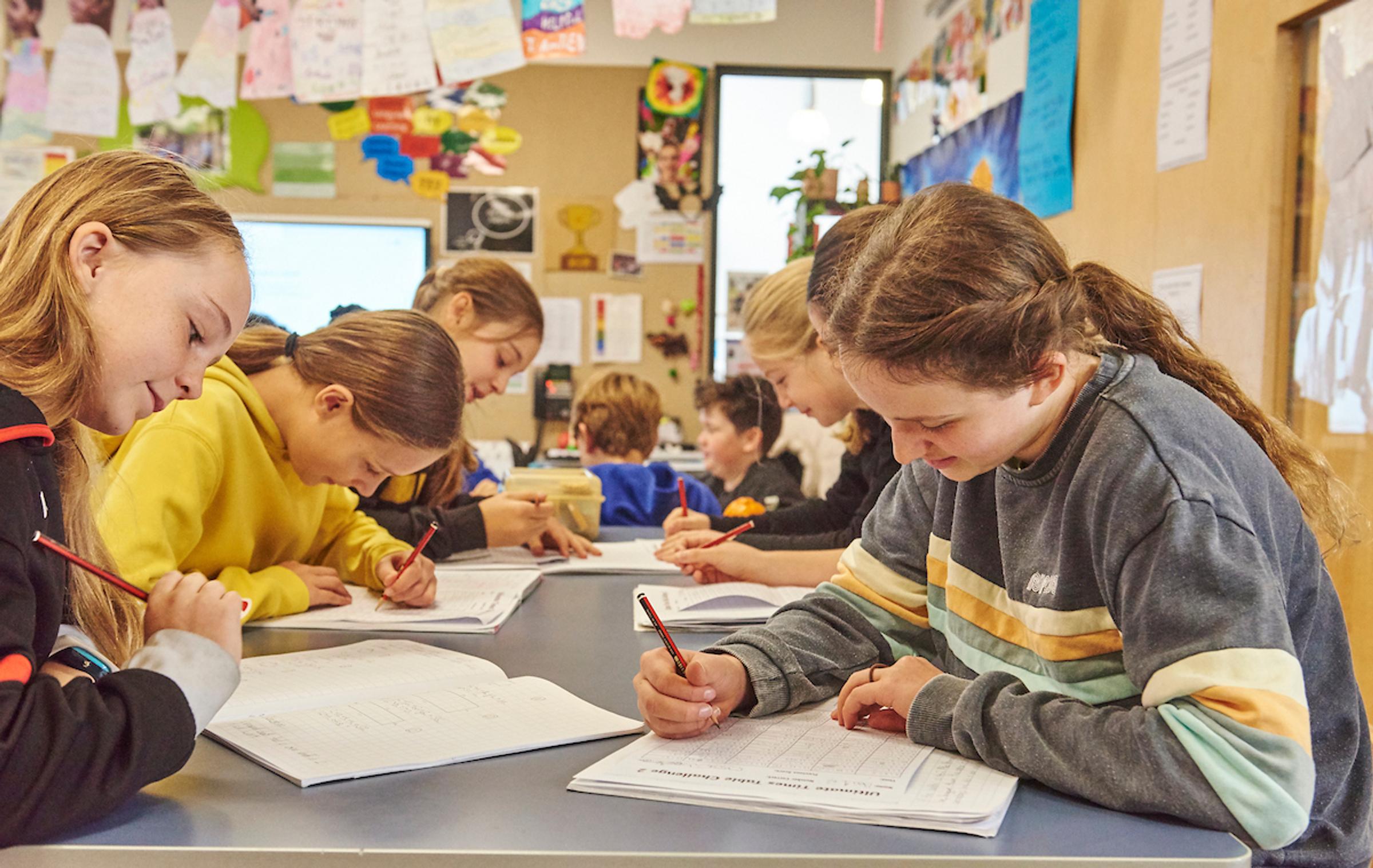
At SKiPPS, phonics is taught explicitly through our Structured Literacy approach using PhOrMeS (Phonics, Orthography, Morphology, Etymology & Semantics). Students participate in daily lessons where, in the early years, they learn the relationships between sounds and letters, practise blending sounds to read words, and apply this knowledge in both reading and writing.
As students move into the upper primary years, their learning extends beyond basic phonics to explore the history of the English language. They learn about morphemes - the smallest units of meaning within words, such as prefixes, base words and suffixes. Understanding morphemes helps students work out the meaning of unfamiliar words, understand how word meanings change, and apply spelling patterns and rules with greater accuracy. This deeper knowledge supports students to become more confident readers, writers and spellers.
Teachers carefully model new concepts, provide guided practice and ensure students have many opportunities to revisit and strengthen their learning.
Students also apply their phonics knowledge through decodable texts, which allow them to practise reading words that contain the sounds and spelling patterns they have been taught. This builds accuracy, confidence and independence.
Literacy Spotlight
Learning phonics does not mean children only read phonic specific books (decodables).
Phonics is a tool that helps children access reading. Once students can accurately decode words, they can spend more of their attention thinking about the meaning of the text, building vocabulary and enjoying stories and information.
Strong readers need both:
- the skills to read words accurately, and
- the knowledge and language to understand what they read.
How You Can Help at Home
Families can support phonics learning by encouraging children to use the knowledge they already have about sounds, spelling patterns and meaningful parts of words.
Try to encourage your child to:
- Look for familiar chunks or parts of words they already know.
- Notice meaningful word parts (called morphemes) such as prefixes, suffixes and base words.
Think about whether they recognise a familiar word within a longer word.
For example, when reading the word unhelpful, students can recognise:
- un = not
- help = the base word
- ful = full of
Knowing these meaningful parts helps children read the word and understand what it means.
Similarly, when encountering a word like disagreement, students can draw upon their knowledge of:
- dis = apart or not
- agree = the base word
ment = a noun-forming suffix
The more patterns, sounds and word parts children know, the more efficiently they can read and understand new words.
Families can also continue to support reading development by:
- Reading rich stories and information books aloud.
- Discussing interesting words and their meanings.
- Celebrating curiosity about language and word patterns.
Coming next week: Week 5 – Handwriting: Building Automaticity for Writing Success.
Jac Morphy
Assistant Principal - Curriculum and Instruction