Term 4 Learning Summary
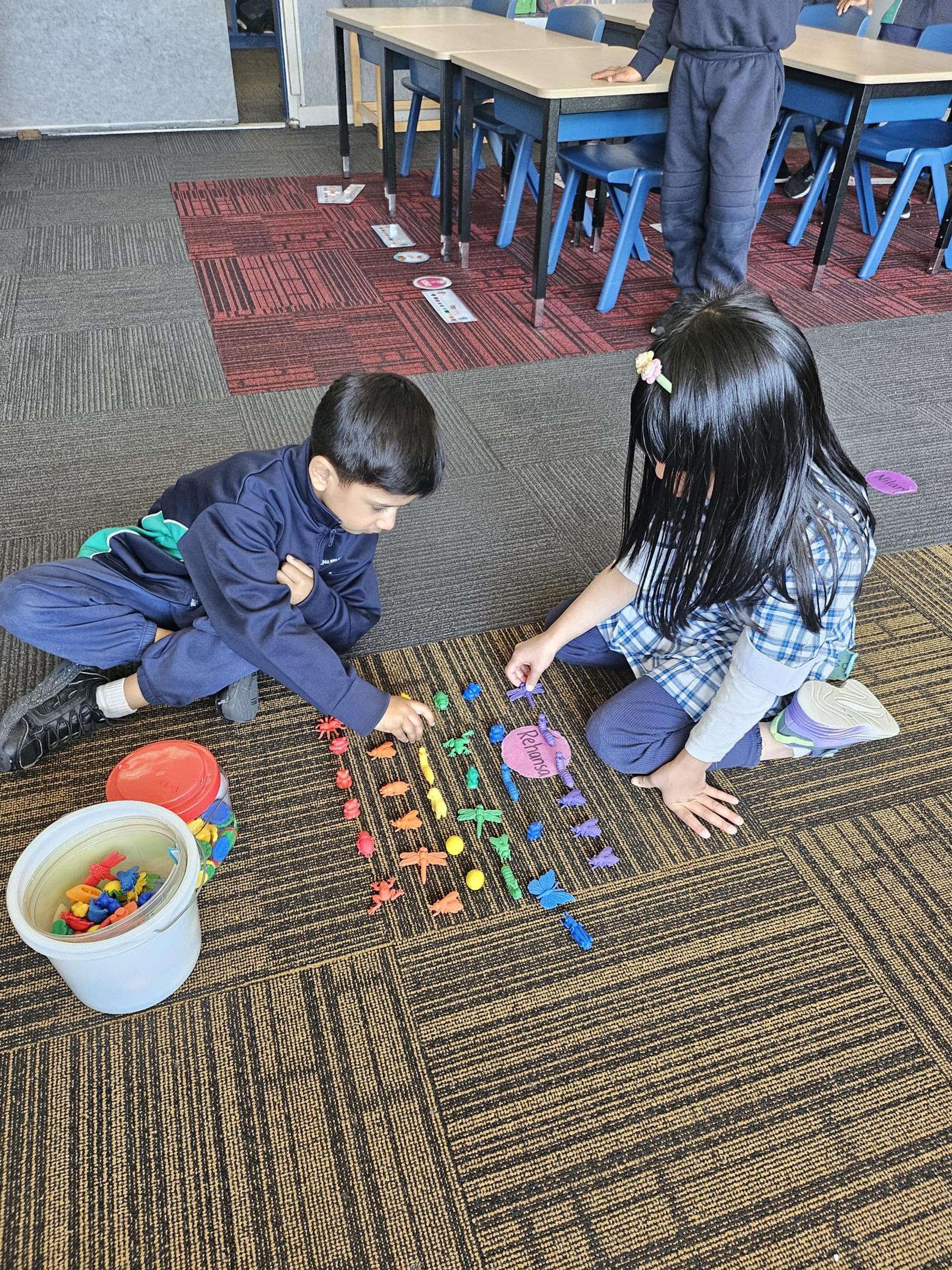
English - InitiaLit
Reading and Viewing
Students will continue to develop their phonics knowledge through focused exploration of sounds and digraphs. They will recognise and use digraphs including ‘sh’, ‘ch’, ‘th’, ‘wh’, ‘ck’, ‘ll’, ‘ff’, ‘ss’, ‘qu’, ‘ee’ and ‘zz’, as well as vowel combinations such as ‘oo’ and ‘ay’. Students will apply their knowledge of these sound–letter relationships to blend sounds, decode words and develop reading fluency.
Writing
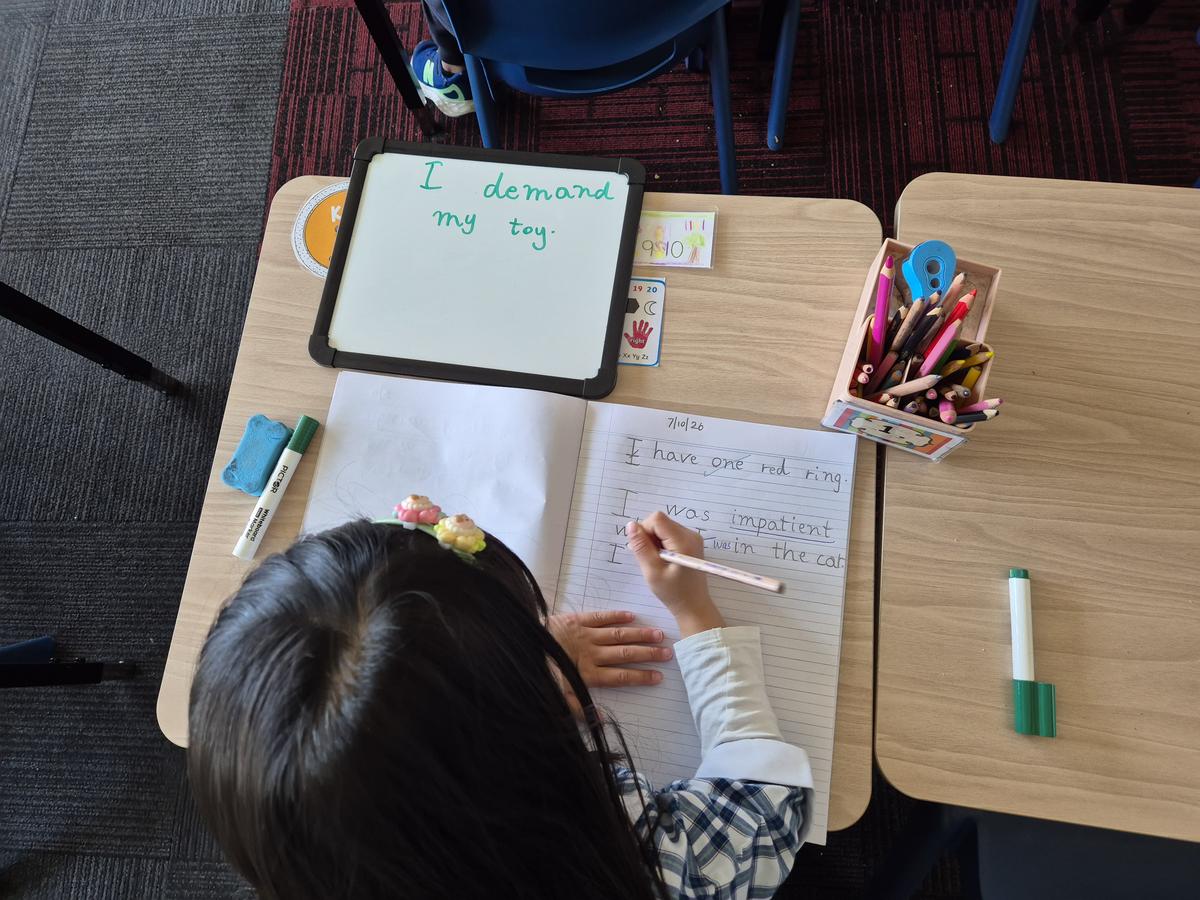
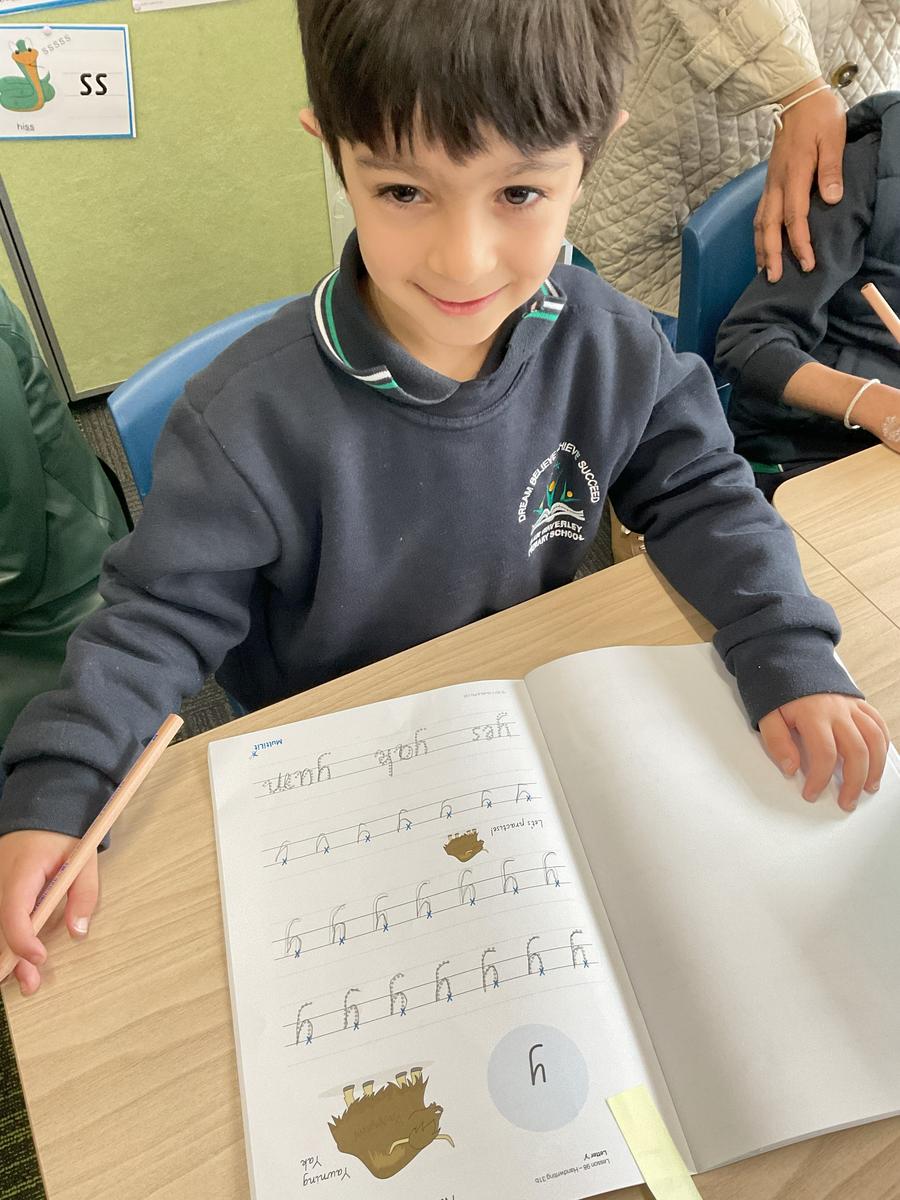
Students will explore the structure and language features of texts through Storybook lessons. They will identify the beginning, middle and end of stories and develop their understanding of how vocabulary is used to enhance meaning. Students will continue to develop their understanding of writing conventions and will use capital letters and full stops to construct sentences. They will apply simple editing processes to check their spelling, word choices and punctuation. Students will further develop their handwriting and spelling skills by forming letters accurately, spelling most consonant-vowel-consonant (CVC) words and using Tricky Words to compose sentences.
This term, students will explore the following quality children’s literature:
- Click, Clack, Moo: Cows That Type
- Ernie Dances to the Didgeridoo
- Magic Beach
- Lucy Goosey
- Stick Man
Speaking and Listening
Students will engage with these Storybook texts by sharing their thoughts, preferences and responses. They will develop their ability to deliver short spoken texts, including retelling stories and reporting events, and will use features of voice to communicate meaning. Students will explore new vocabulary and make connections between texts, their own experiences and the world around them. Through discussion, oral language activities and dictation, students will strengthen their confidence in communicating ideas and develop the language skills needed to support their continued literacy development.
Key Vocabulary:
story structure – beginning, middle, end; sentence; capital letter; full stop; question mark; digraph; suffix
How can you support your child’s English learning at home?
- Read with your child every night and record their reading in their diary. Encourage your child to stretch and blend the sounds in their decodable reading books. Regularly practise reading Tricky Words to help develop accuracy and fluency.
- Talk about the stories you read together to support comprehension. Ask questions such as, “What happened at the beginning, middle and end of the story?”, “I wonder why the character decided to…?” and “Can you retell the story in your own words?”
- Support correct handwriting habits by encouraging your child to use a comfortable, correct pencil grip and maintain an appropriate writing posture. During Home Learning Tasks, support your child to form letters correctly, paying attention to letter size, proportion and placement on the dotted thirds. For guidance, please refer to the Pencil Grasp resource.
- Provide opportunities for meaningful writing at home. Encourage your child to write for real purposes, such as making a shopping list, writing a letter or card to a family member, creating a reminder or helping to write a simple message.
Mathematics
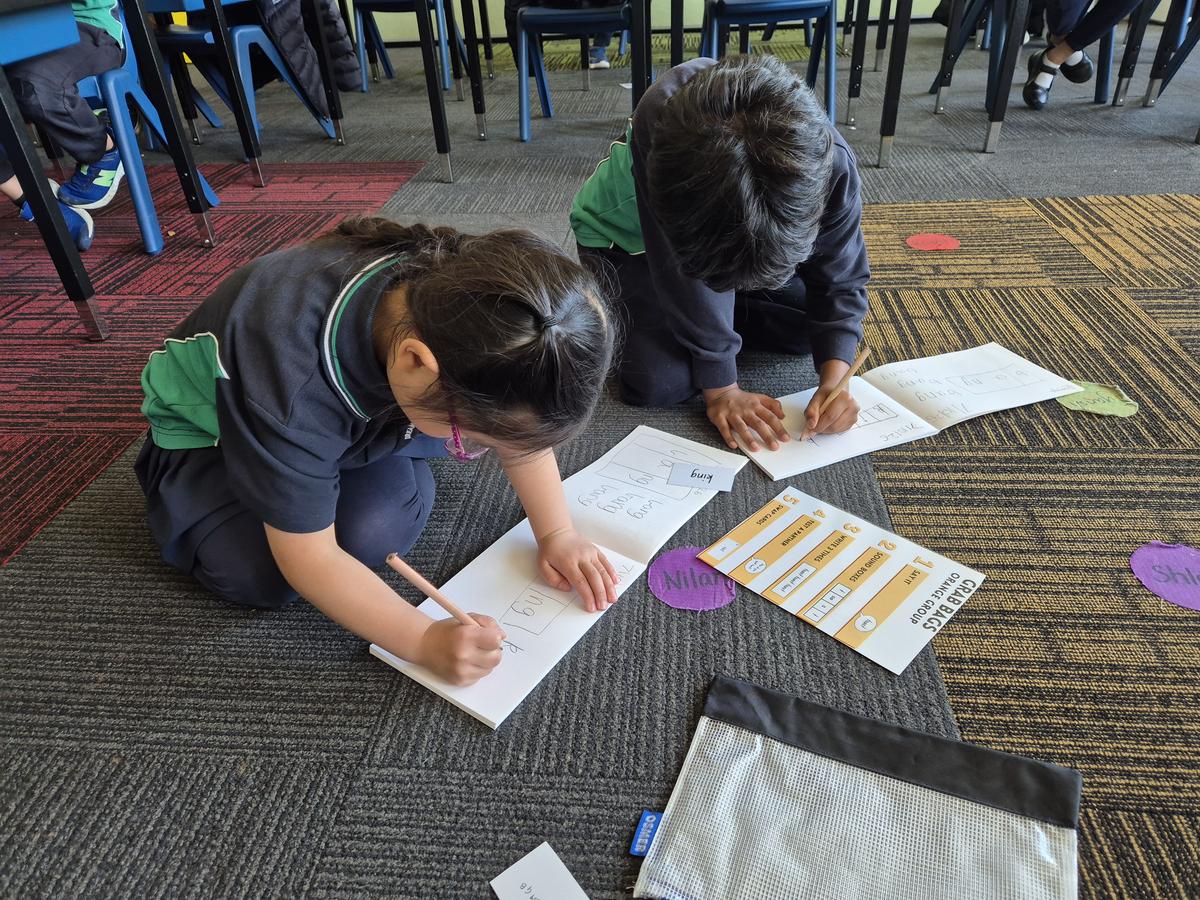
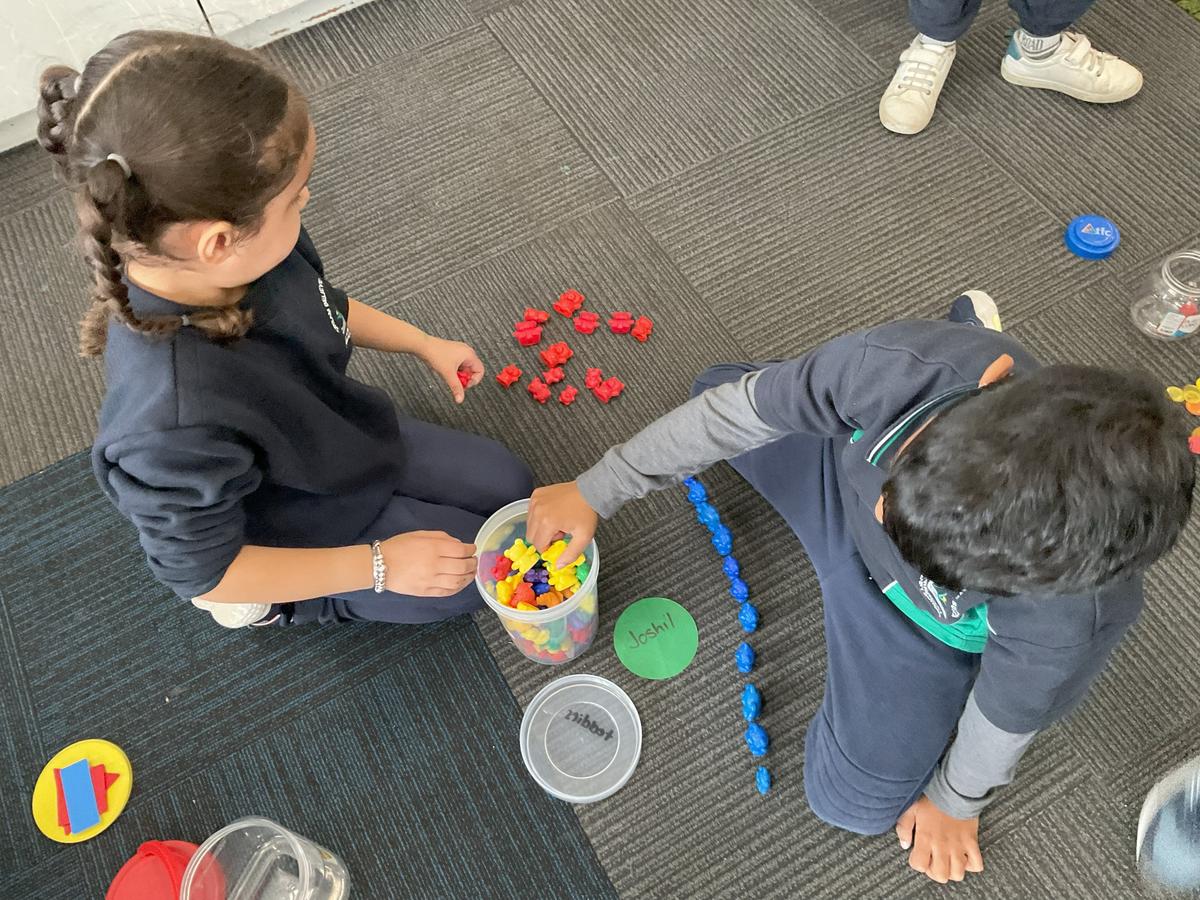
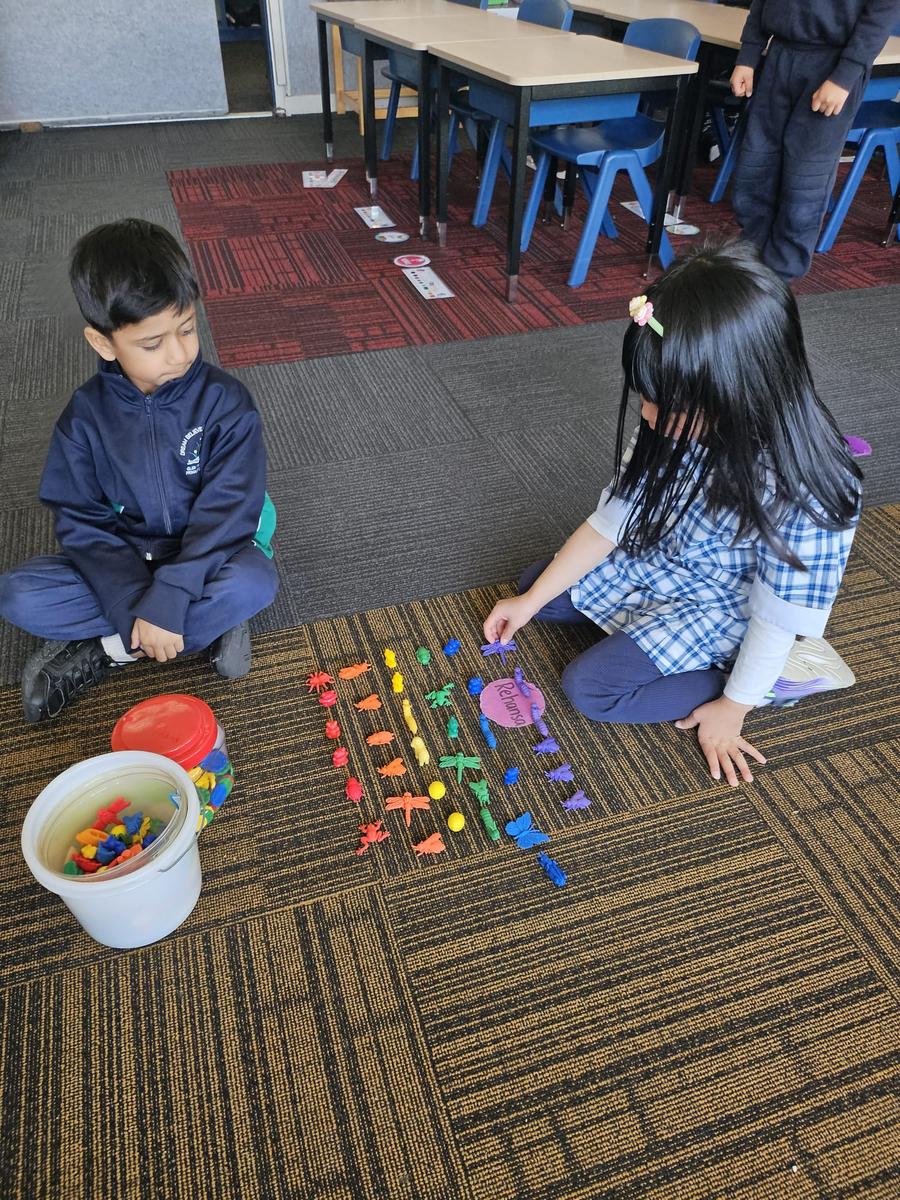
This term, students will continue to build strong mathematical foundations, with a focus on developing number sense, problem-solving, spatial reasoning and data understanding through explicit and hands-on learning experiences.
In Number, students will extend their understanding of counting and place value by exploring two-digit numbers to 100. Using ten-frames, bundling sticks and base-10 materials, they will make, represent and partition numbers into tens and ones. Students will practise counting forwards and backwards from a range of starting points. They will also be introduced to Australian coins and will identify, sort and compare coins based on their value and features.
In Measurement, students will compare and order objects according to length, mass and capacity using direct comparison and informal units. They will also explore duration and develop their understanding of time by comparing events as shorter or longer in duration. Students will use language such as heavier/lighter, longer/shorter, holds more/holds less and longer/shorter duration to describe and compare measurable attributes.
In Space, students will describe position and movement using everyday language. They will follow and give simple directions on grids and within the classroom, using positional language such as next to, behind and between.
In Statistics, students will collect, sort and represent information using simple charts and graphs. They will respond to yes/no questions and collect and represent data from two-choice questions. Students will use the information they collect to make comparisons and answer questions about their data.
These rich and engaging learning experiences will support students to develop mathematical thinking, problem-solving and reasoning skills and will provide a strong foundation for their continued mathematical learning.
Key Vocabulary:
Number: cent, compare, dollar, first, last, money, number, number track, numeral, ones, order, ordinal number, place value, tens, ten-frame
Measurement: capacity, duration, hefting (lifting objects to compare their mass), length, mass
Space: backwards, behind, bottom, count, forwards, in front of, inside, left, next to, number, position, right, top, under, underneath
Statistics: data, sorting
How can you support your child’s Mathematics learning at home?
To support your child’s learning, you could:
- Explore Australian coins by identifying, matching and sorting them. Using plastic coins and role-play activities will provide helpful opportunities for your child to practise recognising and comparing coins.
- Use positional and ordinal language in everyday situations. You could identify objects or situations using words such as first, last, before, after and up, on, under, around, over, in between and encourage your child to respond to questions using this language.
- Compare quantities using terms such as more and less.
- Use everyday objects such as toys or buttons to make and count groups.
- Play dice or card games that involve combining or adding numbers together.
- Talk about time by comparing and ordering the duration of two or more everyday events. For example, you could ask, “What takes longer, getting dressed or brushing your teeth?”
- Practise counting forwards and backwards from 10 and 20, starting from different numbers where appropriate.
- Compare the length of objects using language such as longer and shorter.
Inquiry
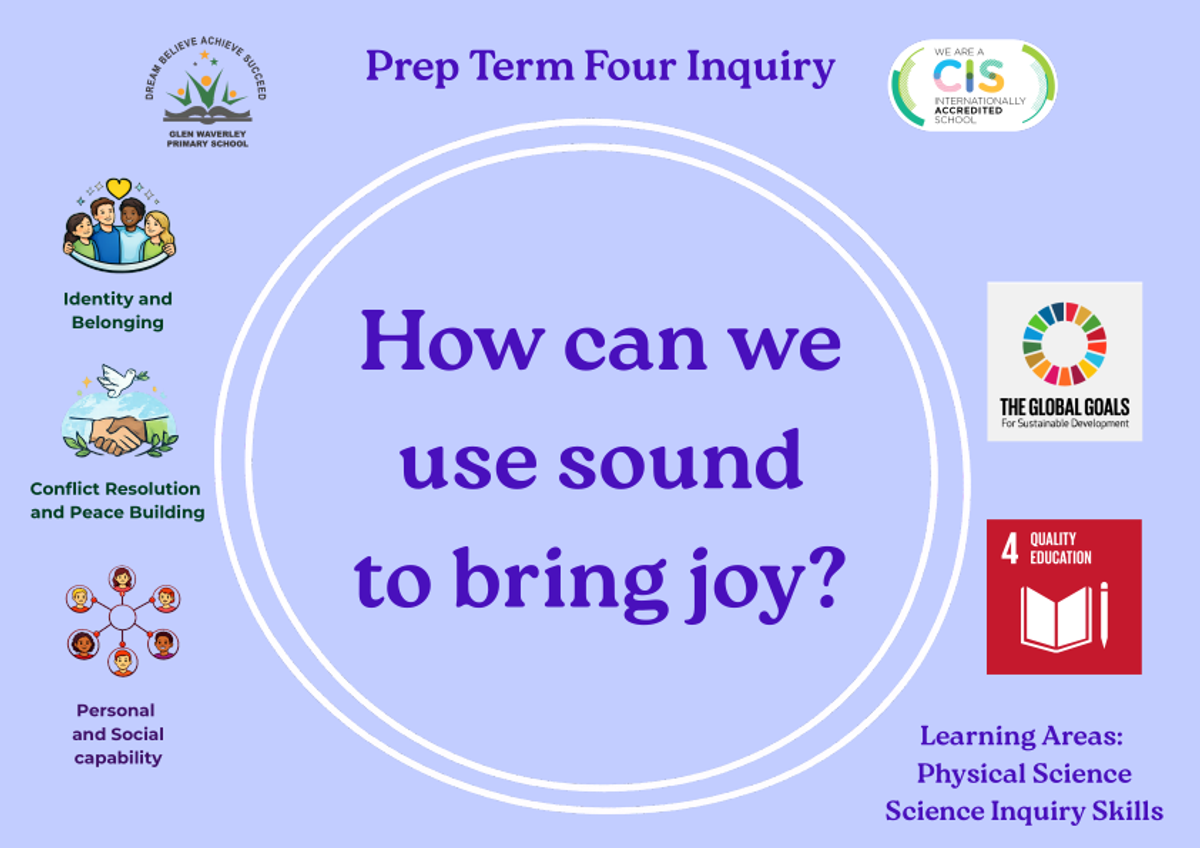
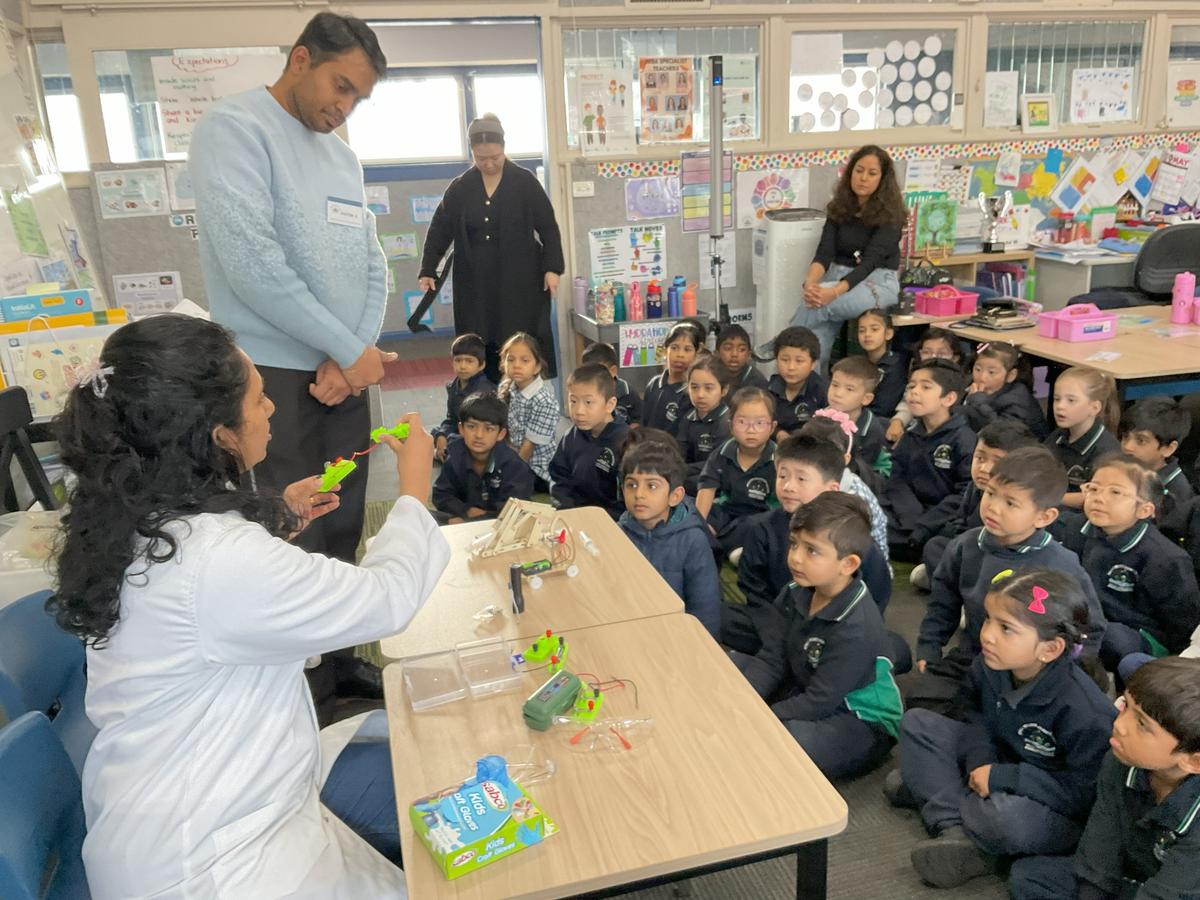
This term, Prep students will explore the inquiry question, ‘How can we use sound to bring joy?’ They will investigate how sound can influence emotions, connect people and contribute to different cultural and environmental contexts. Through hands-on experiences such as mindful listening, sound exploration and simple scientific investigations, students will develop an understanding of how sound is produced and travels, with a focus on how sound can affect objects.
Students will listen to and respond to music from a range of cultures, including Aboriginal and Torres Strait Islander perspectives, and will explore the different emotions and responses that sounds can evoke. They will apply their understanding of sound as they contribute to the Prep Prom, using their voices, body percussion and instruments to create and perform sounds and express themselves creatively.
As part of their transition to Year One, students will reflect on their strengths, identify areas for growth and develop strategies for approaching new challenges with confidence and independence.
Key Vocabulary:
sound, hear, listen, produce, vibration, vibrate, movement, sound source, loud, quiet, high, low, hit, tap, shake, pluck, blow, move, rattle, still
How can you support your child’s Inquiry learning at home?
- Talk about sound and music together. Discuss how different sounds and music can make us feel and share songs or music that are meaningful to your family and culture.
- Explore sounds together at home and outdoors. Encourage your child to listen carefully and identify where different sounds come from.
- Experiment with creating sounds. Encourage your child to use their voice, body and everyday objects to create sounds and rhythms, such as clapping, tapping and stomping.
- Talk about strengths and achievements. Celebrate your child’s achievements and encourage them to think about strategies they can use when they are trying something new or facing a challenge.
Wellbeing
During Term Four, Prep students will continue to develop their personal and social skills through targeted learning in The Resilience Project. They will deepen their emotional literacy by exploring the Zones of Regulation, naming and describing feelings, noticing where they experience emotions in their bodies, and developing strategies to manage their emotions. Students will explore the qualities of positive friendships, including how words and actions can affect others, and will practise demonstrating kindness and respect in their interactions. They will reflect on healthy alternatives to screen time and engage in mindfulness activities to support their wellbeing, reinforcing the key principles of Gratitude, Empathy and Mindfulness (GEM).
As part of The Cyber Safety Project, students will develop safe online habits and an understanding of respectful digital behaviour. They will identify trusted adults they can approach for help and explore the importance of kindness when communicating online. Students will recognise safe and unsafe behaviours when using technology, identify personal information that should not be shared, and explore ways to balance screen time with other healthy activities. These learning experiences will support students to develop positive digital habits and a growing sense of responsibility when using technology in everyday life.
Key Vocabulary:
emotions/feelings, kindness, respect, Gratitude, Empathy, Mindfulness, friendship, personal strength, challenge, safe/unsafe behaviours
How can you support your child’s Wellbeing learning at home?
Families will be encouraged to incorporate opportunities for empathy and gratitude into everyday life. One simple way to do this will be through gratitude journaling. After dinner or at the end of the school or working week, family members could contribute to a shared journal by drawing or writing about something they are grateful for. This will provide an opportunity to connect as a family, share experiences and discuss empathy.
You could also talk together about what it means to be empathetic and encourage your child to:
- Identify other people’s feelings and emotions.
- Identify and describe their own feelings and emotions.
Recognise and discuss acts of empathy and kindness they have shown towards others.
As a family, you could also design an ‘Empathy Superhero’. Give your superhero a name and motto and label the characteristics they will need to show empathy and kindness towards others.
At GWPS, we recognise and value parents and carers as important members of our school community. Your involvement will help reinforce and strengthen the learning from The Resilience Project and support your child to apply these skills in everyday life.
Our families also have access to:
- The Resilience Project: TRP@HOME – resources to support families to continue conversations and activities around Gratitude, Empathy and Mindfulness at home.
- Cyber Safety Project: Home Resources – resources to support safe and respectful technology use at home.