First Aid














 Brighton Beach Primary School
What are ticks?
- Ticks are arachnids, not insects. They are related to spiders and have eight legs.
- A common Australian tick is the Ixodes holocyclus – Australian Paralysis tick. This tick is mostly found down the East coast of Australia but can be found in some inland areas.
- Tick stages are seasonal, with larvae active during the autumn, nymphs in winter, and adults in the spring.
- The adult stage is the most dangerous, but any stage can lead to allergic reactions.
- Adult ticks are normally found on the tips of grass blades and in bushes.
- Adult ticks generally attach themselves to the skin on the head, scalp or neck of their host (a passing animal or human).
Health problems caused by ticks
Most tick bites are harmless. The most common health problems caused by ticks are allergic reactions. These include:
- Large local reactions
- Allergic reactions including anaphylaxis
- Mammalian meat allergy (such as beef, lamb, goat and pork).
Less common reactions include:
- The spreading of infections
- Tick paralysis (very rare in humans).
How to remove ticks safely
It is very important that the tick is removed correctly to reduce the risk of anaphylaxis and/or reduce the development an allergy to tick bites. Safe removal will also reduce the chance of developing mammalian meat allergy. The safest way to remove a tick:
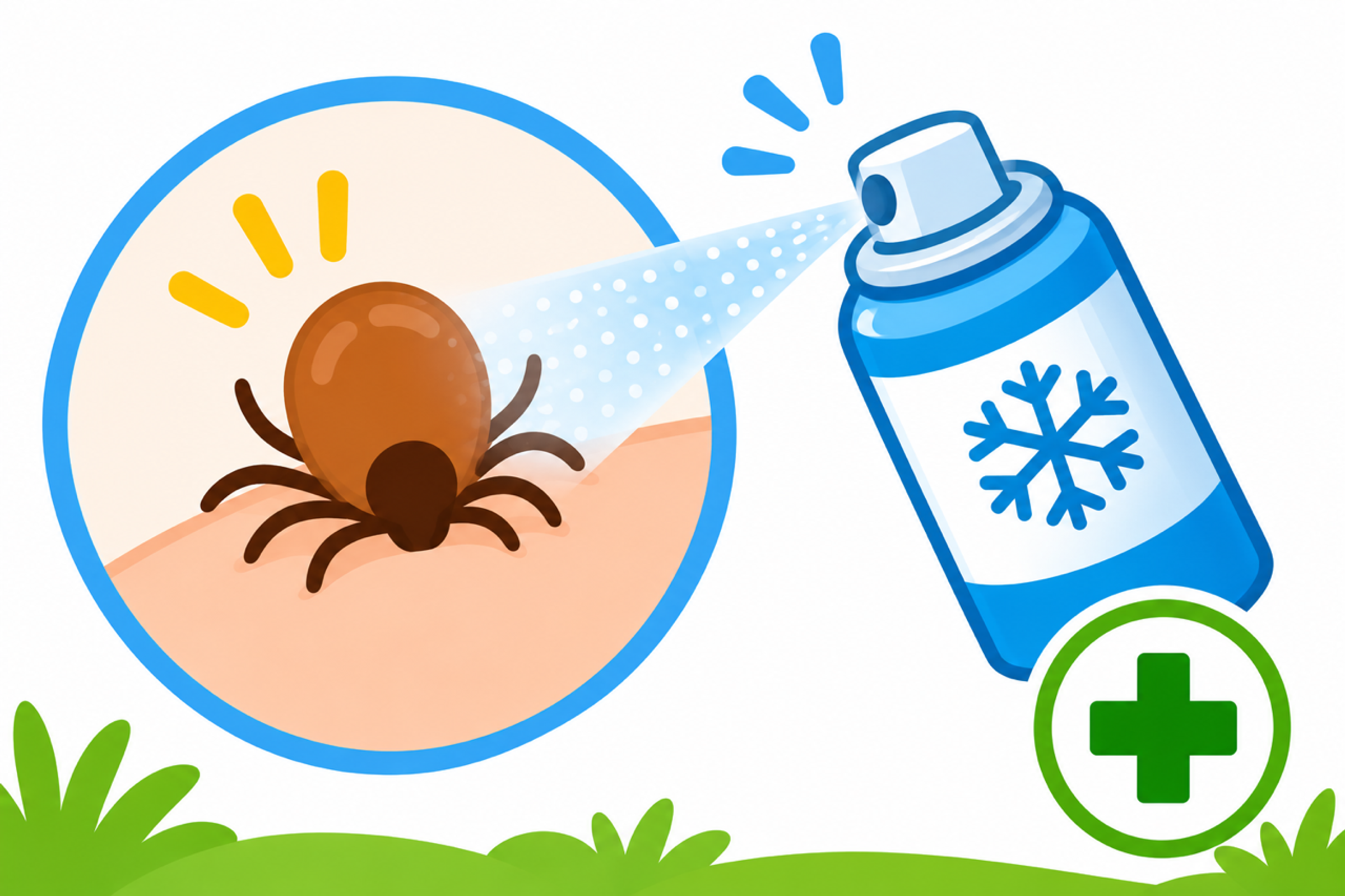
- Freeze the tick, using sprays containing ether available from a pharmacy. This rapidly freezes and kills the tick within five minutes and allows it to drop off. Do not use chemicals such as methylated spirits or kerosene.
- If the tick does not drop off or cannot be frozen, leave the tick in place and seek medical help to remove the tick.
To prevent tick allergy, it is important that ticks are not forcibly removed or touched as this may cause the tick to inject more allergen-causing saliva into the person.
Do NOT use household tweezers to remove the tick, as this will cause it to squeeze allergen containing saliva into you, even if the tick is dead.
Those at risk of anaphylaxis to ticks should have them removed by a doctor in a hospital.
If you are in an area that is known to have many ticks, it is important not to scratch anything that you cannot see.
Prevention of tick bites in bush areas
- Try to avoid going into the bush at high-risk times such as spring and summer when there are many ticks. There is also an increase in ticks after wet periods.
- Wear light coloured clothing to help spot ticks and check yourself regularly.
- Wear long sleeve shirt and trousers. Tuck pants into socks, and shirts into pants.
- Wear wide-brimmed hats
- Apply repellents to the skin. Use those that contain DEET or Picaridin and apply (and reapply) as per label directions.
- Soak clothing in permethrin washes (available from stores that specialise in outdoor gear). Follow label instructions for application and re-application.
- After being in an area know to have ticks, remove clothing and place into a hot dryer for 20 minutes to kill any ticks that may still be present.
- Check for ticks on the body, especially on the neck and head (scalp).
For more information on tick allergy see Tick allergy - Allergy & Anaphylaxis Australia