CHILD SAFE STANDARDS AT ST AGNES'
















 St Agnes' Primary School

Child Safe Standard Eleven: Policies and Procedures Document How Our School Is Safe for Children and Young People
At St Agnes’, the safety, wellbeing and dignity of every child are central to all that we do. We are committed to creating a school environment where every student feels safe, valued, respected and empowered. As part of this ongoing commitment, each month we have been highlighting one of the Victorian Child Safe Standards with our community.
The Victorian Child Safe Standards are a set of eleven standards designed to help schools create and maintain child-safe environments through strong policies, practices and partnerships with families. They support schools in building cultures where children’s voices are heard, their wellbeing is prioritised, and safeguarding is embedded into everyday school life.
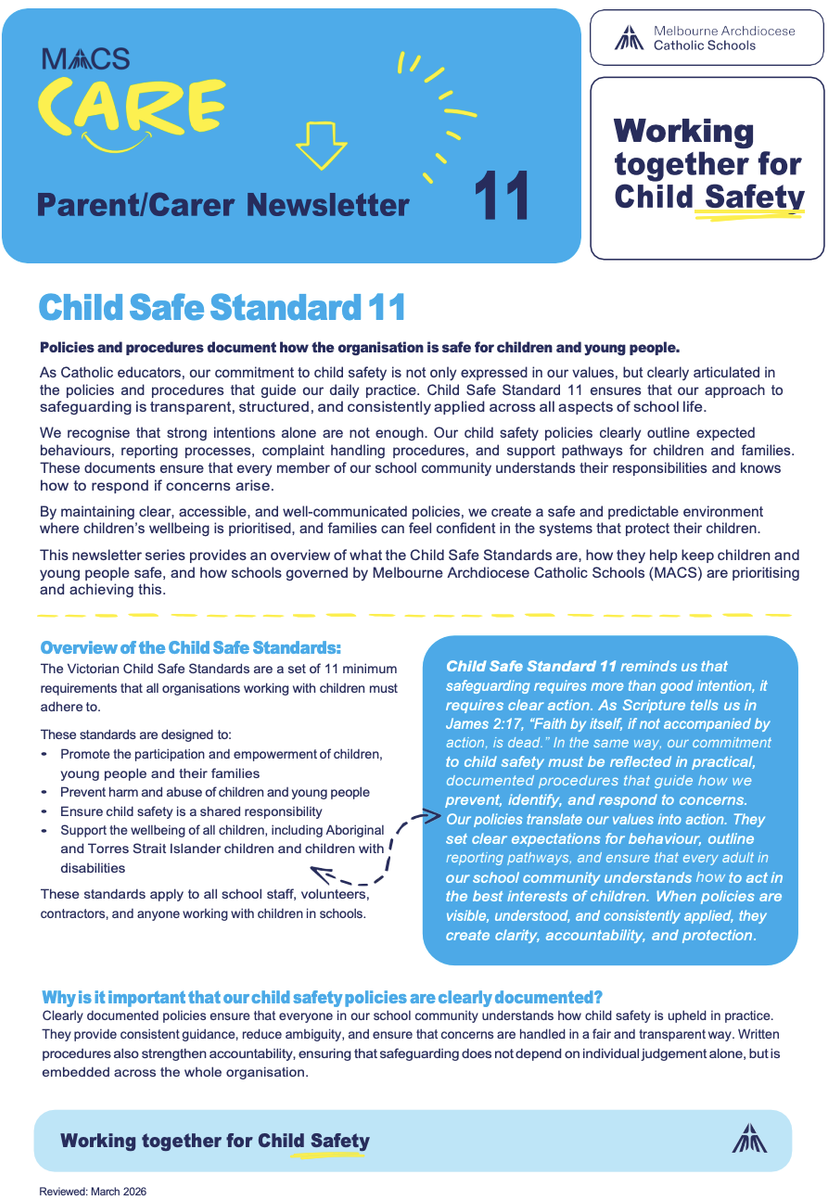
This month, we focus on Child Safe Standard Eleven, the final standard, which is about ensuring that schools have clear, documented policies and procedures that explain how children are kept safe. While having strong policies is important, the real value comes from ensuring these policies are understood by staff, families and students and, most importantly, are reflected in what happens at school every day.
At St Agnes’, we have a range of policies and procedures that guide how we protect and support our students. These include our Child Safety and Wellbeing Policy, Child Safety Code of Conduct, procedures for responding to and reporting child safety concerns, and expectations around the supervision of students. These documents establish clear responsibilities for staff and other adults working within our school and help ensure that child safety is approached consistently.
An important part of Child Safe Standard Eleven is making sure that everyone understands what to do when a concern arises. For example, if a student shares something that makes them feel unsafe, staff need to know how to respond calmly, listen appropriately, record the concern and report it through the correct channels. Similarly, if a parent raises a concern about their child's safety or wellbeing, there must be clear processes for ensuring that concern is taken seriously and followed up appropriately.
Our policies also guide the everyday decisions we make across the school. This includes how we supervise students in classrooms and playgrounds, how we manage visitors and contractors on site, the expectations we have for staff interactions with children, and how we approach child safety when planning excursions, camps and other school activities. These are all practical examples of how documented policies translate into the daily running of our school.
Child Safe Standard Eleven also highlights the importance of making child safety information accessible to our wider community. Families should be able to understand our school's approach to child safety, know where to find relevant policies and feel confident about who they can speak to if they have a question or concern. Our key child safety policies are available through the school, and we encourage families to familiarise themselves with these documents.
As our school continues to grow, it is particularly important that our expectations remain clear and consistent. New staff, volunteers, contractors and other adults working with our students need to understand their responsibilities and the procedures they are expected to follow. This is supported through induction processes, staff professional learning and ongoing communication about our child safety expectations.
As we conclude our series on the eleven Victorian Child Safe Standards, I hope these updates have helped families better understand the many ways child safety is considered across our school. While some of this work happens behind the scenes, it influences countless decisions made by our staff and leadership team each day. Ultimately, the Child Safe Standards are not simply a set of requirements for schools to meet. They are an important framework for ensuring that every child is protected, listened to and treated with dignity and respect. At St Agnes’, this will always remain one of our most important responsibilities.
What this looks like at St Agnes'
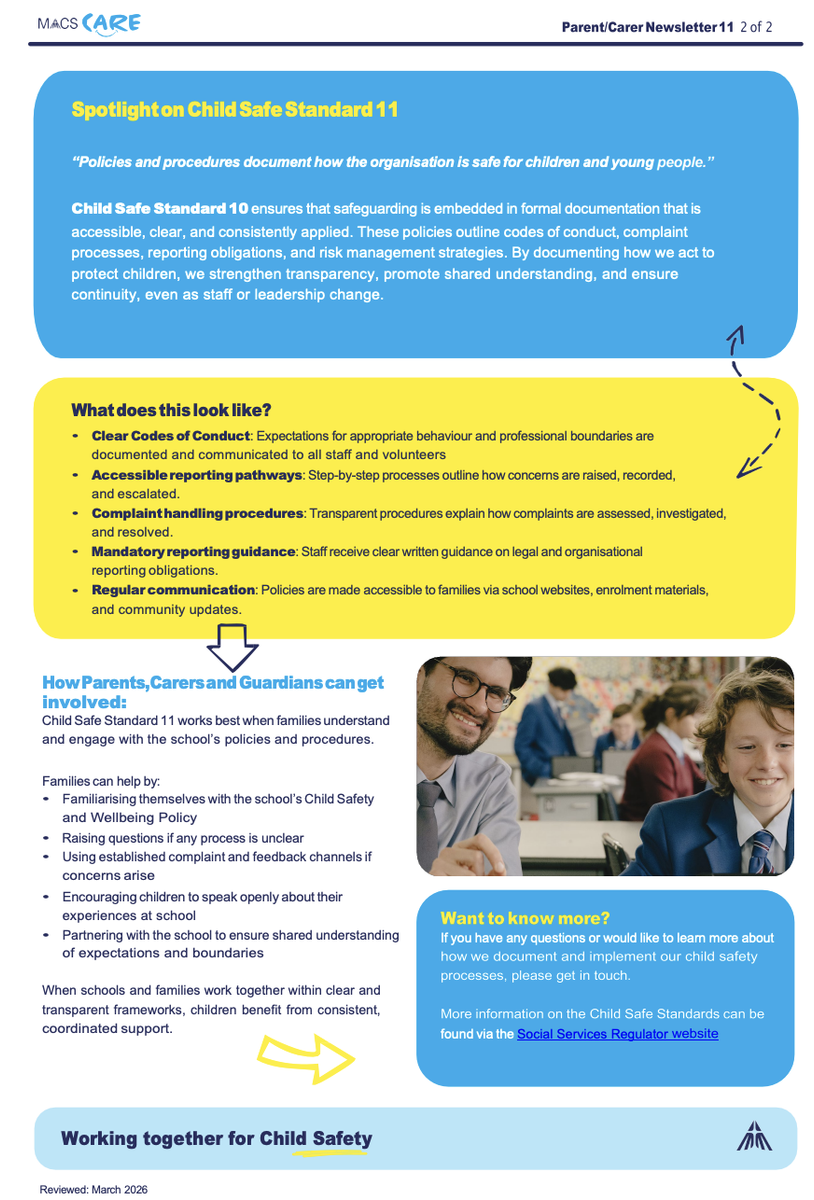
At St Agnes’, we recognise that keeping children safe requires more than simply having good intentions. We need clear expectations, consistent practices and documented procedures that guide how we protect and support our students each day. Child Safe Standard Eleven focuses on ensuring that schools have policies and procedures that clearly explain how they create and maintain a child-safe environment. Importantly, these policies must be understood by the adults working with our children and reflected in everyday school life.
At St Agnes’, our Child Safety and Wellbeing Policy, Child Safety Code of Conduct and reporting procedures establish clear expectations for staff, volunteers, contractors and other adults working with students. These cover everything from appropriate relationships and professional boundaries to student supervision, responding to concerns and maintaining safe learning environments.
One practical example is how we supervise students throughout the school day. Our documented procedures guide staff responsibilities before school, during recess and lunch, and at dismissal. Teachers and LSOs are allocated specific yard-duty areas, and clear processes are followed when students need to visit sick bay, move between learning spaces or receive additional support. These expectations help ensure that students are appropriately supervised, regardless of which staff member is responsible.
Our policies also guide how adults work with students individually or in small groups. At St Agnes’, many children participate in literacy and numeracy intervention, extension programs and wellbeing sessions. Our Child Safety Code of Conduct establishes expectations around professional boundaries, appropriate communication and visibility during these interactions. For example, staff consider where individual or small-group sessions take place to ensure students are supported in appropriate, visible environments.
Another important part of Child Safe Standard Eleven is ensuring that everyone knows what to do when a child safety concern arises. If a student discloses something concerning, or a staff member observes behaviour that raises concerns, there are clear procedures for listening, documenting and reporting the information. These processes ensure that concerns are taken seriously and managed appropriately, including making reports to external authorities when required.
Our documented procedures also guide the planning of excursions, camps and school activities. Before students attend events such as swimming carnivals, sporting competitions or our overnight camps, staff complete risk assessments that consider supervision, transport, medical needs and emergency arrangements. Similarly, parents volunteering at school events or excursions, and external providers working with students, must meet relevant child safety requirements and understand our expectations.
A particularly relevant example is our upcoming senior classroom building project. As part of our planning, we have established procedures for separating construction areas from students, restricting access to certain playground spaces and adjusting student movement around the school. These arrangements demonstrate how our child safety responsibilities influence practical decisions about the school environment.
As our school continues to grow, particularly with additional classrooms and new staff joining us in 2027, it is important that our expectations remain clear and consistent. Through staff induction, professional learning and regular communication, we work to ensure that everyone understands their responsibilities. Our child safety policies are also available to families, and parents are encouraged to contact our leadership team if they have any concerns about their child's safety or wellbeing.