Director of Student Wellbeing
Mr William Geeves
Director of Student Wellbeing
Mr William Geeves
As we move further into the term, it is important to recognise that transitioning back into routine can be challenging for many young people. The shift from the flexibility of holiday schedules back into the structure and expectations of school life often requires students to readjust their sleep patterns, manage academic demands, and reconnect socially with peers and staff.
For some students, this adjustment period may present as reduced motivation, difficulty concentrating, frustration, or heightened emotional responses. Increased screen time and changes to routine during holiday periods can also make the transition back to school more difficult. We understand the importance of routine, consistency and connection in helping young men thrive.
Throughout the opening weeks of term, staff continue to support students by reinforcing clear expectations, predictable routines, and positive relationships within the classroom and broader College community.
Families also play an important role during this transition period. Simple strategies such as re-establishing consistent sleep routines, encouraging organisation for the school day all contribute to your son’s success.
ThinkUKnow Program
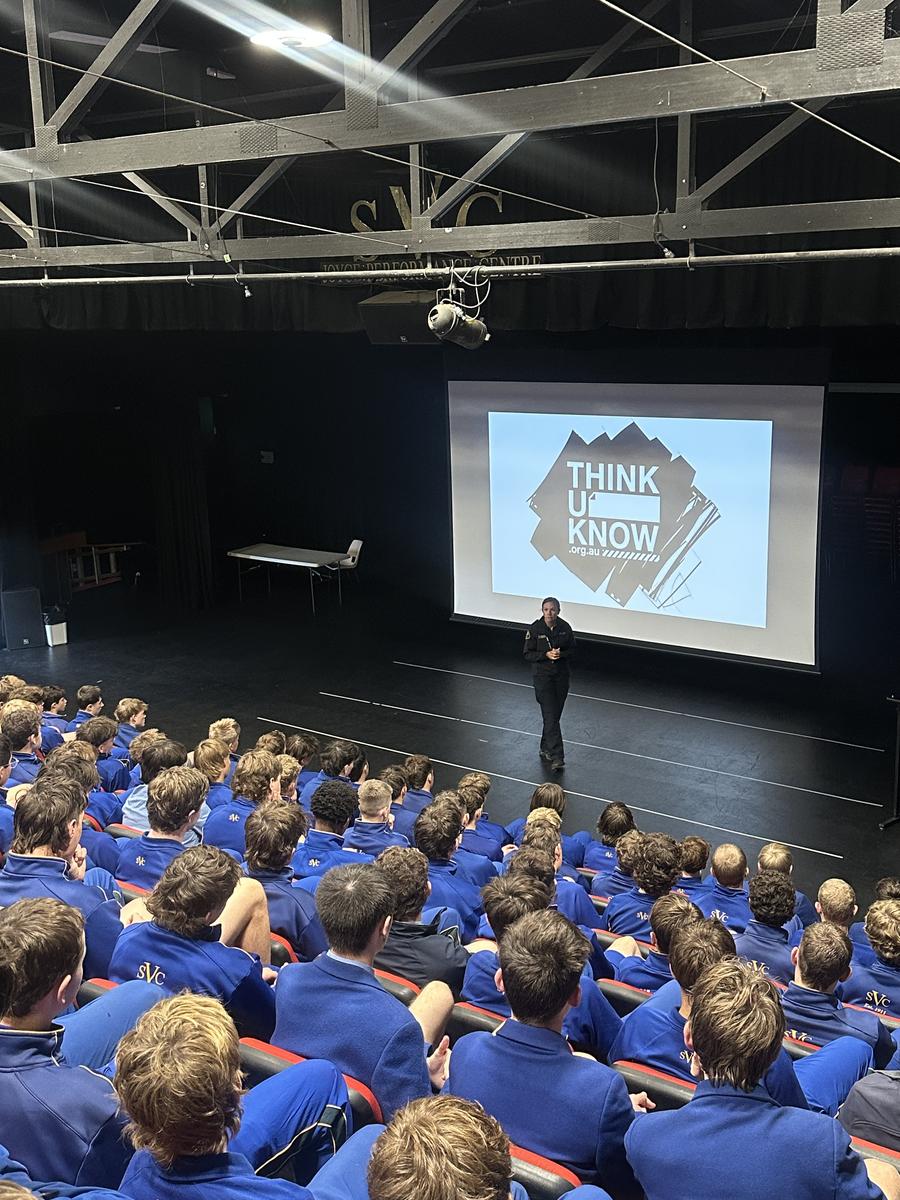
On Wednesday 13 May, we welcomed Rachel Fellows from Tasmania Police to St Virgil’s College to deliver the ThinkUKnow Australia program, an initiative created in partnership with the Australian Federal Police. These sessions formed an important part of our ongoing commitment to supporting the wellbeing, safety, and personal development of our students.
Our Year 7–10 students participated in sessions focused on online safety and digital wellbeing. The presentations explored the opportunities and risks associated with being online, including social media use, online communication, gaming platforms, privacy, and respectful online behaviour. Students were encouraged to think critically about their online presence and were provided with practical strategies to help keep themselves and their friends safe in digital spaces.
A significant focus of the sessions was helping students understand the importance of respectful interactions online, recognising unsafe situations and knowing when to seek support from trusted adults. As technology continues to play an increasingly large role in the lives of young people, these conversations are essential in helping students navigate online spaces safely and responsibly.
Our Year 11 and 12 students engaged in a session titled, Party Safe. This presentation focused on promoting positive choices and supporting their mates during a stage of life where they may begin to encounter social settings where drugs and alcohol are present.
The session encouraged students to reflect on the impact of their decisions and the responsibility they have, not only for themselves, but also for the wellbeing of those around them.
A large component of the presentation focused on risk-taking behaviour, personal safety, consent, and recognising situations where intervention or support may be required. Students were challenged to think about how quickly situations can escalate when poor decisions are made and were provided with strategies to help manage social situations safely and responsibly. I encourage families to check in with their son about his experience during these sessions. I encourage families to check in with their son about his experience during these sessions.
A large component of the presentation focused on risk-taking behaviour, personal safety, consent, and recognising situations where intervention or support may be required. Students were challenged to think about how quickly situations can escalate when poor decisions are made and were provided with strategies to help manage social situations safely and responsibly.
I encourage families to check in with their son about his experience during these sessions. I encourage families to check in with their son about his experience during these sessions.