
Science
Dr Roxanne Toivanen | Domain Leader
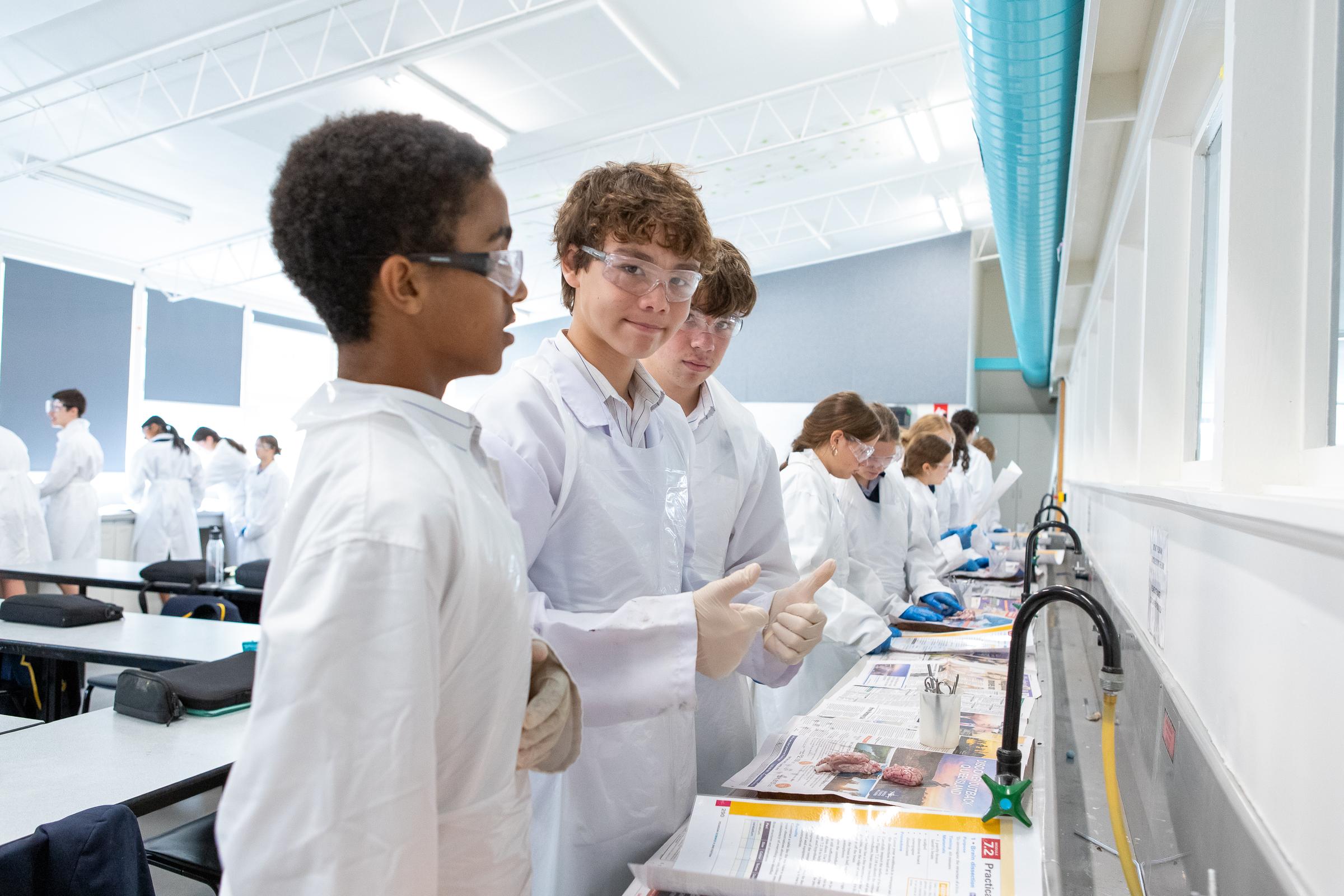
Science
Dr Roxanne Toivanen | Domain Leader
Throughout Term 4, students in Years 7–9 have been immersed in units across the field of Earth Science, each cohort focusing on a different area of study and completing a research-based assessment.
In the senior years, our Year 11 students in Biology, Psychology and Physics completed their Scientific Investigation SAC over the last few months. The innovation in designing their experiments was particularly evident this year, although with this came a high degree of trial and error, and sometimes, defeat. Some notable experiments include:
These projects reflect the high level of independence, creativity and scientific skills developed through our VCE Science programs.
As we have now entered Headstart, we are also incredibly excited by the growing number of students at Sandringham choosing to pursue Science at the VCE level. In 2026, the college will be running nine classes across the four available VCE Unit 1 and 2 Science subjects, a notable increase compared to the past three years. This growth reflects the academic maturity of our Year 10 and 11 2026 cohorts, and the teachers in the science domain are thrilled to be teaching so many young people who are passionate and engaged deeply with the sciences.
Finally, a special acknowledgement to our outgoing Year 12 Science students, who recently completed their final VCE examinations. It was particularly pleasing to see so many students leaving their exams feeling confident and proud of their efforts, a true testament to their resilience and commitment to their studies throughout the year.
A reminder to all students and families to ensure the correct Science resources are purchased for the 2026 school year.
For all VCE Science subjects, the prescribed textbook on the Campion booklist is essential for the successful completion of coursework and will be required from the first week of classes in 2026.
For Years 7–10, 2026 marks the second year we have decided not to booklist a textbook. Students will continue to have access to class-set texts and our extensive digital resources created by Sandy Science teachers. However, for Years 7-9 students, we are introducing a new resource to our booklist, the Pearson Science Student Companion.These new workbooks provide summary notes, structured worksheets and practical activities that will be used consistently throughout the year. As students will be writing directly into these books, families are asked to purchase a new copy through the Campion website.
On behalf of all the Science teachers at Sandringham Secondary College, I would like to thank our students for their hard work and curiosity throughout 2025. It has been a pleasure having them in our laboratories this year, and we look forward to inspiring further wonder and scientific thinking in 2026.