
CHILD SAFE STANDARDS AT ST AGNES'
Child Safe Standards at St Agnes'
At St Agnes’, the safety, wellbeing and dignity of every child are central to all that we do. We are committed to creating a school environment where every student feels safe, valued, respected and empowered. As part of this ongoing commitment, each month we are highlighting one of the Victorian Child Safe Standards with our community.
The Victorian Child Safe Standards are a set of eleven standards designed to help schools create and maintain child-safe environments through strong policies, practices and partnerships with families. They support schools in building cultures where children’s voices are heard, their wellbeing is prioritised, and safeguarding is embedded into everyday school life.
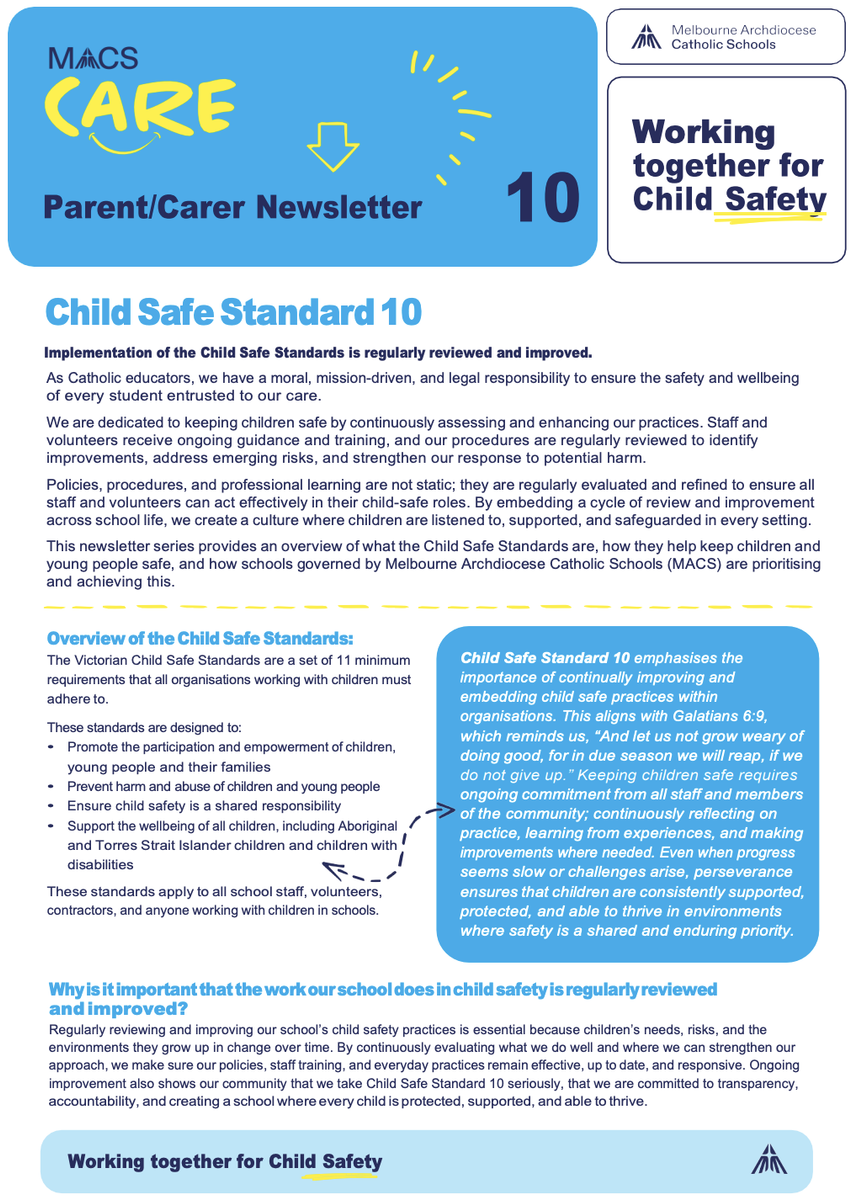
This month, we focus on Child Safe Standard Ten, which is about ensuring that schools regularly review and improve their child safety policies, procedures and practices. Creating a child-safe environment is not something that can be achieved through developing policies alone. It requires ongoing reflection, evaluation and a willingness to make improvements to ensure our approaches remain effective and responsive to the needs of our students.
At St Agnes’, this means regularly reviewing the systems and practices we have in place to protect our students. Our child safety policies and procedures are reviewed to ensure they reflect current legislative requirements, best practice and the expectations of Melbourne Archdiocese Catholic Schools (MACS). We also regularly consider how effectively these policies are being implemented in our classrooms, playgrounds and wider school community.
An important part of this process is listening to the voices of our students, staff and families. Feedback from our community helps us understand what is working well and where improvements may be needed. Through student discussions, wellbeing initiatives, family feedback and school surveys, we seek to better understand how safe, supported and connected our students feel at school. We recognise that children themselves can provide valuable insights into the environments and practices that help them feel safe.
Child Safe Standard Ten also highlights the importance of learning from incidents, concerns and feedback. When issues arise, schools have a responsibility not only to respond appropriately but also to reflect on whether existing procedures could be strengthened to prevent similar situations in the future. This process of reflection and improvement is an important part of maintaining a strong child-safe culture.
At St Agnes’, our staff undertake ongoing professional learning in child safety, and our leadership team works to ensure that safeguarding remains a priority in school planning and decision-making. We recognise that as our school continues to grow and evolve, our practices must continue to develop alongside it.
Child Safe Standard Ten reminds us that child safety is an ongoing responsibility, rather than a task that can simply be completed. By regularly reviewing our practices, listening to our community and looking for opportunities to improve, we can continue to strengthen the safe, supportive and welcoming environment we want for every child at St Agnes’.
What this looks like at St Agnes'
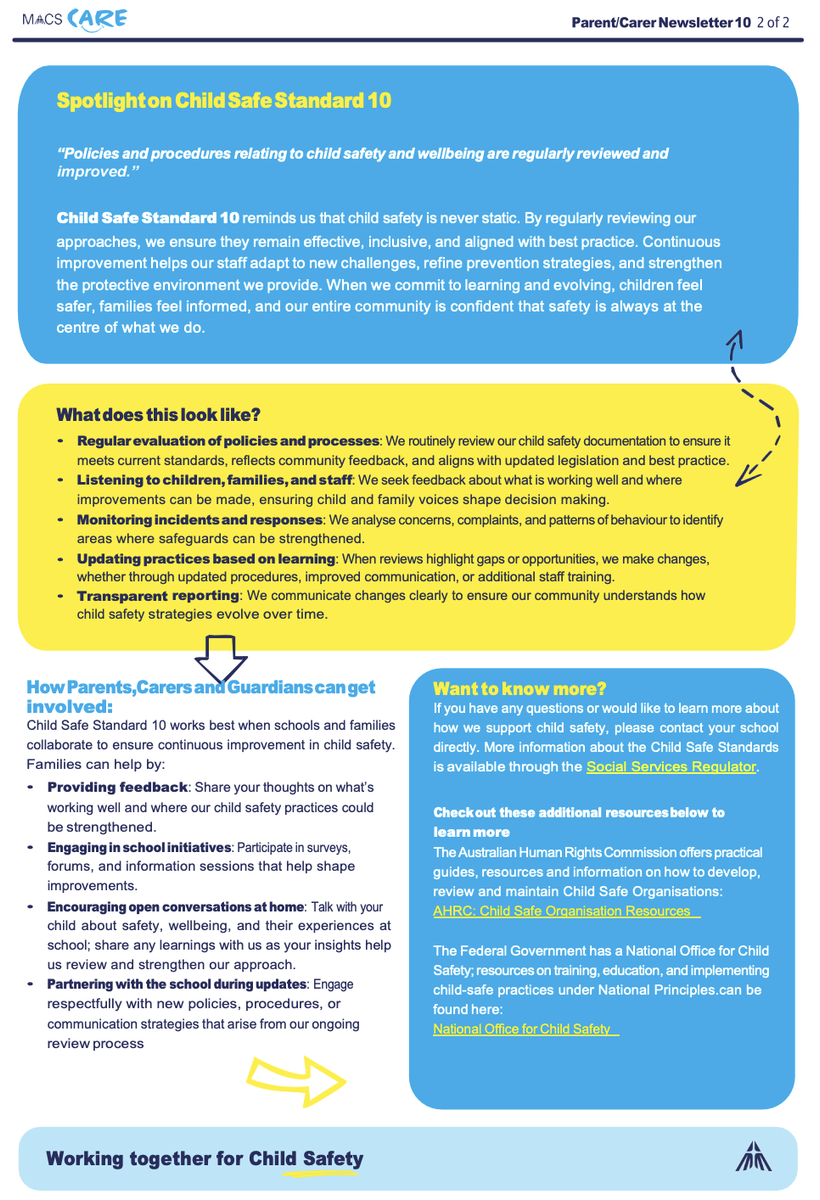
At St Agnes’, we recognise that creating a child-safe school is an ongoing responsibility. It is not enough to simply have policies and procedures in place. We need to regularly reflect on how well these are working, listen to feedback from our community and make improvements where needed. Child Safe Standard Ten focuses on ensuring that schools regularly review, evaluate and improve their child safety policies, procedures and practices.
An important part of this standard is ensuring that our child safety policies remain current, relevant and effective. At St Agnes’, we regularly review policies relating to child safety, student wellbeing, behaviour management, supervision and responding to concerns. These reviews consider changes to legislation, guidance from Melbourne Archdiocese Catholic Schools (MACS) and the practical experiences of our staff and students. Importantly, we also consider whether our policies are being consistently understood and implemented across the school.
Listening to our students is a particularly important part of reviewing our child safety practices. Through classroom discussions, Circle Time, wellbeing lessons and conversations with trusted adults, students are encouraged to share their thoughts about what helps them feel safe and supported at school. For example, if students identify an area of the playground where they feel uncomfortable or a particular time of the day when they feel they need additional support, this feedback can help us review supervision arrangements or make changes to our practices. Our student leaders and Student Representative Council also provide opportunities for students to have a voice in school decisions.
We also recognise the important role that families play in helping us review and strengthen our practices. Parents often provide valuable insights into their children's experiences at school, including concerns that may not always be visible during the school day. Through conversations with families, parent feedback, school surveys and communication with staff, we can identify areas where our approaches may need to be strengthened. For example, feedback about how students are supported during transitions, how concerns are communicated or how playground issues are managed can lead to changes in our procedures.
Another important aspect of Child Safe Standard Ten is learning from incidents, concerns and complaints. When an issue arises, our responsibility extends beyond responding to the immediate situation. We also need to consider whether there are broader lessons to be learned. For example, if an incident highlights a gap in supervision, a communication breakdown or a procedure that was not clearly understood, we review what occurred and consider what changes may help prevent similar situations in the future. This may involve adjusting supervision arrangements, clarifying expectations with staff or updating a school procedure.
Our staff also play an important role in this process. Through staff meetings, professional learning and regular discussions about student wellbeing, we reflect on the effectiveness of our practices and identify opportunities for improvement. This includes reviewing how we respond to student concerns, support children with additional needs, manage behaviour and maintain safe and respectful relationships. As new staff join our school, we also ensure they are familiar with our child safety expectations and procedures.
Regular review is particularly important as our school continues to grow. With increasing enrolments, changes to our facilities and new programs being introduced, we need to consider how these developments may affect our existing practices. For example, the introduction of new learning spaces, changes to playground areas or adjustments to student routines provide opportunities to revisit supervision, accessibility and student safety arrangements. What worked well for our school several years ago may need to be adjusted as our community changes.
Child Safe Standard Ten also requires schools to review child safety practices following significant incidents and to report relevant findings to their governing authority. This helps ensure that lessons learned lead to meaningful improvements and that there is accountability for maintaining a safe school environment.
Ultimately, Child Safe Standard Ten reminds us that being a child-safe school means continually looking for ways to become even safer. By listening to our students and families, reflecting on our experiences, reviewing our policies and being willing to make changes, we can continue to strengthen the culture of safety and wellbeing at St Agnes’. Our goal is to ensure that every child feels safe, heard, respected and supported, and that our practices continue to reflect this commitment each and every day.