
Principal Message
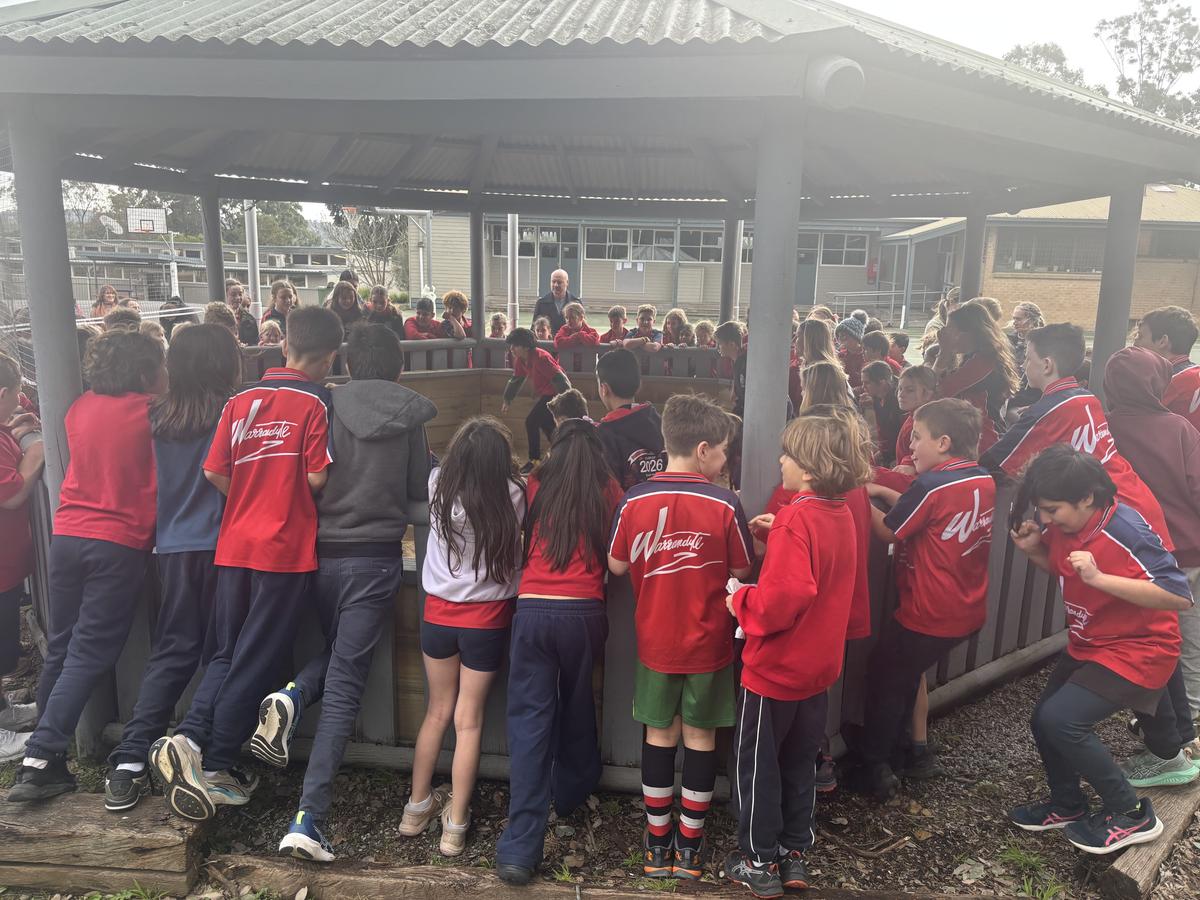
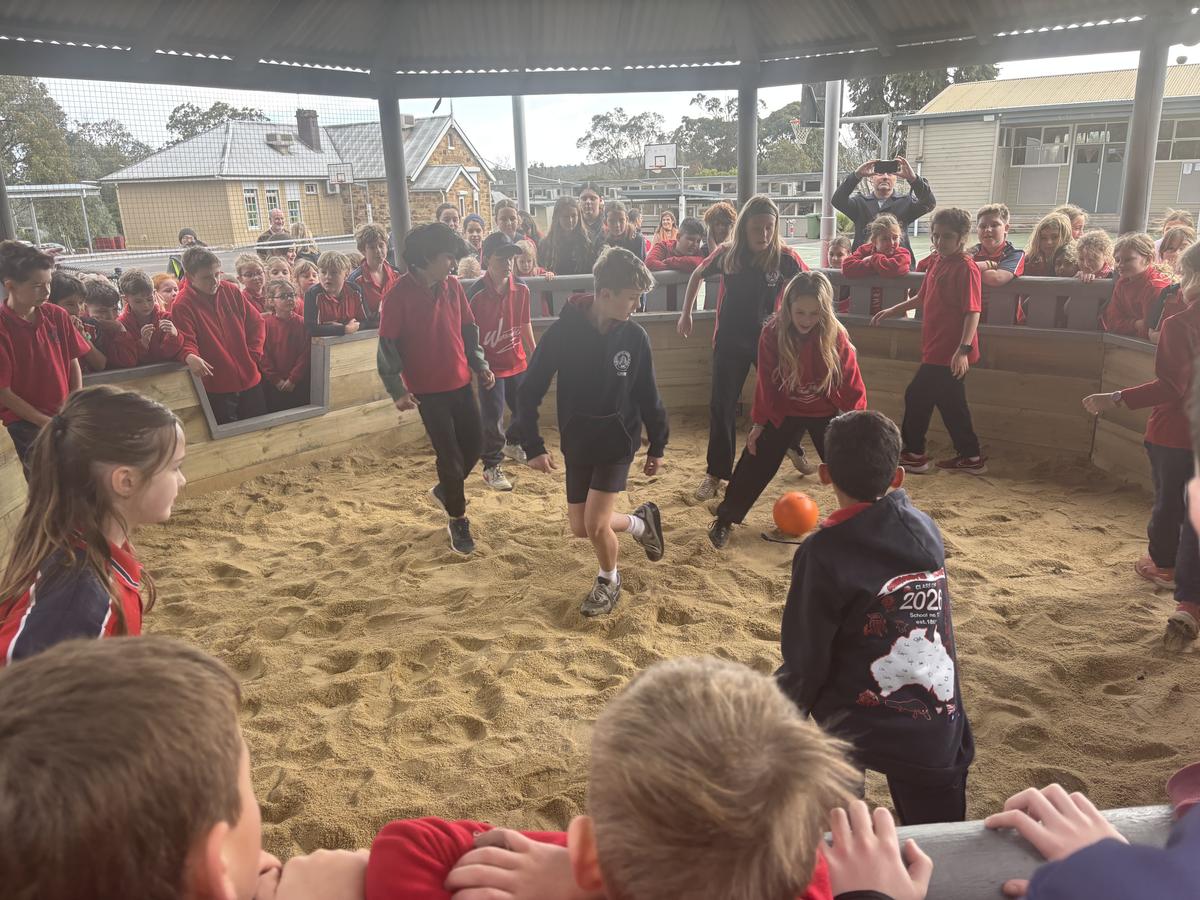
Our Gaga Pit is open for business, and it has been a huge hit with students taking to the game like ducks to water. All age groups and friendship groups are engaging in this game and we have heard from students themselves that it is their favourite part of school at the moment. After school care students are also enjoying the pit and Fran reports it is used nonstop. Thank you to the families who contributed their time and skills to make the Gaga Pit.
One of the most rewarding aspects of our new Gaga Pit is the story behind how it came to be. The project is a wonderful example of student voice leading to meaningful action and reflects our commitment to empowering students as genuine leaders within our school community.
Last year, Claire Lamert introduced the idea of a school Snack Bar, and through the dedication of our Junior School Council (JSC) and the generous support of parent volunteers, it has grown into a highly successful and sustainable initiative. Not only has the Snack Bar become a popular part of school life, but it has also raised funds that students have been able to reinvest back into our school.
When it came time to decide how these funds should be used, the Junior School Council consulted with their peers, and the Gaga Pit emerged as the clear priority. Our School Council proudly endorsed this decision, ensuring that the voices of our students translated into real outcomes for our community.
The Gaga Pit is more than just a new playground feature. It is a reminder that when students are given authentic opportunities to contribute, their ideas and agency to action them, they can make a genuine difference. It demonstrates that our Junior School Council is not simply a representative group, but an active body of young leaders whose opinions are valued and whose decisions help shape the future of Warrandyte Primary School.
Curriculum Day
This week all our teachers and education support staff attended a combined professional learning day to focus on developing our skills and knowledge of the science of learning and explicit teaching. Whilst the science of learning is applied across all areas of the curriculum, this day had a focus on Literacy and how the science of reading can be applied in primary classrooms. WPS joined forces with Park Orchards Primary School, Anderson's Creek Primary School and Templestowe Valley Primary School to be able to pool our limited cash flow resources to bring a big name in the industry to deliver Professional Learning. Education consultant and expert, Philiip Coloca, spent most of the day at the Manningham Function Centre consolidating teachers and ES staff knowledge on The Science of Learning and Reading to inform effective literacy instruction. He articulated the framework for effective comprehension instruction that extends beyond word recognition.
The simple model of memory is where we began when looking at all the research behind how the transformation of knowledge from the working memory into the long-term memory is the only way learning has happened. All learning in mediated through working memory (Cognitive Load Theory - Sweller). For learning to take place, it must be encoded into the long-term memory. Knowledge without effortful retrieval will be forgotten over time, which is why during our lessons the retrieval of information and skills via multiple exposures is so important. It is also why simply engaging in a task or completing a task does not necessarily mean learning has taken place. Rereading decodable readers multiple times is an essential part of learning code in reading. Once stored in the long-term memory, thinking, reasoning and problem solving can be applied. This is also something we must consider for student who have processing issues and require additional support and time for this process to be undertaken.

We explored Scarborough's Reading Rope and how skilled reading develops through two interconnected strands: language comprehension and word recognition. Much of the learning validated the work already taking place at Warrandyte Primary School. Our implementation of Little Learners Love Literacy continues to align with the evidence supporting explicit, systematic literacy instruction.
We also explored the important role of reading fluency in developing strong readers. Research shows that fluent readers recognise words accurately, at an appropriate pace and with expression, enabling them to devote more of their thinking to understanding the meaning of a text. This is one reason students are often encouraged to reread texts that may seem easy. Repeated reading helps develop automatic word recognition and fluency, building the mastery and confidence needed to tackle increasingly complex texts.
Book Week Parade - Monday 24th August at 9:15am
Of course, all of the above information is about the science of reading. We also want to develop a deep love of reading in our students. They should still be exposed to stories, books and being able to lose themselves in reading or listening to a text of their choice for pleasure.
That is part of the basis of our Book Week Parade, which is to celebrate as a learning community the love of books. Our Book Week parade will take place on Monday 24th August at 9:15am. We do this every year and love the fun and excitement it brings on the day.
For our new families, we ask that our students come dressed in one of their favourite literary characters and parade in year levels around with the whole school. There are book prizes for each year level. The staff get involved too and it is now one of my most favourite events on the school calendar. My costume arrived in the mail this week and is ready to go! All parents are welcome to be a part of this parade. We look forward to seeing what the students come dressed in. They are always very creative.
Warrandyte Primary School Uniform Review – Survey Summary
Thank you to those who completed the uniform survey. We had a very strong participation rate with a total of 82 families participating, providing School Council with valuable feedback to inform the review of the Student Dress Code Policy. The strong response represents families from across all year levels and provides confidence that the results reflect a broad cross-section of our school community.
Overall, the survey results were overwhelmingly positive. Approximately 70% of families indicated they were either satisfied or very satisfied with the current school uniform, while only around 8% reported being dissatisfied. Similarly, over 90% of respondents felt the school's expectations regarding wearing the uniform were reasonable or very reasonable, with only around 1% considering them unreasonable.
Families identified comfort (around 70%) and practicality for learning and play (around 65%) as the most valued aspects of the uniform, followed by school identity and pride (approximately 50%). Around 45% also valued the durability of the uniform and 40% its ease of purchase.
Affordability was viewed positively, with almost half of respondents indicating the uniform is affordable and a further 40% responding that it is mostly affordable. Only around 8% believed the uniform was not affordable. Where improvements were suggested, families most commonly supported keeping uniform changes to a minimum (around 58%), increasing access to second-hand uniforms (around 50%), and allowing generic uniform items where appropriate (around 48%) to help reduce costs.
The survey also confirmed that the current uniform meets families' practical needs. Approximately 92% of respondents indicated the uniform is comfortable and practical for learning, outdoor play and all weather conditions (around 70% Yes and 22% Mostly). Satisfaction with the quality and availability of uniform items was similarly high, with around 75% of families reporting they were satisfied or very satisfied.
When asked about the top 3 purposes of having a school uniform, the strongest themes were:
- Promoting equality (approximately 66%)
- Reducing peer pressure (approximately 66%)
- Building school pride (approximately 55%)
- Providing appropriate clothing for school activities (approximately 47%)
Improving student safety through easy identification (approximately 45%).
The written comments generally reinforced the findings of the survey. While a number of respondents suggested minor improvements, such as additional clothing options, continued access to second-hand uniforms, and maintaining affordability, the most consistent opinion voiced was a desire for greater consistency in the implementation of the existing policy.
Many families commented that the current uniform is appropriate but would like to see expectations enforced more consistently and fairly across all year levels. Families also acknowledged that flexibility should continue to be provided where there are genuine financial, cultural or individual student circumstances, while maintaining high expectations so that the uniform continues to promote school pride, belonging and equality. At our next School Council meeting we will engage in discussion based on this data to assist the members to make a decision on the policy and its implementation.
Athletics Day Tomorrow
Tomorrow is Athletics Day and the weather forecast seems to suggest there is no rain. Of course, we are talking about Melbourne so please ensure your child has a raincoat and warm clothes as it will be cold.
For our Prep families who have not particpated in the Athletics Day, it is a great experience for our junior school. They partipcate in multiaged tabloid games that are largely run by parent volunteers and junior teachers. All parents and grandparents are welcome to come along and watch. We don't have Sally this year, but I she has been working behind the scenes to assist in the coordination and organsation of the day, for which we are very grateful for. Mel, who has been taking PE in Sally's absence, will be there.
Hope you are having a great weekend.
Take care,
Nieta