Mathematics











 St. Patrick's School

Maths in Action: Year 3 Edition
Welcome to this week’s edition of Maths in Action! After stepping away from our regular classroom showcases last week to share a family fluency game, we are excited to come right back into the classroom—throwing open the doors to Year 3 to explore how our students are diving into the unpredictable world of Chance and Data!
The Year 3 Focus: Predictions vs. Reality in Chance & Data!
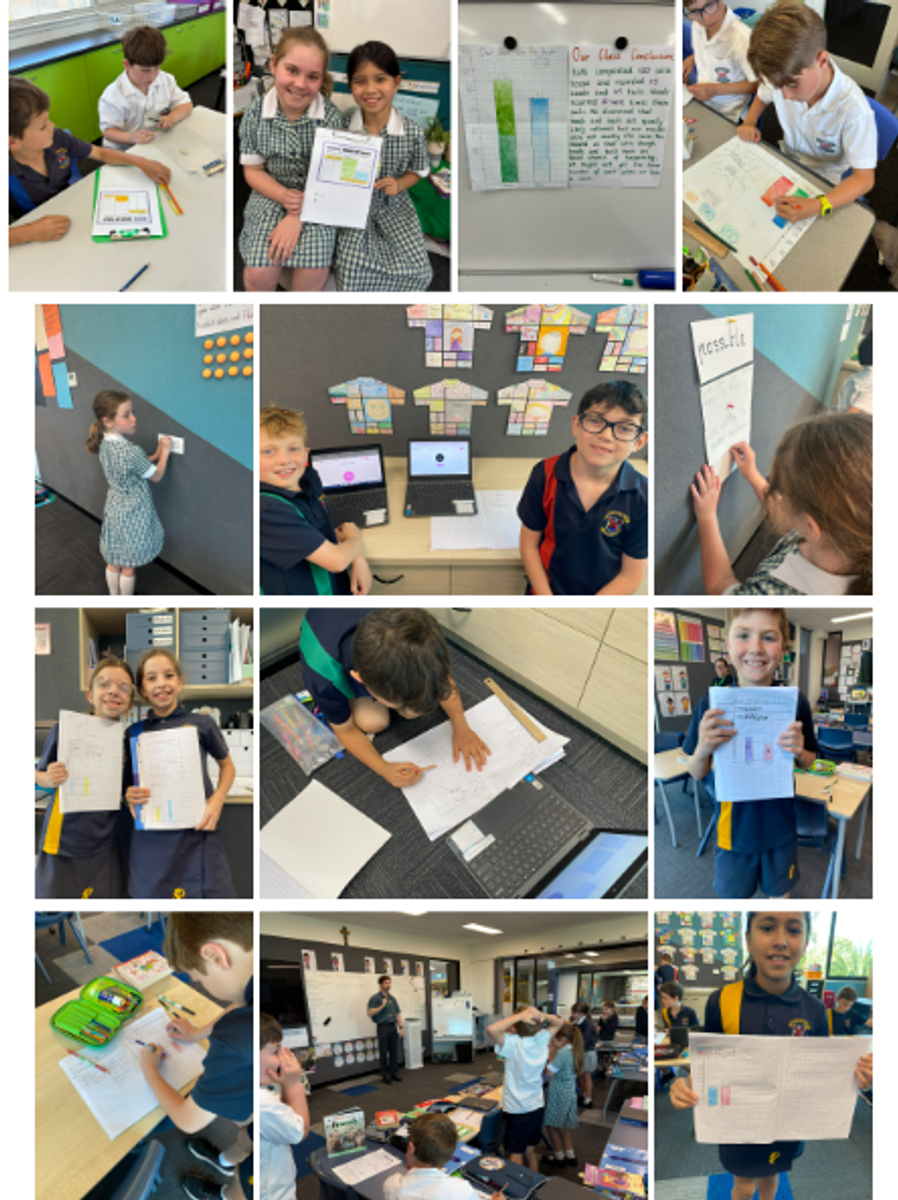
This term, our Year 3 students have stepped into the role of mathematical researchers—learning the formal language of chance, making predictions, running hands-on experiments, and organizing their findings visually.
Why Probability & Data Analysis Matter Learning probability allows children to move past intuitive guesses toward logical mathematical reasoning. A crucial milestone in primary mathematics is discovering that mathematical predictions don't always match real-world experimental results! By making predictions, running repeated trials, recording data, and building column graphs to compare outcomes, students learn how data can be analyzed and communicated clearly. This directly aligns with the Victorian Curriculum Year 3 statistics and probability standards.
What it Looks Like (Hands-on in the Classroom)
Our Year 3 classrooms were buzzing with curiosity, active experimentation, and debate as students tackled their investigations:
- Exploring the Language of Chance: Students practiced evaluating daily events using precise probability vocabulary—ranging from impossible and unlikely to equal chance, likely, and certain.
- Predicting & Experimenting: Students formulated initial hypotheses before conducting hands-on trials (such as spinning wheel games, dice rolls, and bag pulls). They systematically recorded their raw results using tallies and frequency tables.
- Graphing & Comparing: Using their experimental data, students constructed clear column graphs to represent their findings visually.
- Analyzing the Results:
- The most exciting learning happened when students compared their original predictions with their completed graphs! Students engaged in rich discussions about why short-term experimental results often surprise us, discovering firsthand how chance operates in the real world.
Combining hands-on trials with visual graph construction allowed our Year 3s to strengthen both their analytical skills and their mathematical reasoning!
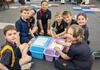
(Check out the wonderful photos below of our Year 3 researchers recording experimental data and building their column graphs!)
Expert Insights: Fostering a Positive "Maths Mindset"
As our Year 3 teachers embrace these active, inquiry-based approaches, here is a simple strategy you can use at home to explore probability and data together:
Weekly Mindset Strategy: Embrace Uncertainty as Curiosity
In mathematics, realizing that an initial prediction was wrong isn't a mistake—it is valuable data! Helping children embrace surprise results builds strong scientific curiosity and resilience.
- Talk Chance in Daily Life: Use probability language during everyday routines. Ask: "How likely is it that it will rain today? Is it impossible, likely, or certain?"
- Play Simple Probability Games: When playing board games with dice or spinners, ask your child to make a prediction before rolling: "Which number do you think is most likely to come up? Let's keep track for 10 rolls to see what actually happens!"
- Reflect on Surprises: If a game outcome surprises them, prompt rich reasoning by asking: "Why do you think our experimental results turned out differently from what we predicted?"
Viewing unexpected results as exciting discoveries helps children see maths as an active, engaging exploration.
As always, please reach out if you have any feedback or something you would like to see in the maths section of the newsletter (cspence@spmentone.catholic.edu.au)
Charlotte Spence
Mathematics Leader