Foot Steps of St Paul: Pilgrimage Reflection











 Mother Teresa Catholic Primary School
Ancient Corinth
Ancient Corinth in it's day would have been a bustling, cosmopolitan metropolis situated on a narrow isthmus connecting mainland, placing it at the heart of Mediterranean trade routes. Rebuilt as a Roman colony by Julius Caesar in 44 BCE, the city quickly grew into the political and commercial capital renowned for its wealth, bustling ports and vibrant diversity. Its strategic location attracted sailors, merchants, artisans, and travellers from across the Roman Empire, creating a dynamic mix of cultures, religions and philosophical ideas.
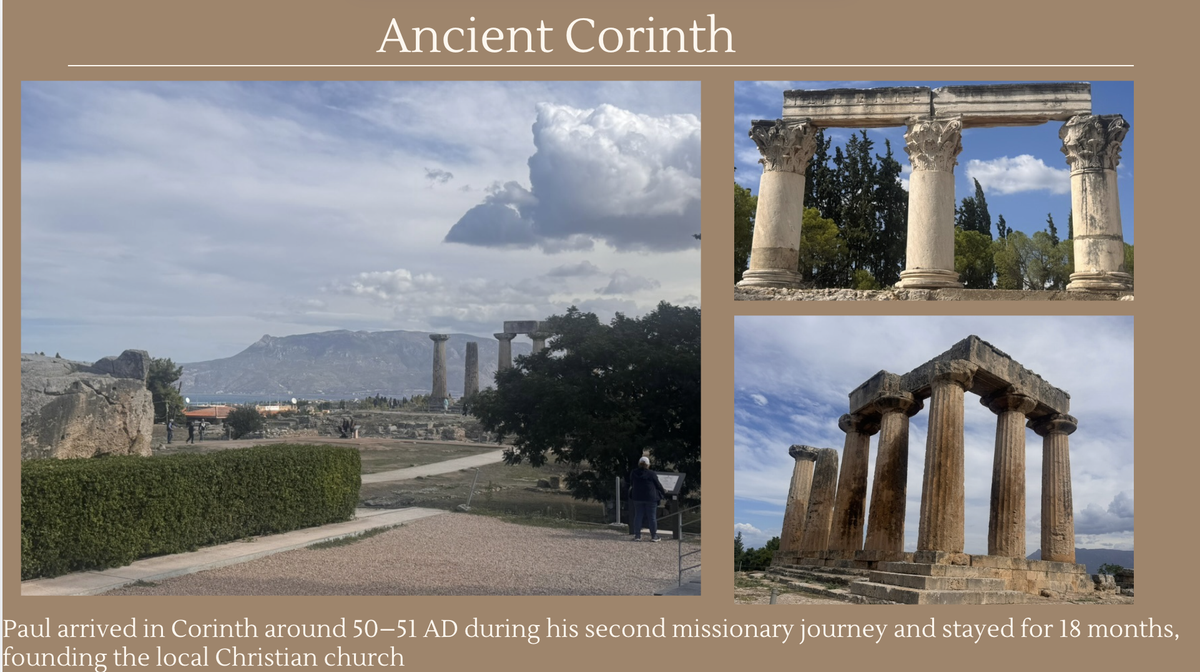
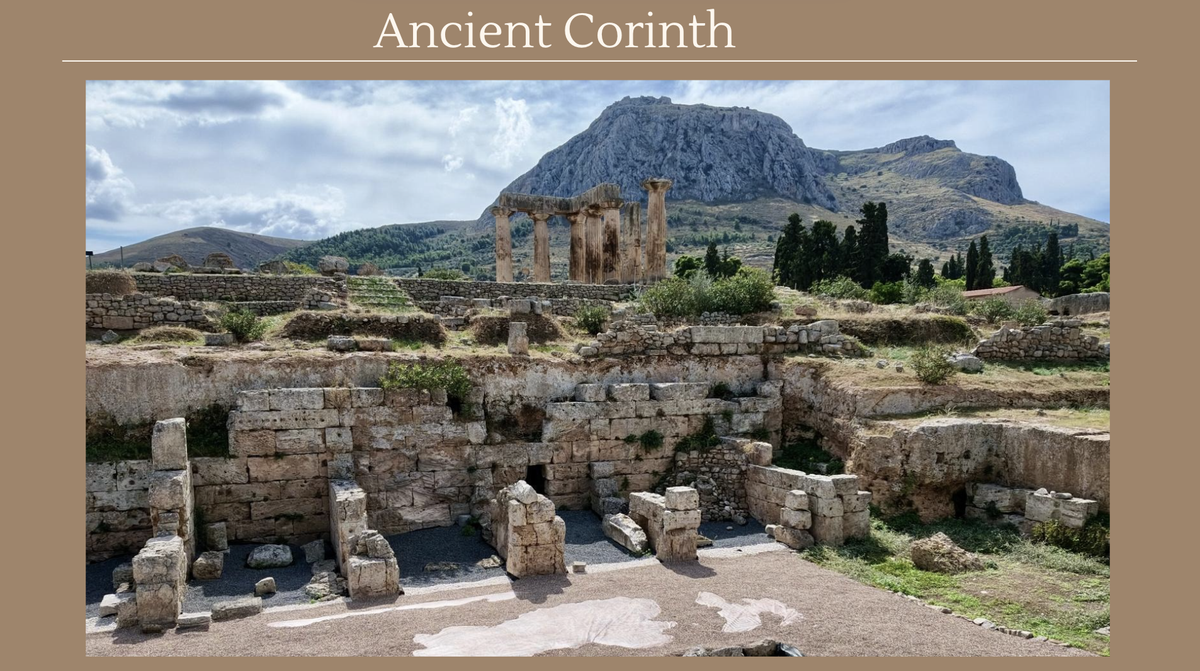
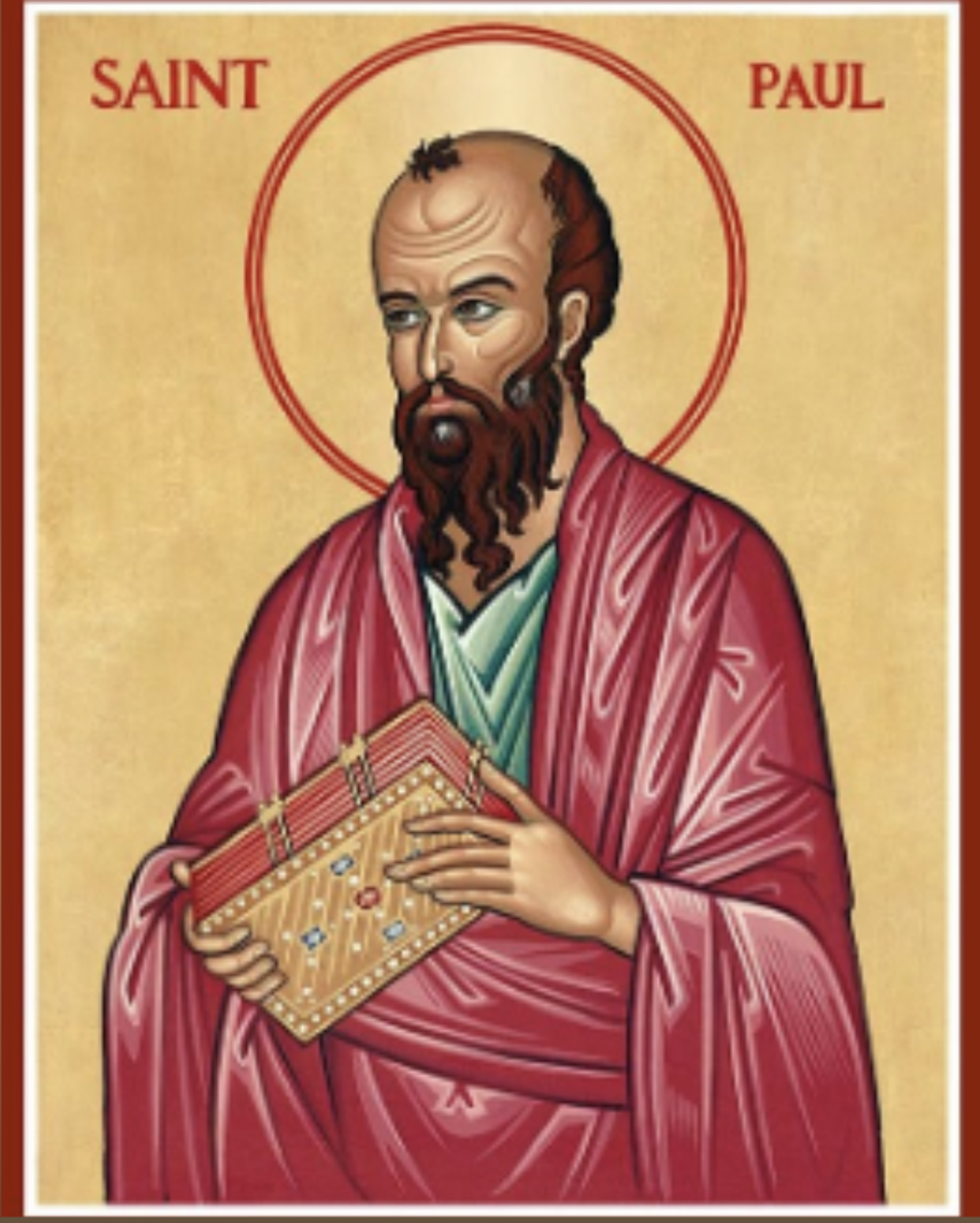
For the Apostle Paul, Corinth served as a crucial hub for his missionary work in Europe, where he spent roughly 18 months establishing and nurturing one of the earliest Christian communities. The city's open trade networks provided an ideal platform for spreading the Gospel, allowing Paul to work alongside fellow tentmakers Aquila and Priscilla while preaching in both the local synagogue and the public marketplace (the agora). However, Corinth’s environment posed constant challenges for the young Christian church, leading to internal fighting, ethical dilemmas, and theological confusion.
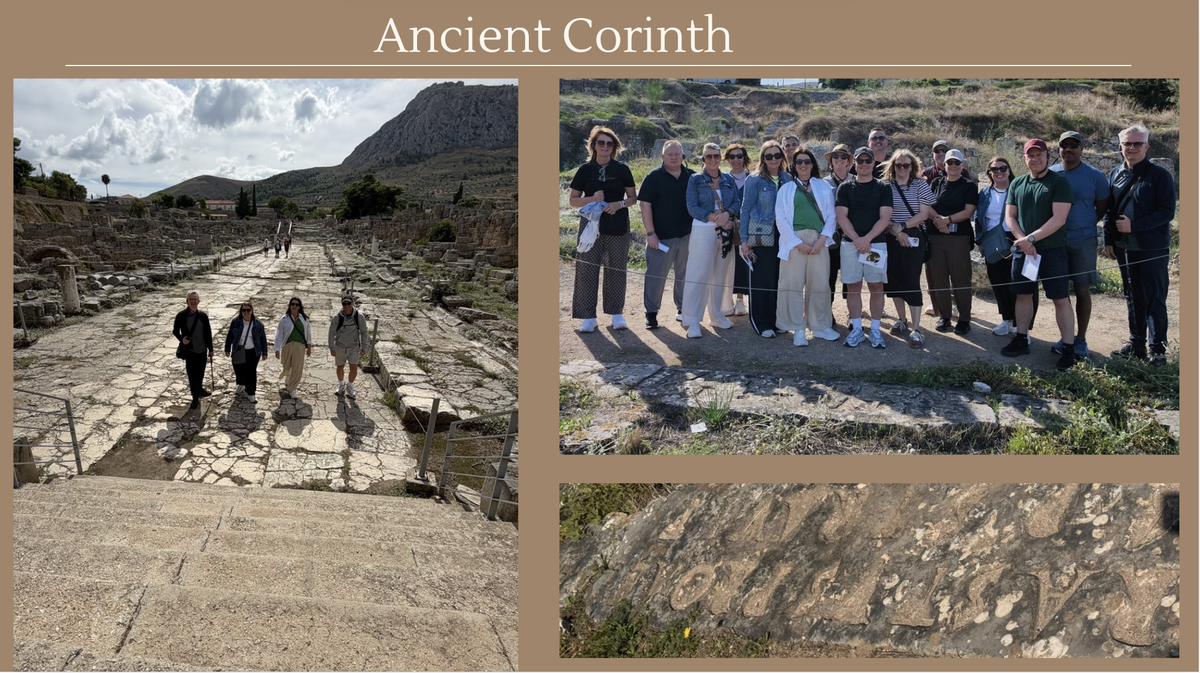
1 & 2 Corinthians

Paul wrote letters to the community in Corinth (1 Corinthians & 2 Corinthians) which addressed these moral challenges & social divisions, and spiritual gifts. These days we often use the verses in Corinthians 1 as a reference for romantic love as this is the most uses verse in Christian weddings. in reality, Paul wrote this letter as more of a reminder of his love (and ultimately Christ’s love) for this early Christian community of Corinth. A reminder that they needed to stop fighting and come together.
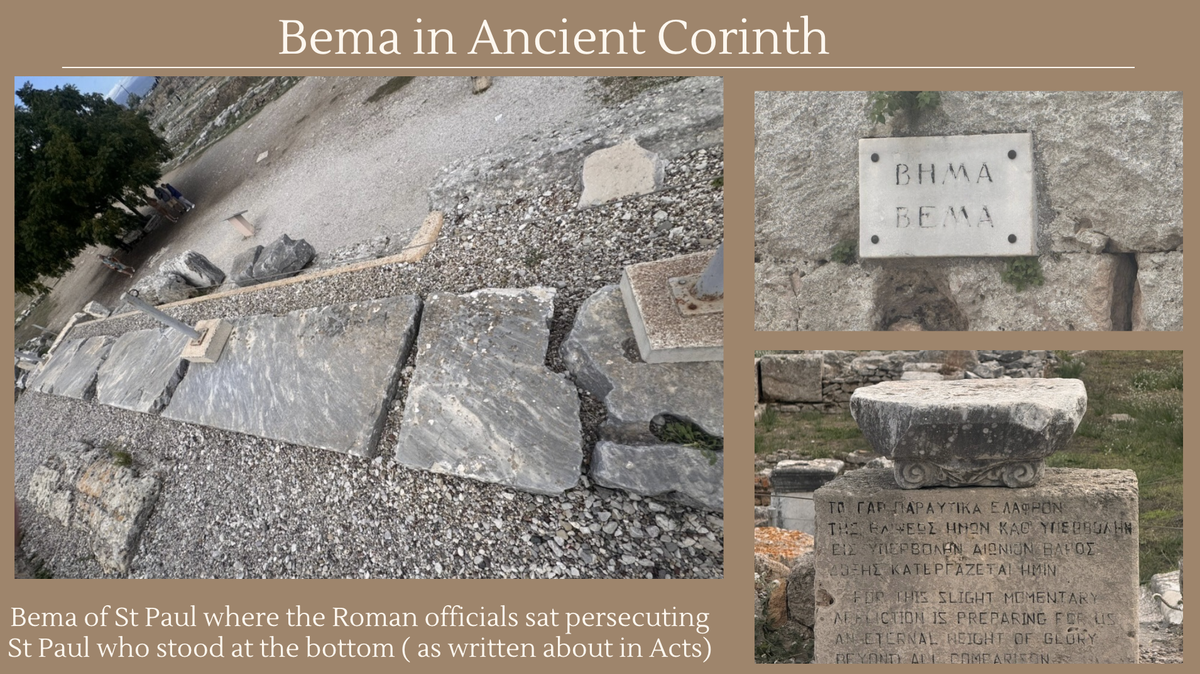
The Bema of St Paul
Standing before the ancient Bema of Corinth, I was struck by an overwhelming sense of awe while standing in the very spot where Saint Paul stood on trial before the Roman proconsul Lucius Junius Gallio (around 51–52 CE). Looking upon the weathered marble platform in the heart of the ancient agora, it is easy to imagine the tension as described in Acts 18:12–17, when local opponents dragged the apostle forward to accuse him of teaching illegal worship. Gallio’s swift dismissal of those charges from this exact seat not only granted St Paul his freedom to continue preaching across the Empire, but also established a crucial anchor point in early Christian history. Today, the visible stone remains of the Bema stand as one of the most prominent archaeological features in Ancient Corinth - a powerful link between scripture, Roman law, and the enduring legacy of Paul's mission.