IN THE CLASSROOM
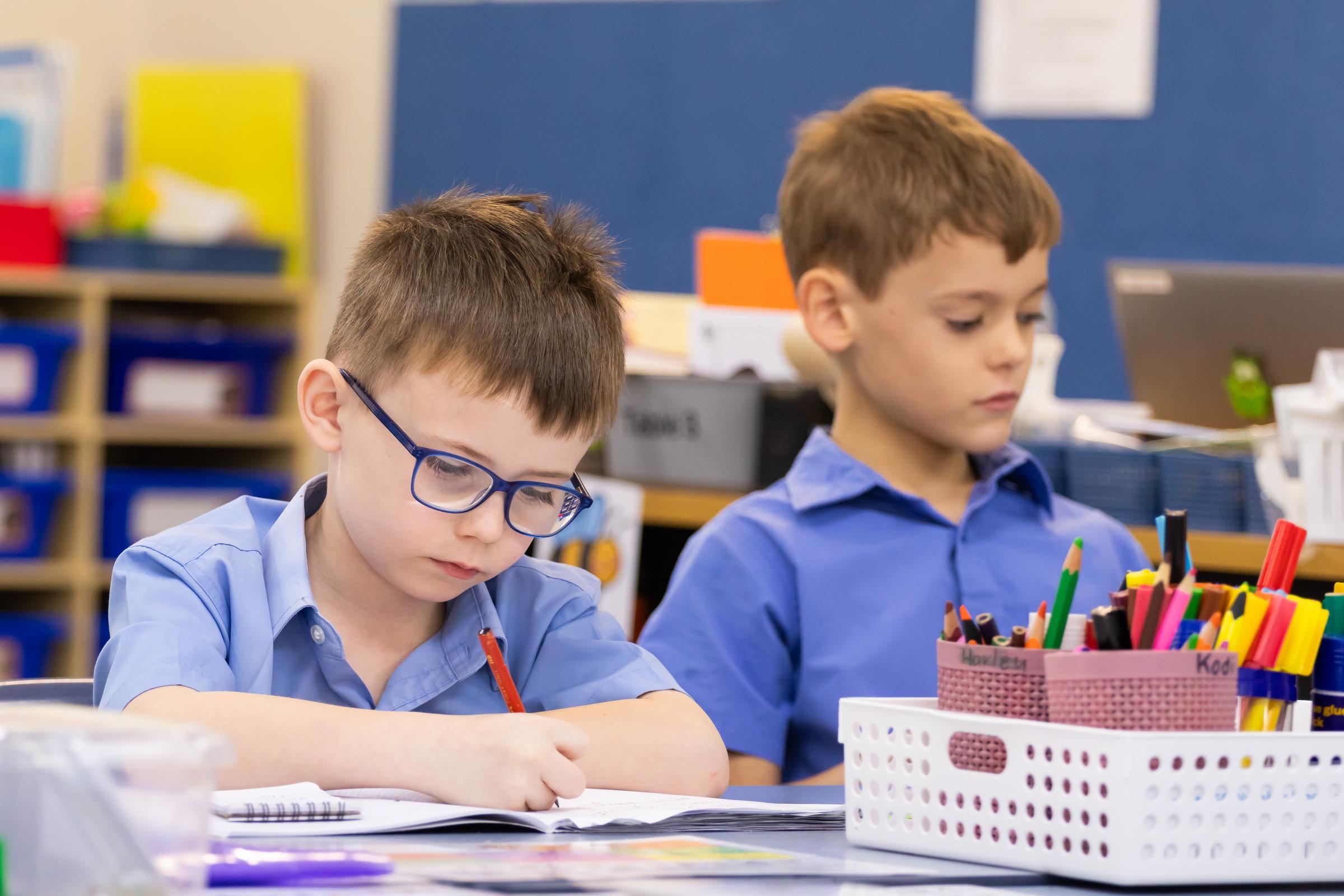
Classroom Spotlight: The Third Teacher
If you have popped into your child’s classroom recently, you might have noticed the Learning Walls— which are dynamic, living displays created with students as they learn.
At St. Joseph's, we talk about three main influences in a child's learning journey:
- The Parent (the child’s first teacher)
- The Educator (the child’s second teacher)
The Learning Environment (what we call The Third Teacher)
When designed intentionally, the physical space around students actively guides, supports, and sparks their thinking.
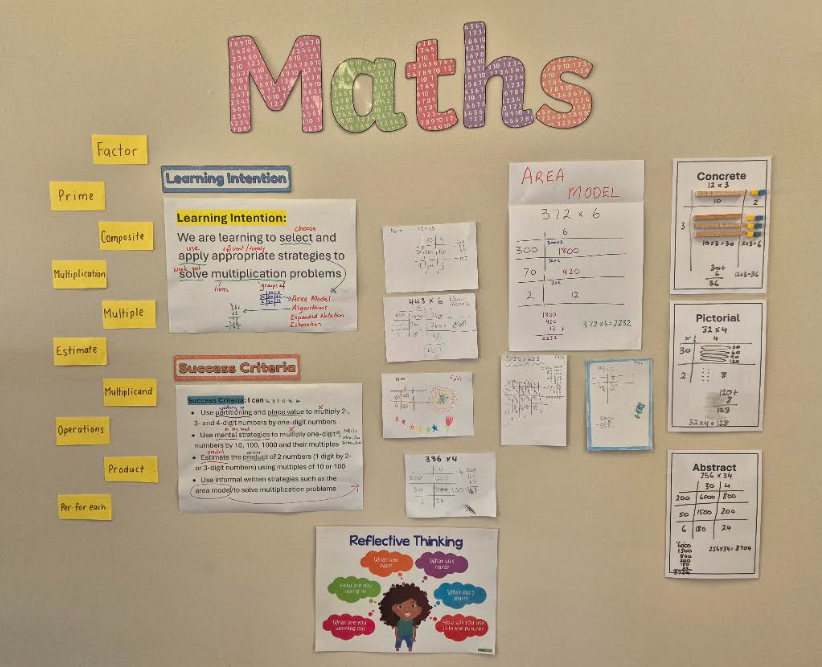
What makes a Learning Wall so special?
Think of a Learning Wall as a giant map of a unit's journey. Rather than showing up fully formed on day one, it starts blank and grows step-by-step as students explore a topic.
Here is what you will typically find on one:
- Learning Intentions (The "What" and "Why"): This tells students what they are learning and why it matters. Instead of just saying "Today we are writing a paragraph," a Learning Intention frames the bigger goal: "We are learning to use persuasive language so we can convince an audience."
- Success Criteria (The "How"): This is the step-by-step checklist students use to know if they’ve hit the goal. It answers the question: "How do I know I've done a good job?"
- Vocabulary & Anchor Charts: Key terms, math strategies, or writing models created during class discussions that students can refer back to independently.
- Student Work in Progress: Drafts, brainstorming notes, and reflections—showing that learning is a process, not just a final product.
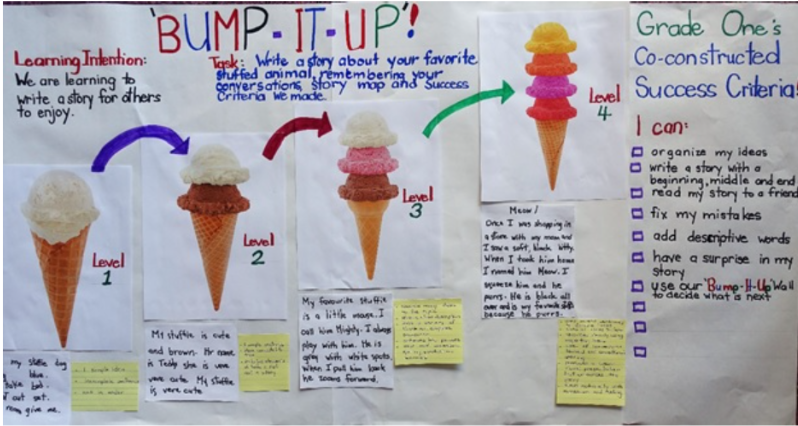
- "Bump It Up" Examples: Visual guides that show students what a basic, good, or great piece of work looks like so they know exactly how to improve their own work.
Why it works: When students get stuck during an activity, their first instinct doesn't have to be raising a hand and waiting for the teacher. They can look up at the Learning Wall to find a clue, check a spelling rule, or review a step-by-step math strategy. It builds independence, confidence, and problem-solving skills.