Maths Matters
All things Mathematics...





 Richmond West Primary School
Maths Matters
All things Mathematics...
Have you ever wondered how much a school bag weighs, or whether bigger objects are always heavier than smaller ones? These everyday questions are wonderful opportunities to explore Mathematics!
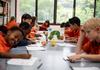
Measurement is one of the six strands of the Victorian Mathematics Curriculum and is closely connected to developing students’ number sense, fluency and problem-solving skills. This term, students from Foundation to Grade 6 have been busy exploring mass through a variety of fun, hands-on activities. From hefting objects to compare their mass to using balance scales and mechanical scales to measure and investigate, students have been learning to estimate, compare and measure mass in meaningful ways. Along the way, they have also been applying their number knowledge, practising calculation strategies and developing their mathematical reasoning to solve real-world problems.
Bringing Maths into Everyday Life
Learning about mass doesn't stop in the classroom! There are many simple and fun ways to help children develop their number sense and mathematical fluency through everyday activities at home and in the community. Here are some ideas you might like to try with your child:
Making Maths Fun and Meaningful
Maths learning can be fun, engaging and full of discovery! Whether children are exploring mathematical ideas through hands-on activities, solving problems or noticing numbers and patterns in everyday life, every experience is an opportunity to build curiosity and confidence. In future newsletters, I look forward to sharing more about the exciting Maths learning happening across our classrooms, along with practical ideas for how families can explore and enjoy Maths together at home. After all, Maths is everywhere!
Rita
Maths Curriculum Leader