Classroom Gallery

1/2 Newsletter
The Power of Persuasive Writing: Making Your Voice Heard
Have you ever wanted someone to see things your way? That's the magic of persuasive writing! The core purpose of persuasive writing is to convince the reader to agree with your point of view or to take a specific action. It's about building a strong argument using evidence and passion.
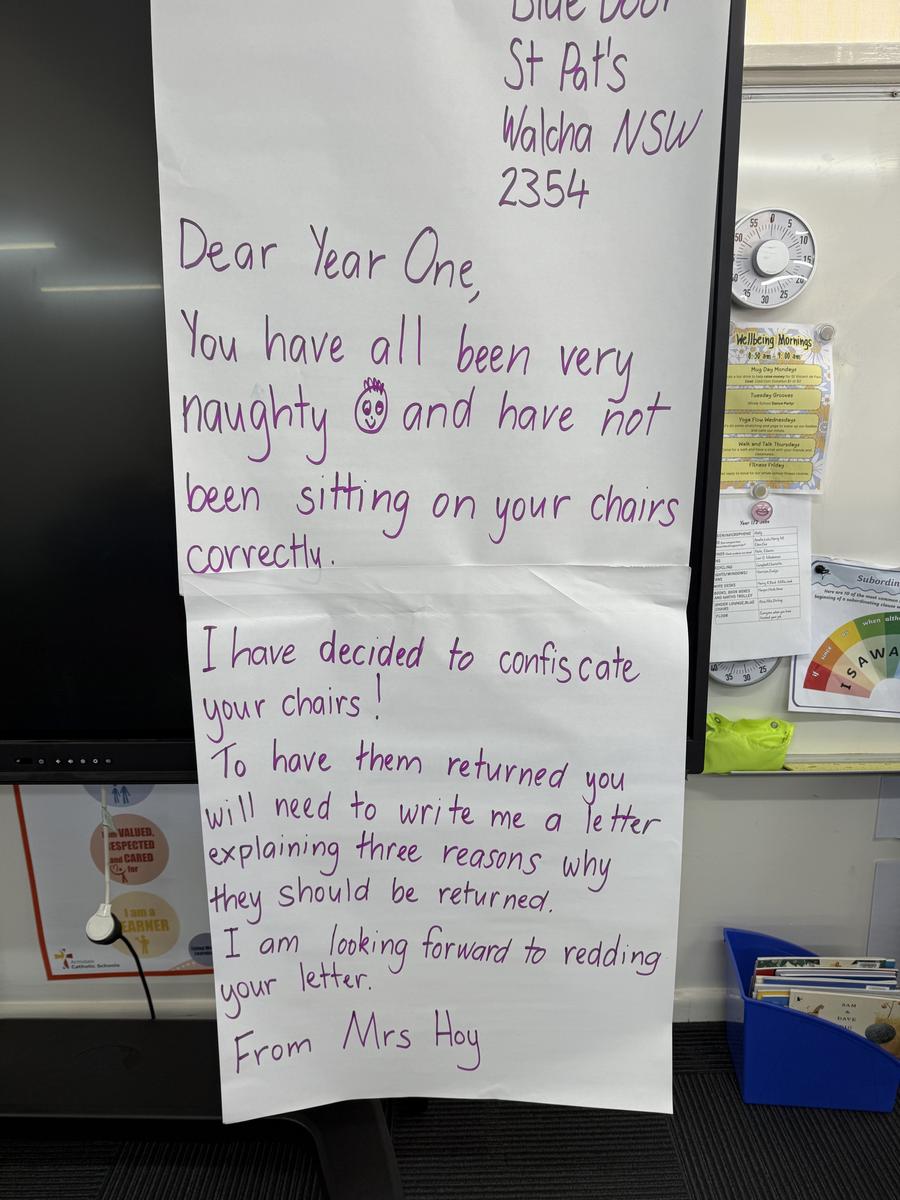
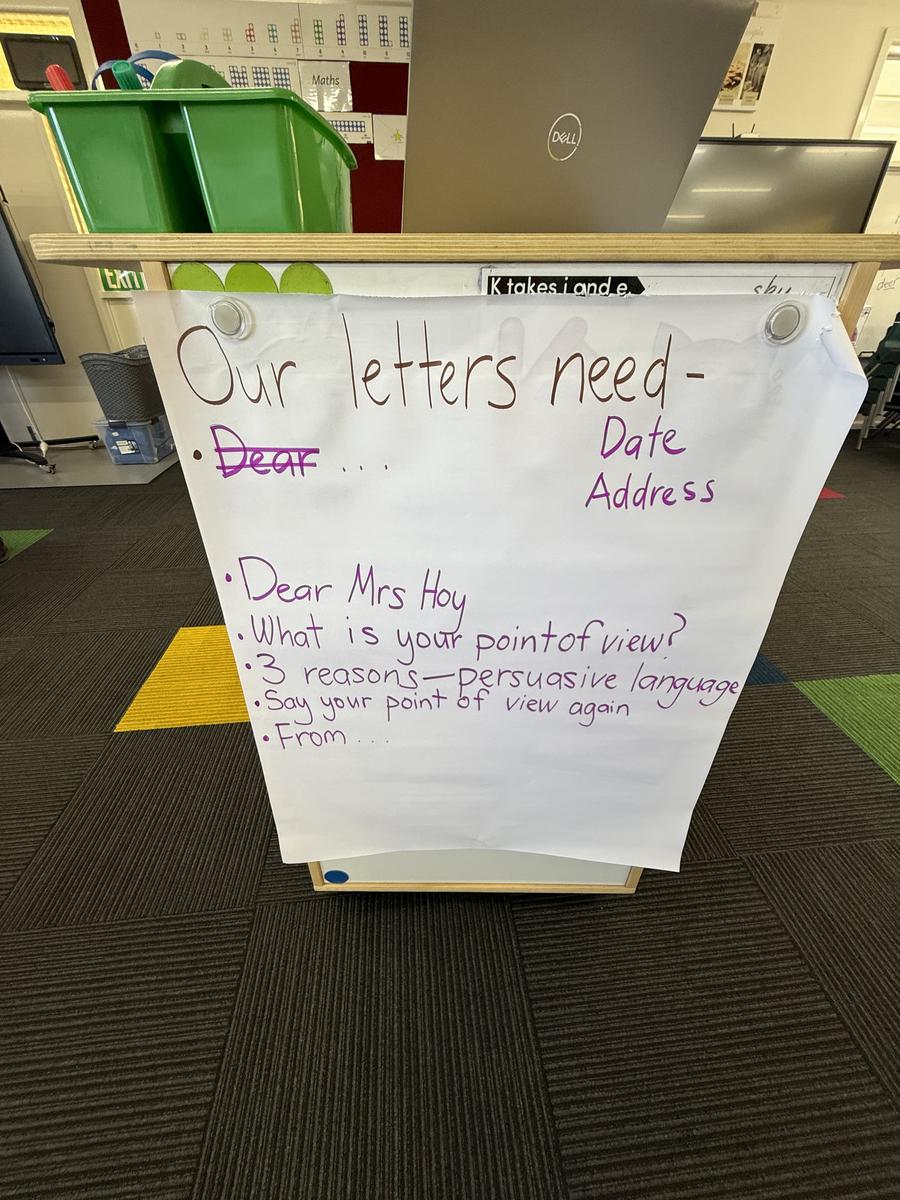
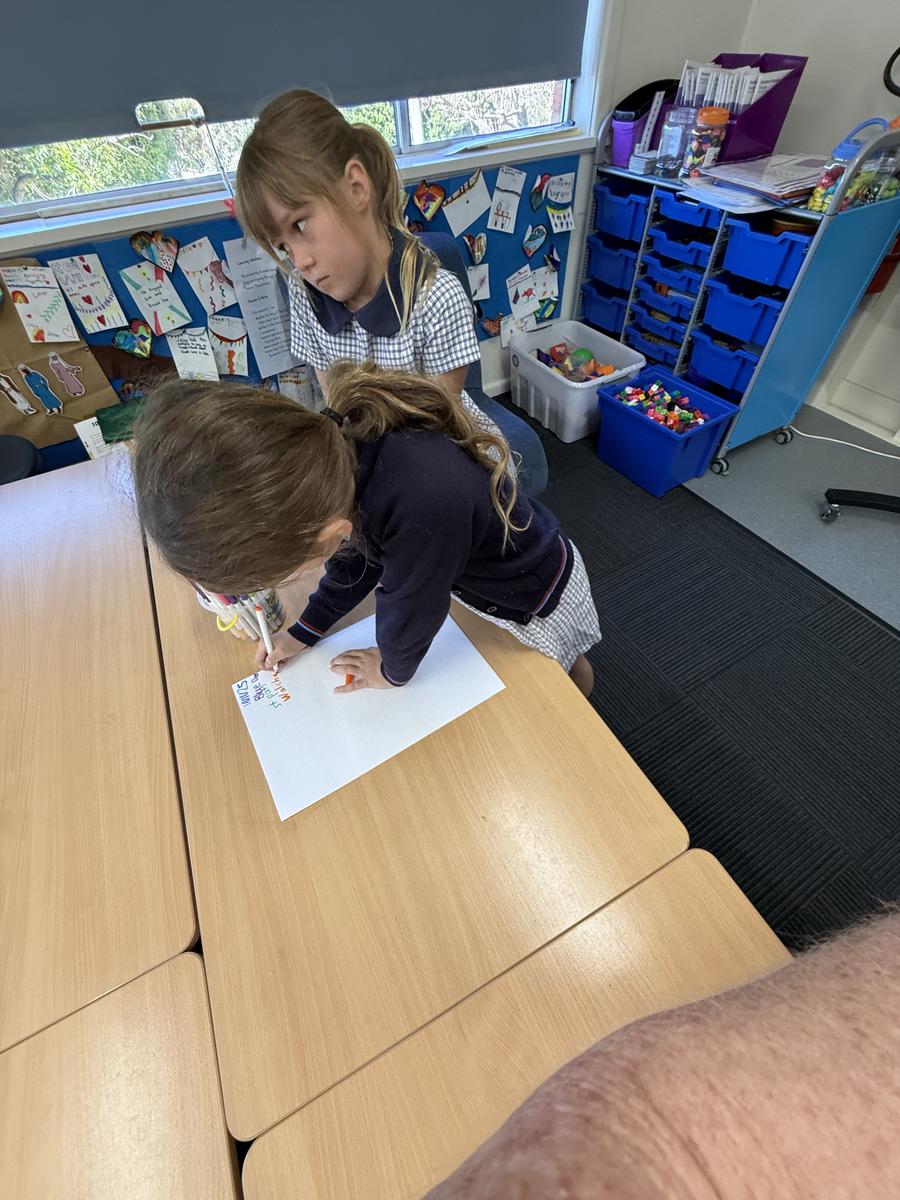
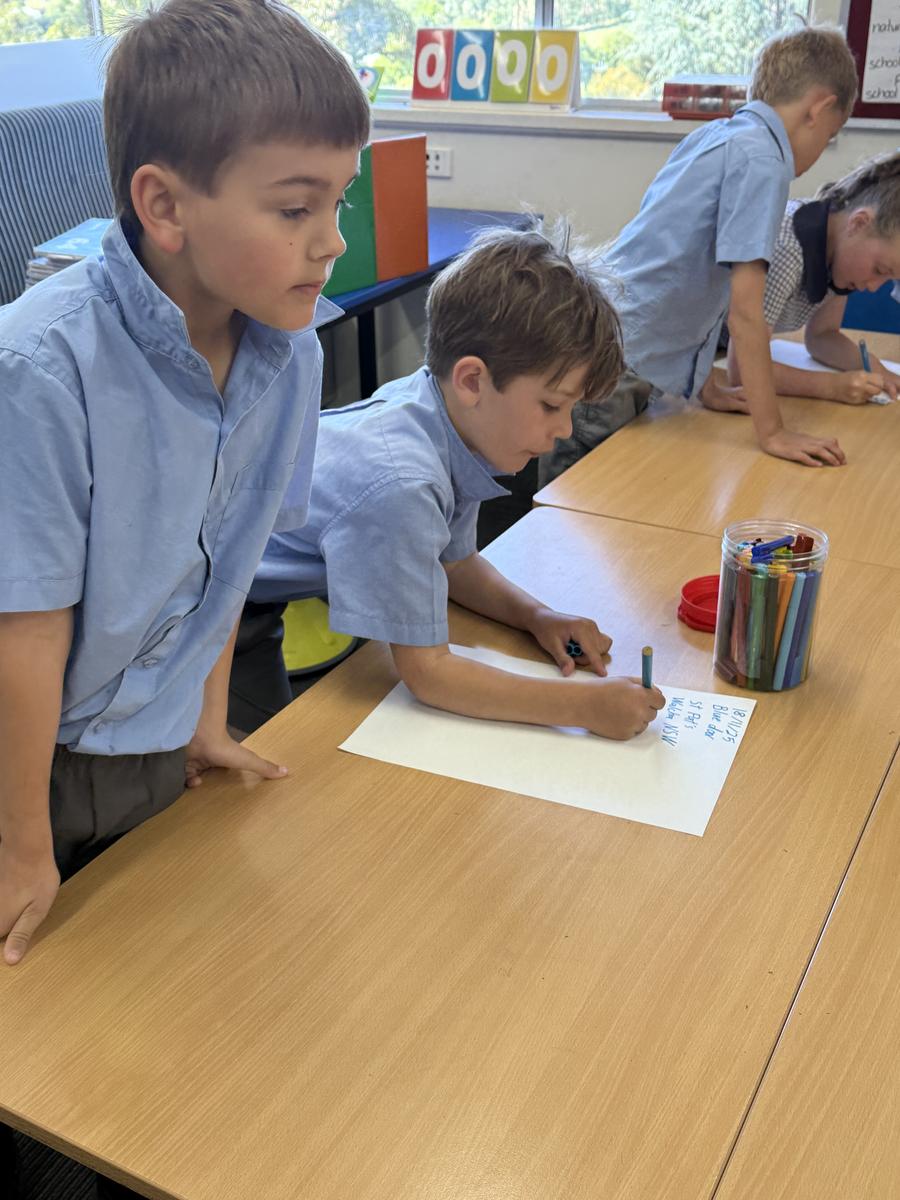
This week, our Year 1 students had a fantastic and highly engaging introduction to this vital skill. They received a mysterious letter from Mrs Hoy explaining that she had tied up all of their classroom chairs! The students were immediately motivated to respond.
The task required them to write a letter back to Mrs Hoy with one clear goal: to persuade her to return them.
To help them build a convincing case, the children learned the essential structure of a persuasive text:
- Statement of Opinion: Start with a clear and strong sentence stating what you believe (e.g., "The chairs must be returned immediately.").
- Three Reasons Why: Provide at least three separate, powerful reasons to support your opinion.
Re-iterate the Statement: Finish by restating your opinion in a new way to leave a lasting impression.
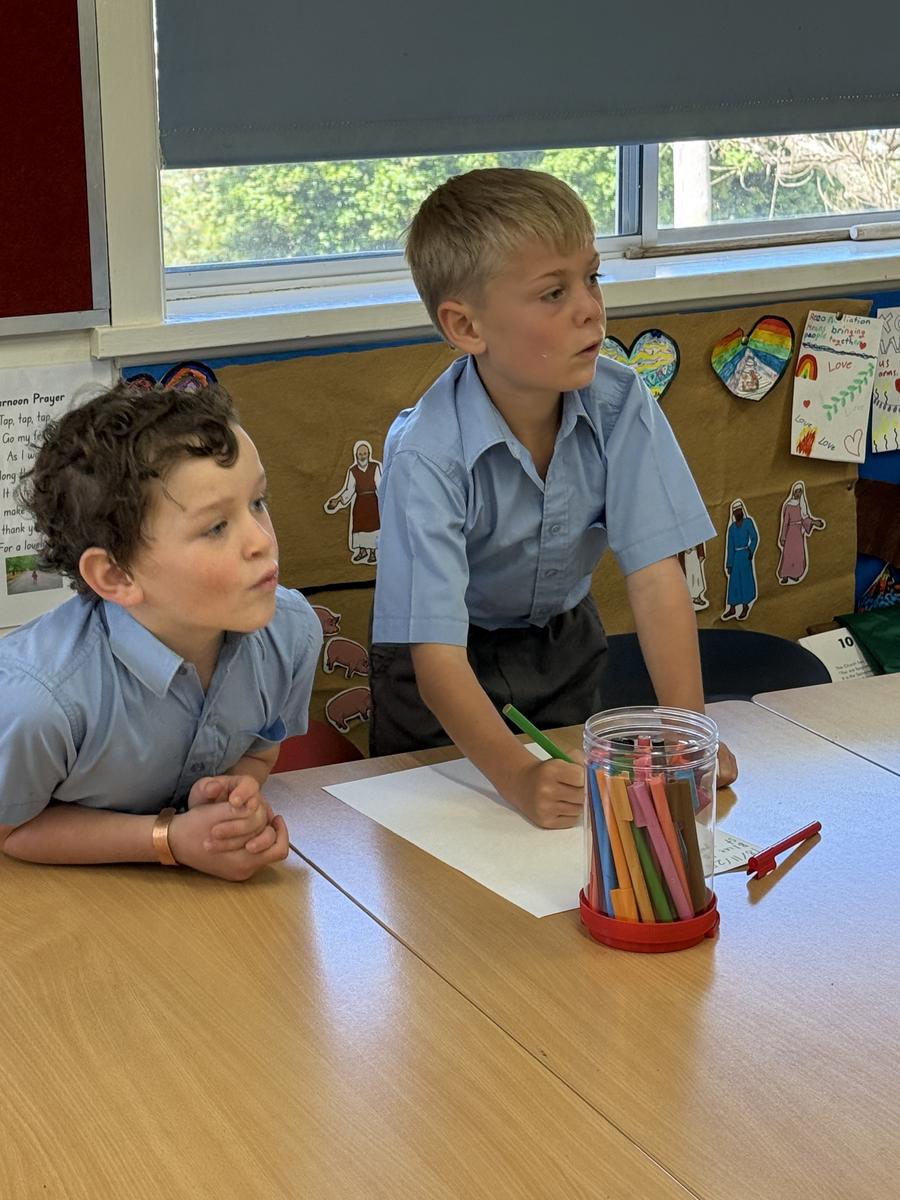
The children absolutely loved this task! They showed great creativity in coming up with reasons why sitting on the floor was unsuitable for learning, comfort, and even safety. It was wonderful to see them use language purposefully to achieve their desired outcome.
Persuasive writing is a crucial skill that empowers students to express their views clearly, logically, and effectively—whether they're arguing for their right to a chair or campaigning for a cause they believe in!



Mastering the World of 3D Shapes: Why Geometry Matters
Learning about three-dimensional (3D) shapes is much more than just memorizing names; it's a fundamental part of developing essential mathematical and spatial reasoning skills. Understanding geometry helps students make sense of the physical world around them, from the buildings they see to the packaging they handle every day.
Why is 3D Geometry Important?
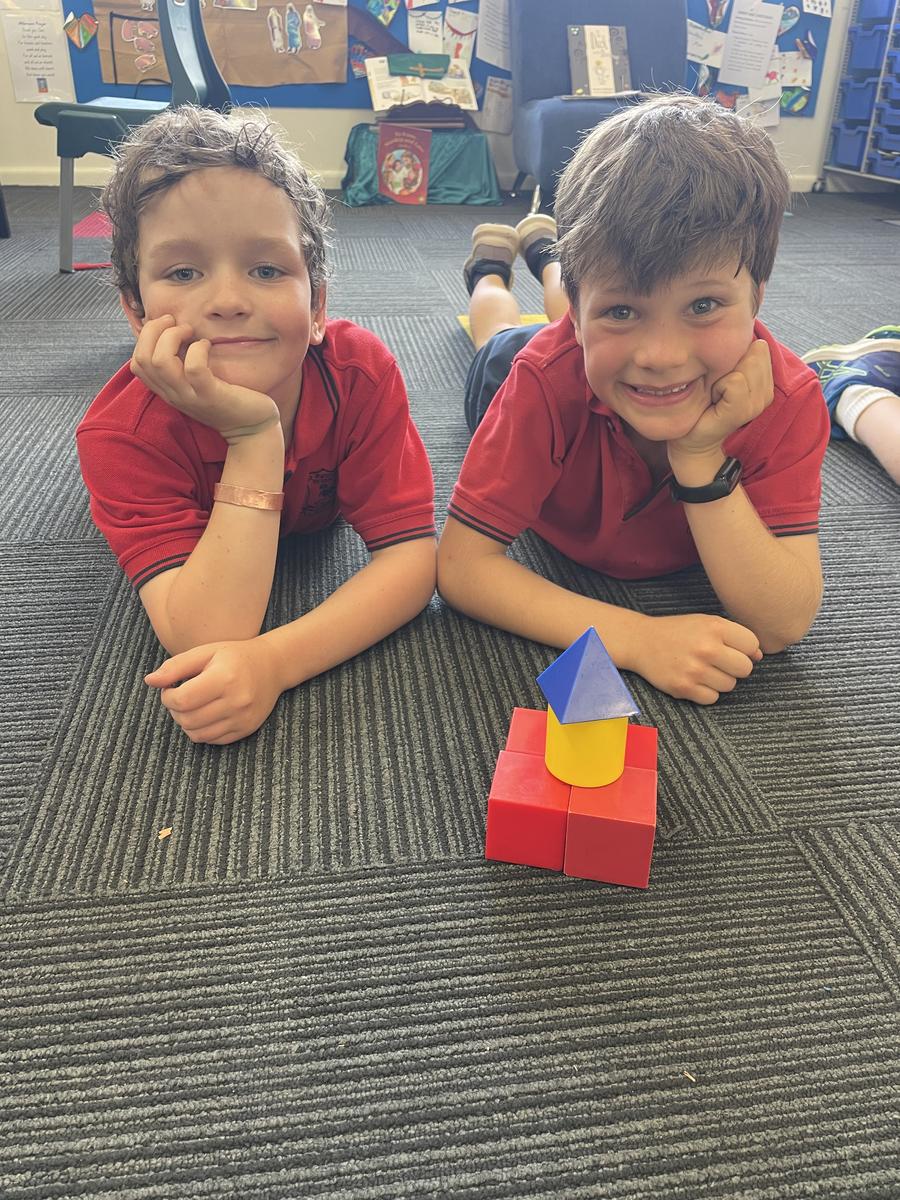
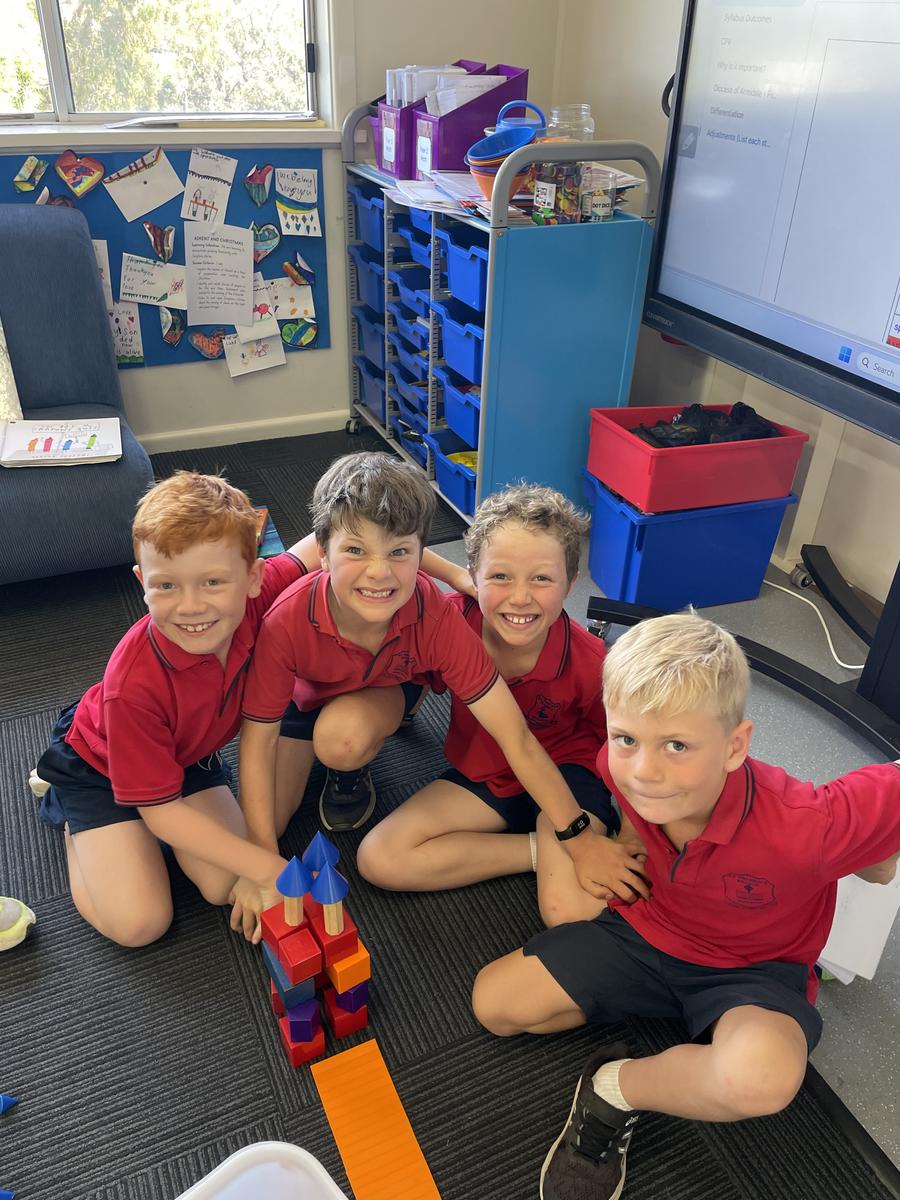
Developing and retaining mental images of objects is a critical skill for students. When children manipulate a variety of real 3D objects (like blocks, balls, and pyramids) and two-dimensional (2D) shapes (like squares and circles), it actively supports the development of relevant mathematical language and representation.
- Spatial Reasoning: Investigating activities like determining which 3D objects are stackable helps students understand the features of geometric objects, which is an early step in quantifying volume.
- Real-World Connection: Opportunities for these activities occur constantly—in the classroom, the playground, and outside the school—connecting abstract concepts to tangible experiences.
📏 Describing Dimensions: Length, Width, and Height
The terms used to describe the dimensions of 3D objects take different forms. While 'length,' 'width,' and 'height' are commonly used, the term 'depth' is sometimes used in place of height, particularly when referring to an internal dimension (like the depth of a pool).
In everyday use, the context guides our choice of terms:
- The 'length' of a piece of string.
- The 'width' of a doorway.
- The 'height' of a building.
- The 'depth' of a pool.
However, when describing an object that can easily change its orientation, such as a wooden block, the choice of labels is not fixed. What is described as the 'height' of the block will depend on how it is positioned. We introduce the terms 'length,' 'width,' and 'height' when students are engaged in using rectangular prisms (like shoeboxes or building bricks).
◻️ Key Geometric Terminology
In 3D geometry, precise language is used to describe the parts of a shape:
- Face: This term refers specifically to a flat surface with only straight edges, as found in prisms and pyramids.
- Example: A cube has six faces.
- Note: Curved surfaces (on spheres, cones, or cylinders) and flat surfaces with curved boundaries (the circular surfaces of cones/cylinders) are not classified as faces.
- Edge: An edge is the straight line interval formed where two faces of a 3D object meet.
Vertex (plural: Vertices): A vertex is the point where three or more faces of a 3D object meet, or where two straight sides of a 2D shape meet.
By learning these precise terms and exploring 3D shapes hands-on, students are building a strong foundation in spatial thinking and mathematical understanding that will benefit them across many subjects!