Teaching and Learning
Literacy and Numeracy Week
This week we are opening the doors to showcase our Literacy and Numeracy. Please check the schedule for Literacy and Numeracy Week (on Compass) and take the time to visit the rooms and sections and engage in the teaching and learning experiences offered.
A gala occasion and highlight for the week is the whole school assembly on Friday 7th September. (9.15-10.15am). Parents/carers and family members are very welcome to attend. There will be a bit of everything; dance, movement, drama, singing, film, a live band and performances all geared up to entertain, amuse and amaze audiences.
In this issue I have set the spotlight on some excellent professional practice. Enjoy finding out how we are leading the wider educational community in magical maths assessment, basic brain research, Career Education endeavours and fantastic Food Technology teaching.
English
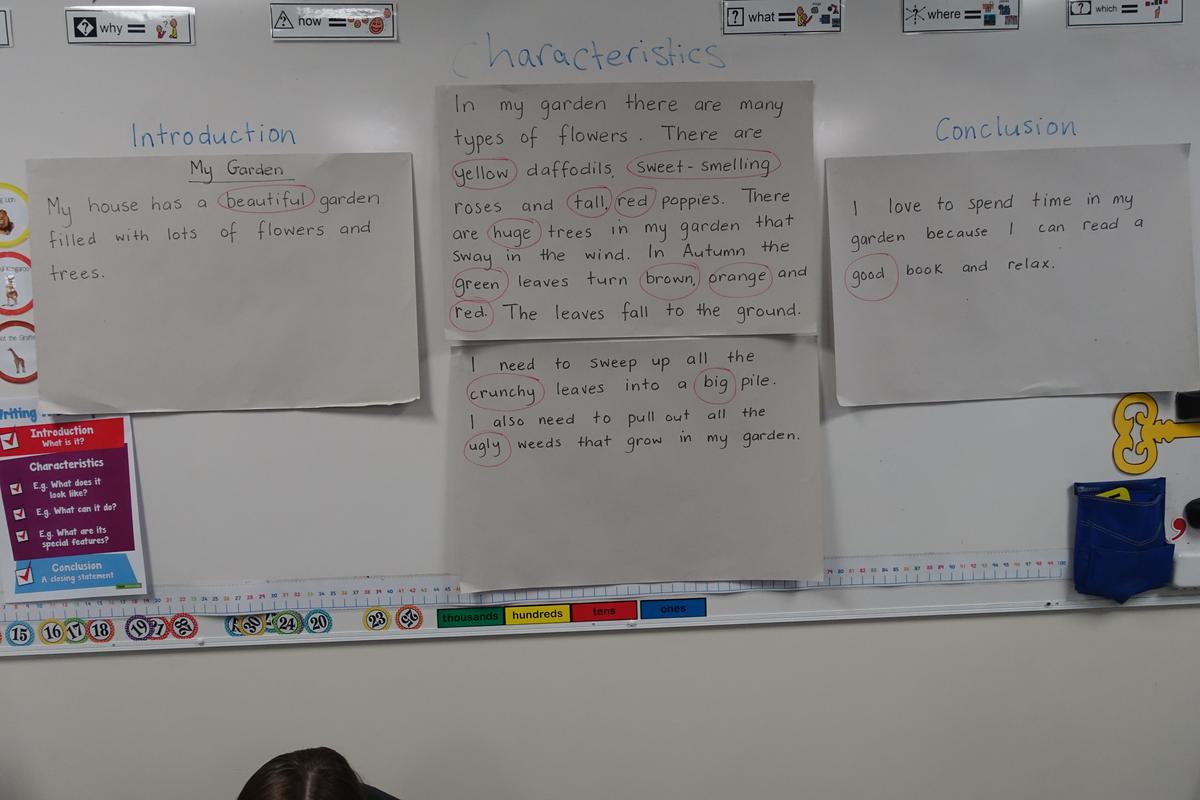
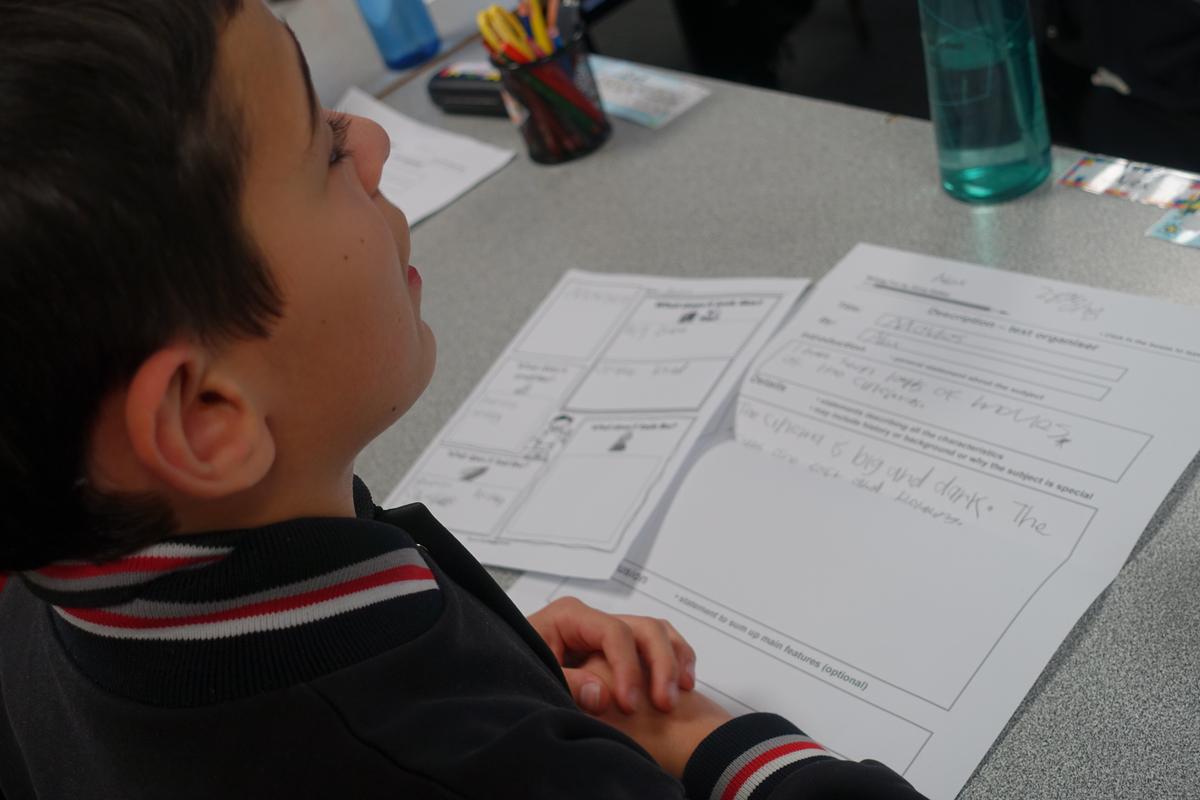
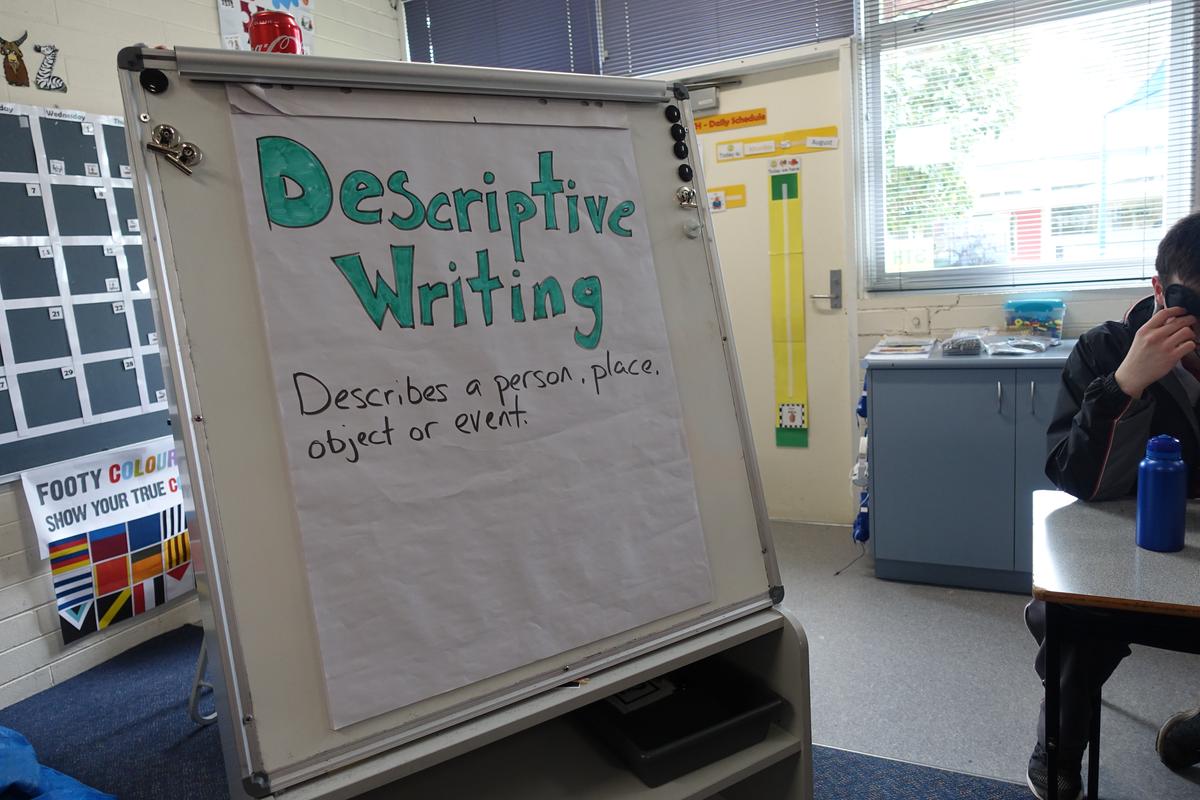
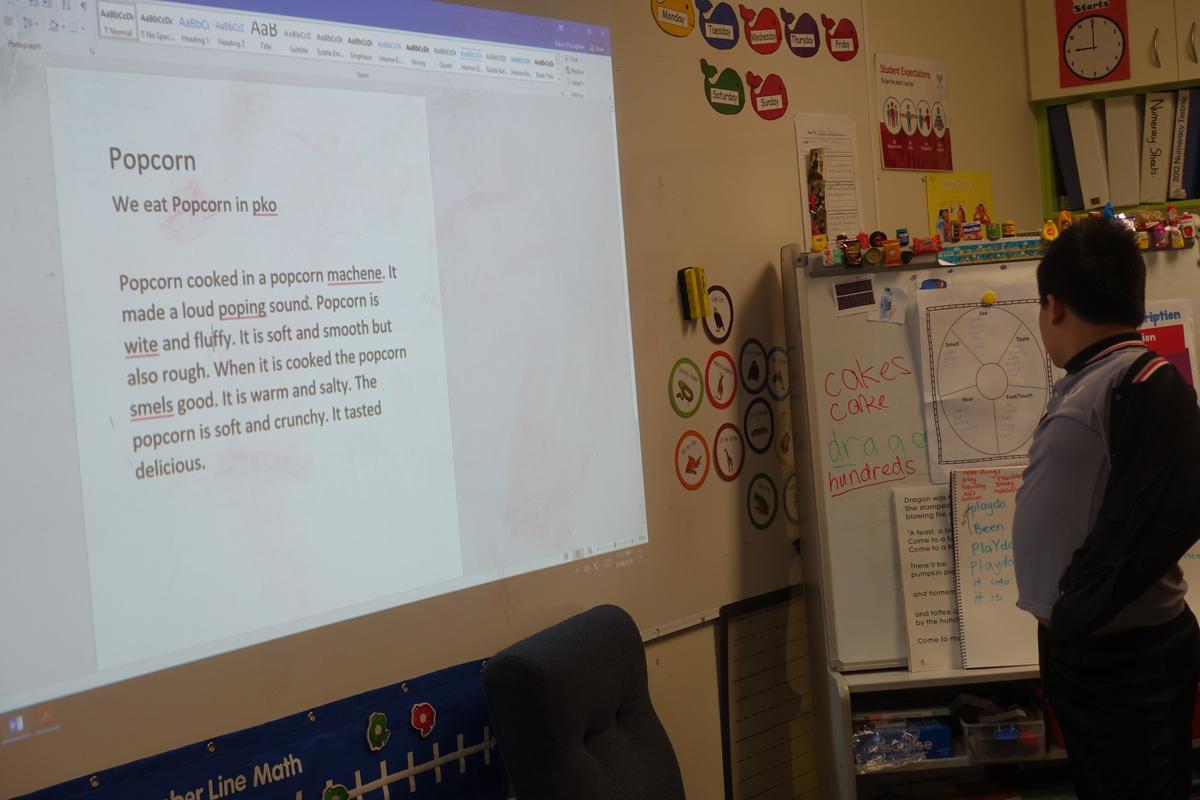
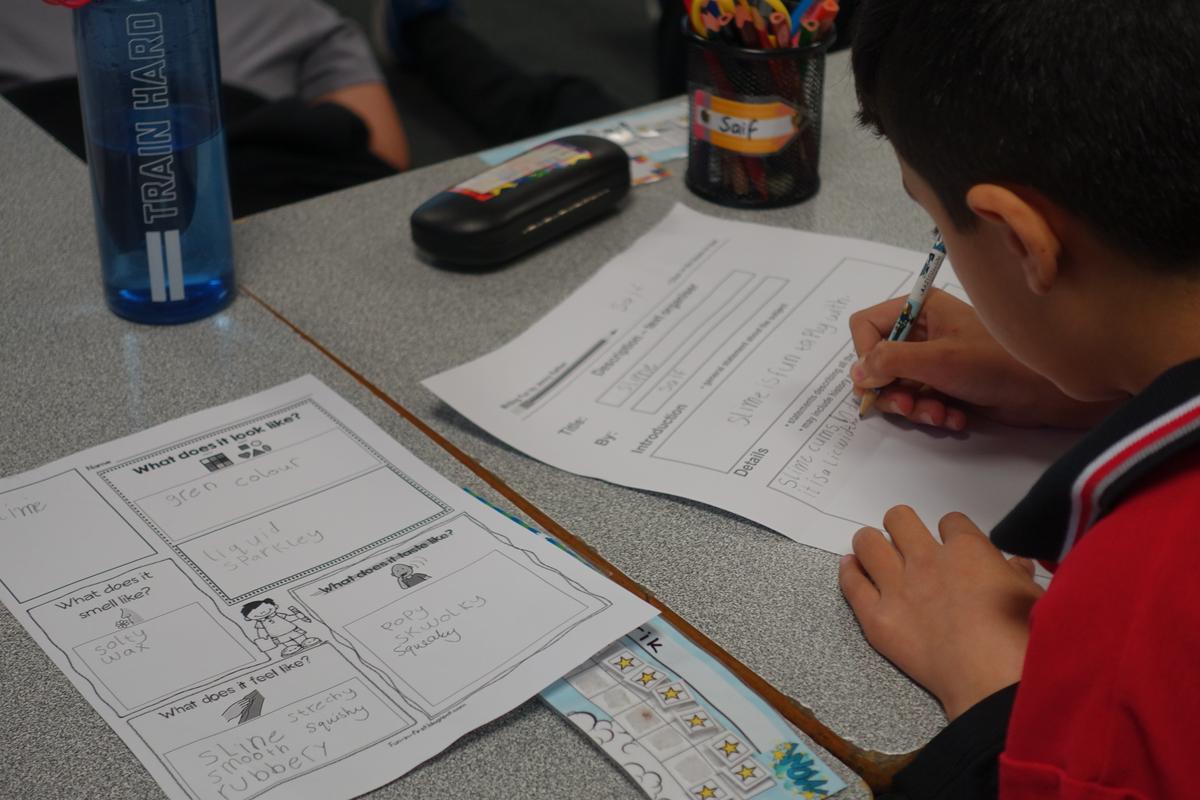
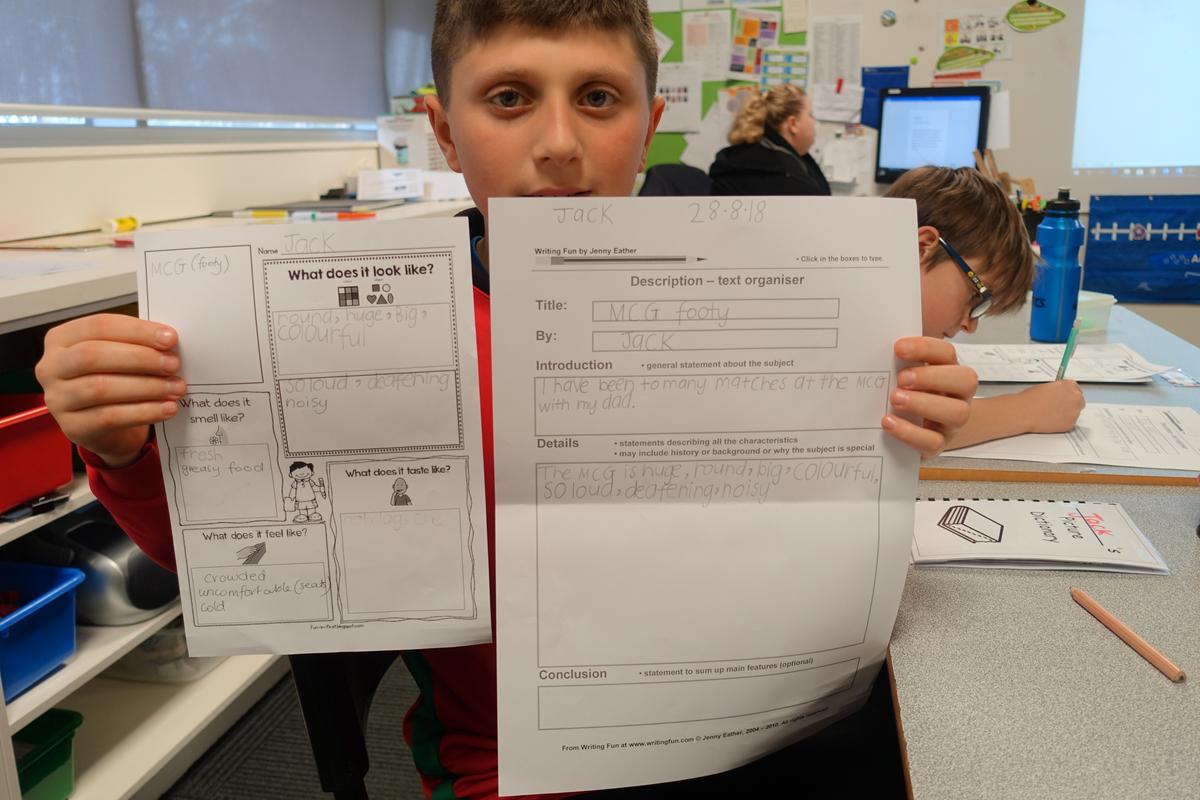
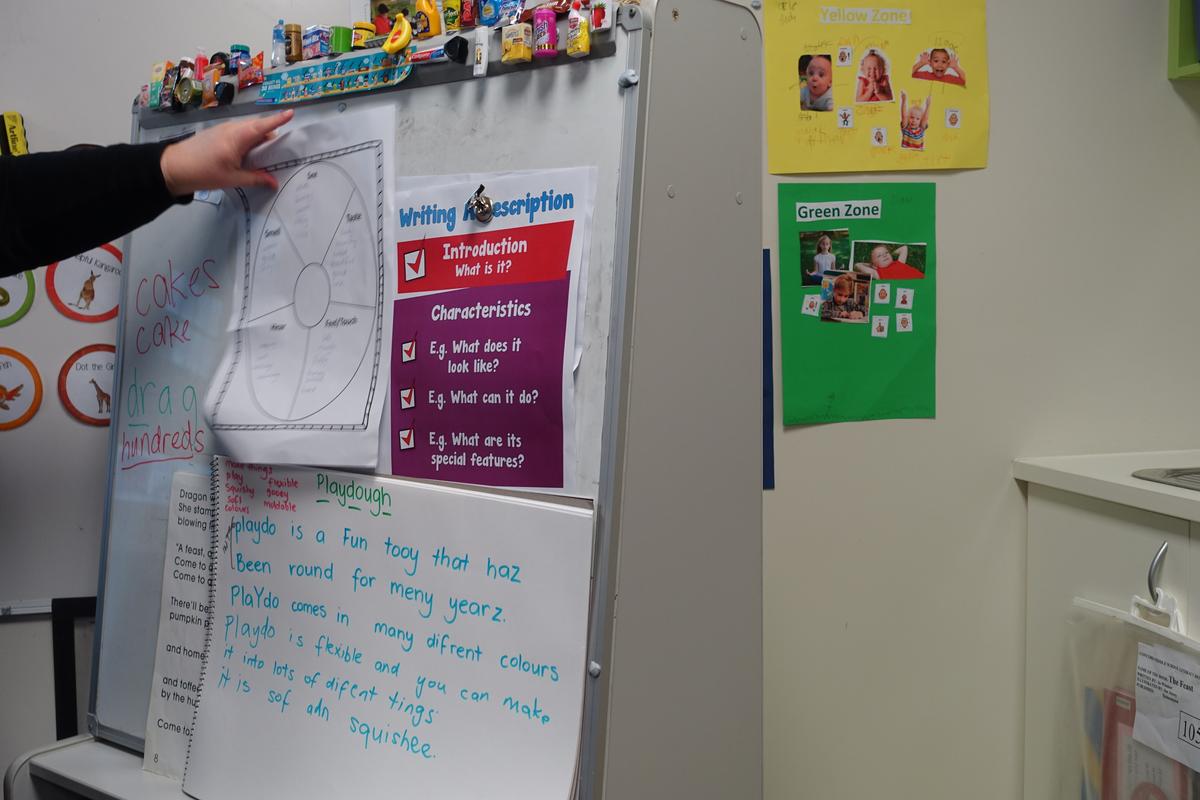
Descriptive Writing Over the last 3 weeks Primary students have been focussing on reading and writing descriptive text in a range of genre. The purpose of decriptive text is to describe a person, place or thing using our senses and our words (particularly adjectives).
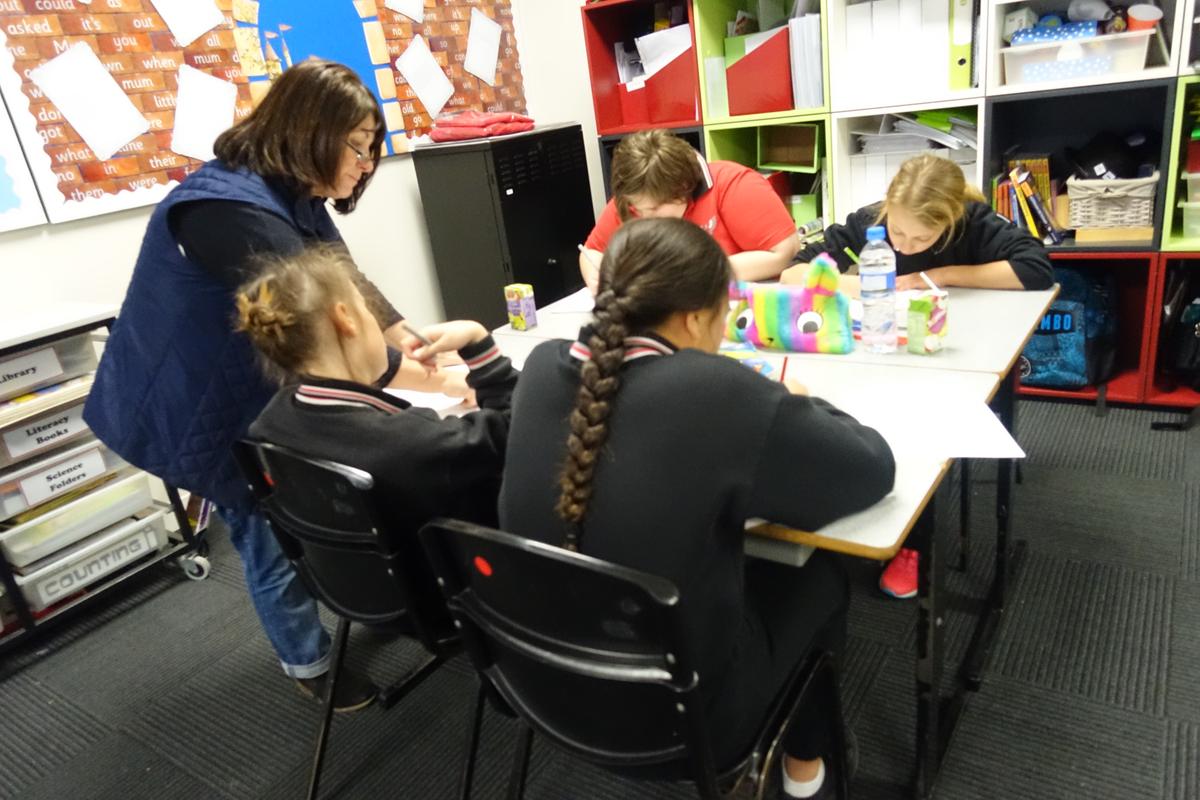
I captured students across the Primary sections and PreCAL classes engaged in many brainstorming and pre-writing activities designed to build their readiness for descriptive writing.
Activities included:
- participating in sensory language experiences
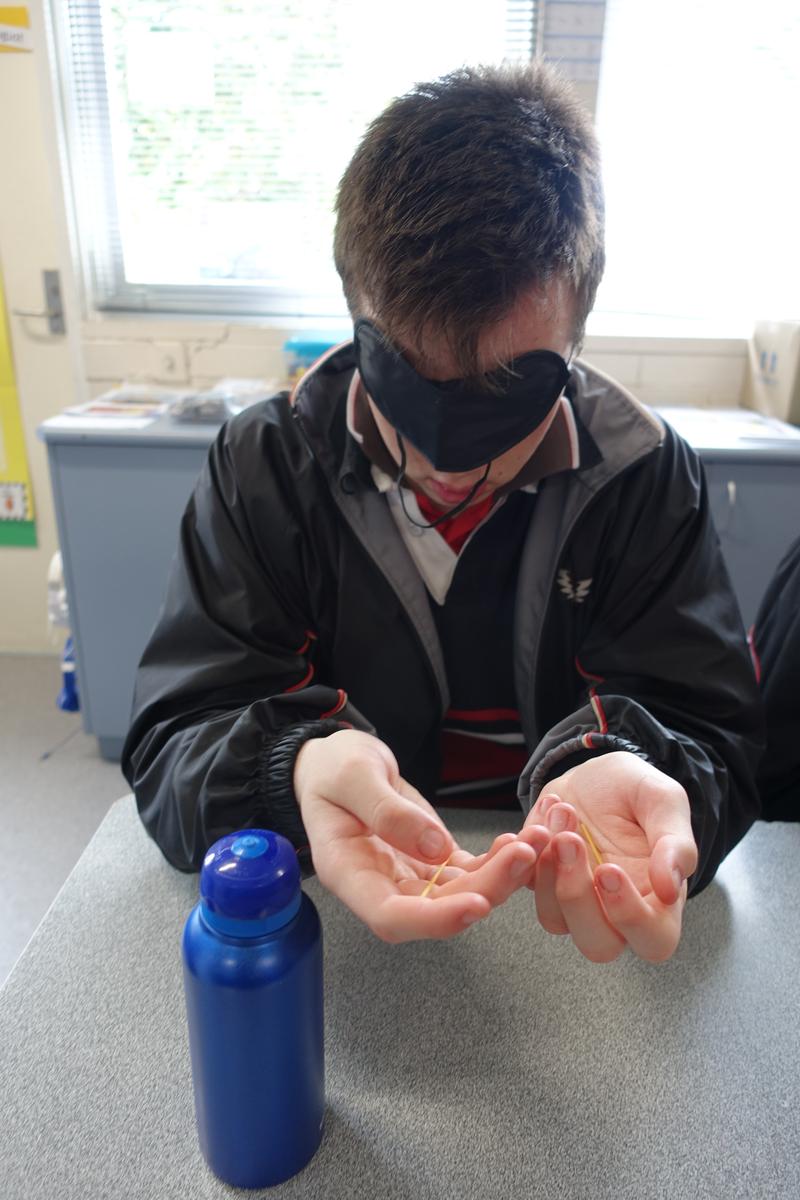
- feeling and smelling materials and objects and listening to the sounds they make whilst blindfolded or in feely boxes or mystery bags.
- using their oral language to describe an object or image verbally using their senses to help them describe it.
- creating anchor charts listing descriptive features and structures.
- building descriptive vocabulary:
- Classes and groups have created lists of adjectives and adverbs related to sensory language experiences.
- generating ideas on brainstorm sheets
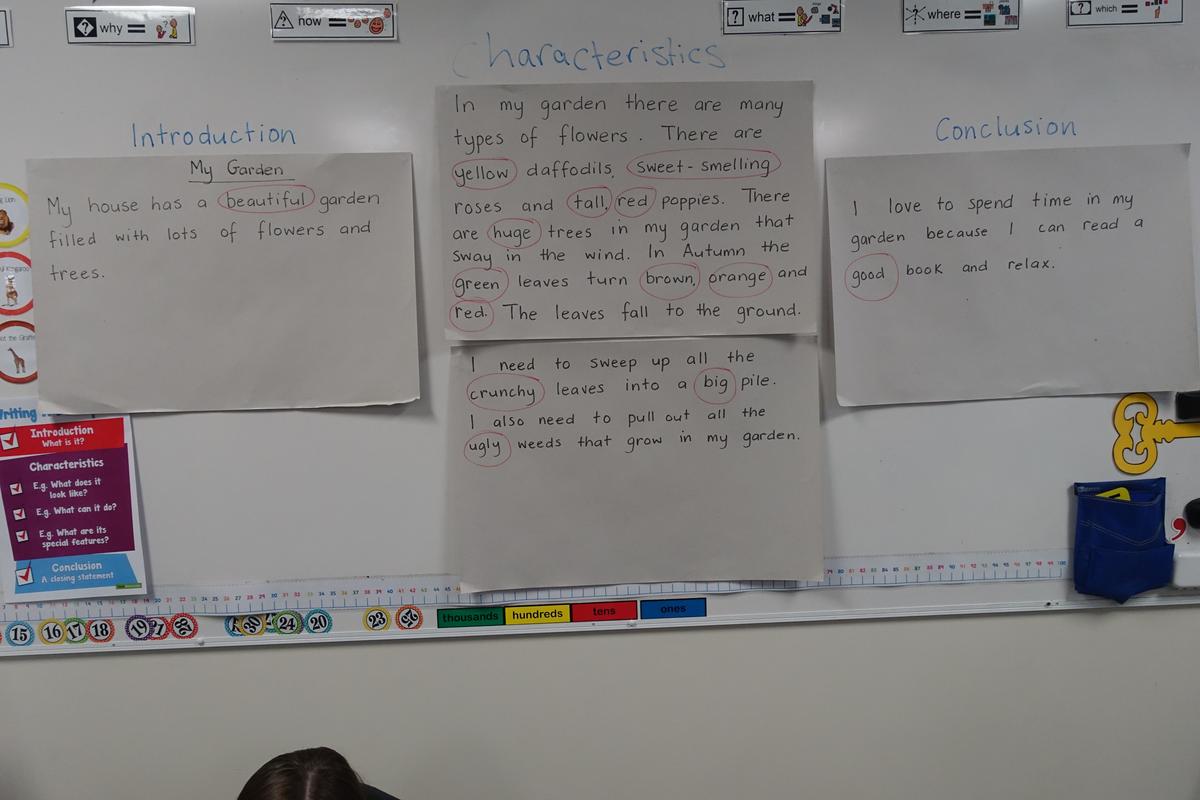
- co-constructing descriptive text after explicit instruction and using aided language displays, picture words, picture word sentences to assist them.
- drafting descriptive text using graphic organisers Teachers introduced a supportive descriptive writing organiser and implemented a modelled, shared or guided practice approach to help students construct descriptive text.
- incorporating descriptive text into integrated learning around Weather, Spot the Difference or Leisure
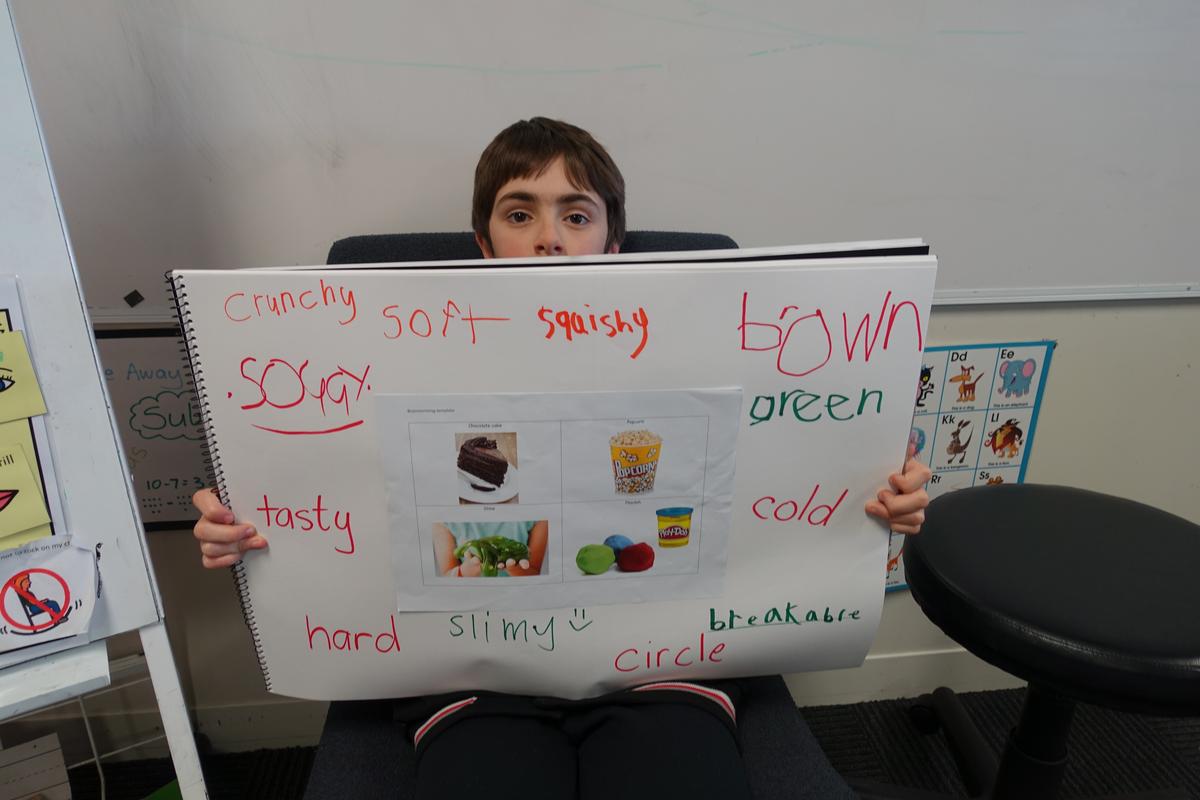
During the week I read some delightful Upper Primary descriptions of talented and much loved dads. I also enthused over the entertaining and detailed shared text SFC wrote after visiting Lush in Doncaster. The experience prompted students to include expressive adjectives to describe colours, shapes, smells and touch of the products.
Over the next few weeks teachers will use modelled, shared and/or guided practice to assist students with completing the writing cycle by not only drafting but also revising, editing and publishing their own descriptive texts.
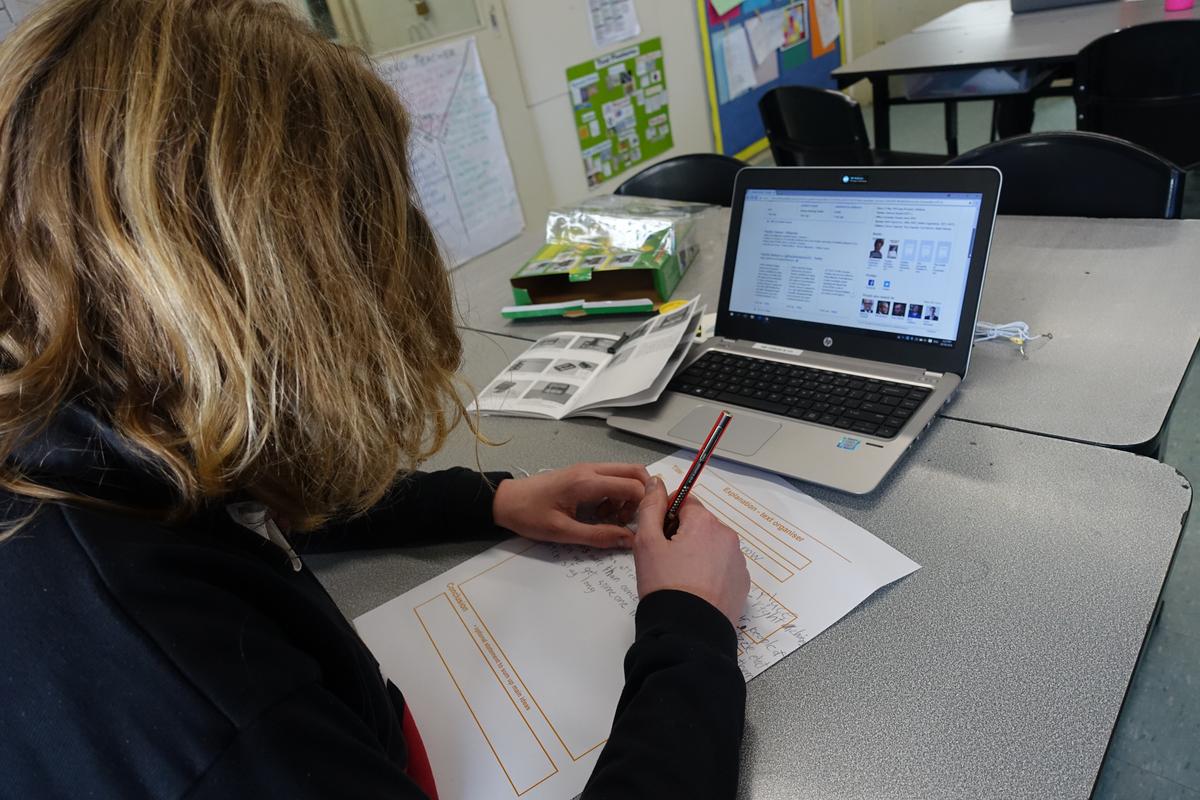
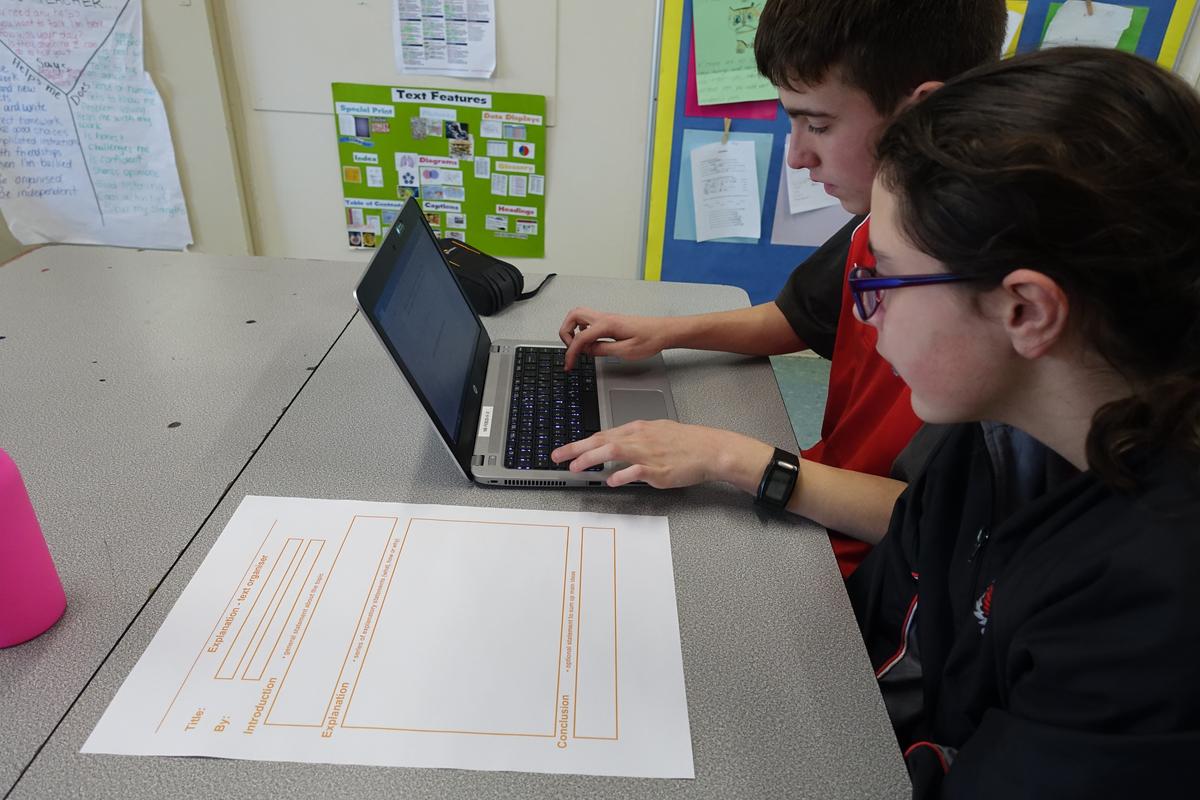
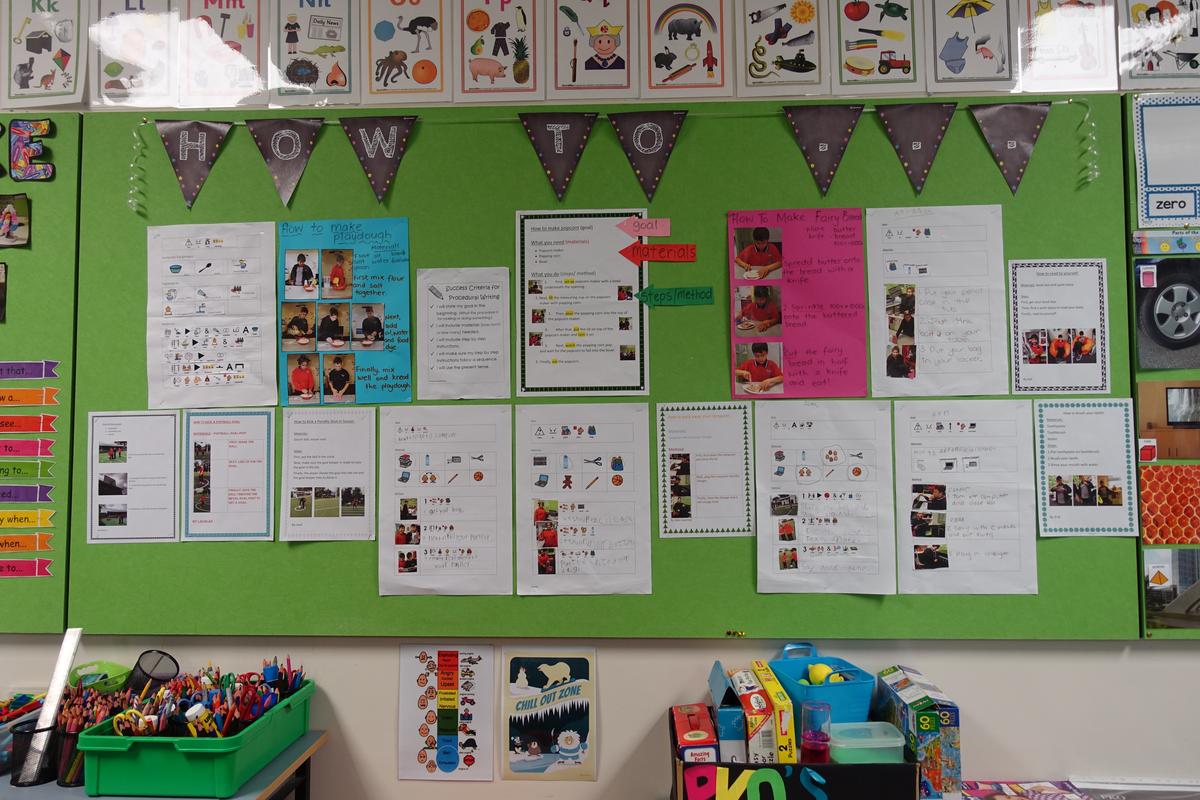
Explanatory Writing Most Yr. 7-10 classes have looked critically at the differences and similarities between explanations and procedures. Students recognise that explanations tell us why something happens or how something works and they can identify many examples of non-fiction explanatory text in books and online.
I captured students during the week building on their prior knowledge and their pre-writing skills by:
- posing questions on topics of personal interest and conducting online research in pairs and groups into film, sport, politics and/or science.
- using graphic organisers to sort the information
- drafting explanatory text that contained a title, introduction, description and a conclusion
I was impressed with the quality and range of questions as well as the curiosity demonstrated by many 9/10 classes. Over the next few weeks these students will have independently planned, drafted, edited and published their own explanatory texts related to their Integrated Units or to personal research. I’m looking forward to reading, hearing and viewing students published texts.
Explanatory writing Most Yr. 7-10 classes have looked critically at the differences and similarities between explanations and procedures. Students recognise that explanations tell us why something happens or how something works and they can identify many examples of non-fiction explanatory text in books and online.
I captured students during the week building on their prior knowledge and their pre-writing skills by:
- posing questions on topics of personal interest and conducting online research in pairs and groups into film, sport, politics and/or science.
- using graphic organisers to sort the information
- drafting explanatory text that contained a title, introduction, description and a conclusion
I was impressed with the quality and range of questions as well as the curiosity demonstrated by many 9/10 classes. Over the next few weeks these students will have independently planned, drafted, edited and published their own explanatory texts related to their Integrated Units or to personal research. I’m looking forward to reading, hearing and viewing students published texts
Reading and Viewing
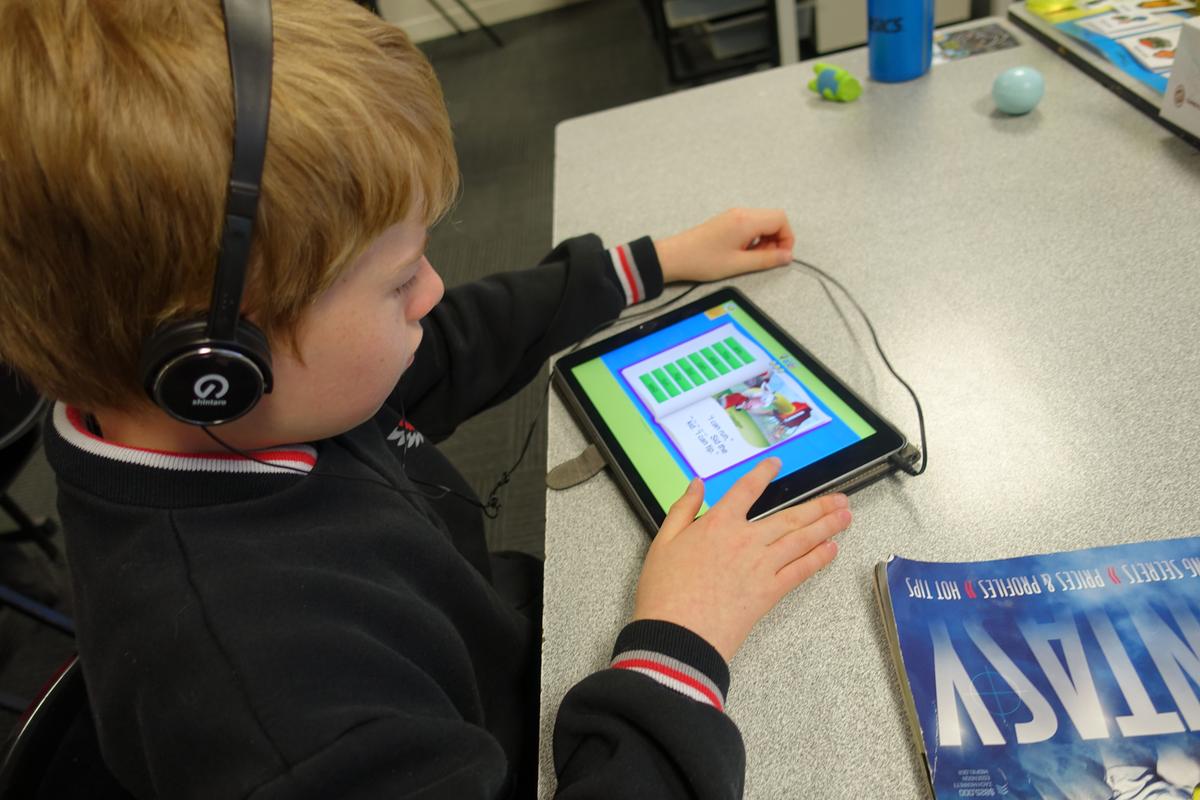
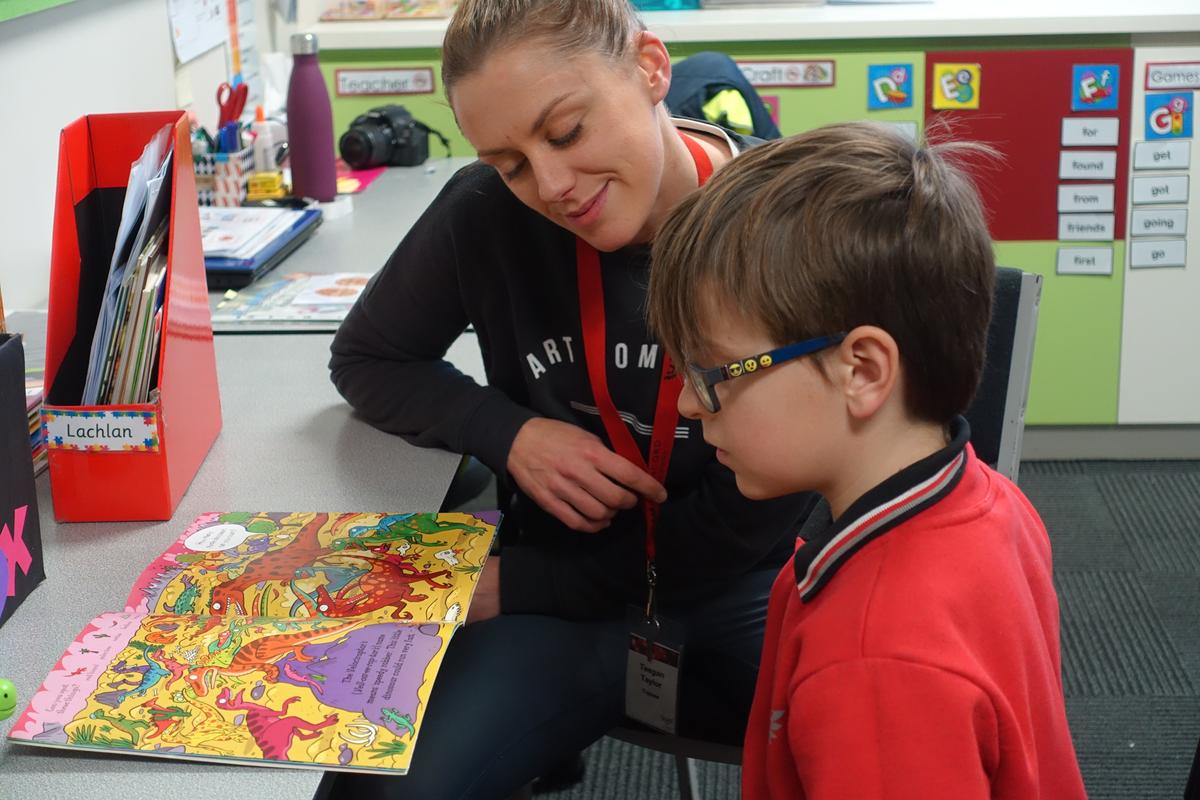
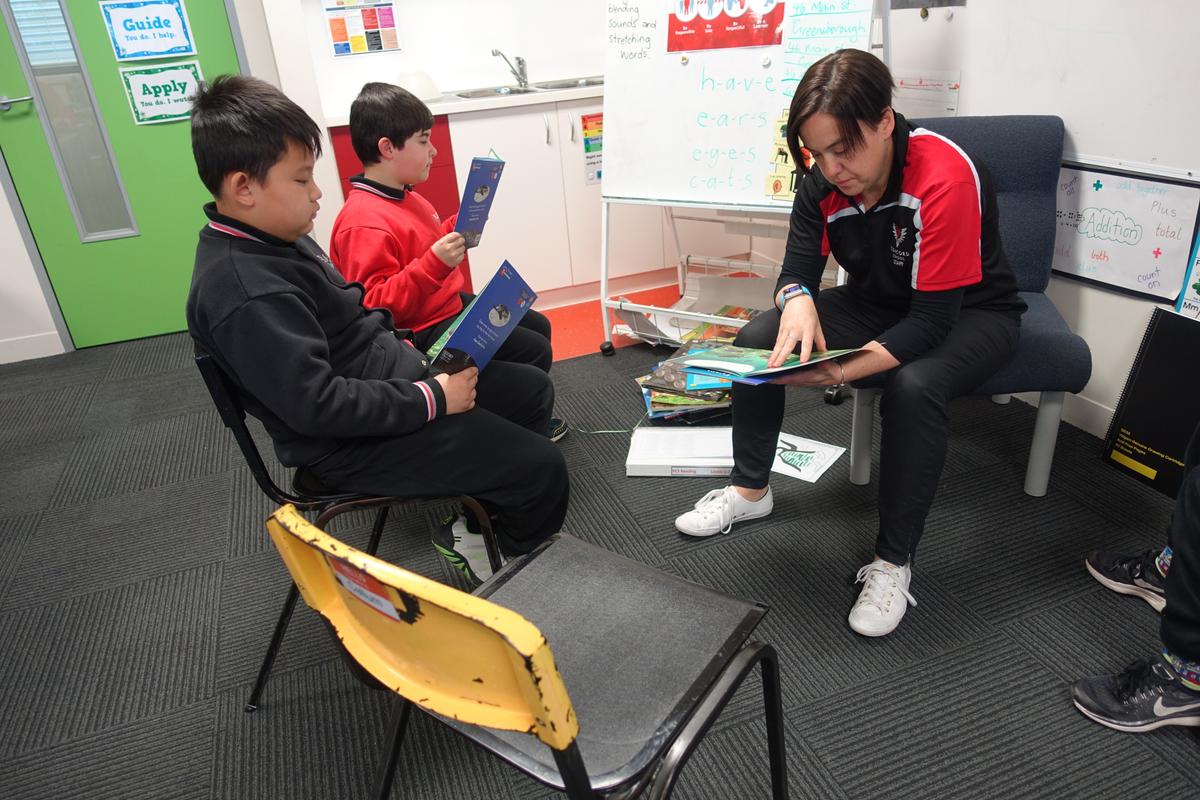
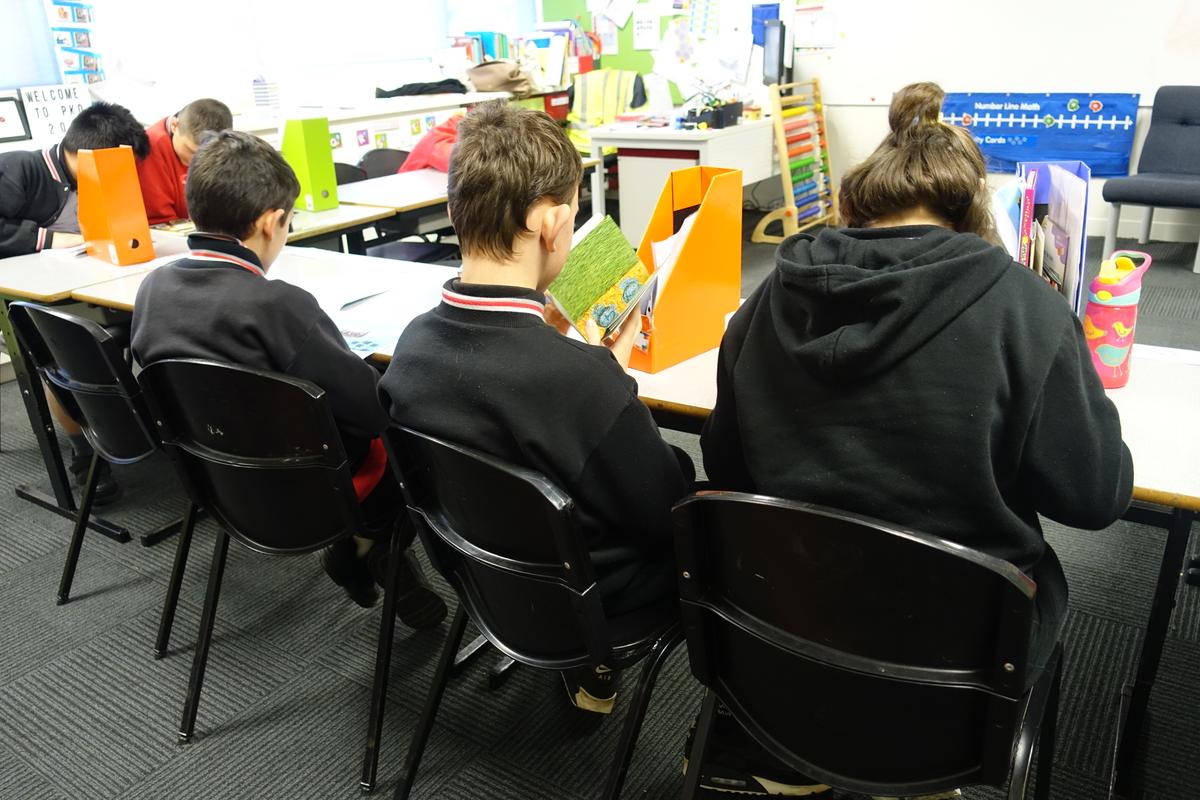
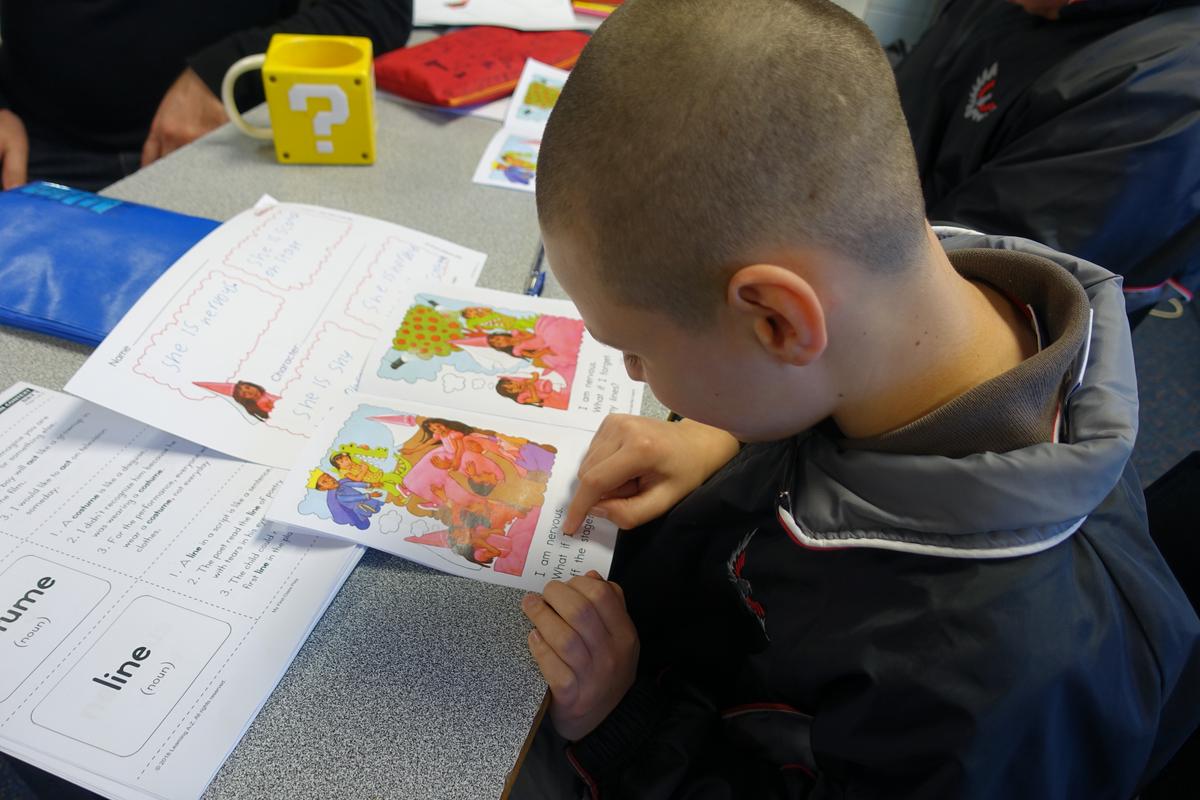
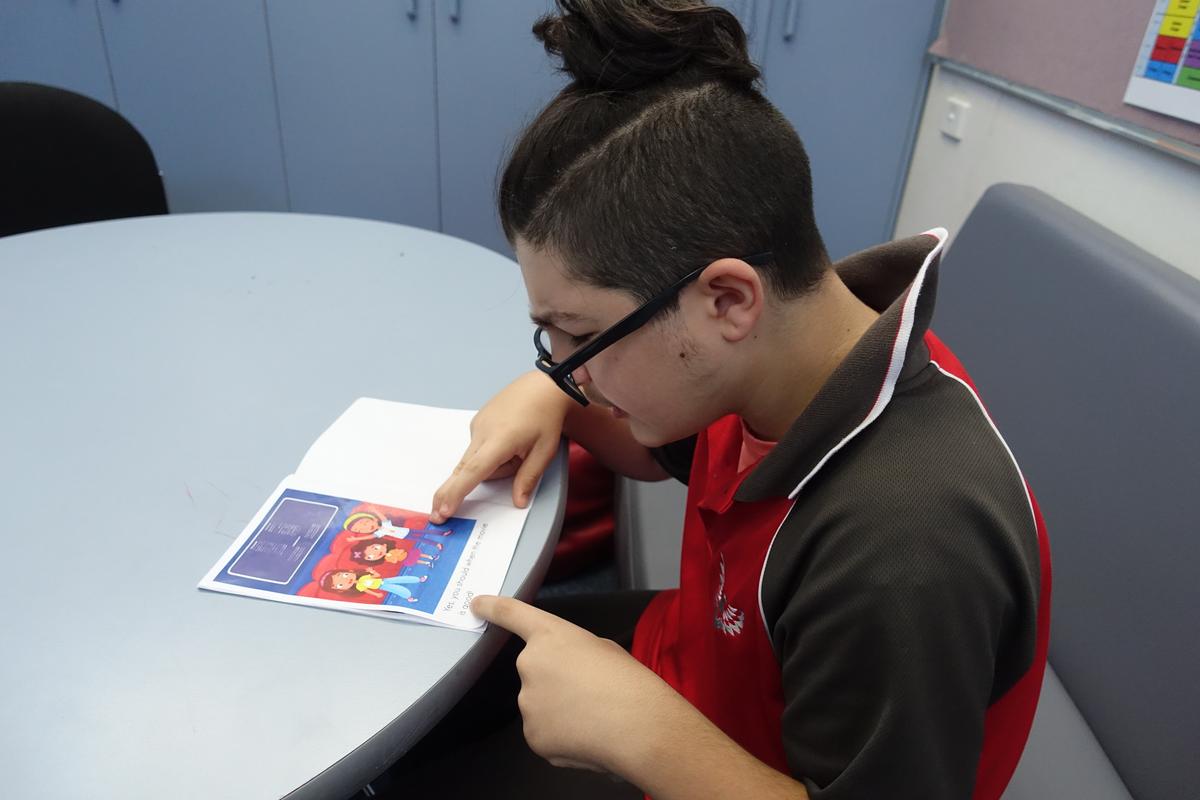
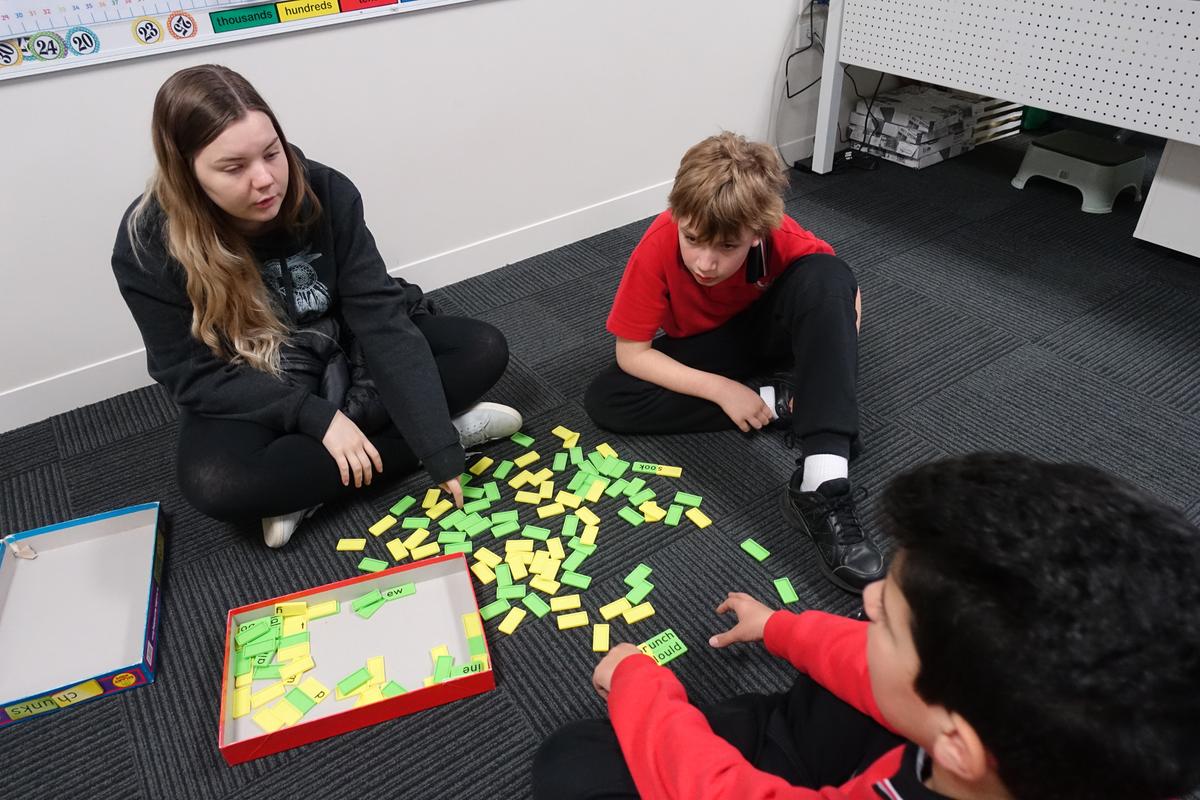
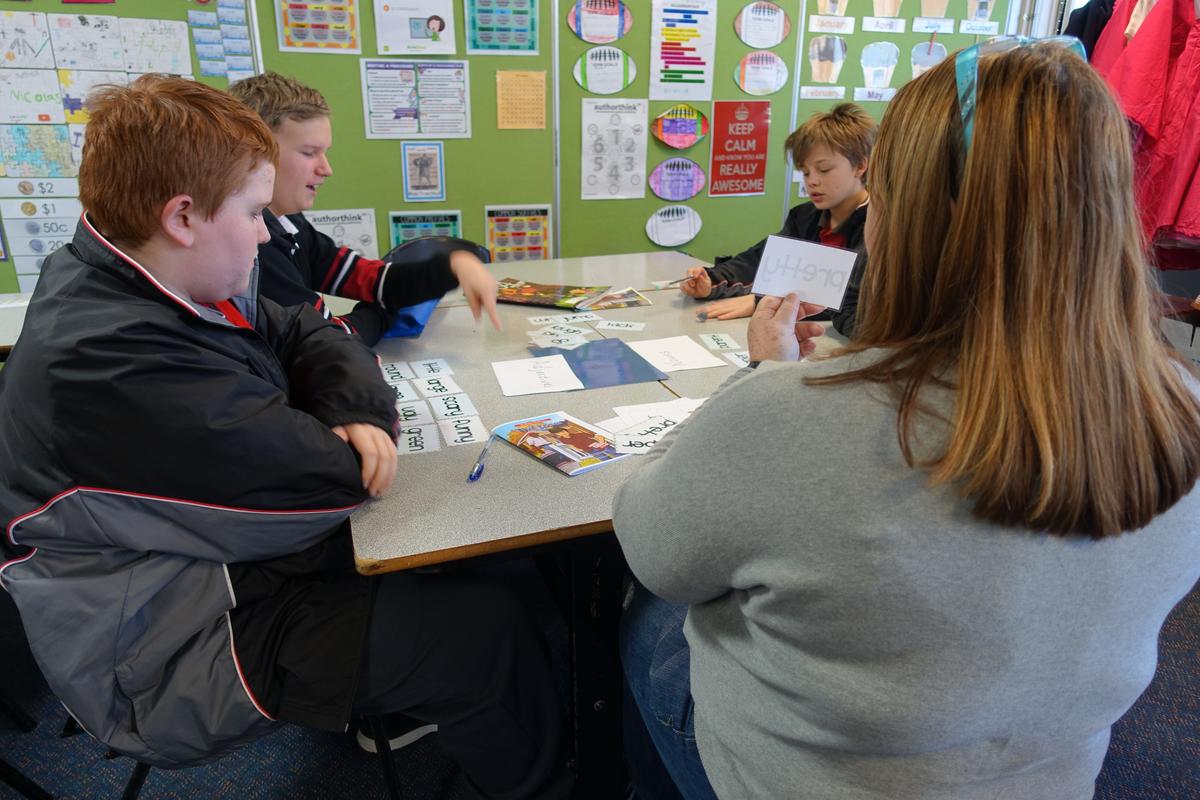
Decoding strategies.Primary students’ Reading and Viewing focus now moves from phonics and word knowledge to decoding strategies. The skills they have learnt with phonics and word knowledge will support them as they build their decoding strategies. We know that students with a good understanding of phonological awareness have the underlying framework in place for reading (or decoding), Phonological awareness is the ability to hear, identify and manipulate the sounds of spoken language (hearing and repeating sounds, separating and blending sounds, identifying similar sounds in different words, hearing parts or syllables in word e.g. “hel-icop-ter).
There are at least seven key child friendly decoding strategies that students may be introduced to during this term and next term, depending on a student’s point of need
They include:
- Eagle Eye - Looking at the pictures and looking for clues to figure out the word.
- Lips the Fish- Getting lips ready. Saying the beginning sound. Saying beginning, middle and ending sounds in single-syllable words
- Stretchy Snake-sounding out and stretching the sounds within the word slowly
- Tryin’ Lion-Trying to reread the sentence, thinking ‘what makes sense?’
- Chunky Monkey-dividing words into parts (chunks) you already know, read each part and read the word by combining the parts
- Skippy Frog-skip the tricky word, read to the end, go back and try again.
- Flippy Dolphin-flip the vowel sound, try long or short sounds.
Comprehension Strategies
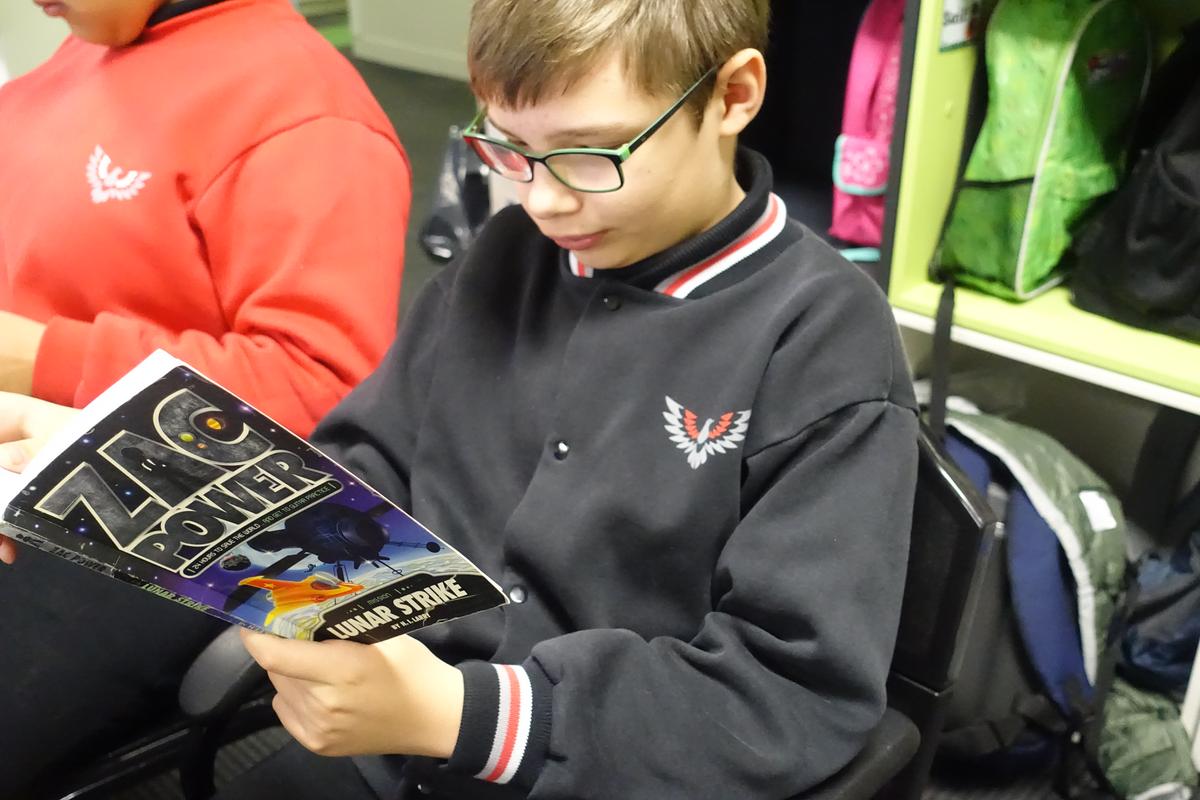
In reading Secondary students are now revisiting the key comprehension strategies needed to make meaning when they read.
Classes have focused on the following strategies:
- inferencing. - making inferences based on characters feelings and the main idea of the text.
- using supporting details- learning to confirm the main idea of a text then identify details that add to the literal and implied meaning
- making predictions- using prior knowledge, text title, front cover and/or pictures prior to reading a non – fiction text.
- asking questions- while reading to help us understand
- recognising when we lose meaning-while we read so that we stop, back up and reread the passage.
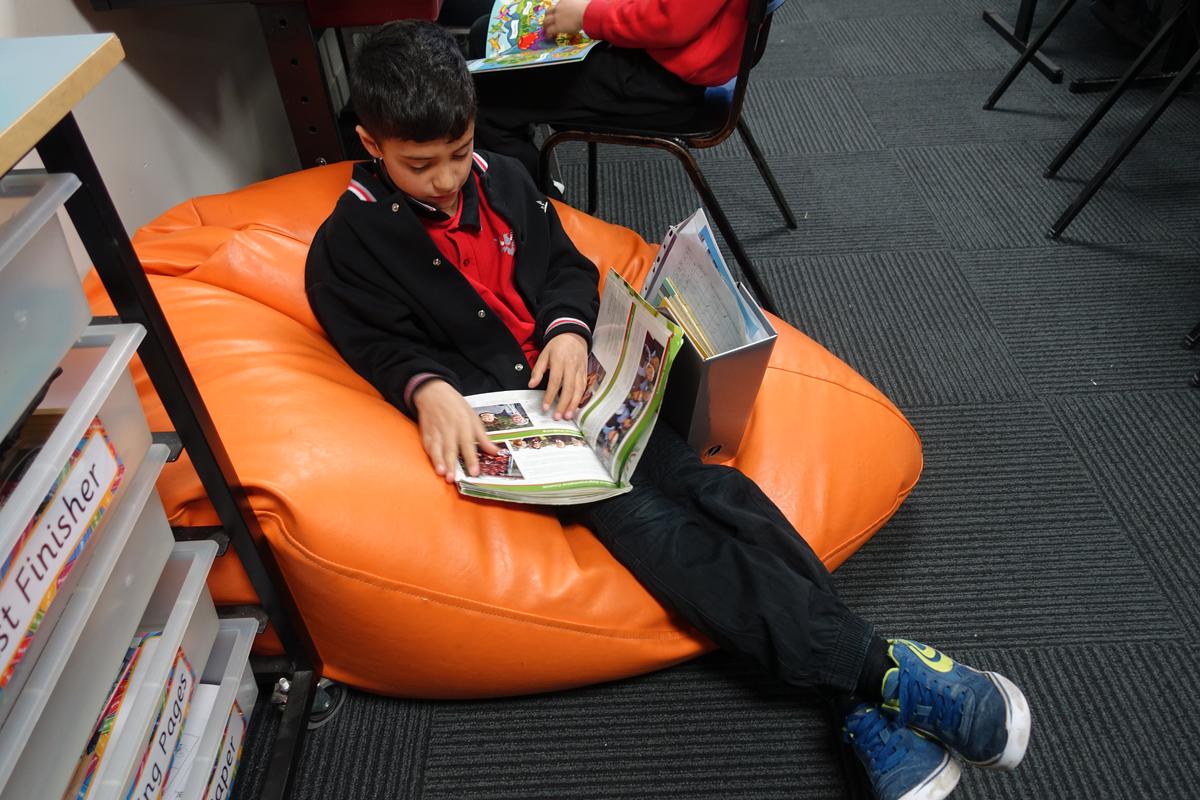
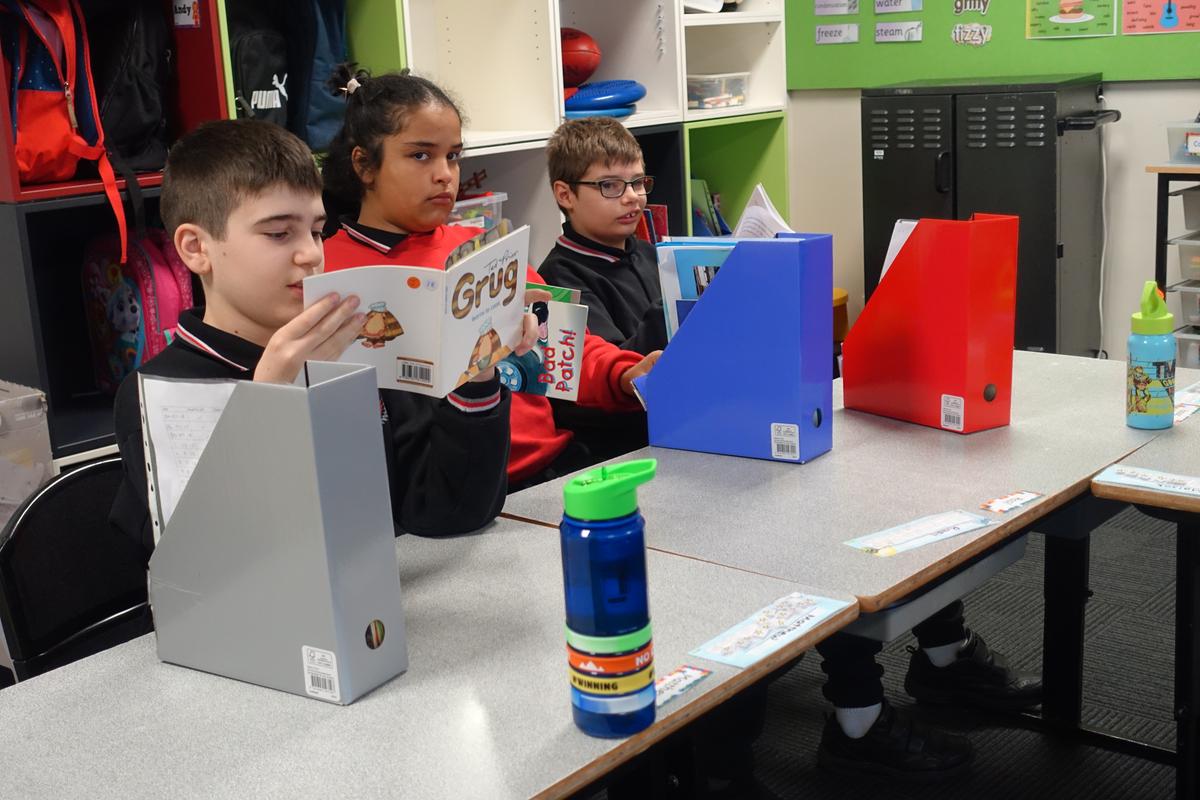
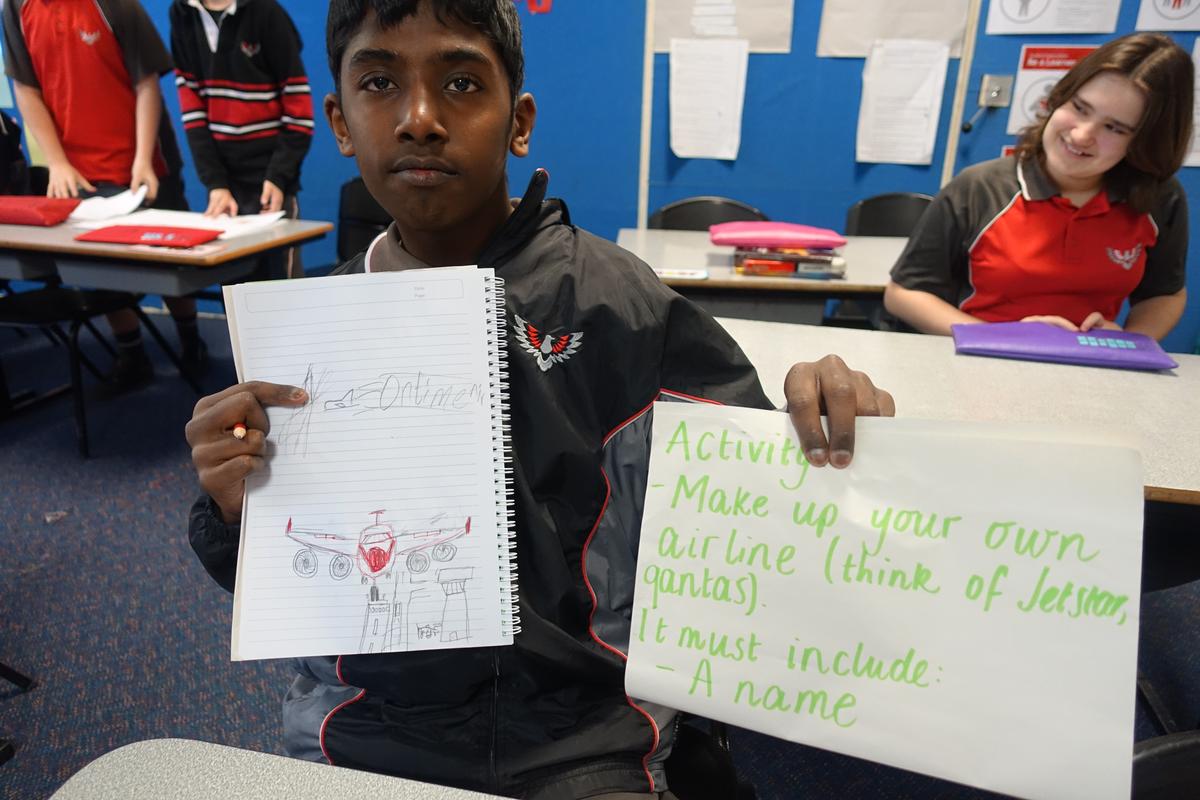
At school we will be consistently modelling the decoding and comprehension strategies mentioned. We will provide students with a range of opportunities to practise them. We encourage all of our students to read at home as well and your support and enthusiasm will make this a very valuable learning experience.
Mathematics
Number and Algebra
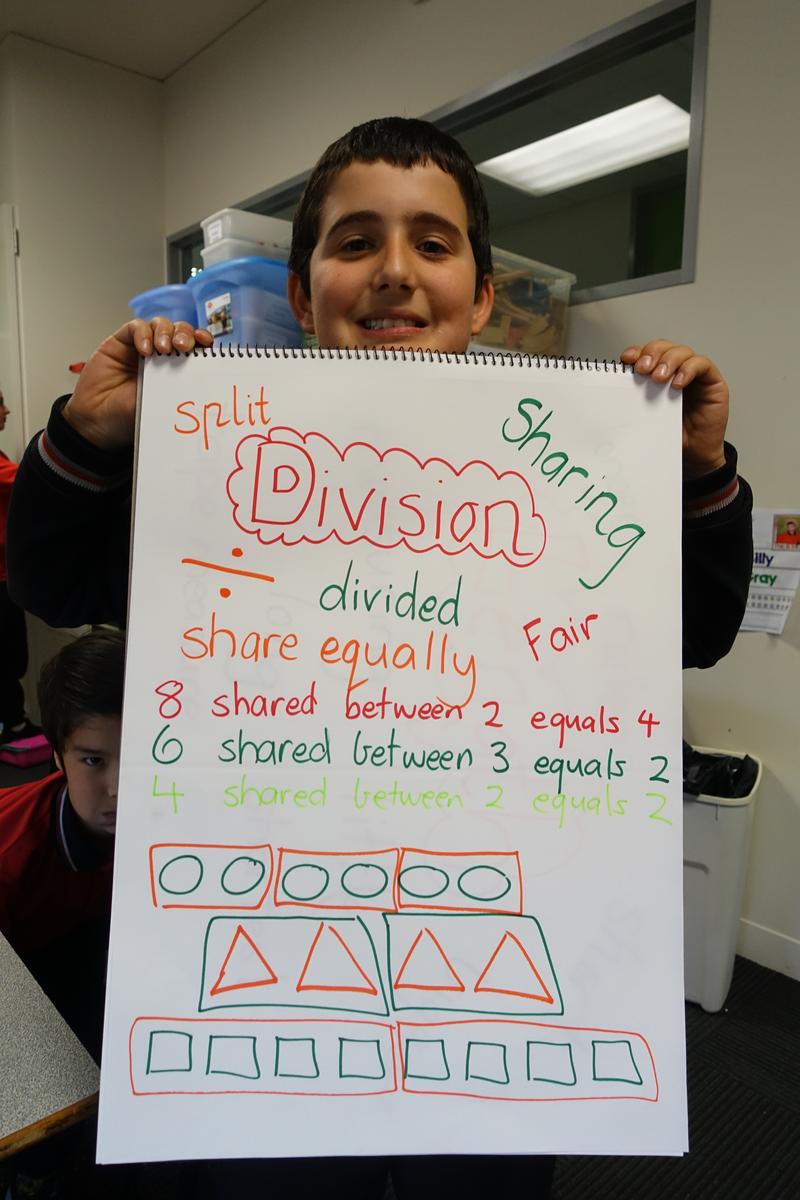
Groups and Sharing (multiplication and division)
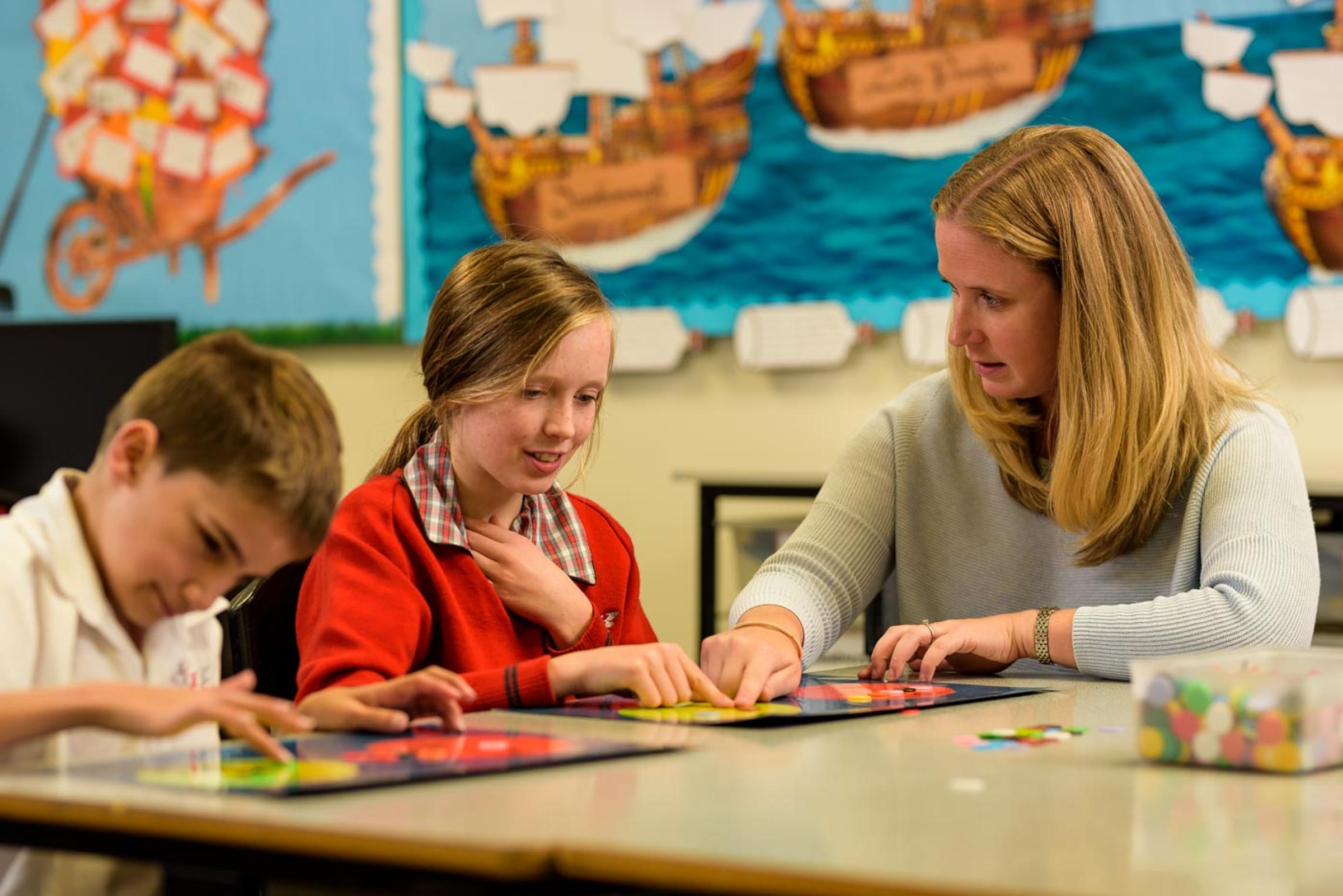
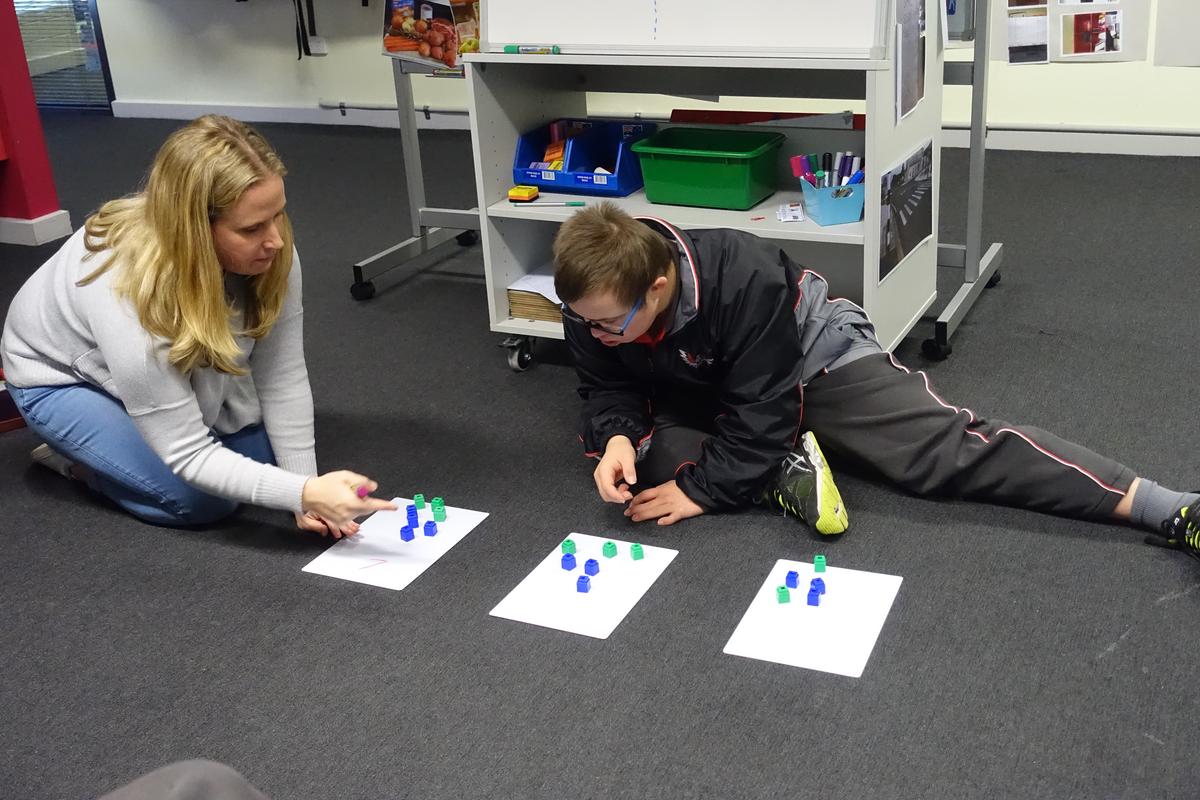
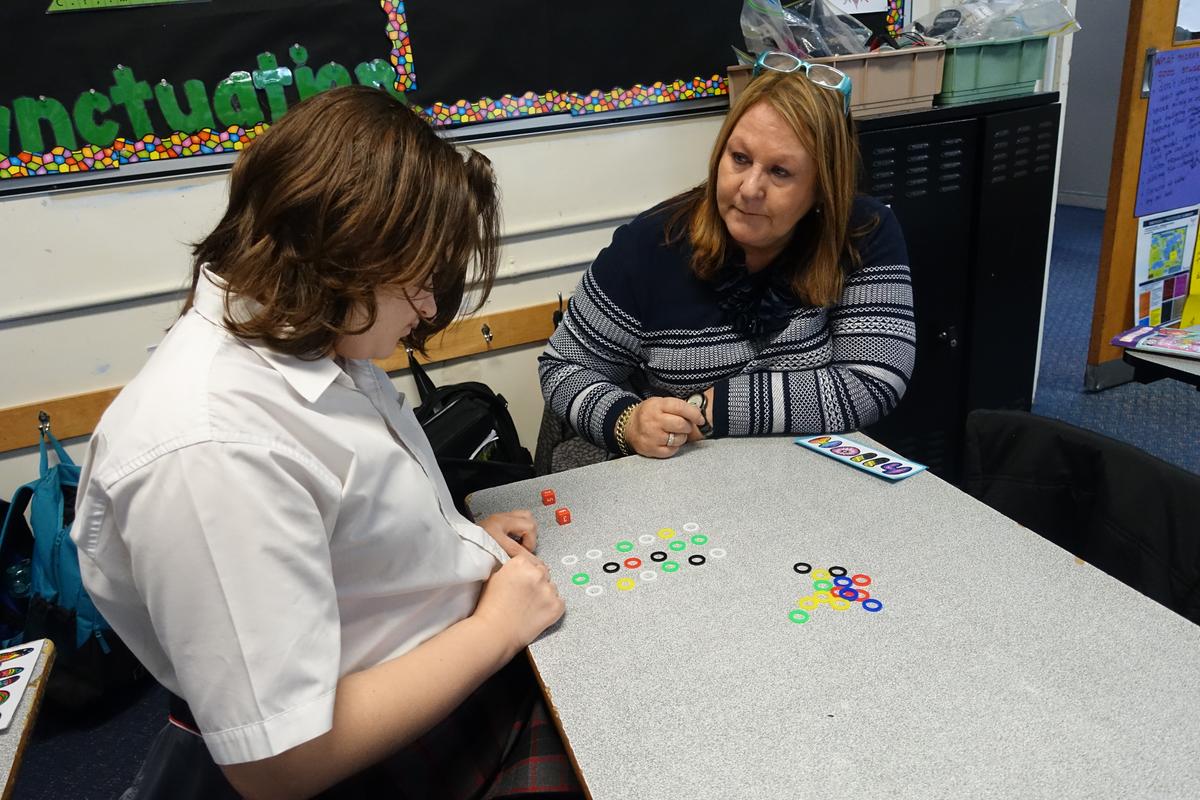
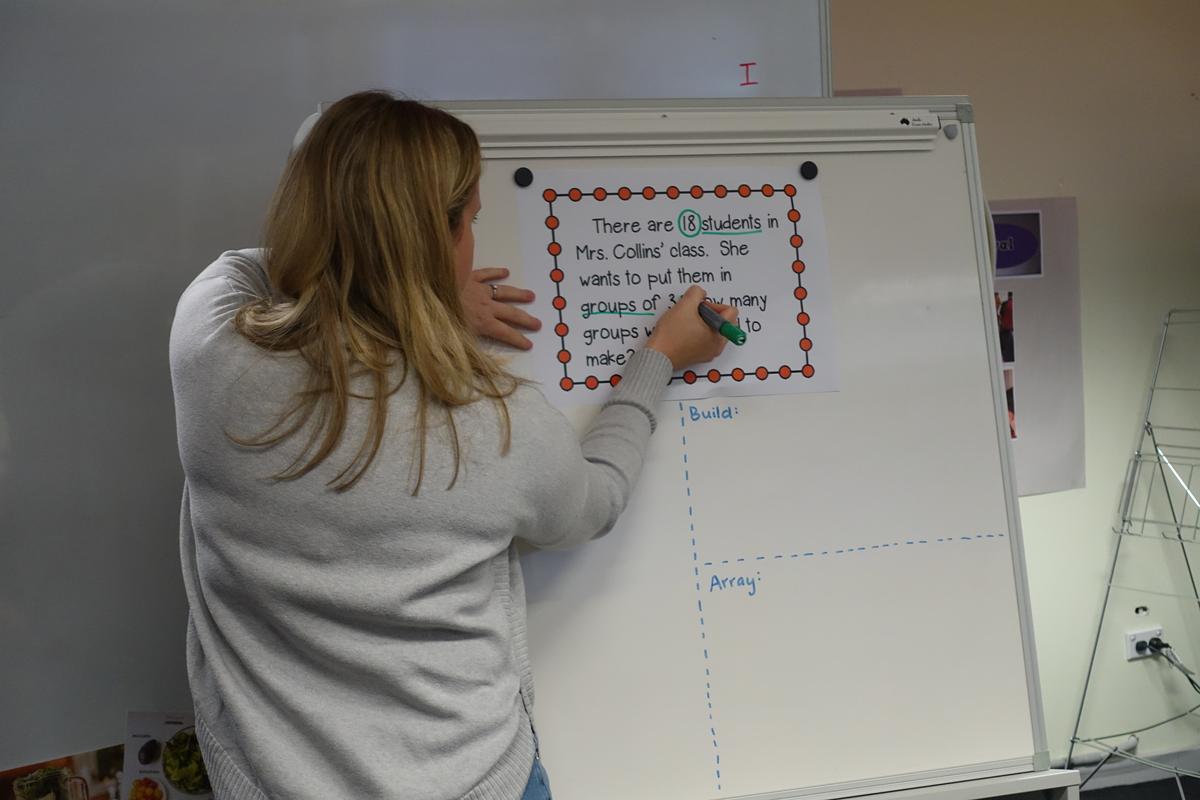
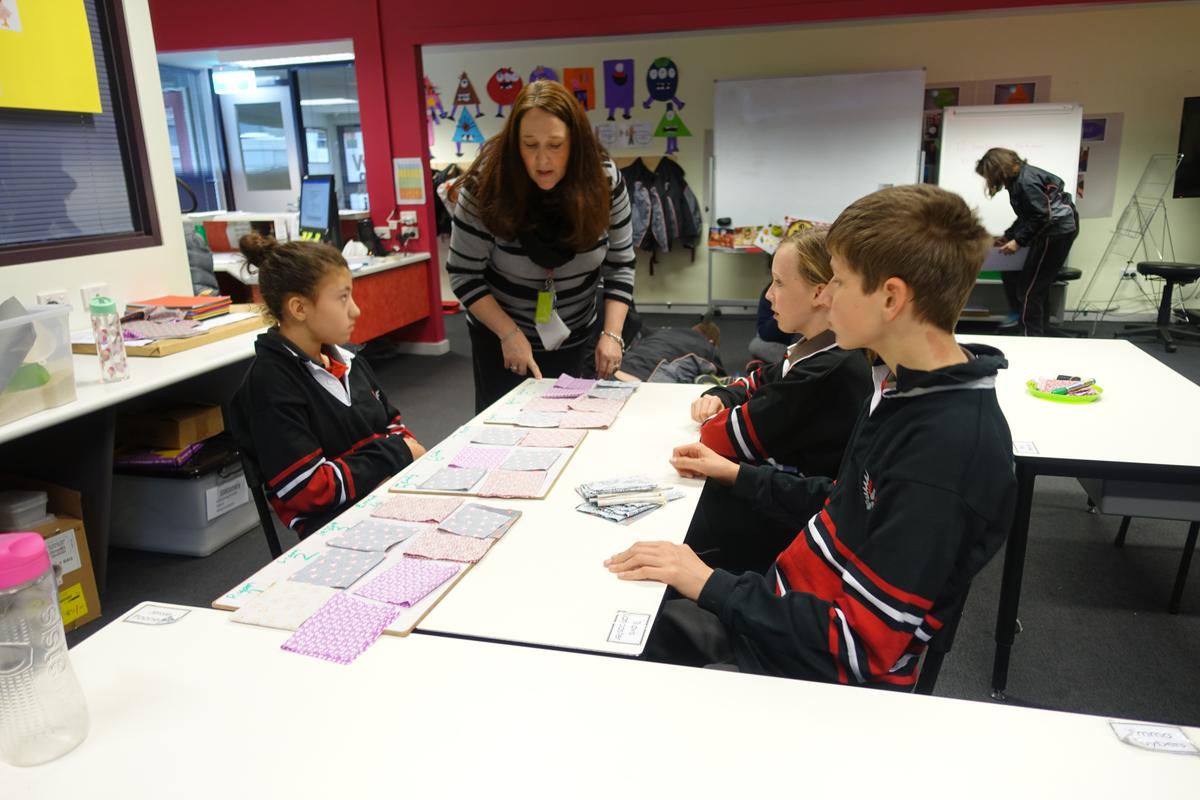
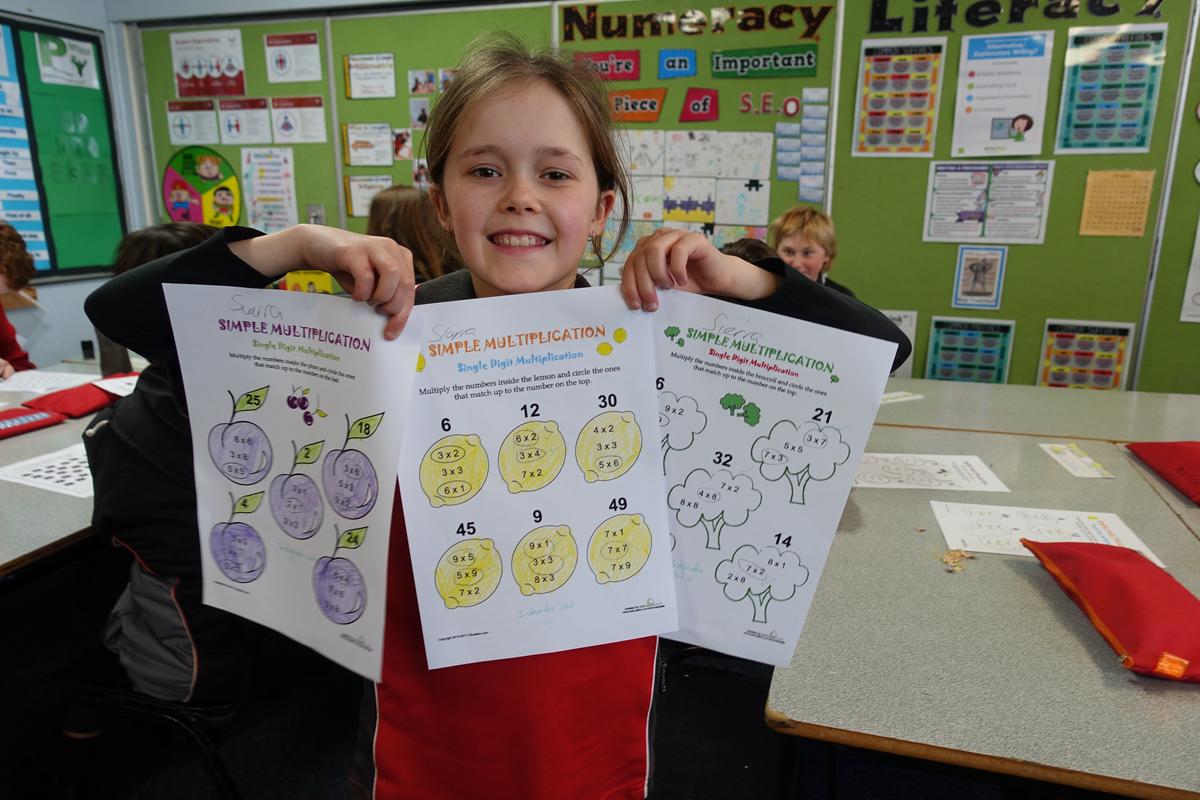
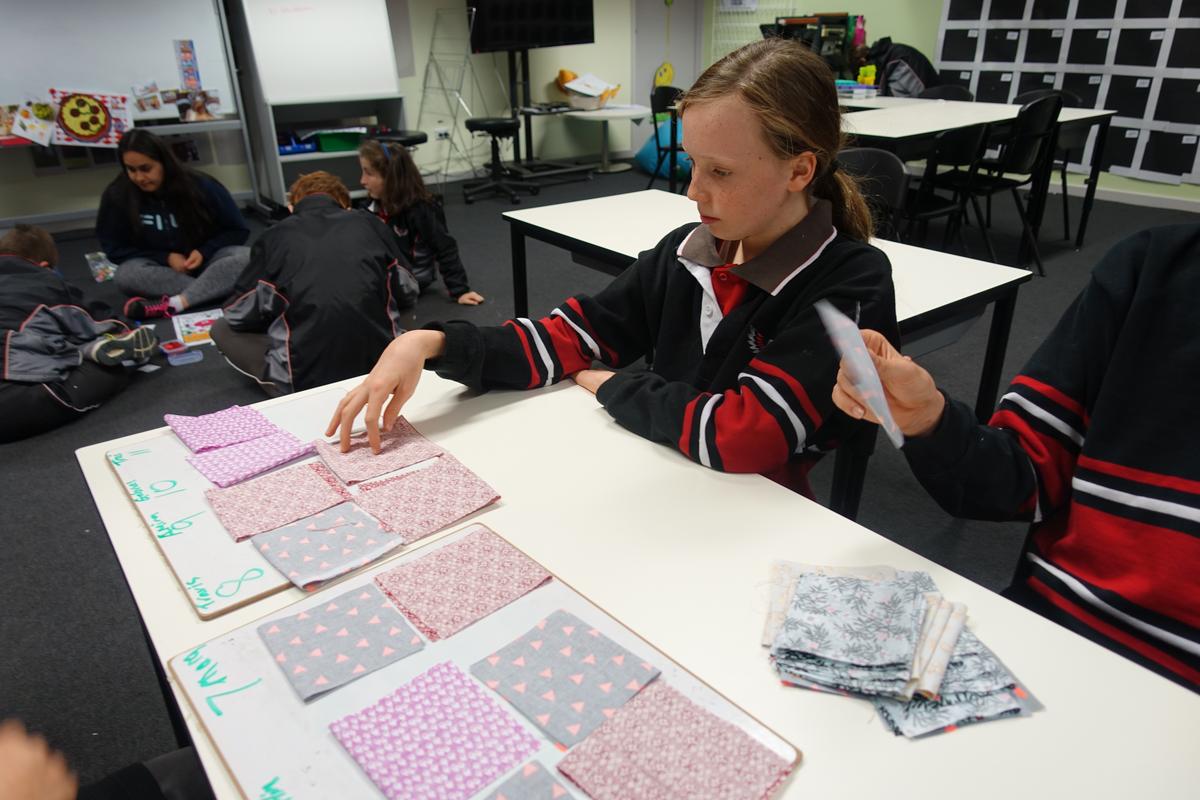
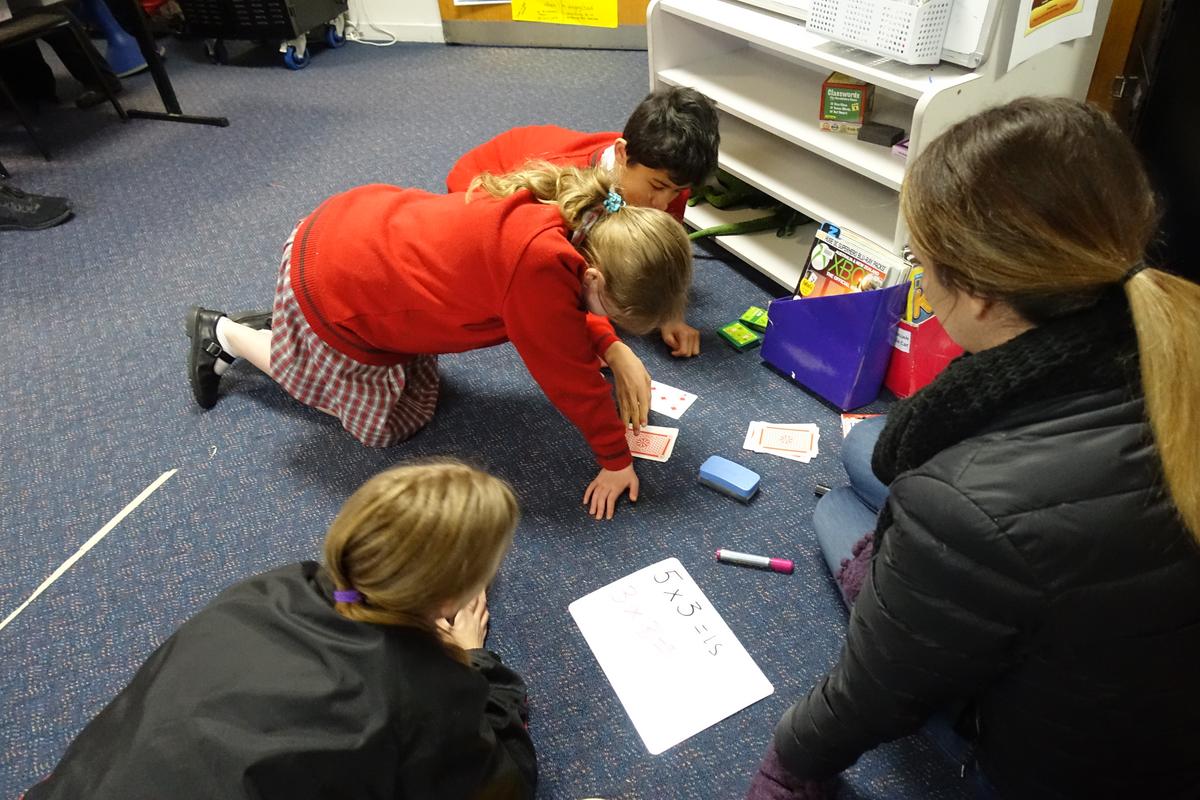
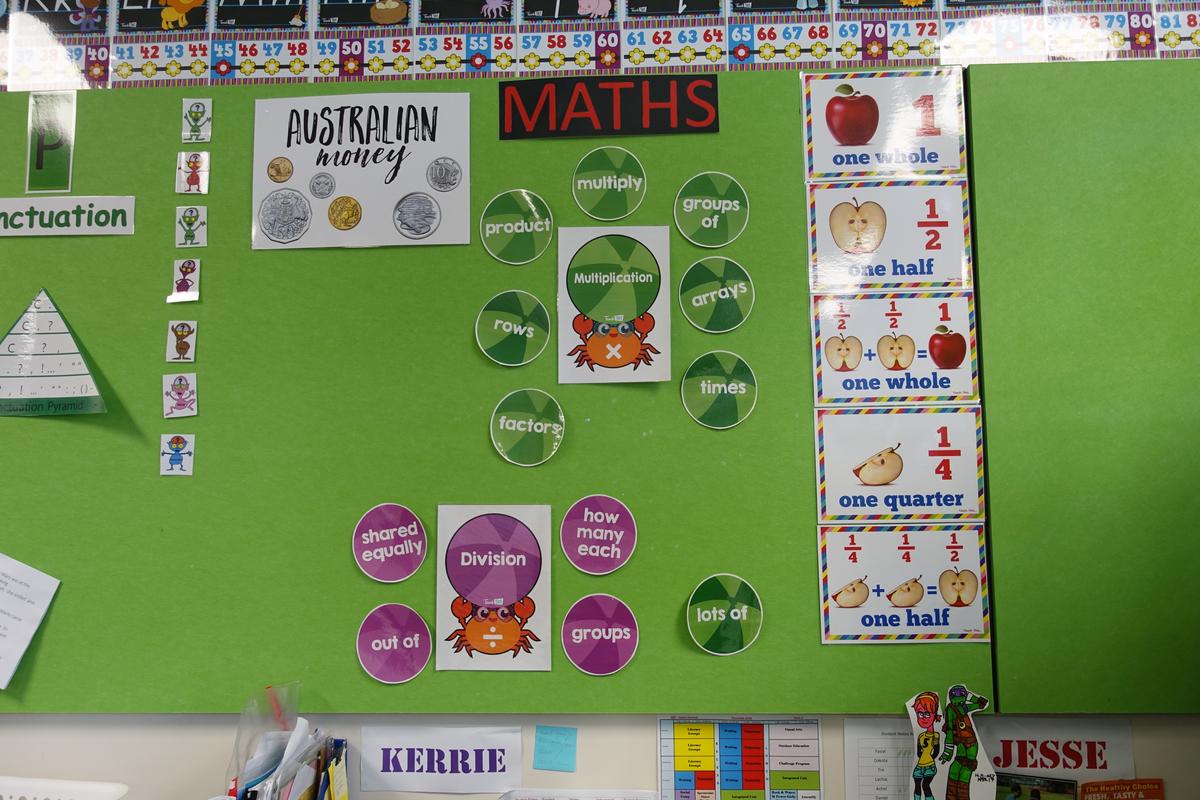
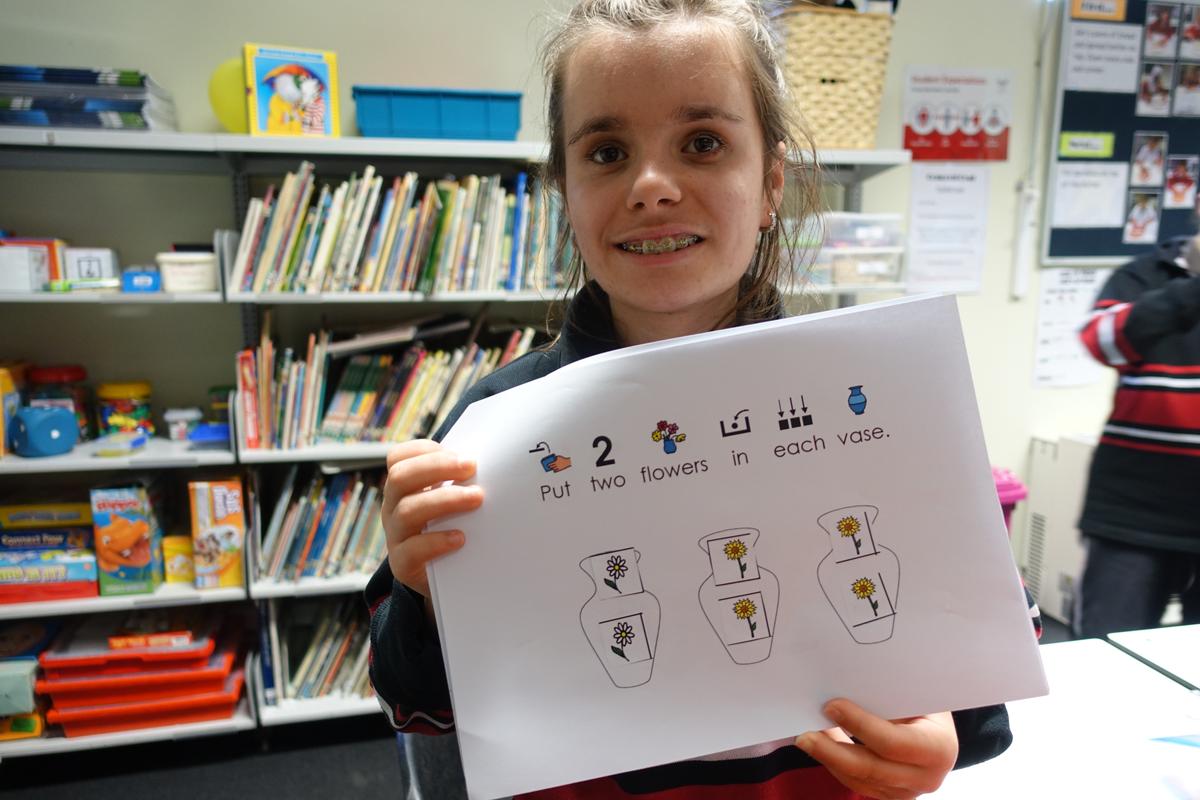
Students across the school have been involved in a range of activities that involve grouping and sharing. They have used objects, diagrams and pictorial representations (including arrays and number lines) and number sentences to solve problems.
Activities have included:
- exploring action stories and making equal groups in sharing or grouping situations
- sharing items and counters into different equal groups- 4 counters into 2 groups, 6 counters into 2 groups
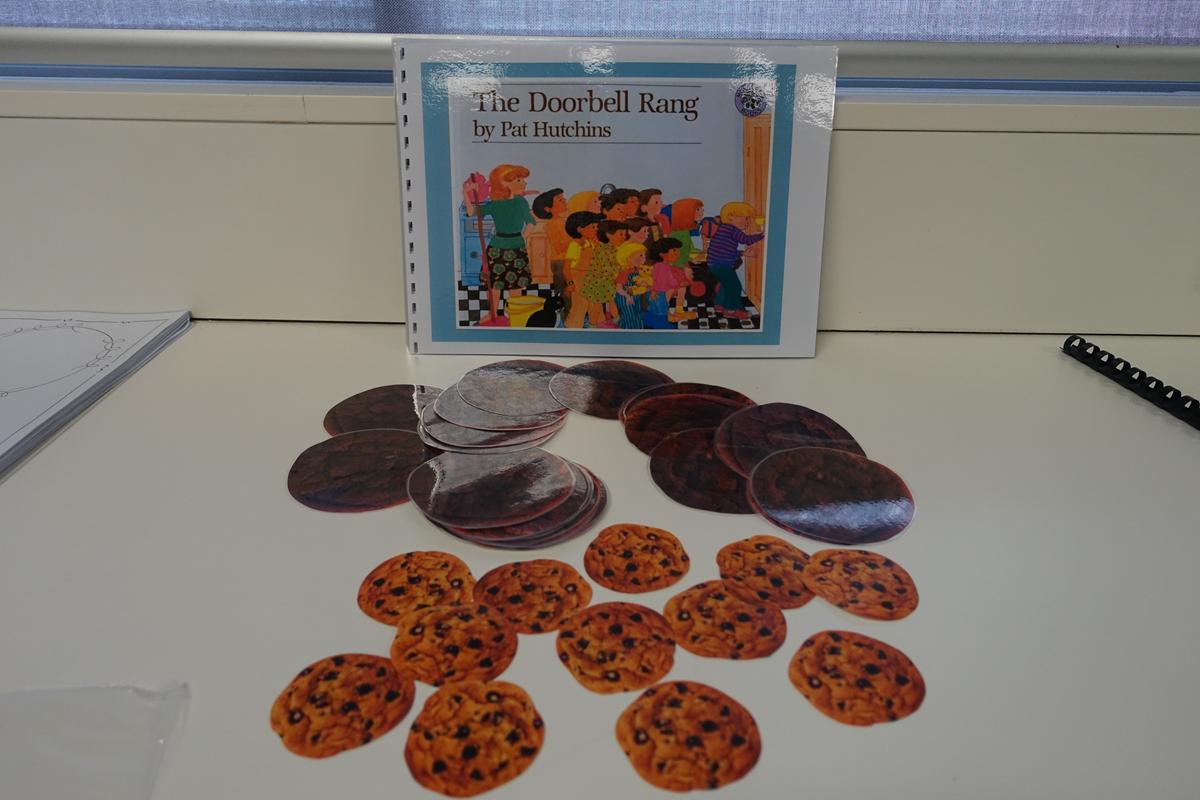
- acting out Maths sharing or grouping stories e.g. The Doorbell Rang-Finding out what happens when an amount is shared out to an increasing number of people.
e.g. Minnie’s Diner-Discovering how doubling multiple times tests your multiplicative strategies-Is repeated addition enough to solve the problem?
- making arrays and discovering the commutative law for multiplication e.g. 4 row of 3 is the same as 3 rows of 4 or 4x3=3x4
- using number lines to visualise number sentences and worded problems
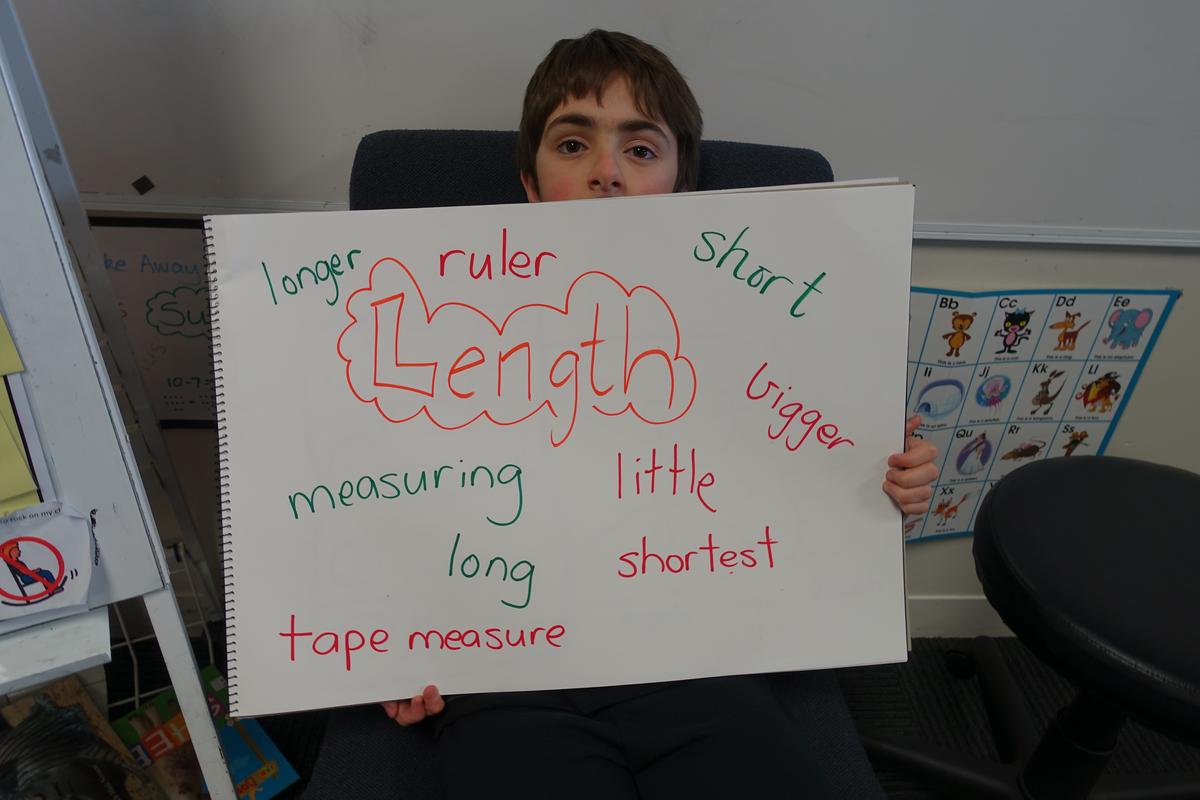
- using the language of same, equal, group, share, fair share, each, repeated addition, multiples, columns and rows, division and multiplication
- practising skip counting and number facts through games (online, board and class)
- recording shared and personal learning in class Maths journals, online portfolios, student reflection booklets and anchor charts
In the coming weeks students will consolidate their skills and knowledge in multiplication and division by consistently exploring how to solve problems in multiple ways (e.g. using arrays, repeated addition, number lines and groups).
In the last week of term all students will complete a common assessment task in multiplication and division, pitched at their level of understanding. This will give teachers and students a chance to reflect on progress and work out what they can do next term to build on this learning.
Measurement and Geometry
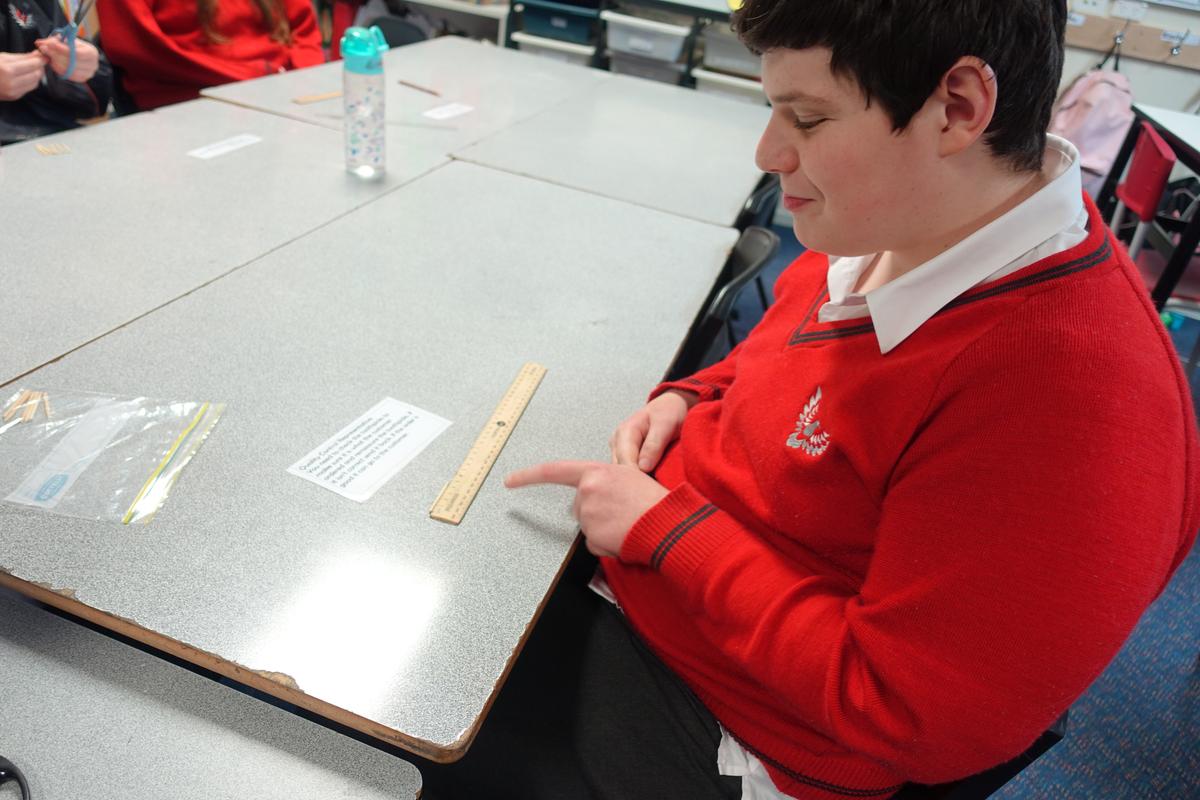
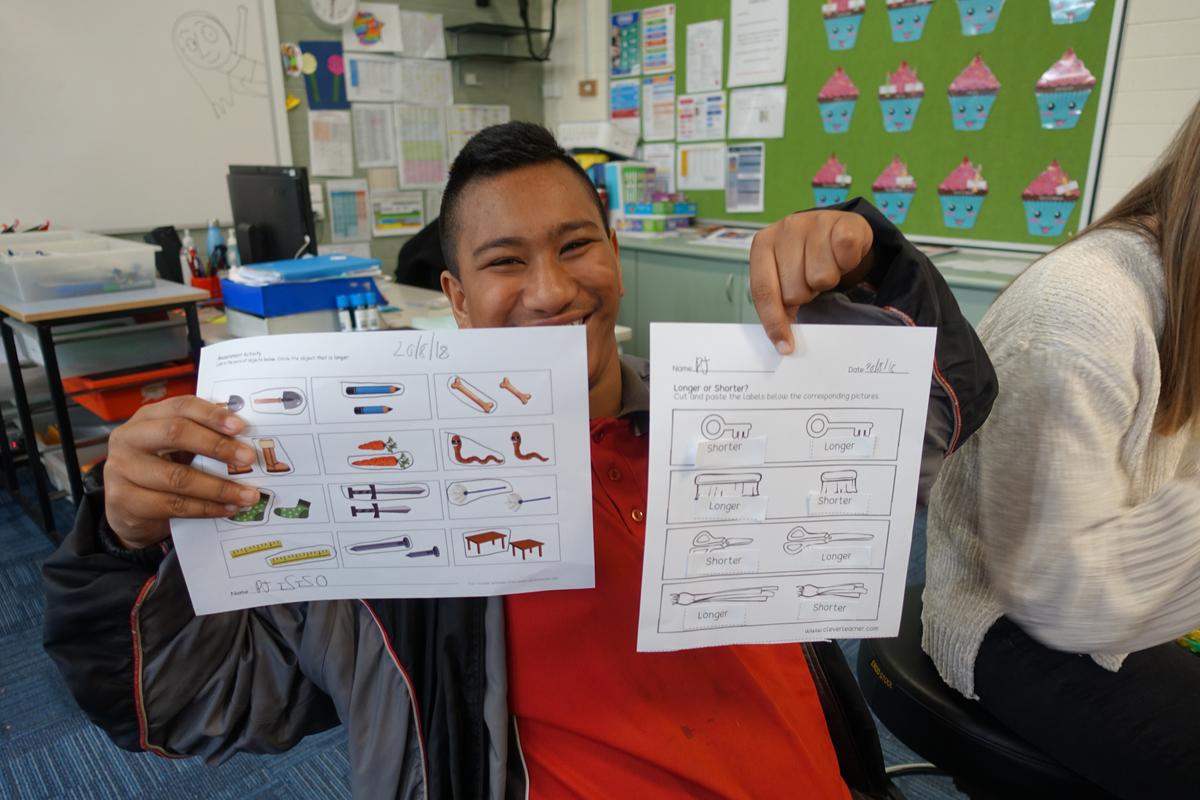
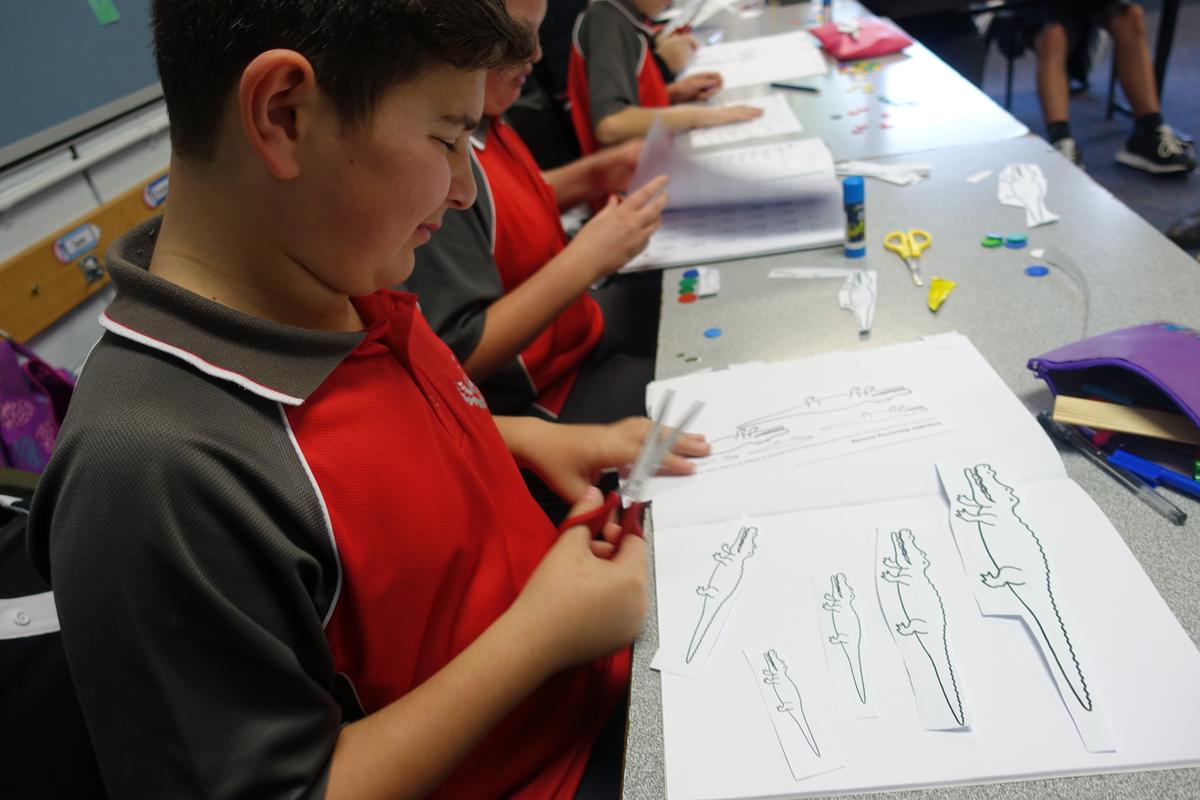
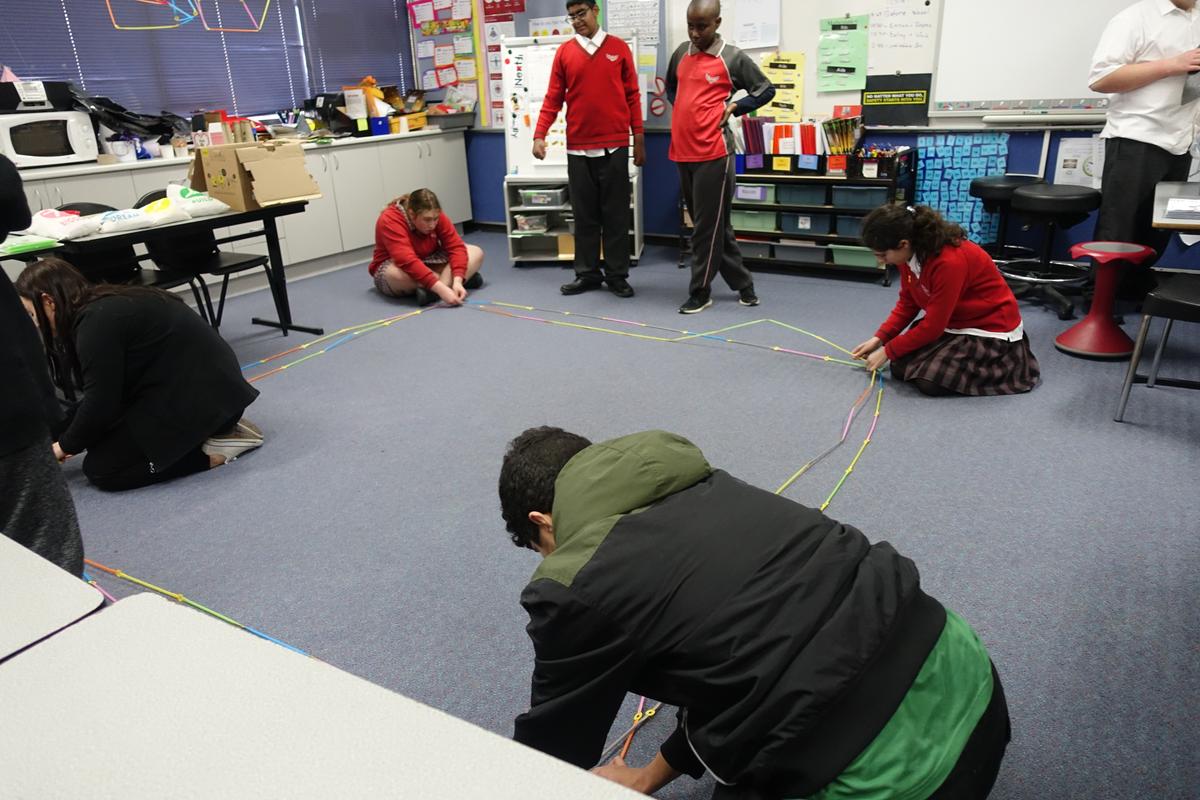
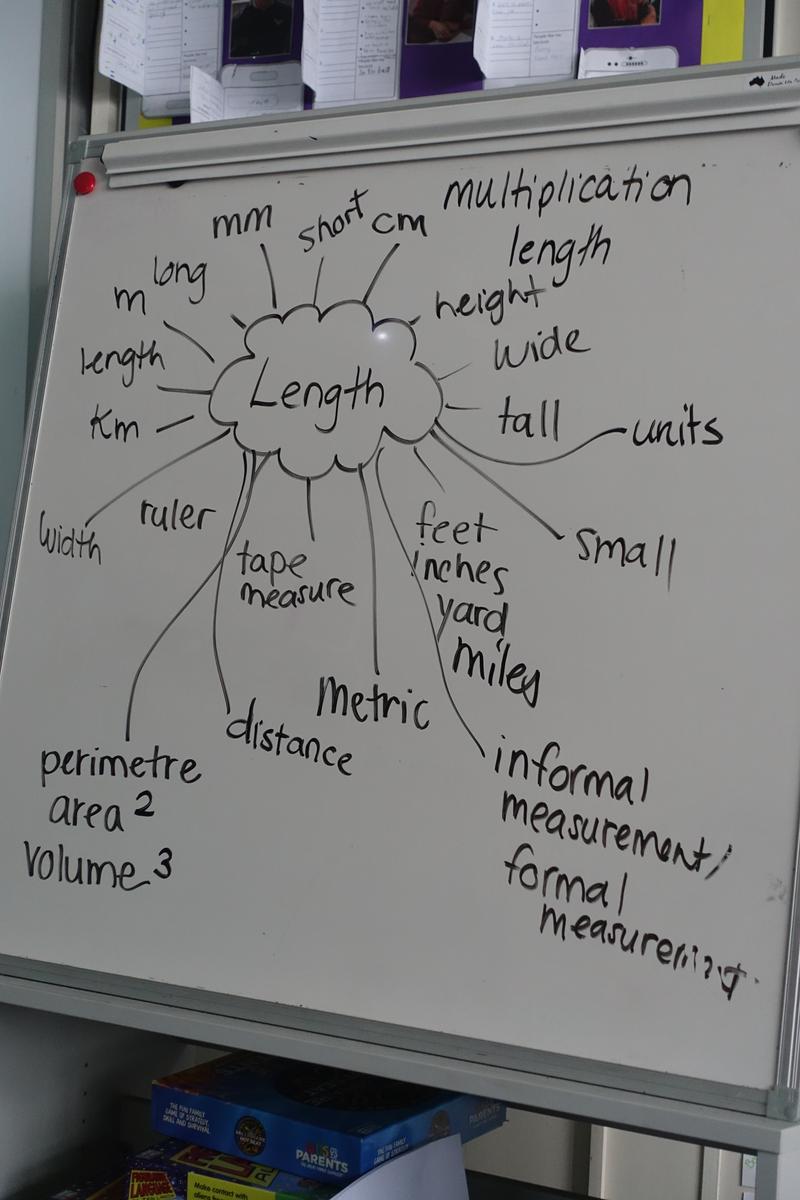
Students are continuing to build on their knowledge of measurement language and their understanding and accuracy with informal and formal measurement.
Students have participated in a variety of activities including:
- discussing how we measure and record the different measurements we use
- directly measuring items against each other to identify which is long/short
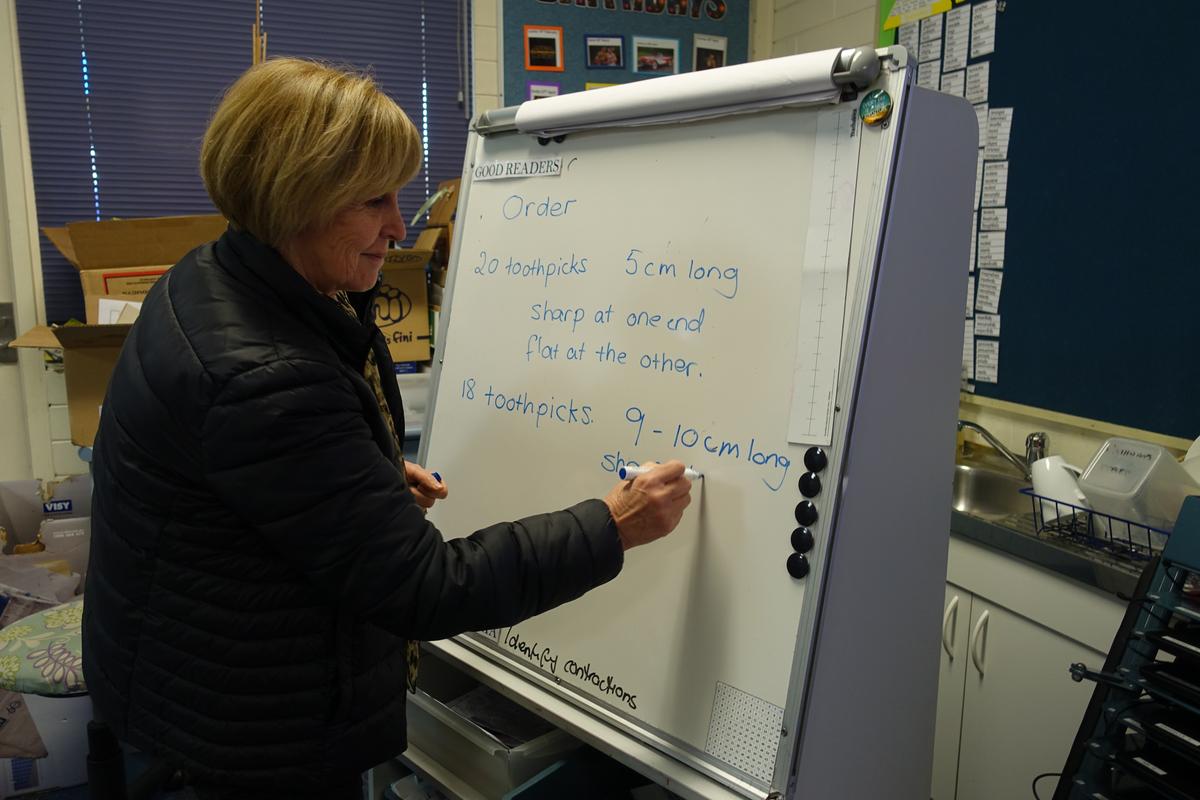
- ordering objects based on length
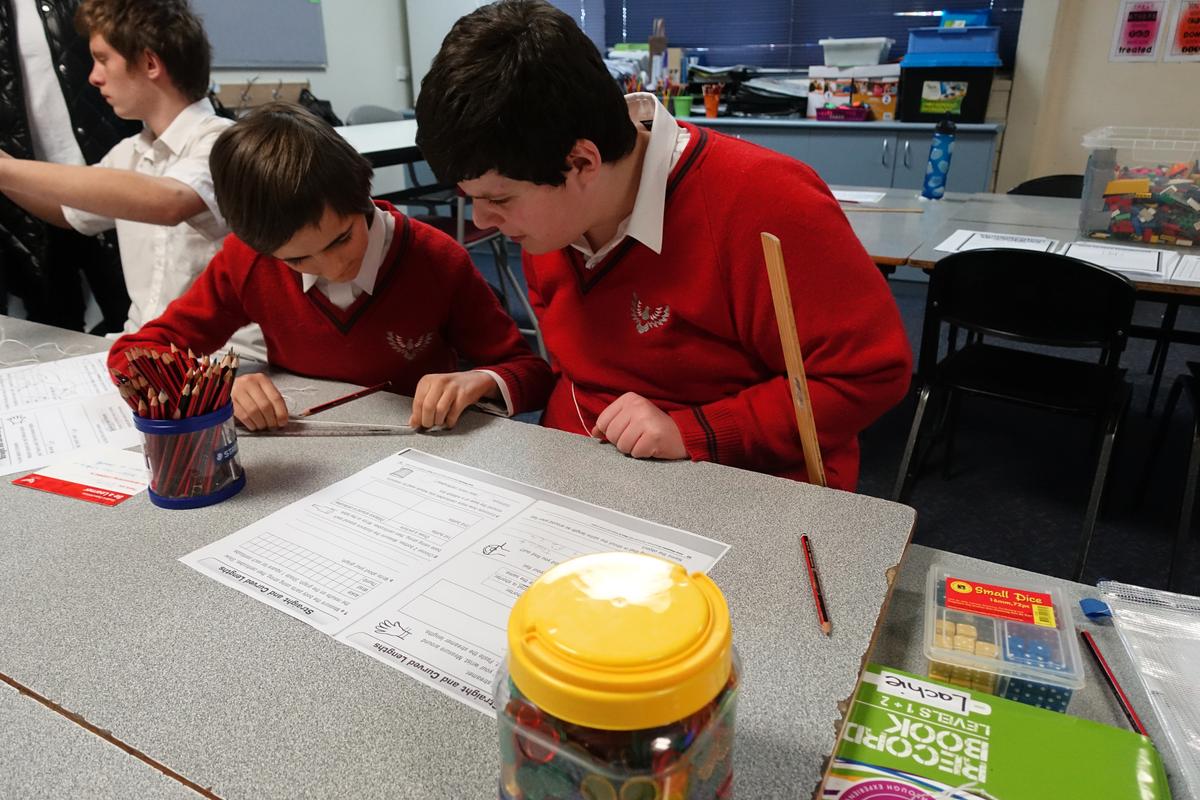
- measuring and comparing body parts footprint using informal units (e.g. paper clips, unifix blocks) and formal units (mm and cm)
- measuring items from around the room using different informal and formal units
- exploring which measurement is the best choice for different items, e.g. would it be best to measure the length of a lunchbox using metres?
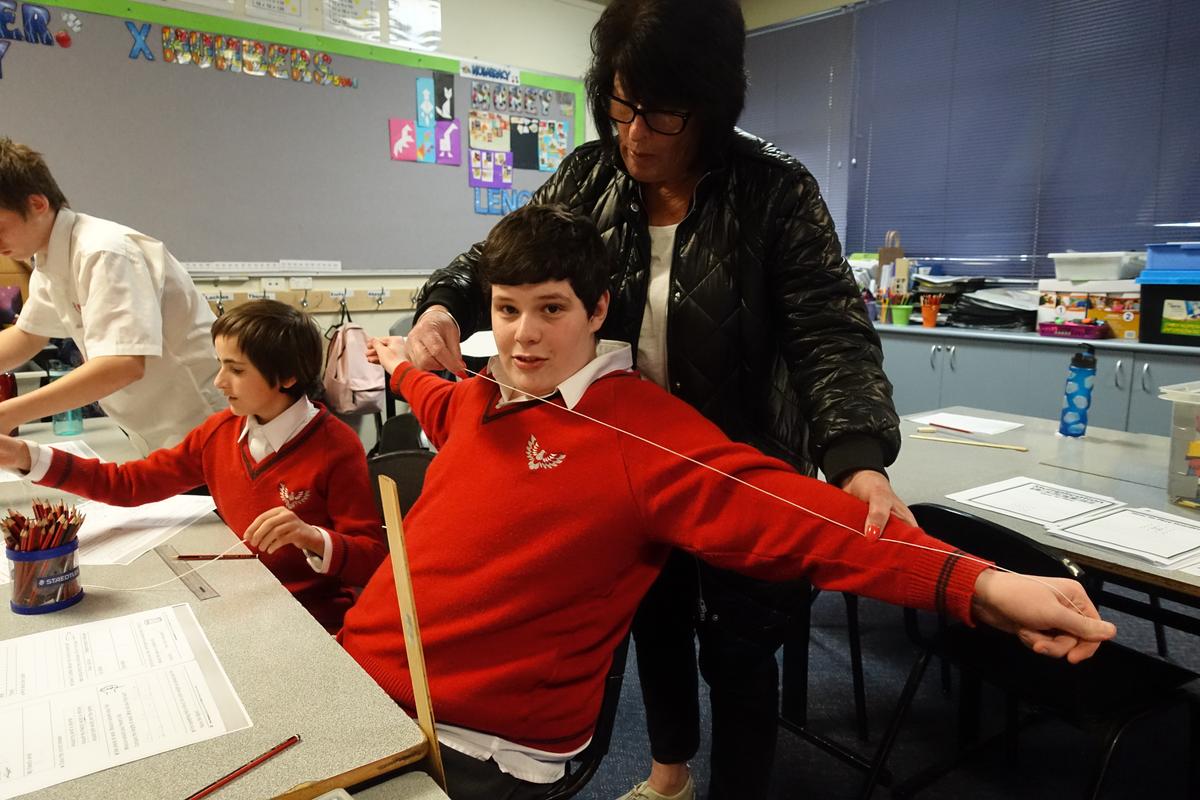
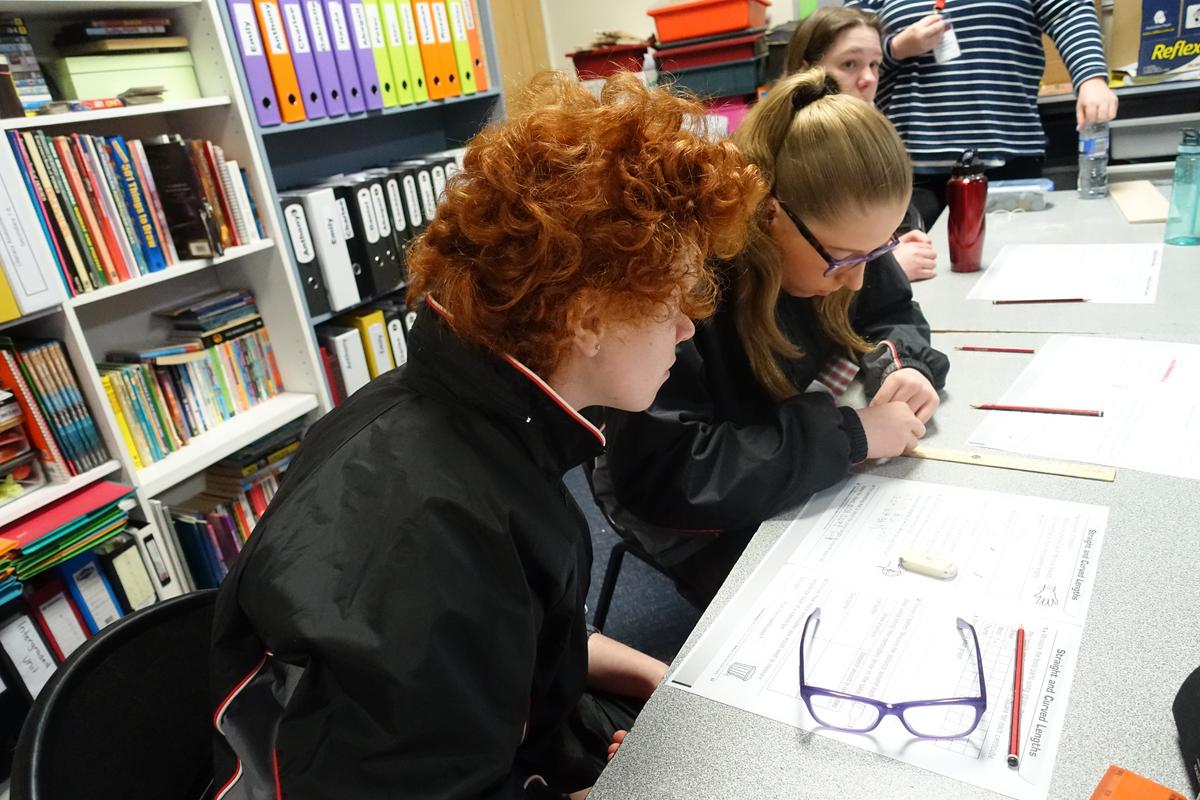
Last week Yr. 12’s participated in some fun authentic ‘Gorilla Maths’ activities that included comparing their arm span, height and weight to that of a male silverback gorilla. In an open-ended task, students had to find and measure as many different features as possible on a gorilla’s hand. One student found more than 20 different things that could be measured! Some students used counters to determine area while others used a ruler or string to accurately measure the perimeter of a life-sized gorilla hand.
Over the coming weeks students will practice their measuring skills to gain more confidence and accuracy. Most students will be challenged to apply their skills to everyday situations and problems e.g. comparing the flight distances of students’ paper planes, designing a new garden beds, interpreting the new school building plans, more ‘gorilla maths’!
Integrated Studies
The Integrated Unit inquiries on Change are now really bubbling along.
Lower Primary students are investigating the Weather and how weather affects their lives.
They are using their senses to develop understandings and concepts about the weather.
Students have been busy:
- making art works reflecting the seasons
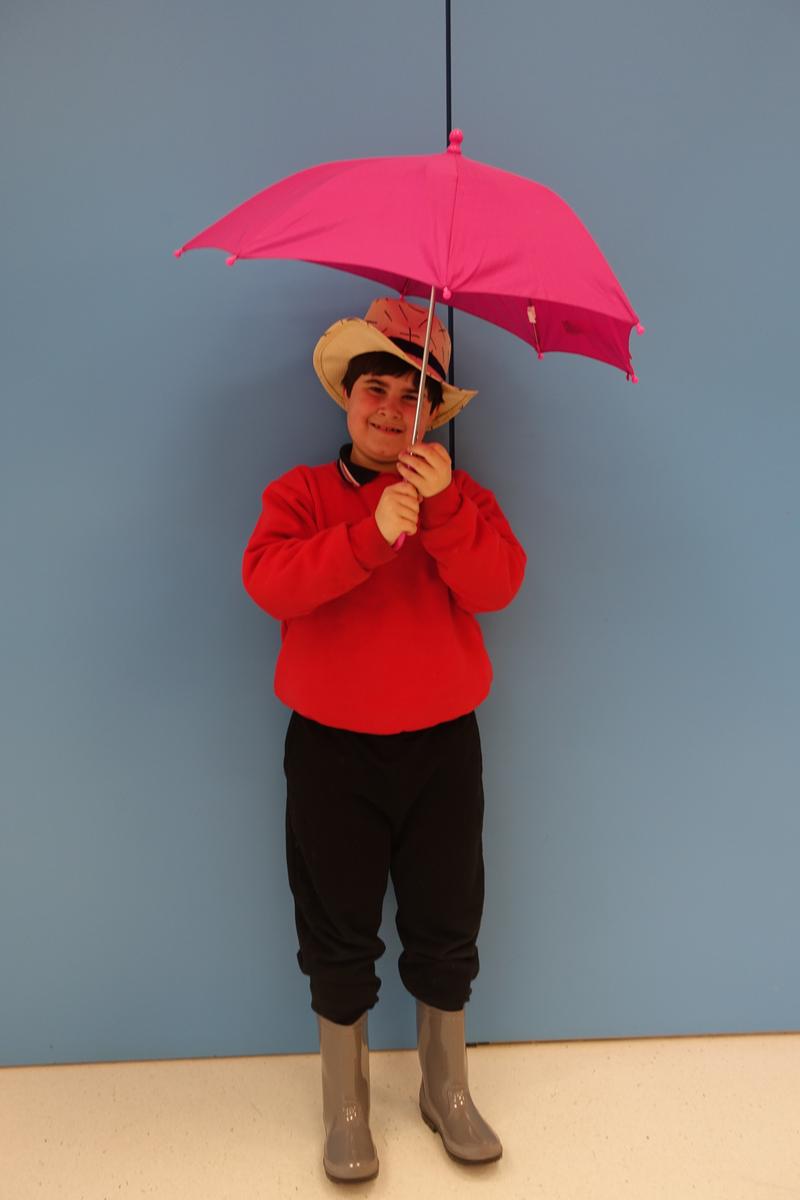
- dressing up to suit the weather
- tracking the weather in a weather journal.
- Inventing and using weather symbols for cloudy, rainy, sunny, stormy, windy
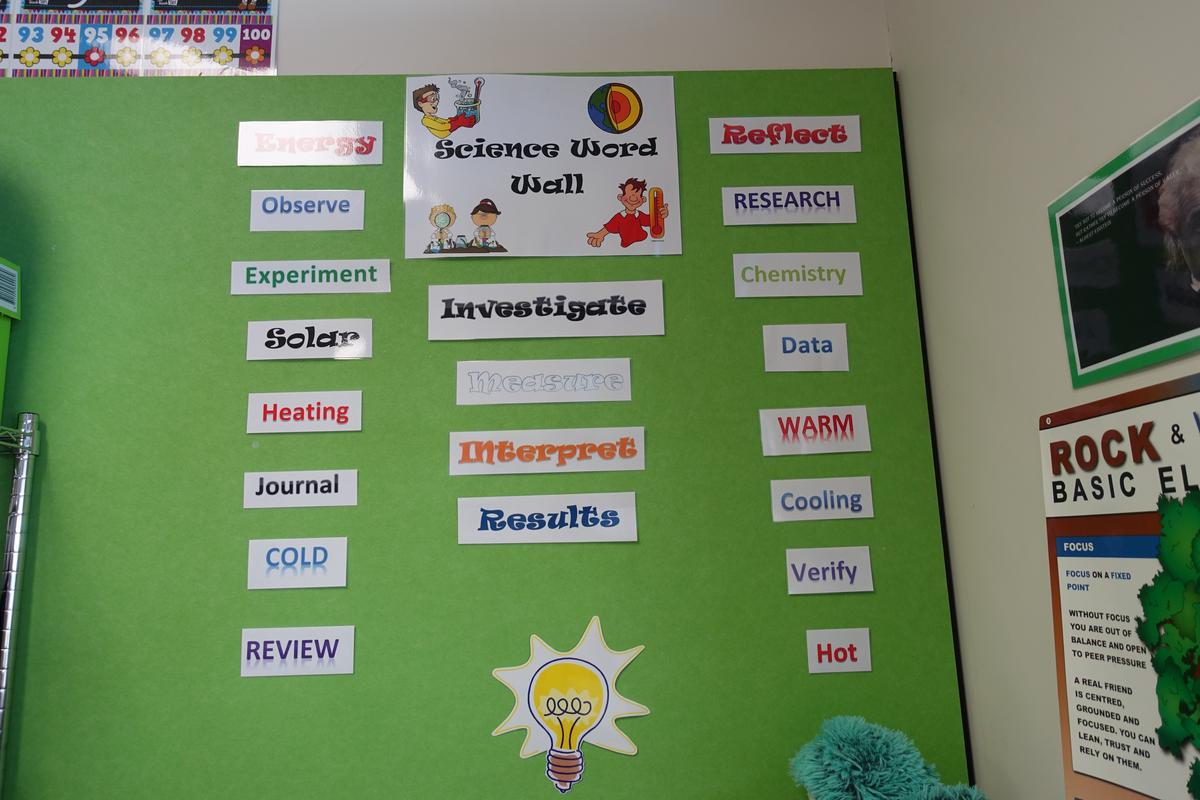
- contributing to word walls with descriptive words
- singing songs about the weather using interactive actions
As the unit continues students will investigate particular types of weather. They will explore expected weather patterns and reflect on how that weather affects what we eat, wear and do.
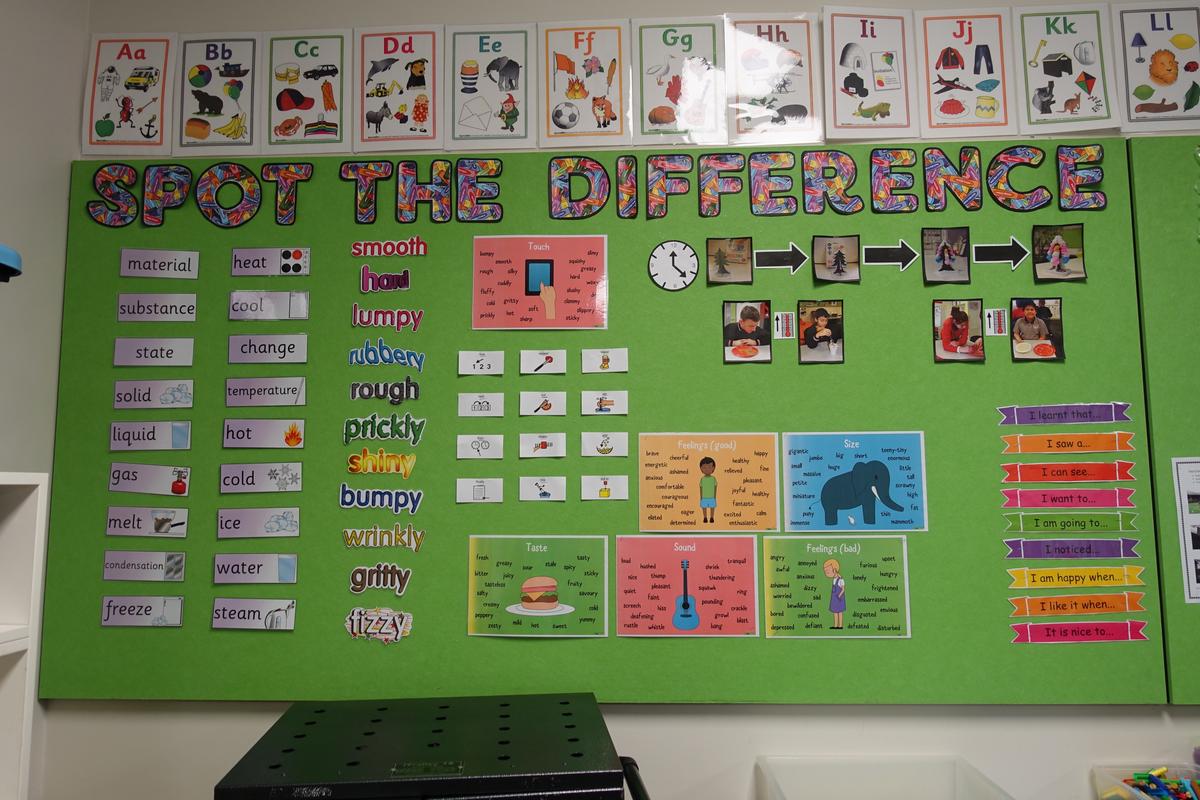
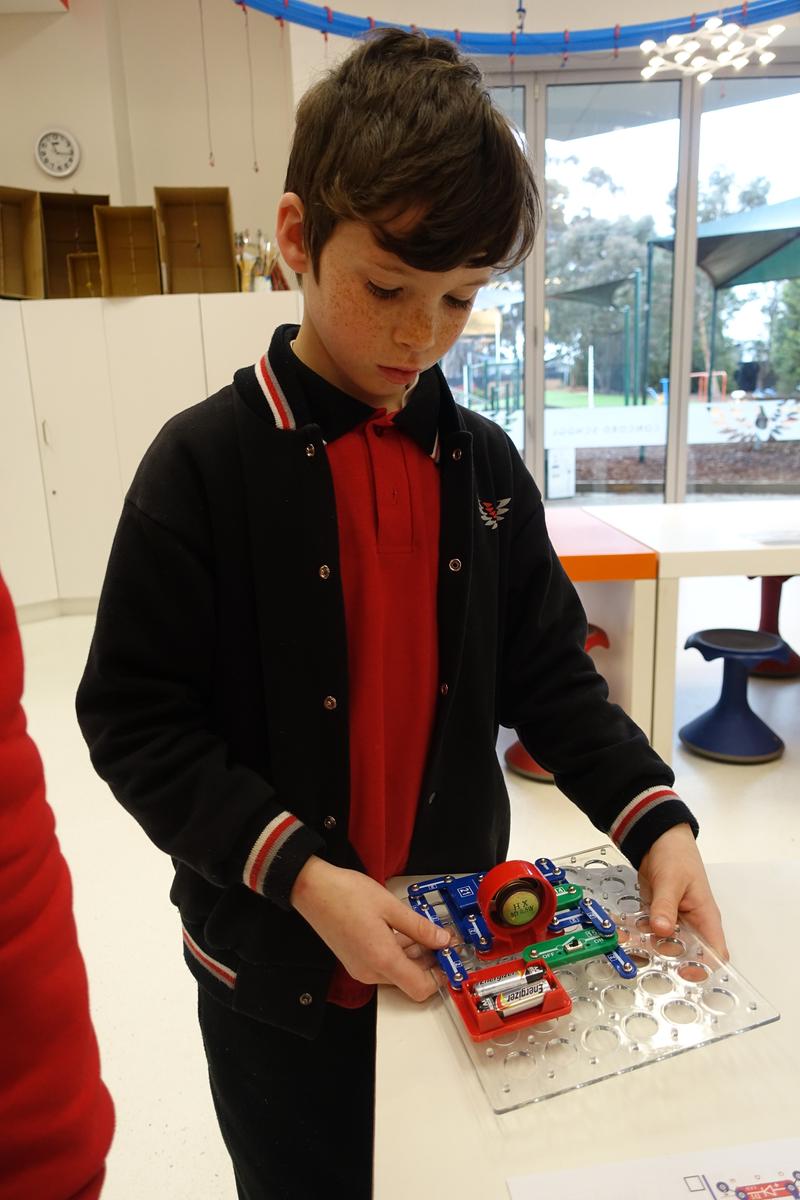
Upper Primary students continue to "Spot the Difference" in Science. They are exploring basic physical, chemical and environmental changes, developing their sensory and descriptive powers and reflecting on reversible and non-reversible change.
More recently they have been:
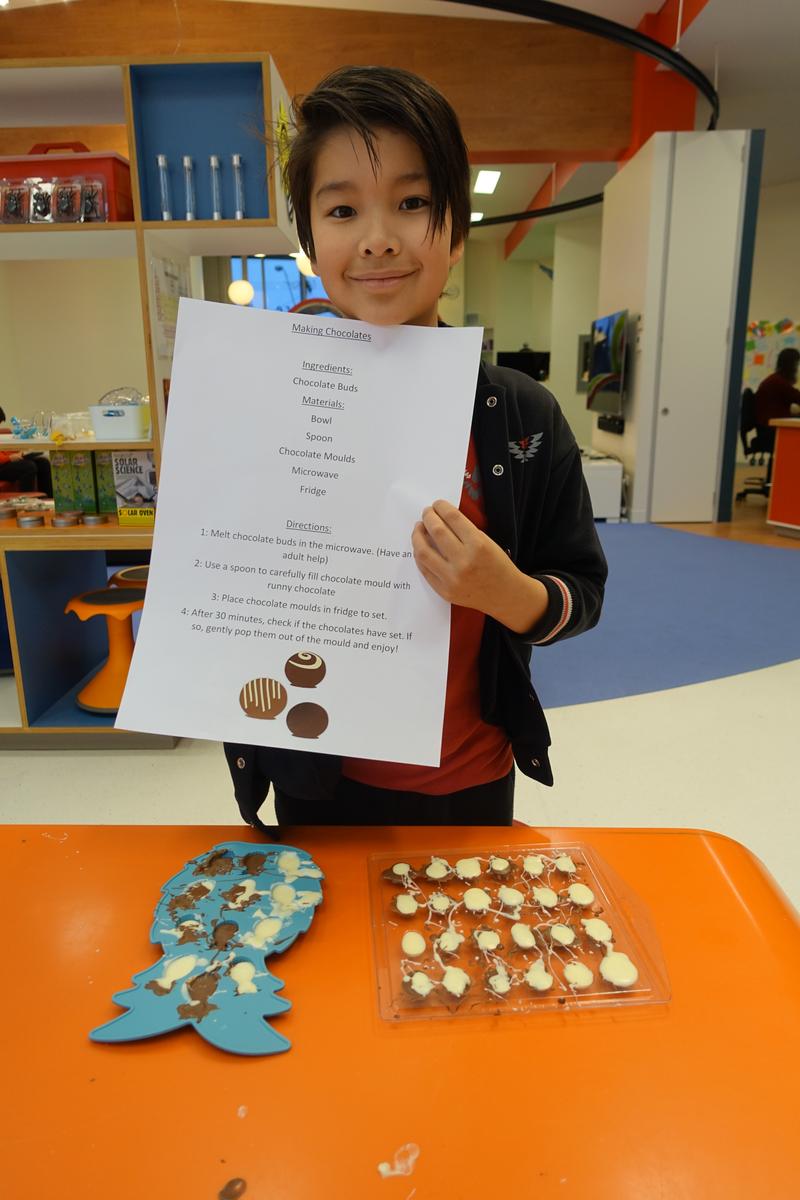
- using their 5 senses to describe the stages of change chocolate and popcorn goes through when heated and then cooled
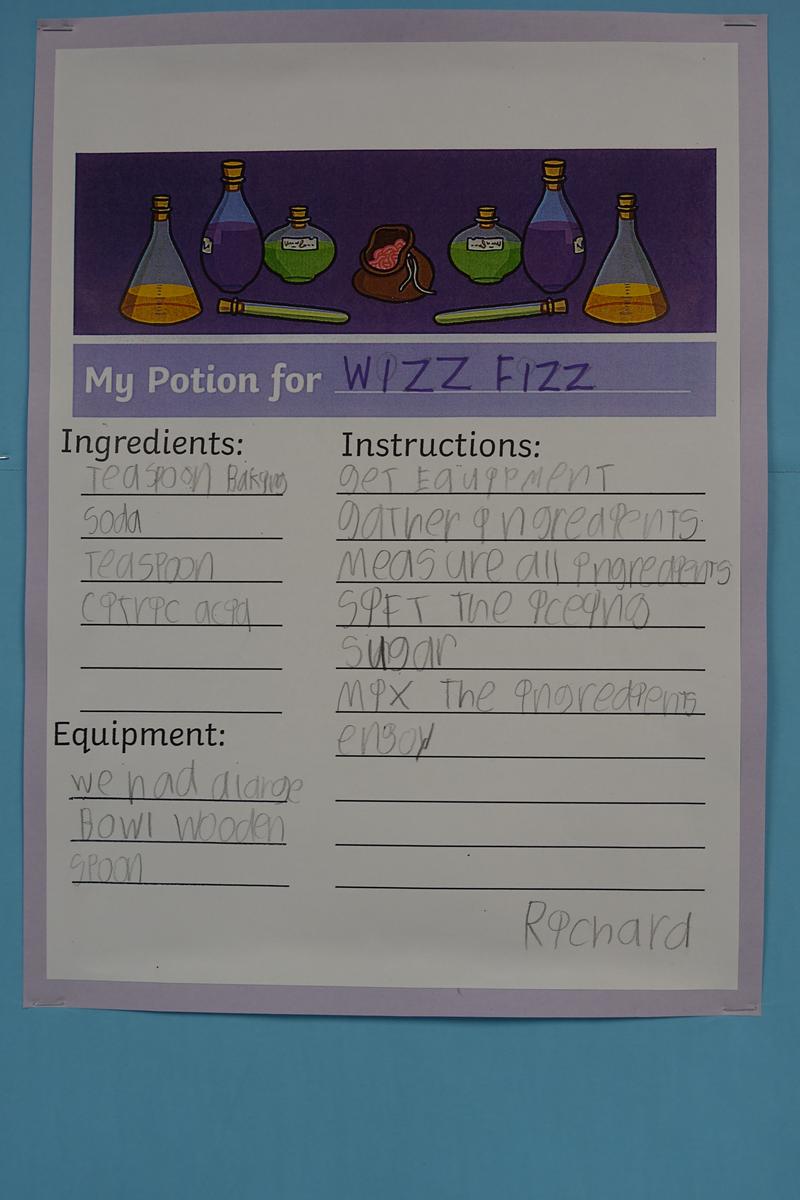
- creating chemical reactions by mixing up a ‘wizz fizz’ concoction
- lighting candles to observe whether the candle changes after heat is applied.
- comparing the features of uncooked spaghetti: its smell, feel and appearance
- dressing up in outfits in the MILE room to suit the different seasons
- observing chemical changes when you mix milk, dishwashing liquid and food dye together
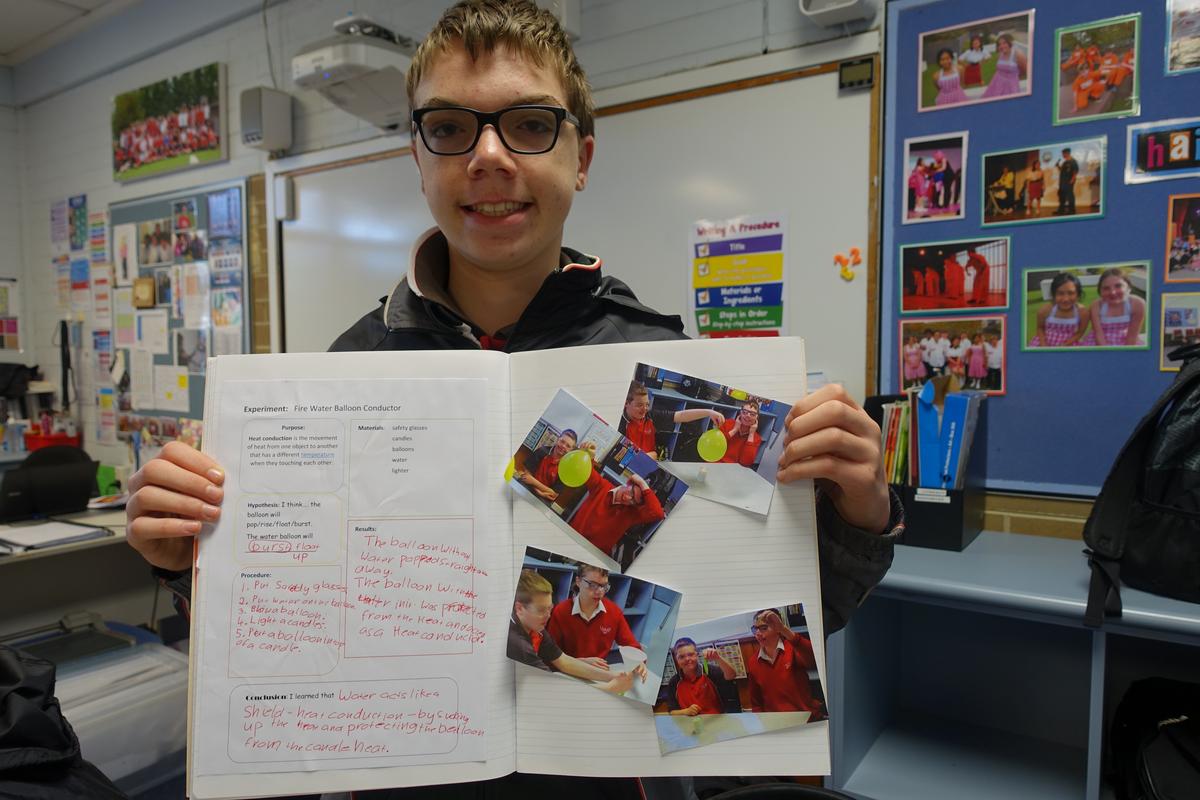
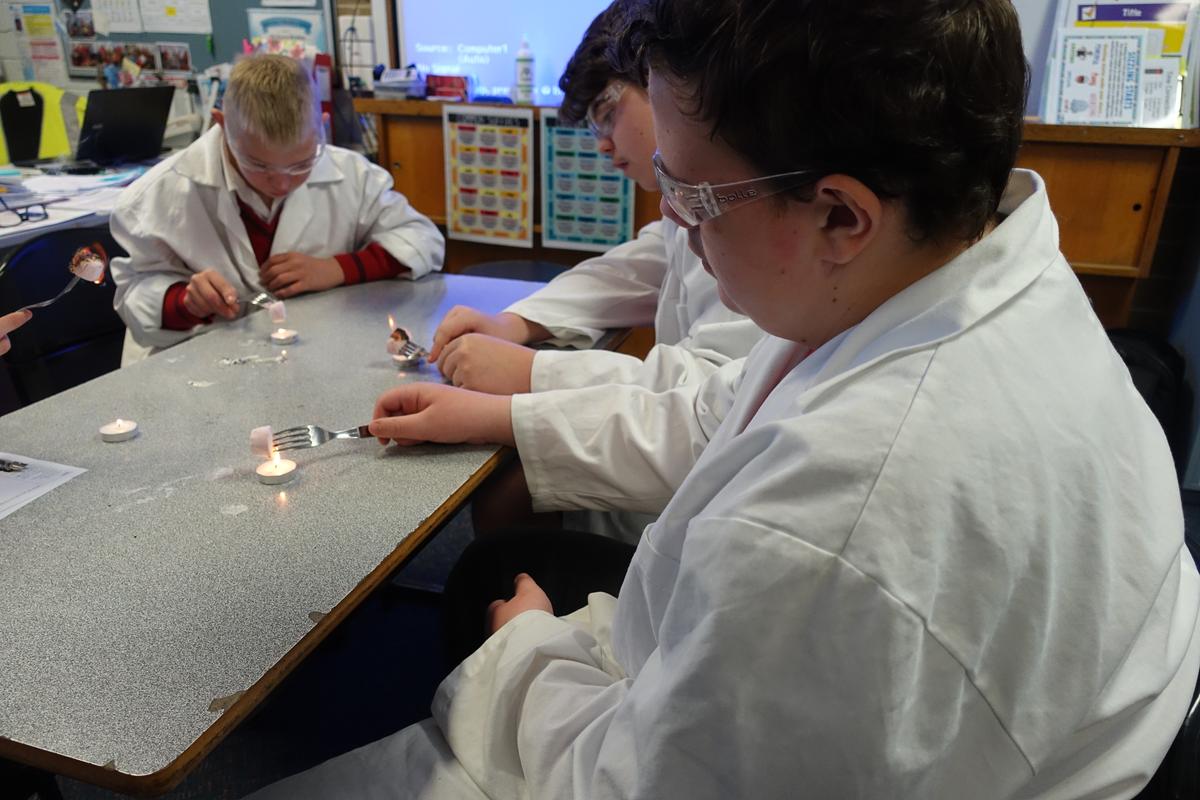
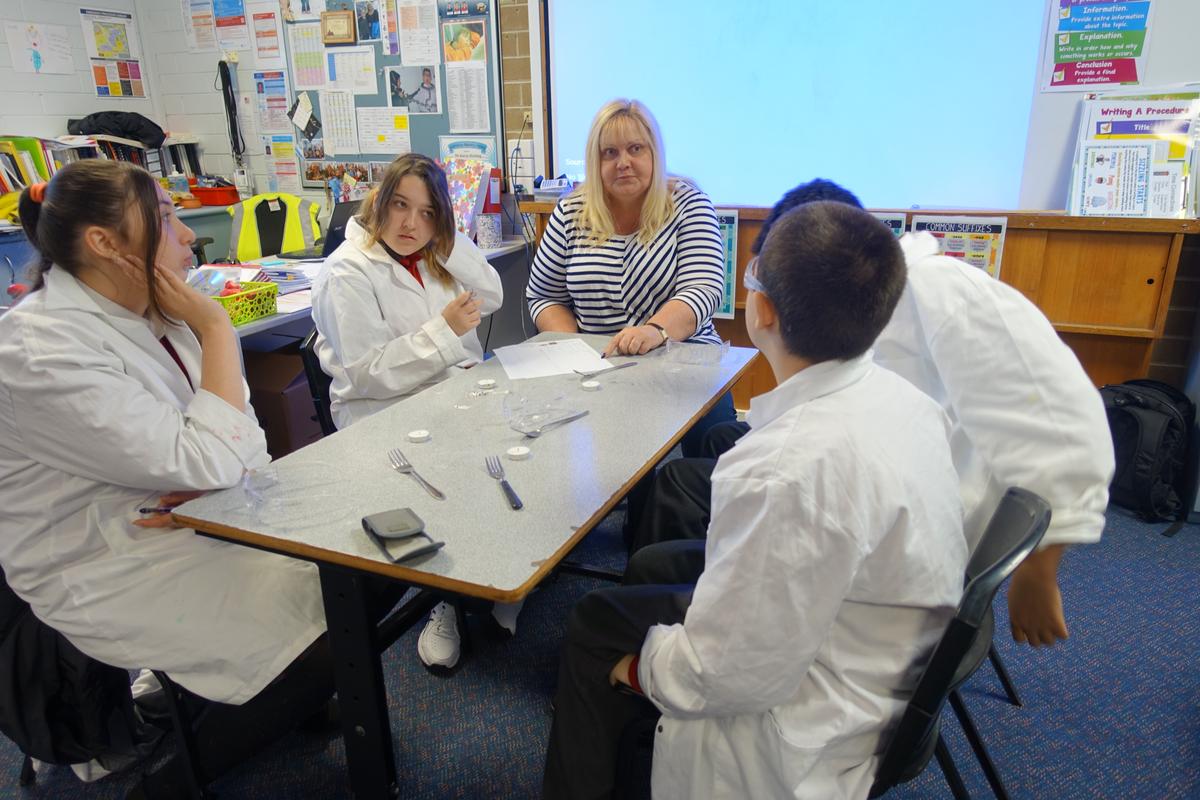
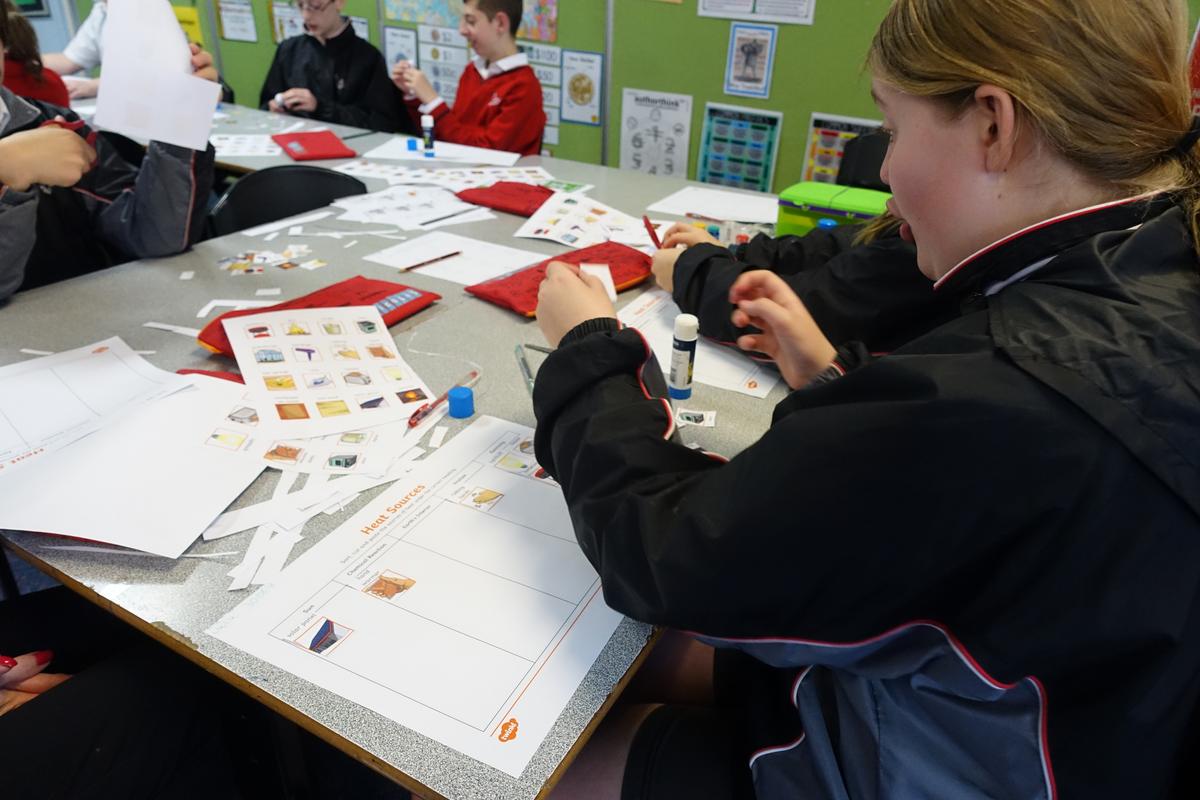
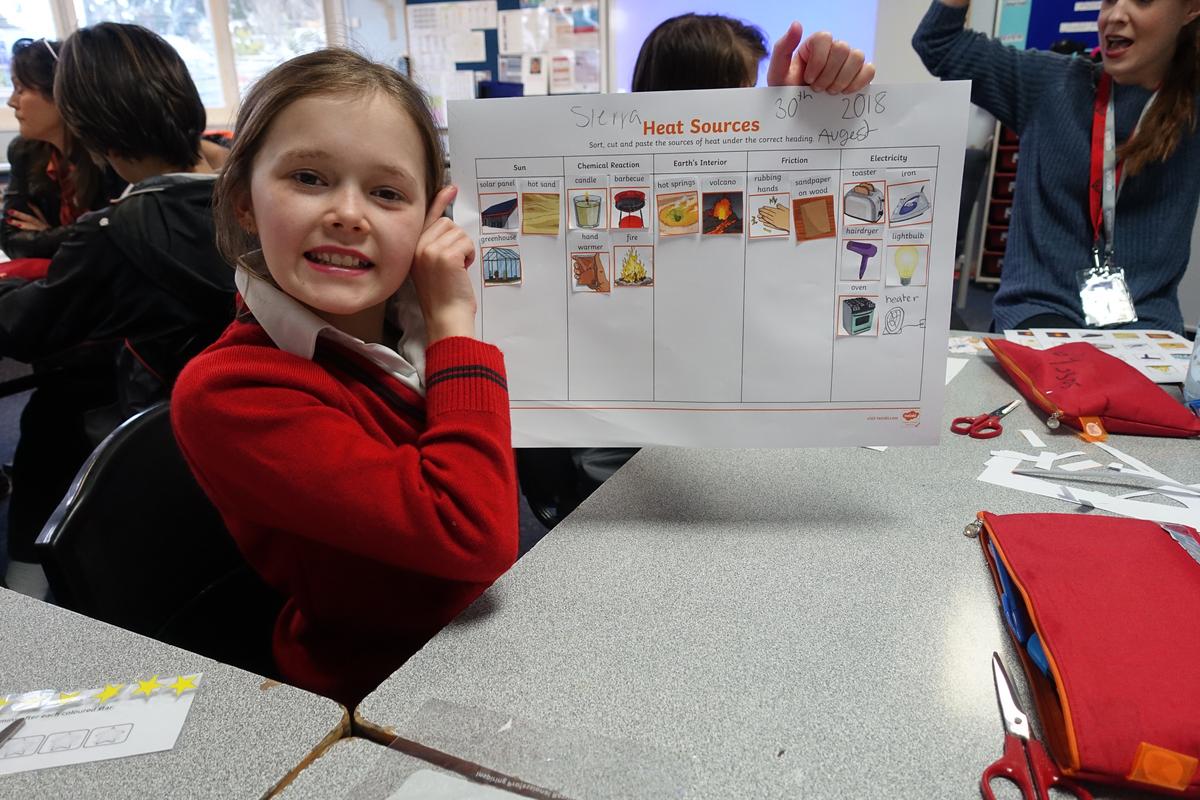
Secondary Yr. 7/8 students are exploring Heating and Melting in order to find out how solids or liquids are influenced by temperature. They are discovering how and why items from their everyday lives can change.
It was great to hear students talking about their experiments in the last newsletter. I have participated in some of their fun hands on activities and experiments such as:
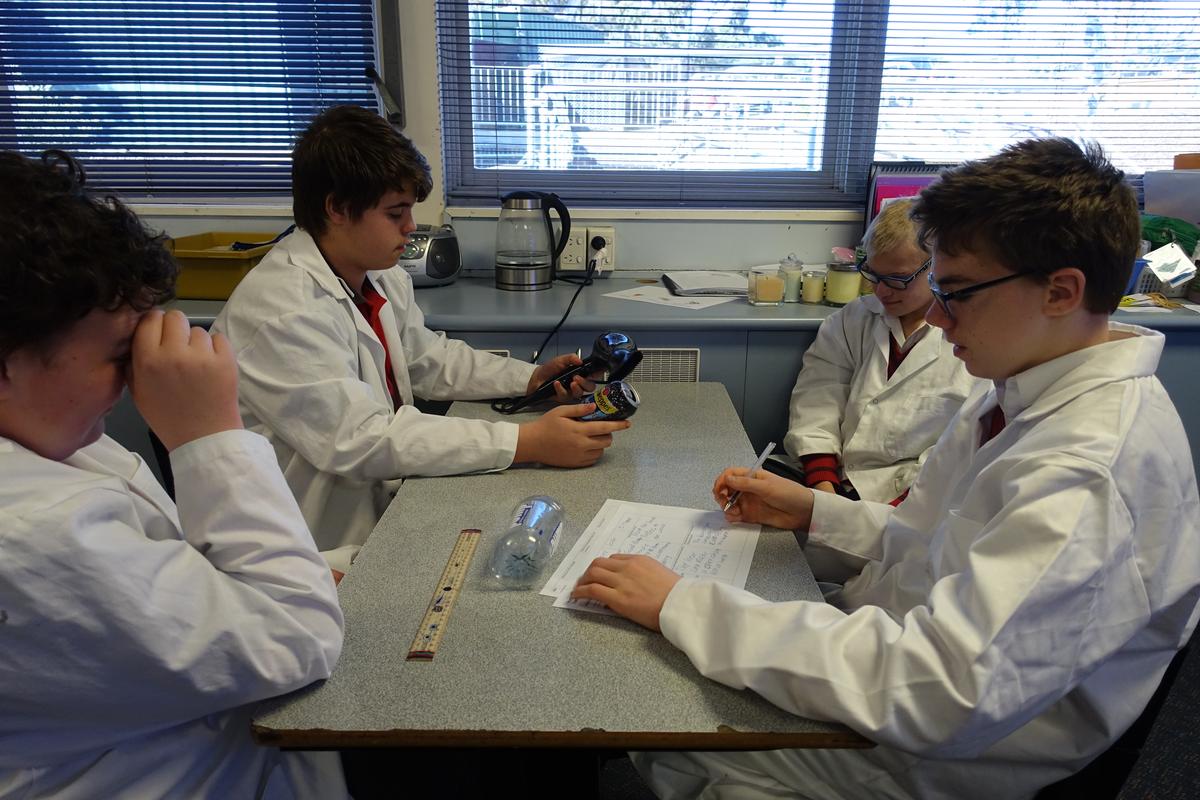
- observing hot water and cold water bottles with balloons attached to determine whether heat energy makes things rise
- comparing types of heat energy sources to observe how heat transfers from one object to another
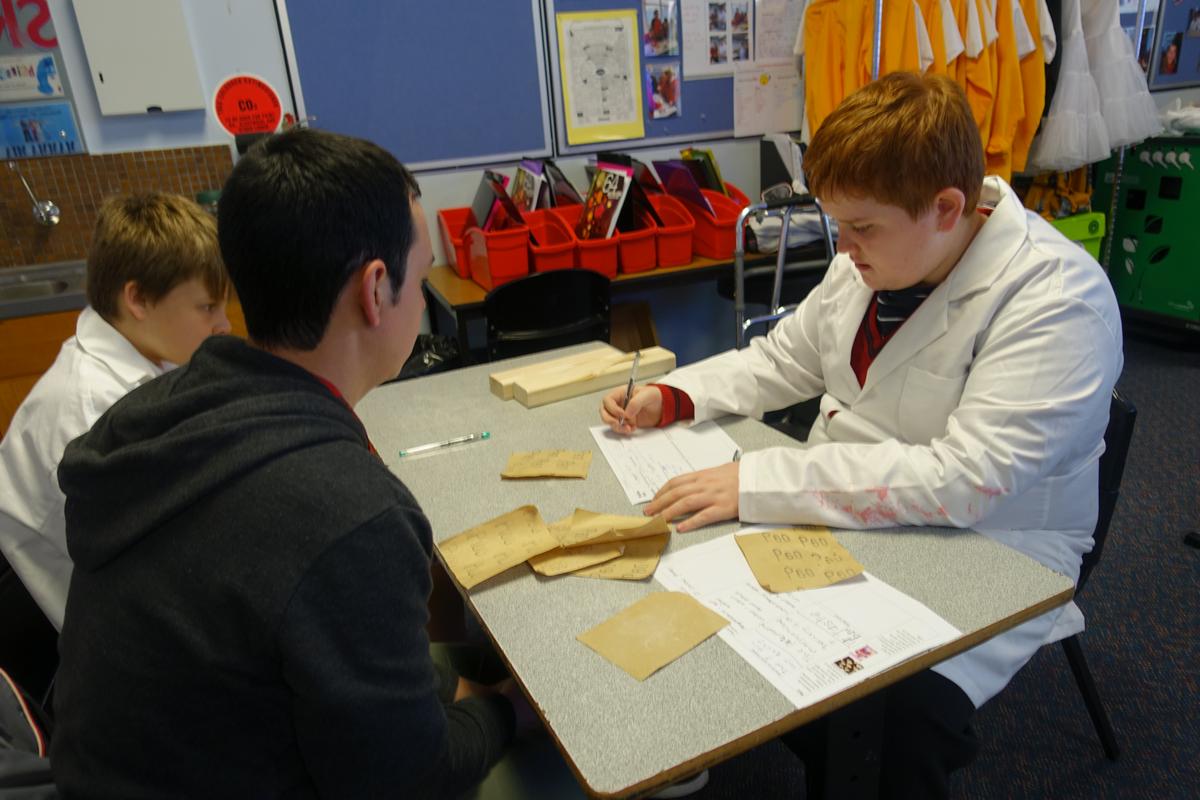
- sliding friction-using sandpaper and wooden blocks
- burning energy with candles and marshmallows
- electrical energy- using a hairdryer on an empty plastic bottle
- ‘Ice Race’ experiment where students had to work out the best way to melt the ice block.
- cooking an egg to learn about how the heat is made and the states of change that happened with the water and egg.
In the final weeks of term classes will start researching a Heating and Melting Expo product. Based on the students’ current interest and enthusiasm for this inquiry I’m guessing there will be some amazing products for sale at this year’s Expo!
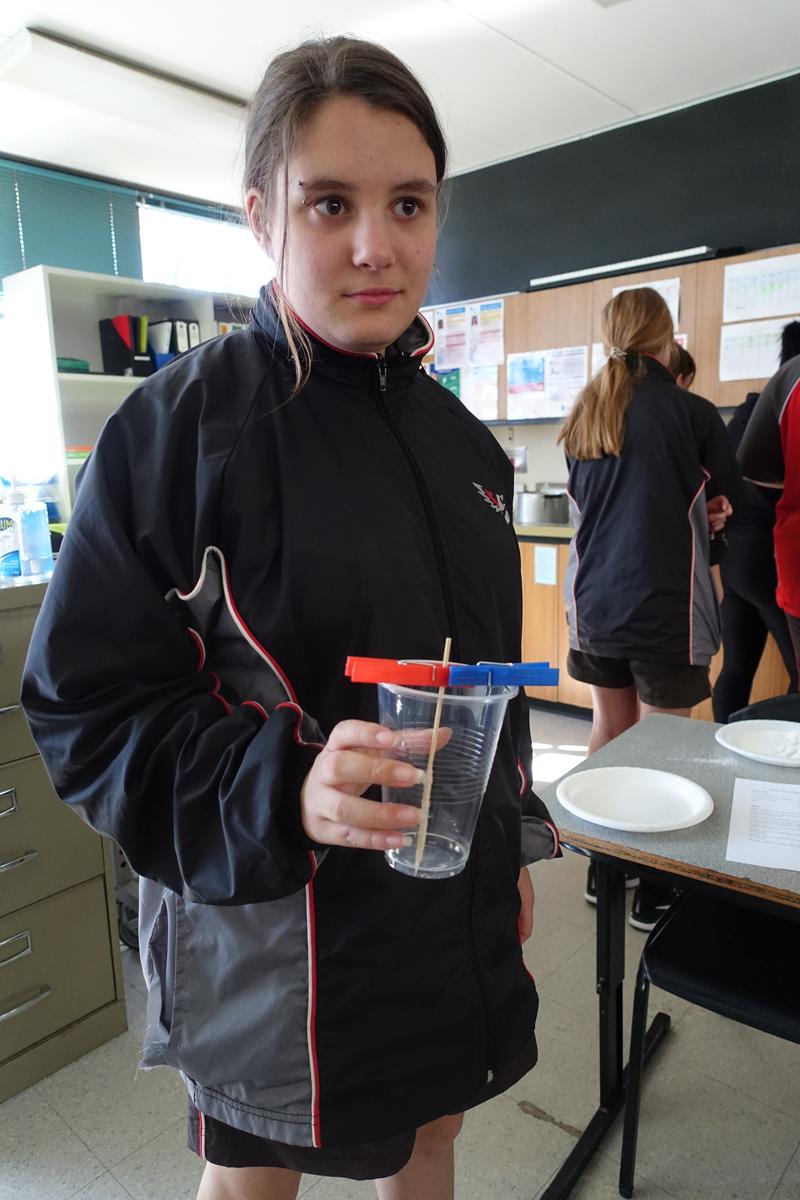
In Secondary 9/10 three classes are investigating Electricity and the other three classes re are delving into Changing State. The focus switches in Term 4 so that all students cover the key Change inquiry units.
There has been lots of excitement as each group has an excursion or an incursion coming up in the next few weeks. On Sept 4th there is a States of Matter incursion with Professor Bunsen coming out, while the electricity group is heading to Scienceworks the following week on Tue 11th.
in the Electricity sessions students are researching different sources of energy and plan further experiences to demonstrate different kinds of energy. Meanwhile, the Changing State groups are concocting reactionary experiments and puzzling over reversible and irreversible change.
PreCAL classes are going ‘craft crazy’ in their Leisure unit. Classes are applying their knowledge of both procedural and descriptive texts as they visit local shopping centres, Zart Art and Bunnings to buy requirements to bring back to school and make. They have both followed and created procedural text to get to the venues and construct a craft item. Additionally they have co-constructed recounts describing the places, products and experiences encountered. When purchasing items the students focused on their communication skills and used the visual clues in the stores to locate the items they wished to purchase.
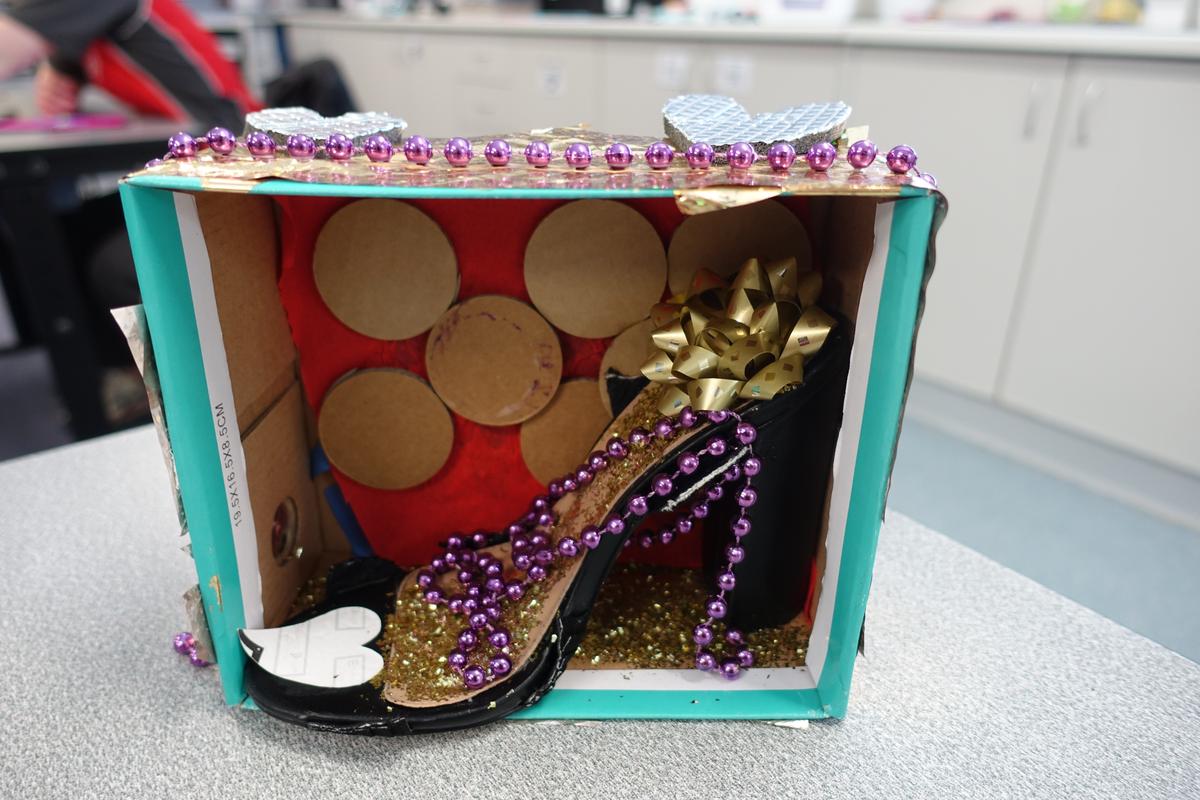
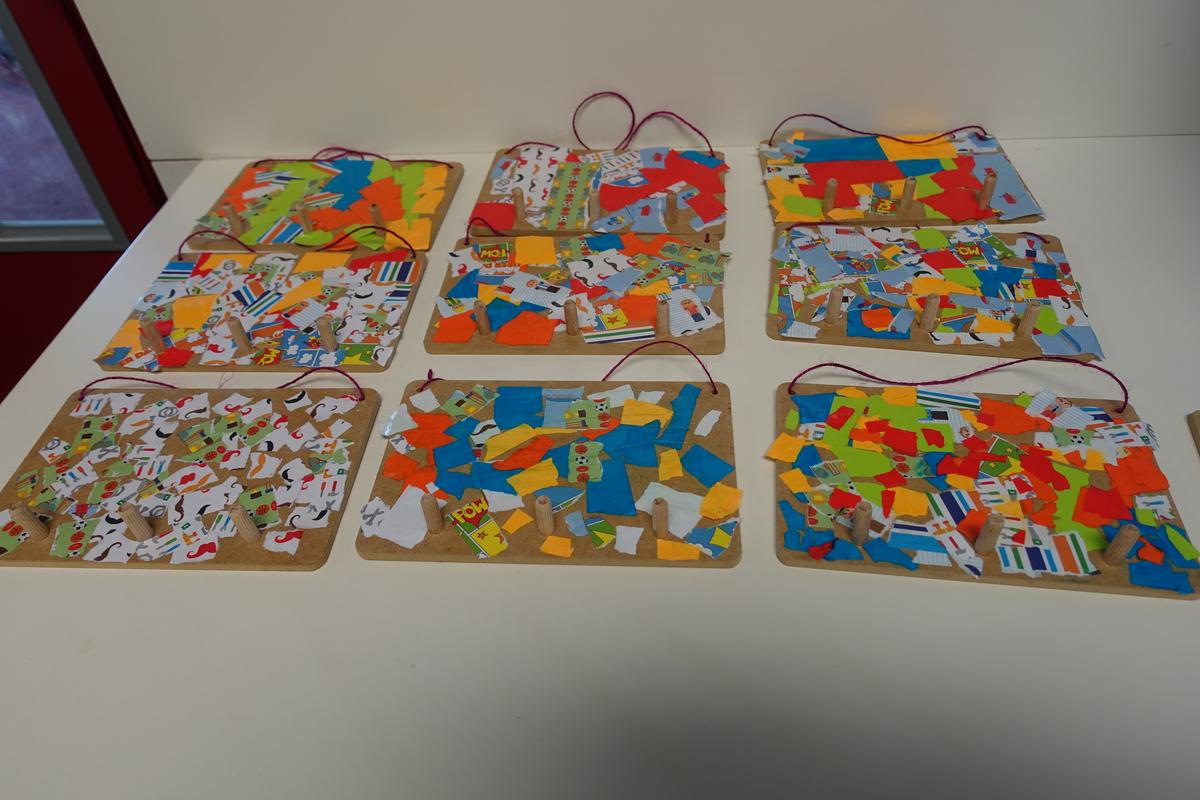
Stemming from the visits to Reverse Art Truck, Zart Art and Bunnings, Secondary 9/10 PreCAL students have made some amazing 3D designs featured in the attached photos. Classes are preparing to display and perhaps sell their construction creations at the upcoming Night of Celebrations in term 4.
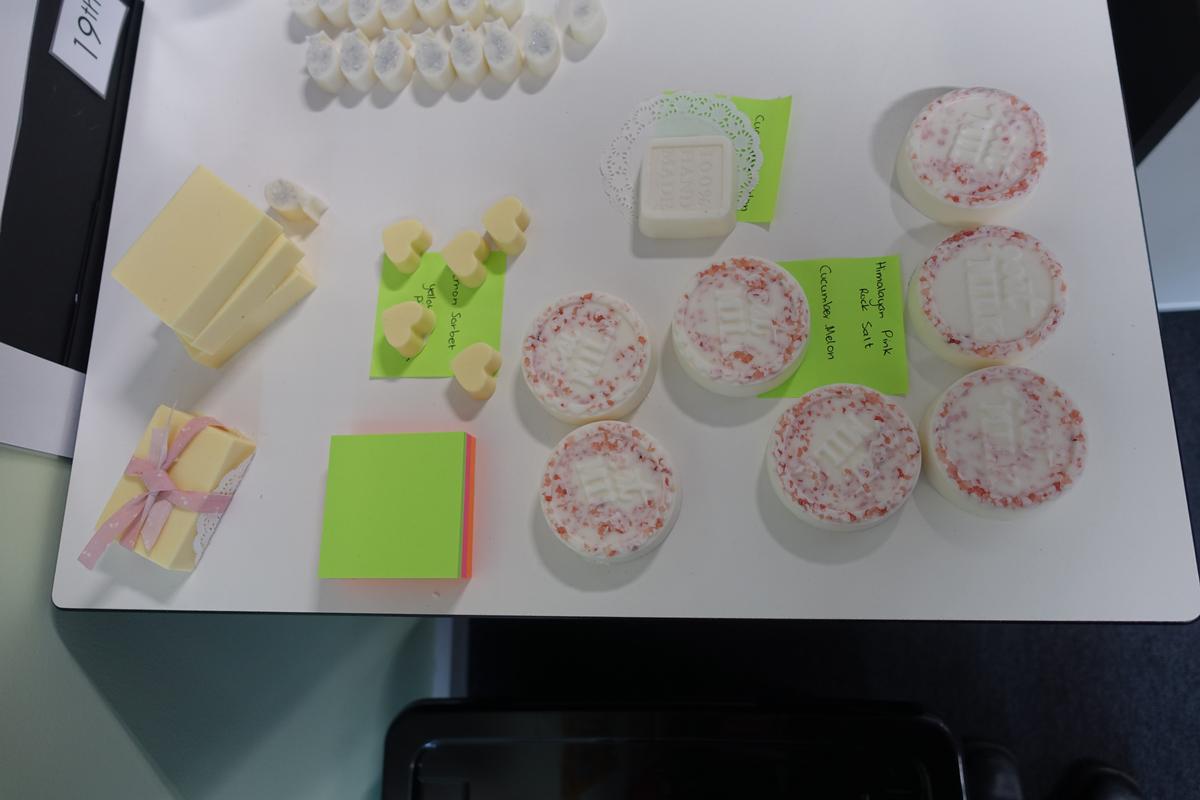
Secondary 7/8 PreCAL students have made attractive designer heat bags and now beautifully scented soap for their craft hobby projects. I visited them after all the hard work was done! I found out they went to Lush in Doncaster to research soaps. They discovered how they are made, explored different scents/smells and the different textures and colours. Students touched and smelt everything there and watched a rainbow bath bomb in action. The following week they visited The Body Shop to get more ideas and materials and then the soap making process occurred back at school. SFC students will sell these products at the Heating and Melting Expo next term.
I can’t wait to see how well they sell!
Social Competencies
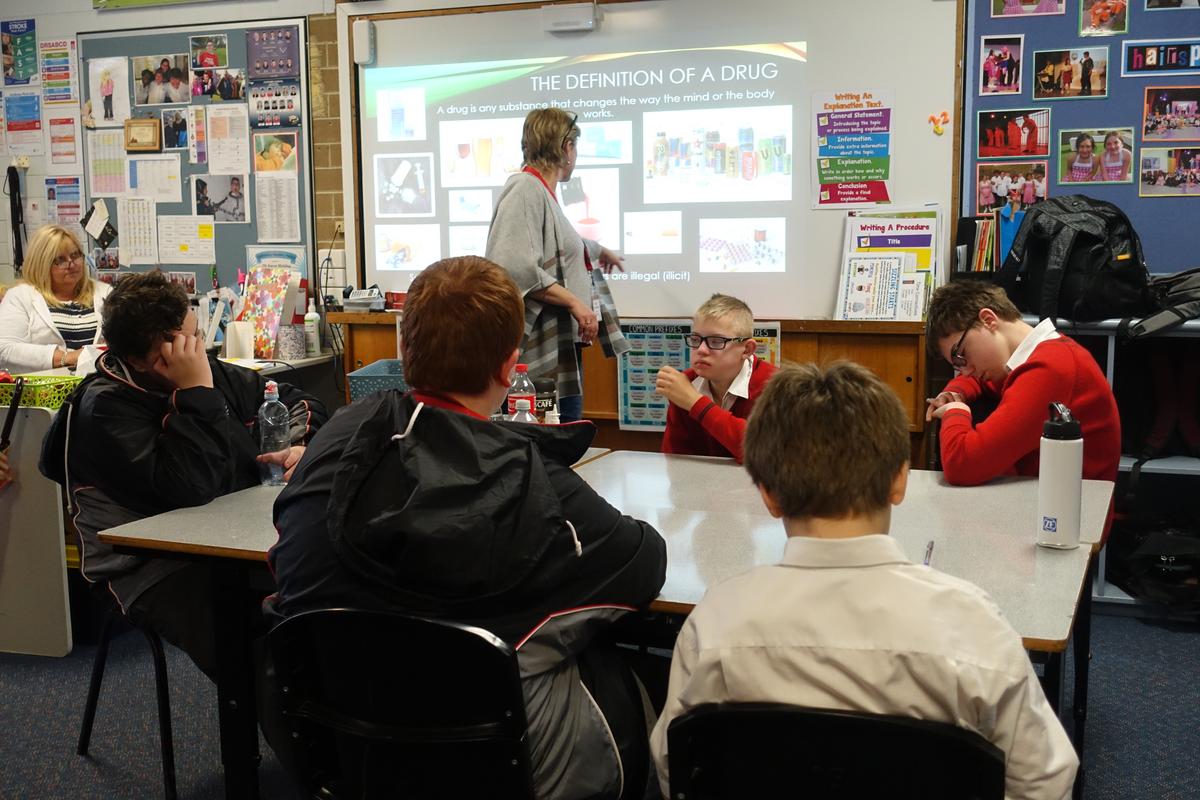
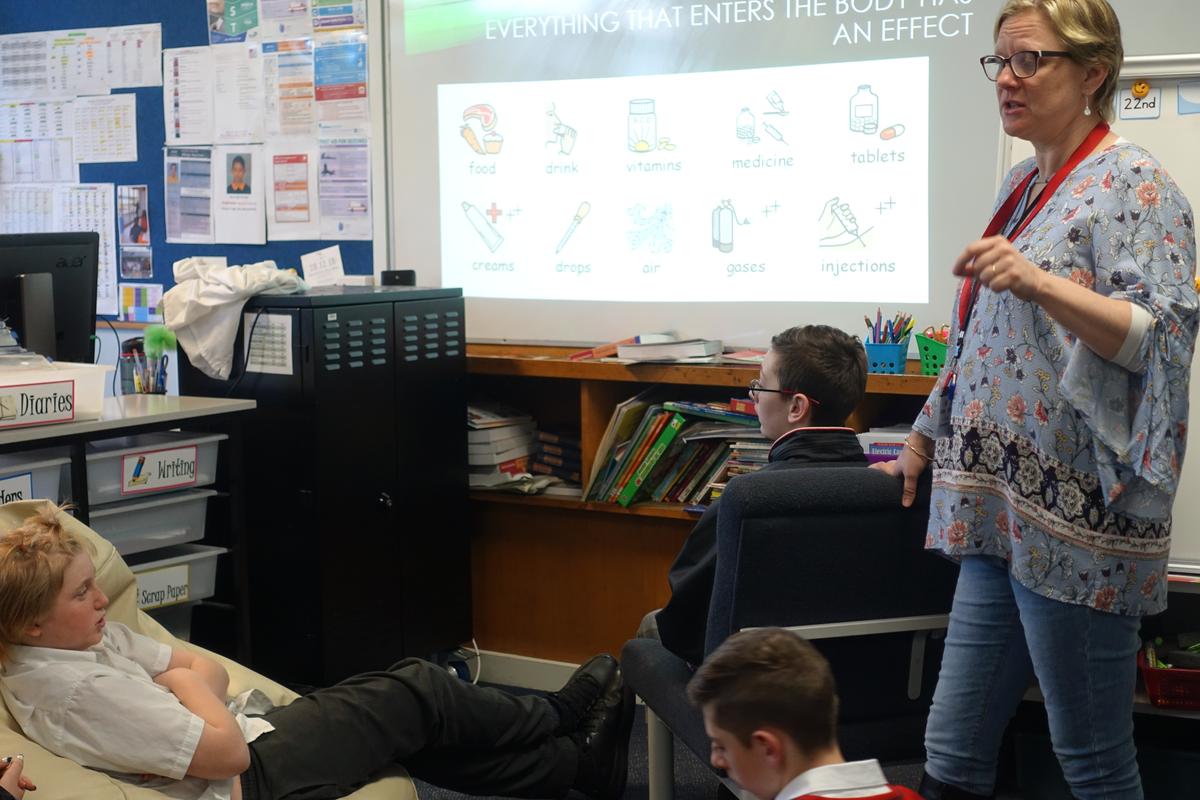
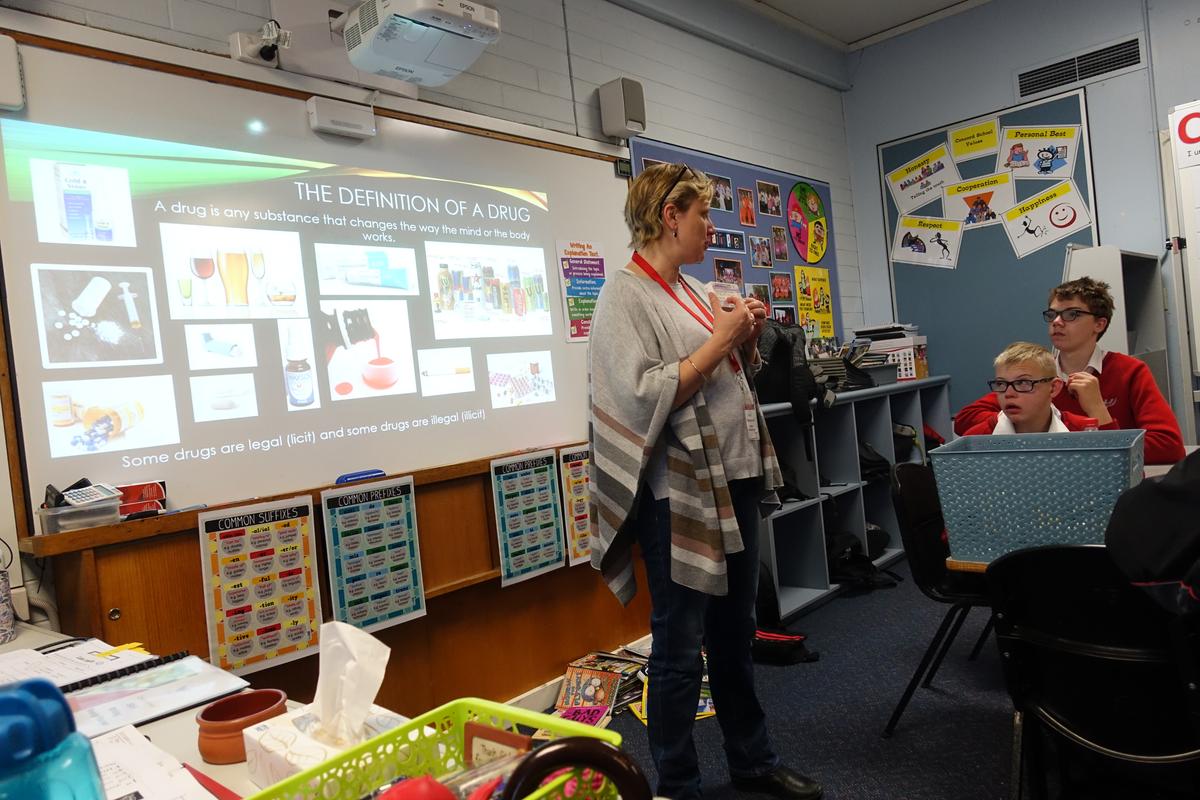
Across the school all students are learning about Drug Education. The content for Drug Education program varies depending on the student’s age and maturity. The order of the key understandings are:
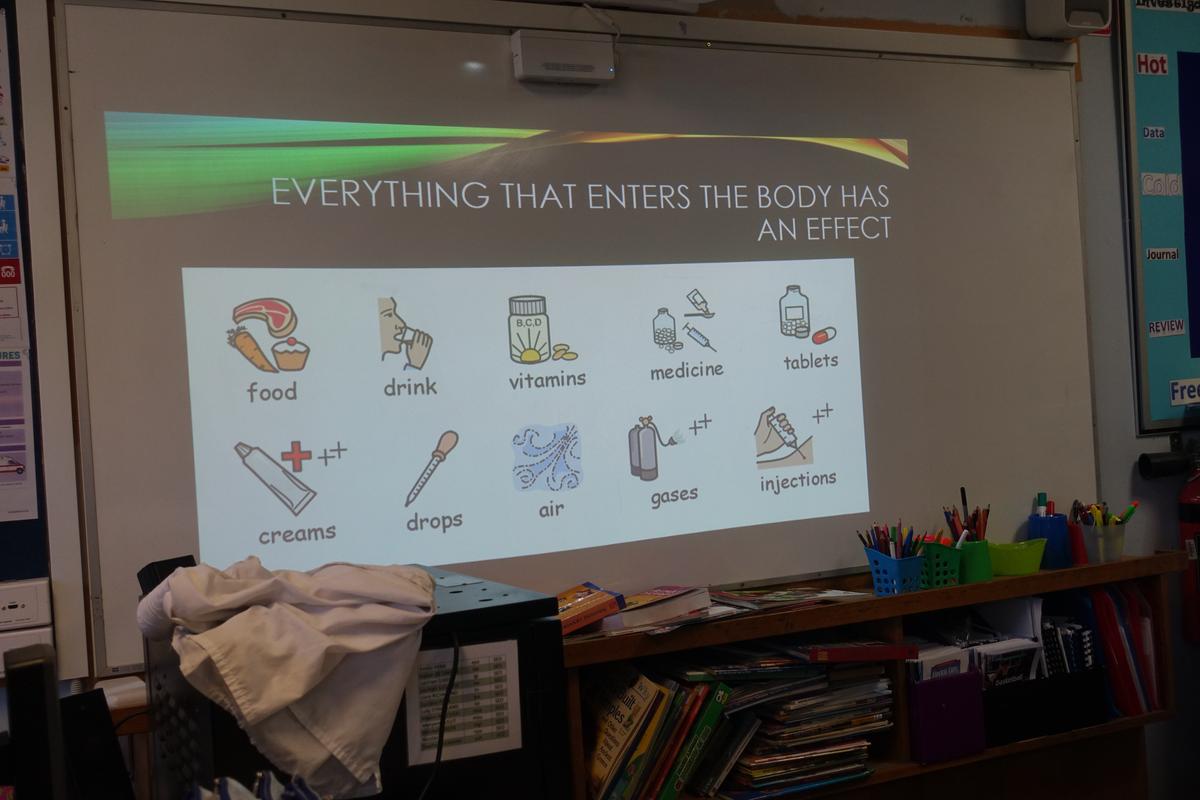
- everything that enters one’s body has an effect
- drugs are a substance and/or medicine that has a physiological effect on the body
- there are legal drugs and related issues
- there are illegal drugs and related issues
- there are laws regarding legal and illegal drug use
- there are implications of drug use/abuse on the individual and society laws regarding legal and illegal drug use
Primary students are exploring the different substances that enter the body and investigating the safety of certain drugs. They have sorted medicines and non-medicines and checked out instructions and labels on packages. Prep students are simply identifying ‘sick and not sick’ by looking at pictures, role playing and looking after the dolls who are “sick or not sick”.
Secondary students are exploring substances that help your body function and those that change the way your body works. They are investigating the emotional and physical changes that can occur in your body when taking drugs. Strategies to keep safe are covered by both Primary and Secondary students. Older students are investigating legal and illegal drugs, the laws regarding drug use and the implications on individuals and society.
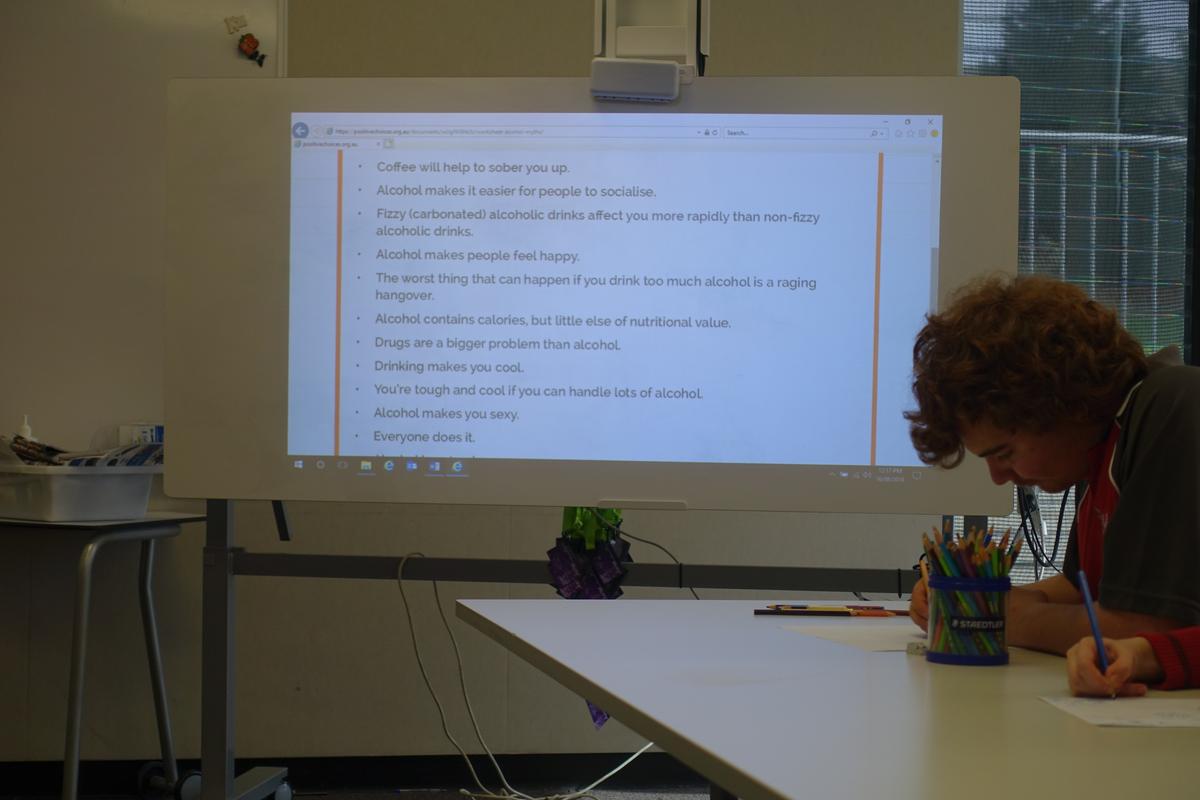
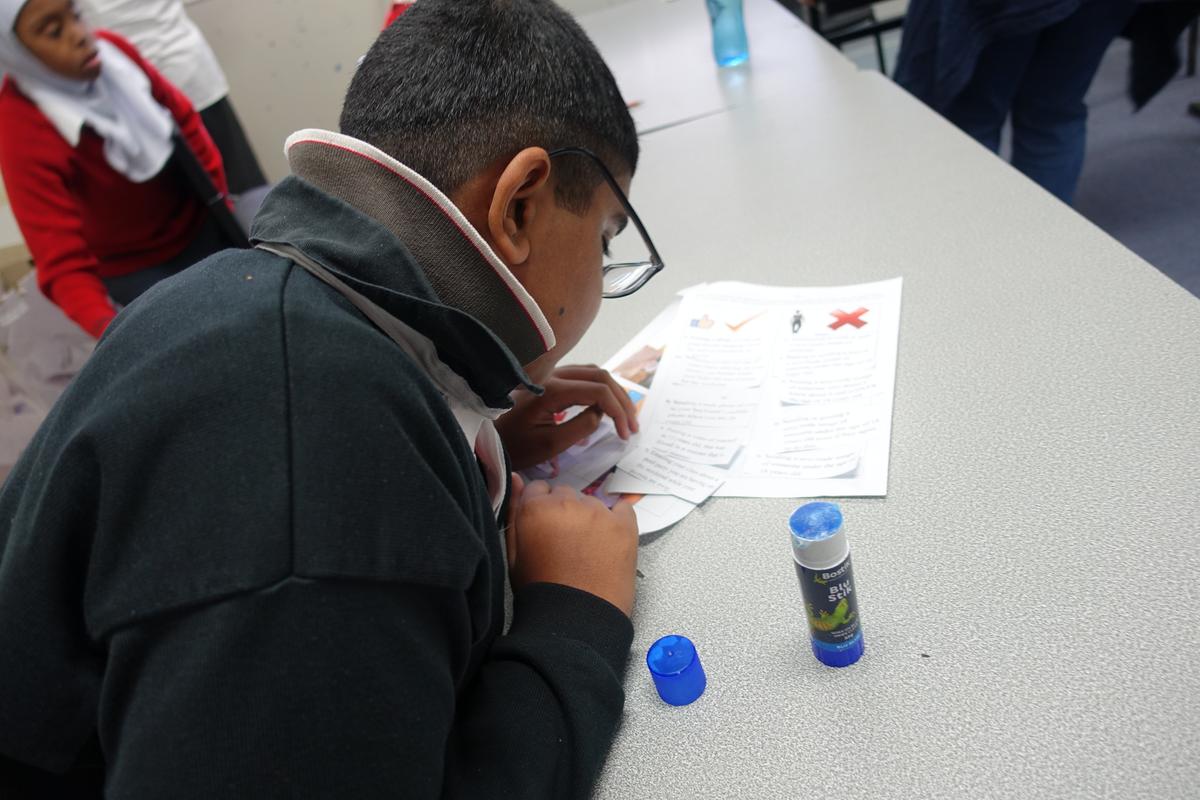
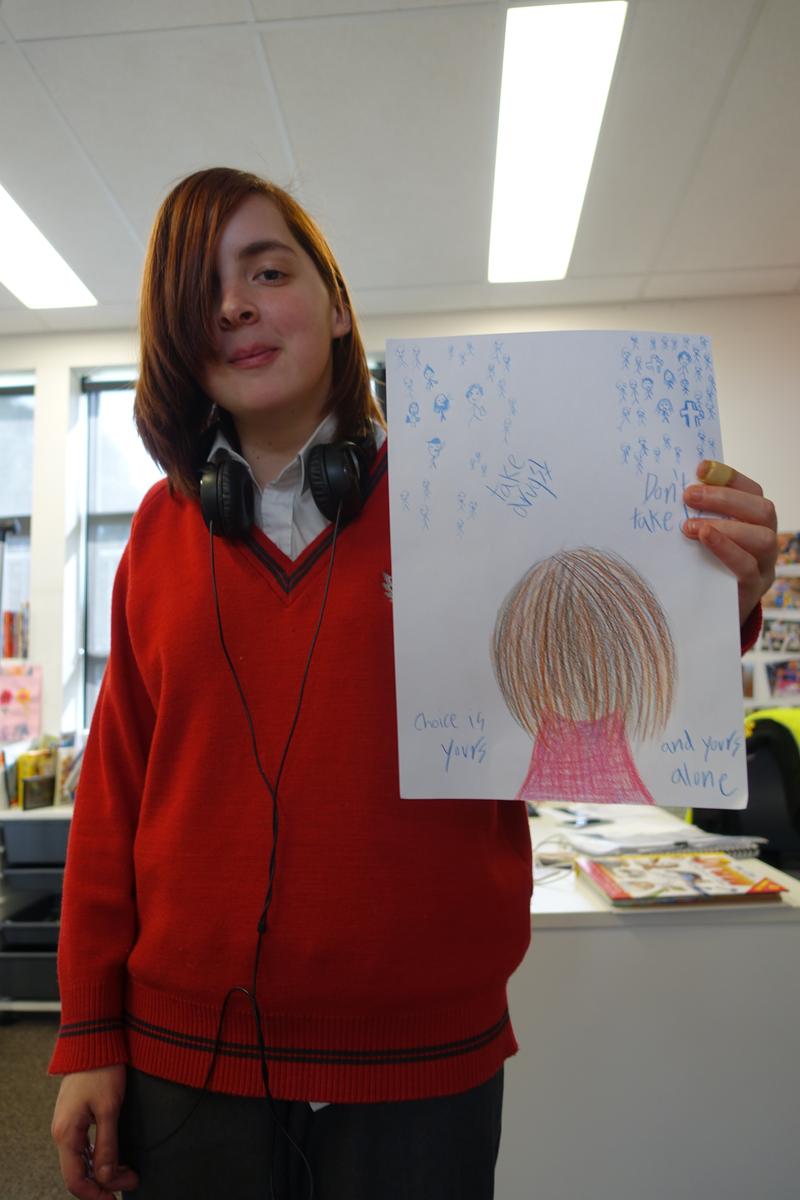
Most of the Secondary11/12 classes are also learning about what drugs are, which ones are legal or illegal, and how they impact physical and mental condition. They have listed and sorted drugs into those that are stimulants, hallucinogenic and depressants. They have, also, looked at targeted videos on drug use and worked in pairs to write a myth or a fact about drugs. Many students have created posters that express what they know and think about drug use.
Making the Most of Father’s Day
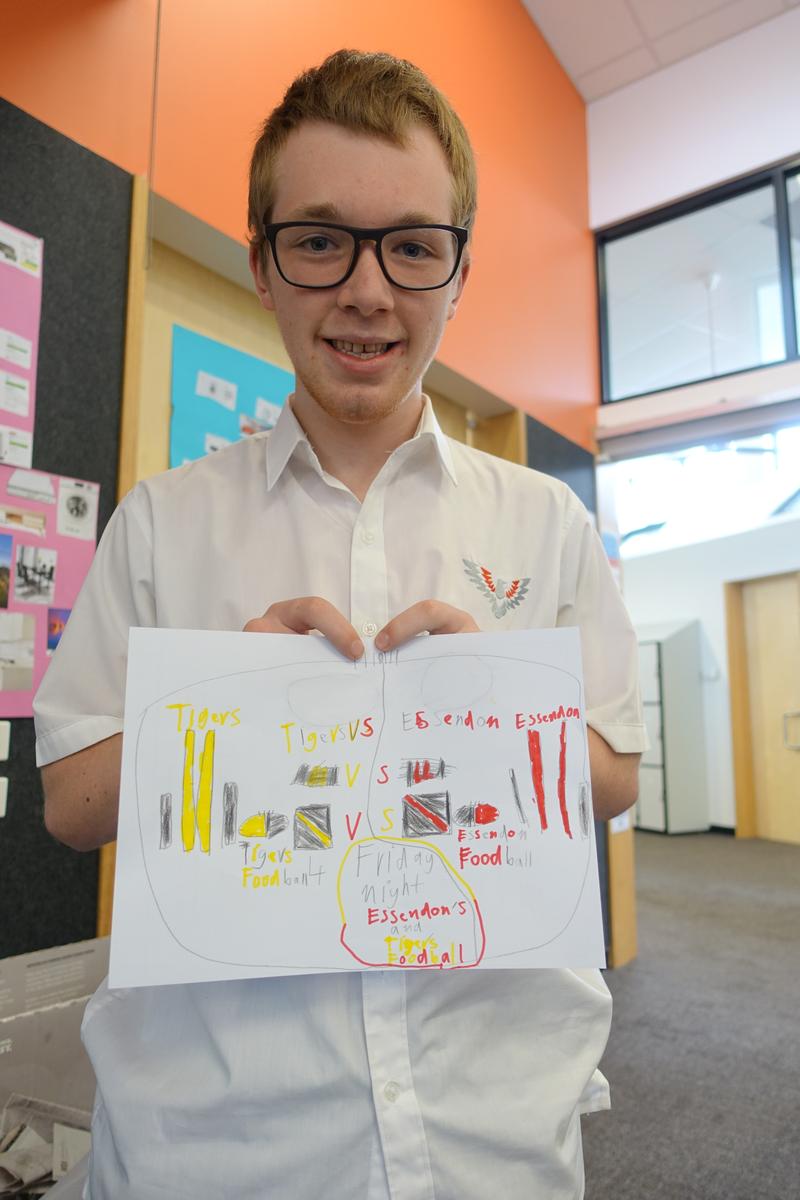
Across the school there’s a lot of authentic learning around celebrating Father’s Day
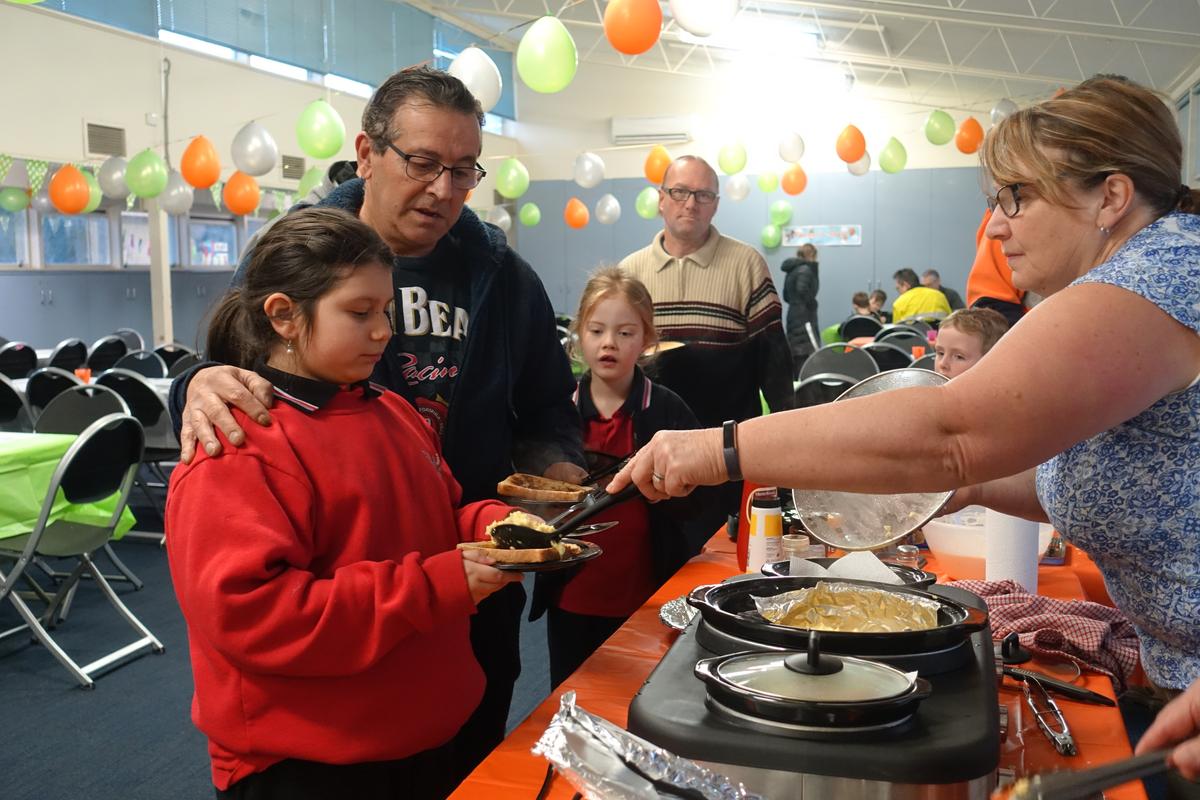
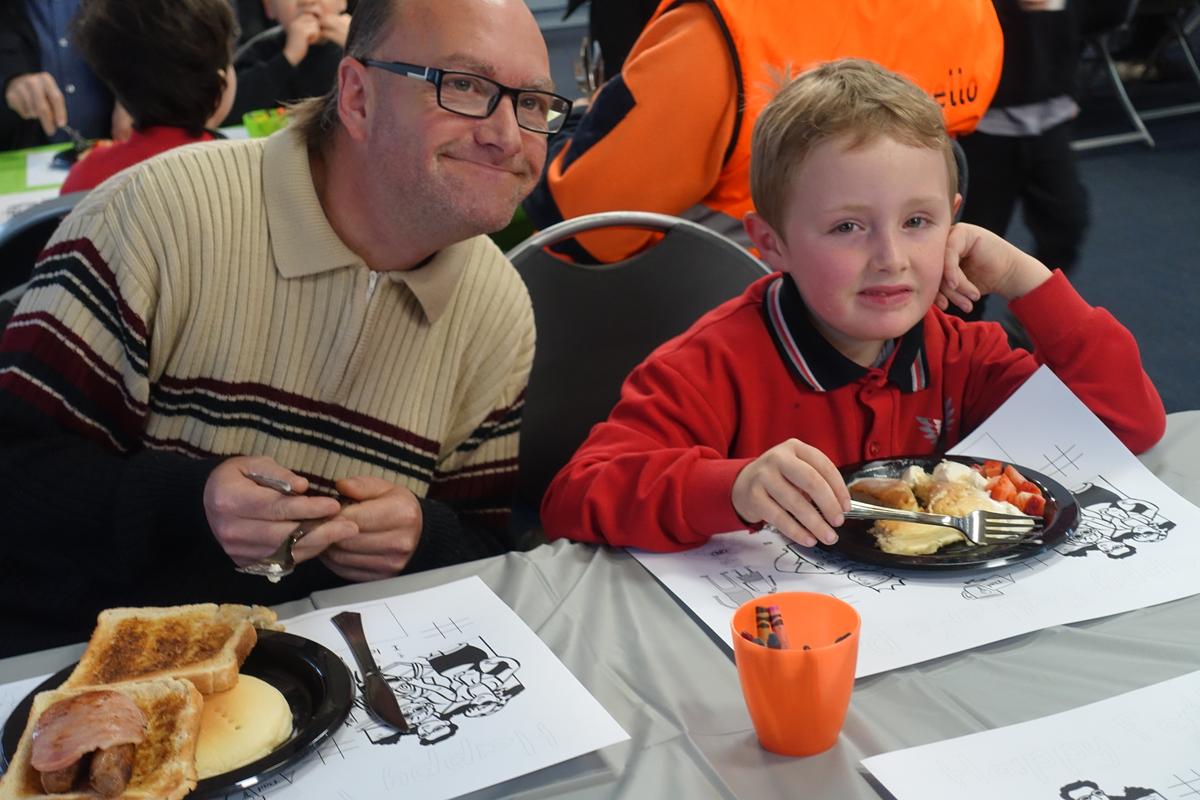
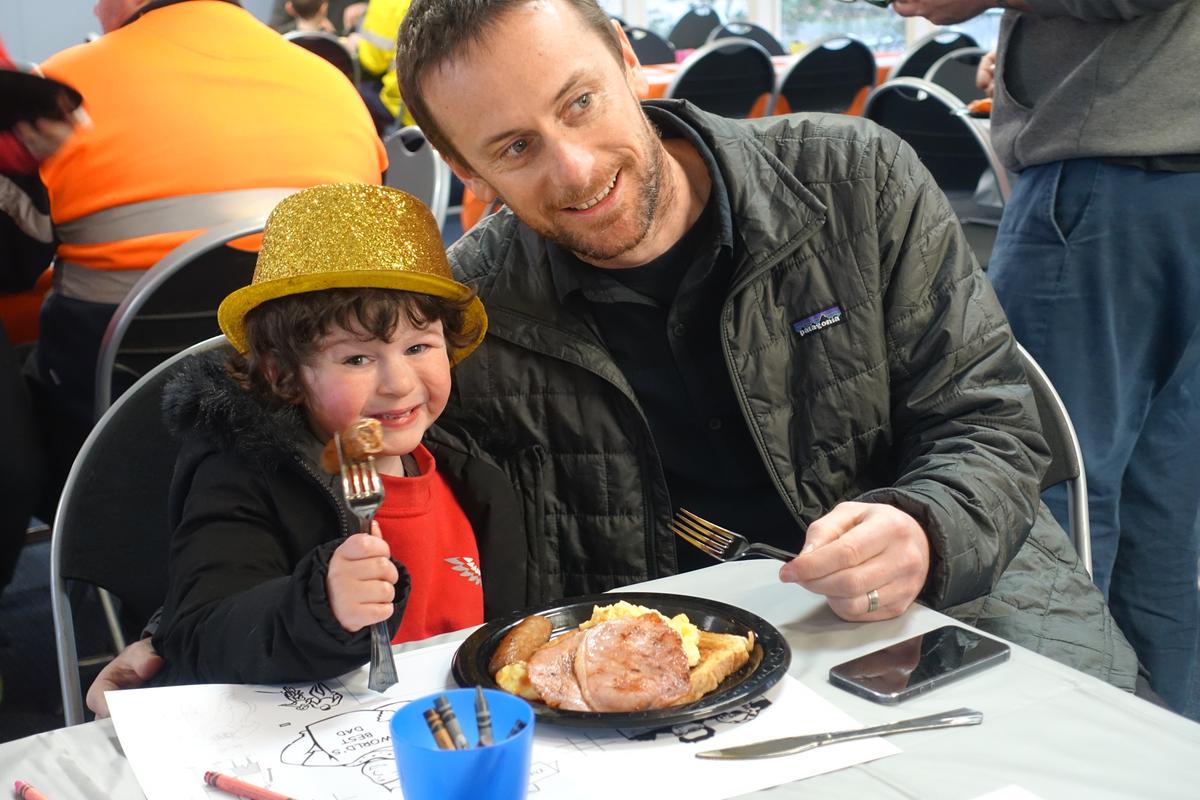
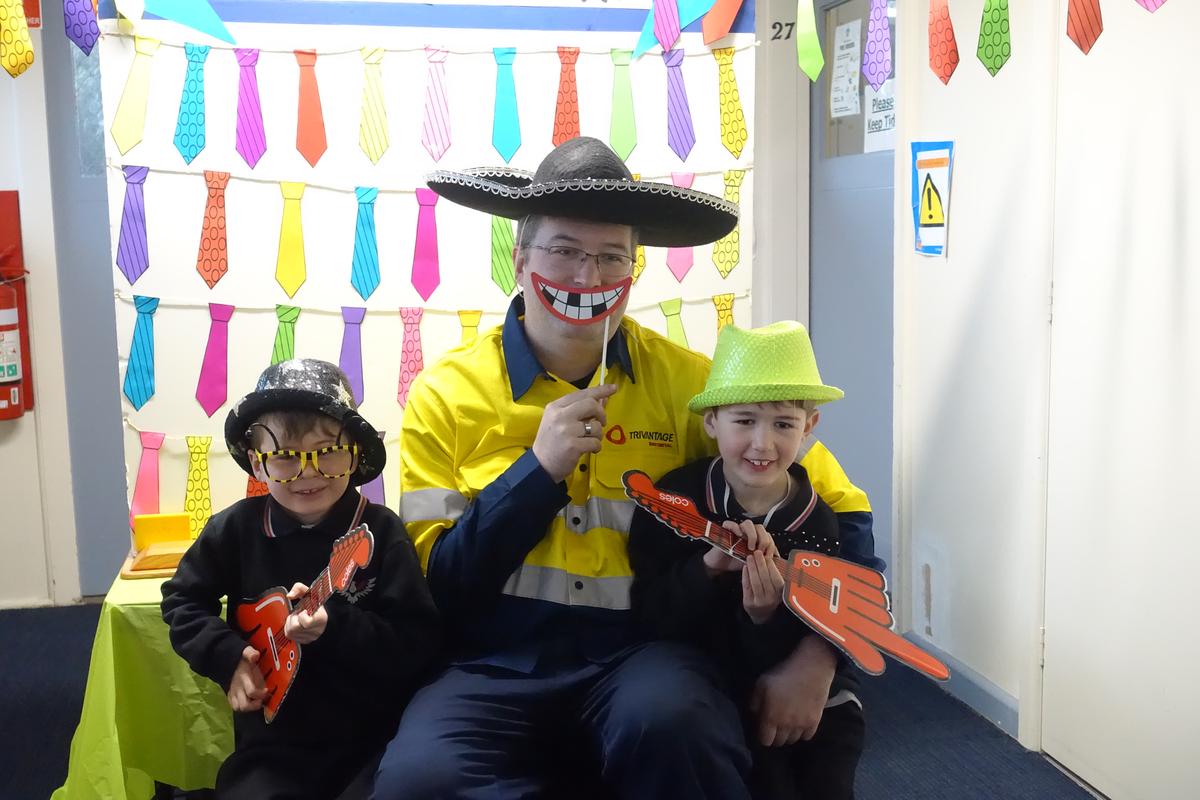
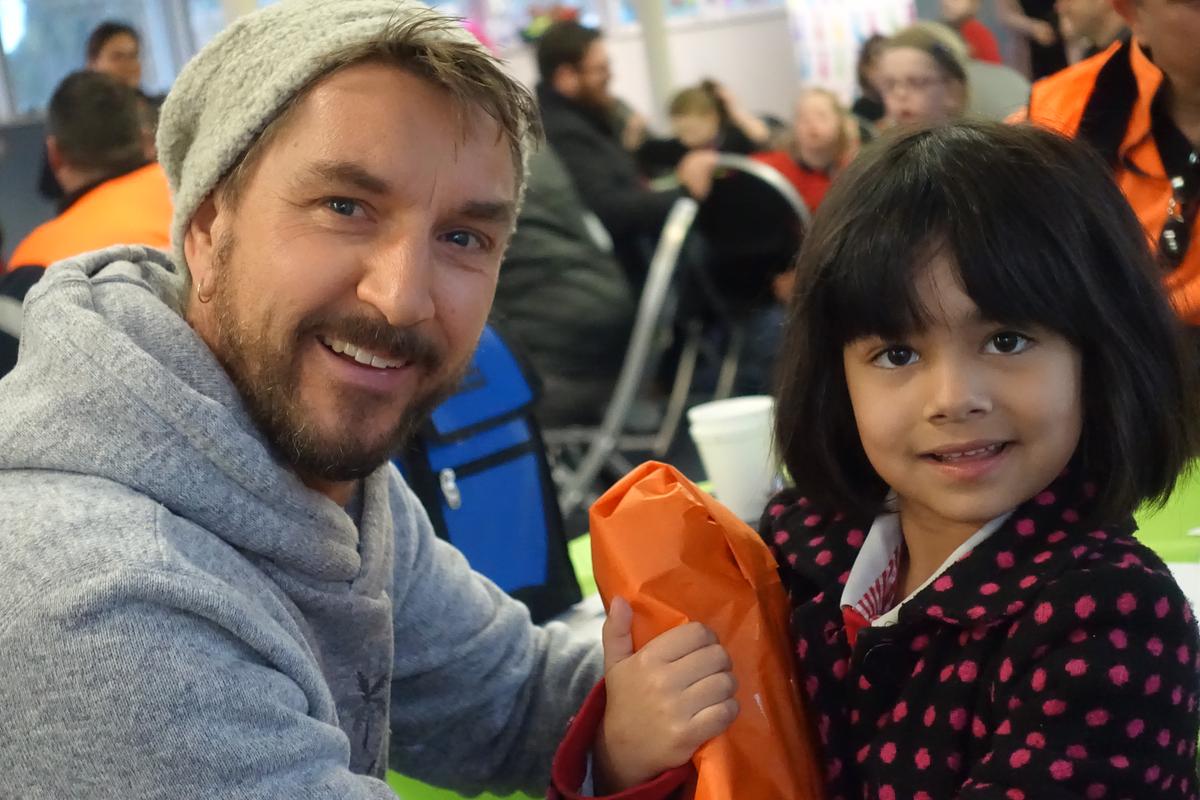
The Lower Primary campus went all out to make this occasion special for the students, the dads and their families. Last Friday I attended the annual Father’s Day Breakfast. There was such a happy, excited atmosphere; Dads, grandpas, and mums eating heartily with their children or grandchildren, groups colouring in their placemats together and families dressing up at the photo booth. Our crowded gym was buzzing with eighty or more contented visitors. There were memorable moments as door prizes were announced and students presented their dad or grandpa with a bag of gifts that they had specially made. Over the last month, class teachers and Specialists in Lower Primary have been working on making thoughtful cards and an array of appealing gifts for Father’s Day. There are many educational spin-offs stemming from these activities:
- Social and interpersonal skills- Students learnt more about how to express their love and appreciation for the adults that care for them. They also practised choosing healthy breakfast options and ‘dining out’ in a public and friendly setting.
- Craft and technology skills- Students practised following instructions, exploring and manipulating a range of materials whilst trialling small technology solutions to construct items.
- Literacy- Students listened to, discussed read and wrote stories about fathers. They followed procedural text and used descriptive vocabulary and features to make cards and gifts and write descriptive text.
- Numeracy-Students applied numeracy skills as they measured objects, arranged shapes and counted the materials needed to make gifts.
In Upper Primary students were supported by visiting Bunnings staff to make some surprise gifts that would appeal to the handyman dad. In many Spot the Difference integrated learning sessions students have used their senses to describe lots of chemical and physical changes. Some classes have experimented with melting chocolate and made yummy chocolate gifts for dads using different moulds and methods of cooking. Additionally other classes enthusiastically wrote descriptive sentences and/or paragraphs about their fathers.
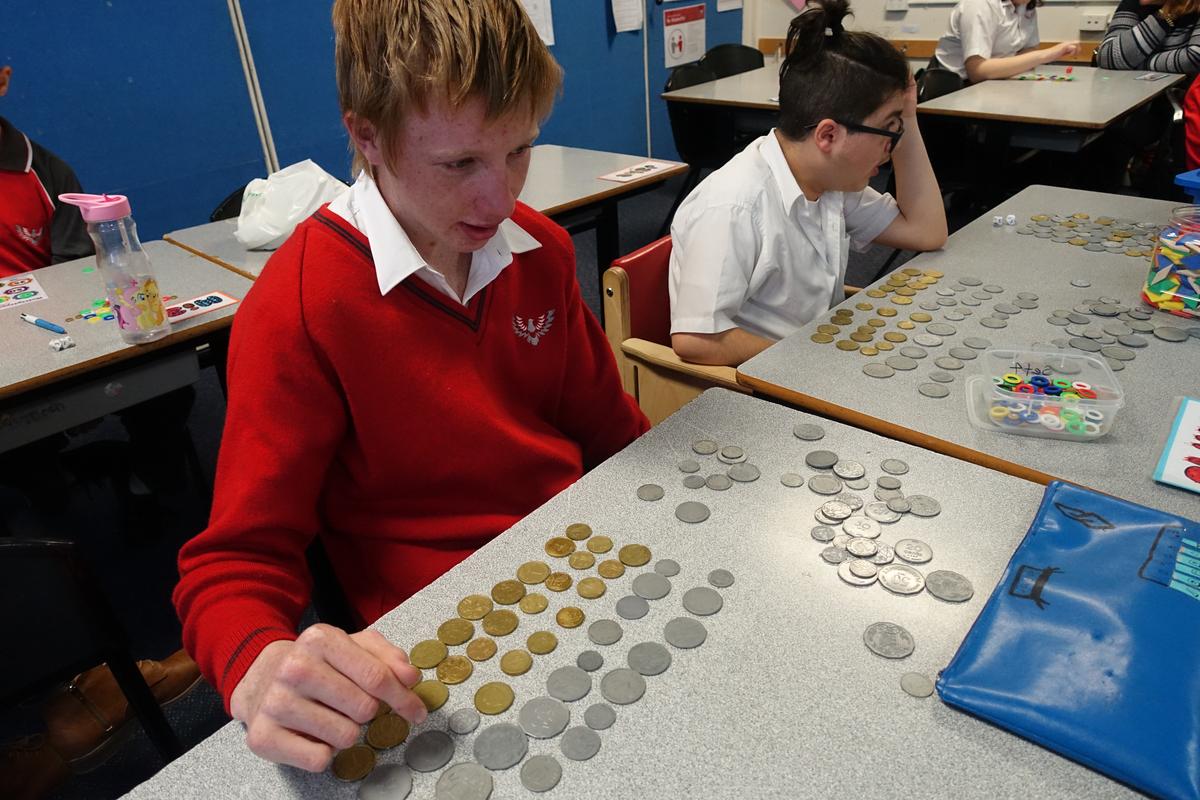
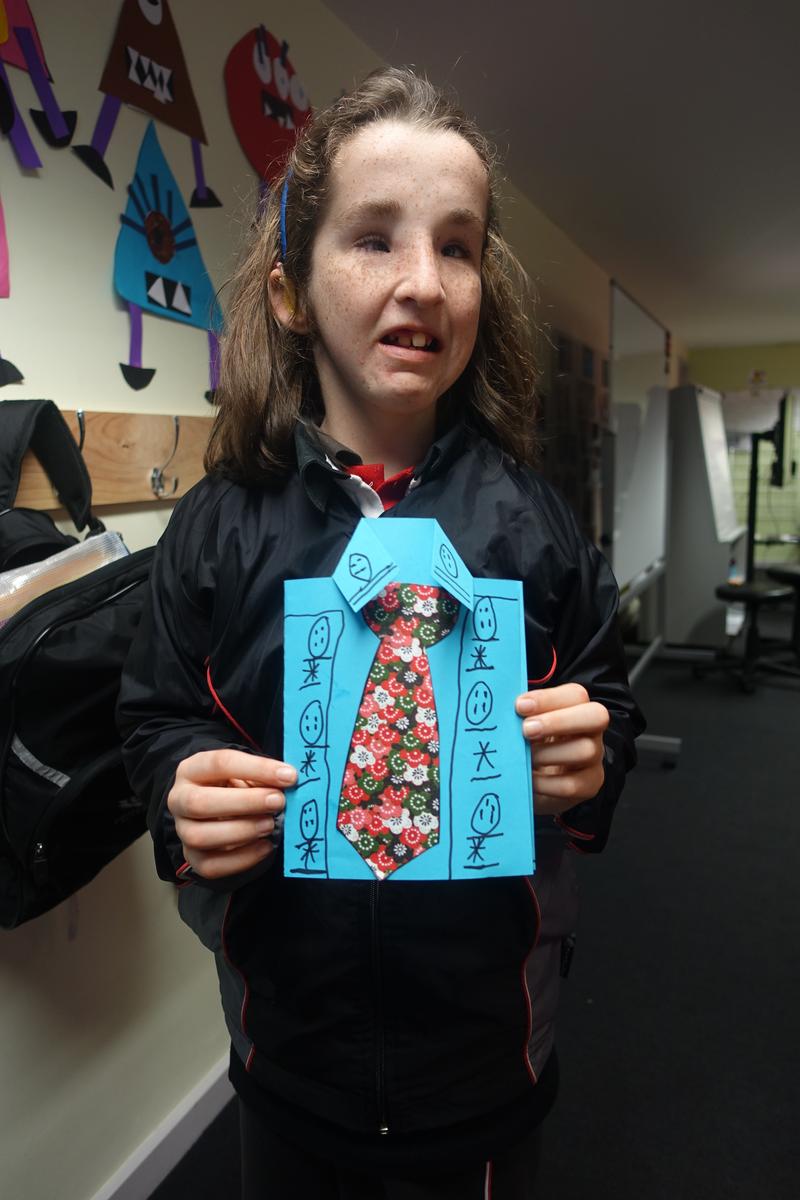
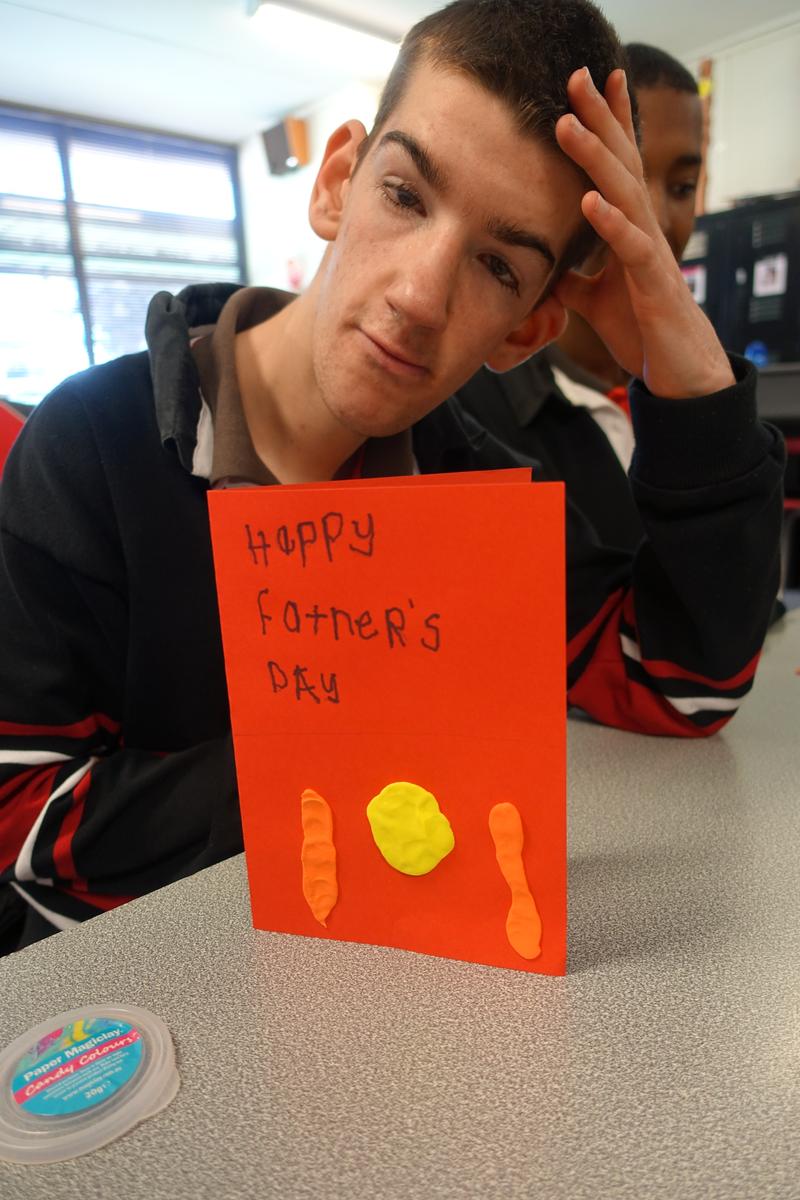
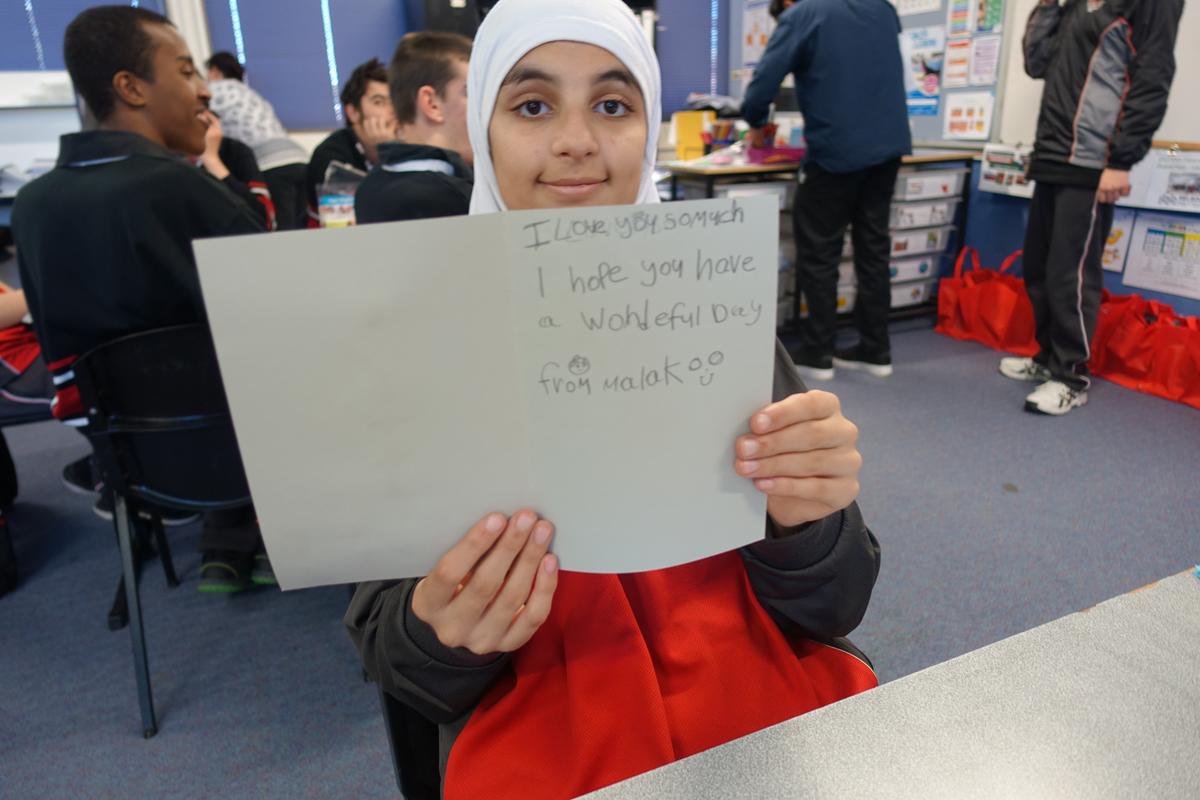
Recently, Secondary Yr. 9/10 PreCAL classes visited Zart Art and Bunnings to purchase items to make a father’s day gift. They practiced the skills they have been working on at school with money including identifying the coins and notes when paying for their items. In another PreCAL class, SFC, I observed students making nifty cards for their fathers. The lesson focus, supported students to build on their transactional text knowledge and in small groups they either constructed the text with some support or they co-constructed the text on the interactive whiteboard. The photos speak for themselves- no doubt many fathers and carers will treasure these personalised cards.
In most Secondary classes teachers gave students a chance to make Father’s Day cards. They helped students explore their creative talents and write appropriate messages.
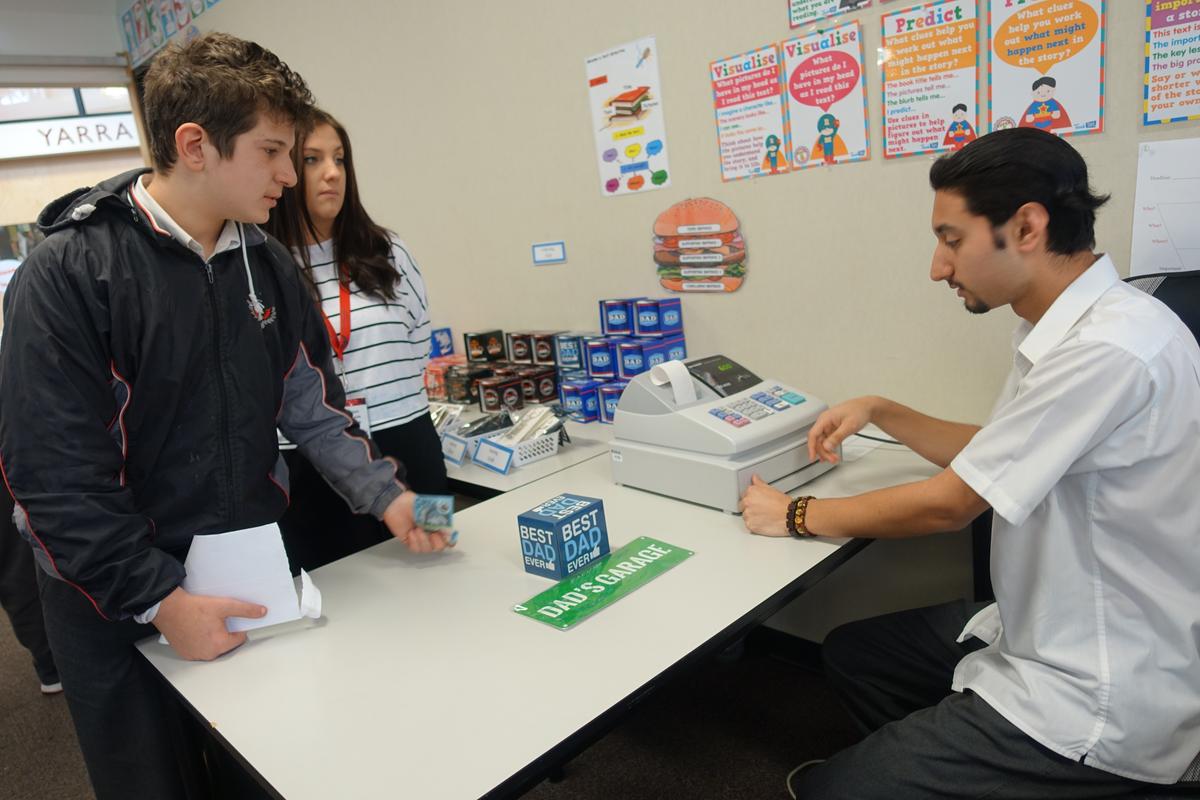
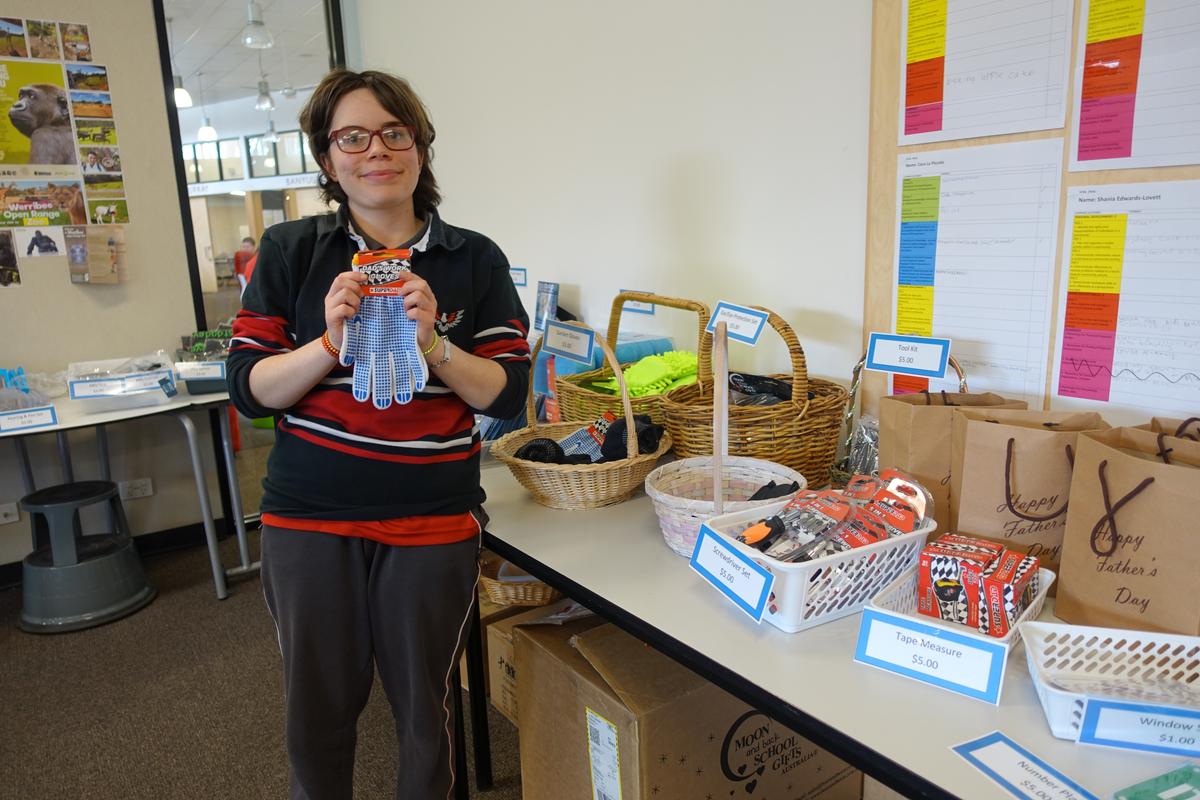
Yr. 12 VCAL students engaged in their event management unit ran the Father’s Day stall in SNK’s room. I was really impressed with the skill and confidence they demonstrated throughout the course. I watched students’ as customers, excitedly choose from a broad and appealing range of gifts which were attractively displayed. VCAL students efficiently managed the transactions; greeting customers, accepting money and using the till to calculate and confirm change and finally bagging the purchases. They also periodically checked stock and display items to ensure customers had adequate consumer choice over the weeks the stall operated. Teachers and aides roved around assisting student customers with making choices and calculating their goods before going to the counter. The course engages VCAL students’ at many levels; preparing them for work as they gain confidence with money handling, customer service and retail administration.
Through these authentic applied experiences, Nina and her Yr. 12 team empowered students to build their workplace skills by:
- researching and sourcing the retail items that would appeal to fathers and students
- calculating the predicted merchandise and running costs
- working to a budget
- setting up the stall
- managing the purchases
- storing the unused stock
- evaluating the enterprise, putting forward improvements for next year’s Father’s Day event
As you can see, Father’s Day, this year, proved to be a great catalyst for teaching and learning across the school.
Spotlight on Professional Excellence
Maths Magicians
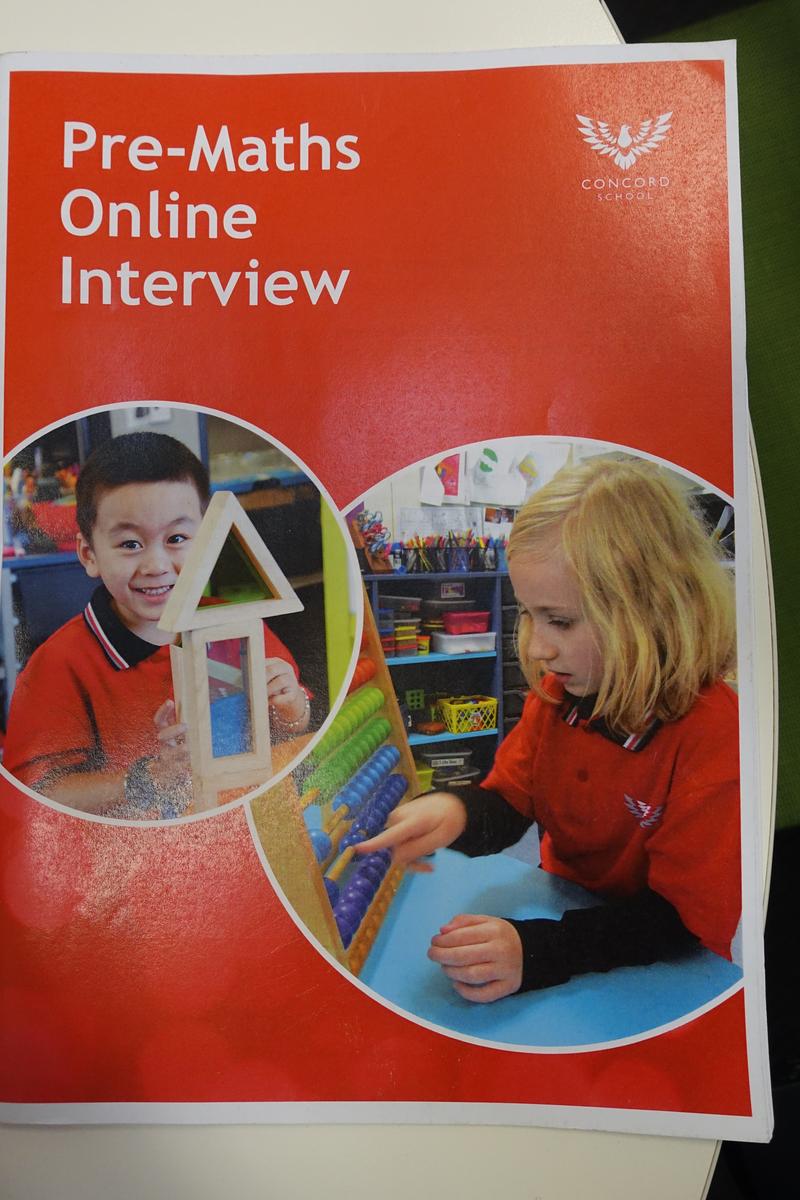
Kirrily Lamers, Kath Moore and Lisa Wiedermann have ‘pulled the rabbit out of the hat’ thus week by publishing an assessment tool called the Pre-Maths Online Interview (Pre-MOI).
Mainstream schools have access to a range of formal Maths assessment tools but there has long been a gap in accessing robust tools for students in the very early stages of numeracy development. This new Pre-MOI tool fills that gap. The Watsonia Campus have been successfully trialling the tool this year and hopefully it will be released to a wider professional learning community in 2019.
In 2004, Lisa Wiedermann and Heather Hawke produced a Supplementary Numeracy Interview tool which provided some guidance for assessing students with additional needs. It was very popular with teachers in a range of settings. The new tool builds on this initial assessment, it allows teachers to collect data for students performing in the A-D levels of the Victorian Curriculum. It helps teachers assess skills that require practical application not seen in the Department’s Mathematics Online Interview in the areas of counting, place value, addition & subtraction, multiplication & division, time, length, mass, shape and visualisation.
This informative tool allows teachers to monitor student progress in Number & Algebra and Measurement & Geometry. The data gained will assist teachers to:
- gain additional diagnostic information about students ‘learning strengths and challenges in Mathematics
- plan for and monitor the impact of teaching and numeracy interventions throughout the year.
Thankyou Lisa, Kath and Kirrily for your valuable professional contribution to helping teachers track our students’ learning better, so we can purposefully make a difference to student achievement in Maths.
Careers Education
The Careers Education spans across the Secondary 9-12 sections. This program offers students a wide range of activities to prepare students for the workplace. Across all year levels, students have reflected upon their own skills and learned how these skills can be transferred to the workplace and or further study/training/community contribution. This information was documented in their Career Action Plans.
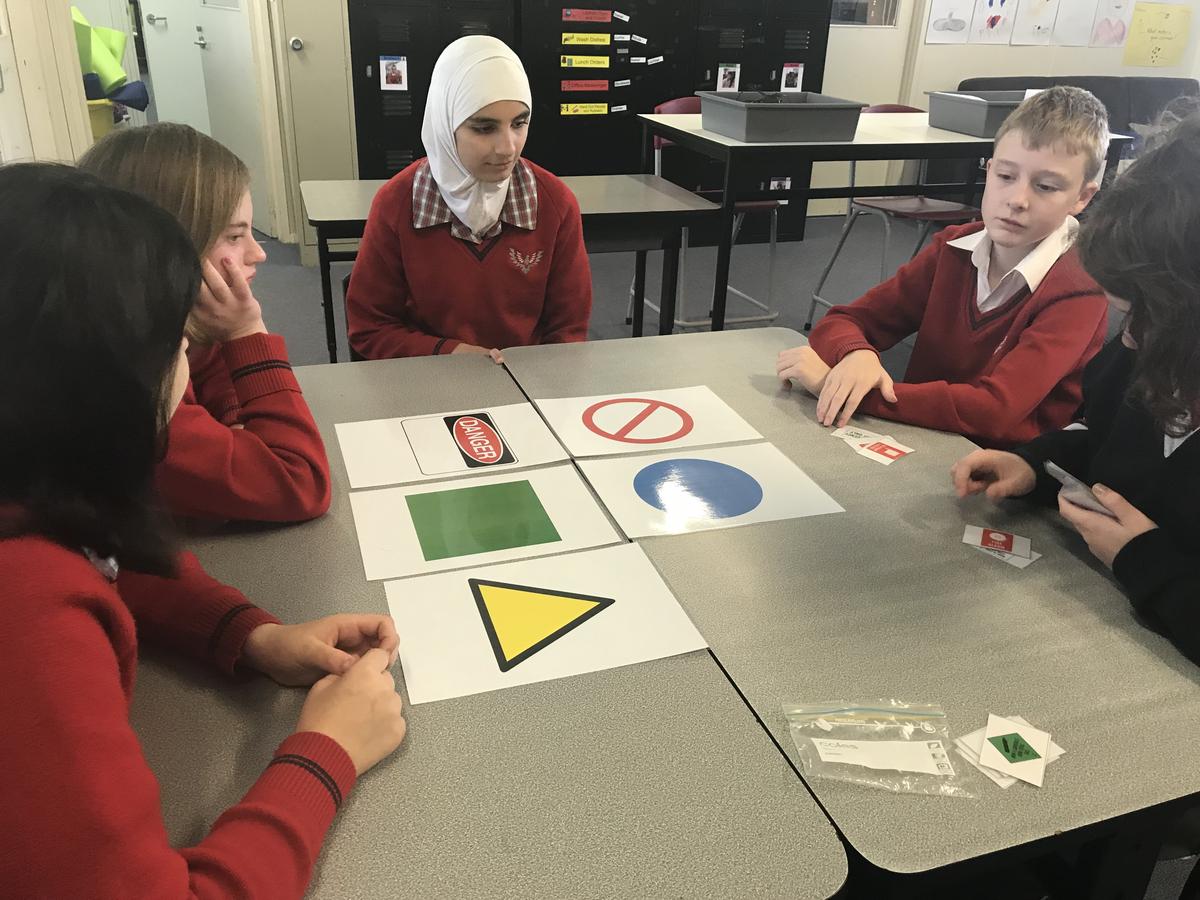
Students in Secondary 9/10 have been focused on identifying and practising Employability Skills (Teamwork, Problem Solving, Initiative and Communication) and identifying their interests and strengths. This has included an introduction to the world of work. They also explored different occupations, work settings and environments. Students have had the opportunity to learn and apply skills related to Occupational Health and Safety with some students gaining their ‘A Job Well Done’ Certificate, which will help to prepare them for Work Placements in the future. They have explored topics such as Manual Handling, Emergency Procedures, Identification of Hazards and Safety Signs.
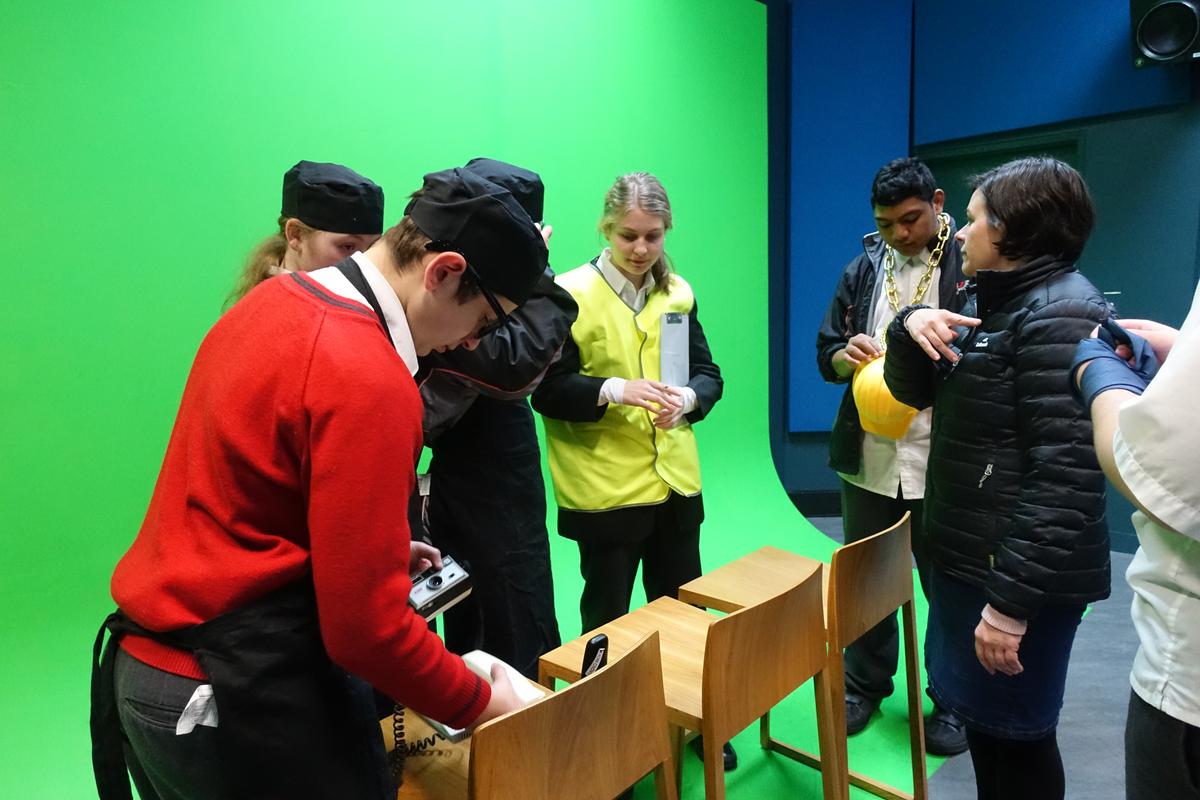
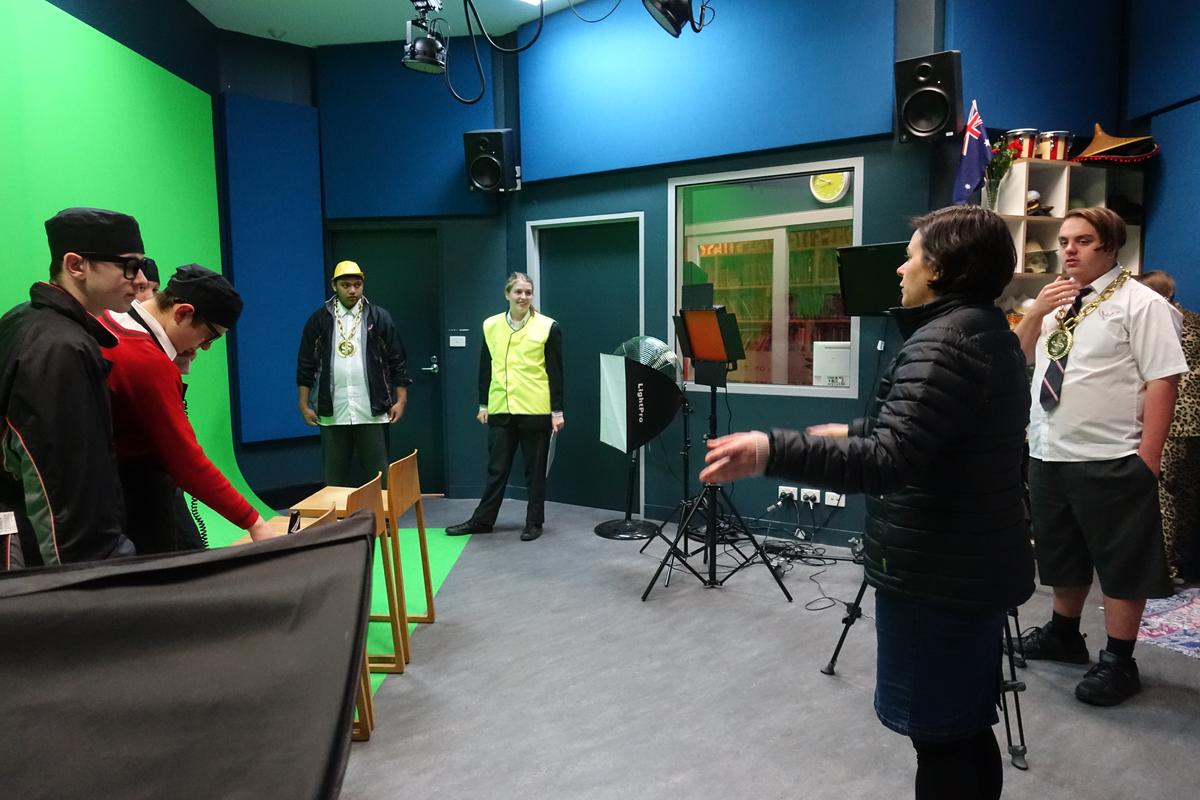
Last week, I observed some talented Yr. 9/10 students in the TV studio, performing skits on Manual Handling and Hazards and Safety Sign recognition. Over the term they used their Employability Skills to collaboratively construct the script content and presentation design. Students demonstrated great teamwork as some assisted with costuming and design whilst others helped with filming, set and props. An innovative aspect of the performance was the improvisation and collective encouragement that students contributed to improve the skits. I’m looking forward to seeing the final instructive/amusing videos.
For students in Secondary 11/12, the Careers Education focus has been on developing career management skills such as future planning including understanding the opportunities that may exist beyond Concord School. The Year 11 students have completed an online program ‘Directions’, exploring their personal interests, skills and investigated potential pathways post school. The focus for the Year 12 students has been to explore pathways, develop, and plan future goals. Students have also worked on an Infographic Resume that highlights their ambitions, goals, skills and achievements they have made whilst at Concord School.
Brain Science
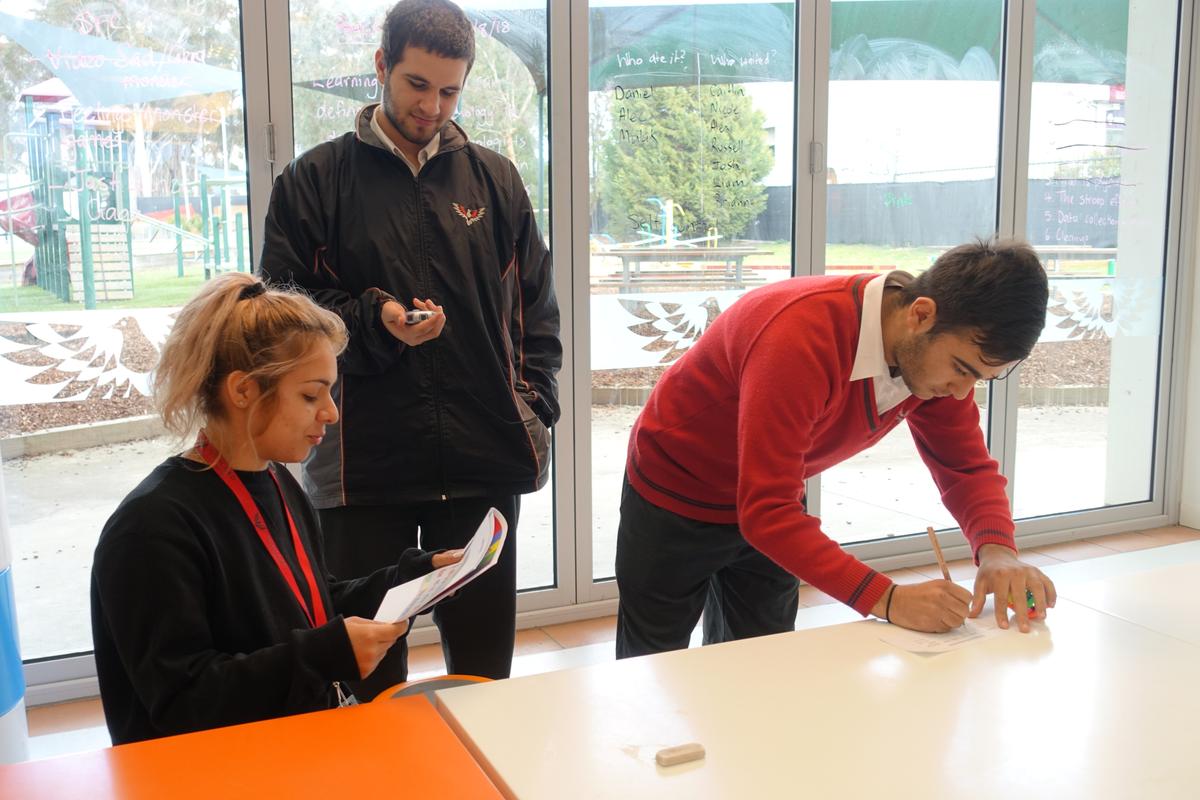
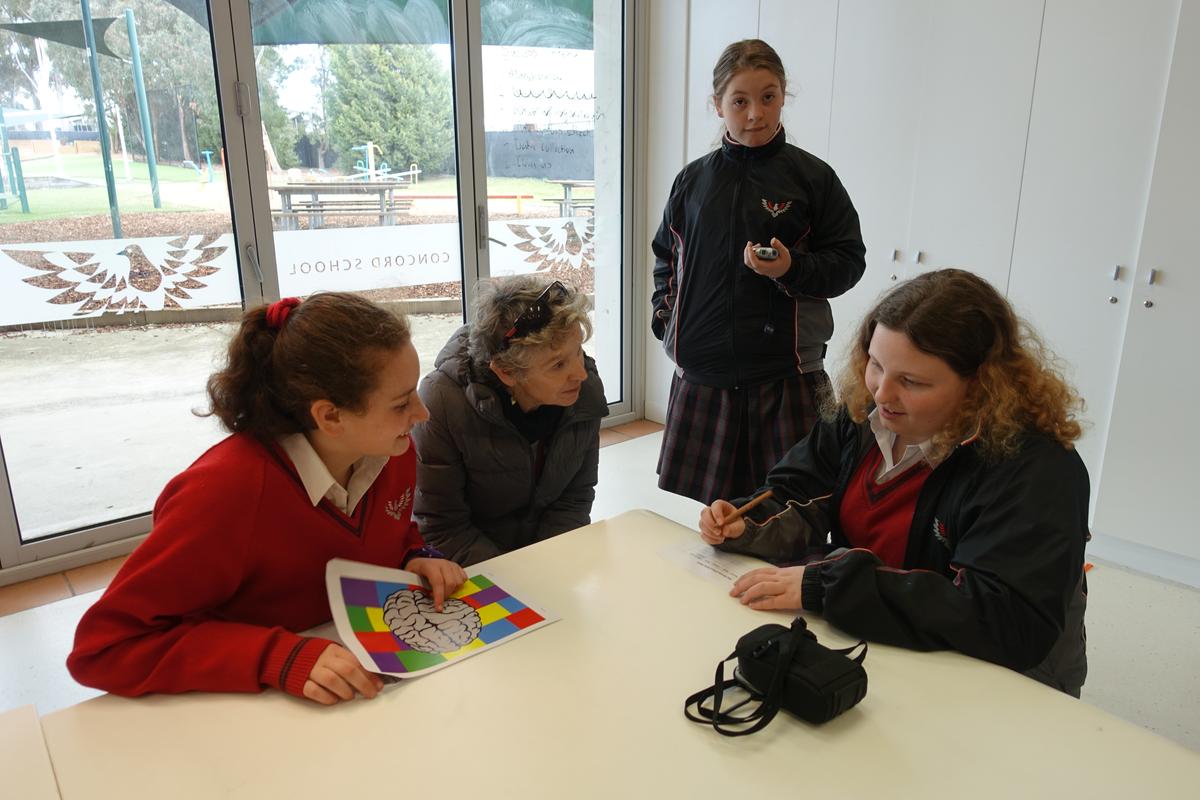
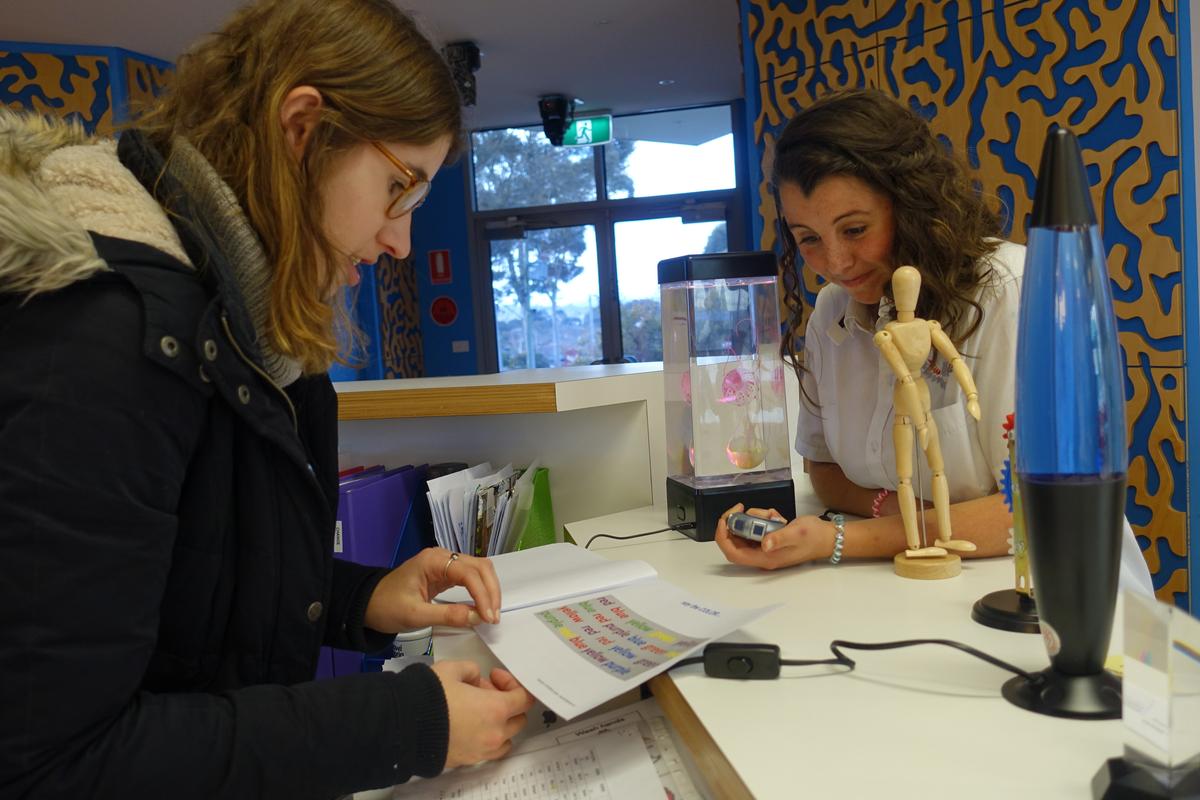
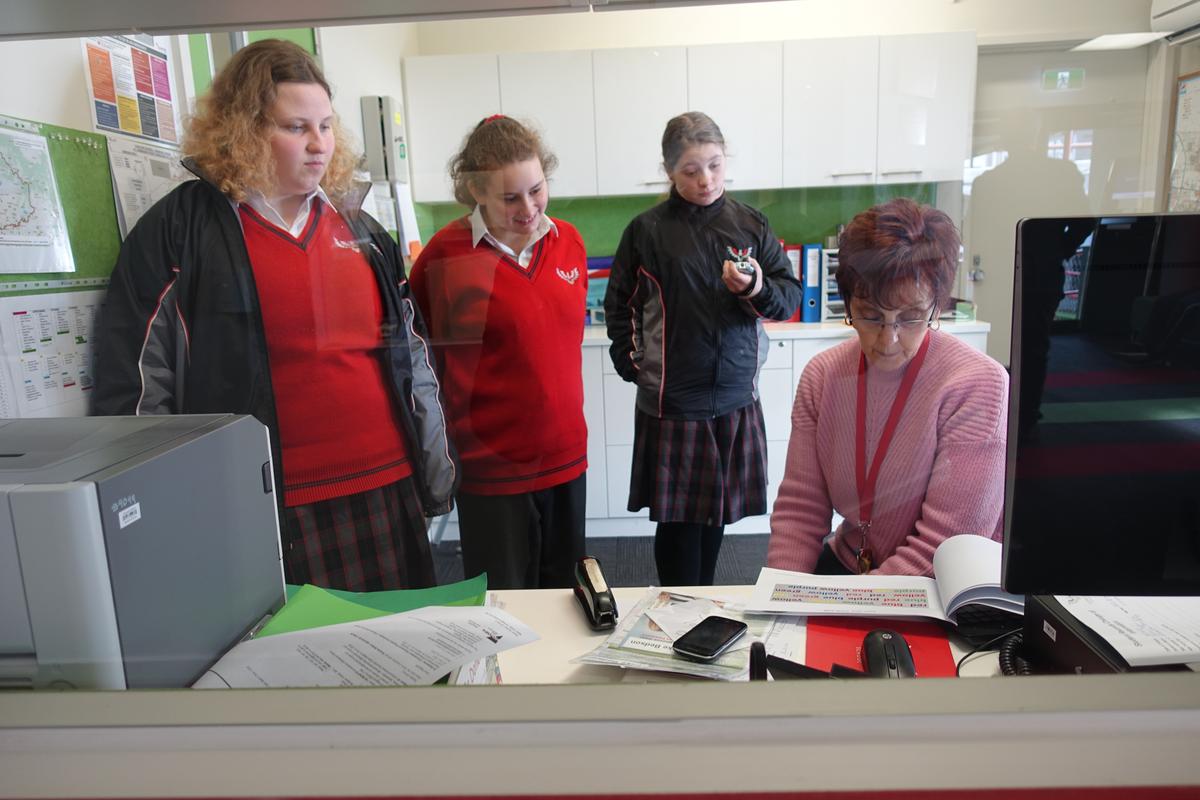
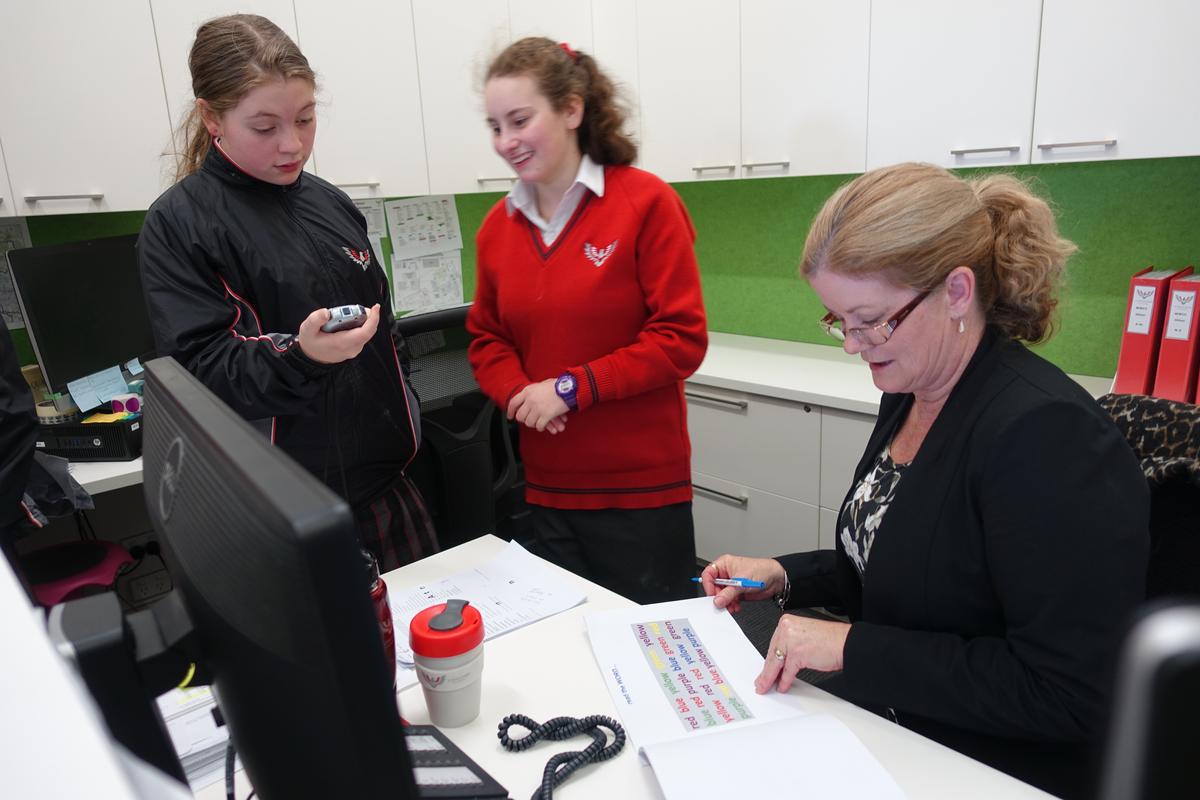
Last week I tentatively participated in a brain experiment conducted by year 9 and 10 students undertaking the ‘Becoming a Scientist’ elective. Students timed me as I read a list of words with matching colours then as I read the colours in a list that had non matching colours. They were testing a well-documented phenomenon in psychology The Stroop Effect.
The students were very well organised and reassuring. They worked in small groups to administer the experiment to three or more teaching staff at Concord School. Then they collated and analysed their data together and discussed and evaluated their findings. After the experiment students transferred their findings to their science journals. Throughout the experiment, students were very motivated and I found their discussion particularly lively and thoughtful. They had their own theories about why the results consistently showed longer reading times for conflicting reading lists. I learnt from the students that apparently reading a conflicting list after a non-conflicting list creates a distraction for the reader and takes longer to process. This situation has application for teaching and learning as it is easier for learners to retain knowledge when the material is presented in a visually consistent way.
Participating in psychology experiments as well as discussing and examining where psychologists work gave students a taster for the work of psychologists and the field of psychology.
In ‘Becoming a Scientist’ elective students are exploring what it means to become a scientist. Students are researching past and present scientists who have developed important scientific understandings, discoveries or inventions that have affected peoples’ lives. They have explored:
- Inventors and innovation; developed a plan for their own invention.
- Chemistry; careers in the chemistry field and participated in the Erupting Lemon experiment.
- Biology; identified possible careers in Biology field and completed a guided investigation to explore Charles Darwin’s theory of natural selection and his study of finches on the Galapagos Islands.
- Physics ; participated in a class Reaction Time experiment and made their own
catapults using popsicle sticks.
In the final week they will explore
- Forensics; analysing their own fingerprints and completing a crime scene investigation using shoeprints
Food Technology
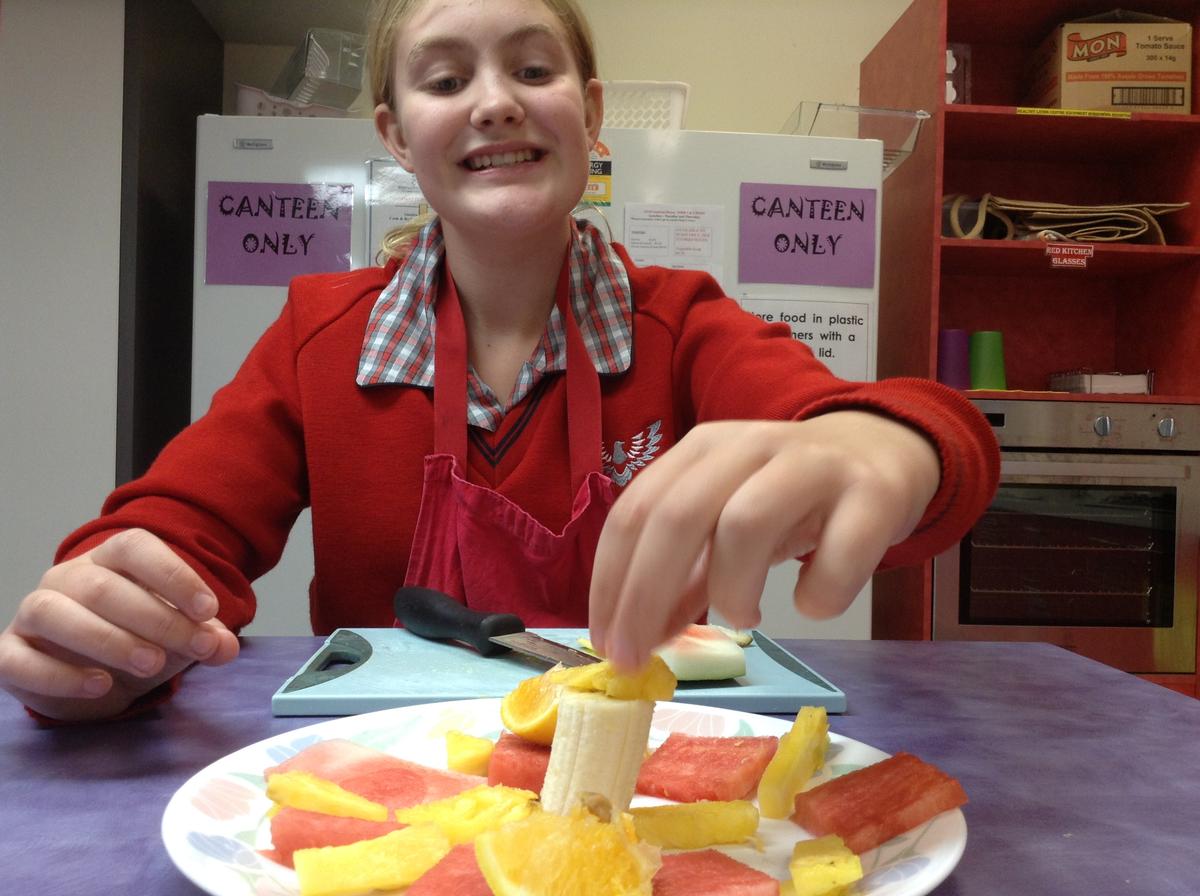
Entering the Food Technology room is an amazing sensory experience. I’m excited by the colours, sounds, odours and the level of interest and collective activity involved in preparing, presenting and consuming healthy and delicious food.
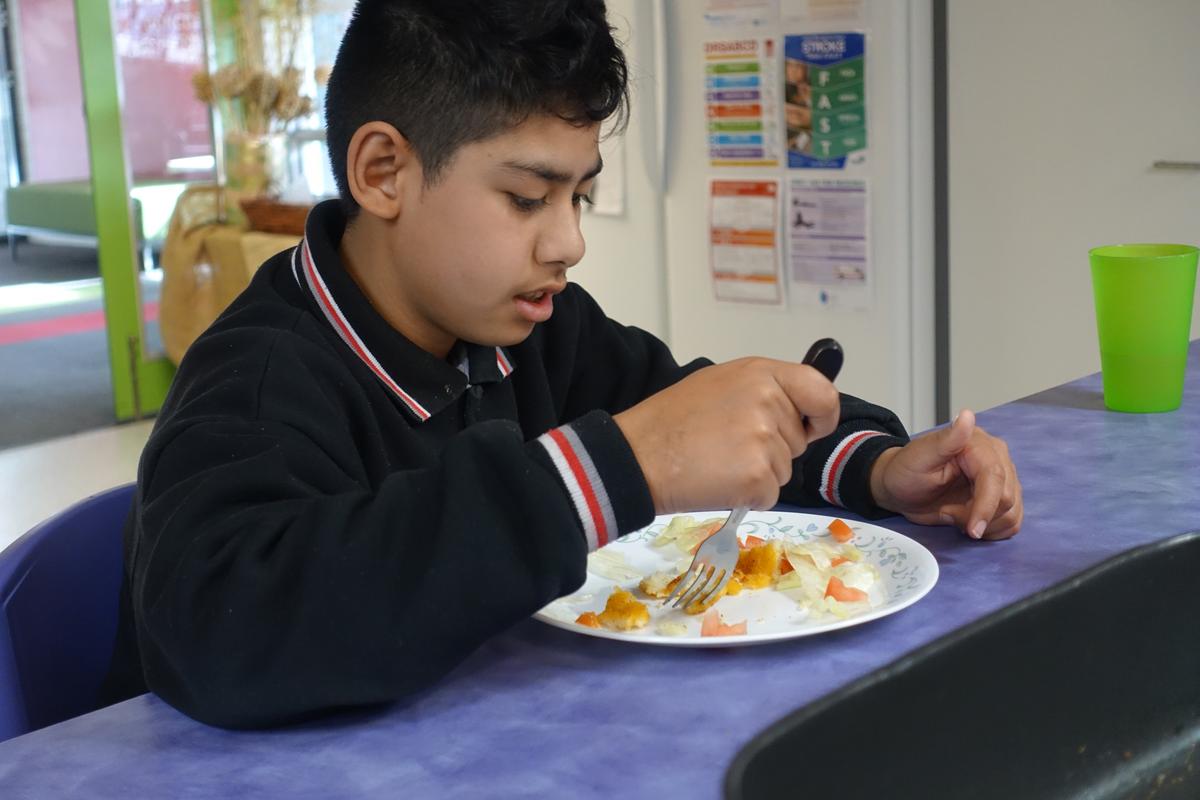
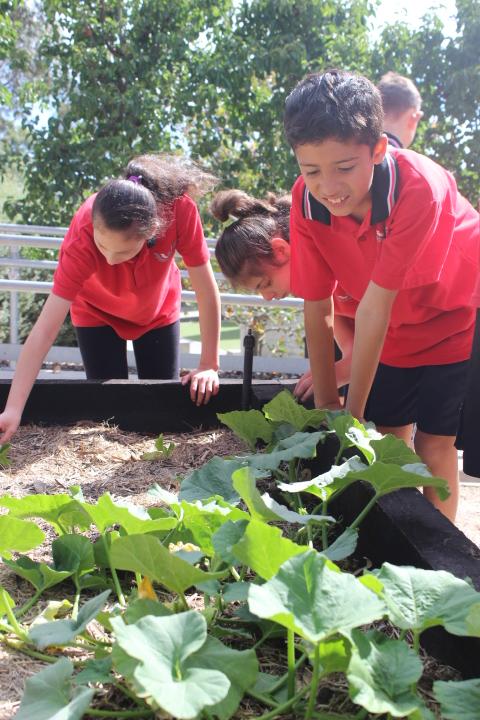
For the first time, our Upper Primary students have undertaken a Food Technology Specialist program. They have adapted well to the learning environment and the expectations. Upper Primary students were introduced to the kitchen and have learnt basic kitchen skills, investigated where food comes from and participated in looking after our Concord School vegetable garden. The garden has produced a variety of vegetables, fruits and herbs for us to use in our cooking.
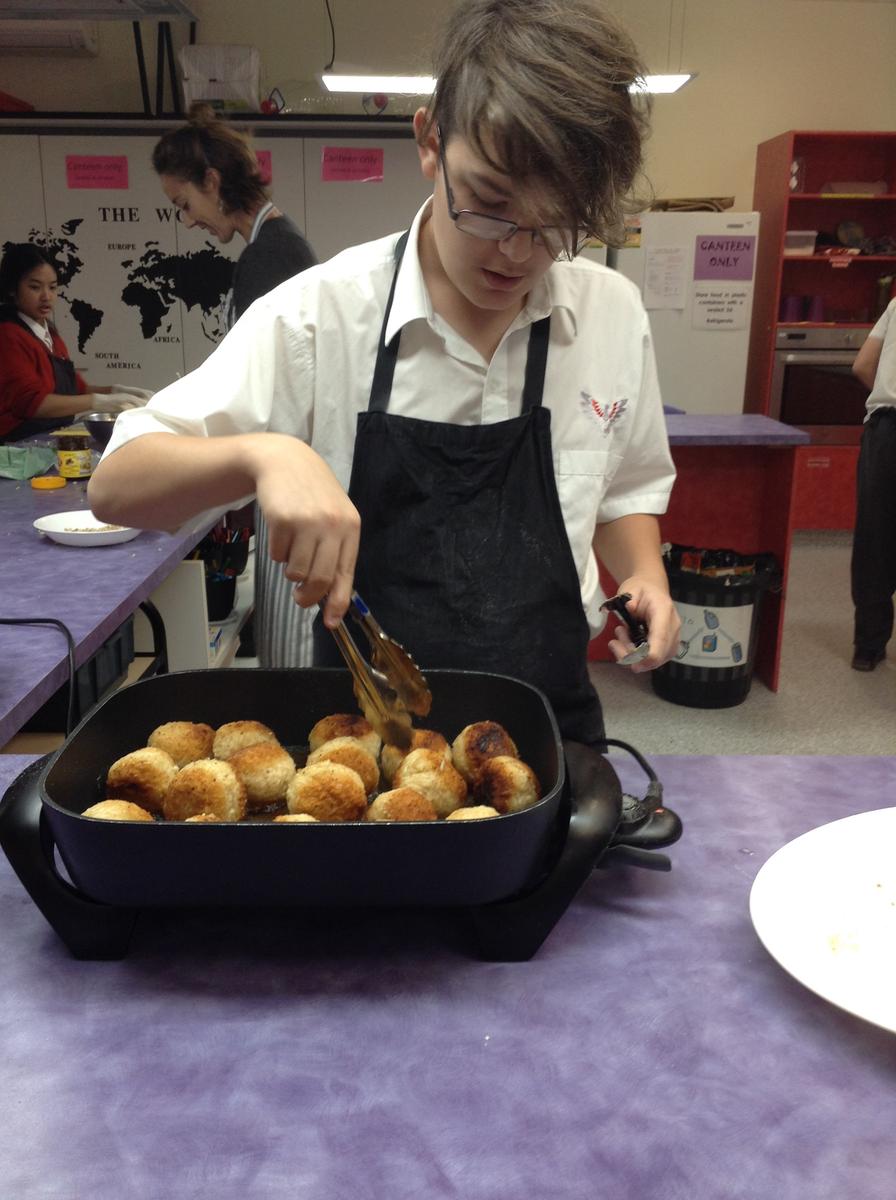
In the last few weeks I have captured Upper Primary students making and eating healthy balanced meals. I also observed a group carefully following a recipe and making yummy rumballs for their fathers as a Father’s day gift.
The Secondary 7/8 students, are also learning how to make healthy choices for all meals and snacks throughout the day. The students learnt the nutritional benefits of eating a variety of different coloured fruits and vegetables.
The Secondary 9/10 students participate in a variety of elective programs, such as ‘Eat Fresh’, ‘Culture Cooking’, ‘Winter Warmers’ and ‘Make Me A Master Chef’. Students from the Culture Cooking elective, are continuing their yearly fundraising efforts for the charity, Oxfam.
The Secondary 11/12 students are using their already developed kitchen skills to prepare a variety of dishes in their elective programs; ‘Kitchen Garden’, ‘Concord Cooking’ and ‘Cook Your Style’. The aim of these programs is to extend their kitchen skills to become independent at home and post school.
It’s such pleasure to see students smiling when they prepare and eat good food. A special thank you to the creative and hard-working Food Technology Team
Helen Edmonds
Acting Assistant Principal