
Parallel - Student News
From the Editor
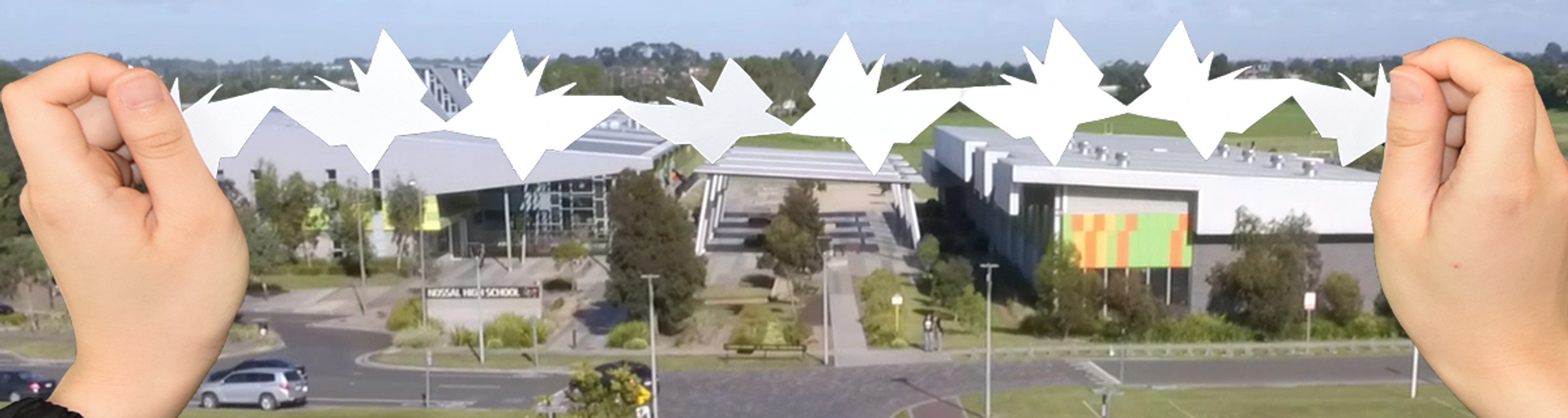
Hello everybody, and welcome to a somewhat unorthodox start to Term Two and the first Parallel for 2020! Although we have begun the term quite unusually, hopefully, sooner or later, we will be able to assimilate into the online learning environment and our regularly scheduled classes and events will run as planned. Most important before all is each person is able to stay safe and stay home, until these restrictions are lifted.
All students, but Year 12 students in particular, are sure to have concerns about how the rest of the year will pan out in terms of VCE. The best we can say is “everyone is in the same boat”. No one is at a disadvantage as we are all facing the same pandemic, and as long as we support one another, trust our teachers and work well with what we have been given, we will be able to make it out okay.
This is the first Parallel edition where the student team have been able to submit work, so we hope you will enjoy our contributions and possibly submit your own in 2020. This year we are focused on engaging more with the student body and branching out with more interactive aspects of the Newsletter. We are open to any feedback you wish to send our way, just contact Ms Slywka on Teams or myself, Ruth Jarra.
Thank you for reading (and stay safe)
Ruth Jara
Editor-in-chief
A review of the Mabel podcast
“A podcast about ghosts, family secrets, strange houses, and missed connections.”
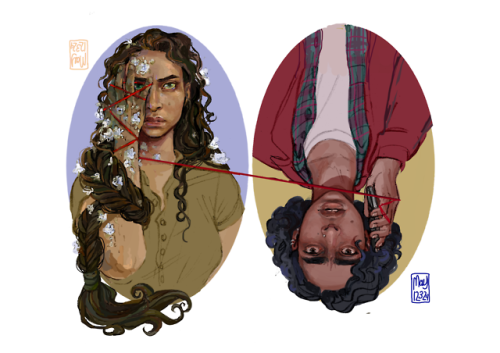
Dark, florid, and rich with riddles, Mabel Martin and Becca De La Rosa’s fictional podcast, Mabel, burrows deep into a rare and slow kind of horror. The podcast has a unique format - it is told through a series of voicemails sent from our protagonist, Anna Limone (voiced by Becca De La Rosa) to the enigma that is Mabel Martin (voiced by Mabel Martin). Anna is an in-home carer for Sally Martin, grandmother of Mabel and her only living relative. Anna’s descent (or ascent) into ‘madness’ begins with a single voicemail used to deliver a message from a seemingly eccentric grandmother to her only granddaughter.
Mabel never responds, but her presence hangs heavy over every word.
And so, we are left completely on our own to make sense of the threads of mystery Anna weaves for us as she spirals further and further into obsession. Each voicemail is a careful collage of stories: the tales behind the house, snippets of Anna’s past, strange encounters, snatches of conversations, unexplained distortion and singing. Mabel does not handhold. It is unafraid to hide secrets from its listeners.
Being an independently produced podcast, Mabel is also unafraid of including representation. Both characters Mabel and Anna are mixed Indigenous Mexican women, as are the creators. ‘[‘The characters’] Mexican heritage is as important to them as it is to us,’ they write, ‘because of the cultural understanding that comes with it: understanding of magic, and death, and oppression, and things-beyond-the-scene.’ The podcast unearths the intricacies of intersectionality in being queer women of colour, and is heavily inspired by Mexican and Irish folklore.
The creators further engage listeners by roping them into solving several puzzles embedded both within and outside of the podcast. For those within the podcast, we are able to peer into Anna’s mind. She is clever, quick to take initiative, and has a penchant for exploring things she knows she should not. It is a refreshing contrast to the swarm of unsuspecting and naive characters that plague mainstream horror. As for the puzzles outside of the story, there are plenty of those too. The creators have planted a secret story on the Mabel website, codes in the transcripts of the episodes, hosted a handful of competitions, and more recently, created a scavenger hunt for all of us who are stuck indoors to participate in.
Overall, the experience of Mabel is something else entirely. Something strange, something intriguing, and something that will easily upend your expectations.
(A content warning: this podcast contains discussions of domestic abuse)
By Neha De Alwis
(Views expressed in this review are individual opinion and do not reflect the newsletter as a whole)
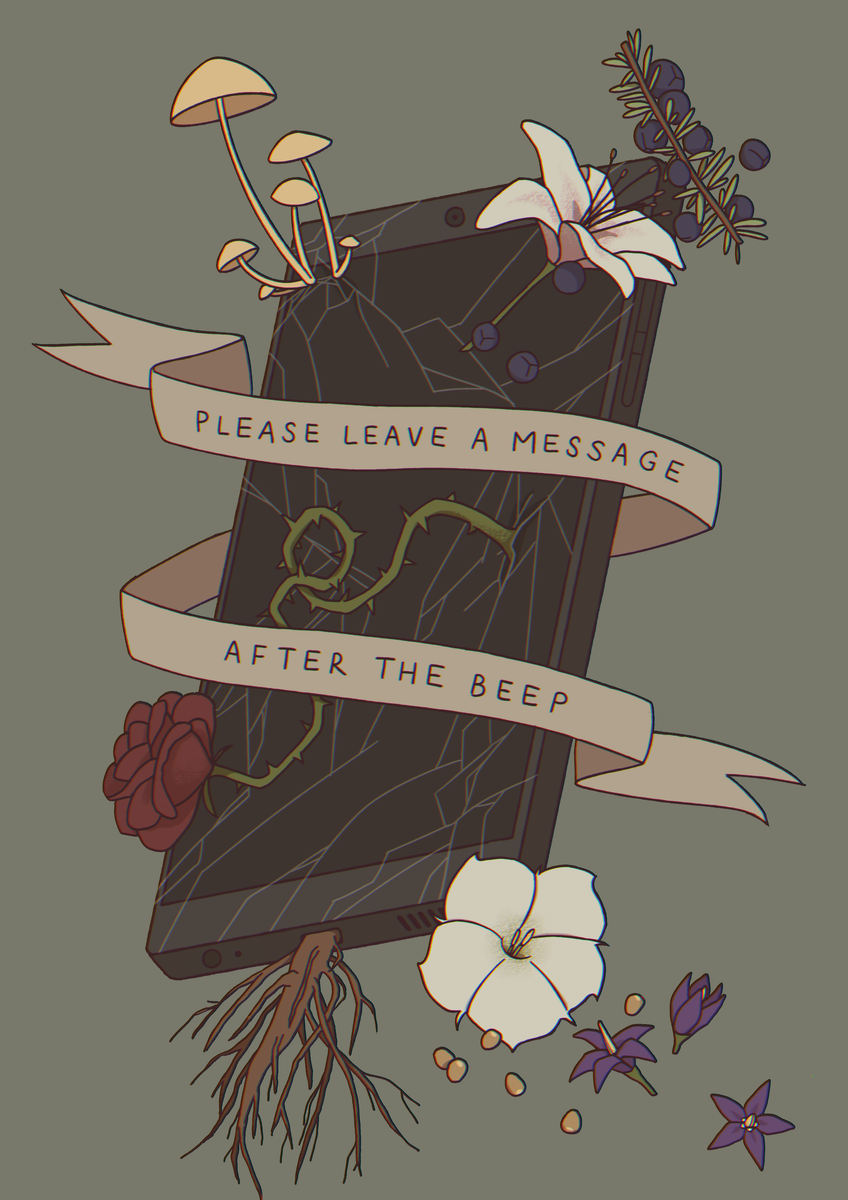
Illustration by Yong En Foo. [ID]: A phone with a cracked screen and roots, vines, flowers, and mushrooms growing out of it, all in muted colours. A banner is wrapped around the phone with the text ‘Please leave a message after the beep’
Illustration by Yong En Foo. [ID]: A phone with a cracked screen and roots, vines, flowers, and mushrooms growing out of it, all in muted colours. A banner is wrapped around the phone with the text ‘Please leave a message after the beep’
COVID-19: The pandemic claiming the lives of hundreds of thousands of people around the world
The spread of the COVID-19 pandemic across the globe has been identified as a strain of coronavirus, mirroring the 2002 SARS (severe acute respiratory syndrome) outbreak, a virus likewise transmitted through droplets. It similarly appeared in China in 2002 and spread worldwide within a few months, although SARS was quickly contained.
With confirmed cases surpassing the 2 million mark, the onset of COVID-19 has impacted people in varying ways on an international scale. It is understandable that during this time, people may be feeling anxious, confused, and overwhelmed by the constantly changing alerts and media coverage regarding the spread of the virus.
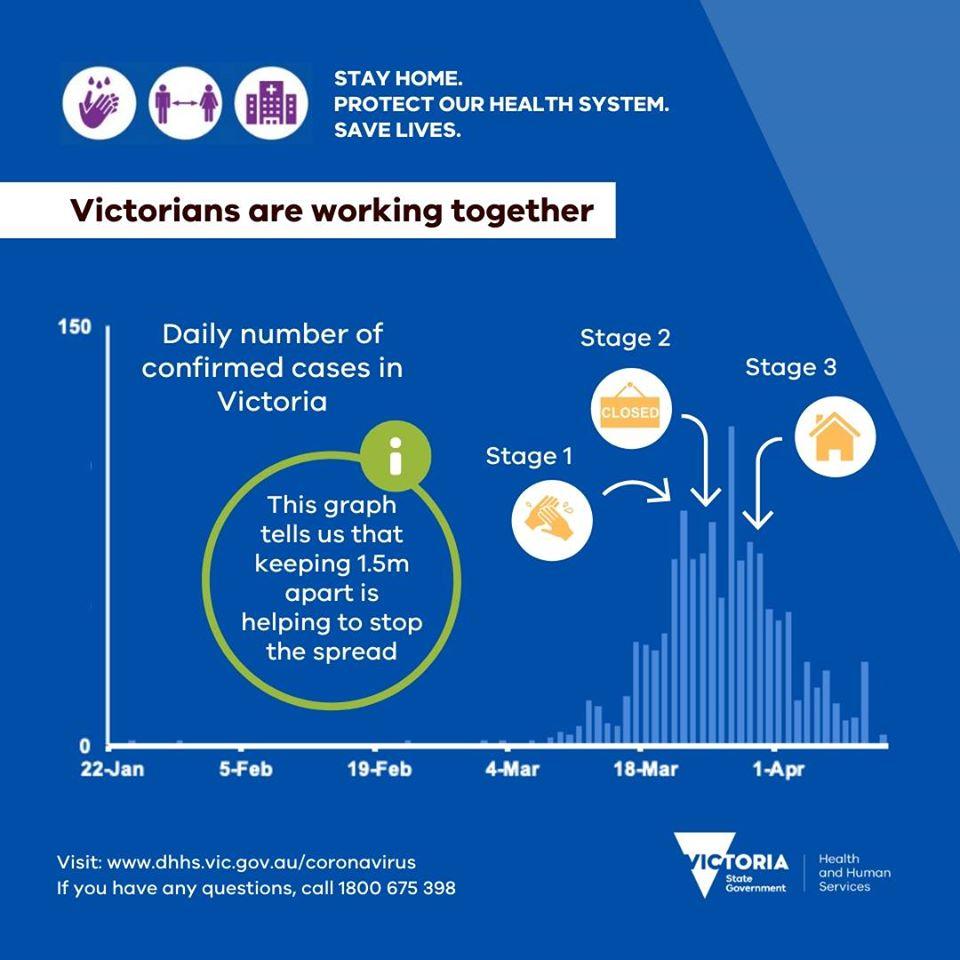
Following advice from the Chief Health Officer, Premier Daniel Andrews joined Minister for the Coordination of Education and Training James Merlino to announce that all Victorian government schools will move to remote and flexible learning and teaching. The end of this period of online learning has been set to be May 11, however, this deadline might be extended to the rest of Term 2 and beyond.
So what does this mean for Nossal students? Feeling frustrated and annoyed? Or upbeat and undeterred?
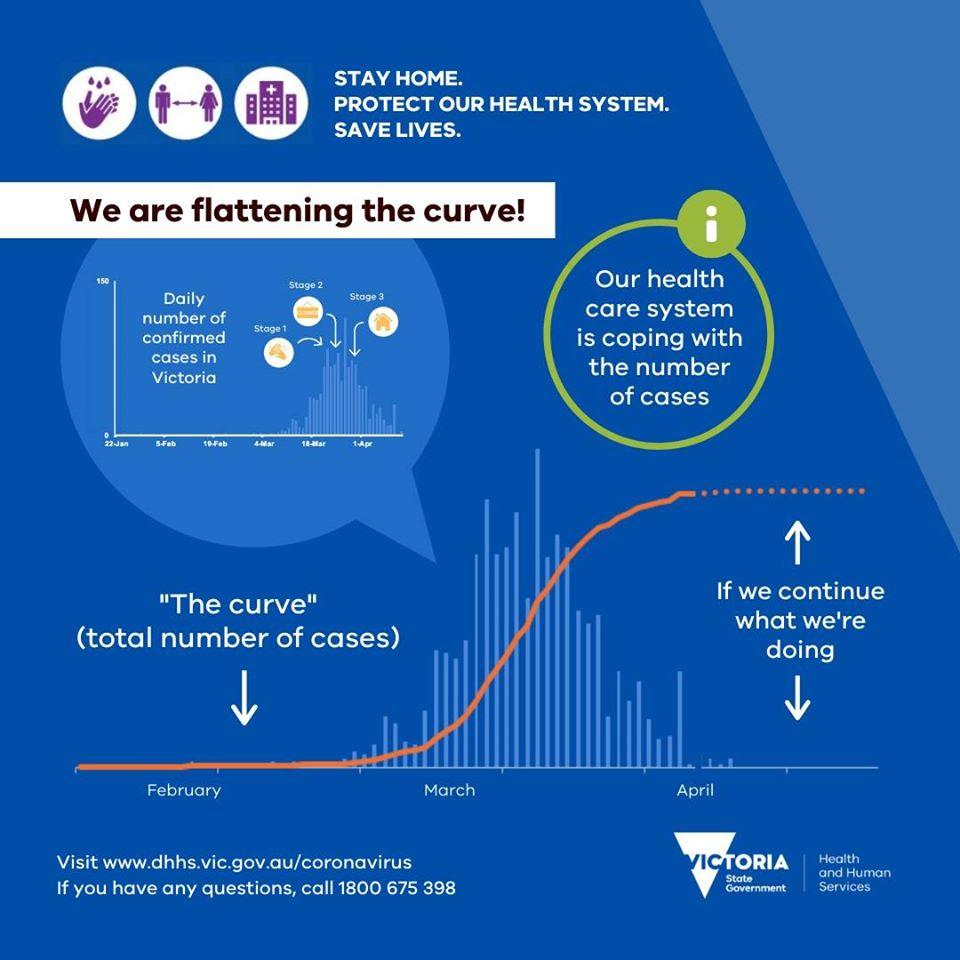
We know Nossal students may feel extra stress during the COVID-19 outbreak. This is a natural response in these unprecedented circumstances, and it’s valuable to acknowledge that such feelings are not a sign of weakness. There are practical ways to manage your mental health during this time, including:
- getting enough rest during school hours and between shifts
- eating healthy foods and engaging in physical activity
- keeping in contact with schoolmates, family, and friends by phone or online
- being aware of where you can access mental health support at school
As a Year 12 student, of course, it means missing out on some social events, in particular celebrating the milestone of turning 18 with loved ones. Missing out on all the social events that come with Year 12 is also frustrating, but it is important to remain positive despite the viral pandemic.
We must also recognise the pressure that our healthcare system and its workers are under and take steps to assist them where possible. Following government advice on how you can help slow the spread of the virus will support the health care workers who are saving lives and keeping us safe. Ultimately, it is important to remain hopeful and acknowledge that it will all come to pass.
How are you coping with the coronavirus-imposed school lockdown? Send your answers to Erythrina Chang or Jemima Schuller to be published in the next edition of Parallel, Nossal’s student-run newsletter. Connect with others, share your experiences and exchange messages of support.
Whatever you are feeling during these challenging times, be aware that you can talk it through with our counsellors, Renee and Sandy or our Tute & House Leaders. They will provide advice and support based on your specific needs. For any queries, remember to send any question you may have concerning COVID-19 to Ms Mackin and check the ‘Mythbusters@NHS’ channel in the Nossal Staff & Students team for more information.
By Erythrina Chang & Jemima Schuller
(Views expressed in this article are individual opinion and do not reflect the newsletter as a whole)
Dawn (a poem)
Before they see the last of the world,
patients are brought out and sat down,
hospital whites, IVs, and all
And are told to get comfortable
You go around, opening each eye-
a surgeon of precision, slicing thinly where their upper and lower eyelids would have met if the human race hadn’t gone underground some several lifetimes ago.
This is all done in the dark
There is no separation between your own eyes, no horizon to greet each day.
Instead, you gently rub your thumb-
down the bridge if their nose,
across the plains of their forehead,
along their withering cheeks
and find acceptance.
(It barely hurts, the skin around their eyes lack the same nerves that they might of once had, there is no capacity to see in the same way humans are said to have once been able to)
You are not allowed to stay for this part-
only the doomed are left to greet this visitor- one that has never been welcomed by those who are set to breathe tomorrow day-
so you leave.
But you know what follows.
Above the surface, the sun begins to rise.
Dawn greets her hosts and with pupils wider than ever before, they open their homes.
By Ruth Jarra
Escapril 2020: poems
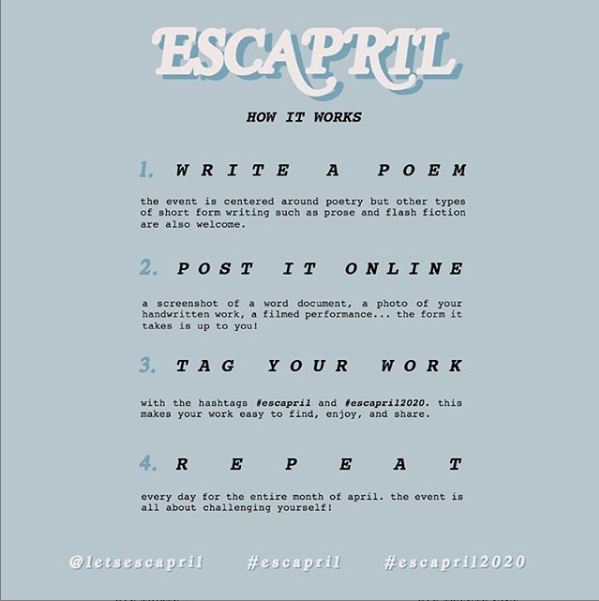
Escapril is a poetry challenge created by Savannah Brown in which participants are tasked with writing a poem every day for the month of April. Visit the official Escapril Instagram for more. – Excerpt from Savannah Brown’s official website (www.savbrown.com)
Poetry submitted by two separate anonymous authors in our Nossal community.
Growth of an animal, decay of a girl (Prompt: Growth/Decay)
There is nothing profound about the
decay of a girl.
Close your eyes.
There she is, shrinking, shrivelling.
And in the midst of the nail-biting horror of—
goodness, change!—
There is a
crack in its white globe of a skull, the
Crank of its jaw unhinged (or unholy), the
Crackling burning ribbons of hair
Pink, no blue,
No, green, green for the shimmer of growing moss,
Hear it singing,
rot, rot, rot!
And now! Sun-loved and sun-soaked,
Something animal,
Something bitter and lovely
Too much? Well,
Here is a secret:
There is nothing profound about the
Growth of something else.
Eyes closed now. Be on your way.
By Anonymous
On the Subject of Name-Giving (Prompt: Chemical reaction)
Maybe the Greeks were onto something when they thought the world was air and flame, water and soil—
though now we think we know better, of course. Now there are one hundred and eighteen of them, the impossible knowledge of their weight on this earth, the endless to endless combinations they create, and I have to wonder: how did we find any of this?
I don’t think I can ever begin to comprehend it.
But we did find it, and we gave it a name:
we were given love and we called it oxygen,
told each other to slow down and take deep breaths, I’ll hold your hand if you would want it.
We found love in grey matter and white and we called it dopamine, serotonin, oxytocin, but we are all still doodling little hearts in our notebooks
dot the ink and connect the line.
And maybe the Greeks were onto something when they connected the spaces between little dots in the sky and called them Orion, Pleiades, Andromeda,
maybe the spaces between you and me (and you, and you, and you) are just as subject to astrological whims—that is to say, suspended by our own belief,
so we grip onto it tight with the interlocking of our fingers like a prayer.
I cannot begin to comprehend how the spaces between electron and electron could build to this solid thing of a life that I grasp in the warm of my palm
but I really do think the Greeks were onto something when they figured out love was so big they needed seven names for it—
maybe when we love something so much we have to give a name to it.
By Anonymous
A critical review of Radio Silence by Alice Oseman
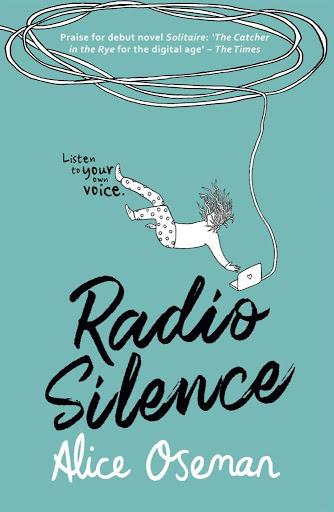
Before reading this book, I was told it was going to move me, make me cry. And if you know anything about my reading tastes, you wouldn’t be surprised to hear that I immediately wanted to get my hands on a copy.
Unfortunately, this was not the case. It made me feel a little sad, sure. But no tears (and I cry easily). Radio Silence by Alice Oseman is a young adult contemporary novel that follows the perspective of our main protagonist, Frances and her struggles with maintaining the persona of a dedicated student and head girl and her secret obsession with the underground podcast, ‘Universe City’. After discovering that her neighbour, Aled, is the mysterious creator behind her favourite podcast, Frances discovers a friendship like she’s never had before after Aled asks her to make official art for the podcast after finding her fan art.
Understanding that this was written when Oseman was younger and the author has since improved in her writing, I still have some grievances. The story, as described by Oseman herself, features ‘a biracial, bisexual protagonist’, which, at first glance seems like good representation. However, there is not as much representation as hoped for. Frances is half Ethiopian on her father’s side, but the only mention of this lies in one paragraph where Frances laments not knowing her father’s side of the family (her parents are separated) and wishes to have a more Ethiopian last name. That’s it. The only time Frances being biracial is discussed at any length. For it to be marketed as it was, it seems like this feature was only added for ‘representation points’ rather than to add to the plot of the story. Nothing about her being biracial contributed to even her doubts about academics, a major theme in the novel, which could have brought about a nuanced discussion of traditional views of academia in ethnic cultures.
Although her writing is juvenile at some points and her plot twists (ridiculously) convenient, Oseman does weave an inclusive narrative discussing major themes such as the pressures schools place on students and how society deems those not academically successful as failures, with ‘almost all LGBTQ+ main characters’ and a ‘friendship between a boy and a girl where they don’t fall in love’. For a student writing in her second year of university, this is still quite a good novel and I would recommend it for an audience such as Nossal, who may be able to relate to the themes discussed.
If you do read this book and would like to talk more about any future book/show/podcast reviews, message whichever author of the review and we would be happy to talk about them with you.
By Ruth Jarra
(Views expressed in this review are individual opinion and do not reflect the newsletter as a whole)
Get in touch

Ruth Jarra
Editor-in-chief