
Respectful Relationships
What is happening in the classroom in Term 2?
Positive Coping
Learning activities in this topic provide opportunities for students to identify and discuss different types of coping strategies. When children and young people develop a language around coping, they are more likely to be able to understand and deliberately utilise a range of productive coping strategies and diminish their use of unproductive coping strategies.
Students learn to extend their repertoire of coping strategies and benefit from critically reflecting on their own choices and being exposed to alternative options. Activities introduce students to the concept of self-talk and practice using positive self-talk to approach and manage challenging situations. Positive self-talk is a key strategy for coping with negative thoughts, emotions, and events. It is associated with greater persistence in the face of challenge and can be learnt or strengthened through practice.
Example of coping strategies taught through a game at Foundation level.
THE LISTENING GAME - Breathe in and out. Slowly.
Listen to the sounds that are far away as you breathe in and out. Slowly.
Listen to the sounds that are close to you as you breathe in and out. Slowly.
Listen to the sounds that are far away as you breathe in and out. Slowly.
Scrunch up your toes. Hold them tight. Relax your toes.
Scrunch up your hands. Hold them tight. Relax your hands.
Listen to yourself breathe in. Listen to yourself breathe out.
Scrunch up your arms. Hold them tight. Relax your arms.
Listen to a sound nearby. Wiggle your toes. Wiggle your fingers. Wiggle your nose.
Open your eyes. Sit up slowly.
Examples of coping strategies explicitly taught in Years 1 & 2
BALLOON BREATHING. Take up your angry statue pose. Take in a deep breath, and then blow out slowly, just as if you were blowing up a balloon. Do this three times.
PRESSING YOUR HANDS TOGETHER. Take up your angry statue pose. Now slowly press your hands together palm to palm. Hold them in front of your chest while you press hard. Then slowly let go.
COUNTING. Take up your angry statue pose. Now slowly count to 10. As you do, imagine you are taking control of your anger. You are in charge, not the angry feelings. To practise one more time, ask the students to run on the spot to get the ‘hot’ feeling of anger, freeze into their angry statue pose, and then try the strategy that you call out. At the end of the practice, ask students which one of the three they prefer.
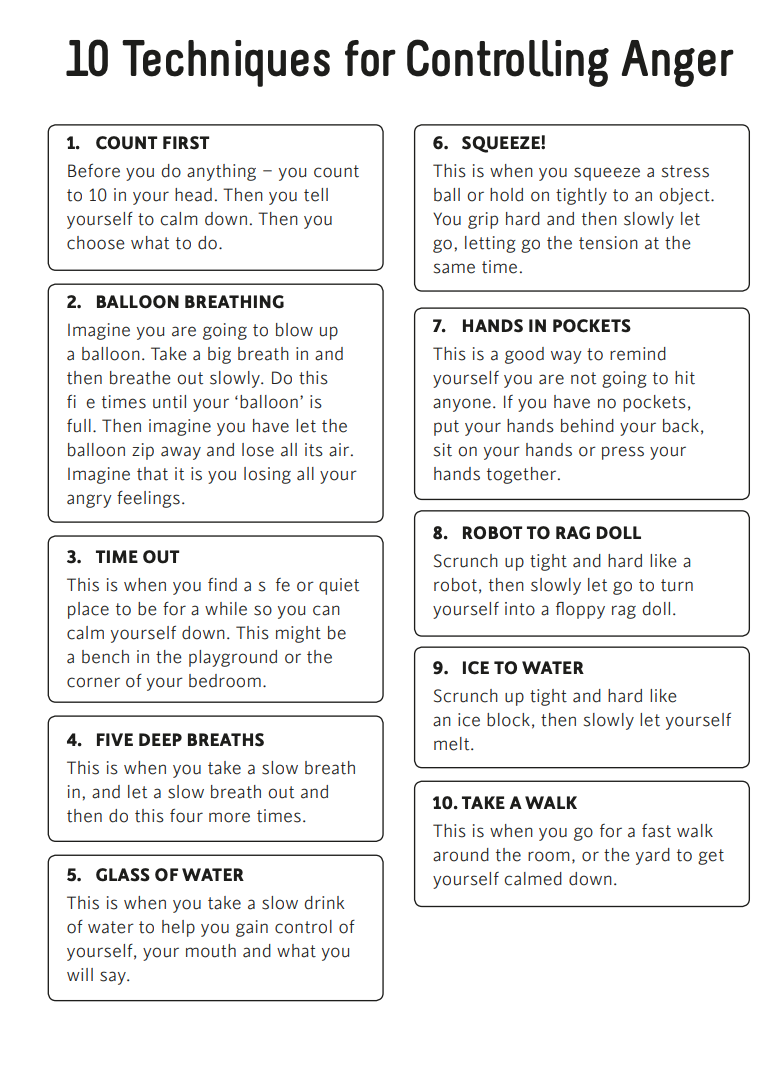
10 techniques for controlling anger explicitly taught at Years 3 & 4 level.
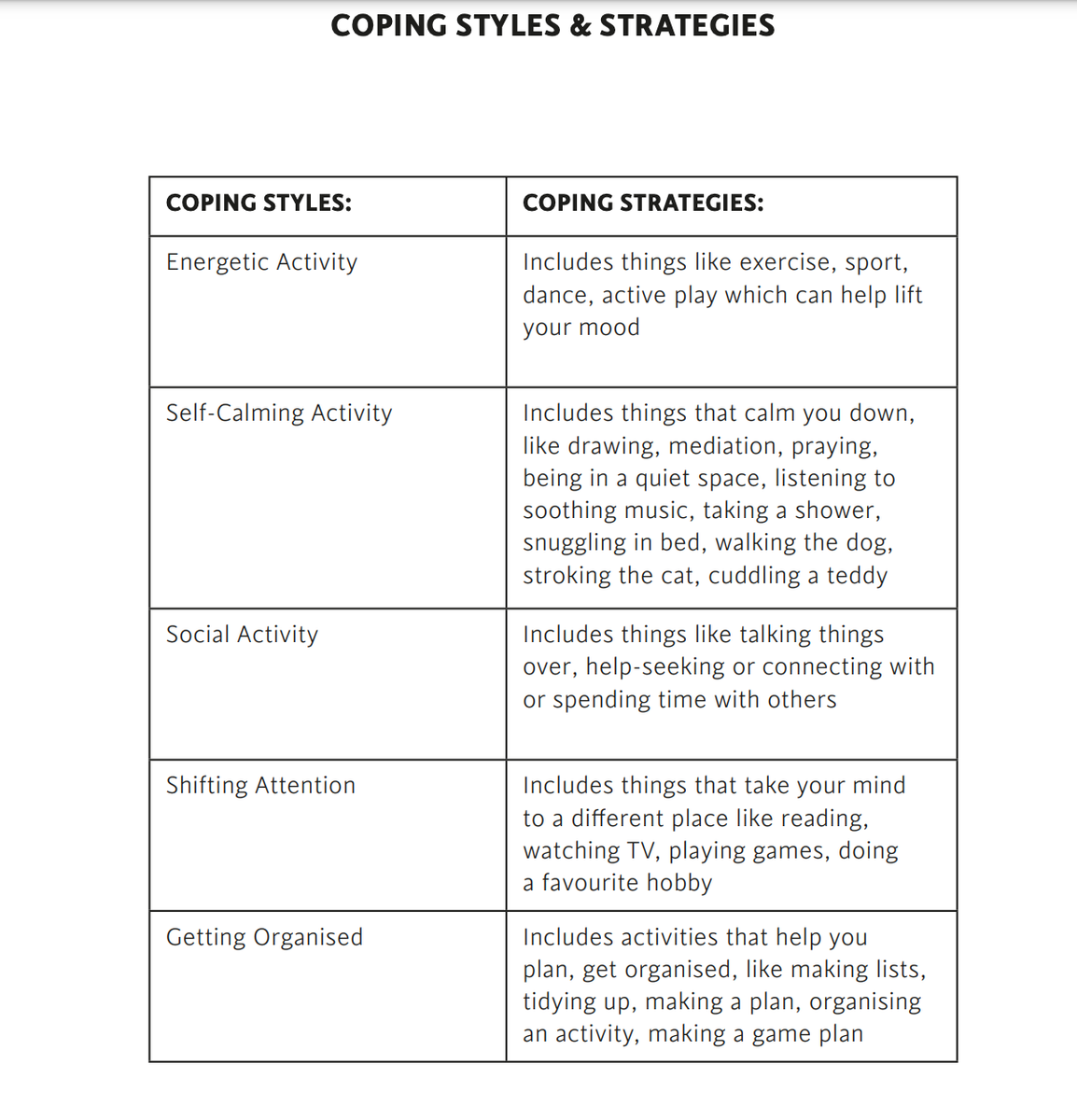
Students in Years 5 & 6 need to develop their own coping strategies after learning about coping styles.
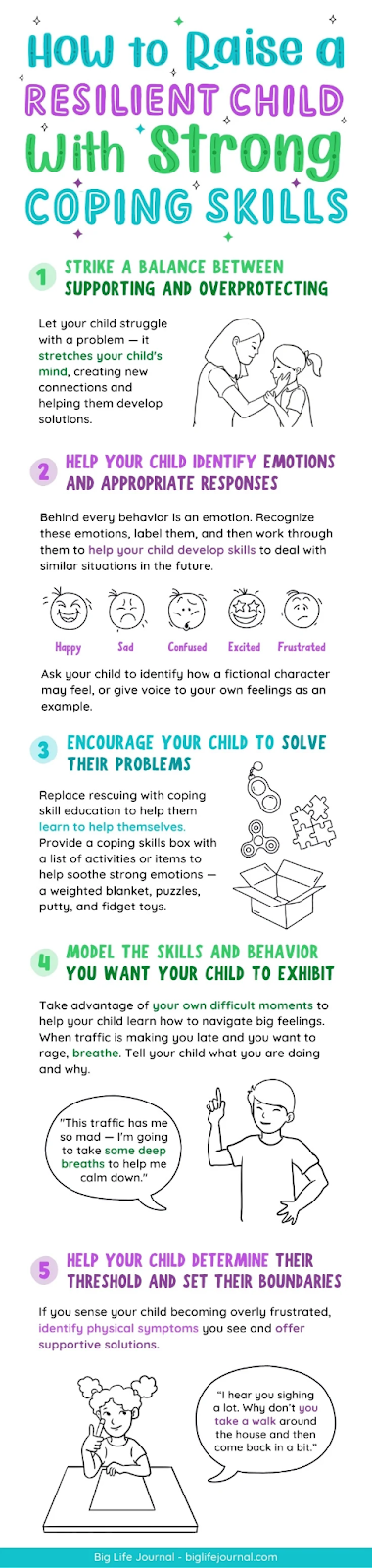
Some great books for children to teach them how to deal with complex emotions include The Way I Feel by Janan Cain, When Worry Takes Hold by Liz Haske, and Wilma Jean the Worry Machine by Julia Cook