
Principal's Message
Sweethearts
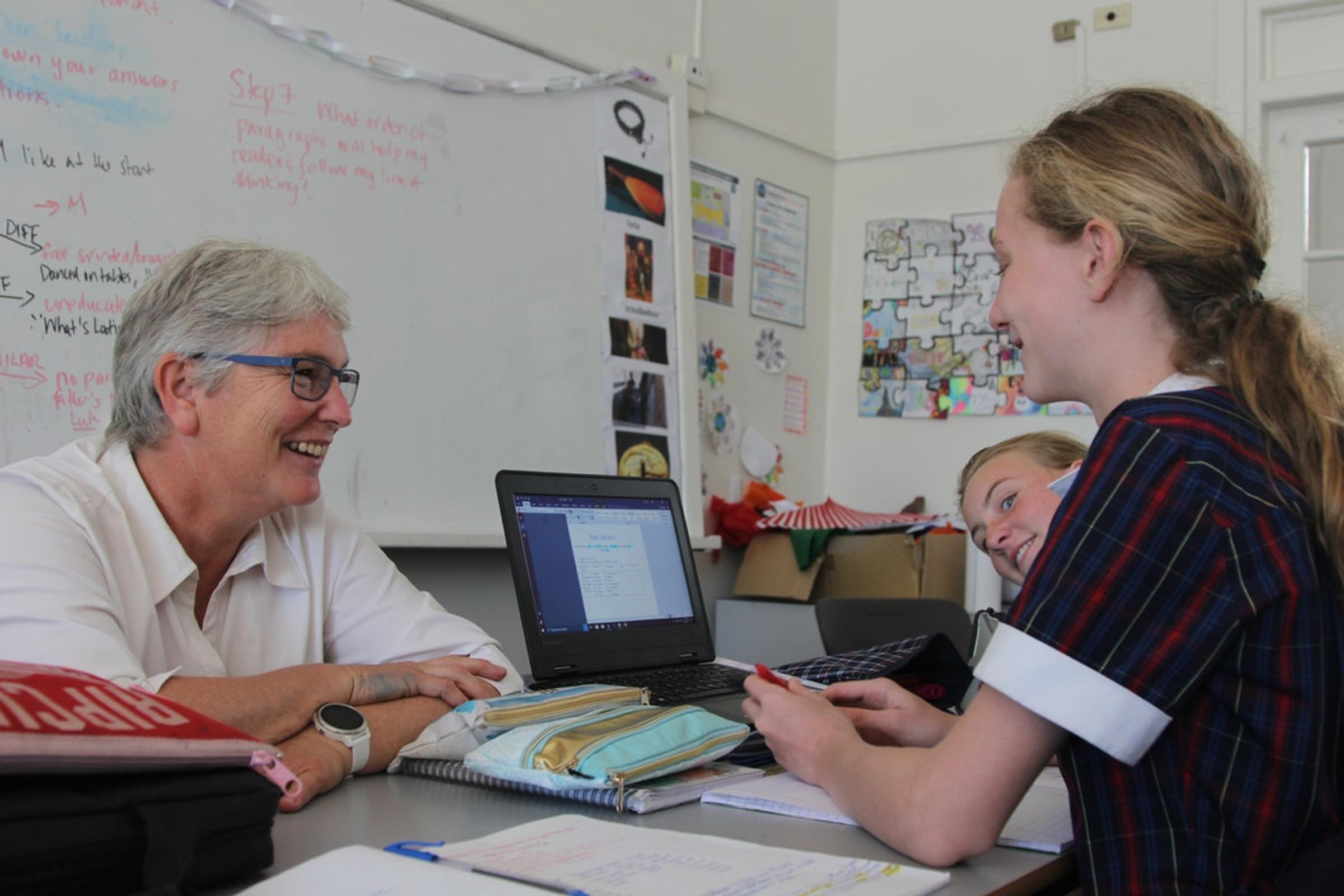
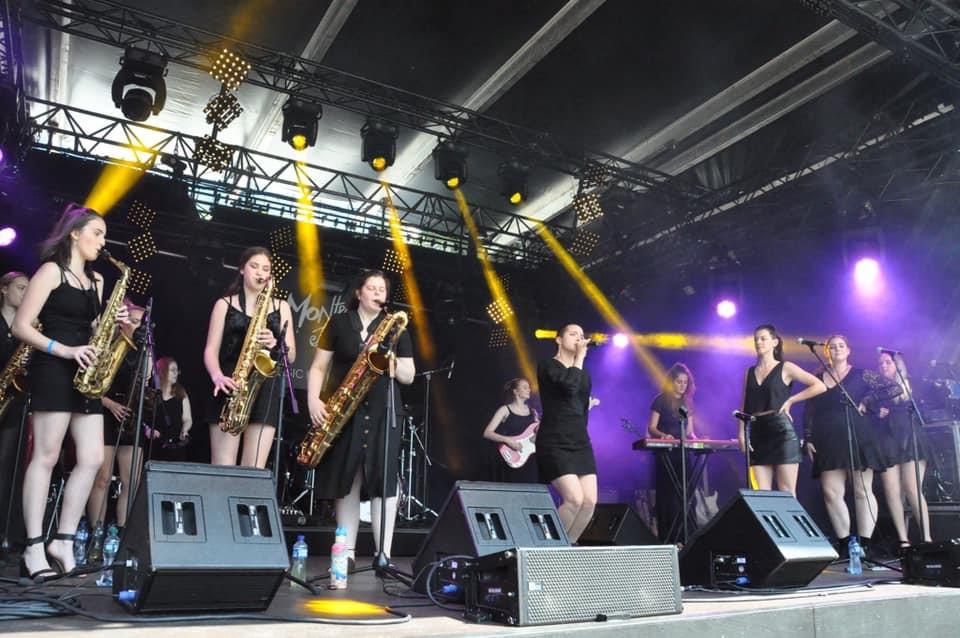
Our MFG Sweethearts have just returned from touring Europe. They have been well received and widely respected in the music community at the Montreux Jazz Festival. We are very proud of the band.


Buildings
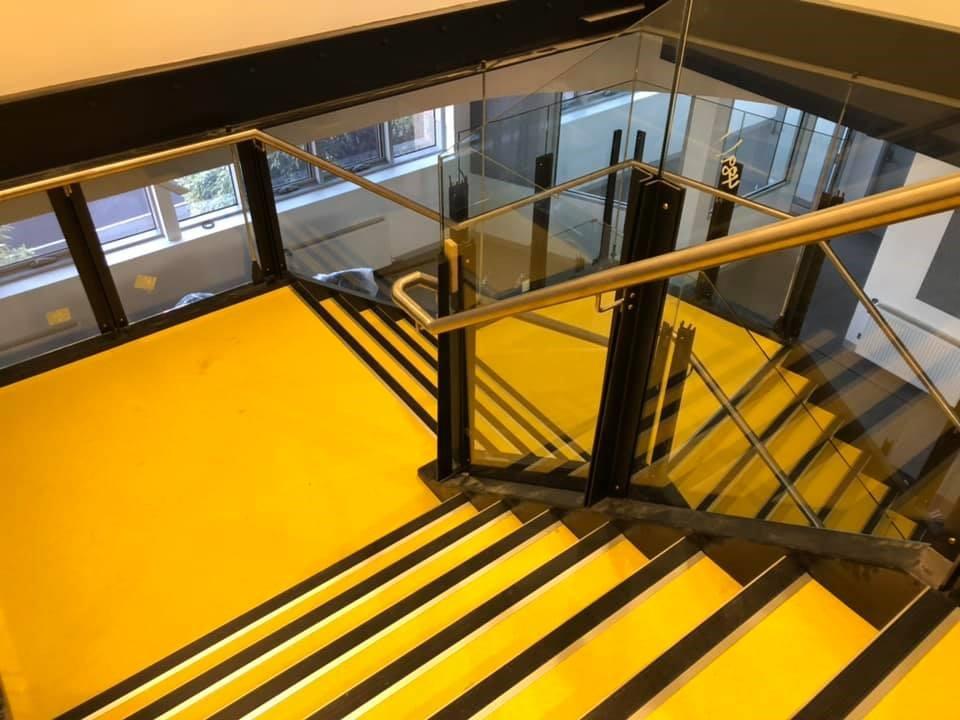
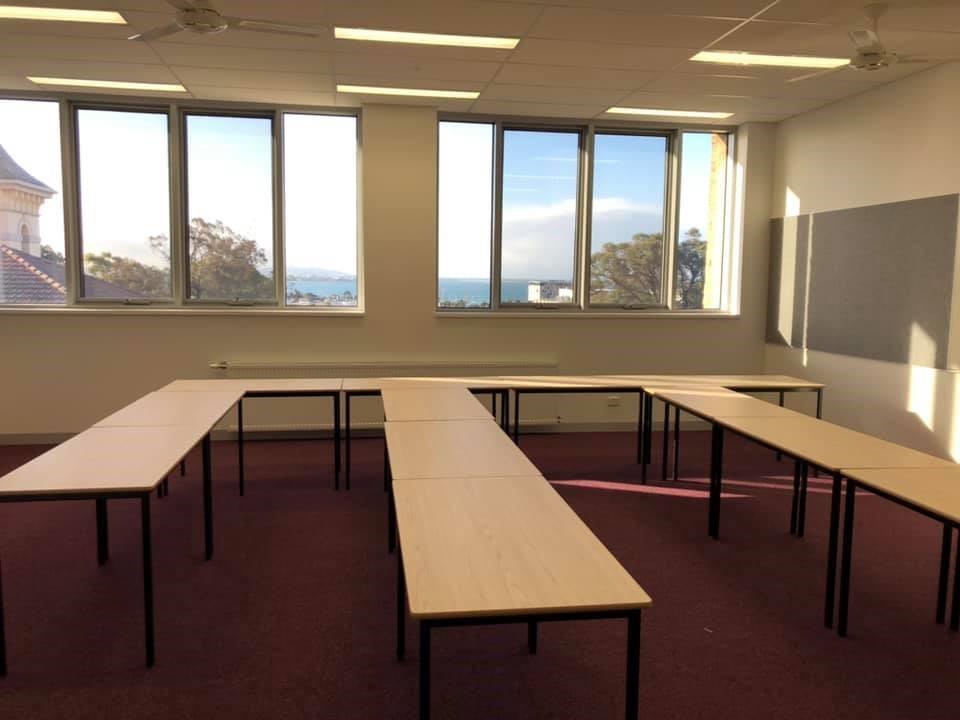
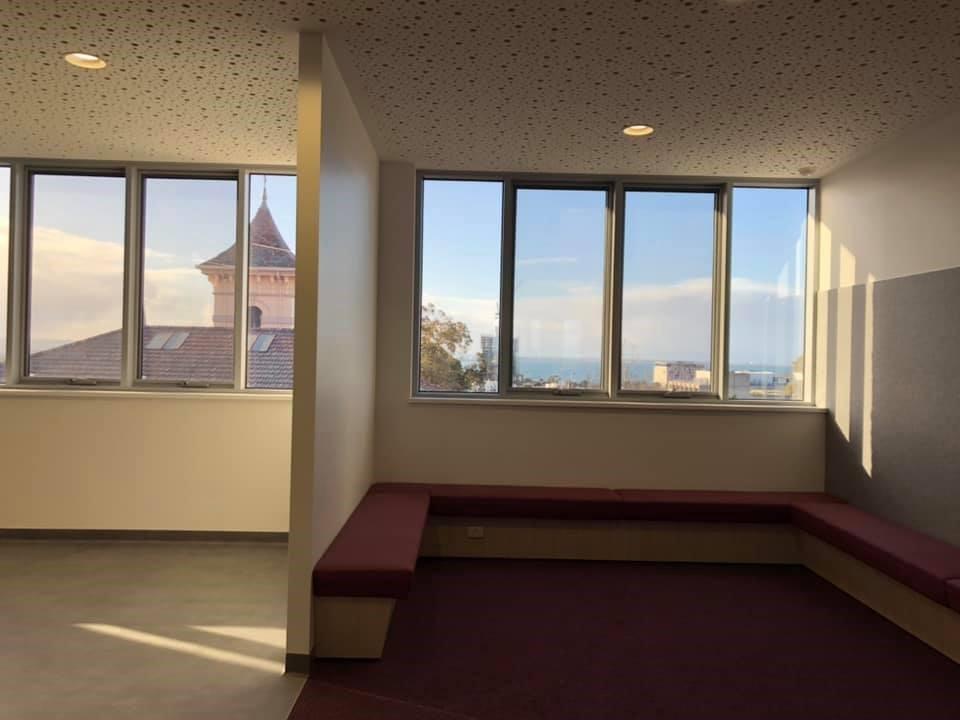
Over the holidays we moved out of the Old Building and into the Embling Building. The students have now moved in and the classrooms have been well received by our students. We feel we have met their goals for colour, light, heating and cooling.

In the new buildings we will be installing security cameras to ensure the safety of our school facilities and equipment. We are following Department of Education guidelines which can be found here: https://www.education.vic.gov.au/school/principals/spag/management/Pages/security.aspx#2
As per the policy, student privacy will be maintained and only a restricted number of people will be able to view the video footage. When the cameras are installed there will be appropriate signage put in place. Naturally they will not be in the toilets, change rooms or sick bay areas. If you have any questions about this please feel free to contact Jeremy Dyson, Assistant Principal.
Staff News
We say farewell to Kerry Buckland who has been a learning mentor at MFG for 23 years and to Leanne Goodwin who has worked in our office for 12 years; we wish them well for their future endeavours.
We welcome back Rose Maloney and Simone Kabylakis to our teaching staff.
Academic Focus
Active Studying
In order to remember or learn a concept, you must practice active studying. If you are passive in your study habits, it will be very difficult to remember what you read or hear during a lesson or class discussion.
One way to be an active studier is to teach the information you are studying to classmates in a study group. You can also critically analyse material you're studying by contrasting it with correlating details or coming up with questions about what you've learned, or finding ways to apply what you've learned.
By implementing active study strategies into your personal study, you'll enhance your ability to retain confusing or complicated concepts.
Storytelling
Story telling is an excellent way to remember things in all subjects. By integrating information into a vivid story that you can tell you provide your brain with a sequence of events.
When developing a story for the purpose of enhancing your memory of information, focus on the key learning points and organize them (within the story) in a logical way.
In the story one event triggers your memory of the next event, so your ability to memorize information is as limitless as your ability to create, remember and tell a story.
ICT
E-Safety has some excellent supports to assist parents to support their child/ren to be safe using technology and on-line.
The following is a section relating to sexting.
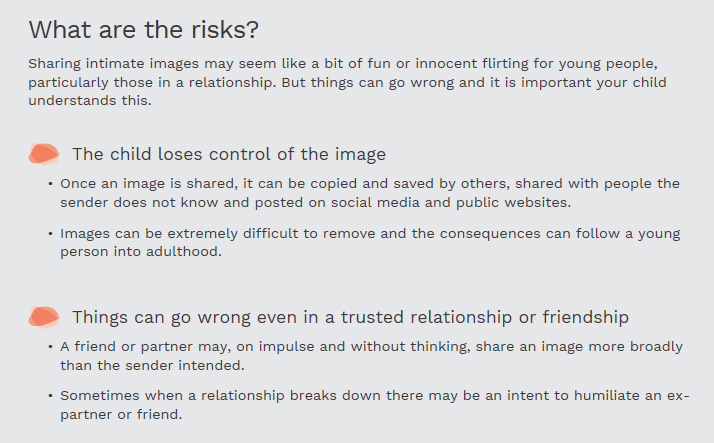
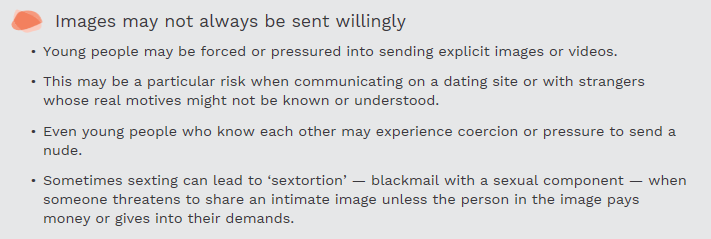
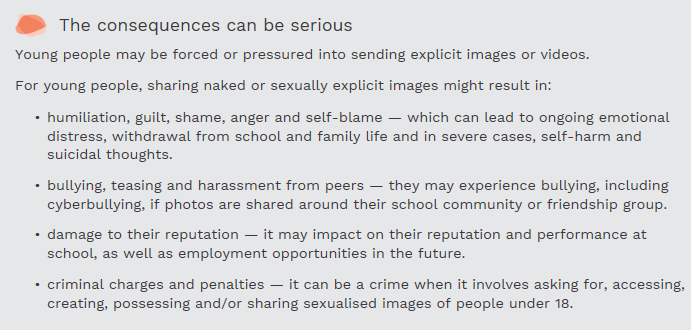
It is important to talk with your children about the possible consequences of sending or sharing intimate or sexually explicit messages, images, photos or videos. And there are ways you can help if things go wrong.
The term ‘sexting’ is not often used by young people or in popular culture. Young people are more likely to refer to other terms like ‘sending nudes' or ‘dick pics’.
How common is it?
In a 2017 eSafety survey, 9 out of 10 young people aged 14 to 17 thought that sexting happened among their peers — as a kind of courtship behaviour.
However, it may not be quite as common as they think.
- 1 in 3 said they had actually experienced sexting in some way — whether sending, receiving, asking, being asked, sharing or showing nude or nearly nude pictures.
- 5% said they had sent an intimate image, and 19% of these said they did it because they trusted the person they sent it to.
- 15% reported being asked for an image, with 52% of requests coming from someone they did not know.
- 73% said they did not send an image after being asked (82% of 14 year olds compared to 66% of 17 year olds).
Sexting and the law
There are Commonwealth and State and Territory laws against asking for, accessing, possessing, creating or sharing sexualised images of children and young people under 18. (In some states, these laws only apply to images of children and young people under 16 or 17, but police in every state also have the option of using the Commonwealth laws, which apply to images of young people up to 18).
This means a young person who asks for, accesses, possesses, and creates or shares sexualised images of someone under 18 may be at risk of criminal charges — even if both parties consented. Being found guilty of these offences can result in a criminal record and registration as a sex offender in some circumstances. This would prohibit them from working or volunteering in places involving children and may require them to regularly report to police and have restrictions placed on their freedom of movement.
Some states have added defences or exceptions to these laws for consensual sexting between young people of similar ages.
Given the laws in this area are complex, it is important to be aware of the law and the legal services that are available to advise and support young people who have been involved in sexting.
For more information about relevant laws in Australia, visit Youth Law Australia.
Reference: