Resources

Senior Secondary Certificate Reform
The VCE Vocational Major (VCE VM) and Victorian Pathways Certificate (VPC) will replace VCAL in 2023
More information about the VCE Vocational Major and Victorian Pathways Certificate will be available in future Notices to Schools and on the Senior Secondary Certificate Reform page.
Youth Week at the Warragul Library
Running from 7 -13 April, students may like to take advantage of the offerings connected with:
- Jobs: Tips and Tricks on 7 April
- Minecraft on 11 April
- How to draw Manga on 12 April
- Dungeons and Dragons on 13 April
Please see the attached flyer for more details
Jobs Victoria Career Counsellors Service
This new initiative provides career counselling services to school-leavers, parents, jobseekers…
Call the CEAV on (03) 9433 8000 to book a careers counselling appointment or request a call back.
More information is available via the CEAV Jobs Victoria Career Counsellors Service website.The service is most suited to people who are:
- unsure of their work/career options and pathways
- seeking employment but lack a clear vocational pathway/plan
- unemployed and struggling to secure work due to lack of work experience (e.g. recent graduates)
- underemployed and seeking more secure and/or skilled work
- in need of support to plan a transition to a new occupation/career wishing to pursue a professional career involving tertiary education pathways.
Transition of LMIP and Job Outlook
Change is coming to how the Australian Government delivers labour market information. Over the coming months, the Labour Market Information Portal (LMIP) and Job Outlook websites will be moving over to the National Skills Commission (NSC) website, before being decommissioned mid-year. You can see concepts for how content may look on the Labour Market Insights website.
Updates to the Australian Skills Classification (ASC).
The ASC offers a way to explore the connections and transferability between skills and between jobs. 500 new profiles have been added including for specialisations and ‘Not elsewhere classified’ occupations. They’ve also introduced emerging and trending digital skills flags plus much more.
Read more in the report and explore the Australian Skills Classification 2.0 today.
Skills clusters show groups of similar specialist tasks. The specialist tasks are designed to describe day-to-day work within an occupation. These tasks are broadly transferable – if you can do one task in the cluster, you can do the others. Skills clusters illustrate a new way of looking at the labour market at a ‘deeper’ level than occupational classifications or qualifications. This view shows how skills are related and connected to one another and illustrates the transferability of skills across occupations.
Connecting Learning and Careers
Research indicates that teachers are a key influence on students’ career decision making and are often asked for advice and information by their students. Moreover, the research suggests students' learning is enhanced by increasing teachers' knowledge and understanding of the career pathways that align with their respective subject areas.The Career Education Association of Victoria (CEAV) has been contracted by the Department of Education and Training to manage and support the member teacher associations of the Council of Professional Teaching Associations of Victoria (CPTAV) to create resources that support teachers and careers practitioners to connect learning in the classroom to potential careers. This will supplement and support the career education programs in schools to provide our students with the skills and capabilities to navigate multiple careers, manage complex and challenging transitions and meet the demands of the rapidly changing world of work.
Links for Drama, English, Product Design and Technology, History, Physics and Maths are already available with more to come. CEAV - Connecting Learning to Work
Students interested in Journalism
Australian newsroom journalism have developed a free guide to news writing through regular blog posts. Blog | Write like a journalist
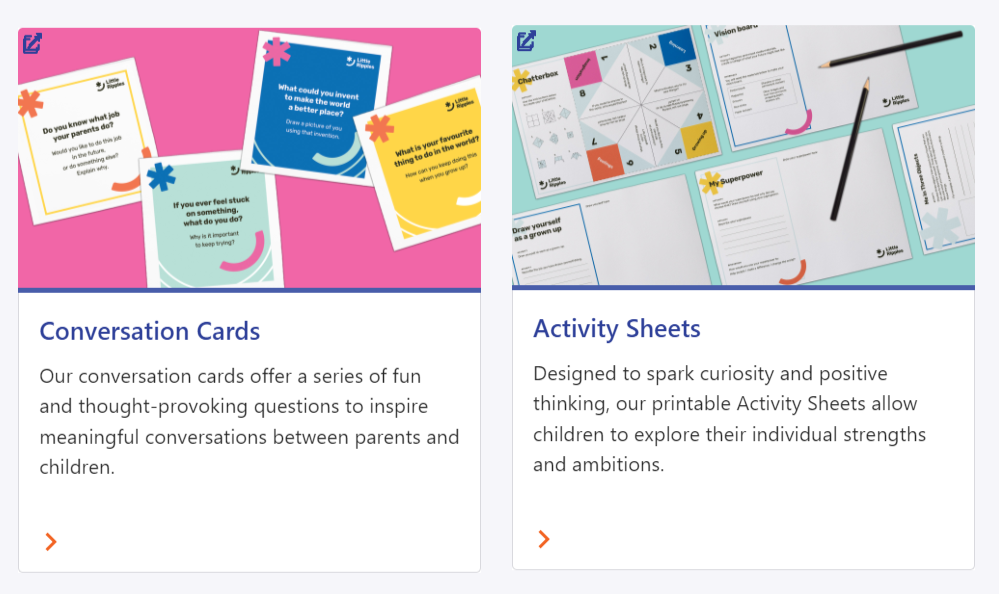
Little Ripples, for parents and teachers interested in positive conversations with children
On the back of research (see Research section) Your Career has developed Little Ripples.
Learn how to make a positive Little Ripple with children. Download the free range of conversation cards and activity worksheets available on Your Career to get started.
Link: Little moments today can change children's lives. | Your Career
Careers in the Water Industry
The student webinar on Wed 6 April from 11.30am – 12:30pm is an opportunities to hear from people currently working in the Water Industry about their career paths, advancements they have seen in their industry, and current industry-specific labour market information to help identify in-demand skills and jobs. Email Mrs Elly Martin emartin@mscw.vic.edu.au if you wish to attend.
Career in Naval Shipbuilding
With more than $160 billion invested by the Australian Government, and 15,000 people needed at the peak of work, Australia’s Naval Shipbuilding Industry is growing rapidly – this is great news for young Australians looking for a secure and dynamic career!
Modern shipbuilding is more than working with sheets of metal in shipyards. It is highly technical and incorporates cutting edge engineering, technology, and systems to ensure the ships and submarines are invisible to attack, can detect threats and ensure the safety of the crew on board.
In the coming years, Australia’s Naval Shipbuilding Industry is going to need people with lots of different skills to work in a wide range of roles – from city-based office roles to hands-on positions in the shipyards.
Students keen on finding out about studying to work in this industry, are encouraged to browse Naval Shipbuilding College to discover more. Students might also like to watch this YouTube Life as an Apprentice in Australia's Shipbuilding Industry clip.
Careers in transport and logistics
An industry that is continuing to grow is in transport and logistics. There are many careers in this diverse industry from actually driving a truck or train, to being part of the logistics team involved in the planning and distribution of freight and people. A particularly important part of this industry is in international freight – be it freight coming into Australia (imports) from all over the world, or cargo being sent from Australia (exports). People involved in this do not move the freight themselves, but instead act as an agent, connecting exporters, importers, and various transportation services like shipping, air freight, road transport, and rail.
An interesting website to visit is Make Your Move and students can also access videos of current students training in this industry.
There are two universities in Melbourne that offer dedicated logistic courses – RMIT Bachelor of Business (Logistics and Supply Chain Management) and Victoria University Bachelor of Business (Supply Chain and Logistics Management).
Skillsroad New Website
The brand new Skillsroad website is here! It’s filled to the brim with advice, resources and interactive quizzes to support students with regards to direction after school. Follow the link here to access the Skillsroad website and areas including:
- Career Quiz: Where are their unique skills best utilised?
- Job Fit Test: How ready are your students for the working world?
- Jobs Board: Entry-level jobs in every field!
Pathways to tertiary education – Online resources for students with a disability/chronic health condition and their parent/guardian/career advocate.
The Disability Gateway now has a pool of great resources and links for those students and their advocates keen to explore post-school options. Well worth a look. Here is the link to the Tertiary Education in Victoria section.
As well as meeting with a member of the Careers Team at MSCW, we recommend students with a disability in their final years of school who are exploring employment options, nominate this in their NDIS plan (if relevant) and make an effort to engage with a local Disability Employment Provider.
Career exploration: Free Careers Assessment Resources
It is not unusual for you people to be very unsure of their next step/s after school. In this case, career exploration, especially in consultation with a qualified careers practitioner is encouraged. Part of that exploration might involve completing a career assessment task. This Canadian article summarises a variety of free, online self-assessments to assist individuals struggling with awareness of their skills, temperament and abilities. Click here if interested.
Year13
This is an amazing website for secondary students in all year levels. Once you create an account, you will receive personalized information about:
- TAFE and university courses
- Careers
- Inspiring articles
- Events
- Job opportunities
- Profiles of people working in the industries you’re interested in
You will also be able to enter competitions, access information on how to manage your finances, be inspired by gap year programs and also register for and attend the annual Year13 Expo, https://year13.com.au/
Job Active Website and Youtube
For those looking for job seeking ideas consider https://jobactive.gov.au/ and https://www.youtube.com/c/jobactivejobs/videos especially the soft skills, what are employers looking for and application tips videos.
The Footnotes – online resource for young people about careers, life and money
Would you like help finding out what stories, careers and courses might be suited to you? Consider The Footnotes online resource https://thefootnotes.com.au/ and the quiz http://your.thefootnotes.com.au/quiz
CSU Study Link - Short online subjects that prepare you for study success
Charles Sturt University’s Study Link program offers short, self-paced online subjects that prepare you for success in your studies. Whether you want to enhance your skills in writing, mathematics, science or just make the transition to tertiary study a little easier, Study Link will help get you there. This may be useful for filling knowledge gaps, enhancing skills or building confidence. Study Link is FREE for most residents of Australia. For more info visit https://www.csu.edu.au/studylink#how-it-works
Free online courses
Have an interest you want to learn more about, for example Block Chain, Climate Change, Mindfulness, and Entrepreneurship? Bit of spare time? Confined to self-isolation? Future Learn uses MOOCs to offer a range on online short courses, many free. https://www.futurelearn.com/courses
Useful websites
Time poor parents interested in directing their child/ren to useful careers and pathways resources might like to use:
- The list on CICA as a starting point https://cica.org.au/resources/
- by ACCE (formerly CEAV) https://ceav.vic.edu.au/resources/parentscarers/
- Parent advice from My Future https://myfuture.edu.au/assist-your-child
AATIS Career of the Month – Warehouse Operator
The easy-to-read resource covers key questions relevant to individual interested in ‘how to become a Warehouse Operator’. https://www.aapathways.com.au/aatis-blog/how-do-i-become-a-warehouse-operator
Research and resources to ponder
Why it is important for students to talk about their futures in work with teachers, family and friends
The OECD Career Readiness project explores quantitative evidence to identify how teenage career-related activities and attitudes are linked to better adult employment outcomes. Evidence from multiple national longitudinal studies shows that secondary school students benefit by actively exploring their futures in work. One indicator of better employment outcomes is students reporting having career conversations with family members, peers and importantly, with subject teachers. Career conversations can be a sign that a young person has access to support through their transitions, a means of securing new and useful career-related information and a prompt for confirming or challenging career thinking.
Taking account of academic achievement (on the PISA tests), social background and gender, analysis shows that students who reported (career) conversations are overwhelmingly more likely to exhibit more beneficial career thinking. They are: more certain about their plans for the future; more ambitious about those plans; less confused about what they need to do to achieve their job goals (more aligned in their educational and occupational planning); and more likely to agree that their education is useful for their futures in work.
Parents have important roles to play in encouraging and enabling the career exploration of their children, beginning with regular conversations about their plans for the future.
Subject teachers have two important roles to play including career informant and subject specialist.
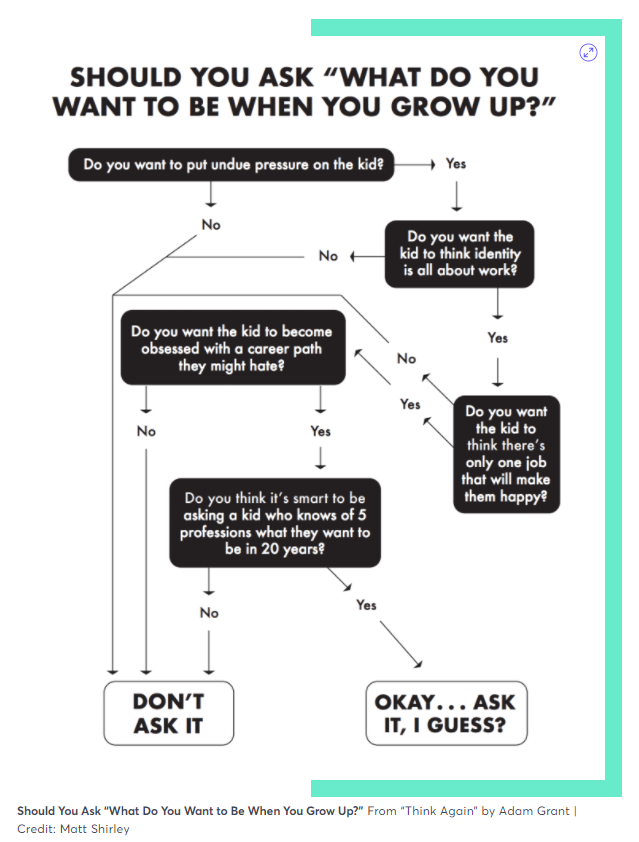
Psychologist Adam Grant reckons “What do you want to be when you grow up” is one of the most harmful questions parents can ask their kids. Predominantly to do with identity foreclosure.
Source: Want to raise successful kids? Parents need to stop asking this question: Psychologist (cnbc.com)
Latest Industry Employment Outlook projects that service industries, led by Health Care and Social Assistance, will underpin the continued recovery in employment from the impacts of COVID-19 over the five years to November 2025.
The following list is the top five most resilient occupations according to NSC research
| Health and Welfare Services Managers |
| Fashion, Industrial and Jewellery Designers |
| Speech Professionals and Audiologists |
| Counsellors |
| Welfare, Recreation and Community Arts Workers |
The industry projections and accompanying report can be found on the Employment Projections LMIP page: https://lmip.gov.au/default.aspx?LMIP/GainInsights/EmploymentProjections