Specialist News
Art, Sport, Music, French, Literacy, Numeracy and Wellbeing

Specialist News
Art, Sport, Music, French, Literacy, Numeracy and Wellbeing
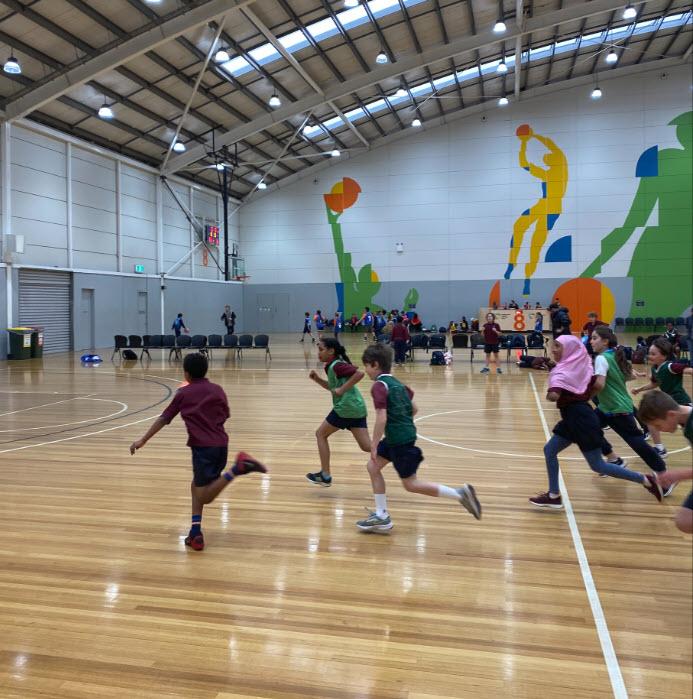
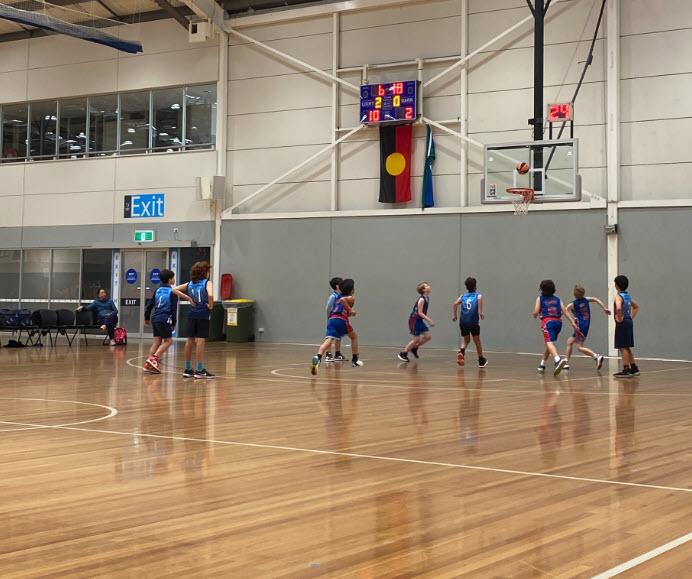
In the last week of term 3, Grade 3/4 students enjoyed a day of basketball at MSAC. Many students were able to experience a game of basketball for the first time.
In weeks 2-8, students will be looking at Topic 8: Positive Gender Relations.
Learning activities within this topic focus on:
We are planning to achieve two things through this initiative;
Why are we covering this topic?
Family violence is one of the most significant and complex issues facing Victorian communities, with a devastating impact on the health and wellbeing of many Victorians.
Victoria’s Plan for Change recognises that family violence is preventable and that schools play a critical role. This supports the range of evidence that was presented to the Royal Commission. This body of research indicates that:
Schools can be effective in changing these attitudes and subsequently in reducing the incidence of family violence.
Each lesson has been specifically designed to match the age of the students within that particular year group.
In the table below are the definitions that students will be introduced to within the lessons.
Year Level | Key Terminology |
Prep | Violence: A big word for too rough. Fair: taking turns, joining in, sharing, encouraging, helping and smiling and talking.
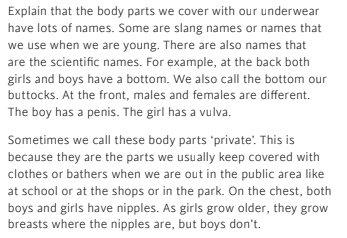
In lesson 5: What are clothes for? preps will be introduced to scientific body part terminology. This has been taken from the lesson:
|
Year 1 and 2 | Violence: We use the word violence to talk about ways in which people hurt others. People can hurt the bodies of other people by hitting, kicking, biting, pushing, or throwing things. People can hurt other people by saying mean things: by teasing, or name calling, or yelling. They can also hurt people’s feelings by ignoring them or leaving them out. All of these acts of violence hurt people.
Gender-based violence: Sometimes people also use boy or girl labels in a mean or violent way. This is called gender-based violence.
Respect: A feeling of understanding and appreciation for all human beings and creatures in the world.
In lesson 5, Respect my body, Respect my space, year 1 and 2 will be introduced to the scientific terms for body parts.
This has been taken from the lesson. 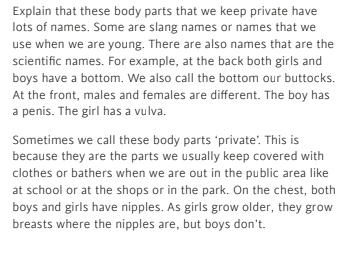 |
Year 3 and 4 | Violence (physical, verbal and psychological)
Physical: when a person slaps, pushes, kicks, throws objects, or uses objects to hurt a person; or when a person damages property or possessions, e.g. smashing, throwing, stealing, hiding Verbal: saying, writing, posting or texting mean, hurtful or untrue things about a person so as to put them down Psychological: deliberately excluding people, making rude or threatening facial expressions or gestures, stalking people, threatening or scaring people, humiliating, shaming or embarrassing people.
Gender-based violence: is a form of violence that targets people because of their gender. Like other kinds of violence, gender-based violence can be physical, verbal or psychological. It is someone acting mean to others just because the other person is not showing exactly the same interests or preferences as other boys or girls. It includes things like teasing girls by saying they are too much like a boy, or teasing boys by saying they are too much like a girl. It is based on gender role expectations and stereotypes.
Rights: our rights are what every human being deserves, no matter who they are (regardless of gender, colour or race) or where they live, so that we can all live in a world that is fair for everyone.
Responsibility: A responsibility is a duty. Often this duty is towards others, but also to ourselves.
Respect: Respect is thinking and acting in a positive way about yourself or others. It involves thinking and acting in a way that shows others you care about their feelings and their wellbeing. |
Year 5 and 6 | Physical violence: When a person slaps, pushes, kicks, throws objects, or uses objects to hurt a person; or when a person damages property or possessions – e.g. smashing, throwing, stealing, hiding. Verbal violence: Saying or writing or posting or texting mean, hurtful or untrue things about a person so as to put them down. Psychological violence: Deliberately excluding people, making rude or threatening facial expressions or gestures, stalking people, threatening or scaring people, humiliating, shaming or embarrassing people. Sexual violence: Unwelcome and unwanted sexual behaviour or contact that offends, humiliates, intimidates, upsets or hurts a person. It can be physical, verbal, written or other conduct. It includes behaviour that does not involve actual touching (e.g. forcing somebody to watch pornography or engage in sexting).
Gender-based violence: is a subcategory of interpersonal violence. It includes forms of violence that target individuals or groups on the basis of their gender and that results in, or is likely to result in, physical, sexual, or psychological harm or suffering. Gender-based violence can affect anyone, including men, women, intersex and transgender people.
Respect: showing respect to someone means acting in a way that shows care for a person’s feelings and wellbeing. Respect is something that we show regardless of how we feel. It does not have to be based on an emotion (that is, only treating people respectfully when we are in the mood to do it). Rather, true respectful behaviour is based on a decision to treat people in a way that respects their rights.
Sexual harassment (a type of gender-based violence): This term is used to describe unwanted sexual behaviour that makes a person feel offended, scared or humiliated.
Sexual assault: includes any form of unwanted or forced sexual behaviour, including unwanted kissing and touching. It also includes serious crimes such as rape, sexual abuse of children.
‘Sexting’: is the word used to describe the sending of naked, sexual or indecent photos using a computer, mobile phone or other mobile device. |
Please see below, for a brief overview of the type of activities for each Year level. We have also attached the lesson plans, as an option to read through the content in more detail.
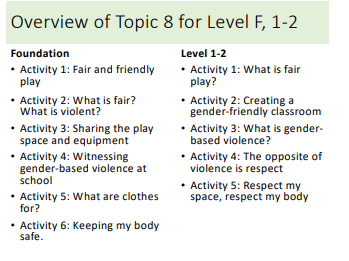
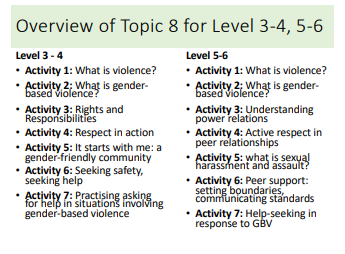
Please click on the links below to have a look at the lesson plans.
If you have any questions, please do not hesitate to contact your child’s classroom teacher.
Kindest regards,
Miss Wilson (Leader for Respectful Relationships)