Learning & Teaching
Literacy
Prep:
Our Prep students are well on their way with their letter and sound journey and using this knowledge when reading and writing.
- Reading & Phonics: We are focusing on the letters and sounds: g, o, b, h, e, r, f, u, l. Children are practicing how to blend these to spell VC (vowel-consonant) and CVC (consonant-vowel-consonant) words like in, at, mat, and pin.
- High-Frequency Words: Look out for these "tricky words" at home: to, his, no, of, into, has, go.
- Writing: We are learning that every great sentence needs a who and what doing. We are also starting to add adjectives to make our simple sentences more interesting!
Grades 1 & 2:
In 1-2, we are moving from ‘learning to read’ to ‘reading to understand.
- Phonics: Our focus shifts to vowel digraphs and diphthongs, including: ar, or, ur, ow, and oi/oy.
- Comprehension: To ensure children truly grasp what they read, we are practicing, summarising and predicting, making "Text Connections" (relating the book to themselves or the world), distinguishing between Literal (it's on the page) and Inferred (reading between the lines) meanings.
- Writing: We are expanding our sentences by adding Prepositions to answer Where, When, and How.
Grades 3 & 4:
Our middle years' students are diving into the beautiful mentor text Brindabella.
- Reading: Through this story, children are exploring how authors use descriptive language to evoke the unique Australian setting. We are also identifying the deeper messages within the story and how they connect to the characters' journeys.
- Writing: Using Brindabella as inspiration, children are practicing how to add extra information to their sentences to create more vivid imagery.
- Spelling: We will be learning new spelling rules which include the -f/-fe to -ves rule (like knife to knives), breaking words into syllable types, and exploring the suffix -y.
Grades 5 & 6:
The 5/6 children are linking their Literacy learning with Geography this month through Jackie French’s Natural Disaster series.
- Reading: Children are transferring their knowledge of geography into their comprehension, exploring how real-world events are portrayed in literature.
- Figurative Language: We are analyzing how Jackie French uses metaphors, similes, and emotive language to engage the reader. Children will then apply these high-level techniques to their own creative writing.
- Spelling & Morphology: Children will be learning and applying the following prefixes and suffixes to spell longer words such as: Prefixes: anti- (against) and non- (not), Suffixes: -hood (state/condition) and -ship (skill/character).
Maths News…
Prep Mathematics: Part–Part–Whole
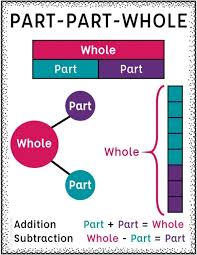
In Maths, the Prep children have been exploring how numbers can be made using parts and wholes. They are learning to recognise and name the number of objects in collections up to five using subitising (quickly recognising how many without counting). The children are also practising how to break apart and combine numbers to make collections up to ten. Through games, hands-on materials and discussions, they are beginning to understand that numbers can be made in different ways (for example, 5 can be made with 2 and 3 or 4 and 1).
How families can support at home:
- Practice subitising by quickly showing small groups of objects (e.g. counters, fruit, toys) and asking, “How many did you see?”
- Ask your child to make a number in different ways, such as “Can you show me 6 using two groups?”
- Use everyday moments like setting the table: “We need 5 spoons. If we already have 3, how many more do we need?”
- Play simple games with dice or cards and talk about the parts that make the whole number.
1-2 Mathematics: Place Value
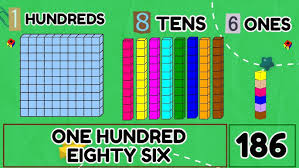
In Mathematics, the Year 1-2 children have been developing their understanding of place value. This includes recognising, representing and ordering numbers, as well as understanding how numbers are made up of tens and ones.
Children are learning to:
- Name, represent and order numbers, including zero, to at least 120 and beyond using physical materials, visual models and numerals
- Recognise and name the number of objects in a small collection (up to five) using subitising (instantly recognising quantity without counting)
- Quantify and compare collections up to 120 through counting, and explain their reasoning
- Understand that numbers are made up of hundreds, tens and ones (e.g. 234 = 2 hundreds and 3 tens and 4 ones)
- Partition numbers in different ways (e.g. 45 = 40 + 5 or 30 + 15)
Through hands-on activities, children are using concrete materials such as counters, blocks and number lines to build strong number understanding and confidence.
How Families Can Support at Home
- Count Everyday Objects: Count toys, snacks, steps, or coins
- Practice Subitising (Quick Number Recognition): Use dice or playing cards, Flash a small number (1–5) and ask: “How many did you see?”
- Make Hundreds, Tens and Ones: Use items like pasta, Lego, or coins, Group into tens and leftover ones
- Find Numbers in Real Life: Look at house numbers, clocks, receipts, number platesCompare Numbers: Say two numbers: “Which is bigger: 37 or 73?”
- Break Numbers Apart (Part-Part-Whole): Give a number (e.g. 25)
- Play Simple Number Games: Roll dice and make 2-digit numbers, Order numbers from smallest to largest or Play “one more, one less”
3-6 Mathematics: Fractions
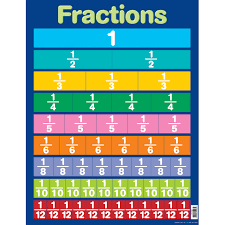
In Maths, the children in Years 3-6 are focusing on fractions. They are learning how fractions can be compared, ordered and represented in different ways.
Throughout this learning, children are exploring how fractions can be the same even when they look different (equivalent fractions). They are practising placing fractions on number lines so they can better visualise their size and order. The children are also solving problems that involve adding and subtracting fractions, particularly when the denominators are the same or closely related.
Another focus has been recognising fractions in multiple forms, including mixed numbers, and seeing how fractions can combine to make a whole. By building confidence with these ideas, children are strengthening their number sense and understanding of how numbers relate to each other.
How families can support learning at home:
- Use food to explore fractions – Cut pizza, fruit, sandwiches or chocolate into halves, thirds, quarters or eighths and talk about the parts.
- Spot fractions in everyday life – Cooking, sharing snacks, measuring ingredients or dividing items are great opportunities.
- Number line challenge – Draw a number line from 0–1 or 0–2 and ask your child to place fractions such as ½, ¼, ¾ or 1¼.
- Fraction talk – Ask questions like “Which is bigger: 1/2 or 1/3? How do you know?”
- Equivalent fraction game – See how many different ways your child can show the same fraction (e.g., 1/2 = 2/4 = 4/8).
You may also find this parent guide helpful for supporting fraction learning at home:
https://ies.ed.gov/ncee/wwc/Docs/ReferenceResources/WWC2021_fraction-parent-tips.pdf