Year 6 News

From Ava McLaughlin, Year 6B teacher
Welcome back for Term 2!
Here is what the Year 6s have been up to so far in Week 1!
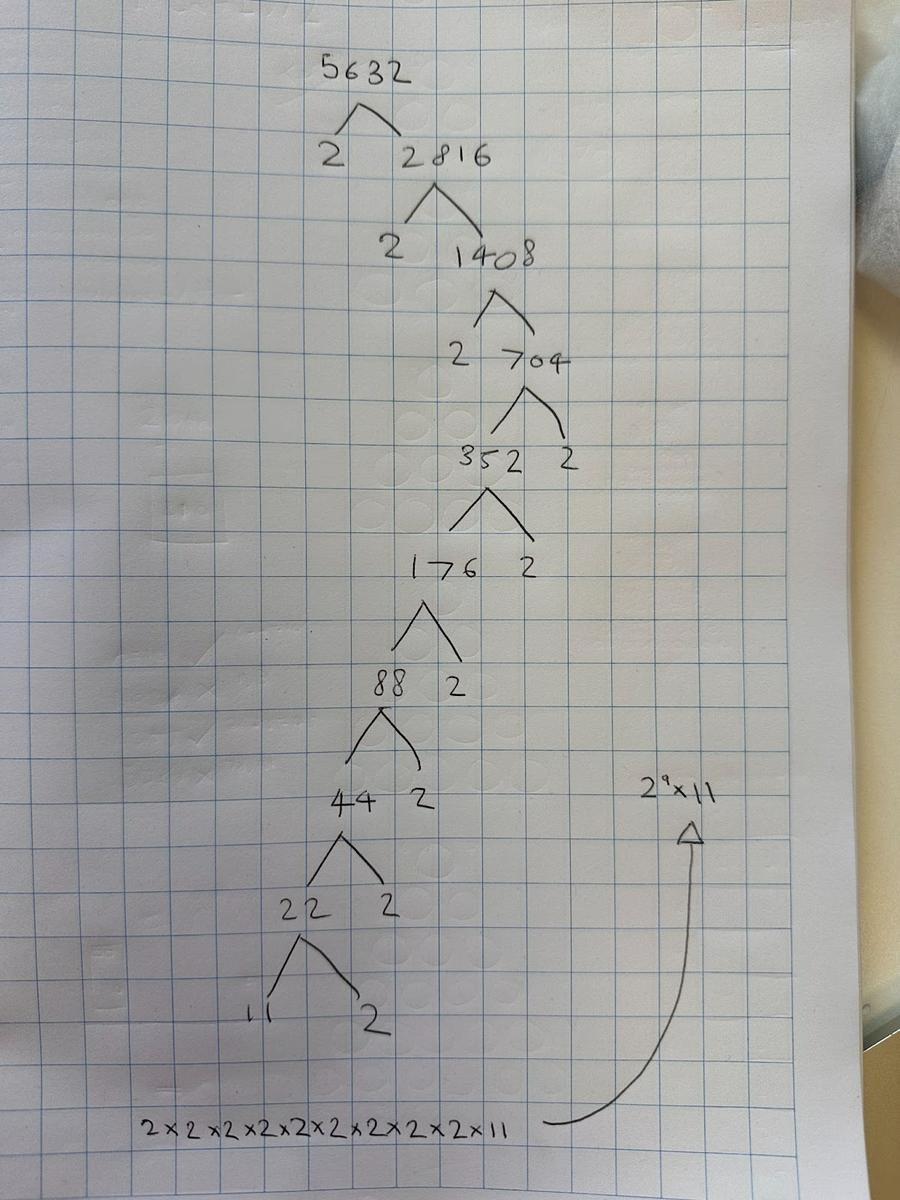
Maths - Do factors grow on trees?
By Sumi
Mathematics is the systematic study of numbers, shapes, structures, patterns, and logical reasoning. It explores concepts like quantity, space, change, and structure, acting as a language for modeling reality and solving practical problems in science, technology, and daily life. This term we learned about prime and composite numbers. A prime number is a whole number greater than 1 that has exactly two factors: 1 and itself. This means it cannot be divided evenly by any other numbers. In contrast, a composite number is a whole number greater than 1 that has more than two factors, meaning it can be divided by numbers other than just 1 and itself. The number 1 is unique because it is considered neither prime nor composite, while 2 is the only even prime number. We also learned about factor trees. A factor tree is a visual tool used to break down a composite number into its prime factors, acting as a roadmap for its mathematical DNA. To start one, you write your target number at the top and draw two "branches" beneath it leading to any two numbers that multiply together to equal that top value. You continue this branching process for every new number you write down, splitting them into smaller factors until you reach a prime number that cannot be divided further. Once a branch ends in a prime number, you usually circle it to signal that the path is complete. The process finishes when every open branch ends in a circled prime; when you multiply all those circled numbers together, they will always equal the original number at the top. This method is incredibly helpful for simplifying fractions, finding the greatest common factor, or identifying the least common multiple between different sets of numbers.
Writing
By Aspen and Nacha
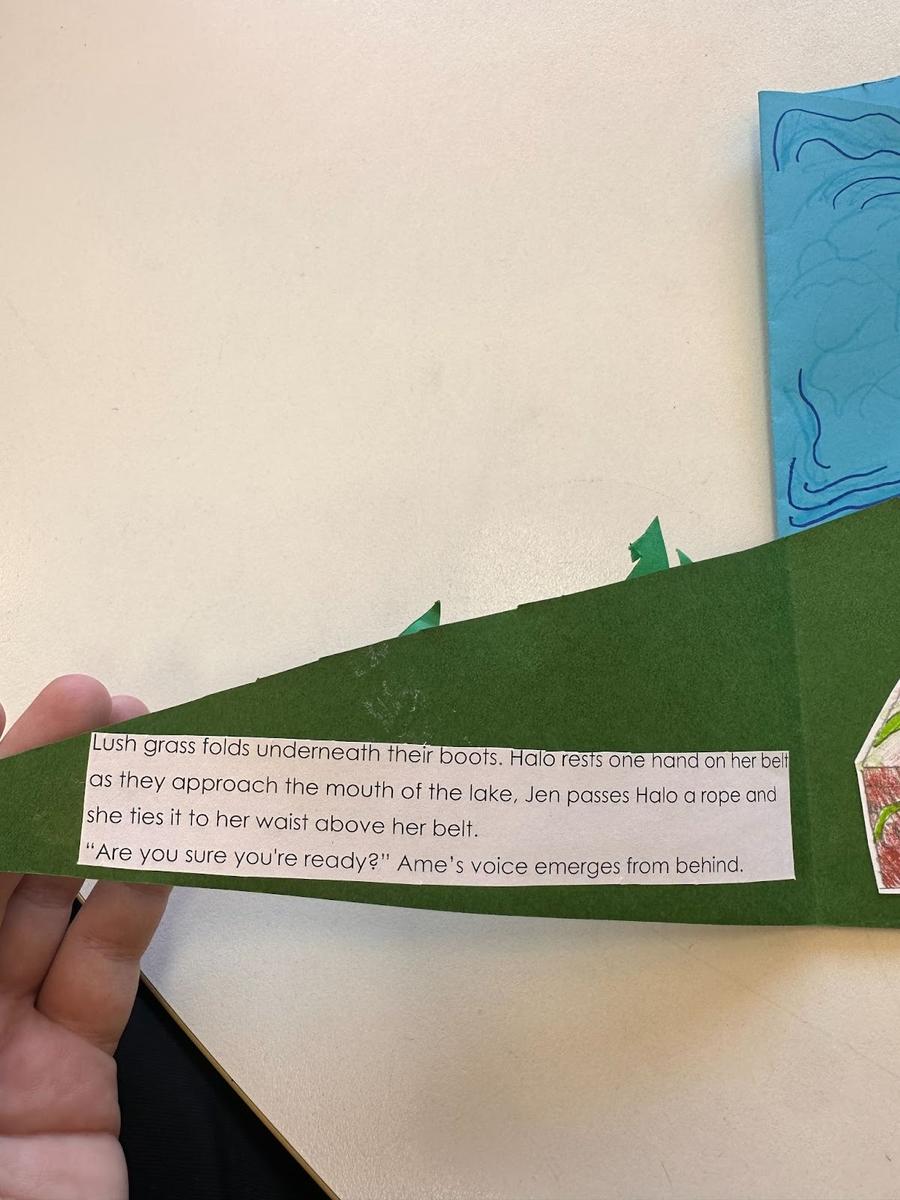
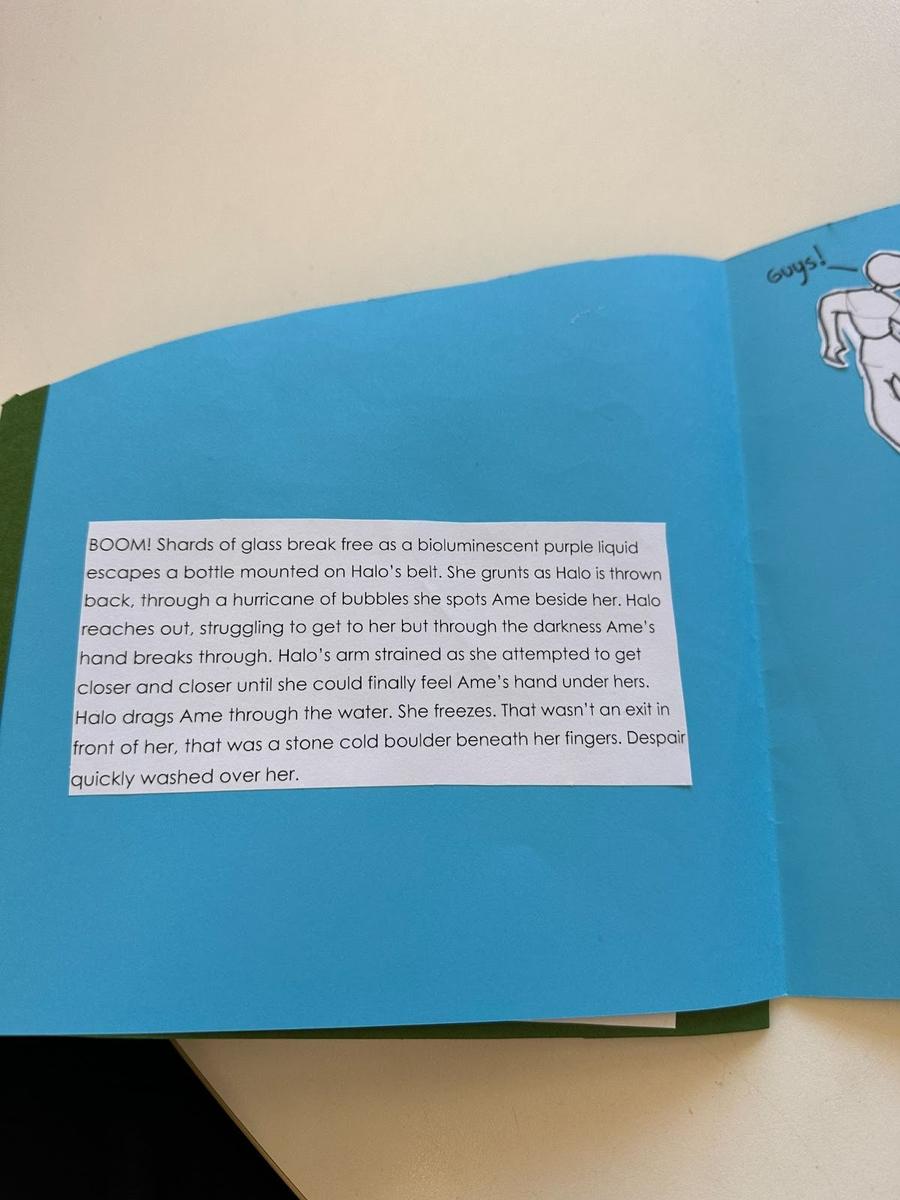
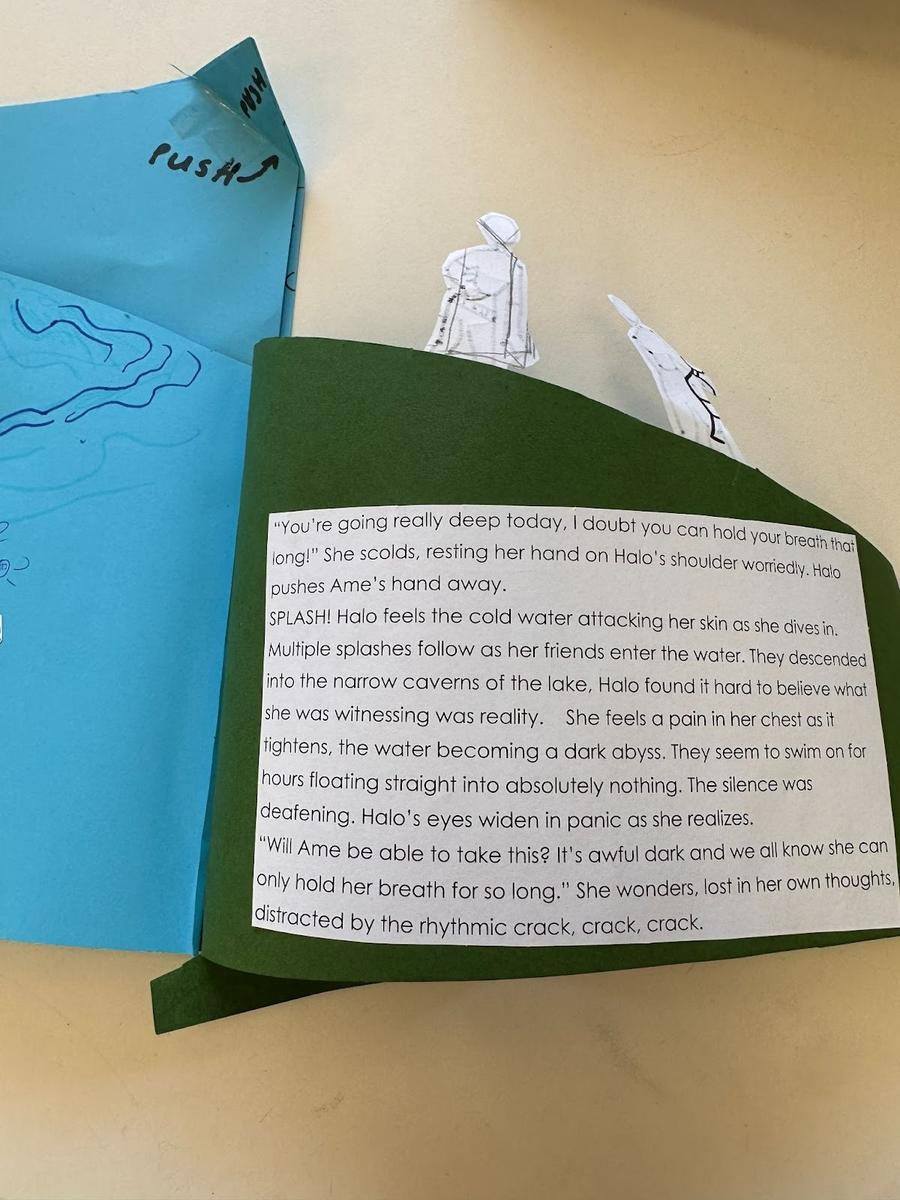
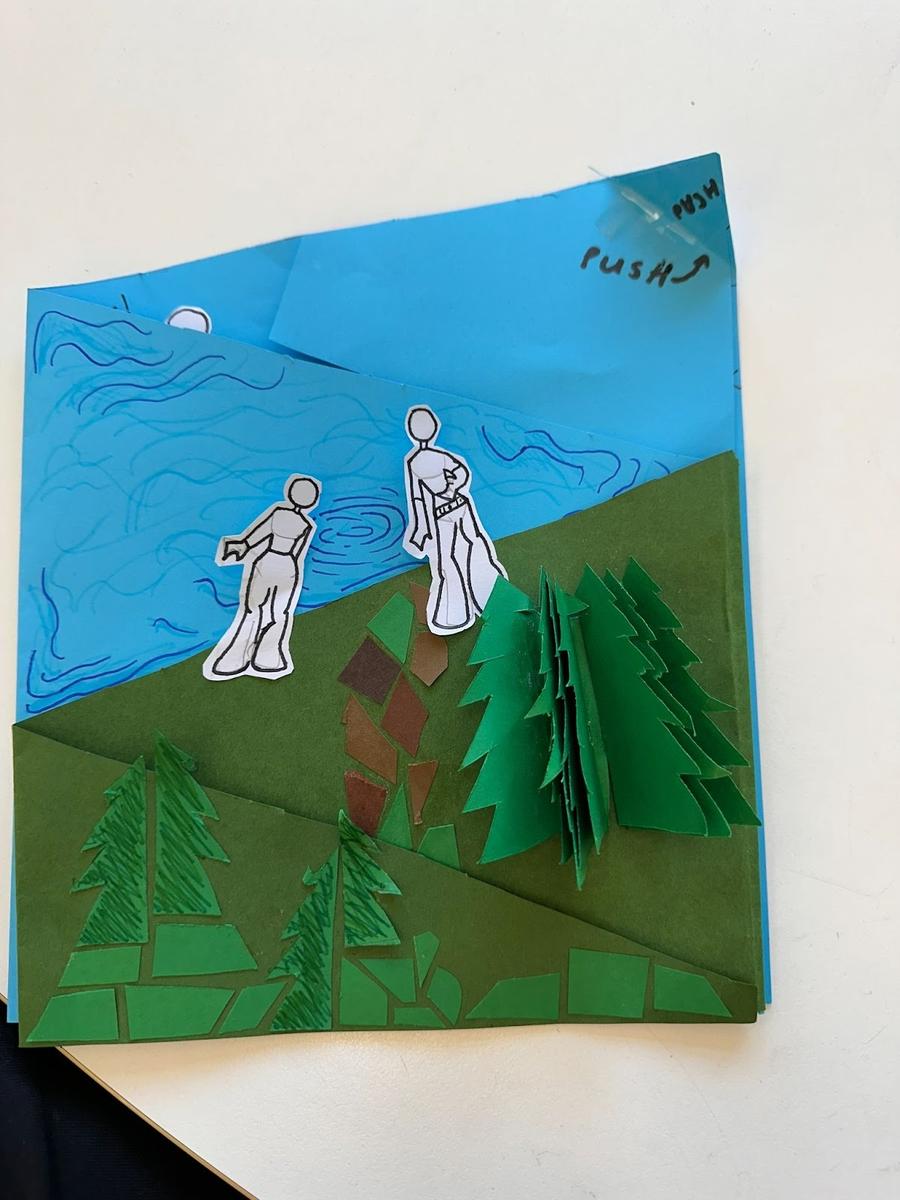
In term one for writing we were planning and publishing descriptive and conflicted pieces. During planning we were using CSPACE, character, setting, problem/purpose, action, conclusion, emotions. In the publishing stage we crafted paper landscapes and wrote our narratives on the back. We made illustrations to tell the story and the describe certain important events. We had a showcase once we finished and parents/carers came into the classroom and viewed our displayed pieces. Overall it was a wonderful writing experience.