Leadership Report
Tristan Kelly - Literacy Learning Specialist
The Department of Education’s guide: Supporting your child’s education provides helpful information for parents and carers to help their child’s learning in literacy and numeracy.
In our next newsletter, we will share information from the Year 3 - 6 guide. Today we are focusing on the The Birth to Year 2 guide.
The Birth to Year 2 guide includes a section explaining phonics:
Systematic synthetic phonics is a highly effective, evidence-based approach to teaching children how to read by focusing on the relationship between sounds and letters. Children are taught the sounds that letters and letter combinations commonly make and use this knowledge to read and spell words. The approach is systematic, meaning it follows a structured sequence, and synthetic, meaning children learn to ‘sound out’ and blend sounds to read words.
At Merri-bek Primary, we use the Little Learners Love Literacy program to teach phonics. Most students in Prep to 2 will take home LLLL decodable readers to practise the specific letter/sound combinations that they are learning. When reading these texts, have your child practise the speed sounds, speed words and heart words in the final few pages of the book first. This sets them up for success when reading the whole text.
Excerpts from the Birth to Year 2 Guide
Oral language
Regularly talking and interacting with your child extends their language and listening skills and helps grow their confidence with language. You are their primary source of language, so the more you speak and engage with them, the faster they will learn new vocabulary and speak with greater fluency.
Activities can include:
- Sharing rhymes, poems and songs. Encourage your child to join in.
- Sharing and talking about family histories and family photos.
- Playing vocabulary games with your child such as, 'what’s the opposite of ….?' (for example, 'what’s the opposite of big?'), 'what’s another word for….?' (for example, 'what’s another word for angry?') and 'which word sounds different to the others: bat, hat, or door?'.
Reading together
General tips for reading together include:
- Set aside time for reading every day. Reading before bedtime is a good habit to get into.
- Discuss the meaning of unknown words that children hear and read. Explore words using a dictionary. Have a discussion and ask questions about interesting words you find.
- Let your child see you and other family members read for pleasure.
- Encourage your child to join the Victorian Premiers’ Reading Challenge, which runs each year from March to September. Participating early childhood services and schools will register your child – otherwise you can register your child at the Premiers Reading Challenge.
Book chat
Discussing the content and meaning of books is an important part of reading. Chat about the book before, during and after reading, and encourage your child to share their ideas and to ask questions about the book.
Here are some questions you can ask before, during and after reading the book:
- Look at the cover. What do you think this book might be about?
- How would you describe the character at the beginning of the story?
- What do you think is going to happen next?
- Why might a character have done this? What would you do in the same situation?
- Who was your favourite character in the story? Why did you like that character?
- Can you try to retell the story to me in your own words?
Costa Missailidis -Wellbeing and Engagement Leader
Wellbeing Day
Dear families,
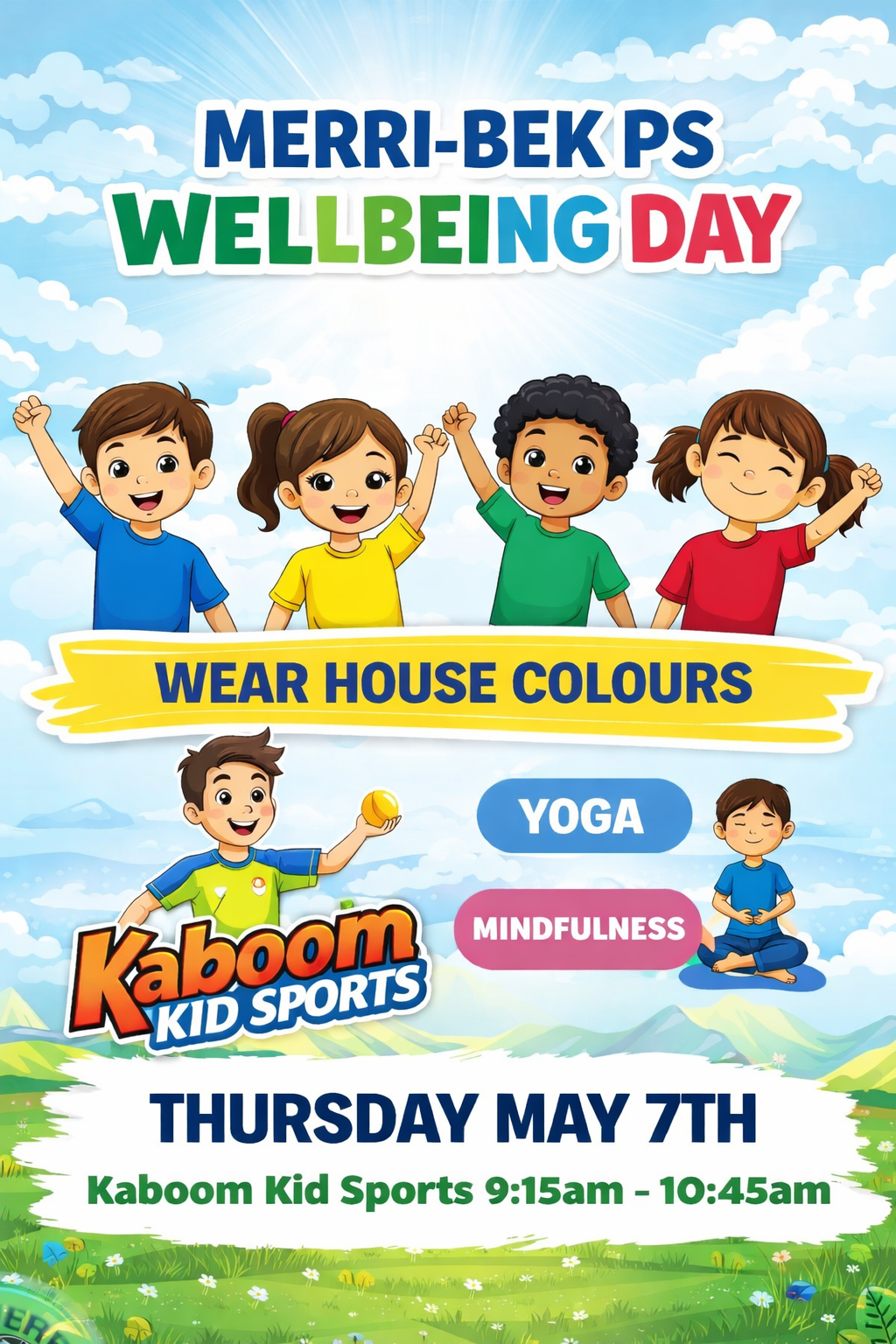
We are excited to announce our upcoming Merri-bek PS Wellbeing Day on Thursday 7th May.
This special day will focus on supporting students’ physical and mental wellbeing through a range of engaging activities.
In the morning, students will take part in a Kaboom Kid Sports (Twilight Sports) from 9:15am – 10:45am. This fun and energetic experience is designed to promote physical activity and teamwork. Parents are welcome to come along during this time and support and cheer on students.
Physical activity plays an important role in student wellbeing. It can help to:
- Improve focus and concentration in the classroom
- Boost mood and energy levels
- Build confidence and resilience
- Support overall physical health
In the afternoon, students will participate in a range of wellbeing activities, including yoga and mindfulness, helping them to relax, regulate emotions, and develop strategies to support their mental health.
Students are encouraged to wear their house colours on the day to celebrate school spirit and participation.
We look forward to a fun and meaningful day for all students.
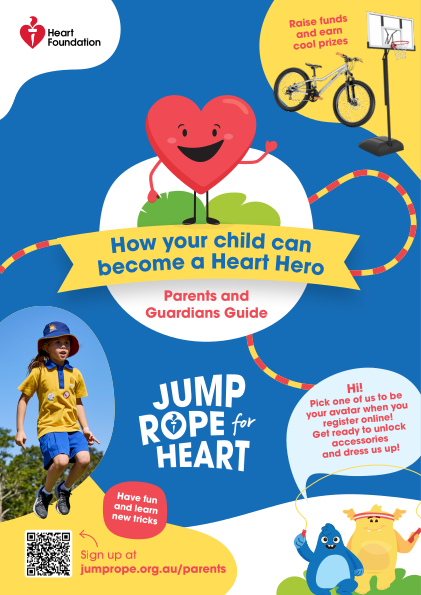
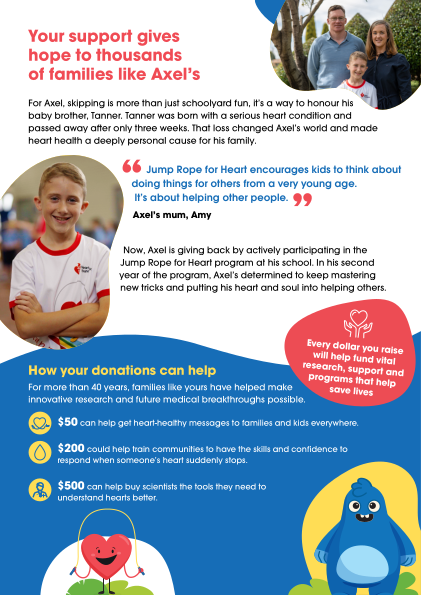
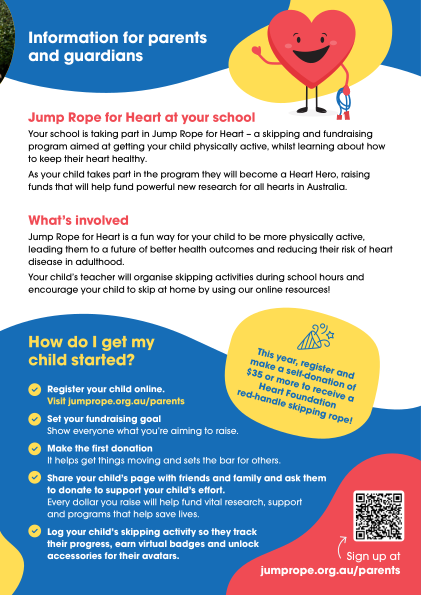
Jump Rope for Heart
Jump Rope for Heart kicks off this term at Merri-bek Primary School! Whilst the program doesn’t officially start until Monday May 25th, students are encouraged to sign up now and start skipping, logging hours and raising money as soon as they can.
Jump Rope for Heart is the Heart Foundation’s primary school skipping challenge that helps kids move more, have fun, and raise funds for life-saving research and programs.
This year we’ve got an audacious goal to see our student Heart Heroes at Merri-bek Primary School to log 50 hours of skipping throughout the program!
Register your child online, so they can receive the full benefits of the program and participate in online fundraising, simply follow the link below to get started.
https://www.jumprope.org.au/fundraisers/merribekprimaryschool-2026
Students will be skipping during lunchtime club, every Wednesday from 11:15am - 11:38am, during this time you can share their online fundraising page with family and friends to help raise money for this great cause.
We will hold our school Jump Off Day on the last day of Term 2, Friday June 26th, this will mark the end of the program and is a chance for everyone to come together to skip and show off their newly learned skills. Students will participate in various activities at lunch time from 11:15am - 11:38am during this time to celebrate the end of the program.
Thank you for supporting the Jump Rope for Heart program!