
Around the Classrooms
Year 12 Biology
In ou
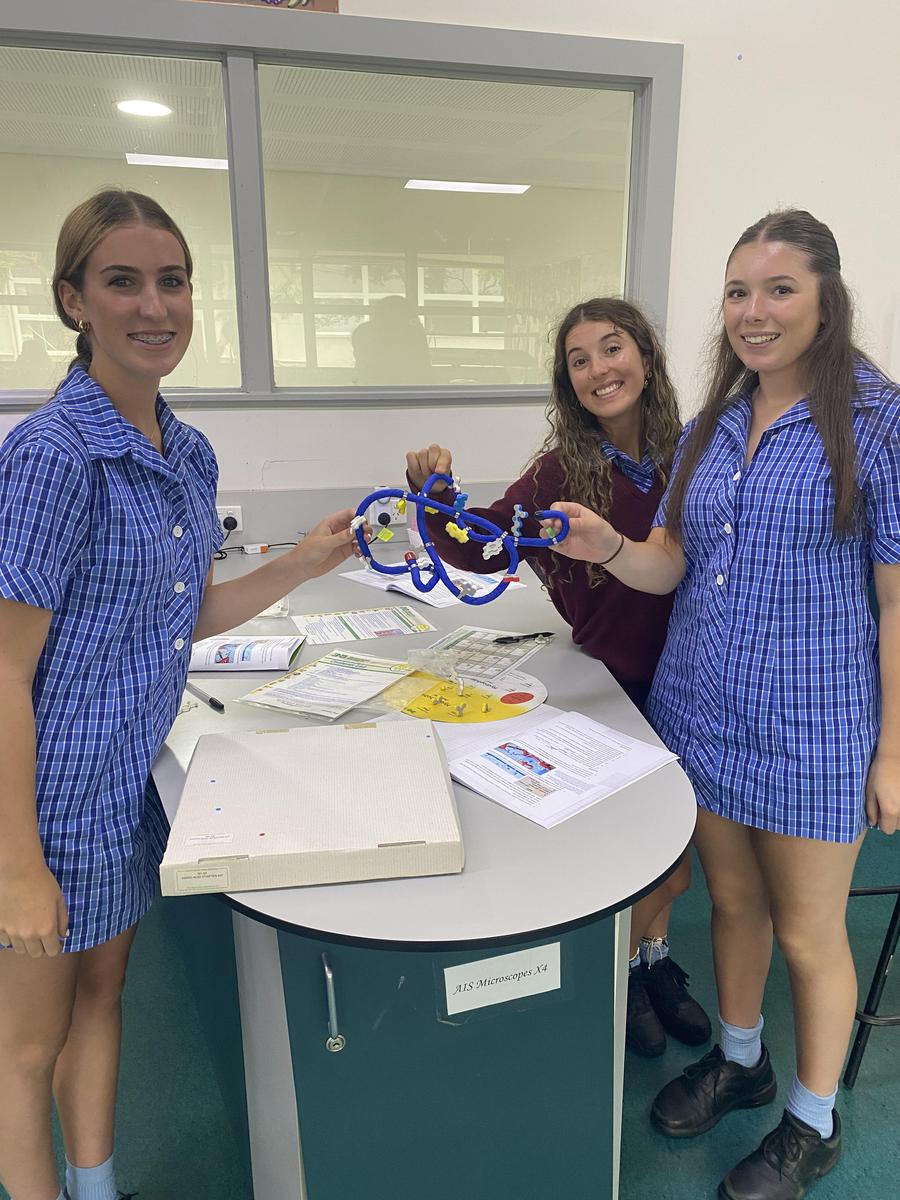
In our Unit 3 & 4 Biology class, we learned about the structure of proteins and created a real-life model. The purpose of the protein modelling activity was to further develop a deeper understanding of how proteins are formed and everything that makes up proteins. This helped us better visualise and remember protein structure. This task helped us understand KK1, which was about how DNA controls cell structure and function, how genetic information is inherited, and how biological processes are regulated to maintain life. It explains how genes are expressed to produce proteins, DNA analysis and genetic modification, along with their practical uses and ethical considerations.
The model let us create our own amino acid sequence, and every group had different amino acids, so every protein was created and folded differently to fit the requirements of how each amino acid sits inside or outside of the protein.
This activity showed us further that protein shape is determined by the chemical properties of its amino acids. Hydrophobic side chains folded inward while hydrophilic and charged side chains faced outward, demonstrating in the classroom how interactions can influence the folding through a model. This showed us hands-on that a protein’s structure and shape determine its function, as the final shape instructs how it interacts with other molecules.
Understanding protein structure is important in real life as it directly determines its functions in the body, such as enzymes, antibodies or structural components. This helps in understanding diseases such as Alzheimer's, which is caused by the misfolding of proteins and leads to loss of function or gain of toxic behaviours.
Ruby Righetti, Phoebe Clarkson (Year 11) and Julia Buzatu (Year 12)
Miss Sarah Scaramozzino
Unit 3 & 4 Biology