
Transforming Mission:
A Journey of Mutual Change
Stephen Said, Faith and Wellbeing Support
Transforming Mission:
A Journey of Mutual Change
Stephen Said, Faith and Wellbeing Support
Steve Corbett and Brian Fikkert’s When Helping Hurts reminded a generation that good intentions in aid and development can sometimes do more harm than good. But it was an Indian Catholic priest in Odisha, an Adivasi brother from Nagaland, who helped me see that helping well requires humility, listening, and transformation — not just for those we seek to serve, but for ourselves.
He taught me that our first impulse is often charity — a one-off response to crisis, like Australia’s “Wave Aid” after the 2004 tsunami. But when revisited a year later, many East Timorese communities were still struggling. If we stay engaged, we begin to understand aid — the need for ongoing support. And if we enter into relationship, we may be given eyes to see — to notice the deeper causes of suffering and be invited into development, where we help build capacity rather than simply respond to need.
Yet development is complex. History, culture, and power dynamics often undermine even our best efforts. Our Catholic brother pointed out that if we have ears to hear, those who suffer will quietly help us recognise the forces — racism, nationalism, corporate interests — that derail true healing. This leads us to advocacy — the final frontier, where solidarity means listening to truths that may be uncomfortable, and using our voice to stand with those whose voices are unheard.
At Donvale Christian College, we’ve been on this journey. In 2024, leaders like Mr Ayton, Mr Hulks, Ms Stapleton and Mr Venour began shaping a more intentional approach to our engagement with suffering — one that moves from reactive generosity to proactive, relational partnerships with trusted organisations.
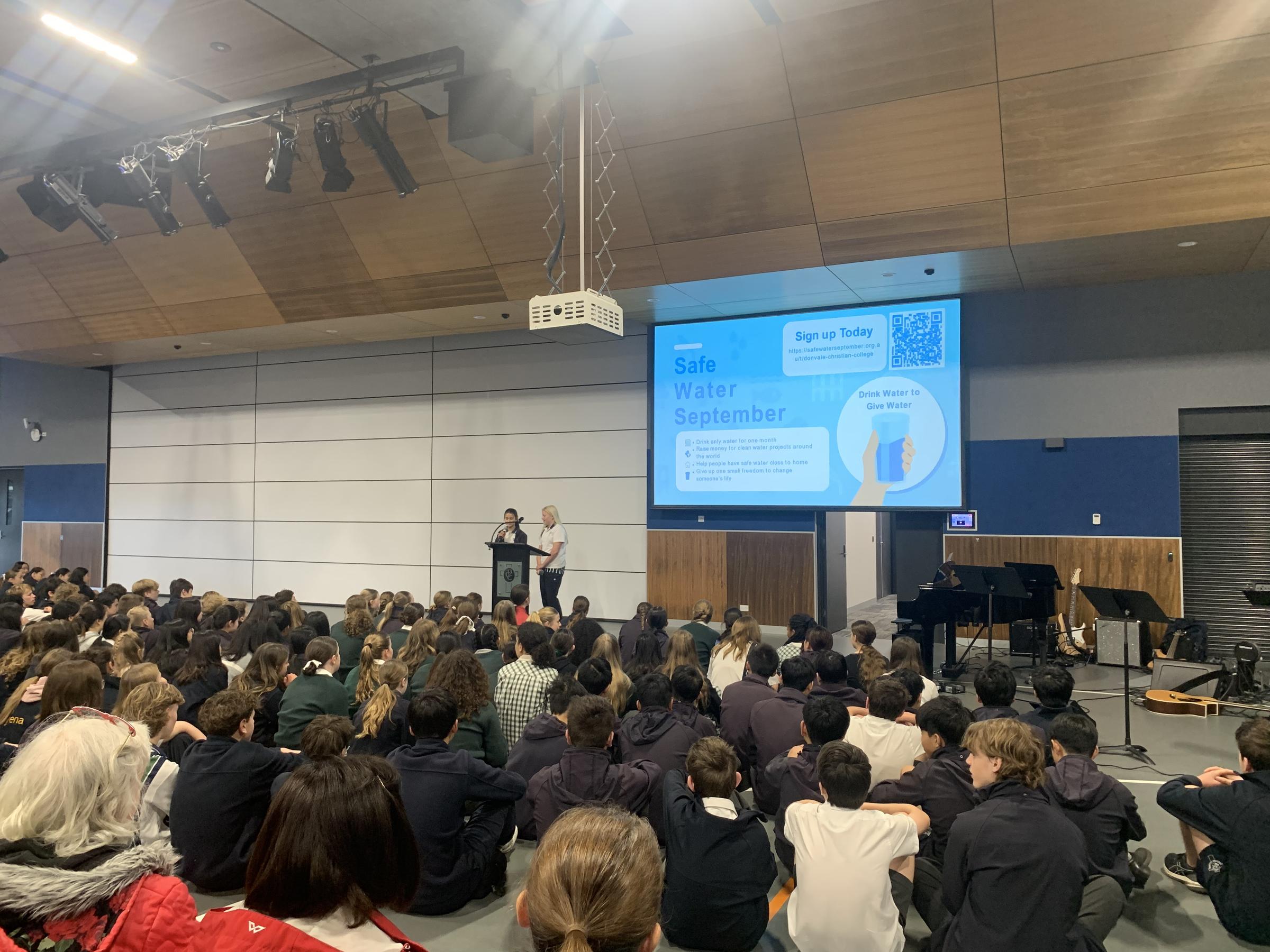
Our partnerships are growing. One of the most striking examples has come through the long-term commitment of graduating Year 12 student Caleb Harding. With the school’s support, Caleb championed Safe Water September throughout his time at DCC, and this year, his persistence helped catalyse our most successful campaign to date — raising over $11,000. More than just fundraising, Caleb’s example has modelled what it looks like to engage deeply, thoughtfully, and vocationally with issues of justice and compassion. His journey offers a pattern for how we hope to grow as a community.
Our relationship with Hagar Australia, a DFAT-accredited anti-trafficking organisation, continues to deepen. At a recent Dad’s Night, Adam Bryant and I were moved by the questions that emerged from the dads and male caregivers themselves: How do we expose our children to suffering in constructive ways? How do we resist the temptation to shelter ourselves from the world’s pain? How do we support each other when that pain touches our own wounds?
We’re also walking alongside Now and Not Yet, a social enterprise supporting survivors of domestic violence and asylum seekers, and exploring connections with Tearfund, Urban Life, and Sharing Hope. These relationships are slow-growing, but intentional — rooted in mutual transformation.
Ultimately, our aim is not just to help, but to be transformed as we encounter Christ in the "least", the "last", the "other". As Christians, we believe that justice, mercy, and humility are not optional extras — they are the shape of discipleship. Development is not about fixing others; it’s about being drawn into God’s work of remaking the world.
As David Bosch wrote in Transforming Mission, this journey is not about extending our reach, but deepening our participation in God’s redemptive story. Or as Lila Watson once said, “If you have come to help me, you are wasting your time. But if you have come because your liberation is bound up with mine, let us work together.”
This is the heart of our journey — and the invitation we extend to our students, staff, and families.