
Legacy of Love -
Love in Action, Rather than Words
Tim Argall, Executive Principal
Legacy of Love -
Love in Action, Rather than Words
Tim Argall, Executive Principal
How do you know that someone loves you?
What are the things you look for?
Are there character traits that you are sensitive to?
Is there a level of devotion that you are hoping to observe?
Perhaps it is about the consistency of their actions …
Or is it more about the constancy and consistency of their reputation …
Why is it that we are so focused on knowing where the love for us comes from?
God created us in His image; part of this truth is that we are created as relational beings. Another part of taking on the character of God as part of His image bearing is that we are wired – it is part of our DNA coding, I’m sure – to be givers of love.
If we were perfect in this, we’d express our love to those around us in the ways Jesus did.
Jesus defined love in human form. Not at times, but always. Even in the narratives we read where we wonder (and at times even disagree amongst ourselves) what his actions meant, they were – at all times – fully reflective of God’s character. They had to be! As God amongst us, walking the earth, what he did and what he said were God’s redemptive pattern for human behaviour fully on view.
When Jesus was brought before the High Priest Caiaphas, when he was brought before Pontius Pilate, and when he was brought before Herod Antipas (all in the context of his arrest and trials before his crucifixion), Jesus’ response – by definition of who he was – was one of love.
How did he love them? He said nothing, he allowed them to carry out their scheming and plotting, because he LOVED them. Not in a fatalistic way, not as a pushover. No! He loved them as he loves you and me – to the point of death for their sins.
To restore relationship with God in heaven, he did this for them. He was silent. I suspect he prayed for them in that moment. He knew the Father’s will, and was obedient to it. It meant saying nothing. It meant not trying to convince them of another way. It meant not arguing his position, in spite of his complete innocence in the eyes of the only one who matter, God – His Father.
Loving without speaking – there are two other examples in Jesus’ life I’d like to consider. A Syrophoenician woman had a daughter who was demon possessed. She asked Jesus for help, for the girl to be “released” from this. Jesus held out, saying nothing and committing to nothing.
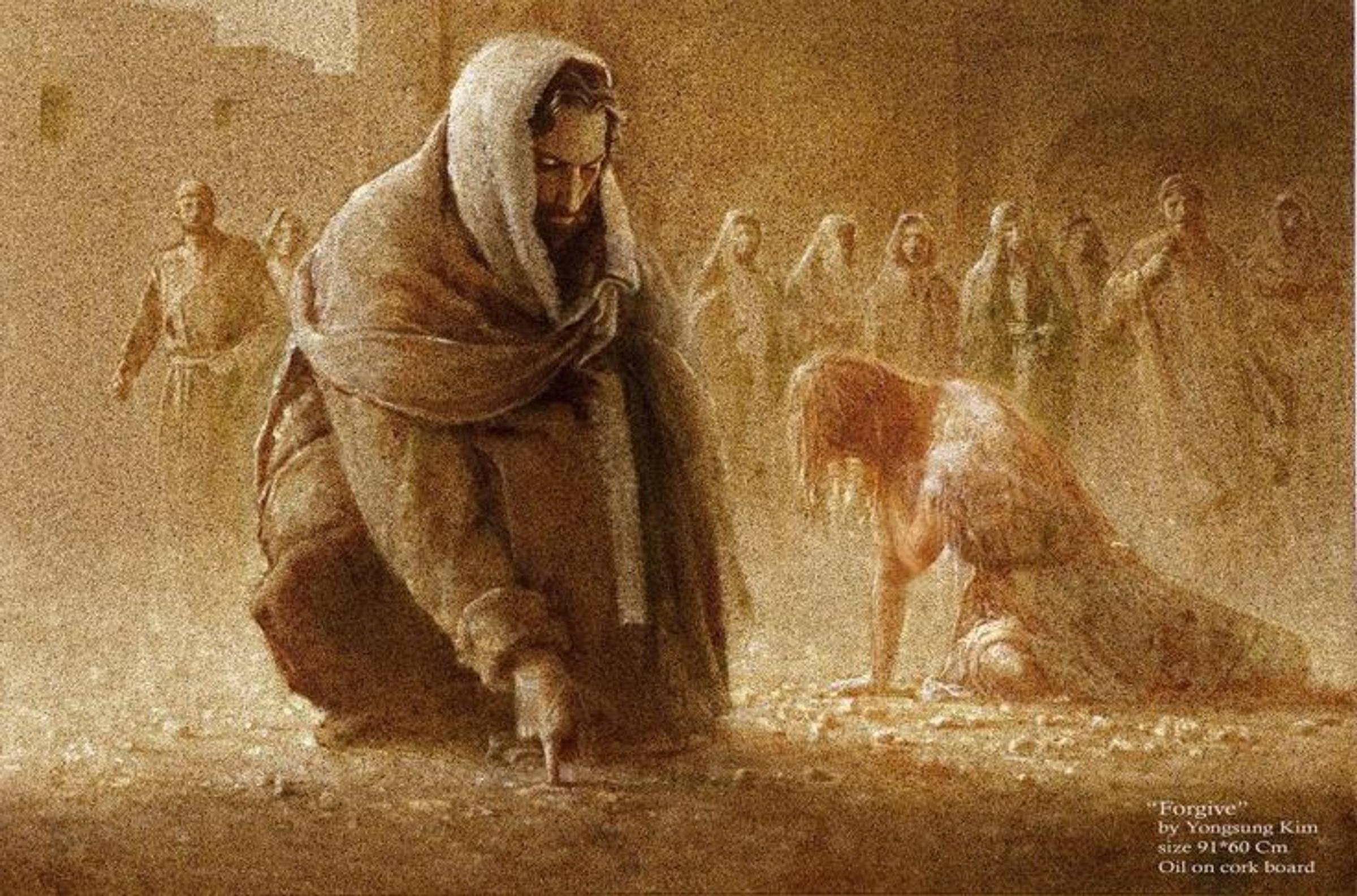
A woman caught in adultery was brought before Jesus – as much to trap him as to shame her through words and acts of judgement. Jesus wrote in the dirt, saying nothing. If Jesus is love, why didn’t he speak?
For me, the power of Jesus’ love here is in his love for all. He loved the two women directly in front of him in each story. But he also loved those around him, and he desired for them to see God’s kingdom work being done in their own lives in that particular instant.
In the narrative with the Gentile woman and her daughter, this was a moment for his followers to realise that, and to argue for, God’s love being extended beyond the nation of Israel – that it was an all-encompassing, and all-consuming love. As the disciples defended the woman and her daughter, the purposes of Jesus’ miraculous love were fully understood.
The adulterous woman was one among many sinners; that was Jesus’ message. He, alone, could have judged. The kingdom expansion here was his teaching all those who watched on that they, too, were part of God’s plan for sinners to be reconciled and restored in relationship with their creator.
Pausing in love. Discerning and knowing God’s will in the moment of heightened emotion and complexity. Praying for greater understanding for ourselves, and those we are caught up with in a situation of significance. Seeking a shared picture of how God’s kingdom work is unfolding in front of, and amongst us.
Loving without speaking. Loving through actions of humility and patience.
Dealing with the moment of confrontation with an eternal perspective in mind. God’s love embodied in what we do together to navigate from complex and tense situations to beautiful and serene outcomes. I suspect it is often best achieved by love without words. I’ll try to do it more – how about you?
Shalom.