
Principal
Turn the Page, Put Down the Phone: Keeping Boys Reading
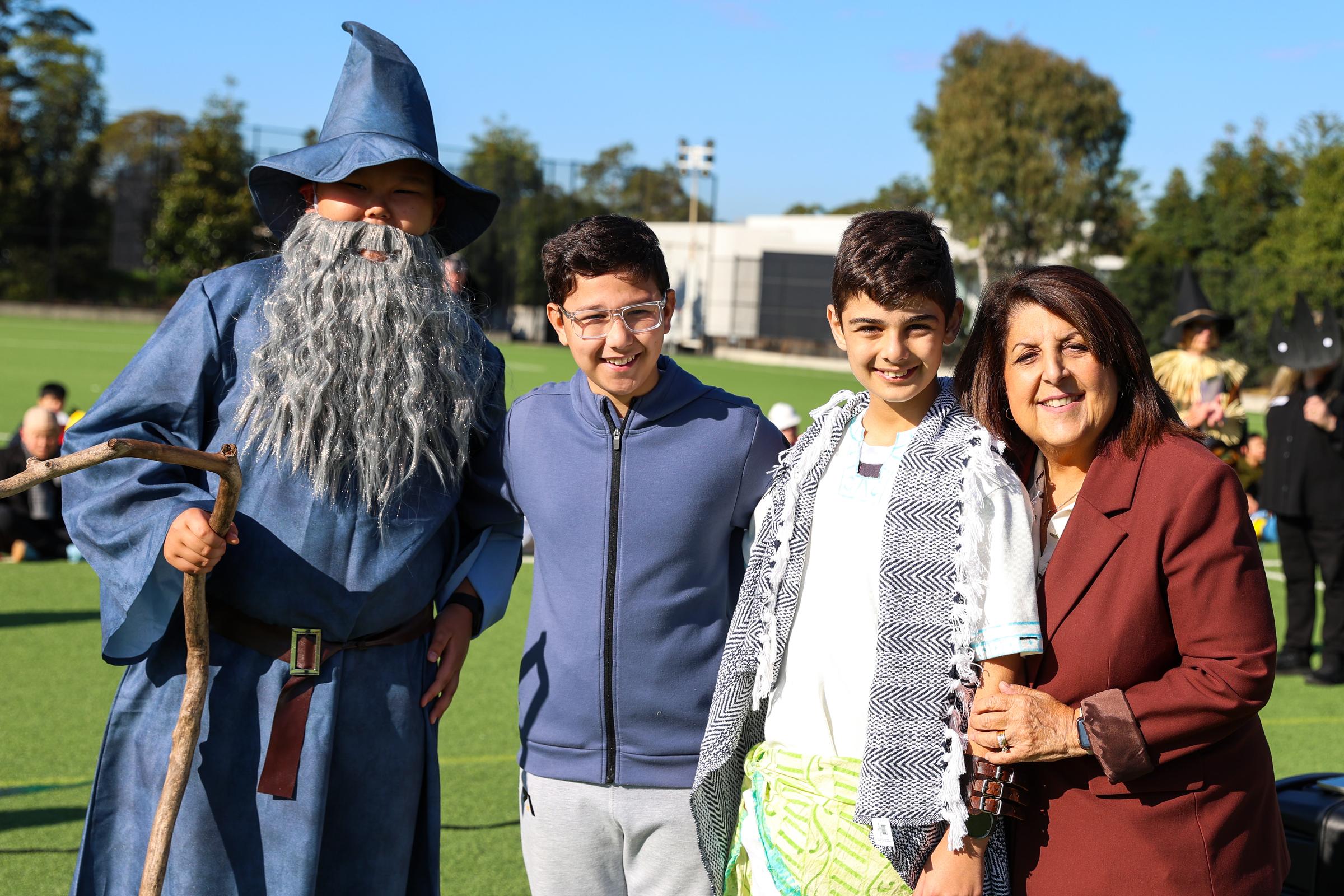
As we celebrated Book Week in our Primary School last week, it is a timely opportunity to reflect on something that matters well beyond costumes, favourite characters and the enjoyment of a good story: the importance of keeping our boys reading as they grow older.
For many children, the Primary years are filled with books and regular reading. The challenge is ensuring this habit doesn't disappear as boys move into adolescence and sport, gaming, social media, streaming, and other digital distractions increasingly compete for their attention.
Australian research shows this decline is real. Deakin University’s significant 2024 Discovering a Good Read study surveyed more than 13,000 Australian students in Years 7–12 and found that almost three in ten teenagers did no reading for pleasure in their spare time, while only around 15% read every day. Reading frequency declined as students became older, with boys generally reading less frequently than girls.
This matters because reading is not simply another school subject. It is one of the foundations upon which learning in almost every subject depends.
A boy who reads regularly encounters more words, more complex sentences, different ideas and increasingly sophisticated forms of argument. Over time, this strengthens vocabulary, comprehension and written expression. These skills are needed well beyond English. A student must comprehend a Mathematics problem, interpret sources in History, understand a scientific explanation and construct a convincing argument in an examination.
Reading also develops something that is becoming increasingly precious: sustained attention.
Much of a young person’s digital environment encourages rapid movement between short pieces of information—notifications, videos, messages, posts and links. A book asks something very different of the brain. The reader must stay with an idea, remember what happened several pages earlier, make connections, imagine possibilities and persist when gratification is not immediate.
That ability to concentrate deeply for an extended period is precisely what our boys need as they move towards senior schooling, tertiary education and employment. Reading is therefore not competing with learning time; in many respects, reading is training for learning.
Fiction also plays an important role in the emotional and social development of young people. Through stories, boys encounter friendship, courage, loneliness, injustice, failure, family, grief and moral dilemmas. Reading lets them experience lives beyond their own and can help them develop empathy, understand others' motivations, and find language for thoughts and feelings they might otherwise struggle to express.
Importantly, we should resist the stereotype that “boys don’t read”. Boys' interests are enormously diverse. A 14-year-old absorbed in a sporting biography, military history, Formula One, fantasy, a graphic novel, science fiction, crime or a book about engineering is reading. We do not need every boy to begin with the same sort of book. The first goal is to help him discover the book that makes him want to read the next one.
What can parents do?
One of the most effective things parents can do is make reading visible at home. Boys notice what adults value by observing what we do, not simply what we tell them to do. Let your son see you reading a novel, newspaper, biography or magazine. Talk occasionally about something interesting you have read. Visit a bookshop or library together and let him choose what he selects.
It is also worth deliberately creating some space away from screens. A digital detox doesn't have to mean banning technology. Smartphones, gaming and online communication are part of our children's world, and technology itself is not the enemy. The problem arises when screens occupy every spare moment and leave no room for boredom, reflection, conversation or reading.
Families might consider a few simple habits:
Establish a regular screen-free period each evening, perhaps 30 minutes before bed, when phones and devices are put away, and reading is encouraged.
Keep phones out of bedrooms overnight and charge them in a shared family space.
Introduce occasional device-free family times, particularly during meals.
Encourage boys to carry a book when travelling or waiting rather than automatically reaching for a phone.
Give books as gifts and allow boys to choose books connected to their genuine interests.
Avoid turning recreational reading into another assessment. Not every book requires questions, a reading log or a discussion afterwards.
Most importantly, model the behaviour ourselves. It is difficult to persuade a young person to put down his phone and pick up a book if the adults around him are constantly looking at their own screens.
Even 20 or 30 minutes of uninterrupted reading each day can help establish a powerful habit. The aim is not to eliminate the digital world but to restore some balance—to ensure our boys retain the capacity to be absorbed by something longer than a thirty-second clip.
As we enjoy the fruits of Book Week in our Primary School, the colourful celebrations remind our younger boys that books can be a source of excitement, discovery and pleasure. Our challenge as educators and parents is to make sure that relationship with reading continues long after the costumes have been put away.
Perhaps the message to our boys should be very simple:
Put the phone down occasionally. Pick up a book. Give your mind the chance to go somewhere else.
A boy who reads regularly steadily accumulates vocabulary, knowledge, concentration, imagination, and perspectives beyond his immediate experience. In a world constantly competing for his attention, the ability to turn off the screen, turn the page and become lost in a book may prove to be one of the most valuable habits we can help him develop.
Parents’ and Friends’ Association Executive 2027
I would like to extend my sincere gratitude to the many parents who expressed an interest in serving on the Parents’ and Friends’ Association Executive for 2027. The depth of commitment, enthusiasm, and goodwill demonstrated by our parent community is both humbling and affirming and reflects the strong partnership between families and the College.
The number of expressions of interest received far exceeded the positions available. As a result, the selection process was particularly challenging. Every candidate brought valuable skills, experiences and a genuine desire to contribute to the life of the College. Choosing from such a talented and committed field was no easy task, and the final appointments required careful consideration to ensure a balance of perspectives, experience and expertise across the Executive.
To those parents who were appointed, thank you for your willingness to lead and serve. To those who were not appointed on this occasion, please know that your interest and support are deeply valued. The strength of our Parents’ and Friends’ Association is built not only on those who hold executive positions, but on the many parents who generously contribute through attendance at meetings, support of events and ongoing involvement in College life.
I am grateful to all who nominated and look forward to working with our entire parent community as we continue to strengthen the rich sense of belonging, partnership and service that characterises St Patrick's College.
I am pleased to announce the Parents’ and Friends’ Association Executive for 2027.
| 2027 Parents’ and Friends’ Association Executive | |
|---|---|
| President | Jaslyn Hewitt-Shehadie |
| Vice President | Julia Gittany |
| Treasurer | Hae-Jung Kim |
| Secretary | Claire Hassen |
| Year Representative Coordinator | Antoinette Nader |
| Social Events Coordinator | Elena Ierardo |
| General Committee Member | Lynette Trainor |
A sincere thank you to those who served, and will continue to serve, this year. I look forward to thanking them personally at our end-of-year dinner.
Staff News
I am pleased to announce that Mr Patrick O’Connor has been appointed as Acting Year 6 Coordinator from Monday 21 September 2026 (the start of Week 10, Term 3) to Friday 5 March 2027 (the end of Week 5, Term 1 2027).
In Memoriam
This week, we received the sad news of the passing last weekend of George Charlton, a former staff member of the College. We extend our condolences to his son, Old Boy Michael Charlton (’06), and the Charlton Family for the loss of their beloved George. May he rest in peace.
Eternal rest grant unto him, O Lord, and let perpetual light shine upon him. May his soul and the souls of all the faithful departed, through the mercy of God, rest in peace. Amen. |
|---|
Dr Vittoria Lavorato
Principal
SPC boys can do anything!
**except divide by zero