Careers


The AI Shift
The workplace is undergoing a rapid transformation driven by artificial intelligence (AI). While headlines often swing between extreme optimism and panic, the reality for Australian workers is far more complex. AI is undeniably reshaping roles, bringing significant challenges alongside new adjustments.
Real Challenges and Displacement
There is no denying that AI brings disruption, particularly as it excels at automating routine, data-heavy tasks. While this shift can free up time for professionals to focus on strategy, empathy, and complex problem-solving, it also raises genuine concerns about job displacement and the devaluation of traditional skills. For many, this evolution doesn't feel like an "opportunity"—it represents a stressful requirement to constantly retrain and analyse new software just to keep pace.
Changing How We Work
Rather than completely replacing entire workforces, AI is currently altering the day-to-day mechanics of existing jobs. It is increasingly used to analyse large datasets or manage administrative tasks. While this can reduce mundane workloads, it also creates a steep learning curve. The pressure is now on employees to develop "AI literacy" and manage the ethical risks, like data privacy and algorithmic bias, that these tools introduce.
The Rise of New Roles
As organisations integrate AI technology, entirely new career paths are emerging. Demand is surging for roles like AI ethics advisers, prompt engineers, and data curators. Even in traditional fields, understanding how to utilise AI tools effectively—often called "AI literacy"—is quickly becoming a non-negotiable requirement on contemporary resumes.
Navigating the Future
Thriving in this shifting landscape requires a realistic, balanced approach focused on two core areas:
Critical Adaptability: Learning to collaborate with new software while remaining mindful of its limitations and validating outputs rather than relying on them blindly.
Human-Centric Value: Doubling down on leadership, emotional intelligence, and complex strategy—essential traits that technology simply cannot replicate.
The Bottom Line: The AI transition is a complex workplace disruption, not a seamless upgrade. Protecting your career isn't about competing with machines; it's about staying ahead of the curve by learning to control and work alongside them.
Building a professional online presence
When employers research potential candidates, one of the first things they often do is search online. Increasingly, your online presence forms part of your professional reputation and personal brand.
Reviewing your current footprint
Take some time to review your social media accounts from an employer's perspective. Consider whether your posts, photos, and comments reflect the image you would like a future employer to see.
This does not mean you cannot enjoy social media. It simply means being aware of your privacy settings and knowing that content shared online can sometimes remain visible for years, influencing how others perceive you.
Proactive networking
Students interested in apprenticeships, traineeships, or employment after school should also consider actively building a positive professional presence. You can start by:
Creating a clean, up-to-date LinkedIn profile.
Joining relevant industry groups.
Following organisations and leaders that interest you.
A professional online presence can help you learn about industries, connect directly with employers, and demonstrate a genuine interest in your chosen field.
The Bottom Line: Just as you would prepare carefully for an interview, it is worth ensuring your online presence reflects the qualities you want employers to associate with you. Building a positive professional reputation now can create opportunities long into the future.
Understanding alternative entry pathways
Many students assume that an ATAR is the only pathway into university. In reality, Australian universities offer a wide range of alternative entry options that can help students reach their goals.
Alternative pathways may include university preparation programs, enabling courses, diploma pathways, TAFE-to-university agreements, portfolio entry schemes and mature-age entry.
These options are particularly valuable for students who may not achieve the ATAR required for their preferred course or who discover their career interests after leaving school.
As Year 12 students begin thinking more seriously about post-school plans, it is important to remember that one result does not determine your future. Many graduates currently working in professional careers reached university through alternative pathways.
If you are considering tertiary study, take the time to investigate the pathway options offered by the institutions you are interested in attending. Understanding these opportunities can reduce stress and help you develop a range of realistic post-school plans.
A successful career is rarely defined by a single pathway. What matters most is continuing to move towards your goals, even if the route looks different from what you originally expected.
Year 12
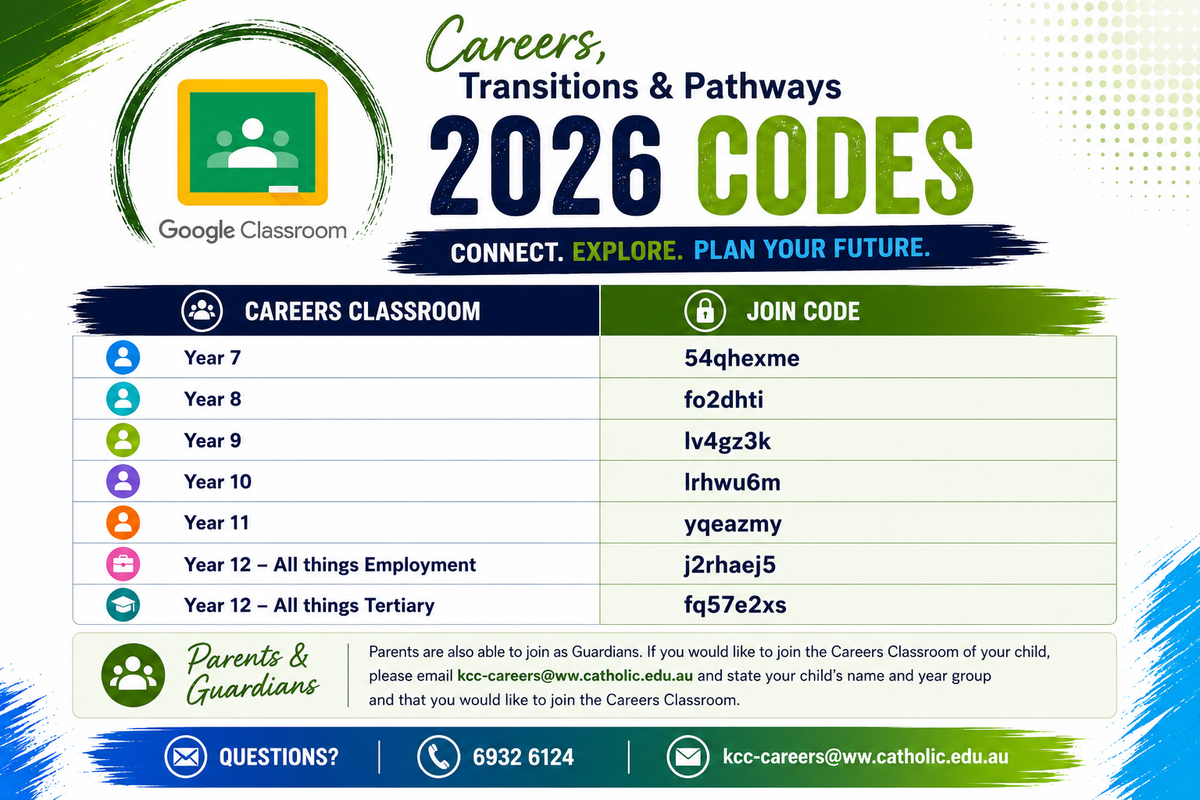
Early Entry preparation - Many Early Entry programs are now open. Start gathering evidence of leadership, volunteering, community involvement and achievements. Check your Classroom for detailed information
Scholarship research - Now is the perfect time to begin identifying scholarships you may be eligible for and noting application requirements. Check your Classroom for detailed information
Open Day season is coming - University Open Days begin soon. Start planning which institutions you would like to visit. Check your Classroom for detailed information
Karen Murray | Careers Adviser
6932 6124
kcc-careers@ww.catholic.edu.au (please note change of email address)