
Being Well at Magill

Dear Magill families,
If you have never visited 'Calm Kid Central', I recommend you do so. It has so much to offer to parents who are looking for extra support with raising their children and navigating life situations and little people's BIG emotions. Today I have shared their overview and an article on supporting children with greetings and why this is important.
Have a wonderful weekend!
Erica Teumohenga
Assistant Principal
Who are we?
Our clinical child psychologists all have Masters degrees in psychology, and have worked with children and families for between 8 and 22 years. We still work every day with children with diagnoses such as ASD, ADHD, learning disorders, sensory processing disorders and trauma – as well as with children who just need some extra support in managing tough life situations or their strong emotions.
Is a family ready for Calm Kid Central?
Family life is busy! But in order to benefit from the program, it is essential that parents/caregivers are able to commit to 15-20 minutes at least once a week to watch the video lessons with their children, help them complete the activities and games and to watch and read the parent/caregiver lessons.
Who has used Calm Kid Central - Did it help them?
Over 5000 parents/caregivers, and over 900 professionals have signed up for Calm Kid Central in the last 6 years.
94% of children (based on 120 respondents) experienced a significant reduction in worry and stress symptoms, difficulties managing frustration and co-operation behaviours and attention and concentration problems after 4 months of being part of the program.
97% of parents said they believed Calm Kid Central had been either "quite", "very" or "extremely helpful" for their family.
Organisations from across Australia (schools, primary health networks, not for profits and private health insurers) have supported their communities to use Calm Kid Central because they believe in it too.
Of course, Calm Kid Central will not be helpful or appropriate for all children. It's important to know that CKC is not a health service and doesn't provide individualised health or therapy support. We are a psycho-educational program providing skills training, information and learning support. Contact us if you would like more information to know whether this program might be helpful for your family.
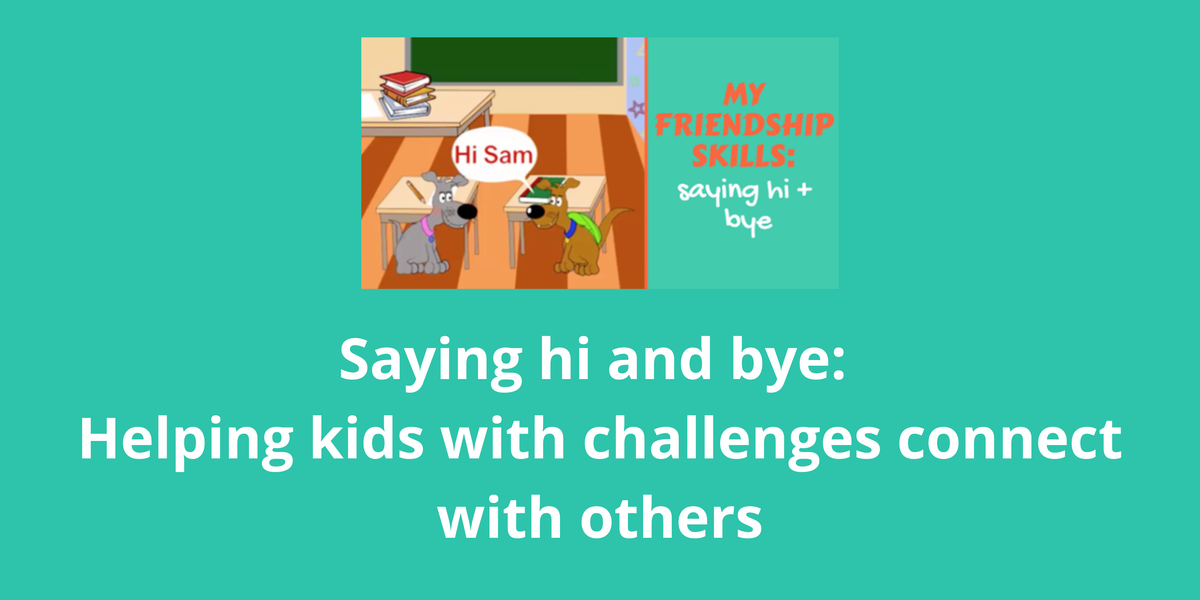
As we support children with emotional, social and mental health challenges - the idea of working on helping these children use greetings and farewells (phrases like “hi”, “hello”, “bye” and “see you tomorrow”) may seem to be not particularly important considering the seemingly much bigger challenges many of these children experience.
However small social actions like these can help improve the quality of children's relationships - which can improve mood and functioning. Of course, this is not easy for many children, who find using greetings and farewells much harder than others. These difficulties might be due to more intense or frequent negative emotions, being not naturally interested or motivated by social interactions or because they find it hard to concentrate, remember or keep still long enough to be able to use these phrases. Some of these children are also neurodiverse and have autism or ADHD which of course bring challenges with using typical social behaviours.
It's important to state this clearly: we should never "force" children to socially interact with other people in ways which don't feel comfortable to them, and it's important to celebrate the differences in how individual children interact with others. However it can still be helpful for some children to at least tell them about how greetings and farewells may help them have good friends - and to ask them whether they would like to do more of these - and if so, how they might do this in ways which feel comfortable to them. This type of education and training in social behaviours has been shown to be linked with better outcomes for many children.
Here are some ways we might introduce these ideas to children:
Tell children how saying hello and goodbye may help them have stronger connections (and happier times) with friends
Ask them if they would like to do more "hellos" and "goodbyes" (and if not, that's okay, we can find other ways to help them connect)
Teach them the words they can say (i.e., the specific hello and goodbye phrases they can use) and ask them to choose something which suits them
If they don't want to use a phrase, they might like to use a gesture (a wave or high five)
If it feels comfortable to them, looking at people's faces when they greet/farewell them can also be helpful
They can practice using a strong, confident and friendly voice if they would like. If they feel comfortable, we can invite them to use their hellos and goodbyes relatively quickly – in other words not always wait for someone to say goodbye/hello to them first. Remember, we should be guided by how difficult this is for different children - and how important it is for them to work on this. However, these small connection behaviours are associated with better relationships in both children and adults, and so it is worth raising and inviting them to consider it as an option. It goes without saying that encouraging parents/caregivers to do rehearsals with children, provide gentle reminders, and scaffold up (if necessary) is also an important part of our work in this area.
KidsHelpline: 1800 551 800
Beyond Blue: 1300 224 636
Lifeline: 13 11 14