Year 3 News

Reading
During Reading, Year 3 students explored character traits by reading stories and talking about how the characters behaved. They learned to use clues from a character’s words and actions to describe their personality. They also described how characters looked, which helped them when they were creating their characters in Writing.
Year 3 students learned to decode words by identifying different vowel sounds, such as short and long vowel sounds. They also learned to decode using the cover-up strategy by covering parts of a word to focus on one sound or syllable at a time. This strategy helped them break down longer or unfamiliar words, improving their reading accuracy and confidence.
Writing
This fortnight in Writing, Year 3 students have been exploring different types of texts. In Week 3, they focused on narrative writing, using descriptive language and the five senses to help readers imagine the characters and settings. In Week 4, students were introduced to explanation texts, learning how to plan and organise information clearly. They enjoyed identifying the stages of an animal’s life cycle and explaining what happens in each stage using technical vocabulary. It has been wonderful to see students discovering how writing can be used not only to tell stories but also to inform and explain ideas clearly.
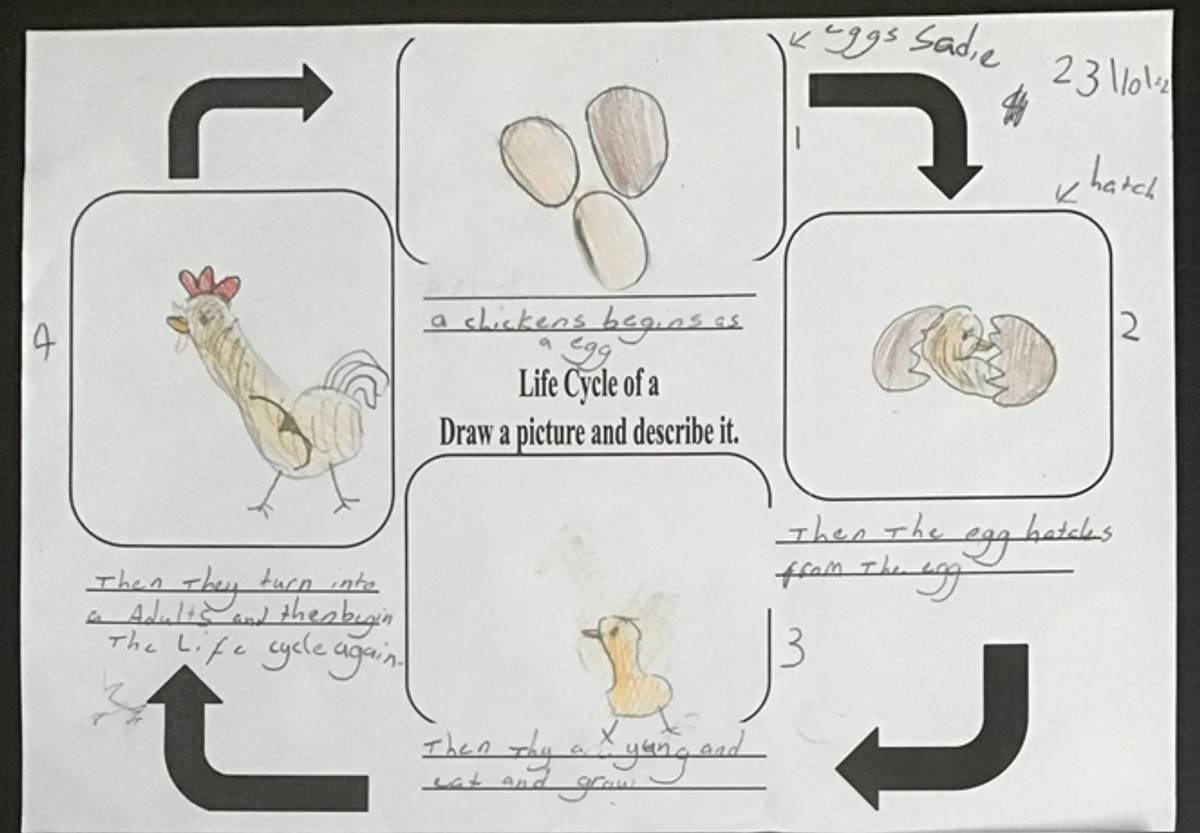
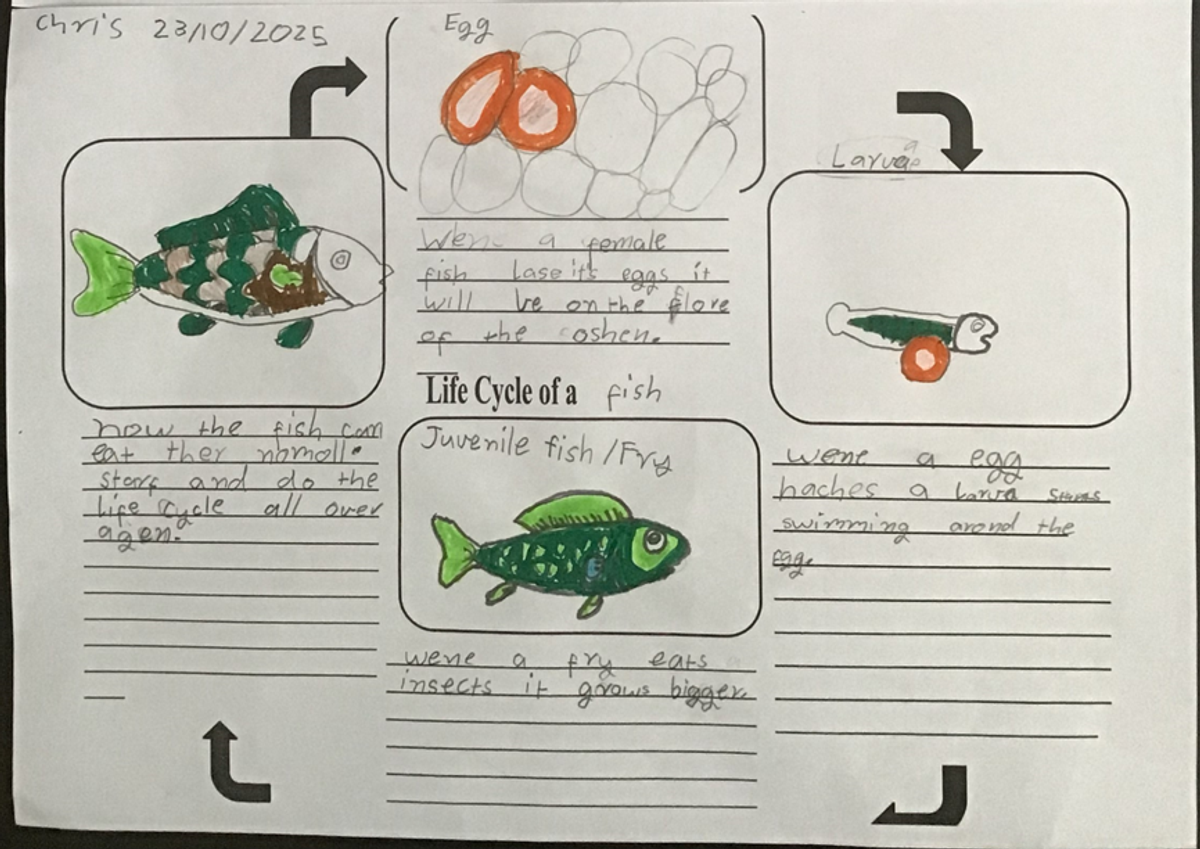
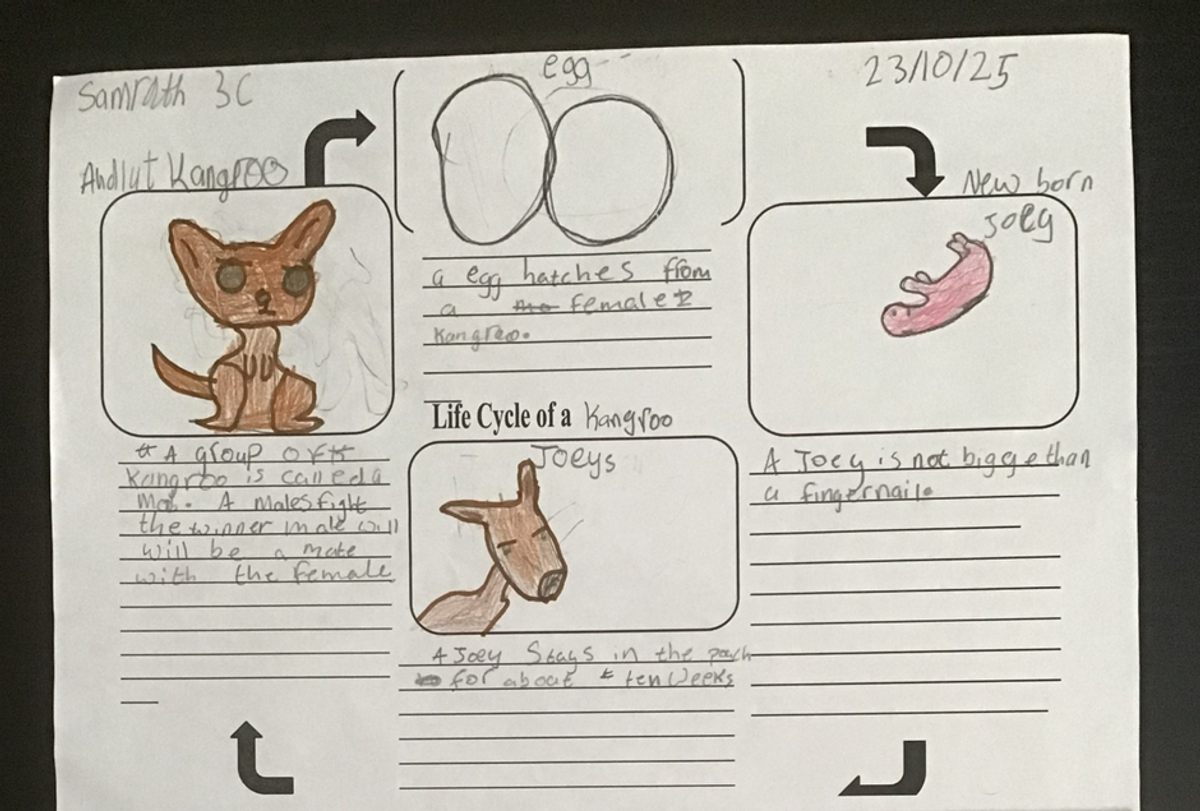
“A butterfly’s life cycle begins with an egg” - Julian 3C
“A frog has five stages in its life cycle” - Georgeuo
Maths
This fortnight, Year 3 students began an engaging unit on fractions. They have been learning about halves, quarters, eighths, thirds, fifths and tenths through a variety of activities involving shapes and collections of objects. By working with visual models, like dividing shapes into equal parts, and grouping items, students are gaining a concrete understanding of how fractions represent parts of a whole.
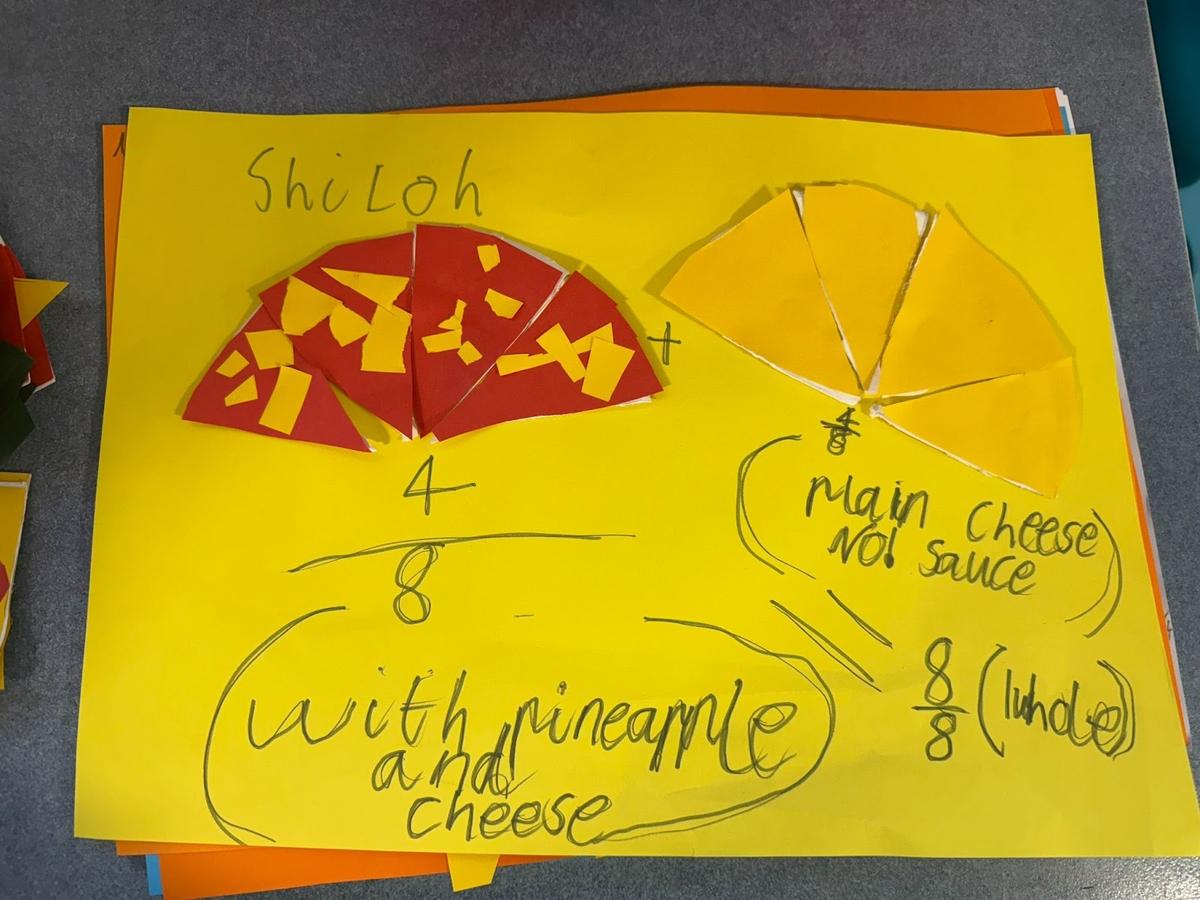
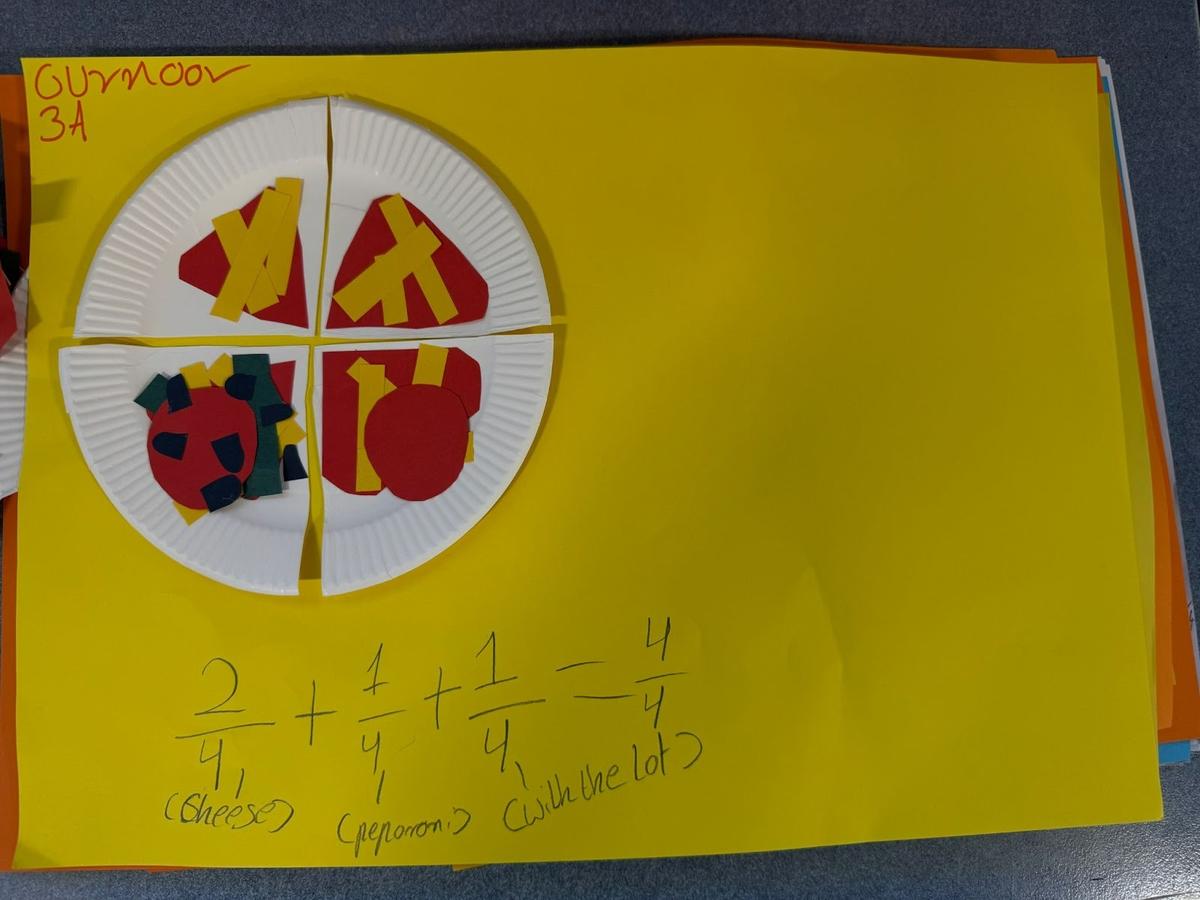
“Quarters are 4 equal parts.” - Gurnoor 3A
“3 sixths is the same as one half.” - Hayley 3B
Inquiry
This fortnight in Inquiry, Year 3 students have been learning about rules and laws and why they are important for keeping our society safe and fair. They learnt about who has the authority to make laws, how laws are created, and the consequences of not following them. Working in groups, students researched different examples and the reasons they exist. They also collaborated to create a new law they believe all children should follow. Students enjoyed sharing their creative ideas and discussing how laws help protect people, ensure fairness, and support the smooth running of the community.
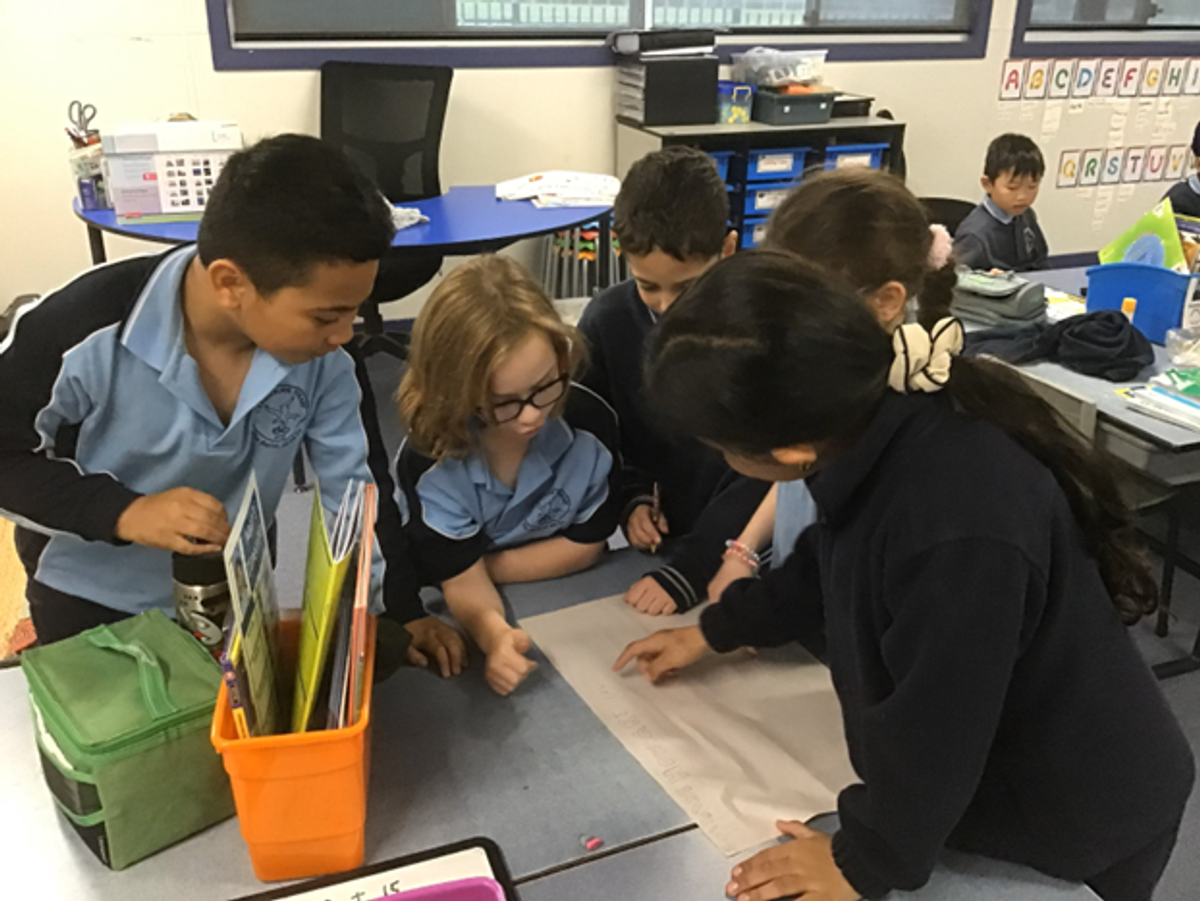
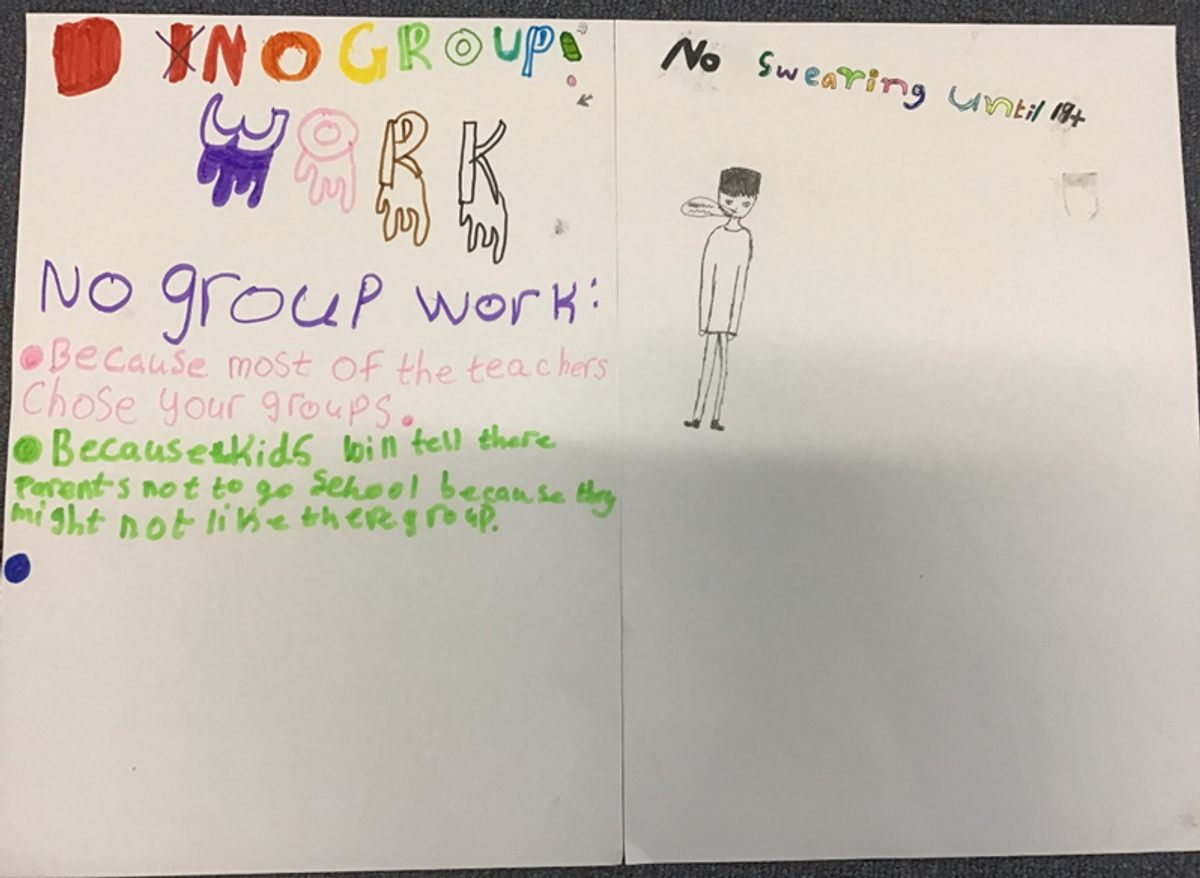
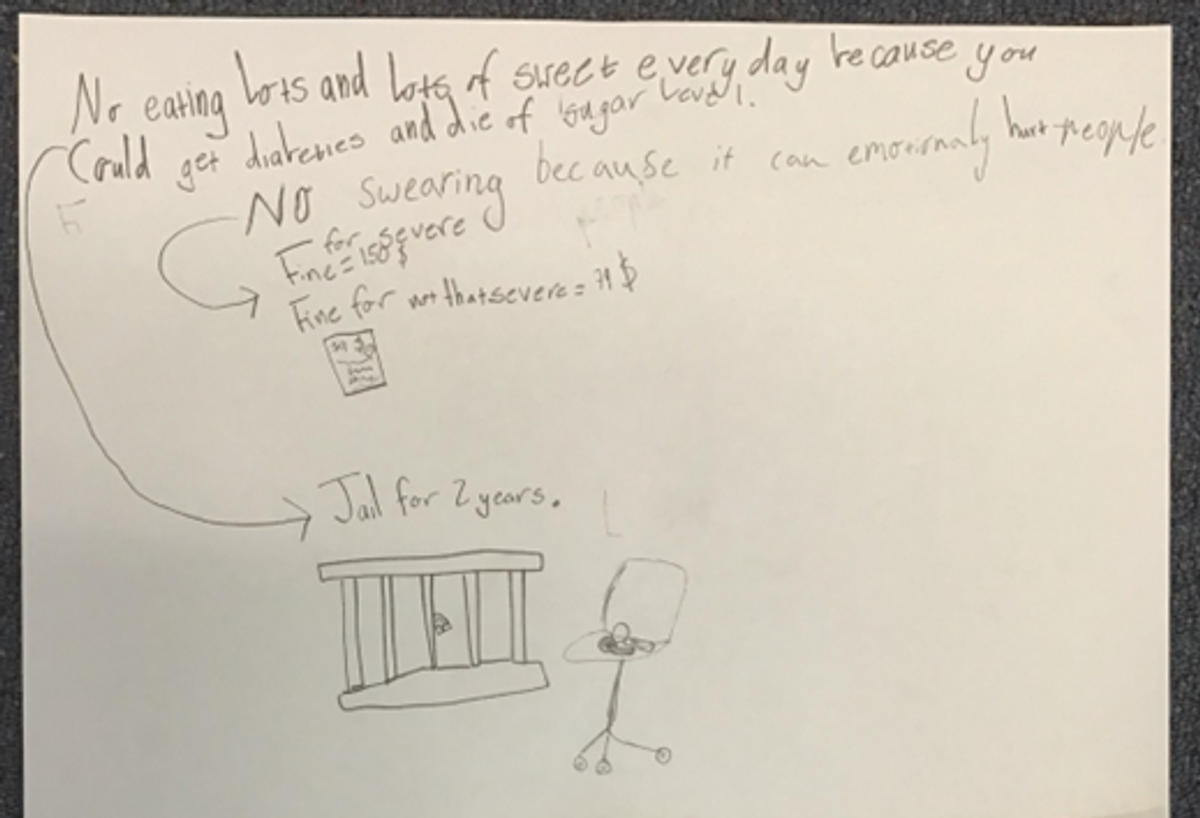
“Rules at school are enforced by the principal, vice principals and teachers” - Deepti 3C
“The difference between rules and laws is that if you break a law, you have more severe consequences” - Iris 3C
Social and Emotional Learning
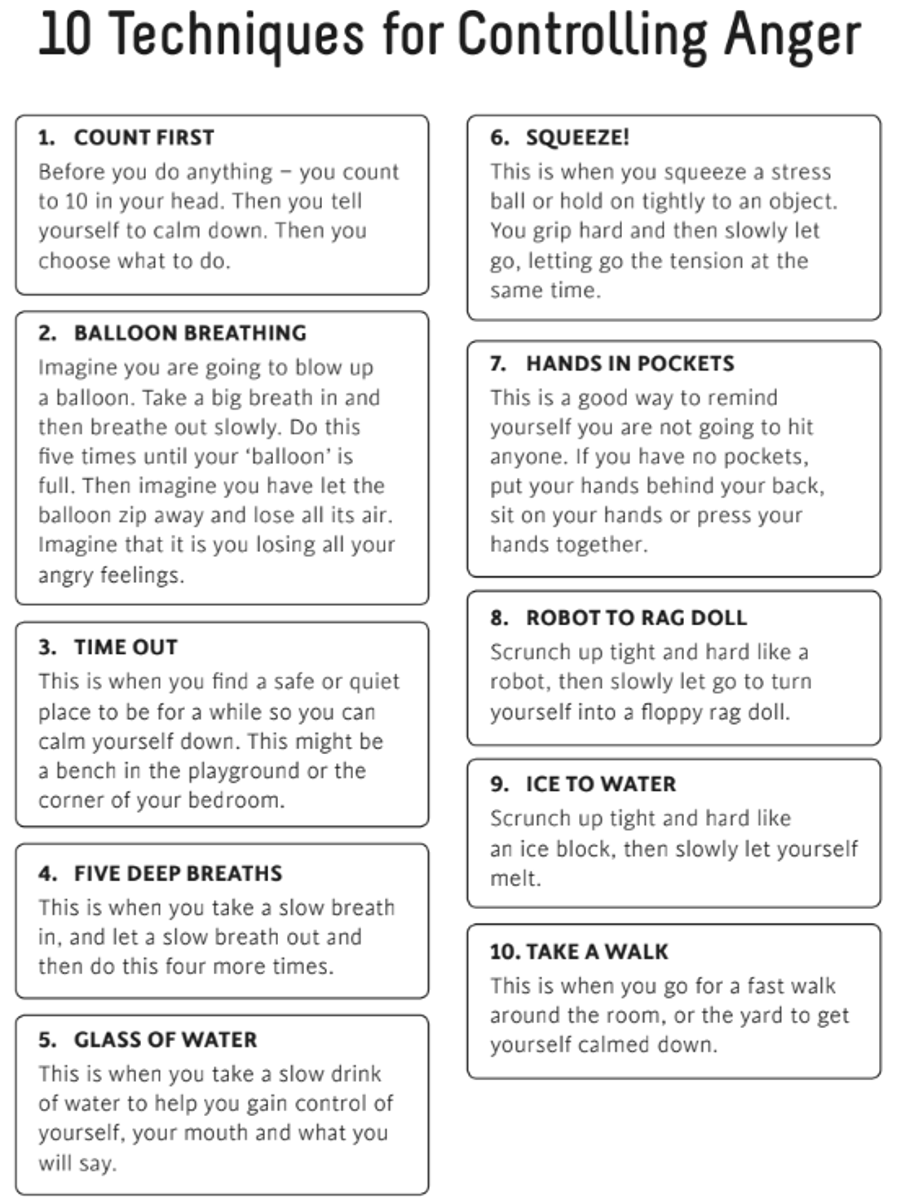
During Socials and Emotional Learning, Year 3 students learned about techniques to help control strong emotions such as frustration or anger in constructive ways. Students experimented with strategies such as counting to 10, taking deep breaths and using positive self-talk.
They also focused on how to make a strong, meaningful apology. Students practised using a clear apology model that encourages reflection and empathy. The steps included:
- I say what I did wrong
- I say how I think it made the other person feel
- I say how I feel now
- I promise not to do it again
- I say sorry
By following these steps, students learn to take responsibility for their actions and repair relationships respectfully.
‘IN SEL, we wrote apology letters.’ - Hasan 3A
‘If we make a nice apology, someone can forgive us.’ - William 3A
Special Event - Oral Language Program
Year 3 students participated in a fun and interactive lesson where they learned the meaning of the word “summarise.” They spent the following lessons working on activities in which they consolidated their learning in partners. Next, Year 3 students took part in an engaging lesson focused on improving how they use “because” and “but” in their writing. After this lesson, they completed sentence starter activities with visual prompts.
“To summarise means to retell the important parts.” - Kayan 3A