Being Franciscan
What might we hope to see?

Being Franciscan
What might we hope to see?
Please see below story from a community member on living the Franciscan values of simplicity and care for creation.
In many Franciscan schools, the values of simplicity and care for creation are already quietly woven into daily life. Second-hand uniform systems, clothing swaps and the sharing or repairing of clothing are small but powerful ways school communities live the Franciscan charism. These practices remind us that care for creation is not only taught in classrooms but expressed through everyday choices.
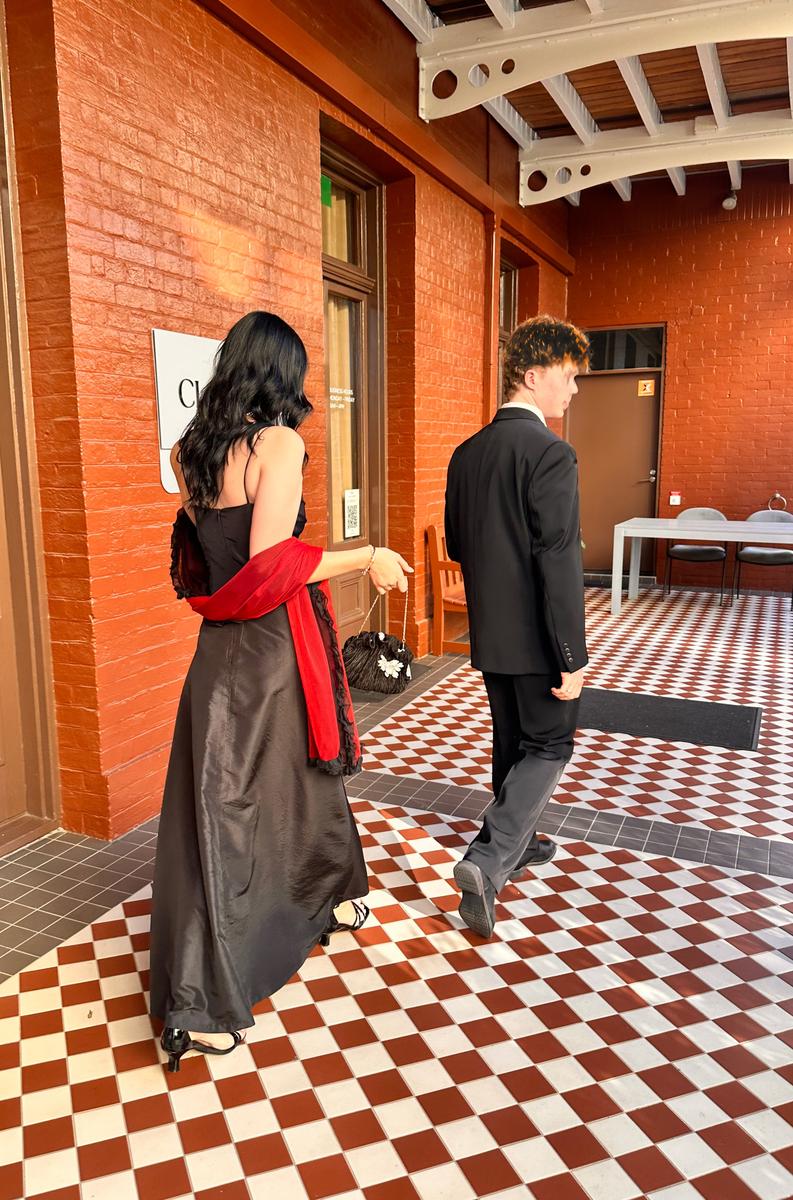
At a recent school formal, one senior student embodied this spirit in a simple but meaningful way. She chose to wear her mother’s dress. Her partner wore his father’s suit. Not a cent was spent on clothing. She wore shoes she already owned and the only item she purchased was a necklace from an op shop. The necklace was paired with her regular jewellery – silver and gold in an eclectic and joyful mix.
Her handbag was borrowed. When her grandmother mentioned the formal at the retirement village where she lives, the residents enthusiastically offered numerous bags to choose from. She selected a vintage fabric handbag with a touch of sparkle to match the necklace she had op shopped.
The result was joyful, personal, unique and elegant simplicity, while offering a counter-cultural response.
In a world where fashion often encourages excess and loudness, this choice reflected a different set of values. The fashion industry contributes significantly to environmental harm, and the culture of fast fashion encourages people to wear garments only briefly before discarding them. In her article How to bring Laudato Si' into your wardrobe: Care for our common home starts in your closet, Whitney Bauck notes, “First off, Laudato Si' calls for an end to the ‘throwaway culture’ that propels excessive production and consumption – a feature of modern fashion so prevalent that some members of Gen Z wear each garment they buy only once.”
Yet here a different story was unfolding. Clothes were reused. Jewellery was second-hand. A bag was borrowed. The result was creativity + connection + sustainability. This student’s choice reflects the call of Pope Francis in Laudato Si’.
Clothing production also has significant environmental consequences. As Jamie Ducharme explains, recycling clothing can be difficult because “modern garments are blends of multiple materials” and “many mass-market brands… churn out garments that are either low-quality, and thus fall apart, or that are so trendy that they quickly look outdated, sending customers back to the store for the latest thing” (in You Might Want to Think Twice About Clothing Brands That Push Rental, Resale, and Recycling by Jamie Ducharme).
These realities invite us to reconsider the choices we make.
Pope Francis reminds us in Laudato Si’ of “the great need for a sense of social responsibility on the part of consumers” (#206). He references Pope Benedict’s statement that “Purchasing is always a moral – and not simply economic – act” (#206).
The student’s choice also reflects something deeper within the Franciscan tradition. In this way, simplicity is not about deprivation but about freedom. St Francis of Assisi, the Patron Saint of Ecology, chose to live simply in solidarity with the poor and in reverence for creation. His life reminds us that joy, creativity and gratitude are not found in excess but in relationship with God, one another and the Earth.
What was seen at this school formal was not simply a clever outfit choice. It was a living expression of Franciscan values – creativity instead of consumption, gratitude instead of excess and care for creation expressed through everyday decisions and choices.
Other students chose to hire their dresses, which is another wonderful ecological response. These choices show that young people are more than capable of imagining a different way of living – one that honours both the Earth and the dignity of those who make their clothing.
Richard Rohr reflects on the radical freedom found in Franciscan simplicity, writing, “When we agree to live simply, we put ourselves outside of others’ ability to buy us off, reward us falsely, or control us by money, status, punishment, and loss or gain” (https://cac.org/daily-meditations/the-joy-of-simplicity).
In a culture where clothing can become a marker of status or wealth, this freedom is significant. Fashion can easily become a way of signalling belonging through brand names, designer labels, or the pressure to wear something entirely new. In these moments we might ask: are we wearing the label, or is the label wearing us?
The choices made by these students suggest another possibility. Their outfits still shone and sparkled. They were joyful, expressive and creative. But they were not controlled by brand power or the pressure to consume. Instead, they reflected something deeper – gratitude, resourcefulness and care for creation.
Perhaps moments like this help us see that the Franciscan charism is alive not only in words or teachings, but in the humble and joyful choices students make every day. In this, they walk the same path Francis and Clare once walked – discovering God’s presence in simple actions, small decisions, and the quiet care we show for one another and for creation.
May we continue to nurture a school culture where such simplicity is celebrated, where sustainable choices are seen as joyful and freeing and where our shared Franciscan story is written through the lives of our students.