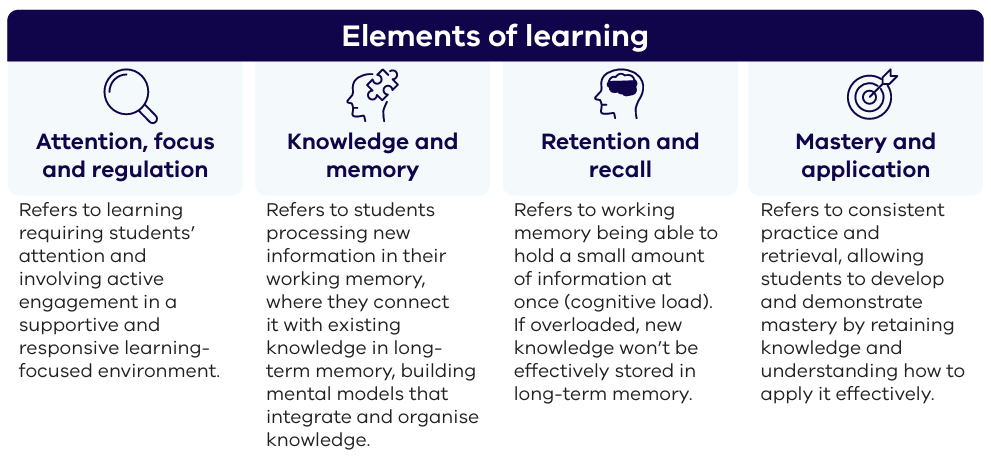
At Boroondara Park Primary School, the Victorian Teaching and Learning Model (VTLM 2.0) underpins our approach to teaching and learning, with a strong focus on ensuring students move beyond basic understanding towards mastery and application of knowledge and skills.
In the classroom, this means that learning is intentionally structured so that students:
- Build deep understanding of key concepts rather than surface-level knowledge
- Practise and consolidate skills through targeted, explicit teaching and guided learning
- Apply their learning in different contexts, including problem-solving, inquiry tasks, and real-world scenarios
- Receive timely feedback to refine their thinking and extend their learning
- Engage in differentiated tasks that challenge students at their point of need
Teachers at BPPS design learning experiences that gradually release responsibility—from modelling and guided practice through to independent application—ensuring all students have the opportunity to become confident, capable learners.
How Families Can Support at Home
Families play an important role in reinforcing mastery and application beyond the classroom. You can support your child by:
- Encouraging conversations about learning. Ask your child to explain what they are learning and how they solved a problem. This helps deepen understanding.
- Promoting real-world application. Involve your child in everyday activities such as measuring ingredients, managing money, reading instructions, or discussing current events.
- Supporting consistent practice. Regular reading, practising key skills (such as number facts or writing), and revisiting classroom concepts strengthens mastery.
- Encouraging persistence and a growth mindset. Celebrate effort, not just outcomes, and encourage your child to keep trying when learning feels challenging.
- Maintaining communication with teachers. Stay connected to understand current learning goals and how best to support your child at home.
Useful Links
AERO – Student Wellbeing Resources – Research and family-friendly information about wellbeing, emotional regulation and creating supportive learning environments.
Student Wellbeing
AERO – Cognitive Load Theory Explained – Explains how reducing unnecessary distractions and structuring learning effectively can improve student focus and learning success.
Cognitive Load