Community
Events | Parent Assoc. | Individual Achievements | Alumnae | Links
Community
Events | Parent Assoc. | Individual Achievements | Alumnae | Links
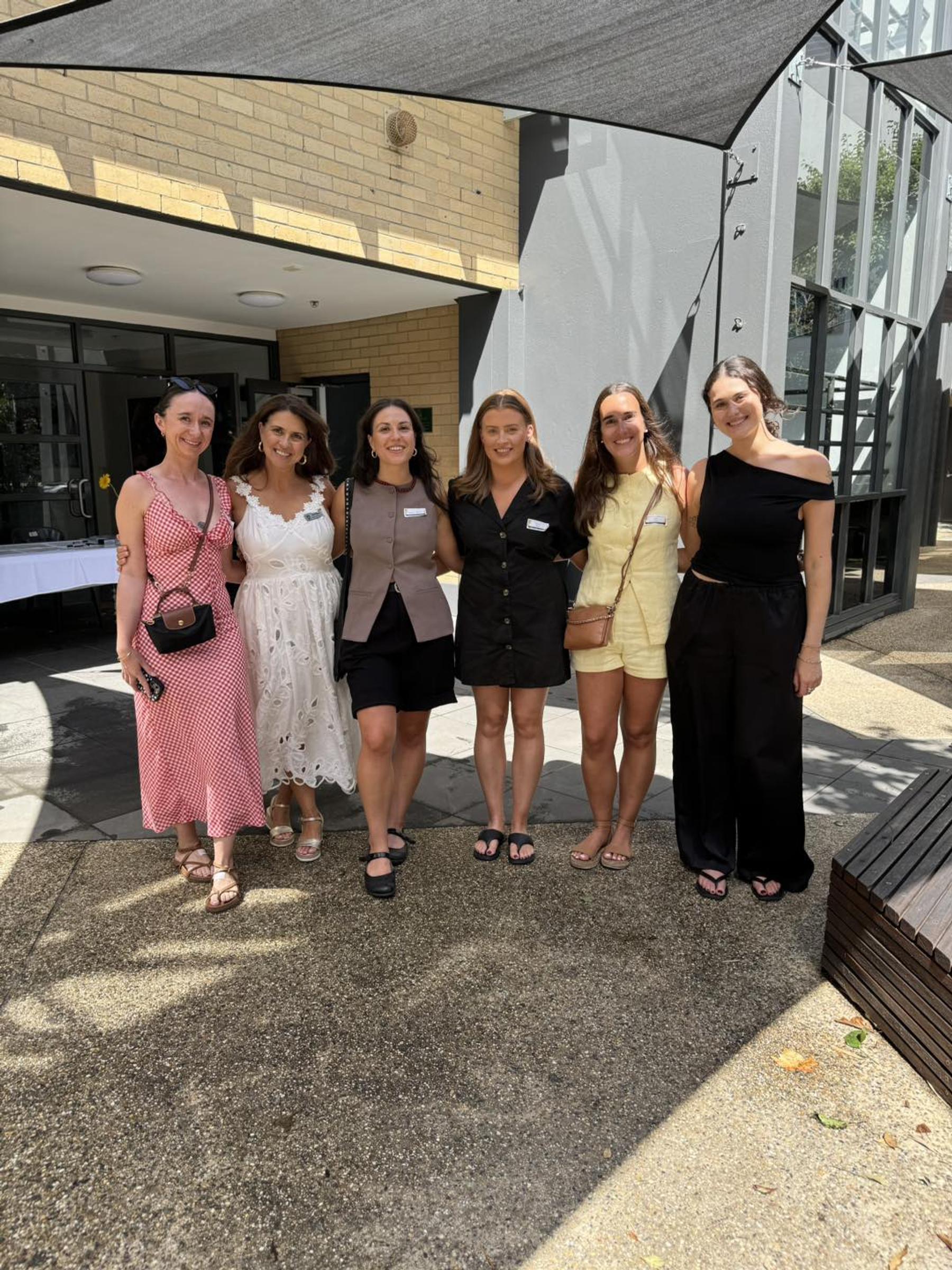
Academy of Mary Immaculate and Simonds Catholic College joined forces in September and October to host two successful Discovery Days, giving Grade 4 students from local primary schools a firsthand look at secondary school life while strengthening community partnerships across Melbourne’s inner west.
Please click on the button for the full story.
I recently came across an article in the Tablet titled “Pope Leo’s three step guide to becoming a Catholic School” written by John Holroyd.
Not surprisingly, the values that Holroyd explored in the article came from the Augustinian charism of his Augustinian College, Villanova, in Brisbane.
Before Sr Mary uses her editorial control to axe this article in defence of our Academy Mercy values, I should hasten to appeal to advice given to me when I travelled to countries other than Australia, that the things that you experience will be different, not necessarily better or worse.
What struck me when I ‘travelled’ into the land of Augustinian values was how they could be used as a guide to becoming a Catholic family.
All of our students have studied the Mercy values of Compassion, Courage, Hospitality, Justice, Respect and Service. These six values form a creative framework for building resilient and loving families.
To this framework, Pope Leo can be heard adding the three pillars of a search for truth, community and interiority.
In discussing the search for truth, Holroyd writes that we “must be animated by the conviction that the truth exists, that it can be sought out and that it is only reached through dialogue and an interplay of perspectives”.
As a teacher and a parent, the conviction that truth exists outside of me and outside of the young people I care for, demands that I listen deeply to arguments outside of my points of view and be open to change.
This is definitely not a form of relativism in which everyone is entitled to their own beliefs. Rather, the key idea to this understanding of dialogue between the generations comes from St Augustine’s teaching that the “victory of truth is Love”.
The concept of family as a community is at the one time both obvious and challenging. Parenting is a tough gig. From the day the first baby is brought home, life is forever changed. The emotional cost of parenting is profound. The total economic costs of parenting are eye watering.
But the idea of family as community potentially trumps all such challenges. In the words of St Augustine “the reason why you have come together is to be one in mind and heart on the road to ...”
For St Augustine it was the ‘road to God’. In our secular age, I do not think that Pope Leo would object if I replaced it with the “road to Love”.
In the final pillar of interiority, Pope Leo encourages students and teachers (and I add parents) to look inward and find the map with which to journey between the head and the heart.
St Augustine wrote of the ‘inner teacher’. For him, this is the Christ within us.
For me, as a parent and as a teacher, this is an exhortation to me to trust the Christ, the Love, that lies at the centre of existence for both myself and those young people for whom I care.
My students moved through and beyond school. My children and grandchildren move though and beyond the family home. It is an indisputable fact, that, how these young people steer their journeys beyond these safe harbours is determined fundamentally by decisions that they make.
What Pope Leo is proposing is that, in our roles as parents, grandparents and teachers, we work together with young people to build the life supports of the search for truth, of community and of Love.
Mr Mark Hyland
Guest Contributor