
Assistant Principal's Report
Katrina Spicer - Wellbeing and Inclusion

Assistant Principal's Report
Katrina Spicer - Wellbeing and Inclusion
FIDGET TOYS OR FIDGET TOOLS?

Fidget toys are all the rage at the moment, with many different toys easily available for purchase. Many children are bringing these toys to school.
From time to time, a small fidget is recommended by an Allied Health Professional such as a psychologist or occupational therapist, to assist children who require movement to focus. But nowadays, we are seeing more and more fidget 'toys' being brought to school, and children declaring that they need them to concentrate.
Of course, the school is happy to accommodate and even provide fidgets for those students who really need them. But all too often, these 'toys' are more of a distraction than anything else.
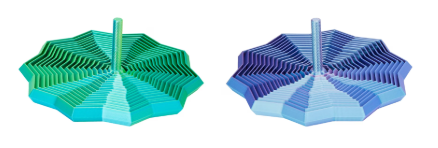
Fidgets should be classified as 'tools', not 'toys'. A 'toy' is a plaything, whereas a 'tool' is something that assists a student to do their best. Fidget tools should be instruments for focus, regulation and calm. As much as possible, fidgets should be discreet, i.e. not seen and not heard so they do not distract others in the classroom.
As mentioned earlier, we may receive recommendations from Allied Health Professionals for fidget tools for children with ADHD, as these students often concentrate better if they are able to move their body or hands. If you believe your child requires a fidget tool in order to help them stay calm, stay focused and do their best at school, please let your child's teacher know.
Please carefully consider the appropriateness of fidgets your child brings to school, and understand that if the fidget is being used as a 'toy' rather than a 'tool', and is a source of distraction to your child or other students, the classroom teacher may ask the fidget to be put away, or the teacher may keep the toy until the end of the school day.
Thank you for your support with this.
Katrina Spicer
Assistant Principal for Wellbeing and Inclusion
katrina.spicer@education.vic.gov.au

By Mim Hammonds
A father recently told me his relationship with his twelve-year-old son was fragile and becoming fragmented. "What's wrong with my son?" he asked me. Then came the list: the attitude, the grunting, the closed bedroom door. "He doesn't even want to join us for meals anymore", he explained.
I hear a version of this question constantly. What's wrong with my toddler? My eight-year-old? My teenager? We worry about our relationships a lot - and for good reason. Relationships are at the heart of our wellbeing. When relationships feel good, we tend to feel good. When a relationship is rocky, we feel rocky.
Rather than discuss this father's list of concerns, I asked how much connection was in their relationship?
"We talk all the time," he responded. Then he went straight back to his son's 'problems'.
I stopped him. "That's not what I asked. When you talk, what are you talking about? How involved is he in the conversation?
He considered it. "He just grunts. It's usually me talking at him." Then, in a moment of candour, "And it's mostly me telling him what to do or what I think is wrong with him."
What is connection?
Connection is feeling seen, heard, valued, and accepted. Every child knows when they have it and when they don't - from the two-year-old at your knee to the sixteen-year-old behind the closed door.
Here's the counter-intuitive bit, and it's also potentially the uncomfortable bit:
Focusing on connection requires us as parent to take a level of responsibility for our child's behaviour.
But surely their behaviour is on them, you might be thinking? But think this through with me.
When you're with someone with whom you have a strong connection, does that make you a better person or a more challenging one? We tend to do better when we're around people who make us feel better. Our children are no different. When children don't feel seen, heard, valued and accepted, they chase it - in clumsy, unhelpful ways. The whining of a four-year-old, the backchat of a nine-year-old, the stony silence of a fourteen-year old: much of what we call challenging behaviour is really a badly worded connection request (or demand).
In our relationships, we load up on correction and direction. Connection receives short shrift. But just as dollars are the currency of our economy, connection is the currency of our relationships - and it buys more behavioural change than any consequence chart, lecture, or grounding ever will.
Connection runs on attention
Our children don't experience our love. They experience our attention. To a child, they're the same thing. And children can tell the difference between a parent who is in the room and a parent who is present - one is a body on the couch, half-listening, phone in hand, while the other is a person whose eyes are on them, whose face responds to theirs, who actually heard the thing they just said.
The quality of your attention shapes the quality of your relationships. Which is to say, the quality of your attention shapes the quality of your life - and your child's.
Connection runs on timing.
The brain's receptivity fluctuates. When our kids are hungry, tired, or emotional, they're closed for business. High emotions, how intelligence. So we connect in the calm moments and we save the hard conversations for when the window is open. The best times are the giggly Saturday breakfast with chocolate milkshakes as a treat, the side-by-side car ride, the 9:30pm kitchen chat when your teen finally wanders in and starts talking. When that door opens, drop everything (quietly) and step through it.
Under five, love is spelled T-I-M-E, and time is spent on the floor. Ten minutes, phone in another room, letting them lead the play. No teaching, no agenda. Just you being there in the moment with your child.
In the primary years, connection means entering their world. Perhaps it's the Minecraft build, or you grab a netball or frisbee and throw it. It's being willing to guess which dinosaur is which. Gah! Twenty seconds of genuine interest in the thing they care about, offered consistently, changes everything.
With teens, connection goes sideways. Eye contact can feel like interrogation, so connect shoulder-to-shouder, like when you're driving, cooking, walking the dog. Be available at inconvenient hours. And keep the ratio honest - if most of your words are correction and direction, the connection account is overdrawn.
A connection audit
If things have gone a little wonky at your place, try four questions:
Back to that dad
The dad was a little annoyed that I hadn't told him how to fix his son. But on the drive home, he decided to try what I'd suggested. He hugged his son (who wasn't sure what was going on), apologised for being grumpy and on his case leately, and they shared a late-night ice-cream.
A few weeks later he emailed me. They'd planned a weekend away together - they went camping, rode mountain bikes, and ate pizza. His son rated it a stunning success. The dad told me he saw, heard, valued and accepted his some more in that brief time than he had in the past two years combined.
And the result? His son longer seemed quite so difficult. The challenges stopped dominating the relationship.
Connection - feeling seen, heard, vallued, and accepted - can be tricky. Life is challenging. But it's the foundation of better relationships and happier lives. And it starts with the next ten minutes.
