
Wellbeing

Fidget Tools in the Classroom: Supporting Learning and Regulation
At Wales Street, we recognise that some students benefit from using fidget tools as part of their learning and self-regulation. Fidgets are not toys; they are accommodations designed to support students with sensory needs to help regulate their bodies and attention.
Like any educational support, fidgets are not needed by every child, all day, in every lesson. The purpose of a fidget is to help a student focus on learning, not to provide entertainment. If a fidget becomes distracting to the user or others, it is no longer serving its intended purpose.
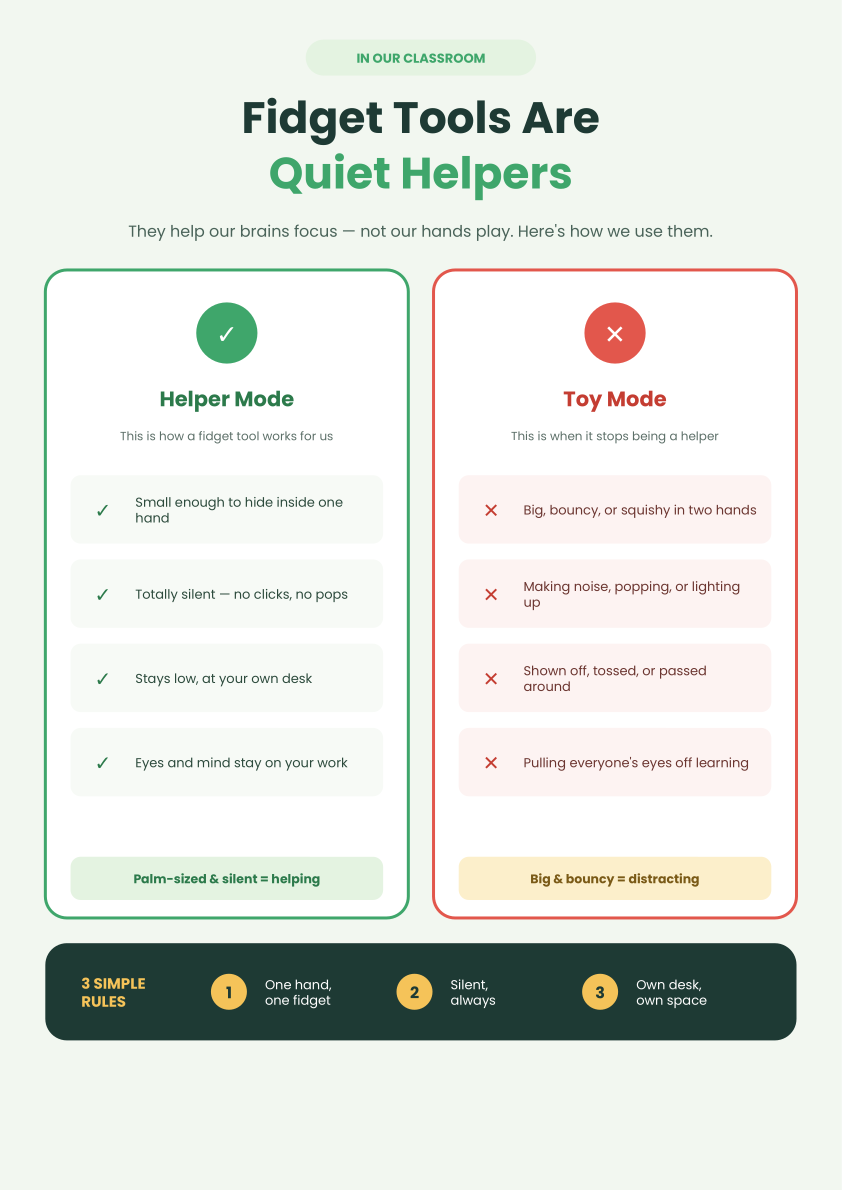
When selecting classroom fidgets, we follow some simple “golden rules.” Effective classroom fidgets should be:
- Small enough to fit in the palm of the hand
- Quiet and low-key: nothing that lights up, makes noise, or bounces
- Used quietly at the student's desk, not shown off or shared around
- Helps the student focus, rather than pulling attention away from learning (theirs or their classmates')
Some examples include:
- Sensory silicone pebbles or coins: small, textured, and squeezed silently in one hand
- Textured stress balls (mini size): soft squeeze, no sound
- Fidget rings or sliders: worn or held, moved quietly with a thumb
- Small putty or theraputty: kept in a small tin, used silently at the desk
A useful question to ask is: "Can my child use this fidget while keeping their eyes on the teacher and their mind on the learning?" If the answer is yes, it is more likely to be an effective classroom fidget. If you think a fidget tool might help your child, please reach out to your child's teacher or our student wellbeing team. We're always happy to chat about what might work best.