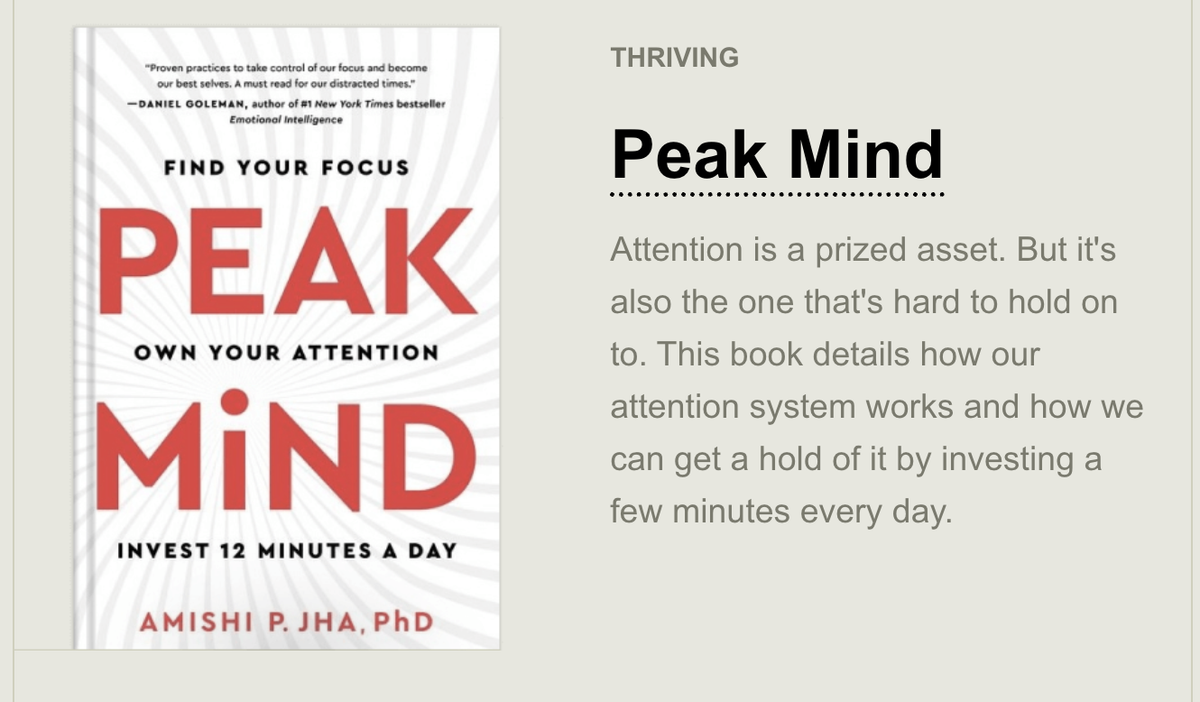
Teaching & Learning Page:

Web Pages:

Window View lets you step inside any building on Google Earth and look out the window. Pick a floor, drop a window on any wall, and see exactly what's outside. A sun path overlay shows you when sunlight actually hits throughout the year. Free, open source, no account needed.

https://tombh.co.uk/longest-line-of-sight
The place on Earth from which you can, in theory, see further than any other is between an unnamed Himalayan ridge near the Indian-Chinese border and Pik Dankova in Kyrgyzstan. It is just over 530km.
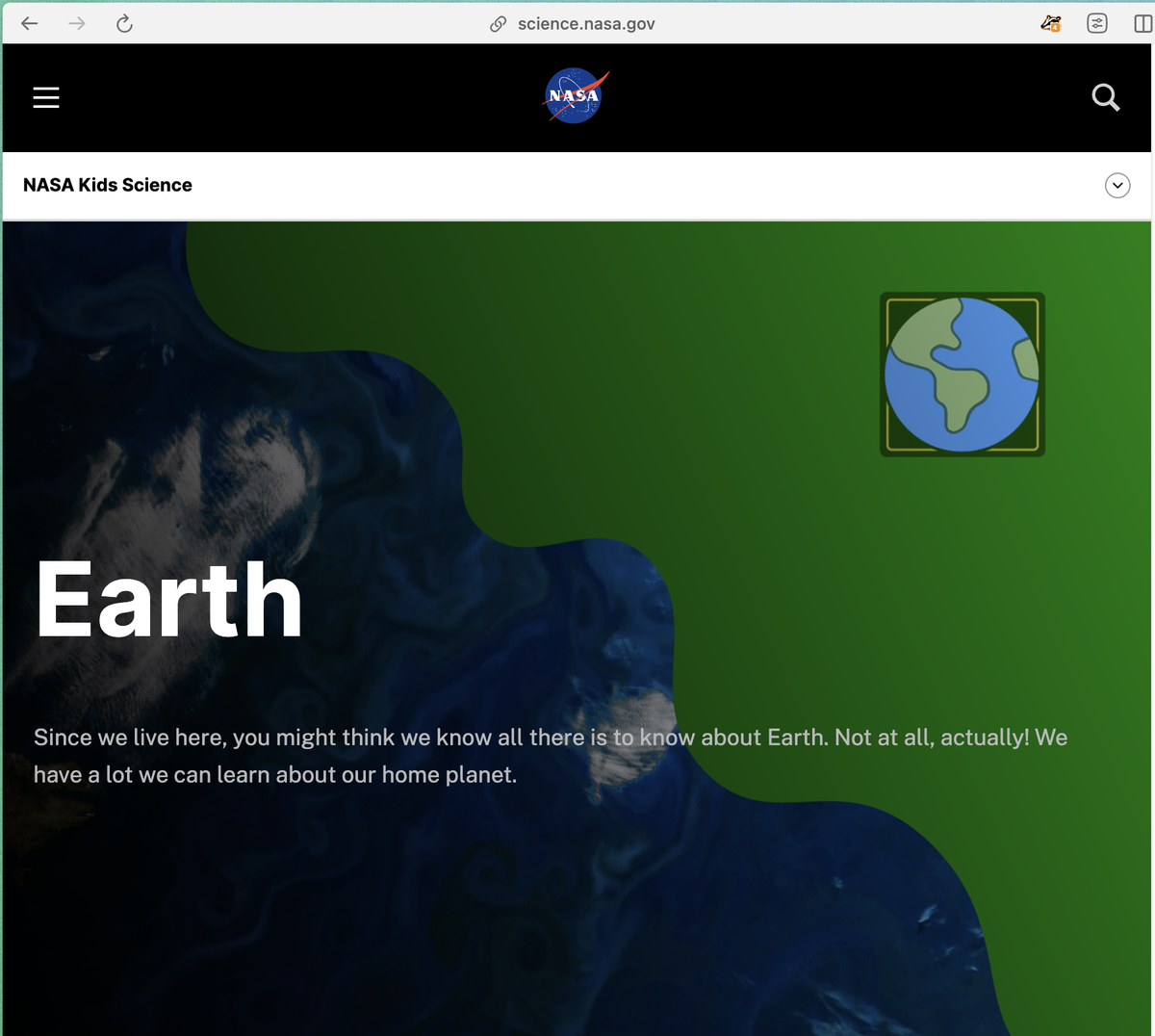
https://science.nasa.gov/kids/earth/
Since we live here, you might think we know all there is to know about Earth. Not at all, actually! We have a lot we can learn about our home planet.
Techie Tips:
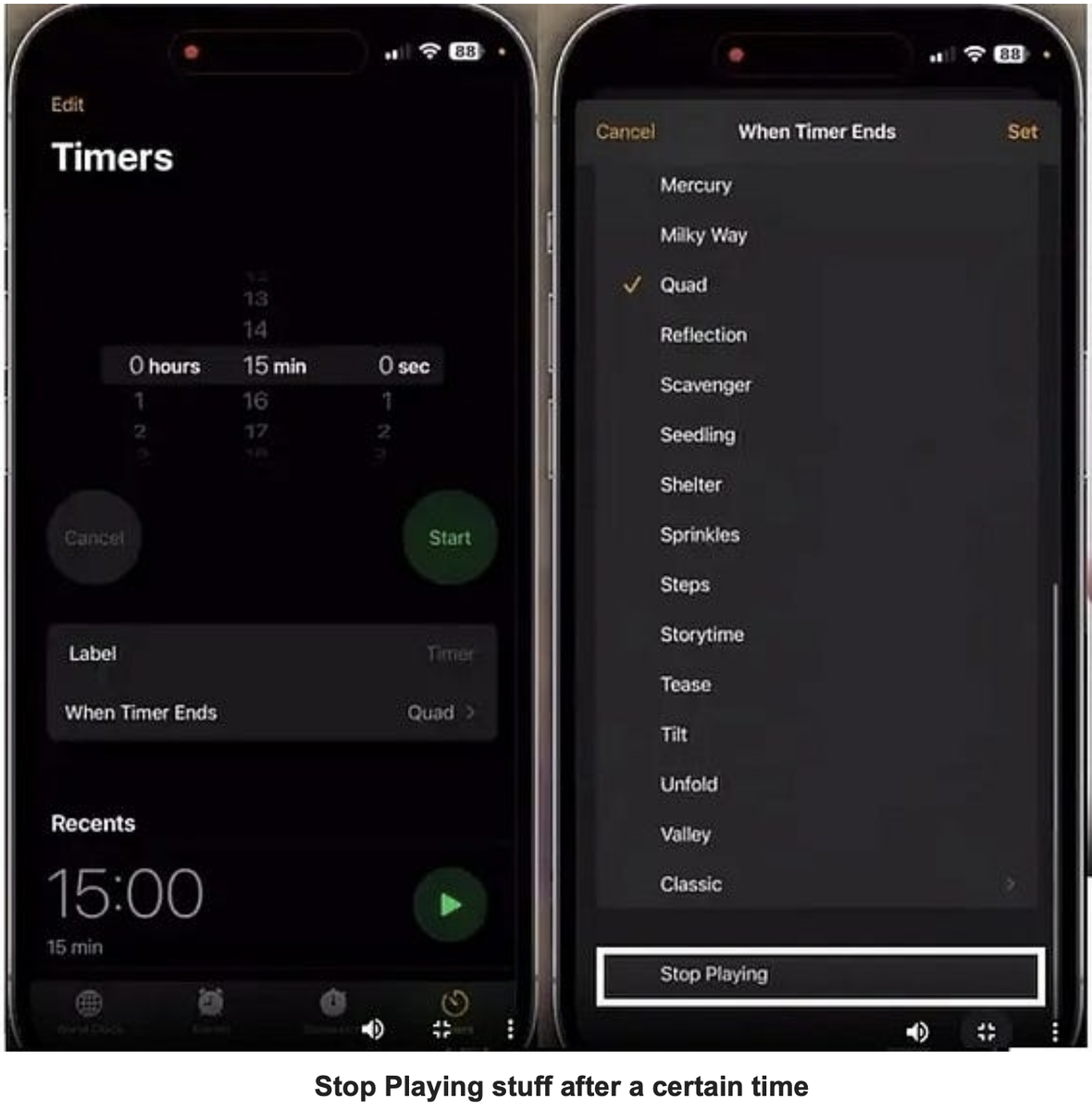
The Built-In Sleep Timer Apple Never Named
We have all made this one mistake at around bedtime:
putting on a podcast, an audiobook, or just one more episode of something you
absolutely love
You wake up at around 3:47 a.m.
Your phone is hot already.
The battery is sitting at barely 9%.
And someone is still explaining something you stopped listening to hours ago.
Here is the quiet fix you have been ignoring till now.
Open the Timer app like you normally would on your iPhone.
Set your time.
But when you choose the sound for “When Timer Ends,” scroll all the way down and
tap:
Stop Playing.
That is very much it.
When the timer runs out, whatever is playing just shuts off automatically.
No dramatic alarm, no sudden noise you hate. It just stops — and your phone locks.
It is basically a sleep timer hiding in plain sight.
Bonus: if you are a parent, this is a beautiful boundary tool.
You don’t end screen time; the timer does it for you.
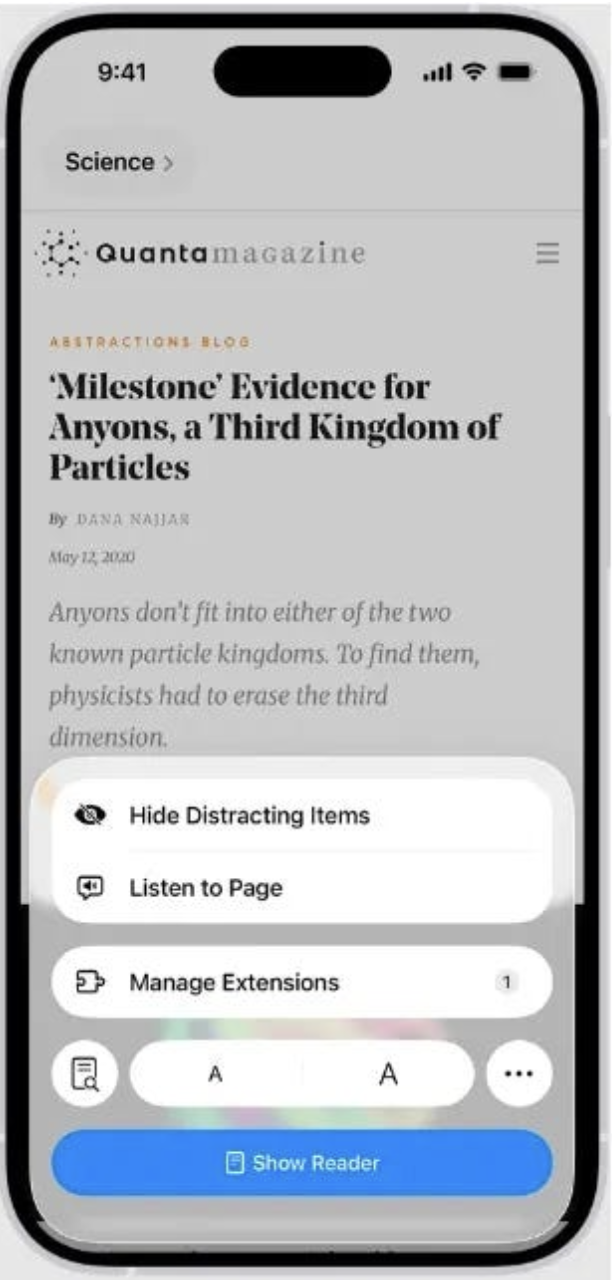
Turning Loud, Messy Websites Into Calm Reading Spaces
Reading the news online can feel like walking through a mall where everyone is yelling your name.
Strange things like,
Pop-ups asking for your email.
Videos auto-playing from nowhere.
Ads blinking like the emergency signals.
But Safari has a built-in escape hatch, you probably don’t know.
Open any article.
Tap the “AA” in the address bar.
Choose the Reader (mode).
Suddenly, everything unnecessary just disappears.
No ads.
No sidebars.
No visual chaos.
Just the related text and images in a clean, distraction-free layout for you to read out.
You can also tweak it a little—stuff like changing the font, adjusting the background colour, bumping up the text size, etc.
And here is the part most people often miss:
You can also set the Reader to turn on automatically for certain sites.
So you never see the annoying clutter again.
Sketches:
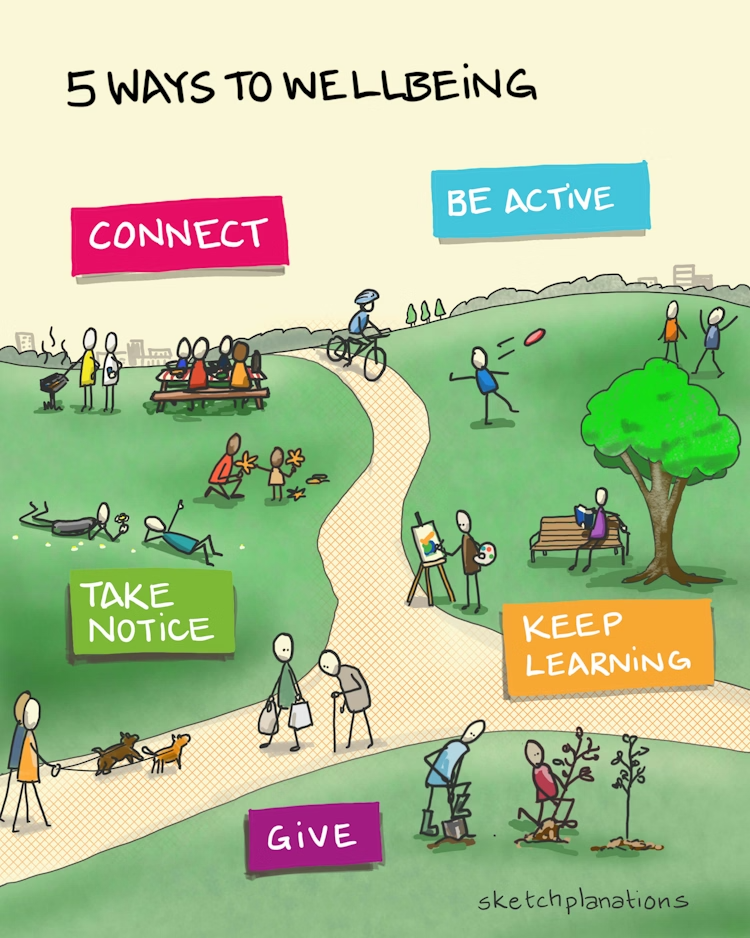
The five ways to wellbeing are five simple, evidence-based ways to improve mental capital and mental wellbeing throughout life.
Developed by the New Economics Foundation, the 5 ways to wellbeing are:
Connect
With the people around you. With family, friends, colleagues and neighbours. At home, work, school or in your local community. Think of these as the cornerstones of your life and invest time in developing them. Building these connections will support and enrich you every day.
Be Active
Go for a walk or run. Step outside. Cycle. Play a game. Garden. Dance. Exercising makes you feel good. Most importantly, discover a physical activity you enjoy, and that suits your level of mobility and fitness.
Take Notice
Be curious. Catch sight of the beautiful. Remark on the unusual. Notice the changing seasons. Savour the moment, whether you are walking to work, eating lunch or talking to friends. Be aware of the world around you and what you are feeling. Reflecting on your experiences will help you appreciate what matters to you.
Keep Learning
Try something new. Rediscover an old interest. Sign up for that course. Take on a different responsibility at work. Fix a bike. Learn to play an instrument or how to cook your favourite food. Set a challenge you will enjoy achieving. Learning new things will make you more confident and is fun.
Give
Do something nice for a friend or a stranger. Thank someone. Smile. Volunteer your time. Join a community group. Look out, as well as in. Seeing yourself and your happiness linked to the wider community can be incredibly rewarding and creates connections with the people around you.
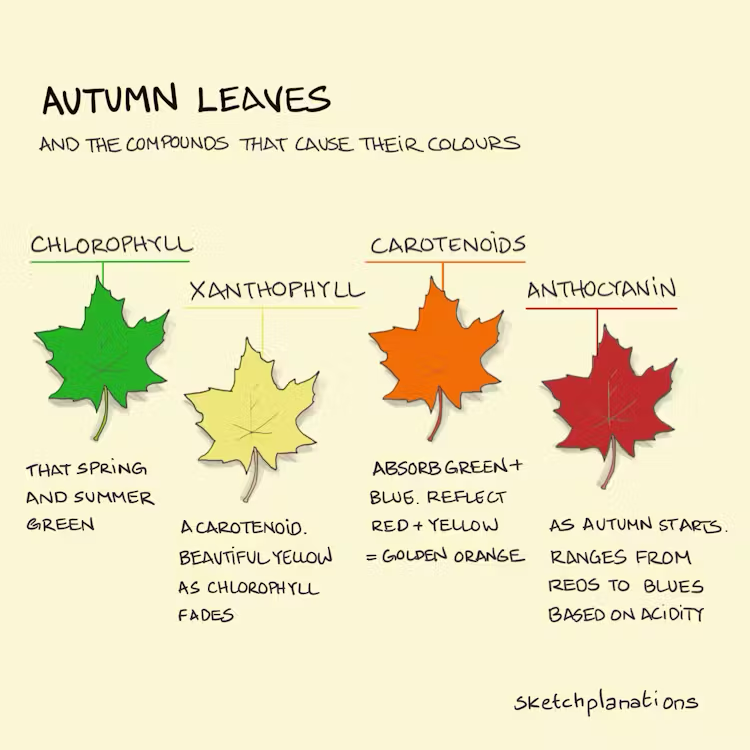
What a lovely time of year—when the leaves of deciduous trees in many forests change from the deep greens of summer to the yellows, oranges and reds of autumn. But what makes the leaves change colour, and what compounds are responsible for nature's spectacular display?
Many of us will know the green of chlorophyll, but leaves also contain carotenoids. As the chlorophyll fades, the golden oranges of these carotenoids start to shine through. You may recognise one carotenoid, beta-carotene, from carrots.
Another carotenoid, xanthophyll, is responsible for the beautiful, bright yellows.
The leaves of some trees also produce anthocyanin as autumn begins, which produces those beautiful deep reds.
Article:
The Donkey Principle: How to Avoid Foolish Arguments
There’s a story I read a few years ago whose lesson stuck with me:
One day, a Donkey and a Tiger got into an argument over the colour of the grass. “The grass is blue,” said the Donkey. “That’s ridiculous,” replied the Tiger. “The grass is clearly
green.” When the argument grew more and more intense, they decided to find the Lion,
King of the Jungle, to settle the debate. When they approached the Lion, the Donkey
exclaimed, “Your Highness, isn’t it true that the grass is blue?” “Yes,” the Lion calmly
answered, “The grass is blue.” Not yet satisfied, the Donkey continued, “The Tiger
disagrees and argues with me. You must punish him.” The Lion nodded, “I will. The Tiger
will be punished with a year of silence.” The Donkey walked off into the jungle,
celebrating his victory. Before the Tiger turned to leave, he looked up at the Lion. “Your
Highness, why have you punished me? After all, you must see that the grass is clearly
green.” The Lion nodded, “Yes, of course the grass is green.” “Then why am I being
punished?” asked the Tiger. “Because someone as wise as you should never waste time
proving anything to a fool.”
Let’s call its lesson The Donkey Principle:
There will be times in your life when you’re drawn into a discussion with someone who has no capacity to act in good faith.
They have no intention of listening to your position or changing their mind.
They just want to argue.
In those moments, you can choose to opt out.
Stop justifying your position to people who show no willingness to hear it. Stop trying to create understanding with those who appear determined to misunderstand. Stop chasing rational outcomes with irrational opponents.
The older I get, the more I realise peace has a price. You buy it by saying no. No to drama. No to noise. No to arguments. Each no creates space for the yes that truly matters.
Actor Keanu Reeves said it best:
“I'm at the stage in life where I stay out of arguments. Even if you say 1+1=5, you're right.
Have fun.”
We live in a modern world where social media makes it easier than ever to get pulled into
pointless fights. No matter your views or beliefs, someone will make it their mission to drag you into the metaphorical mud.
Before you enter any debate, ask yourself two questions:
1. Does this person show a willingness to listen and change their mind?
2. What evidence would cause me to change mine?
The first question ensures good faith on their part.
The second ensures it on yours.
As the old saying goes, “Never wrestle a pig in the mud. You both get dirty—but the pig will enjoy it.”
Perhaps this is all best summarised with one simple line:
If you argue with a fool, you become one.
Book Recommendation: