Maths at St Thomas
Launch into Learning
Maths at St Thomas
Launch into Learning
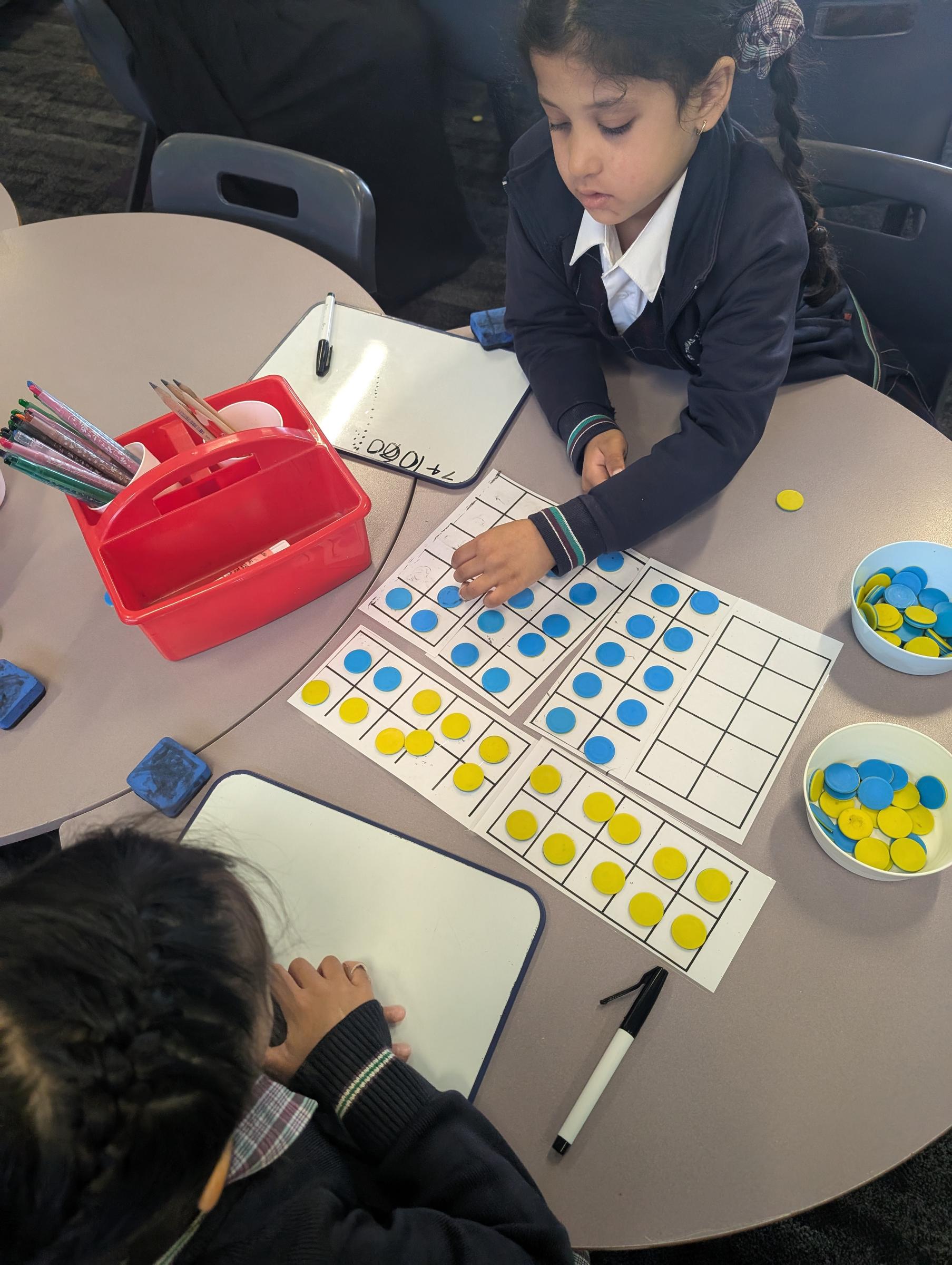
Across our school, mathematics is taught explicitly so students clearly understand what they are learning and how to do it. A strong focus is placed on developing number sense, using the Number Lens approach developed by Dr Ange Rogers. This approach helps students build deep understanding of numbers, rather than relying on memorisation alone.
Teachers use a clear “I do, we do, you do” teaching model:
Students are supported to explain their thinking, discuss ideas, and learn from worked examples. Teachers use manipulatives resources to help students see, touch, and understand mathematical ideas in meaningful ways.
Consistent teaching approaches across the school help students feel confident, supported, and ready to learn.
At St Thomas’, students also participate in Dr Ange Rogers’ Number Fluency Program. This program focuses on essential number skills, such as knowing one more or one less than a given number.
Students engage in this program for seven minutes each day. There are 20 key skills that students work through, which research identifies as critical foundations for future success in mathematics.
Short, daily practice helps students build automaticity and confidence with number.
Mathematics is part of everyday life. Children learn best when maths is connected to real experiences and talked about regularly.
Compare lengths, heights, and weights and ask questions like:“Which is longer?” or “Which do you think weighs more?”
Most importantly, keep maths conversations positive and relaxed. Asking questions, listening to your child’s thinking, and showing curiosity helps build confidence and a positive attitude towards mathematics.