Our Approach
#SafetyRespectandLearning
Our Approach
#SafetyRespectandLearning
At our school, we are committed to helping every child learn and succeed. We use clear, structured teaching approaches that are based on research and evidence about how children learn best.
Teachers use an explicit teaching model. This means that new learning is taught clearly and step by step. Teachers explain what students are learning, why it is important, and how to do it. Students are not expected to “guess” what to do. Learning is made clear.
Before teaching new skills, teachers check what students already know. Lessons are planned using this information so that learning builds carefully from prior knowledge. This helps students feel confident and ready to learn.
Students are given many opportunities to practise new skills. They also regularly review and recall previous learning. Research shows that practising and revisiting learning helps students remember more and become stronger, more independent learners.
We teach in consistent ways across the school. This means:
This consistency helps create a safe and predictable learning environment, where students know what to expect and feel supported.
Our goal is to develop independent learners. We want students to build strong skills and knowledge, as well as social skills such as confidence, resilience, and cooperation. These skills help students succeed at school and prepare them for life beyond the classroom.
Everything we do in teaching and learning is designed to maximise student progress and wellbeing, so every child can thrive.
At St Thomas the Apostle, English and Mathematics are taught every day. Both lessons begin with a daily review. This is a short, focused time that helps children recall what they’ve learned and build strong foundations.
Why is Daily Review important?
It builds strong habits, like having a go, listening, and participating.
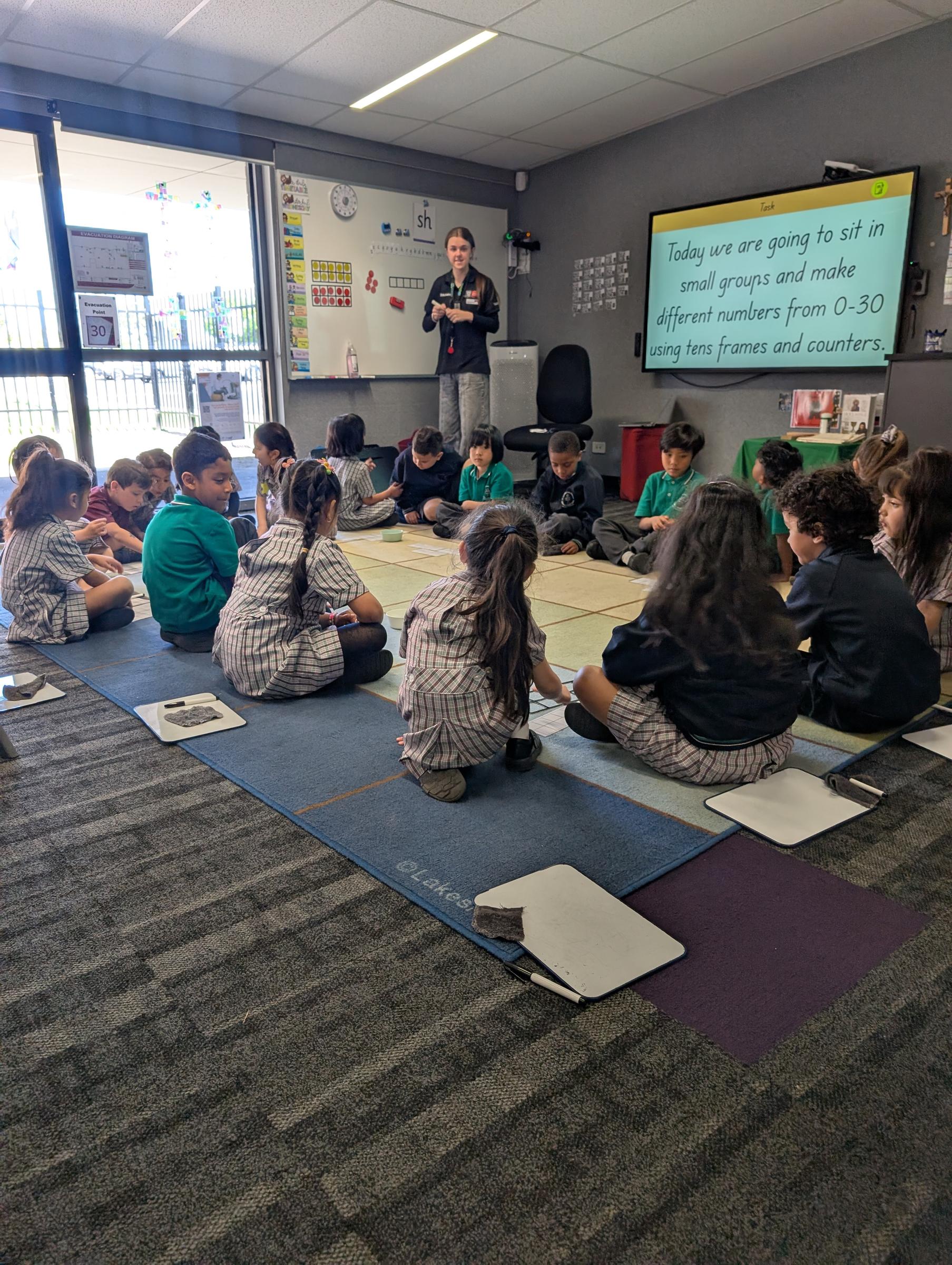
We also use mini whiteboards so every child can show their thinking, and engage in all aspects of each lesson. It helps teachers see what each child understands and also ensures that errors are corrected and learning is paced by the teachbased on the needs of the students.
This short, daily practice makes a big difference, especially in the early years of learning!