
Library
Our Libraries Say “All In” for Reconciliation
Article by Paige Witcombe, Library Leader Yirramboi Campus
National Reconciliation Week is an important opportunity for all Australians to reflect on our shared histories, cultures and achievements, and to consider how we can contribute to a more respectful and united future. This year’s theme, All In, reminds us that reconciliation is not something that happens on the sidelines - it requires all of us to listen, learn and take meaningful action every day.
Across our libraries this week, students are being encouraged to engage with stories and perspectives from Aboriginal and Torres Strait Islander peoples through carefully curated book displays. These collections highlight the richness and diversity of First Nations voices, histories and cultures, while also encouraging important conversations about truth-telling, identity, resilience and connection to Country.
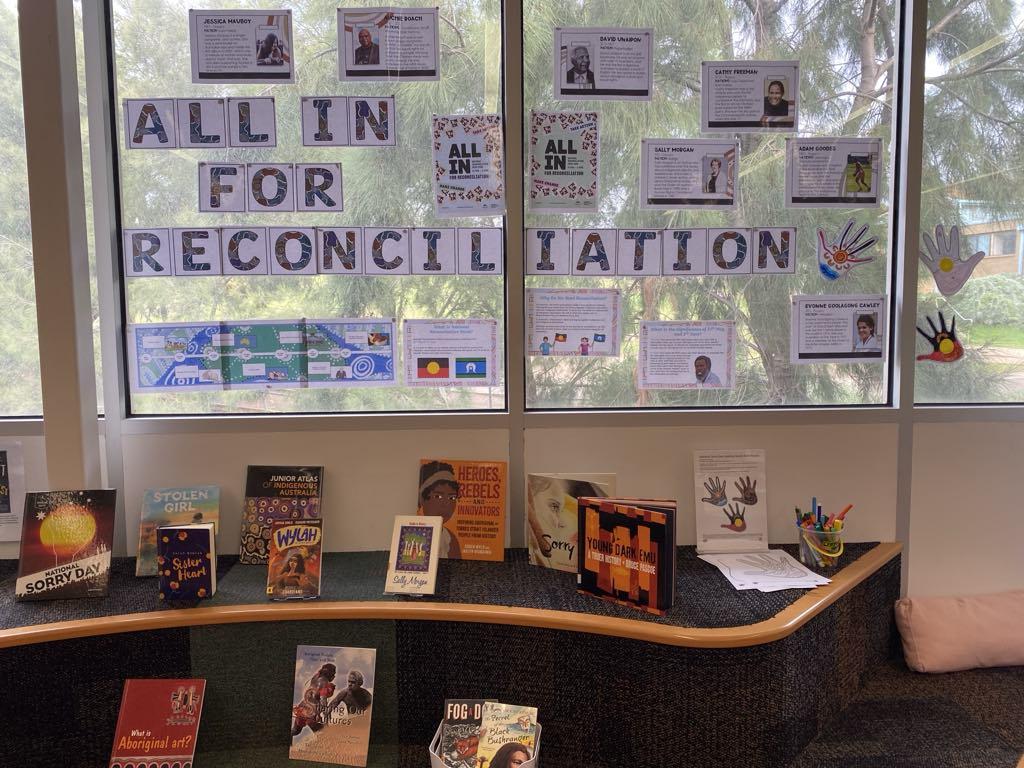
In the Middle School library, at lunchtime, students have been contributing to a collaborative “Healing Hands” colouring activity, with completed artworks added to a growing wall display in the library. The display symbolises unity, respect and our shared commitment to reconciliation, while giving students a visible and meaningful way to contribute to the week’s theme of All In.
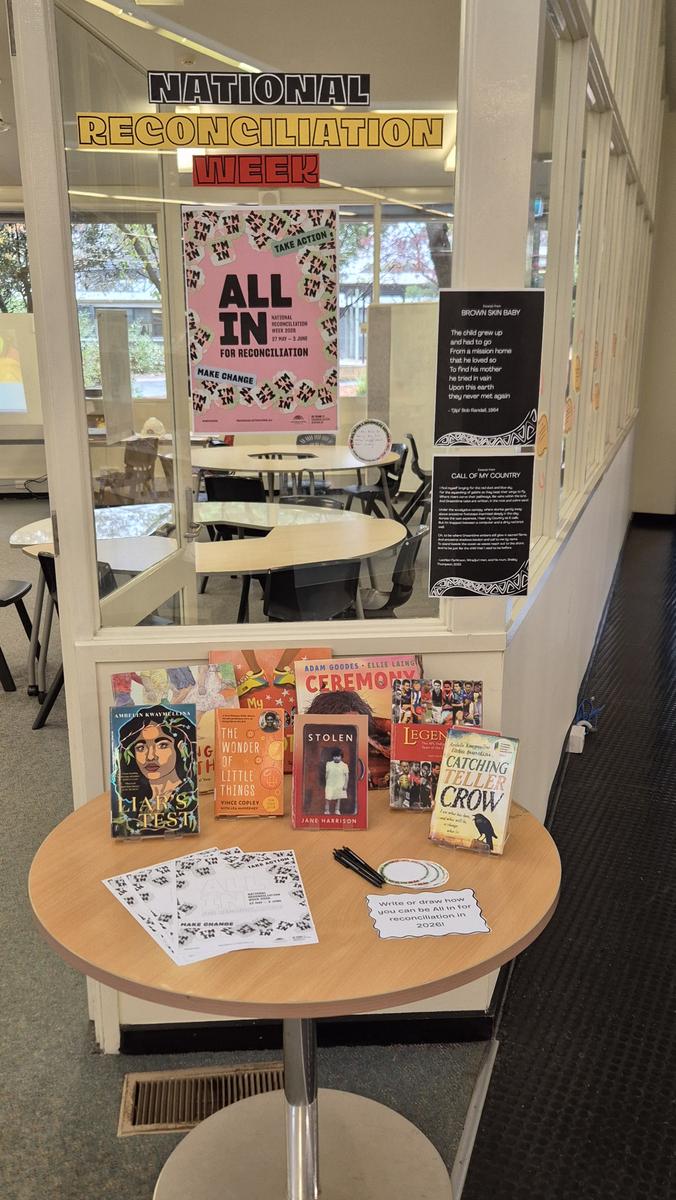
In the Senior School students were invited to interact with the book display by contributing a drawing or make a statement about how they could be “all in” for reconciliation.
Through picture books, fiction and non-fiction texts by Indigenous authors and illustrators, students are able to build empathy, challenge assumptions and appreciate perspectives that may differ from their own.
Libraries play an important role in creating spaces where stories are valued, voices are heard and learning is shared, and Reconciliation Week provides an opportunity to reinforce these values within our school community.
We encourage families to continue these conversations at home by reading, listening and learning together. Stories have the power to connect us, and through sharing them we can all play a part in building understanding, respect and reconciliation.