
Wellbeing


Michael Grose
9 June, 2026
The Resilient Student: Why Grit Matters More Than Grades
How to help your child persevere when school gets tough
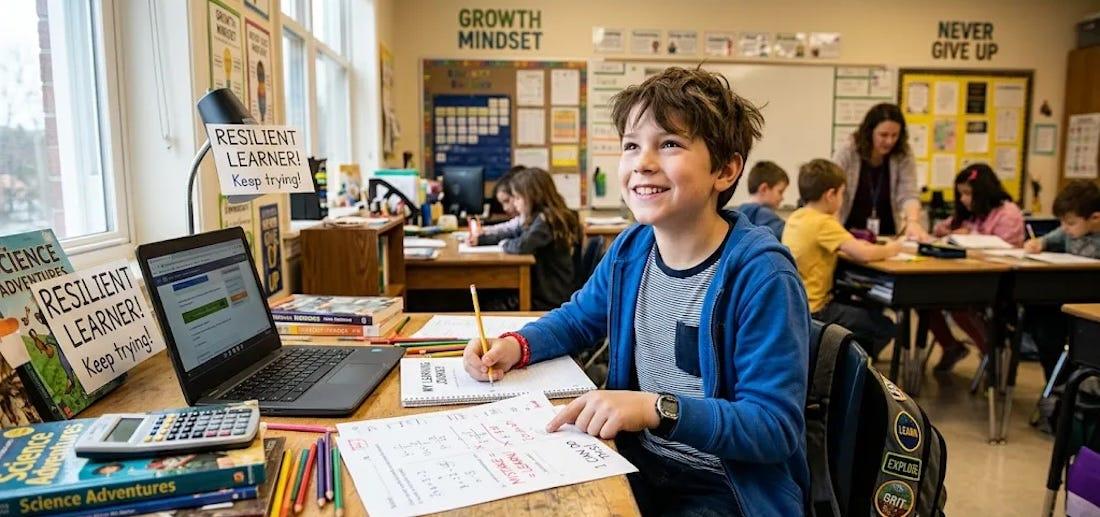
I’ve never a met a parent who doesn’t want their child to do well at school.
But sometimes their focus is wrong.
It’s all about results, which isn’t the best indicator of success.
Doing well at school isn’t just about grades.
True, long-lasting success is found in academic resilience, which empowers students to thrive despite challenges.
When facing setbacks, the growth mindset for kids often wavers, leading to avoidance.
“I’m not good at spelling, reading, or math’ often becomes their default reply, which helps them avoid taking learning risks. It also acts as a convenient defence mechanism to protect their self-esteem, but it severely restricts their potential.
However, by intentionally teaching perseverance at home, you can transform these moments into learning opportunities.
The development of a resilient learner helps ensure long-term learning success- way beyond your child’s current classroom.
It builds the emotional stamina necessary for life’s complexities.
By implementing practical strategies for student success, you ensure your child not only navigates the school year but also gains the confidence to tackle any hurdle.
You help them understand that intelligence is dynamic, not fixed, allowing them to view obstacles as temporary rather than permanent limitations.
This is why cultivating resilience is the most important gift you can give a primary-aged student; it builds the stamina they need to navigate not just the school year, but the complexities of life itself.
What is Resilience and Why Does It Matter?
Academic resilience is the capacity to maintain a positive, productive approach to learning, even when things become difficult.
It isn’t about being tough or ignoring feelings of disappointment; it’s about having the emotional tools to work through difficult feelings and find a solution.
This is vital in the early years of primary school, when children begin to form their identities as learners.
If they equate success only with being the smartest or the fastest, they will crumble the moment they encounter a task that doesn't come easily.
As psychologist Carol Dweck famously noted:
"The view you adopt for yourself profoundly affects the way you lead your life. It can determine whether you become the person you want to be and whether you accomplish the things you value."
Resilience acts as a buffer against anxiety.
It allows a child to stay engaged, ask for help, and ultimately, find satisfaction in the effort of learning, not just the result.
Shaping a Resilient Learner at Home
As a parent, you are the architect of your children's learning environment. Here are some ideas to help you shape the psychological environment that builds resilience needed for learning:
1. Praise the Process, Not the Talent
When your child brings home a great result, resist saying, "You’re so clever!"
Instead, try, "I noticed how hard you worked on that draft," or "You really stuck with that math problem until you figured it out."
By focusing on effort, you teach them that their hard work drives results rather than their natural ability.
2. Normalise the Struggle
Don’t jump in to rescue your child the moment they feel frustrated.
When they hit a wall, encourage them to sit with the struggle for a moment to build the tolerance required for deeper learning.
This small pause allows their brain to switch from emotional reactivity to logical problem-solving.
3. Model Your Own Fails
Children are acute observers of everything we do, including how we handle our own mistakes.
Use this to your advantage to teach them how you approach challenges.
If you are struggling with a project, talk through your thought process aloud: "This is frustrating, but I’m going to take a break and try a different approach. First, I need to make a list, then……”
Hearing you articulate your strategy gives them a roadmap to follow when they hit roadblocks.
4. Encourage “Yet”
If your child says, "I can’t do this," add the word "yet” to the end of the sentence.
It’s a small linguistic shift that opens the door to growth and reframes the current challenge as a temporary hurdle rather than a permanent limitation. It’s also something you can try yourself, when you’re tempted to say in frustration, “I just can’t do this……. yet!”
5. Create a Supportive Debrief Ritual
Instead of just asking, "How was your day?", ask, "What was the most challenging thing you encountered today, and what did you learn from it?"
This regular check-in normalises the idea that challenges are a healthy, everyday part of learning and helps children develop the reflective capacity needed to overcome future obstacles.
Final thoughts
Building a resilient learner doesn't happen overnight; it is a gradual process of shifting focus from the destination to the journey.
By normalising struggle, celebrating effort over innate ability, and encouraging self-leadership, you empower your children to face the academic world with confidence.
The goal isn't to prevent your child from failing, but to ensure they have the courage and tools to bounce back stronger every single time.
The New Digital Parenting Guide for Primary School-aged Children
Struggling with kids' screen time? Discover how to guide your child through the digital world with confidence.
Michael Grose
16 June, 2026
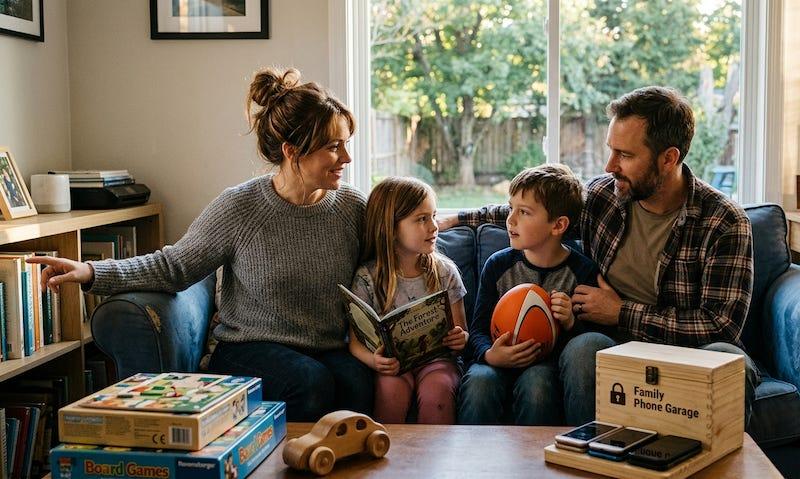
If you feel like you are fighting a losing battle with your children over digital screens, you are not alone.
In 2026, the challenge of managing screen time has become the single most pressing concern for parents.
Your anxiety is well-founded.
Concerns about your digital screens and your child’s attention span, emotional regulation, and safety are backed by significant research.
A major 2025 meta-analysis published in the Psychological Bulletin confirms a “vicious cycle” between excessive screen use and emotional struggles.
But it’s the opportunity cost of increased screen time that should concern us all.
When kids use screens to manage anxiety or boredom, they miss out on the vital face-to-face interactions, physical activity, and deep sleep necessary for healthy brain development.
Furthermore, research from the JAMA Network consistently links high levels of screen exposure to disrupted sleep and, consequently, lower emotional resilience.
And here’s the rub.
You are parenting in an era in which social media and AI safety concerns evolve faster than authorities can set boundaries.
Luckily, there’s a timely shift happening
But it’s not all gloom and doom.
There’s a quiet evolution underway, with savvy parents moving away from an all-or-nothing approach to digital media.
They realise that screens are not going away, so their goal is no longer to eliminate them, but to manage the opportunity cost of using screens.
It’s not about how many minutes a child spends on a device, but about what activities that time displaces.
If your child’s screen time is crowding out sleep, outdoor play, and family conversation, you have a problem.
So the most successful parents are no longer just policing minutes; they are curating their home environment to make real-world activities easier, fun and more accessible.
Proven strategies for 2026 and beyond
Reclaim the balance in your home by shifting from reactive rule enforcement to proactive activity structuring.
1. Prioritise sleep hygiene
Sleep is numero uno for healthy child development.
It’s the single most powerful tool you have to support your child’s behaviour, mood, and cognitive health.
The data is irrefutable: blue light and digital stimulation before bed have a measurable negative impact on brain health.
Your solution: No digital stimulation at least 45 minutes before bedtime. Make the bedroom a device-free sanctuary and move all charging stations to a common area, like the kitchen, overnight.
2. Create non-negotiable digital-free spaces
Out of sight, out of mind is the idea here.
There’s no doubt that visibility breeds desirability, especially when it comes to screens and technology.
Designate specific zones—such as the dinner table or the car—as tech-free.
These are non-negotiable windows where the focus is entirely on conversation and presence.
Your solution: Protect these spaces, which provide your child with the consistent, device-free interaction they need to develop social nuance and emotional intelligence.
3. Collaborate on digital boundaries
I’ve found that most kids will stick to rules they’ve had a say in making. This applies to bedtimes, family routines, and yes, setting digital boundaries.
So, instead of imposing usage rules from above, involve your child in the process.
Ask them, “What is a fair way to ensure we have enough time for outdoor play and family games this week?”
Consider conducting a family meeting to discuss digital boundaries.
When children have a hand in creating their digital structure, they are far more likely to respect it.
Your solution: Stick to agreed boundaries and revisit them regularly. Rather than abandoning all hope if things aren’t going to plan, say to your children, “These boundaries aren’t working. What’s the problem? How can we fix it?” Keep working at getting things right.
4. Model the digital behaviour you want
Kids are astute observers of adult behaviours, especially those they live in close quarters with.
That can be a scary prospect as they see all our less desirable behaviours, as well as the behaviours we’re proud of.
If we are constantly distracted by our own devices, our instructions for them to “get off the screen” will inevitably ring hollow.
Conversely, modelling offers adults a valuable chance to influence children's habits in various areas, including their use of digital technology.
Your solution: Demonstrate that you, too, can step away from the digital world, and show them that a richer, more engaging life awaits them offline.
5. Use tools as support, not a crutch
There’s no doubt that the digital landscape just got a little easier in Australia, with new social media laws that recently made it illegal for children under 16 to open accounts.
This world's first social media ban for under-16-year-olds sends a powerful message to social media companies, and supports parents who increasingly feel overwhelmed by their kids’ social media use.
For younger children, parental controls and router-level scheduling are excellent tools for managing the flow of digital content, but they are only effective when used alongside open, honest conversations.
Use these tools to automate the boundaries so you don’t have to be the “bad guy” every single night.
But it is you who needs to do the real monitoring, guiding and influencing.
Your solution: Take a real interest in what your kids are doing online so that you can stay in the digital parenting game.
6. Provide attractive, fun, real-world alternatives
If there are alternatives to the digital world that are either boring or non-existent, then it’s little wonder screens have a powerful pull.
I’ve seen this first-hand with children in my family.
With few fun options, they’ll opt for a screen every time.
So, it’s out with the art materials, the sports balls, the board games and other activities they like, and on with the energy to join them, even if just to get them started.
Your solution: Offer them real-world activities that cater to their interests and provide the right level of challenge to keep them engaged. And if they don’t take your offer? Well, let’s just say some things in families are non-negotiable, and maybe 30 minutes or so of non-tech play a day could be one of those.
Final thoughts
Parenting in the digital age is not about being a perfect gatekeeper; it is about being a steady, present leader.
It’s up to you to set the climate for smart digital use in your own home.
Focus on your connection with your child. Prioritise real-world play and keep your expectations consistent.
Ensure that your child learns to use technology as a tool for growth, rather than letting it become the default setting for their life.