
Teaching & Learning
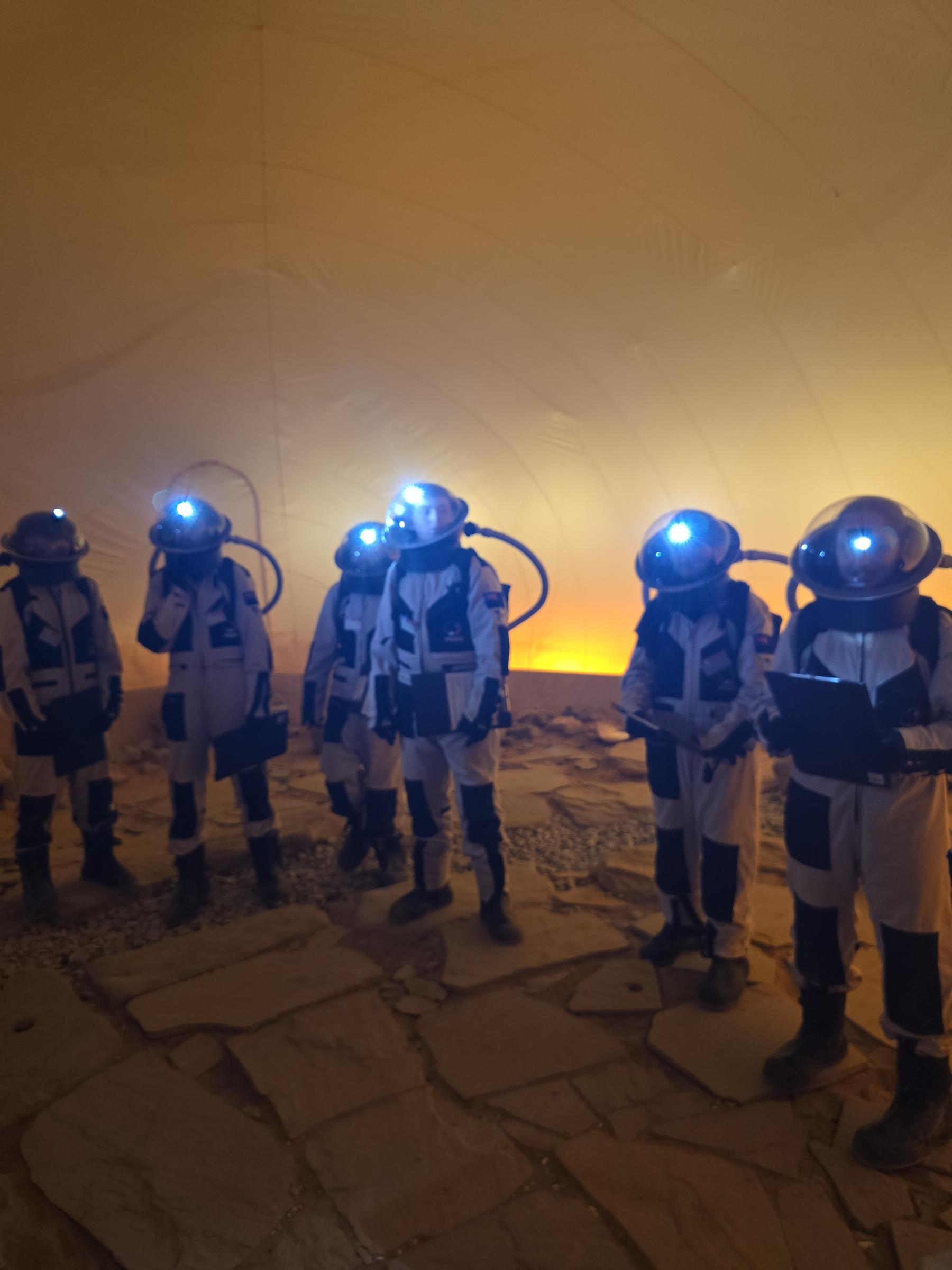
Term 2 Reflections:
As we come to the end of another busy and successful term, I would like to thank all staff for their ongoing dedication and commitment to our students.
This term has included a significant focus on assessment and learning growth across the college. Our Year 9, 10, 11 and 12 students completed examinations, demonstrating their learning and progress across a range of subjects and of course our Year 10 subject expo.
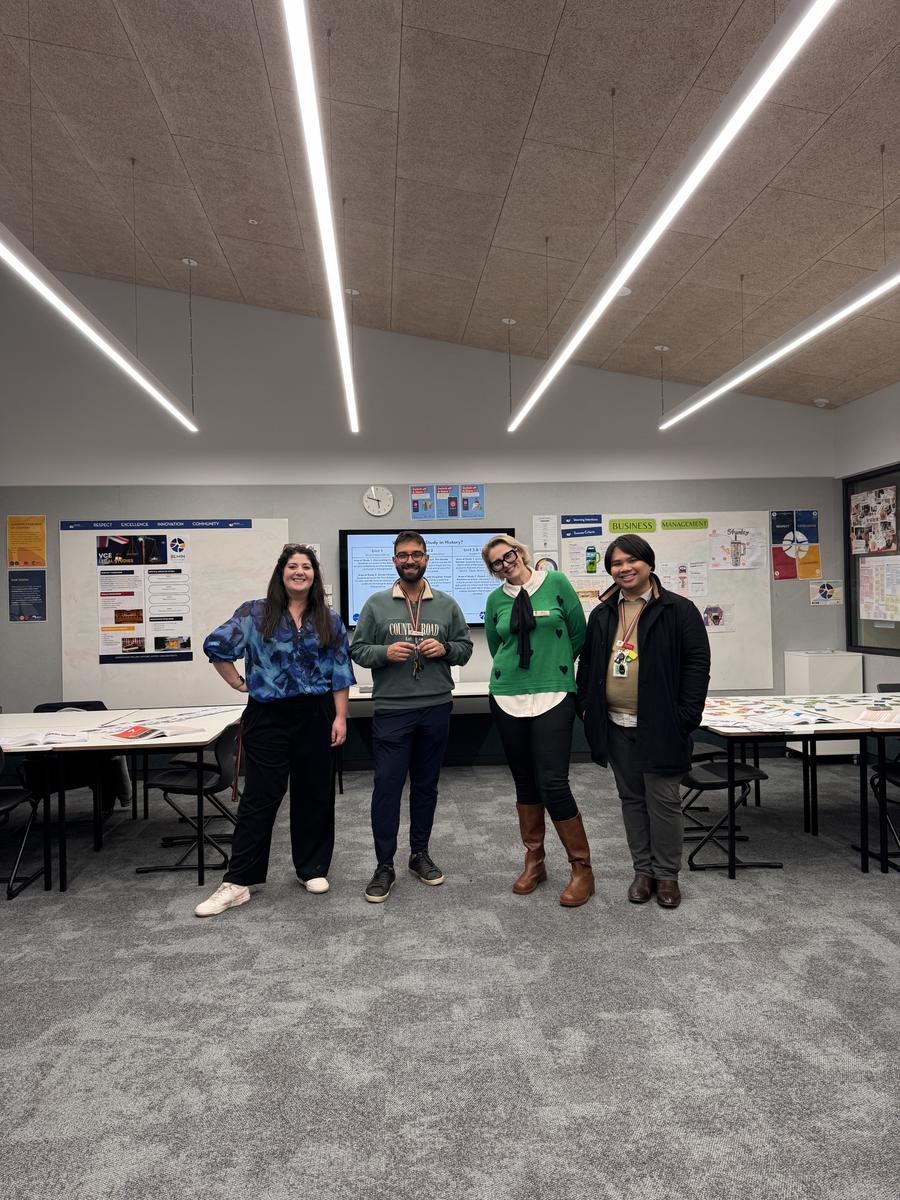
Humanities Teaching Team
Humanities Teaching Team
A particular highlight was seeing our Year 12 students sit their very first GAT, an important milestone in their VCE journey. We were incredibly proud of the maturity, resilience and effort shown by our students throughout the examination period.
Across our junior years, students have continued to build strong foundations in literacy, numeracy and the learning behaviours that support success in senior school and beyond. It has been wonderful to see students engaging in their learning, exploring electives, and developing confidence as learners as the year progresses.
Thank you to our teachers and education support staff who worked tirelessly behind the scenes to prepare assessments, support students, and create engaging learning experiences throughout the term.
As we head into the break, I encourage everyone to take the opportunity to rest, recharge and spend time with family and friends. I wish all members of our community a safe and relaxing holiday and look forward to another successful term ahead.
Sandale Ambegoda
Assistant Principal- Teaching and Learning
Building Teacher Capacity
At Bemin Secondary College, we are committed to supporting the growth and development of our early career teachers as they begin their journey in the profession.
This year, I have had the privilege of working closely with our graduate teachers through a dedicated professional learning program designed to support them in navigating the transition from university to the classroom. Together, we have explored the purpose and impact of teaching, engaged with professional readings, podcasts and videos, and reflected on what it means to be an effective educator in today's learning environment.
A key focus of our work has been preparing our graduate teachers for the Victorian Institute of Teaching (VIT) inquiry process. Through regular collaboration, reflection and goal setting, our graduates are developing the skills needed to analyse evidence, refine their practice and continually improve outcomes for students.
This work is strengthened by the support of our broader leadership team. Our Assistant Principals and Leading Teachers play an important mentoring role, sharing their expertise, providing guidance and helping our graduates build confidence as they establish themselves in the profession.
It was wonderful to recently showcase this work during a visit from the Department of Education, who acknowledged the strong support structures in place for our early career teachers. The feedback reinforced the importance of investing in our people and creating opportunities for ongoing professional growth.
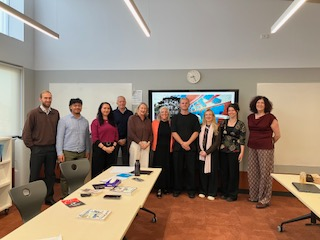
Watching our graduate teachers develop their practice, ask thoughtful questions and embrace new learning has been incredibly rewarding. Their enthusiasm, dedication and commitment to our students are already making a positive contribution to the Bemin community, and I look forward to continuing to support them as they progress through their teaching careers.
Kate Phillips
Assistant Principal- Building Teacher Capacity
Media
Year 10 Content Creators (Media)
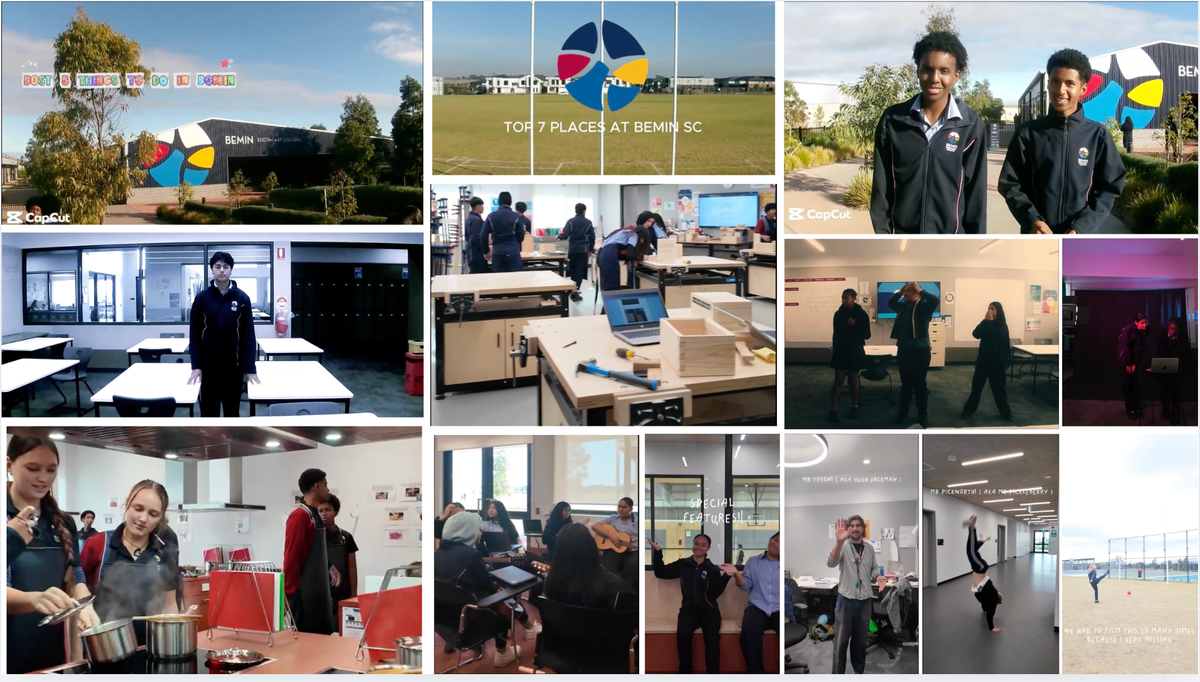
This term, Year 10 Content Creators explored the role of media in society, investigating Australia's new social media age restrictions and discussing how creators and audiences can engage with media ethically and responsibly. Students analysed how social media content is designed to engage audiences before applying their learning to create their own short-form media products. Drawing on media conventions and production techniques, students produced a range of engaging videos including school tours, music videos and short films that promoted our school values.
Year 11 VCE Media
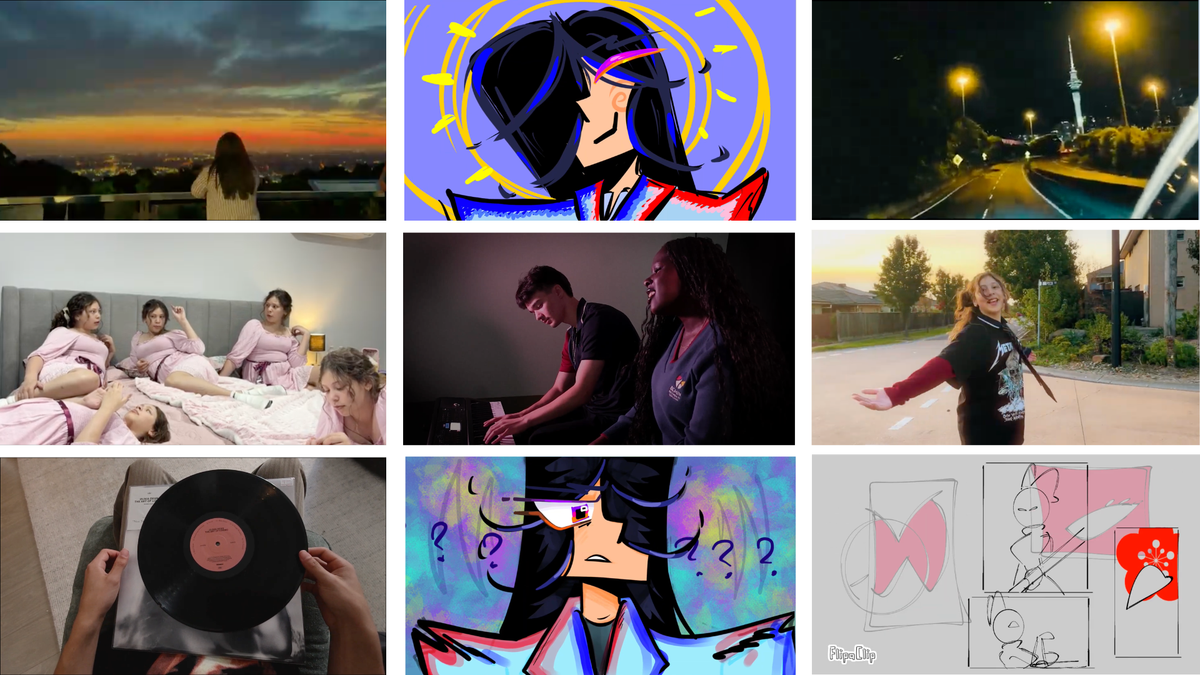
Year 11 Media students have continued to develop their production and analytical skills through a range of creative and theoretical tasks. Students cast friends and family, and produced music videos that showcased impressive creativity, including the use of animation, visual effects and thoughtful editing techniques. They also explored Australian stories through the work of photographer Michael Cook, music videos by Briggs, the children’s classic, Bluey and the streaming series Robbie Hood.
We are now excited to have begun Unit 2 looking at the concept of genre and director style studying film directors Wes Anderson and Edgar Wright. Students will soon study a director or their own choice and then draw inspiration for their next productions.
Year 12 VCE Media
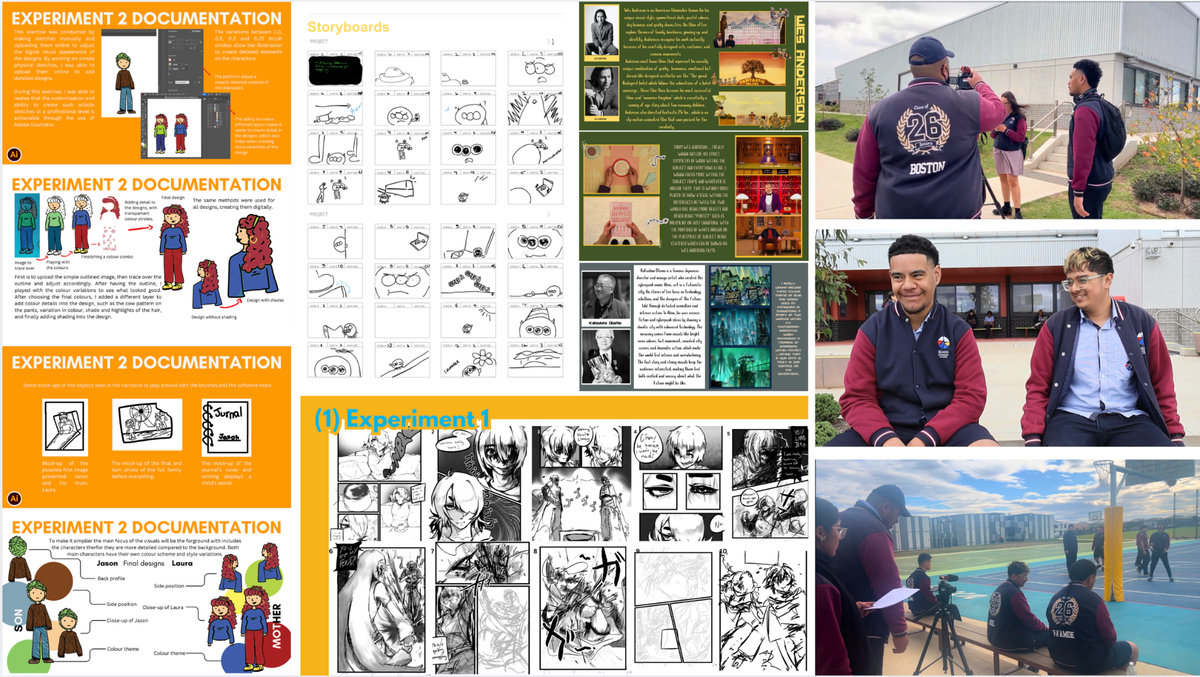
Year 12 Media students completed their Unit 3 studies this term, concluding their exploration of narratives and contexts through a close study of Guillermo del Toro's Frankenstein. They have also spent the term researching, developing, experimenting and refining their own media productions, completing extensive pre-production planning in preparation for production.
In recent weeks, students have begun bringing their concepts to life across a diverse range of media forms, including short films, photography series, graphic novels and an ambitious hybrid production featuring an interactive web-based narrative. Boston has recently commenced filming his Unit 4 project, set at school, with fantastic performances from VM students Axel and Kevon and enthusiastic support from Year 12 study session volunteers who helped bring scenes to life. The production has also provided a valuable opportunity for Media students to experience the realities of a film shoot, learning industry practices such as making production calls to begin and end recording, using an Assistant Director to coordinate background action and prevent interruptions to shots, conducting safety briefings, and carefully monitoring continuity between takes.
Thank you to all students who have generously contributed their time and talents to support their peers' creative visions. We look forward to seeing these exciting productions completed and shared next term.
Clare Wood
Arts-Media (Teacher)
ART
Year 9 Creative Communications
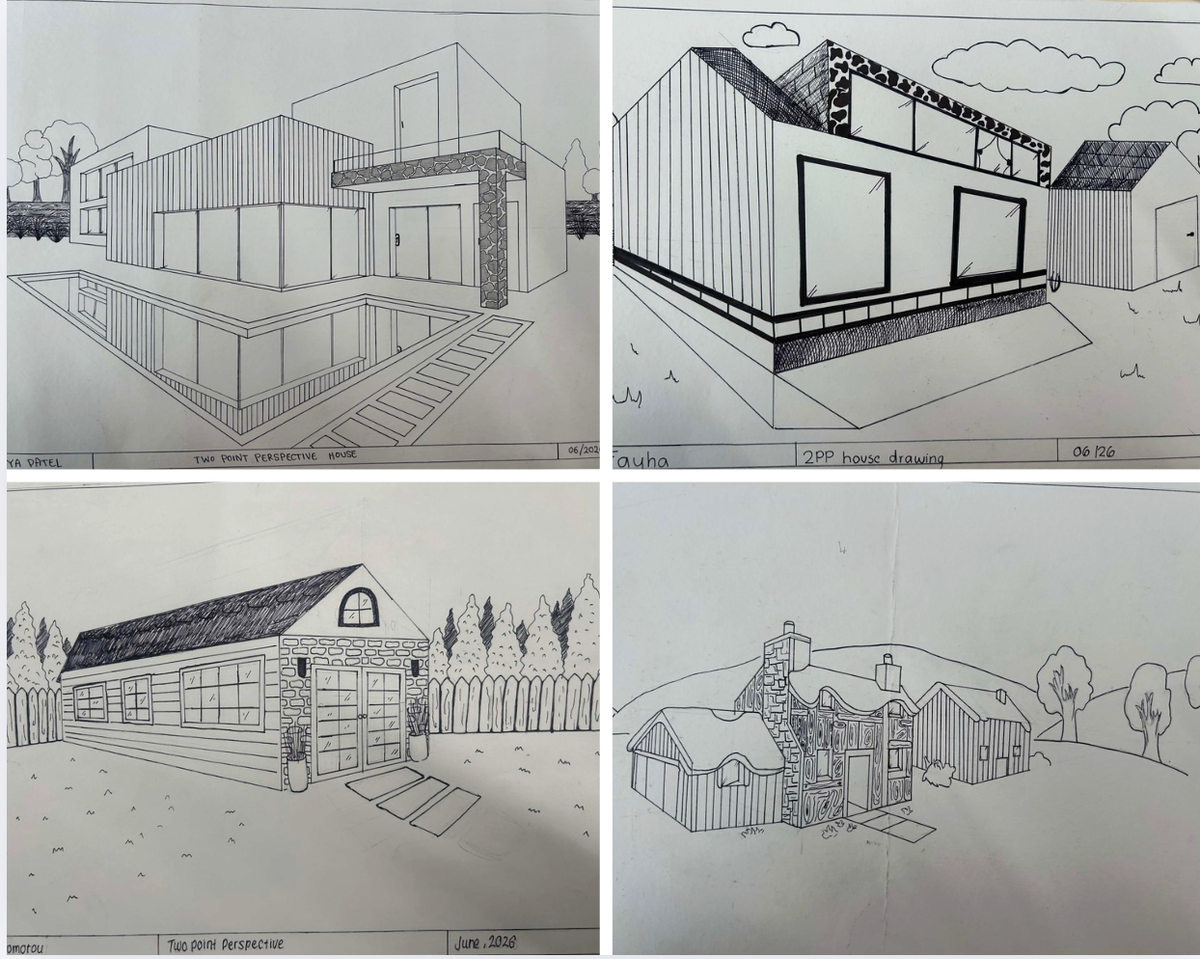
This term, Year 9 Creative Communication (design) students have been exploring the world of perspective drawing. To complete the unit of work, students were able to create their own personalised two-point perspective house, including rendering and texture detail.
Take a look at some of the amazing works in progress before adding fine-liner for a final submission.
Year 11 Art Making and Exhibiting
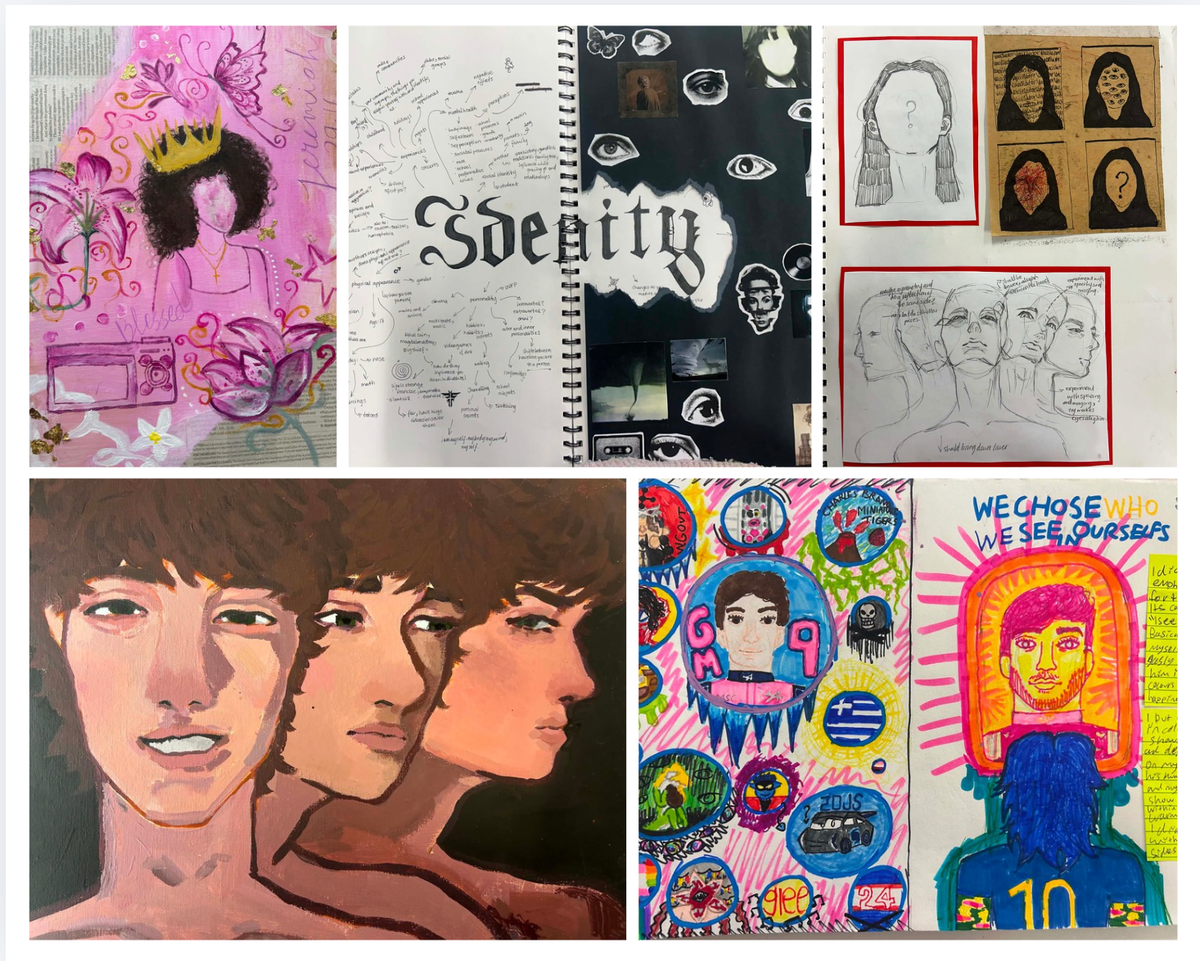
Year 11 Art students have completed their Unit 1 folio work to an excellent standard, exploring themes of identity in their work. Students had full direction of how they chose the explore the theme of identity, some exploring their own personal culture and others exploring personal interests or interpretation of what Identity means to them.
Take a look at some of the excellent art works and folio pages created from the class this term.
Year 12 Art Making and Exhibiting
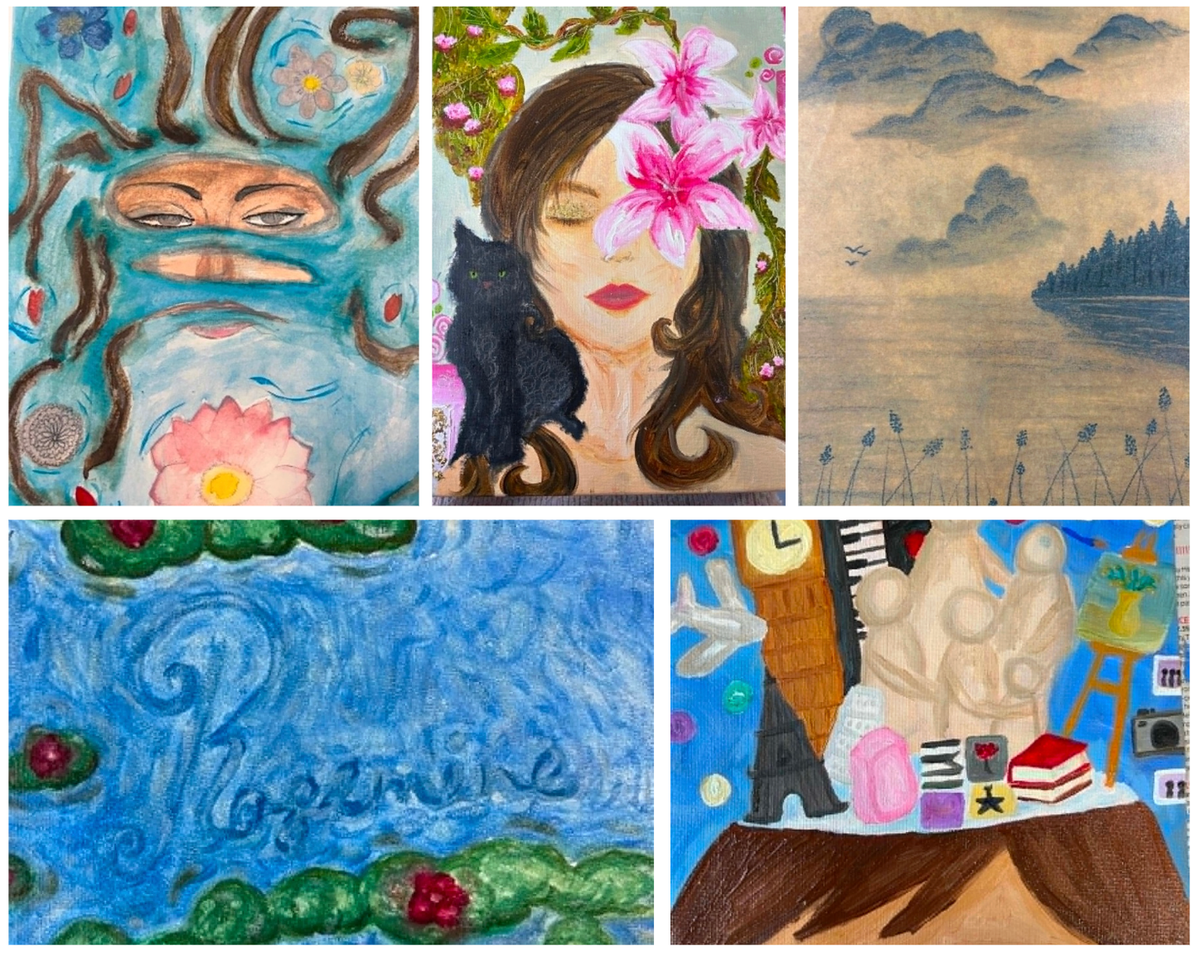
Year 12 Art students have completed Unit 3 with a presentation critique, where each student shared 10x folio pages of their work and 2x artworks created and was provided feedback about their progress by their peers. It was fantastic to see such well throughout our presentations and discussions of the artworks and ideas developed throughout this year. This critique has helped guide and inform the class to generate their unique final artworks that they will be carefully working on over the months in Term 3.
We look forward to seeing what they develop. For now, here are some of their excellent trial artwork ideas created.
Claudia Fadljevic
Learning Specialist
Visual Communication & Design
Mary Taylor & Aoife Blake- VCD Teachers
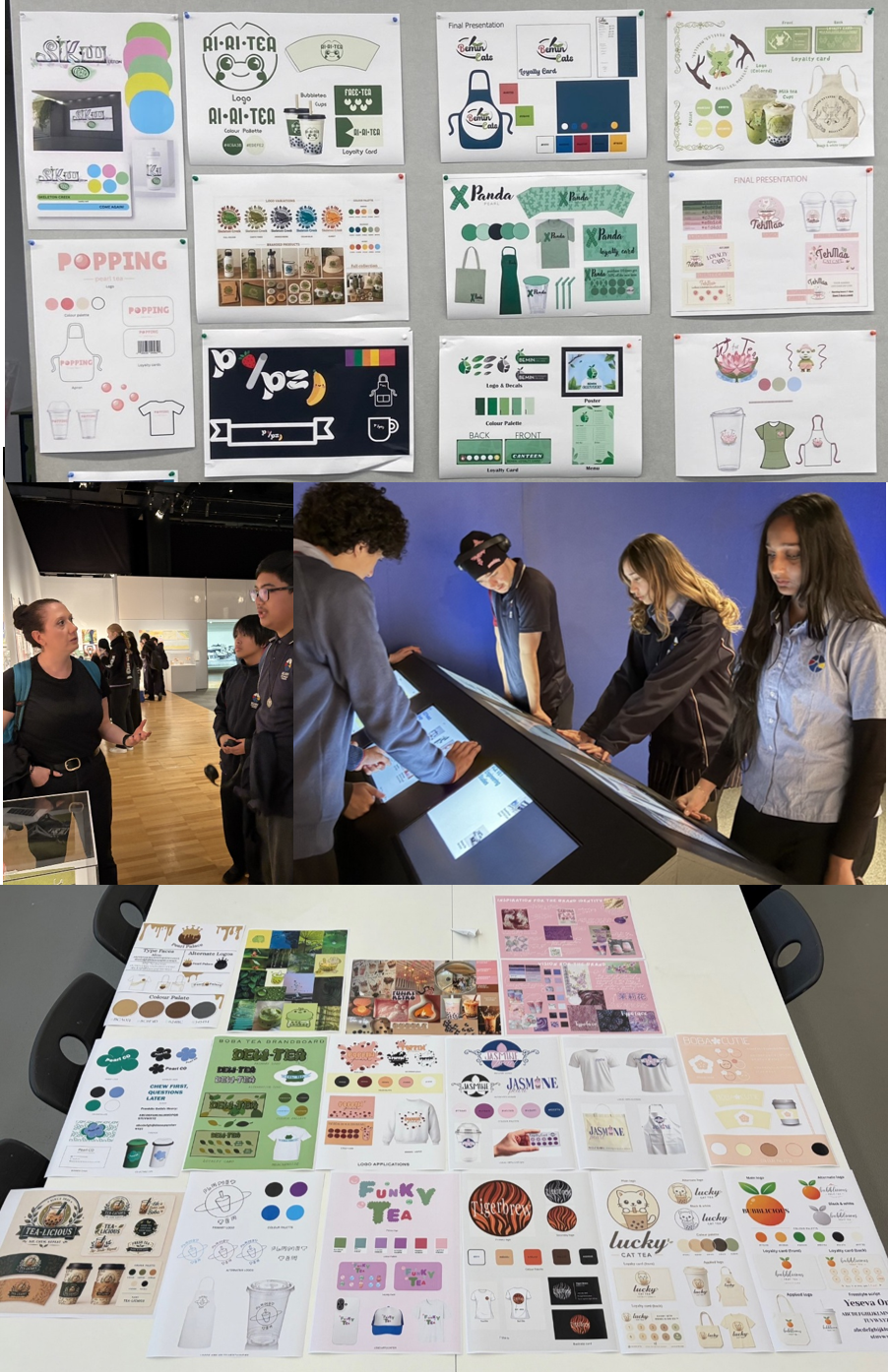
Year 11 Visual Communication Design (VCD) students were lucky enough to visit the Top Designs Exhibition at Melbourne Museum this term. The Exhibition showcases the very best work by Year 12 Art, Design, Media and Technology students in Victoria. Students were inspired seeing all the wonderful designs and were able to get some really great ideas for their own folio work.
Take a look at some photos from the excursion as well as their work created this semester.
Year 12 Visual Communication Design
Mary Taylor- VCD Teacher
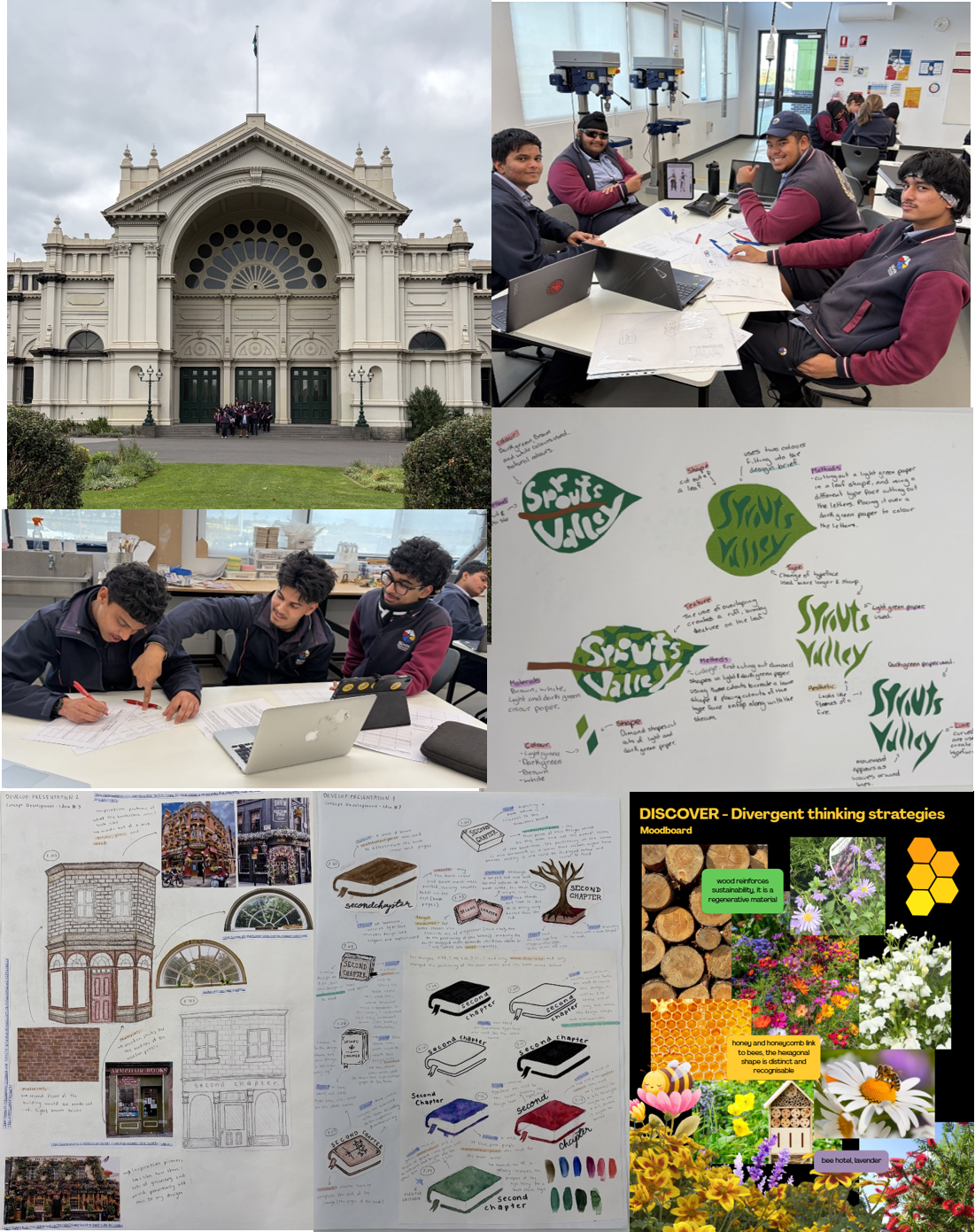
Year 12 Visual Communication Design students were also lucky enough to visit the Top Designs Exhibition at Melbourne Museum this term. The Exhibition showcases the very best work by Year 12 Art, Media, Design and Technology students in Victoria. Students gained so many ideas for their own Major SAT Folio pages as well as inspiration for what could be done for their final solutions.
Take a look at the class outside the Exhibition Building as well as some of the students involved in critiquing each others’ work as well as some examples of high quality folio pages they have already produced.
Year 7 Visual Art
Emma Woodhams- Bertozzi & Alannah Smith- Art Teachers
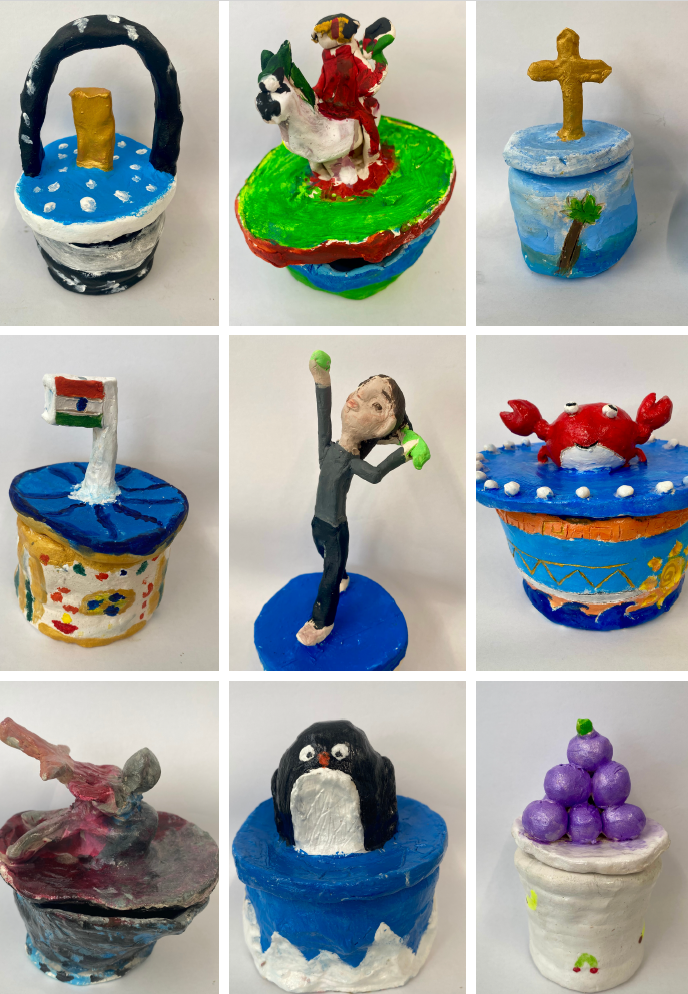
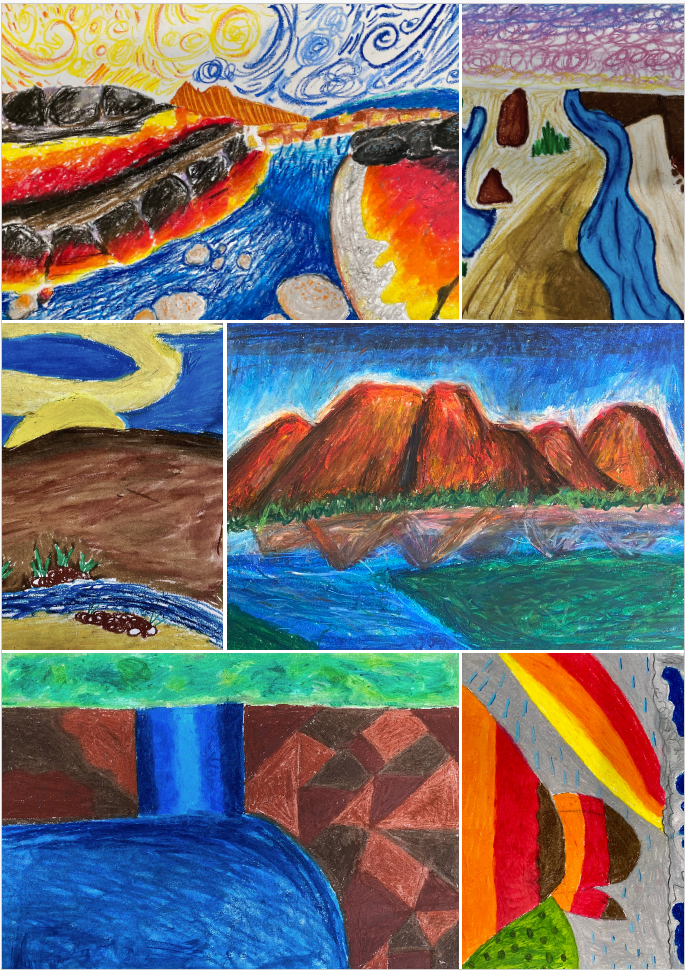
Year 7 Art students have been exploring the Australian landscape through abstract oil pastels before moving into ceramics. Both units drew inspiration from First Nations artists, with the first creating space for students to develop their own understandings of Place and Country.
The second unit, inspired by Western Arrernte artists the Hermannsburg Potters, focused on storytelling through intricately painted ceramics. Students used this as an opportunity to share their own stories, expressing personal interests and elements of their cultural identities.
Year 8 VCD & Visual Art
Aoife Blake,Emma Woodhams- Bertozzi & Alannah Smith- Art Teachers
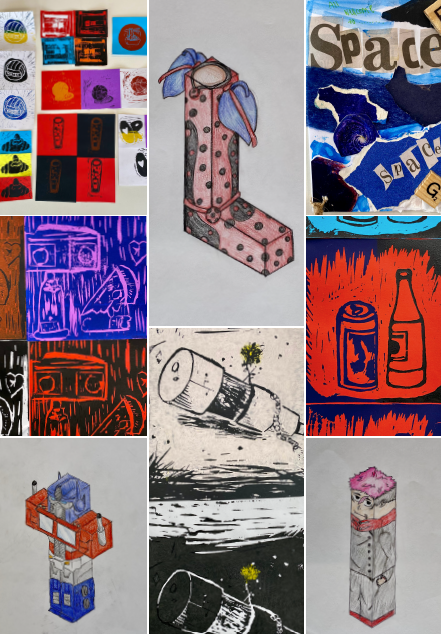
Year 8 students have explored a wide range of Visual Art methods, techniques and materials this semester. The first unit focused on Visual Communication Design (VCD), and asked students to great a #D drawing of their favorite character. We focused on understanding key characterics and scaffolded the process of turning a two dimensional drawing into a three dimensional form using orthogonal drawing and isometric drawing. Students applied mathematical thinking and focused on precise ruler work to great unique and detailed character designs and three dimensional drawings.
The second unit focused on exploring art movements with a focus on Pop Art. In this unit students explored negative and positive space through the method of Relief printing using the technique of Lino Printing to create unique translations of objects of significance to them such as telescopes to look out towards space or album covers of their favourite bands. Students focused on working in response to everyday objects as a point of inspiration.
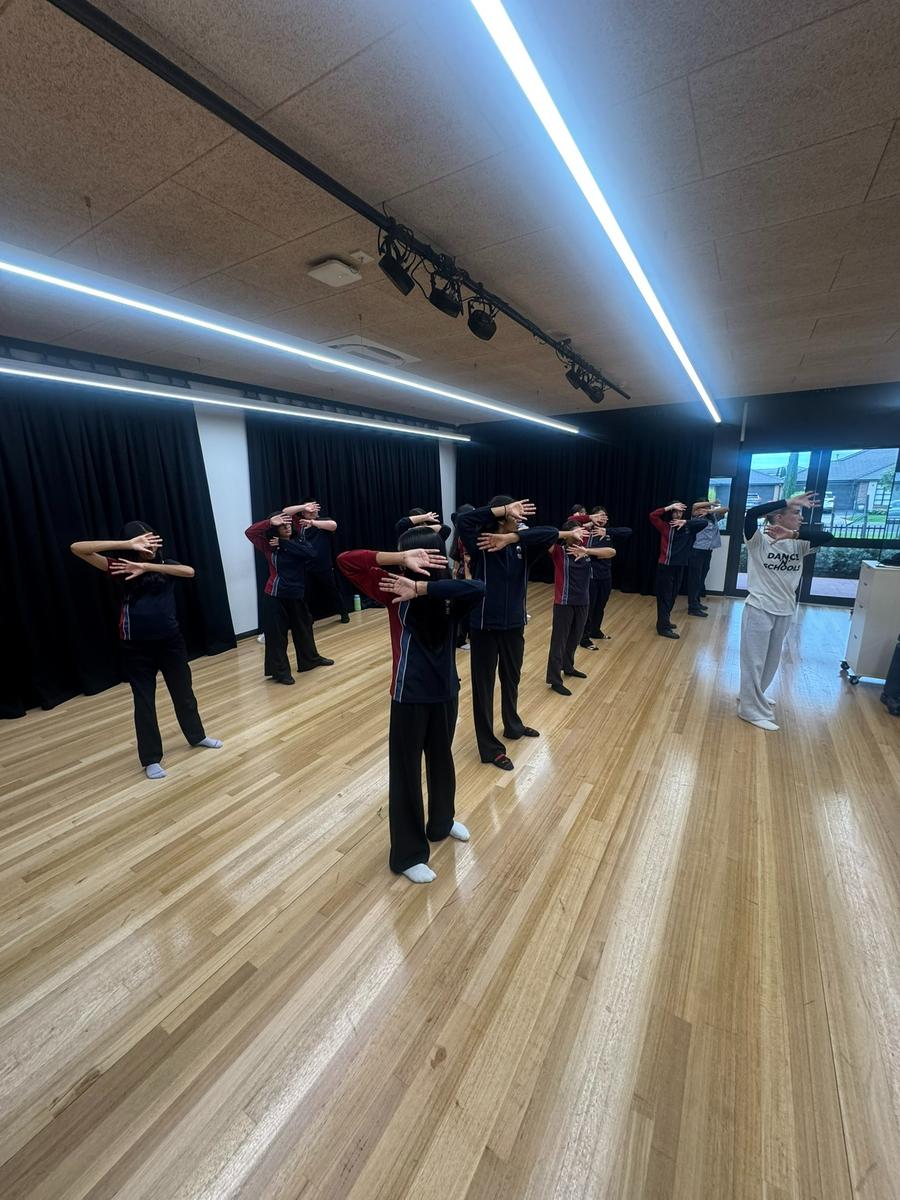
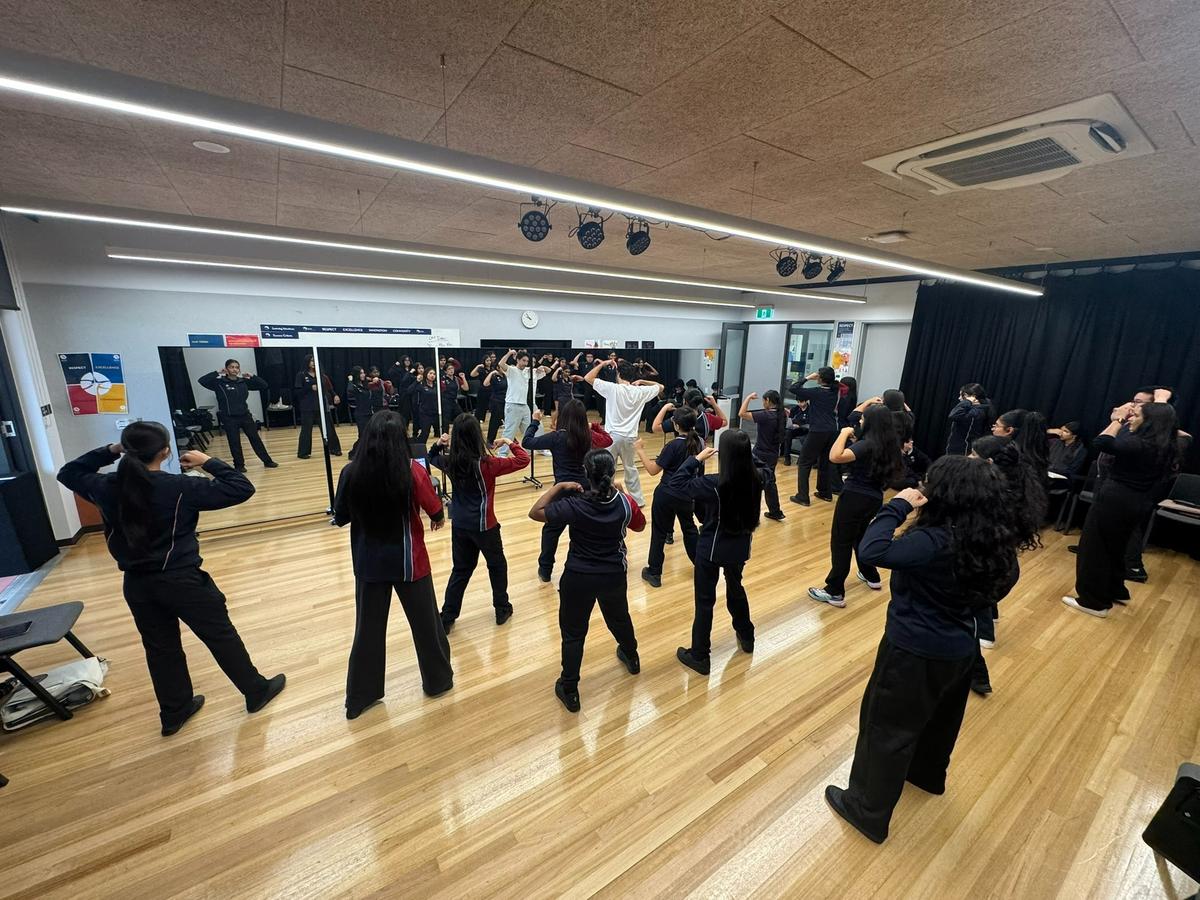
Dance
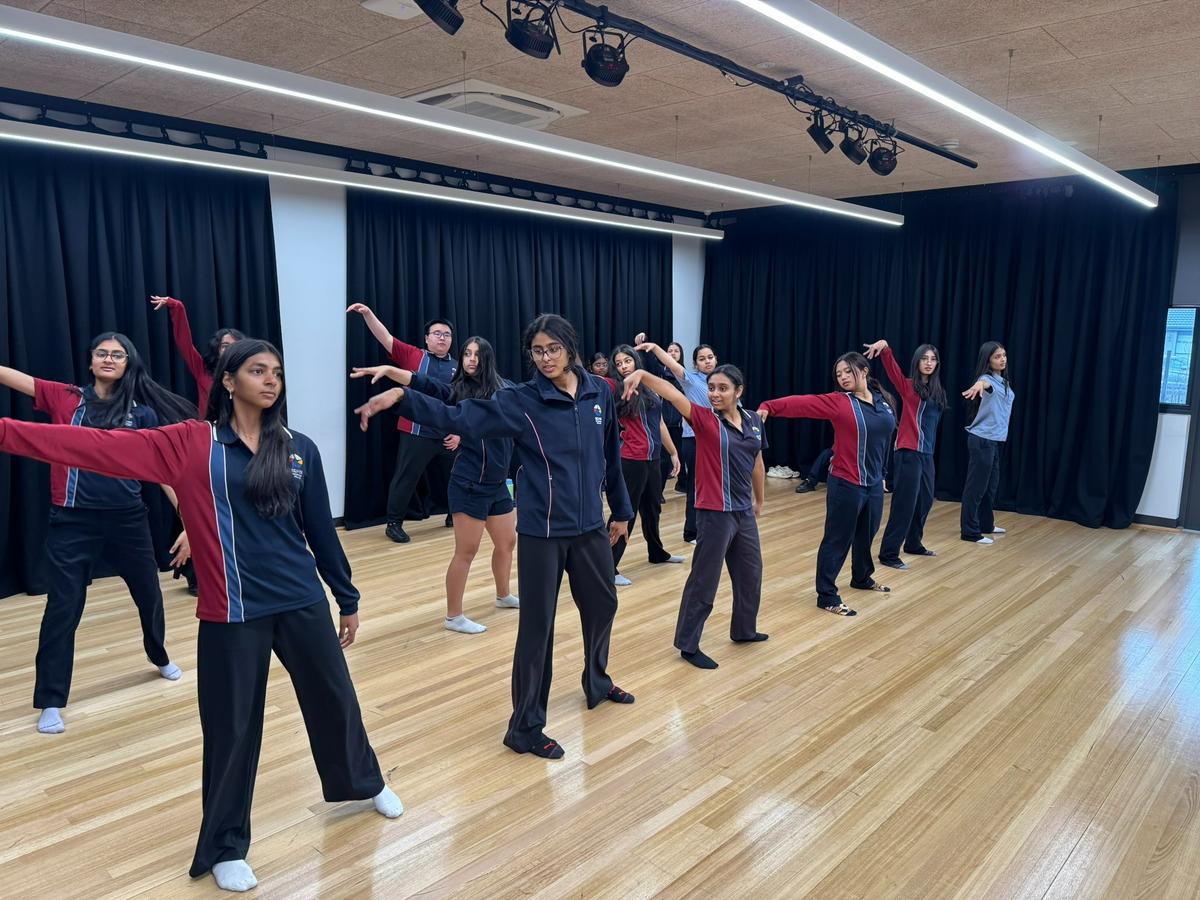
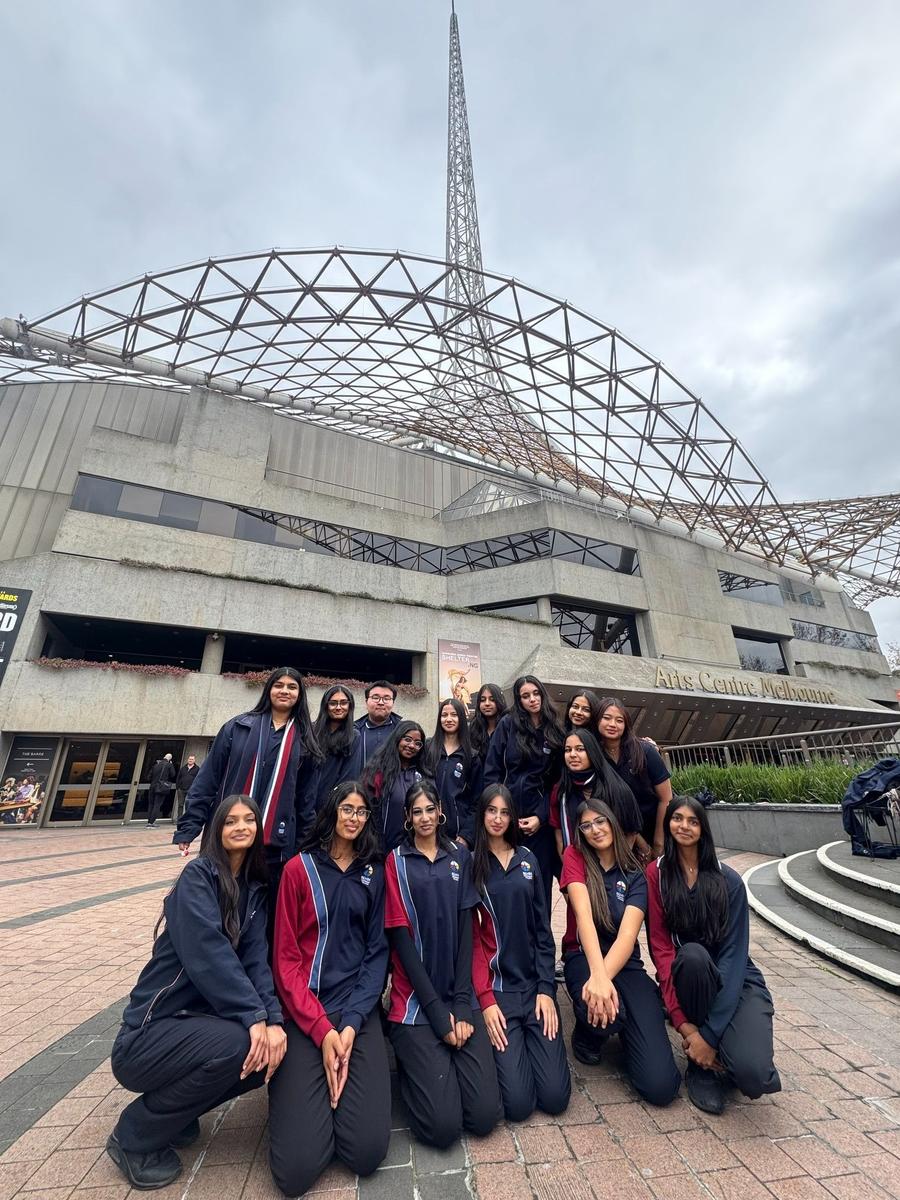
This semester we launched our very first Dance subject and students have been able to explore the elements of dance, choreographic devices and performance skills, gradually building their confidence and creativity as they developed their own original dance routines. Along the way, students participated in two workshops led by professional choreographers, gaining valuable industry insights and practical experience. To further enrich their learning, students attended Bangarra Dance Theatre's Sheltering at Arts Centre Melbourne this week, providing a unique opportunity to experience contemporary First Nations dance storytelling. It has been fantastic to see the enthusiasm and commitment of students throughout the semester, making the inaugural year of Dance at Bemin a great success.
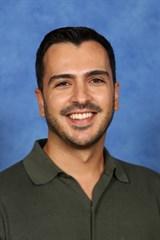
Daniel Ridolfi
Dance teacher
English
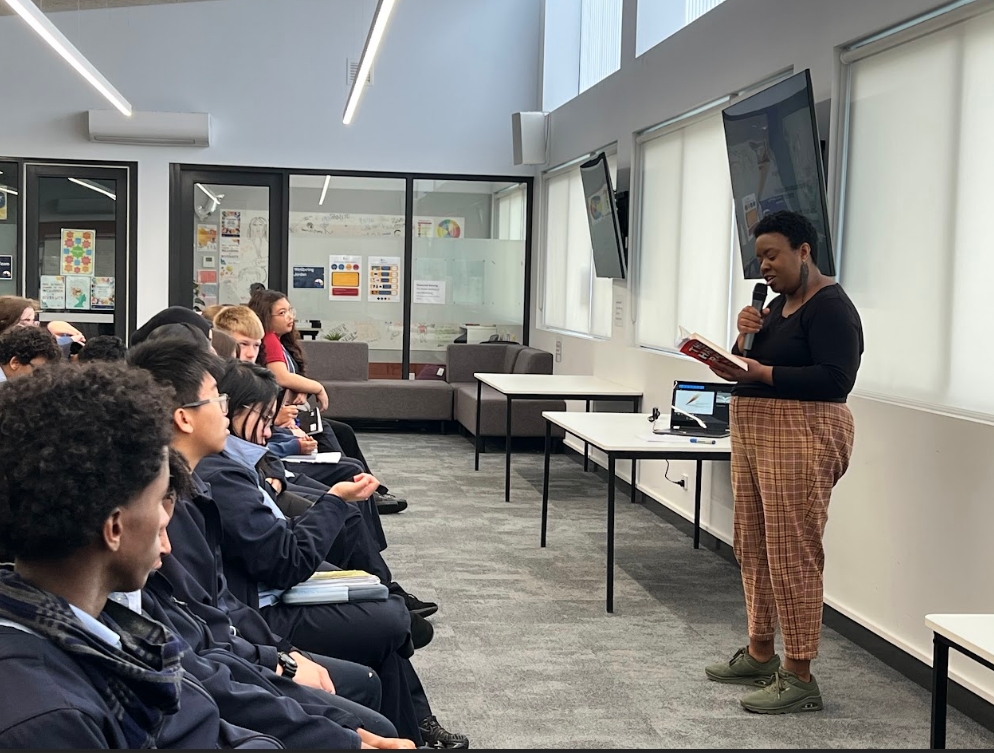
Year 10 Incursion: Visit from author Maxine Beneba Clarke
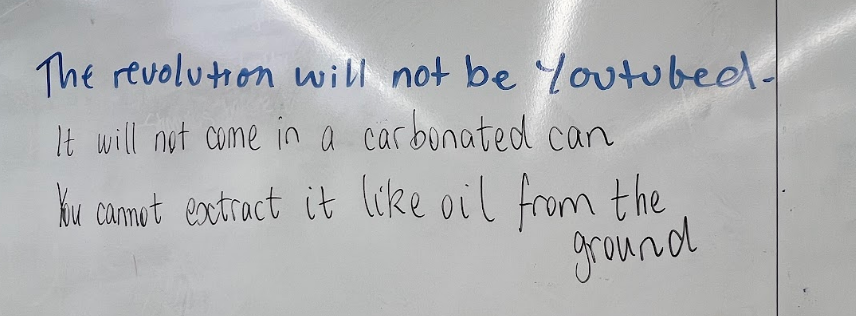
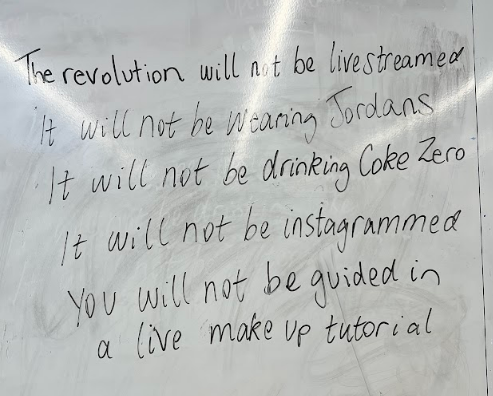
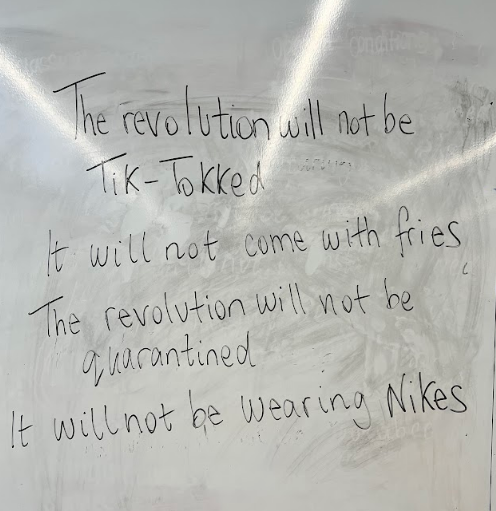
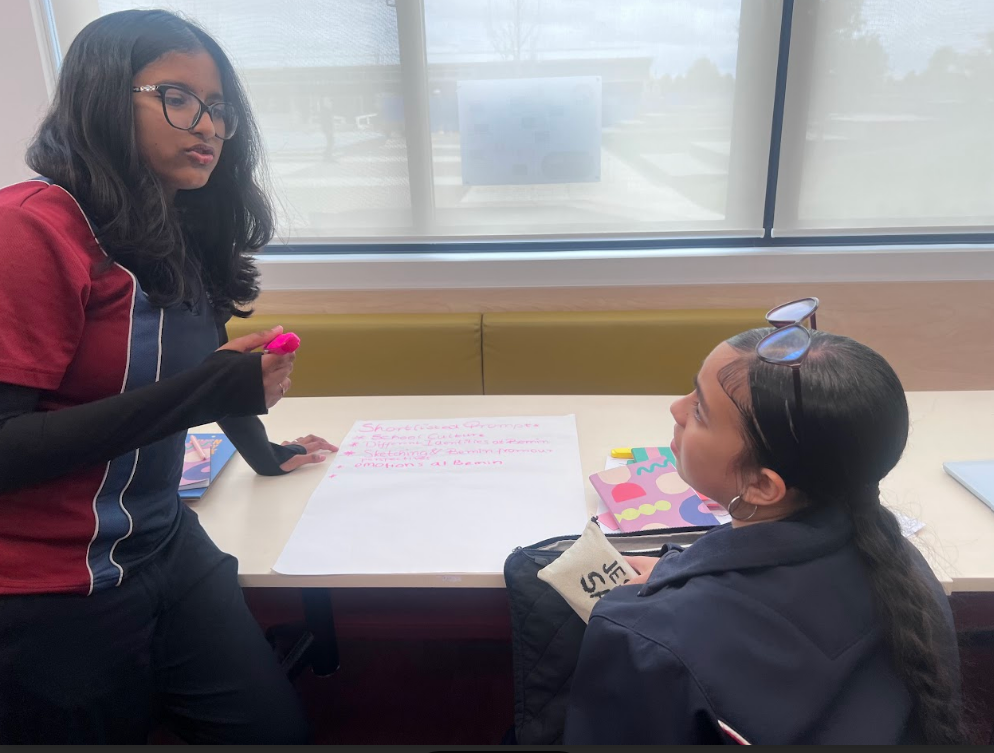
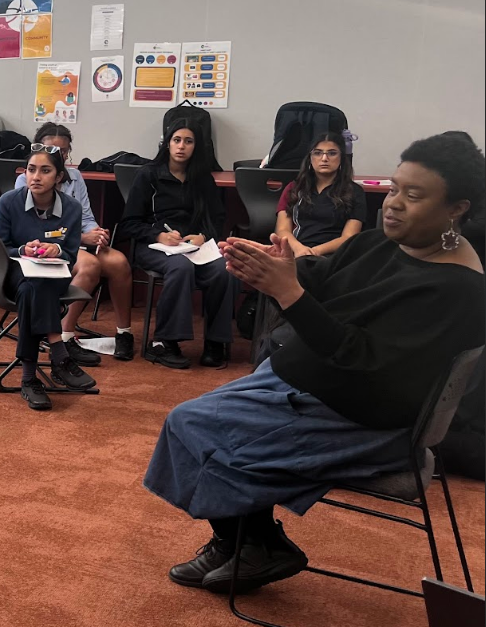
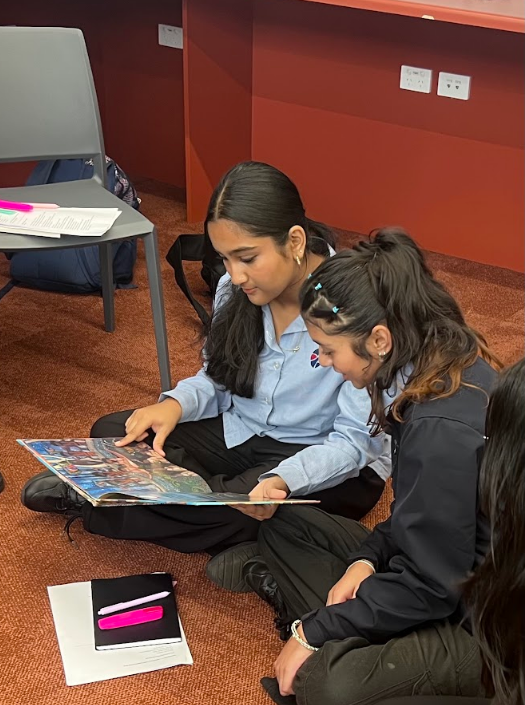
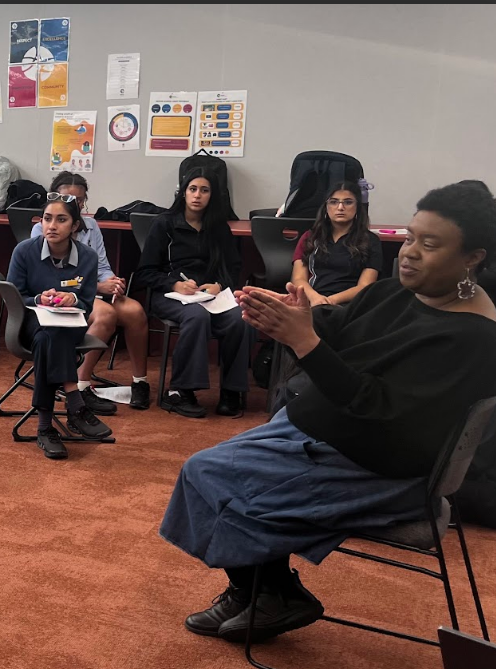
On Wednesday the 13th May, we were lucky to welcome author Maxine Beneba Clarke to speak to some groups of Year 10 students about how they could approach writing about culture. Students were inspired to investigate the stories, traditions and experiences that shape culture, using their writing to explore identity, community and the world around them.
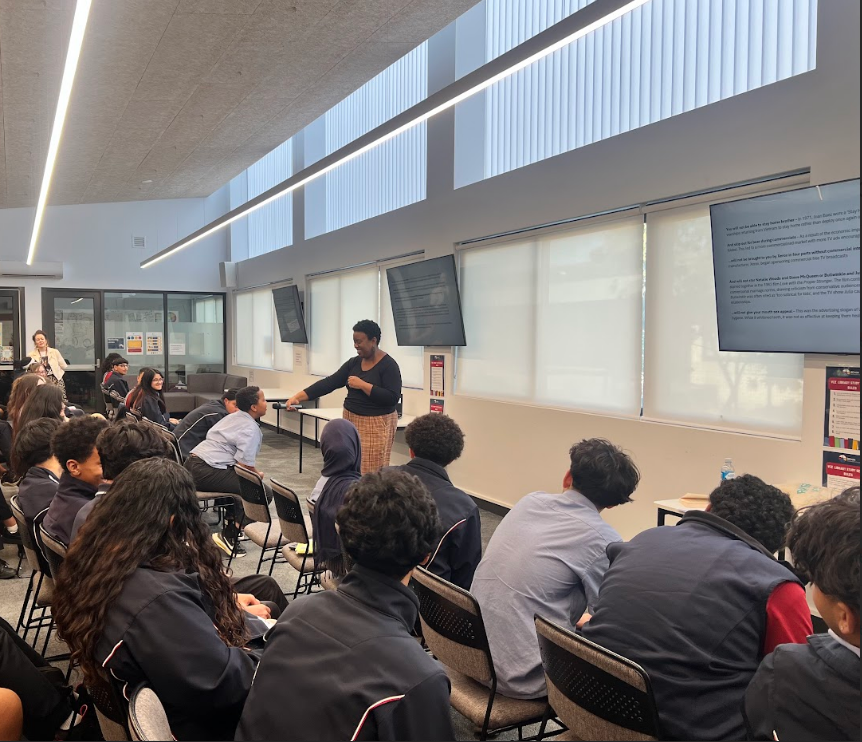
Please see some examples of the opening lines of a few 'revolution' poems that were crafted on the day, aiming to capture and then 'push back' against mainstream culture:
Writer in Residence Program starts off at Bemin Secondary College!
We are thrilled to announce that our Writer in Residence Program was off to a strong start this term at our college, with a group of Year 9 and Year 10 students starting to work with award-winning author Maxine Beneba Clarke on a collaborative writing project that will be developed throughout the year. This project is about celebrating the many identities, experiences, and perspectives that make up our school community.
As part of the project, students will have opportunities to participate in a series of collaborative workshops with our writer in residence, develop their writing and artistic ideas and contribute to a final creative piece that will become part of a public artwork and collection of stories within the school.
We are so proud of our students who are participating and look forward to seeing what grows in this space! Please find a little snippet of the writing we have seen so far below. There will be more to come!
A phrase I've inherited from my family is "Chalse" (pronounced: chaal-say). It literally means "I'll get to it" or "It'll be fine", but I've heard it used for everything from burnt food to last-minute chaotic plans. To me, it represents flexibility, tolerance, and adaptability. Things don't always go perfectly your way, and sometimes you have to laugh it off, work with what you've got, and move on. I think it says a lot about who I am. While I try to be a perfectionist, I fail miserably. I just say "Chalse" and get on with what I've got. At Bemin, everyone comes from different backgrounds and has a story of their own to tell, but we're all editing our way as we go. In a way, we're all a little bit "Chalse" with what we've got, and that's the beauty of it.
Congratulations to our Year 8 and Year 9 Debating Teams!
Congratulations to our Year 8 and Year 9 debating teams for representing our school in inter-school debating competitions.
The Year 9s have experienced multiple victories this term in the Williamstown DAV Debating Competition, with Prisha Jogi winning Best Speaker multiple times, and her teammates Aleena Tanoli, Mihika Gadhavi and Aarza Ahir being commended on their reason and logic, strong arguments and passionate delivery. Nita Houn, Heel Patel and Hadeyah Chaudhary have also been commended for their detailed research and well-supported, logical arguments.
As for the Year 8s, Vivaan Gandhi, Sahasra Gudala and Chenul Henasinghe competed against independent and government schools in the Melbourne region, defeating Doveton College and Loreto Mandeville Hall. Chenul Henasinghe won Best Speaker twice! Well done to all students and both teams for their dedication, teamwork and commitment to excellence. Thank you to teachers Ms. Higginbottom, Mr. McCarthy, Ms. Sheldon and Ms. Mariefor attending.
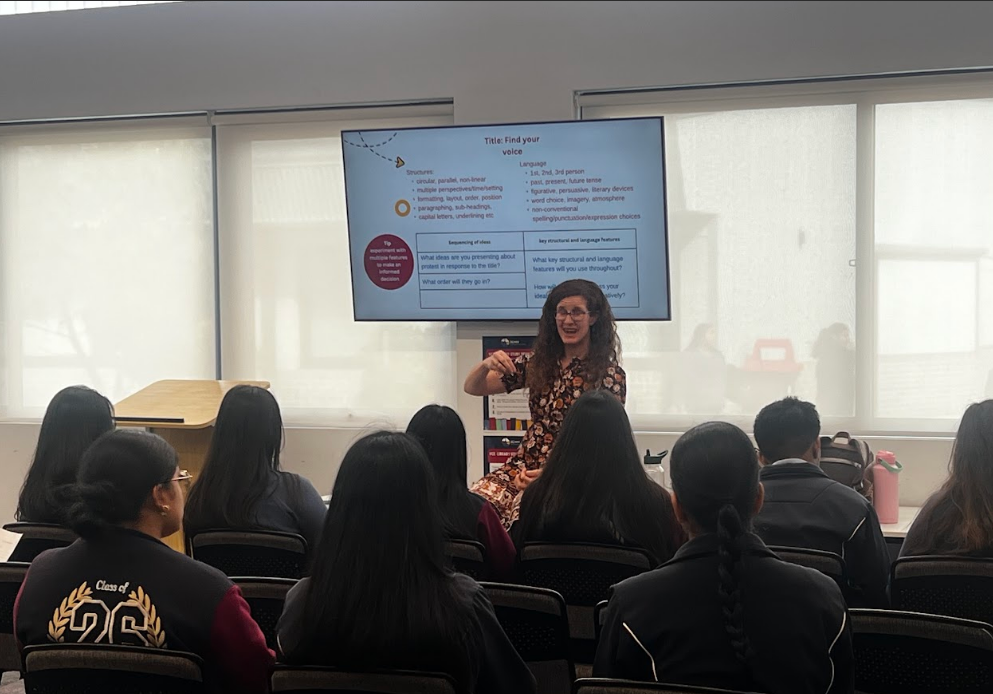
Year 12 guest speaker: Visits from Literacy and English expert Hayley Harrison
This term, our Year 12 students were lucky to welcome Hayley Harrison, an English and Literacy Expert, to our school. Hayley ran some targeted and whole-cohort SAC revision workshops for students to help them develop their ability to write creatively in response to particular ideas, titles and stimulus, something they need to do on their exam.
Well done to those students who seized upon this opportunity to practice and refine their writing, and who made great efforts to improve. Keep it up!
Important notice: Year 12 Oral Presentation Day on the 15th July
On Wednesday 15 July, Year 12 students will complete their English Oral Presentations.
Please note: Year 12 classes will not run on this day. Students only need to attend school for their scheduled presentation time.
Students should:
- Check their presentation time on the timetable provided by their English teacher.
- Arrive at school at least 15 minutes before their presentation.
- Wait in the designated waiting area if they arrive early.
- Bring any notes or materials they need for their presentation.
After their presentation, students will leave school.
The oral presentation is an important part of the Year 12 English course. We encourage students to prepare well and wish them every success on the day.
If you have any questions, please contact your child's English teacher.
Nicole Marie
Assistant Principal - English/Literacy
Mathematics
Mathematics Resources Reminder - Year 7, 8, 9 and 10
To assist your child in achieving the best possible success in Mathematics, it is important that they have access to the required learning resources. These resources are used regularly in class and support students in developing their understanding, completing learning activities, and preparing for assessments.
Textbook
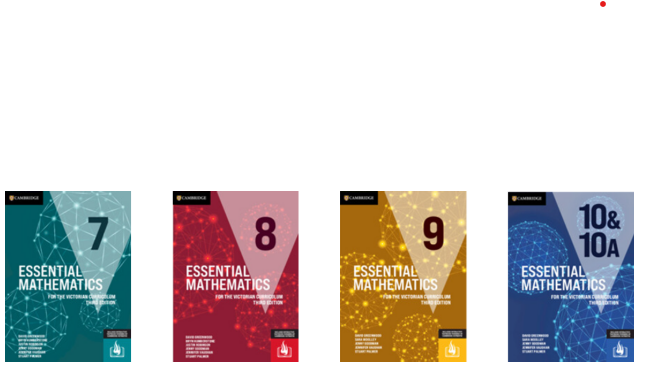
Students require access to the Cambridge Essential Mathematics (3rd Edition) textbook. Both the hardcopy and online interactive versions are used throughout the year.
The hardcopy textbook should be kept at school and brought to every Mathematics lesson, while the online version provides students with access to explanations, worked examples, and practice questions at home. Regular access to the textbook allows students to review concepts, complete classwork, and consolidate their learning independently.
The textbook can be purchased through Campion:
Calculator
Students are also required to have a scientific calculator for use in class and during assessments.
The recommended calculator is the TI-30XB MultiView, which can be purchased through Abacus Calculators, Officeworks, or other educational suppliers.
Having access to a calculator enables students to participate fully in lessons and assessments and helps them develop the calculator skills required throughout secondary Mathematics.
Need Support?
We understand that obtaining school resources can sometimes be challenging. If your child does not currently have access to the required Mathematics resources, please contact your child's Mathematics teacher or Year Coordinator. We will work with you to ensure your child has access to the resources they need to be successful in Mathematics.
Numeracy in Mathematics
At the Junior Campus, students in Years 7, 8 and 9 participate in a dedicated numeracy lesson approximately every two to three weeks. These lessons are designed to help students develop the confidence and skills needed to apply mathematics in real-world situations.
The Victorian Curriculum identifies numeracy as a key capability that supports students to use mathematical knowledge across a range of contexts, both within and beyond the classroom. Numeracy is more than performing calculations; it involves interpreting information, solving problems, making decisions, and communicating mathematical thinking effectively.
Our numeracy lessons are guided by the following learning intention:
“To be able to apply key numeracy skills to solve real-life problems, communicate mathematical ideas clearly using appropriate language, and reflect on learning through active participation in class.”
To achieve this, students work collaboratively in small groups to investigate and solve rich mathematical tasks. Through discussion and mathematical discourse, students are encouraged to explain their reasoning, listen to different perspectives, challenge ideas respectfully, and justify their solutions using mathematical language. These conversations help students deepen their understanding and develop critical thinking and problem-solving skills.
Recently, Year 7 students worked together to solve the problem shown below. Students shared strategies, tested ideas, and explained their thinking to their peers before presenting their solutions to the class.
The Magic Square - In the magic square, the sum of the fractions in each row, column and diagonal is the same. Find the value of each letter in this magic square.
⅖ | A | ⅘ |
B | C | D |
E | ½ | 1 |
Essential Mathematics for the Victorian Curriculum Third Edition Chapter 3 Problems and Challenges page 222
Note: I took several photos of students working on this task; however, after checking media permissions, I am unable to publish any of them.
We are proud of the enthusiasm and teamwork our students demonstrate during these lessons and look forward to continuing to build their numeracy skills throughout the year.
Felicity Christmass
Leading Teacher
Lauren Turner
Assistant Principal- Numeracy/Maths
Science
During Term 2, our students continued to make excellent progress with the support and guidance of our dedicated teaching teams. Through a range of engaging learning experiences, including practical investigations and hands-on activities, students developed their knowledge and skills while exploring real-world applications of their learning. The exemplar work samples below showcase the effort, achievement, and growth demonstrated by our students throughout the term.
Junior Science
The Term 2 theme across the Junior Science program was classification and scientific investigation, with students engaging in a range of hands-on learning experiences.
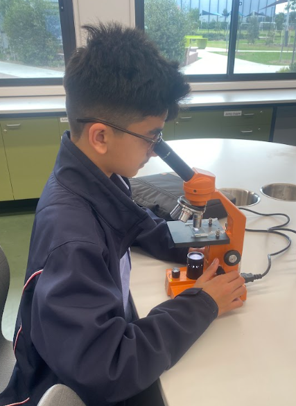
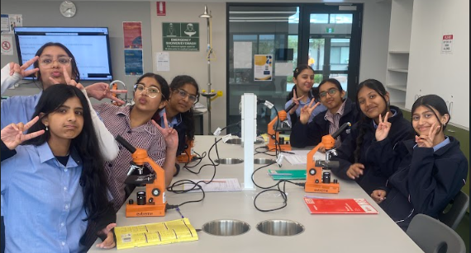
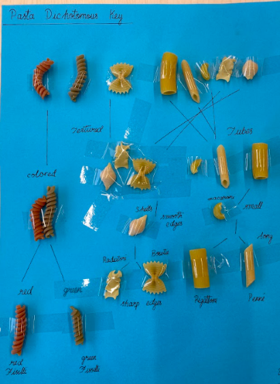
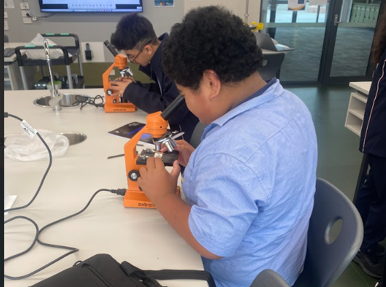
Year 7 students explored the classification of living and non-living things and were introduced to the use of dichotomous keys to identify and group organisms. They also had the opportunity to observe cells under the microscope, developing their understanding of the building blocks of living organisms.
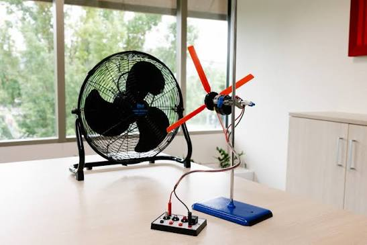
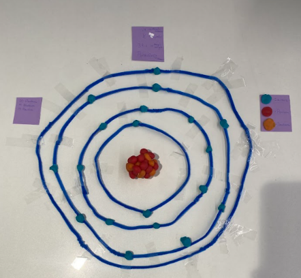
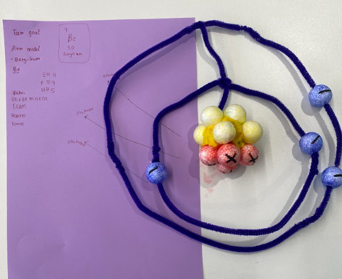
Year 8 students investigated both renewable and non-renewable energy resources. Using STELR kits, they explored how wind turbines and solar panels generate energy, building their understanding of sustainable energy solutions and their importance in the modern world.For Year 9 students, learning focused on atoms and chemical reactions. Students applied their scientific inquiry skills by designing and conducting their own
practical investigations to explore the factors that influence corrosion. This provided valuable experience in planning experiments, analysing results, and drawing evidence-based conclusions.
Senior Science
Our Senior Science students enjoyed a busy and rewarding Term 2. A significant milestone was reached by many of our Year 10 students, who completed their first formal examinations, while our Year 11 students undertook their first VCE exams. We congratulate all students on their efforts and resilience as they continue to develop their study skills and confidence.
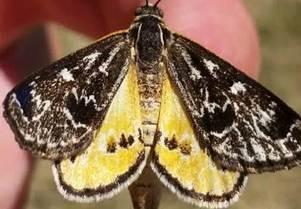
The Golden Sun Moth
The Golden Sun Moth
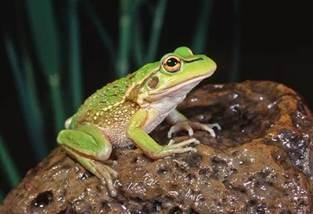
Growling Grass Frog
Growling Grass Frog
In Year 10 Science, the focus for Term 2 was Environmental Science. Students applied their learning through fieldwork activities, collecting and analysing data from the school grounds. They explored the role of stakeholders in environmental decision-making, investigated strategies to mitigate climate change, and strengthened their critical thinking skills by evaluating proposals for reintroducing endangered species into local ecosystems.Across the Year 11 VCE sciences, students were introduced to Area of Study 3 (AOS 3), an important component of the VCE Study Design that provides insight into the work of real-world scientists. Biology, Psychology, and Environmental Science students investigated the question, “How do scientists plan and conduct experiments?” by designing and carrying out their own student-led practical investigations.
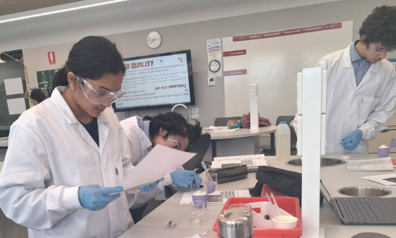
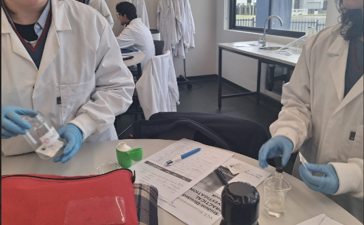
Meanwhile, Chemistry and Physics students explored the question, “How do scientists research and communicate their ideas?” Through this work, students developed essential scientific inquiry, research, and communication skills that are fundamental to scientific practice.
Year 11 and 12 Psychology students also participated in an engaging incursion with Therapy Animals Australia. Students deepened their understanding of behaviour and learning by observing classical conditioning in action through animal training demonstrations. The visit provided a memorable and practical connection to key psychological concepts.
It has been a rewarding term to witness the growth, achievement, and enthusiasm of our students. On behalf of the Science team, we thank students for their hard work and engagement, and we look forward to another exciting term of learning ahead.
Domenica Trifilo
Leading Teacher
Health
It has been an action-packed term in Health! Our students have stepped out of passive learning and into the shoes of critical thinkers, health detectives and advocates.
Here is a snapshot of the fantastic work happening across our classrooms.
Year 7 Health
Our Year 7s have been tackling the realities of vaping head-on! Instead of just reading the facts, students have been actively investigating the physical and social risks of e-cigarettes to bust common myths. They stepped up to the challenge by role-playing real-world scenarios, practicing their refusal skills, and equipping themselves with the confidence to navigate peer pressure and make informed choices.
Year 8 Health
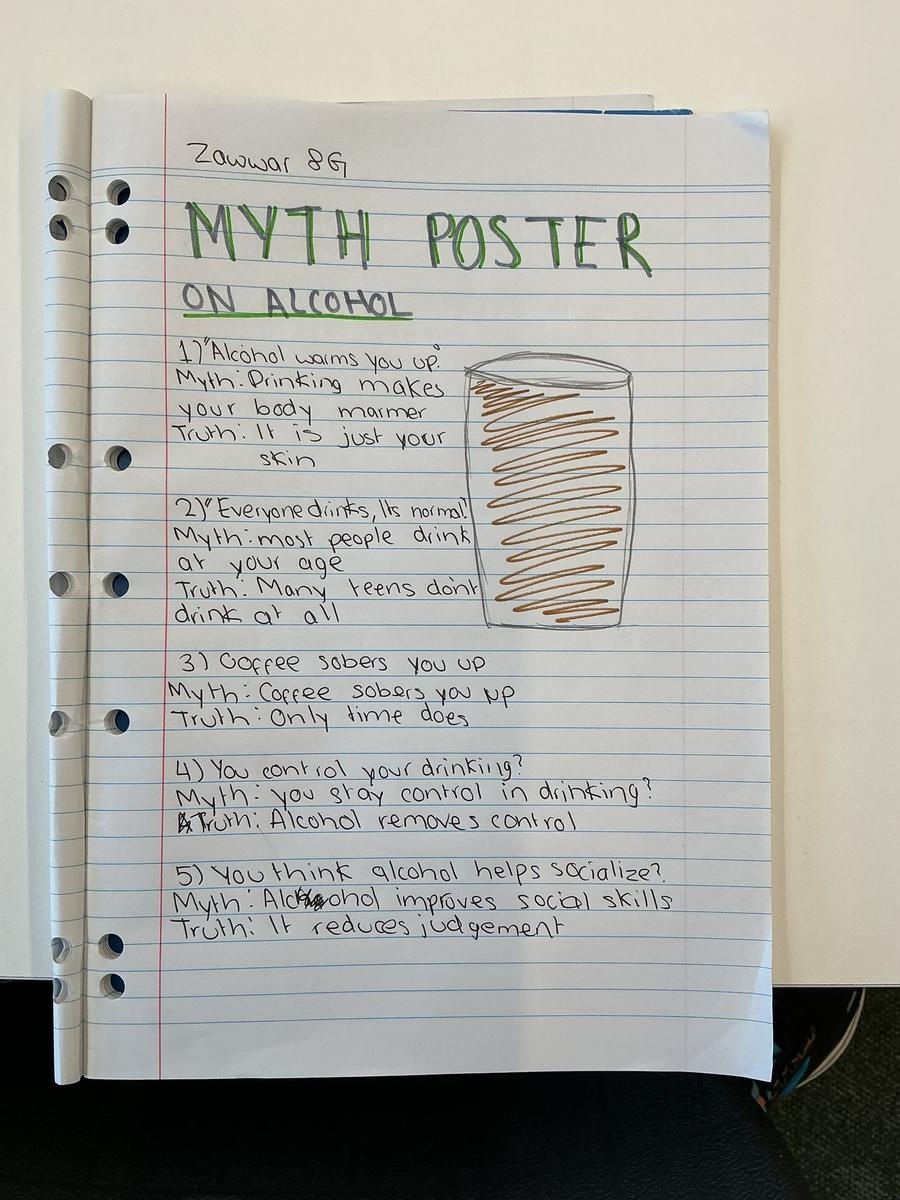
The Year 8 cohort took a deep dive into the science of alcohol and its specific impact on the developing teenage brain! Through collaborative discussions, students explored how alcohol affects the body and tackled crucial topics like the importance of consent, basic first aid, and creating safe environments. Going beyond simply identifying risks, they actively brainstormed practical harm-reduction strategies to keep themselves and their peers safe. To cap it all off, students worked to bust common alcohol myths, showcasing their learning by designing the fantastic, eye-catching posters featured in the samples below!
Year 9 Health
Year 9 students have shown incredible maturity this term, engaging in high-level analysis of cannabis use. They actively unpacked the short- and long-term physical, mental, and social consequences, while also navigating the complexities of the legal landscape. As a major highlight for their Common Assessment Task (CAT), students designed and delivered outstanding presentations demonstrating their deep understanding of the risks and the vital role of health promotion. By mapping out real-world support networks, they ensured they know exactly how to access help for themselves or their peers in challenging situations. We are incredibly proud of the high level of engagement and thoughtful discussion our Year 9s brought to this unit!
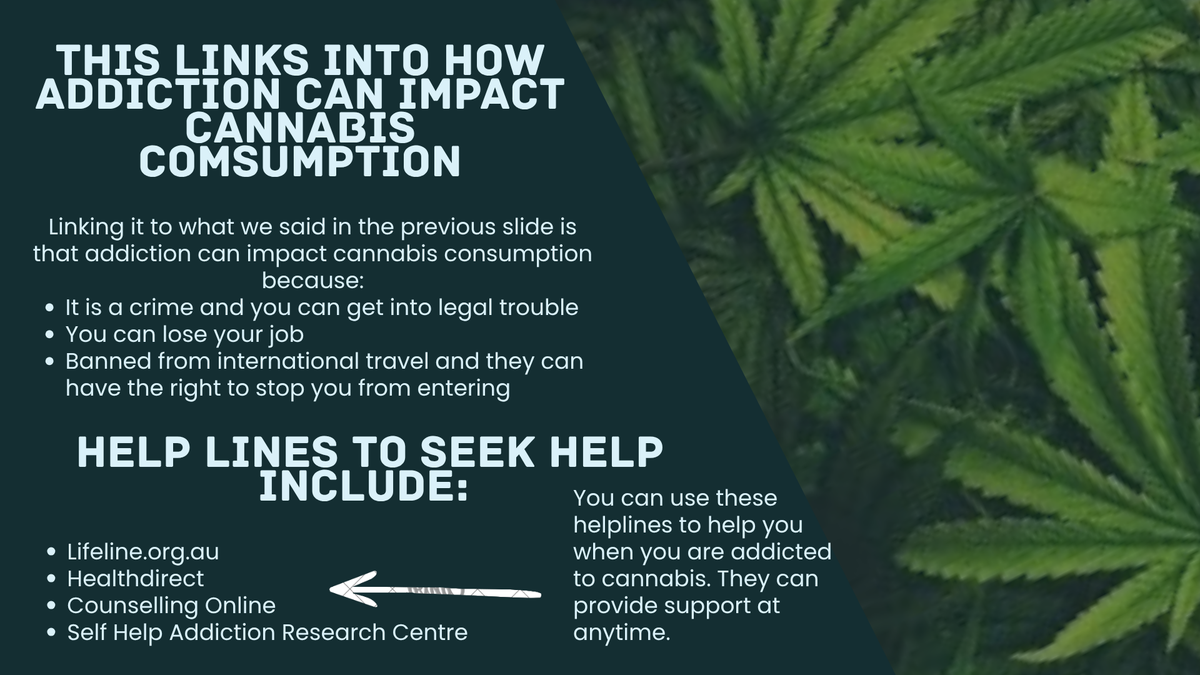
Slide 13 form Nita and Gurnoor’s presentation (9G)
Slide 13 form Nita and Gurnoor’s presentation (9G)
Year 10 Health
Our Year 10s stepped into the role of public health analysts, looking at Alcohol and Other Drugs (AOD) through a critical sociocultural lens. Anchored in the principle of harm minimisation, students actively evaluated real-world health information to determine what is fact and what is fiction. They have been building crucial health literacy skills, researching community support services, and learning how to navigate the complex world of AOD.
Year 11 HHD
It has been a massive term for our VCE students! In Unit 1, Area of Study 2, they tackled complex youth health and wellbeing issues, engaging in deep-dive research to analyse the effectiveness of various government and non-government support programs for young Australians. Transitioning into Area of Study 3, they became 'nutrition detectives,' actively scrutinising and evaluating the validity of online food trends. All of this hard work culminated in the successful completion of their Unit 1 coursework and exams.
Showing incredible momentum, the class jumped straight into Unit 2 towards the end of the term. Students have been exploring the human lifespan, designing some absolutely amazing visual posters to map out the different stages. To consolidate their new knowledge of Physical, Intellectual, Emotional, and Social development, they took a highly creative approach, analysing and linking these developmental concepts to lyrics from their favourite song
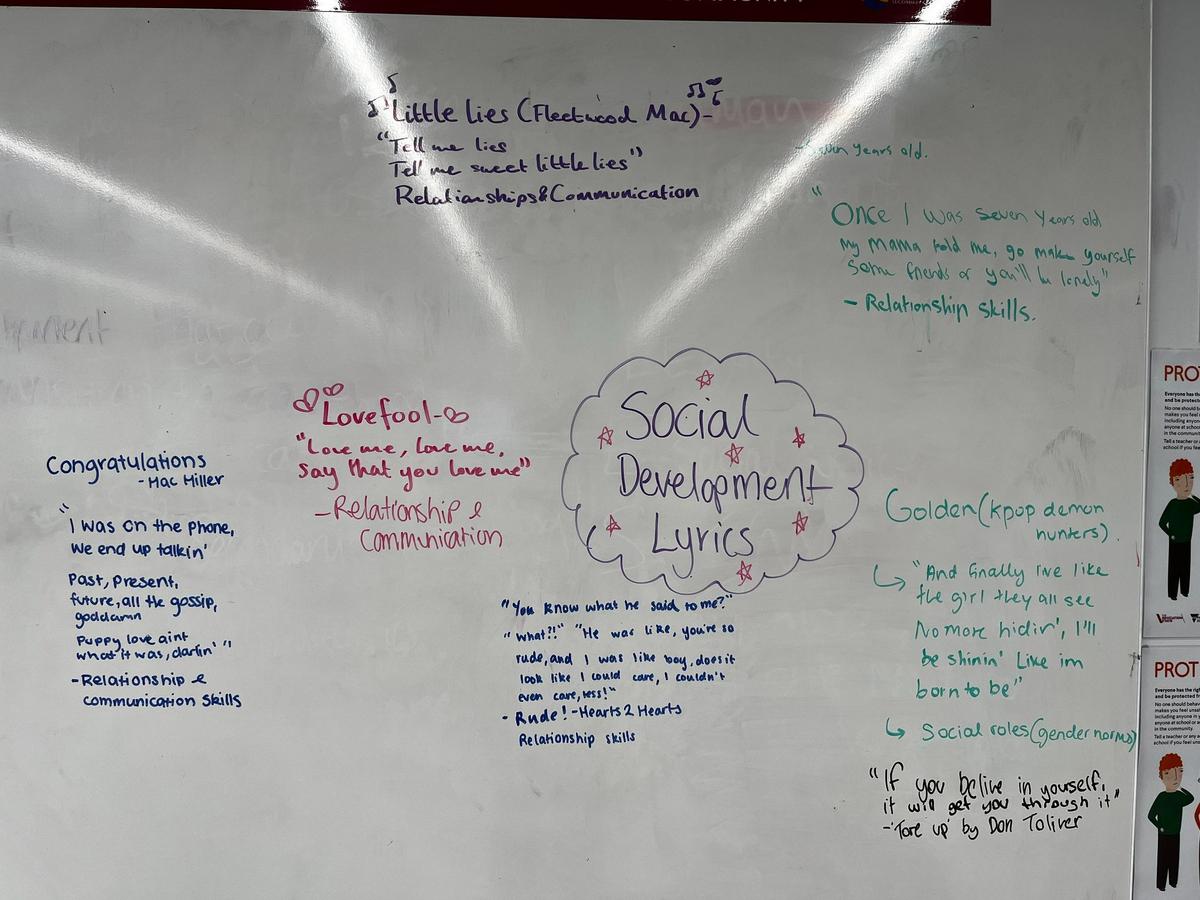
Social Development lyrics
Social Development lyrics
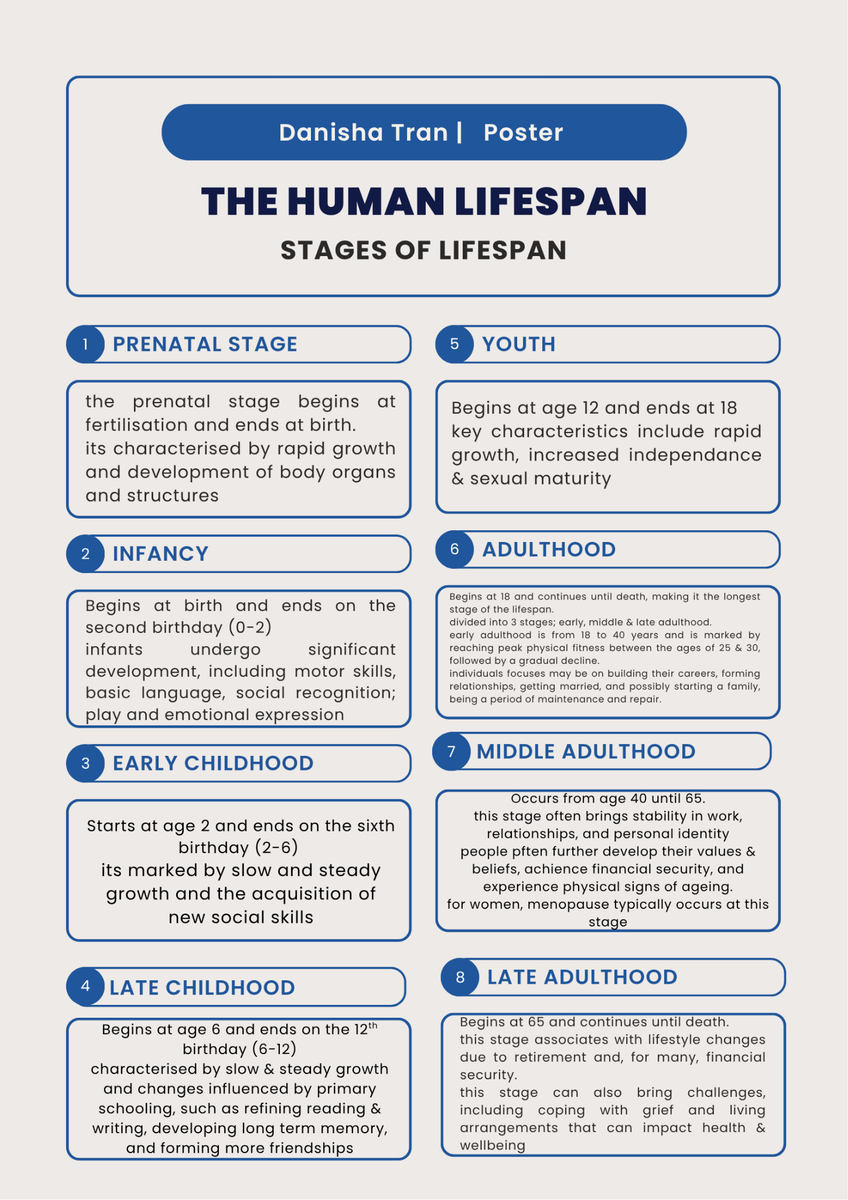
Poster by Danisha Tran
Poster by Danisha Tran
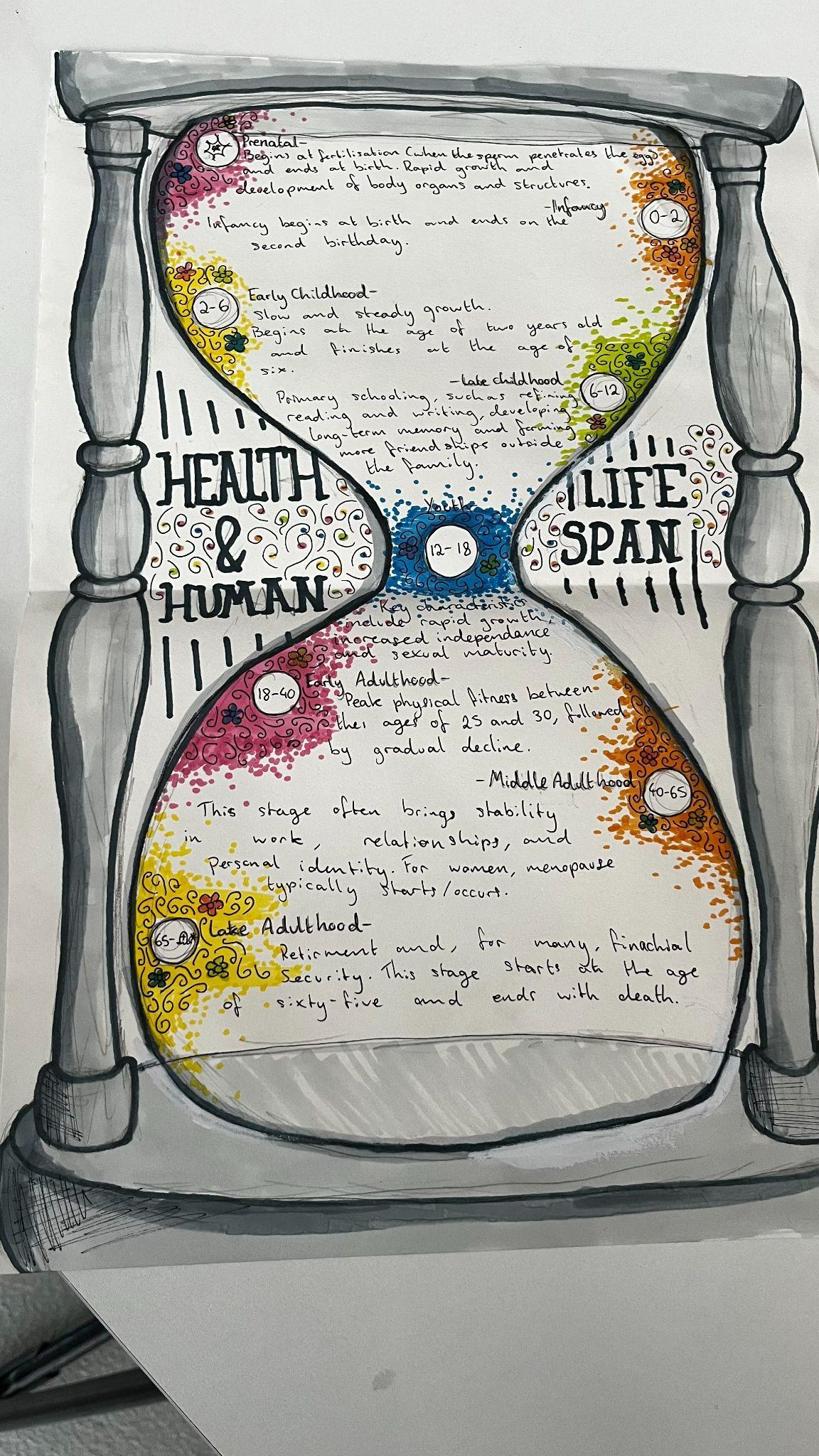
Poster by Brianna Guganovic
Poster by Brianna Guganovic
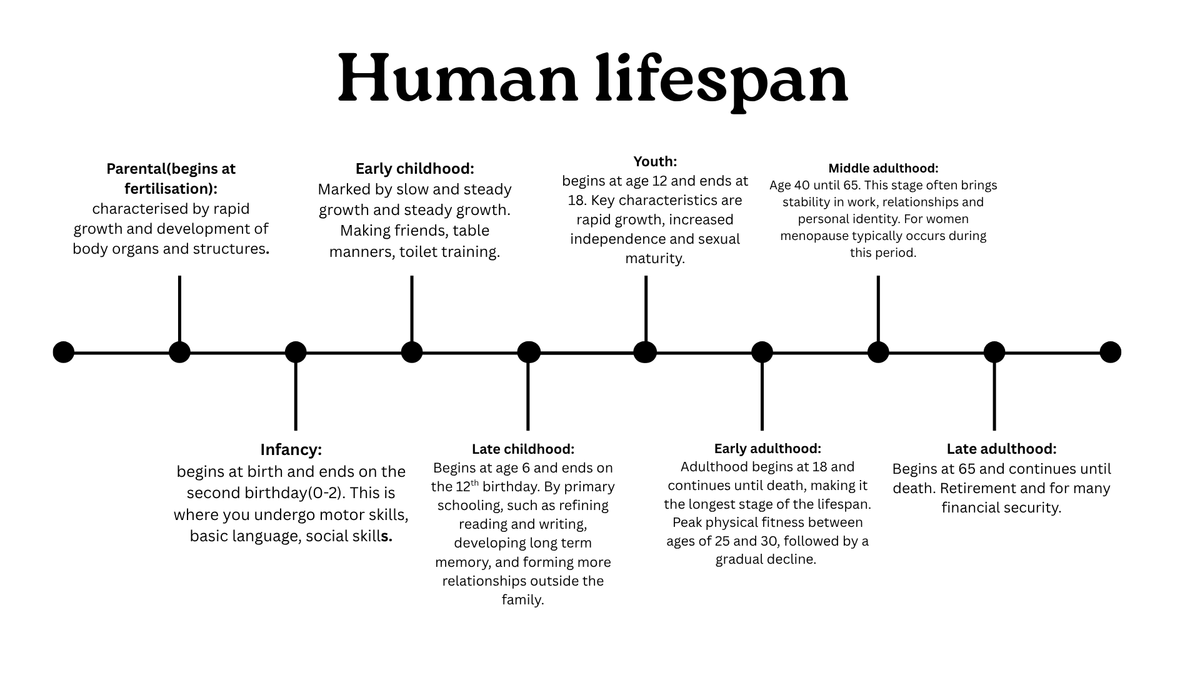
Poster by Japneet Kaur
Poster by Japneet Kaur
Year 12 HHD
Our Year 12s have been on a journey through time for Unit 3, Area of Study 2! Students tracked the massive improvements in Australia's health status since 1900, comparing early public health measures with modern biomedical and social models. They have been critically evaluating the pillars of our health system like Medicare, the PBS, and the NDIS and analysing major, real-world health promotion initiatives targeting issues like smoking, vaping and dietary imbalances.
After all this hard work, we are thrilled to announce that students have officially wrapped up their Unit 3 coursework and successfully conquered their exams! Showing incredible dedication, they haven't slowed down for a second, already hitting the ground running with Unit 4, Area of Study 1 as we head into the next phase of the year.
Kate Meynell
Instructional Leader
Technologies
Food Technology
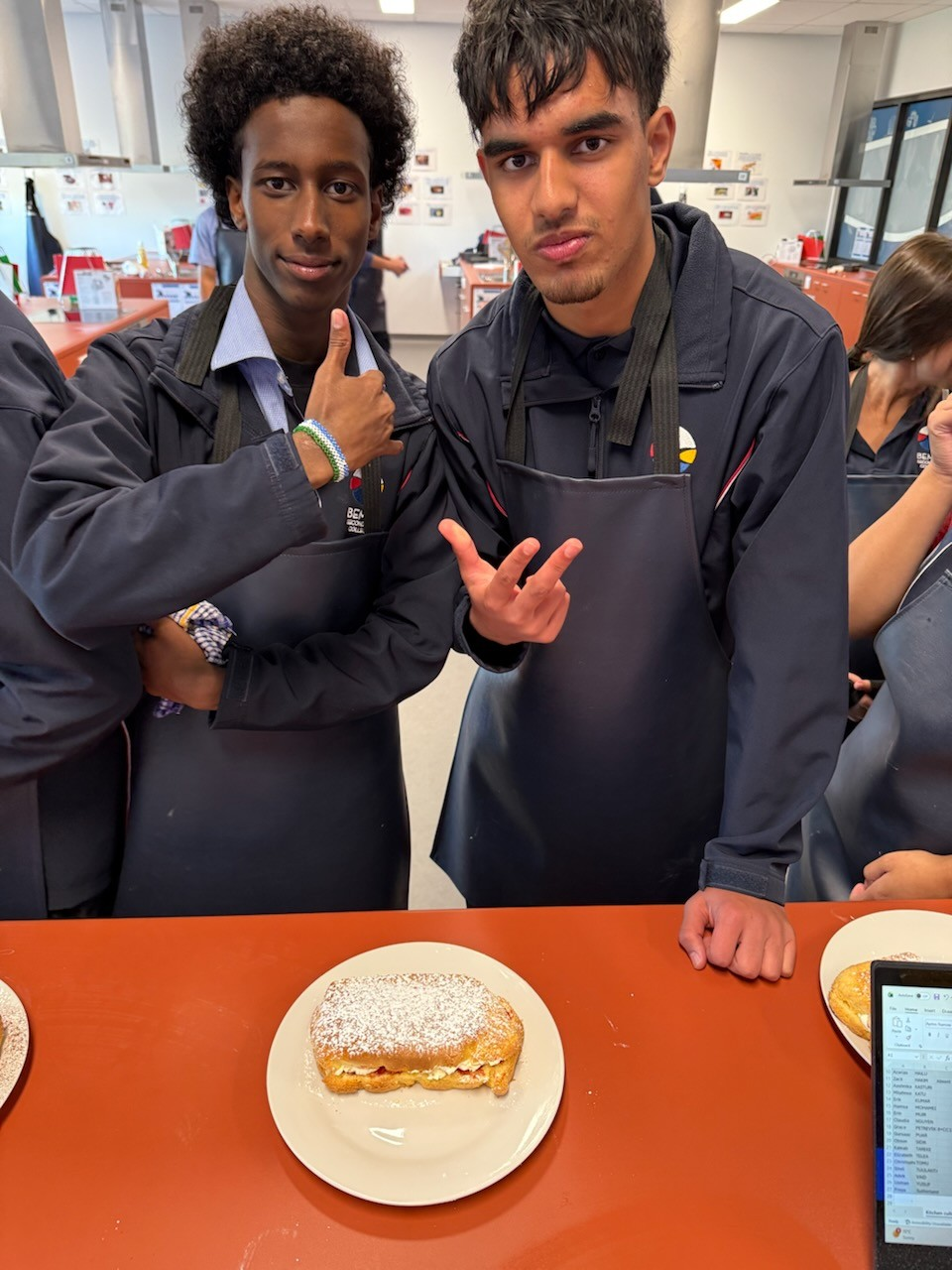
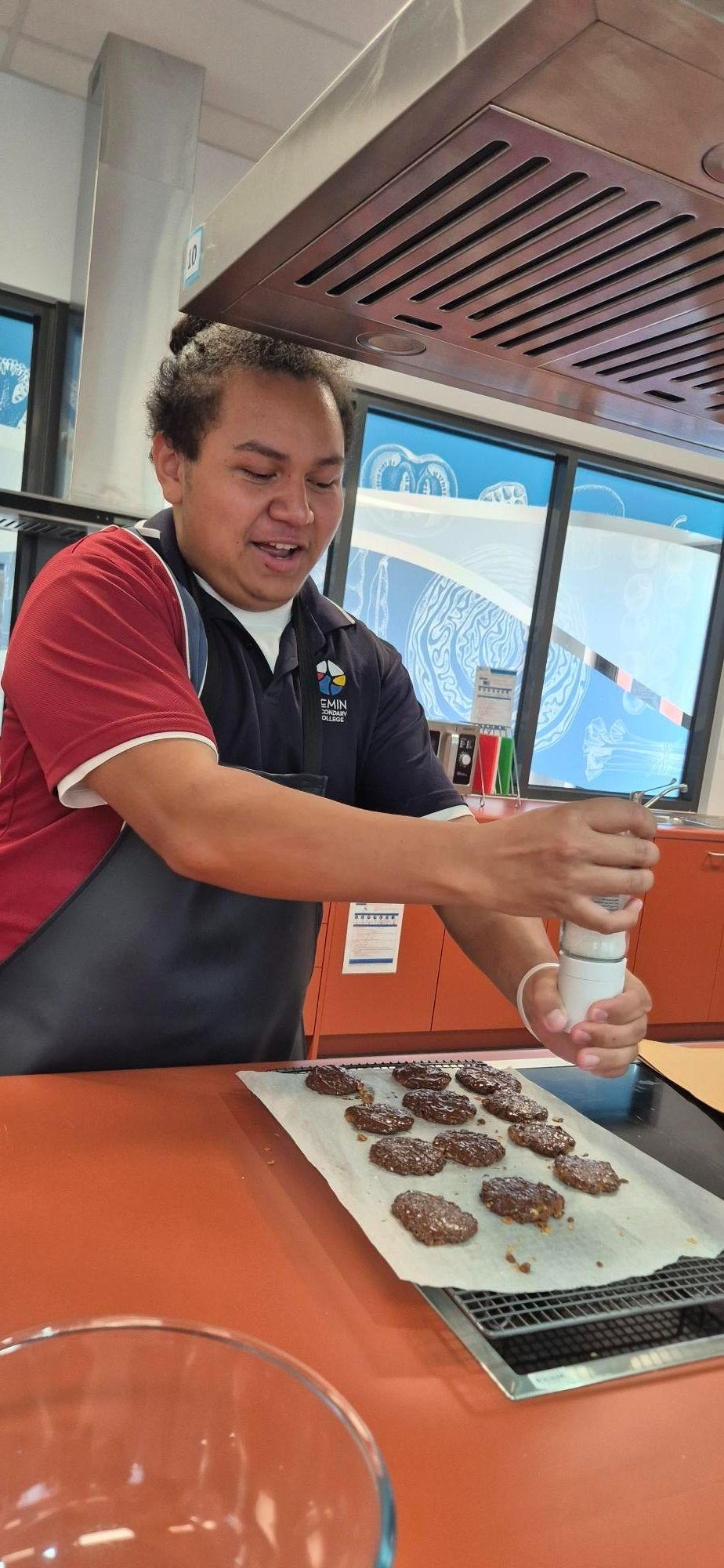
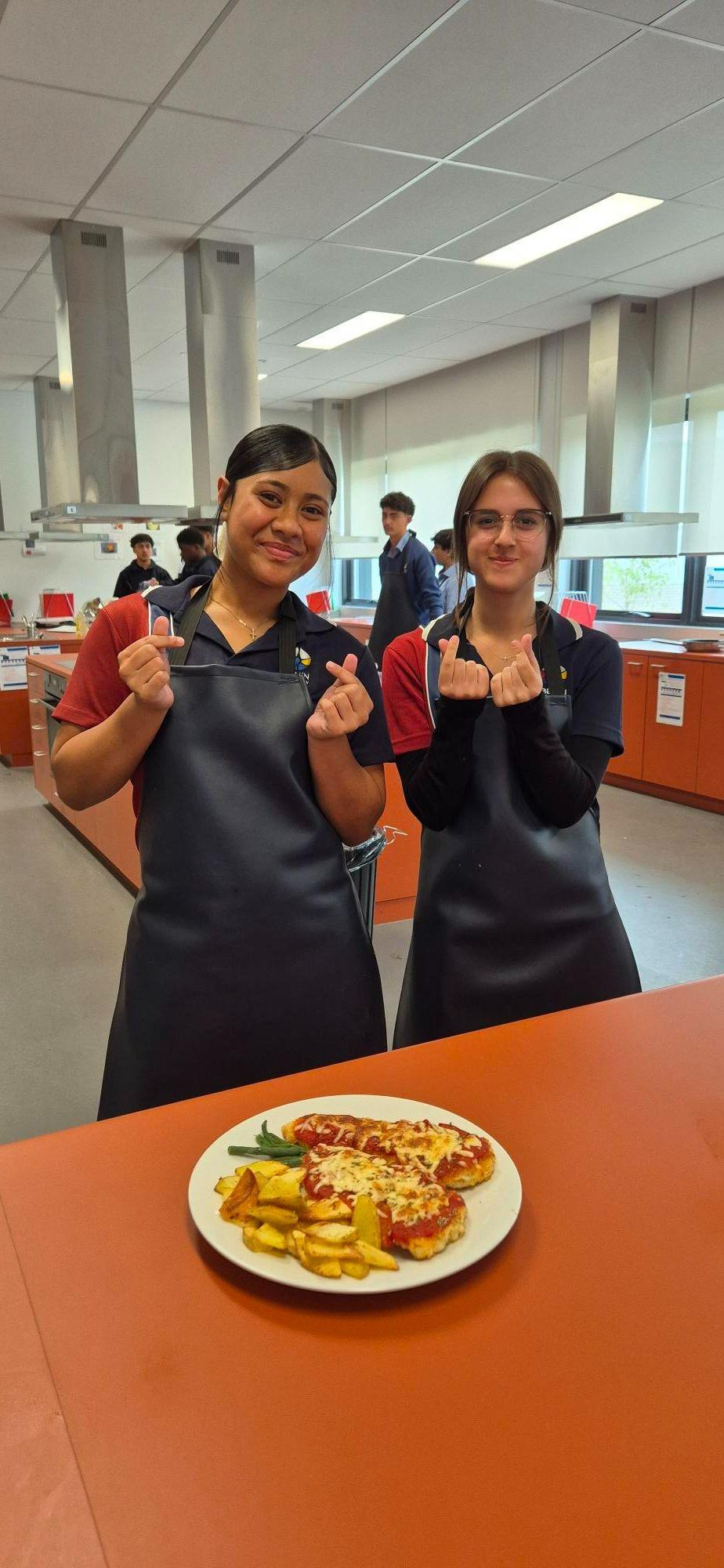
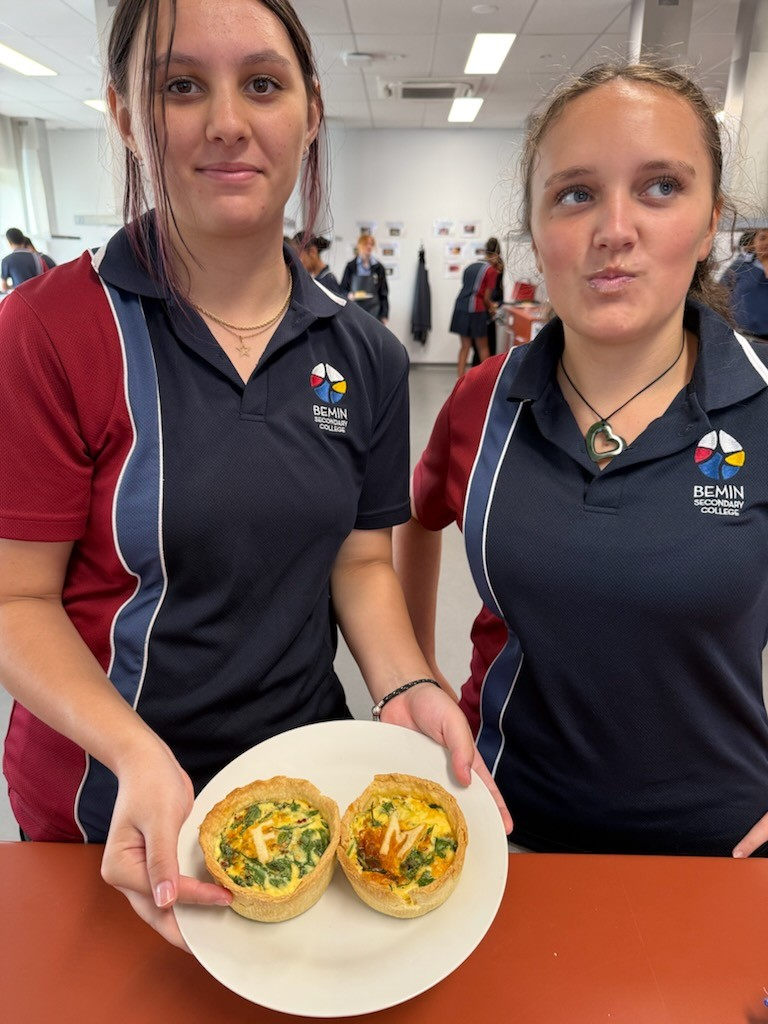
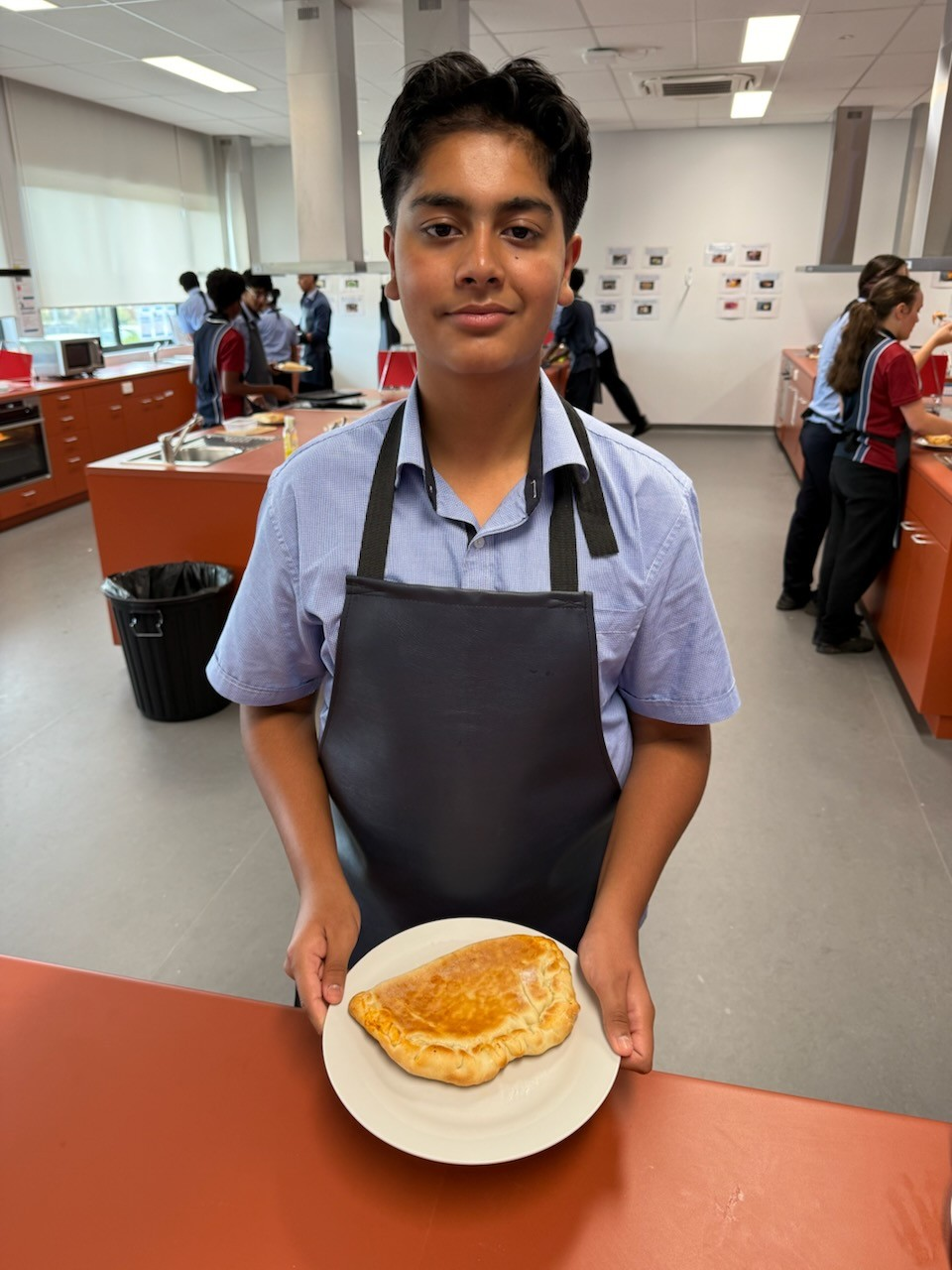
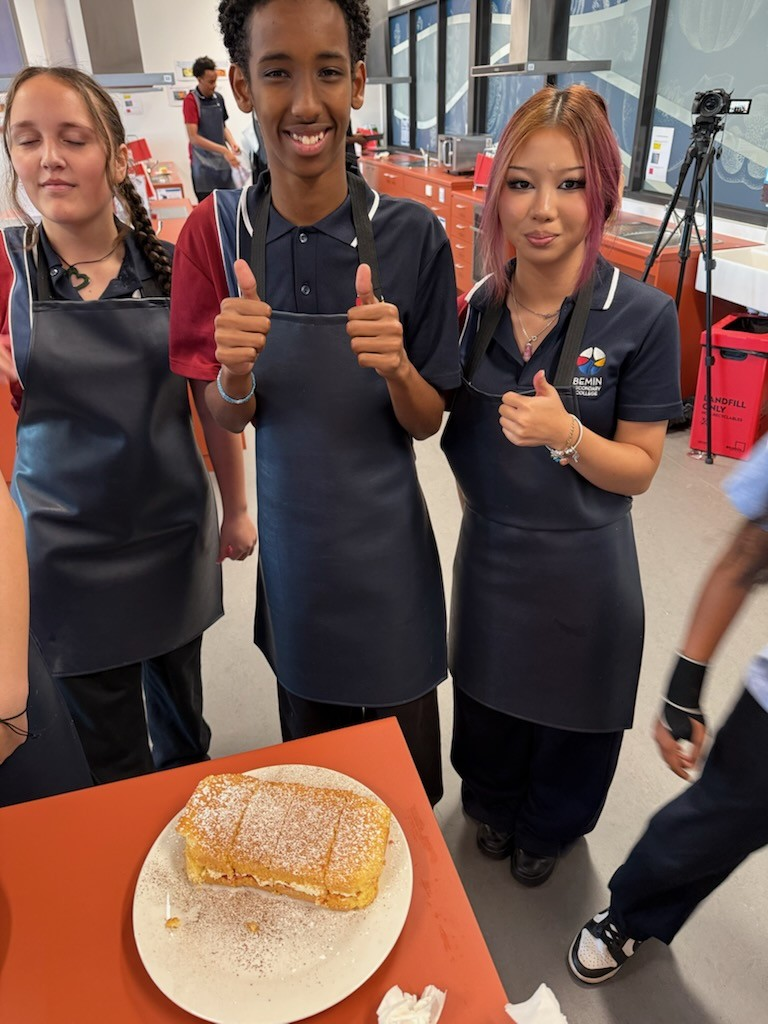
In Food Technology, students went on an exciting journey that broadened their understanding of food and nutrition. They developed a diverse set of knowledge and practical skills through engaging hands-on experiences. This Semester’s curriculum allowed students to appreciate the role of food in our lives and society, making their time in the program both informative and memorable.
Across Years 7–10, students have built strong foundation skills in food preparation, kitchen safety, hygiene, and equipment use while developing confidence and independence in the kitchen. As students progressed through the program, they explored increasingly complex food concepts, including nutrition, food systems, sustainability, cultural food traditions, and specialised food preparation techniques. Year 9 students in Food Glorious Food investigated food history and global influences, the relationship between food, health, and wellbeing, while Year 10 students in Kitchen Culture and Story of Food examined how food reflects culture and identity, gaining an appreciation of foods from around the world and the factors that shape food choices.
At the senior level, VCE Year 11 and 12 Food Studies students have engaged with contemporary food issues and explored the complex relationship between food, individuals, communities, and the environment. They have investigated topics such as digestion and nutrition, the influence of food on physical and mental well-being, the effects of media and marketing on food choices, ethical food production, food sovereignty, food citizenship, and environmental sustainability. Students have also examined how food systems operate locally and globally, considering the challenges and opportunities involved in creating a more sustainable and equitable food future.
All in all, this semester has been one of great success. Students of all year levels have loved diving into the practical side of Food Technology, where they can apply what they've learned through a variety of fun cooking experiences. They've improved their food preparation and presentation skills, tried out unique techniques, explored new ingredients and cuisines, and worked together to whip up a range of delicious and nutritious dishes. These hands-on experiences have not only boosted their confidence and creativity but also helped them develop problem-solving skills and appreciate how important food is to our health, culture, and everyday lives.
Design Technology
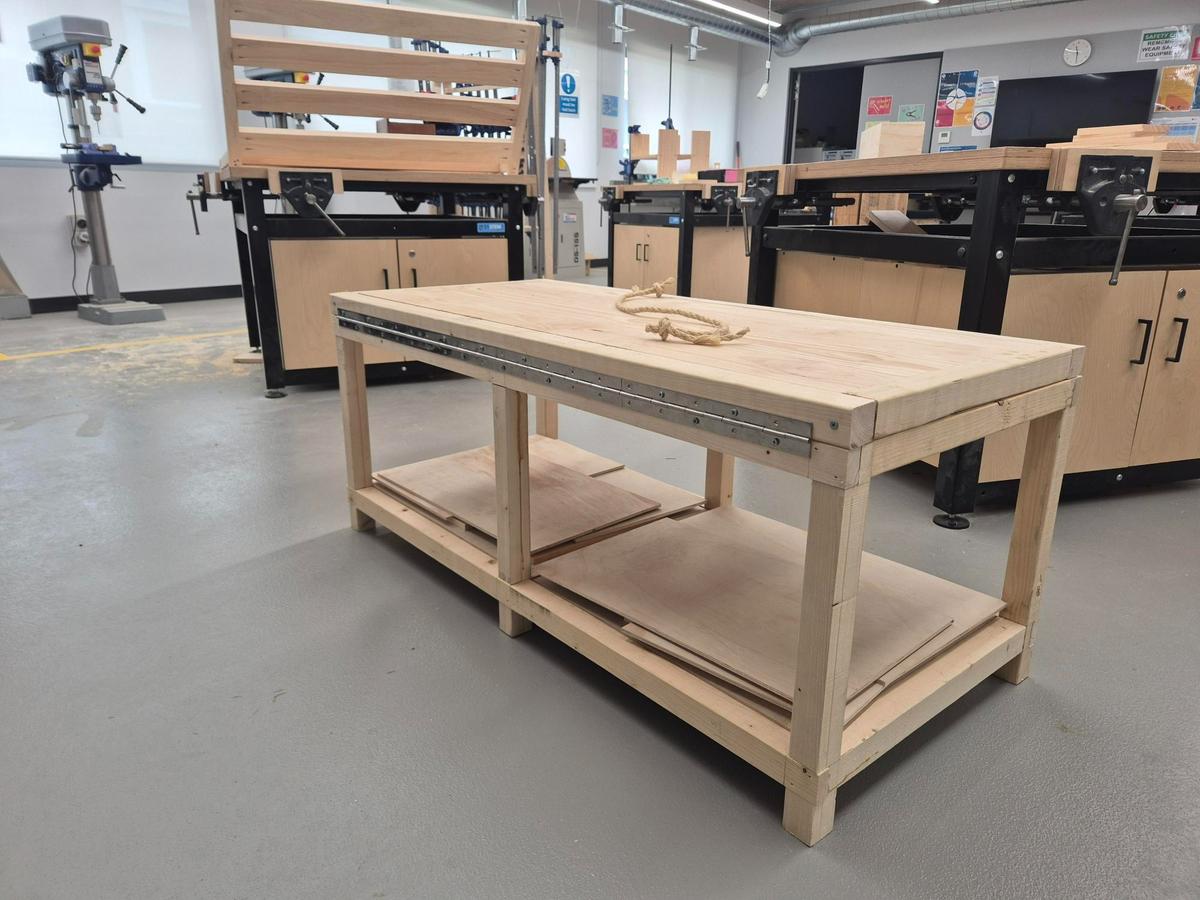
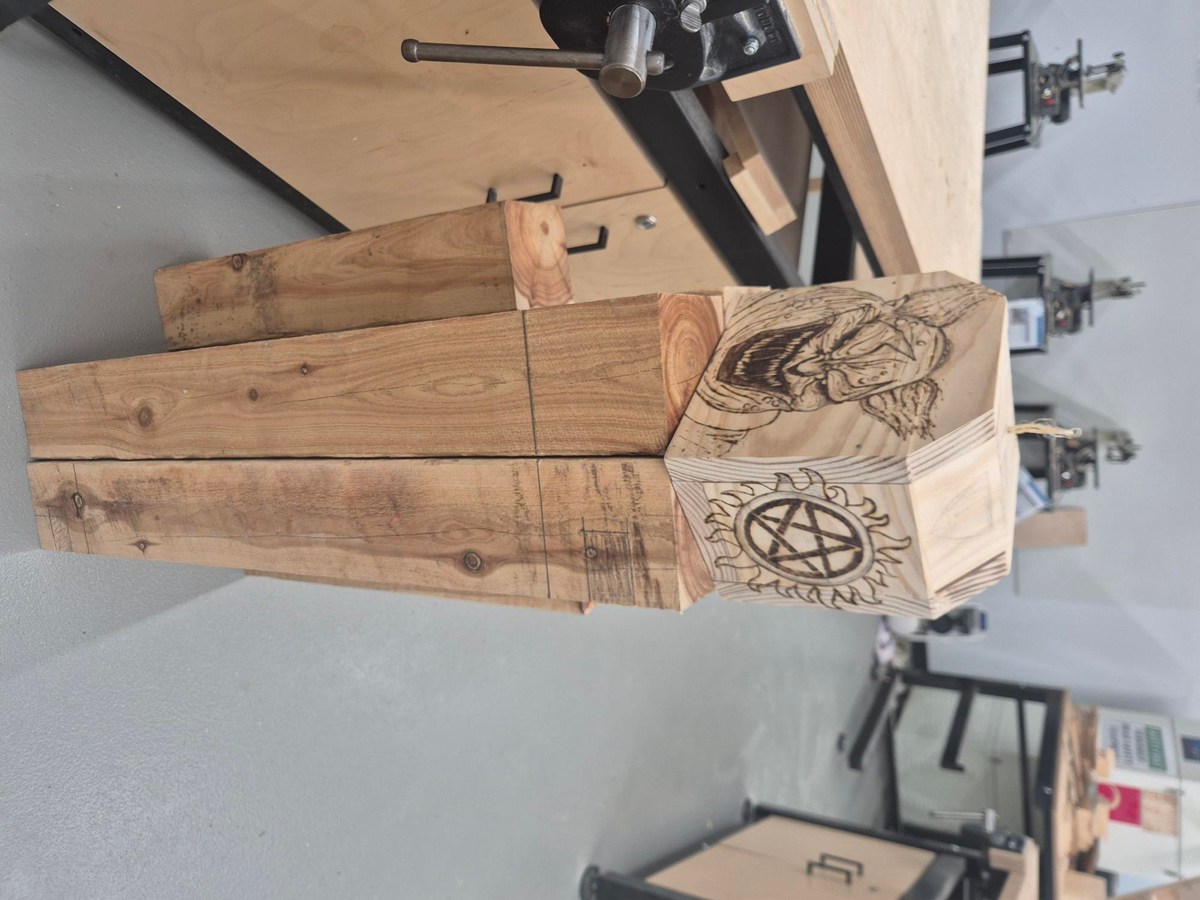
In Design Technology, students have developed their understanding of design processes, materials, tools, and manufacturing techniques through a range of practical and theoretical learning experiences. Across Years 8–12, students have progressively built their knowledge and skills in woodworking, problem-solving, creativity, and project management while gaining an appreciation for the role of design in addressing real-world needs and challenges.
Year 8 students were introduced to basic woodworking skills by constructing wooden cars and treasure boxes. These projects offered opportunities to practice safe workshop techniques while learning how to measure, mark, shape, assemble, and finish timber products accurately. Through these activities, students gained confidence in using various hand and power tools and developed an understanding of the properties of timber as a material.
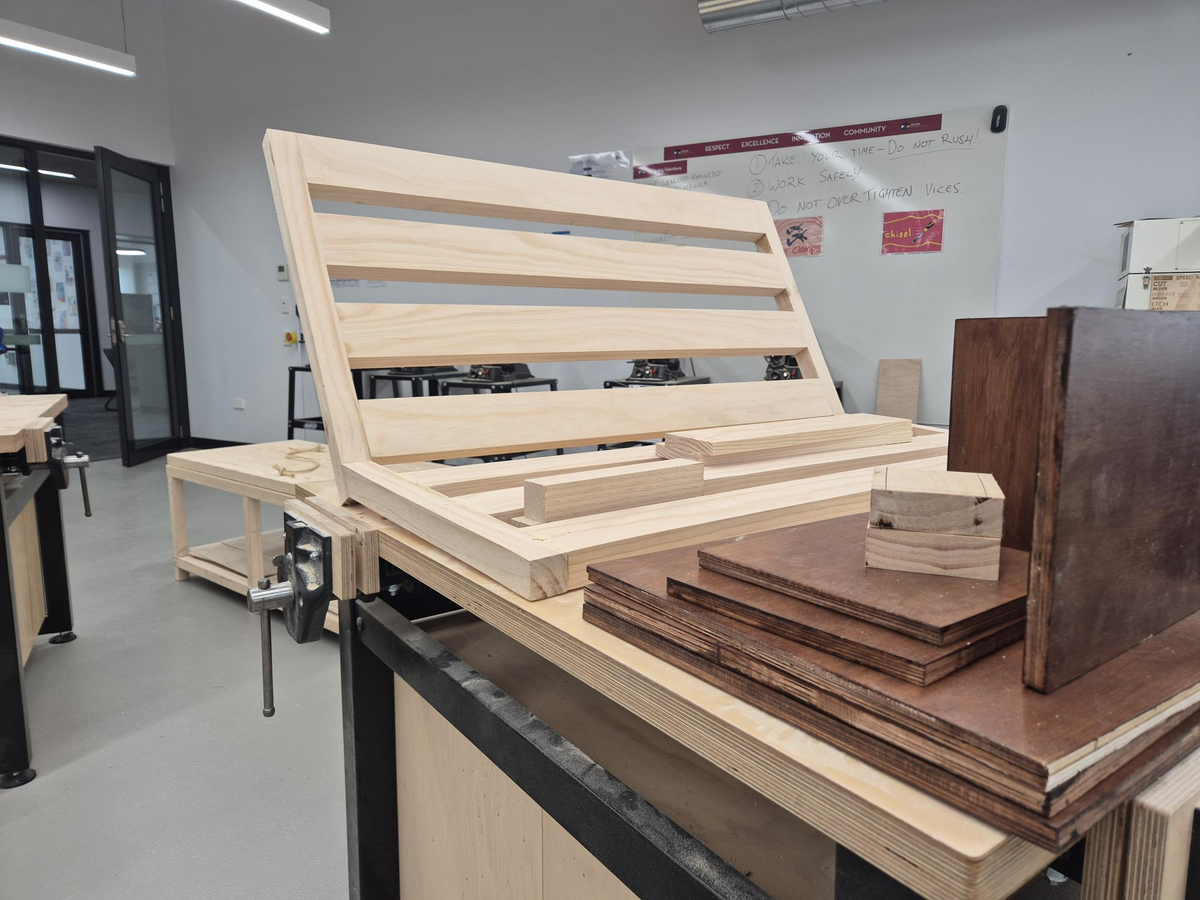
In Year 9 Crafted in Timber, students further refined their woodworking skills through the design and construction of photo frames. This project encouraged students to apply precision, craftsmanship, and creativity while developing a deeper understanding of design principles, manufacturing processes, and quality construction techniques.
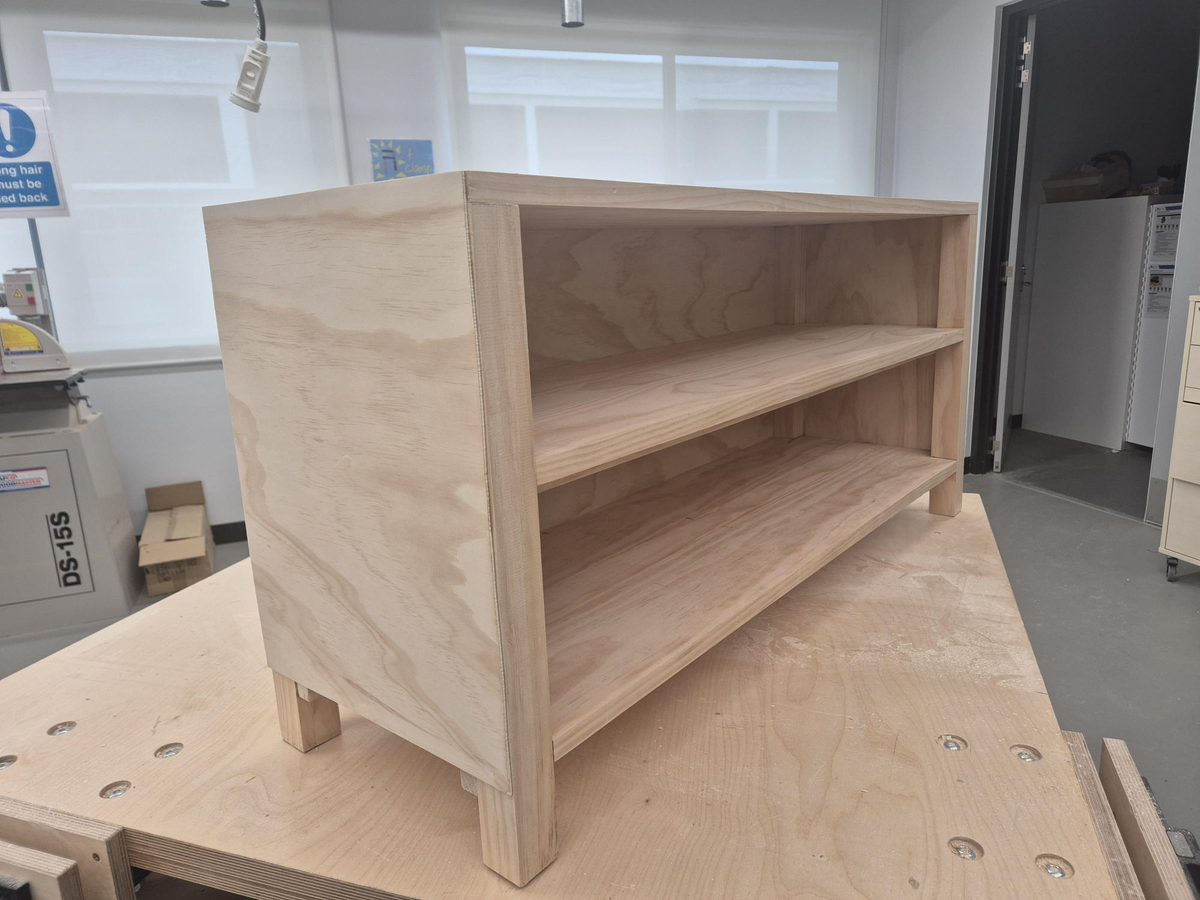
Year 10 students in Working with Wood extended their skills and knowledge through the design and manufacture of timber toolboxes. Students applied more advanced construction techniques and problem-solving strategies while considering functionality, durability, and aesthetics. These projects challenged students to work independently and demonstrate increasing confidence in planning, producing, and evaluating quality products.
At the senior level, VCE Product Design and Technology students explored contemporary issues affecting the design and manufacturing industries, with a particular focus on sustainability, renewable resources, ethical production, and responsible design practices. Students investigated how designers and manufacturers respond to environmental and social challenges while considering the impact products have throughout their lifecycle. Through the design process, students identified opportunities to address real-world issues and developed innovative solutions by designing and constructing their own products. This provided valuable experience in applying research, creative thinking, technical skills, and critical evaluation to produce purposeful and sustainable design outcomes.
Throughout all year levels this semester, students have enjoyed the hands-on nature of Design Technology, developing practical skills alongside their creativity and problem-solving abilities. By designing, constructing, and evaluating a variety of timber products, students have gained a greater appreciation of craftsmanship, innovation, and the important role design plays in shaping the world around us.
Jeevagi Suthananthan
Learning Specialist
Vocational Major (VM)
Personal Development Skills
Throughout Term 2, Personal Development Skills, students explored health promotion and the impact of technological advances on society. As part of their studies, students researched how various aspects of everyday life, including transport, communication, medicine, and recreation, have changed over time. A particular focus was placed on the significant role that smartphones now play in modern society and their influence on how people communicate, access information, and engage with the world around them.
To conclude the unit, students completed a research project and oral presentation on a health promotion initiative operating within Victoria. This task required students to investigate the aims and strategies of their chosen program, identify the target population, and evaluate the effectiveness of the initiative in improving the health and wellbeing of young people. Through this assessment, students developed their research, communication, and critical thinking skills while gaining a greater understanding of the role of health promotion in supporting positive community outcomes.
Literacy
Work Related Skills
In Work Related Skills, students have been developing their understanding of future employment, pathways and career opportunities through the Best Entry Level Job for You project. This task has encouraged students to explore careers that align with their interests, strengths, and future goals while gaining a greater understanding of the skills, qualifications, and experiences required for success in the workforce.
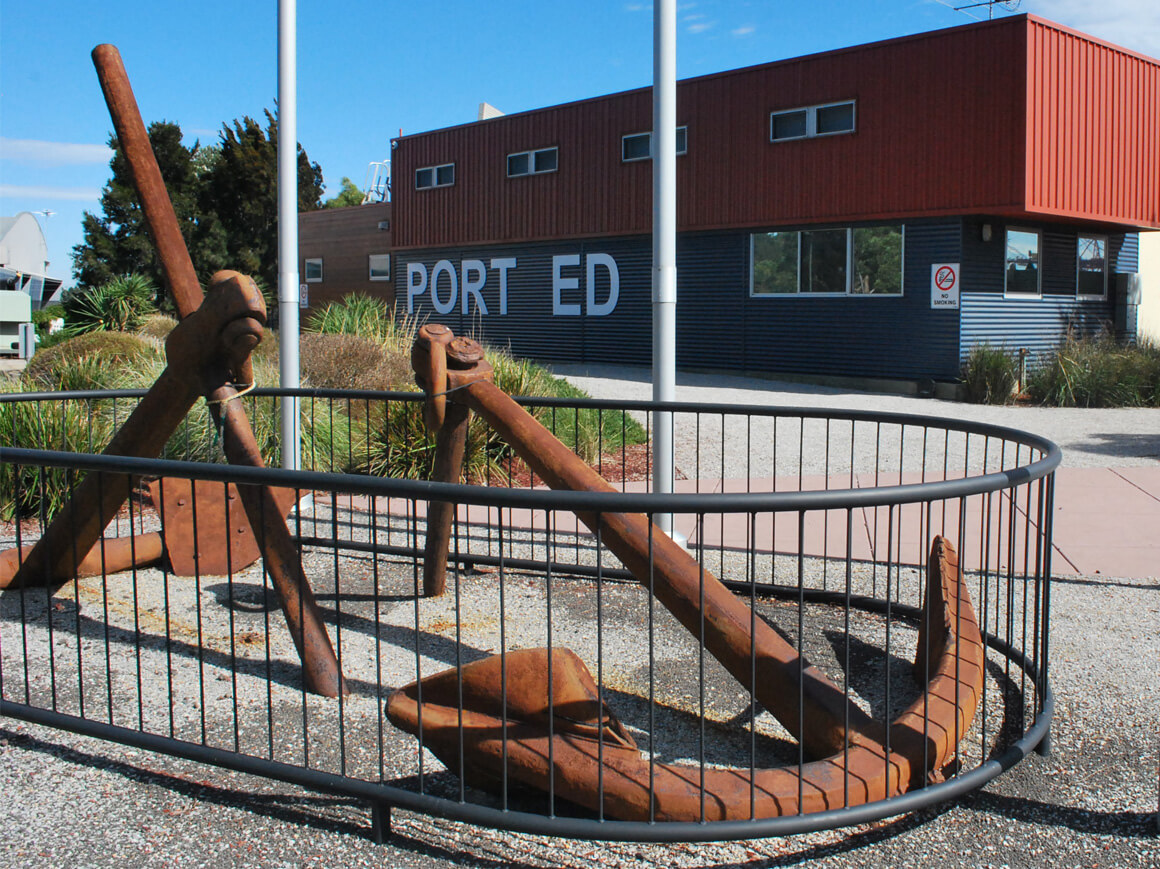
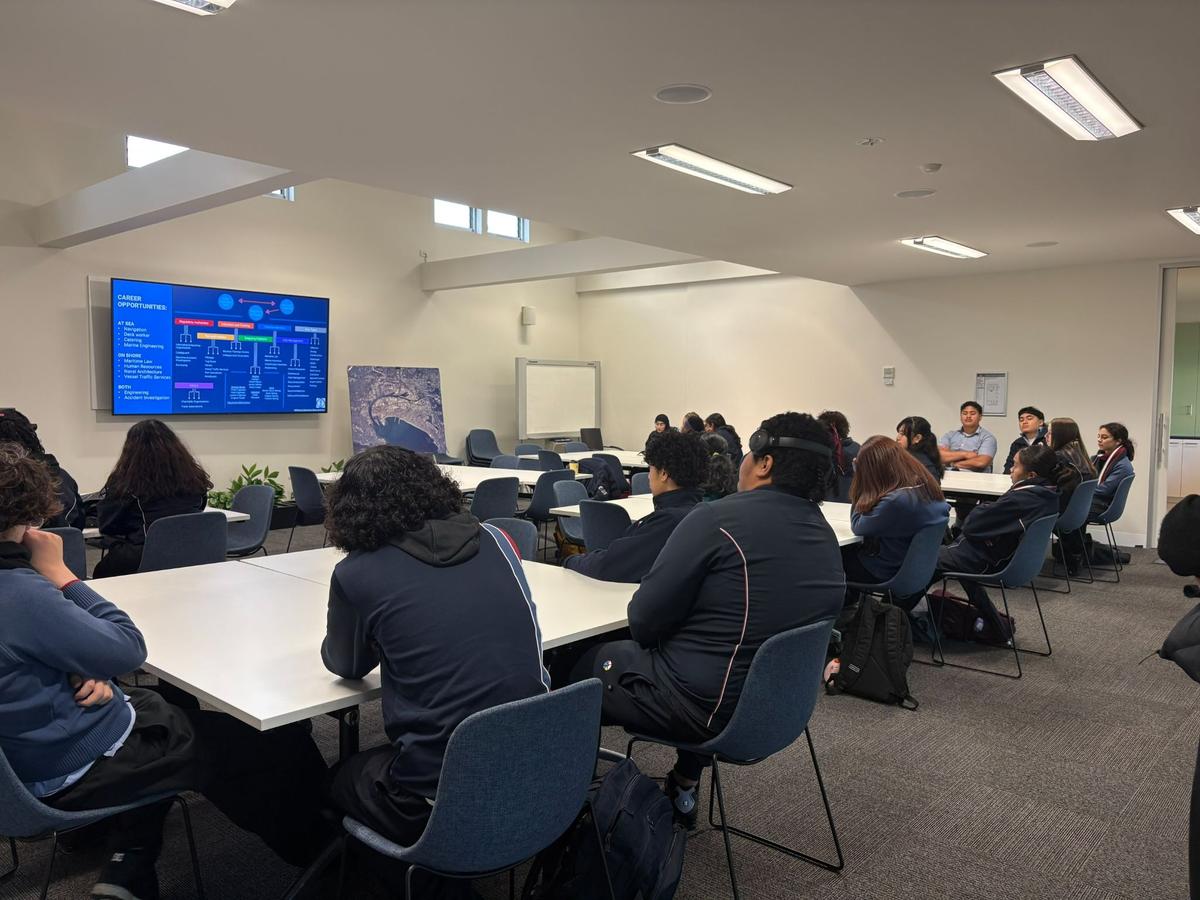
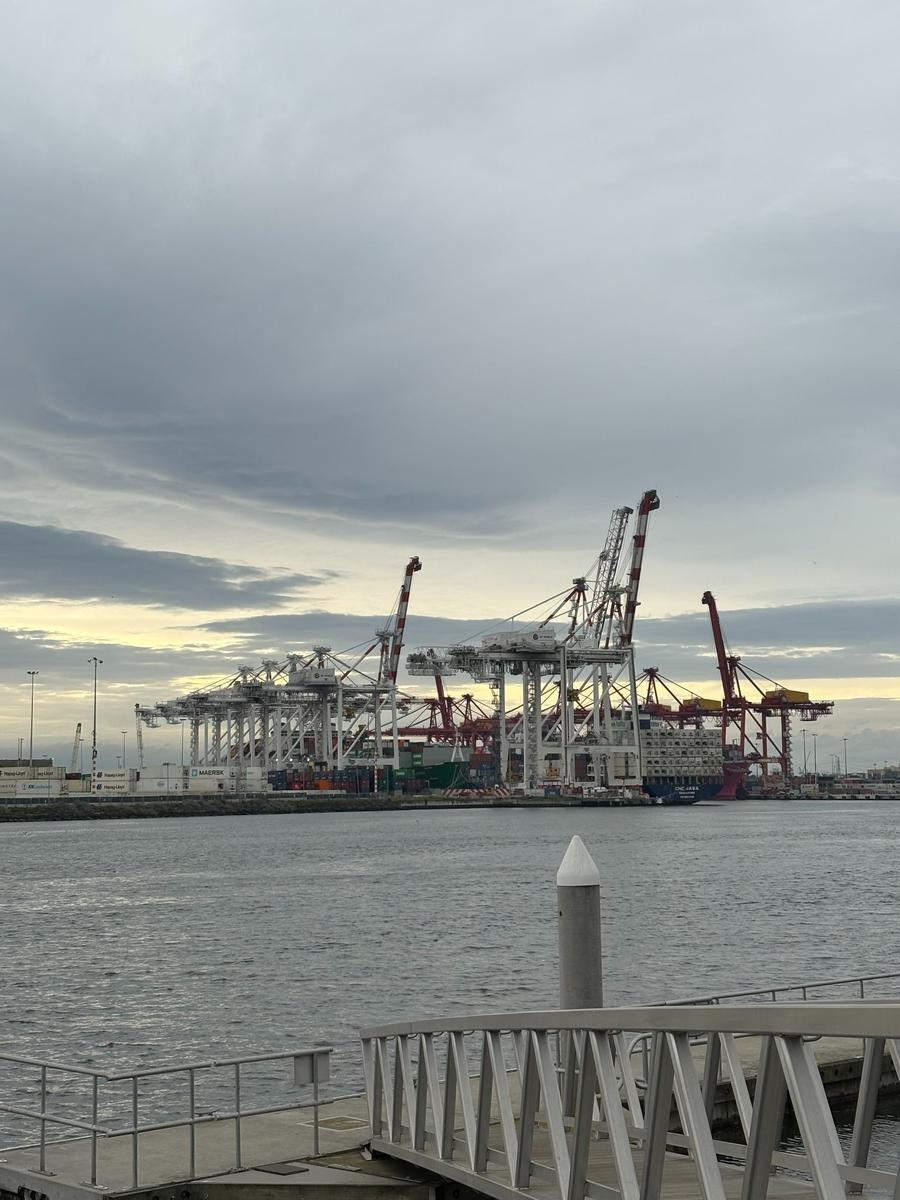
To complement this project, students attended an excursion to the Port of Melbourne Education Centre. During the visit, they participated in a range of sessions that explored the diverse career pathways and employment opportunities available within the maritime, logistics, transport, and trade industries. Students also took part in a guided tour of the port facilities, gaining insight into the day- to-day operations of Australia’s largest container and cargo port. Throughout the day, students were introduced to a wide variety of occupations within a range of industries and had the opportunity to engage directly with current employees from several companies, asking questions about their roles, career journeys, and experiences working in the sector.
Unit 3
Personal Development Skills
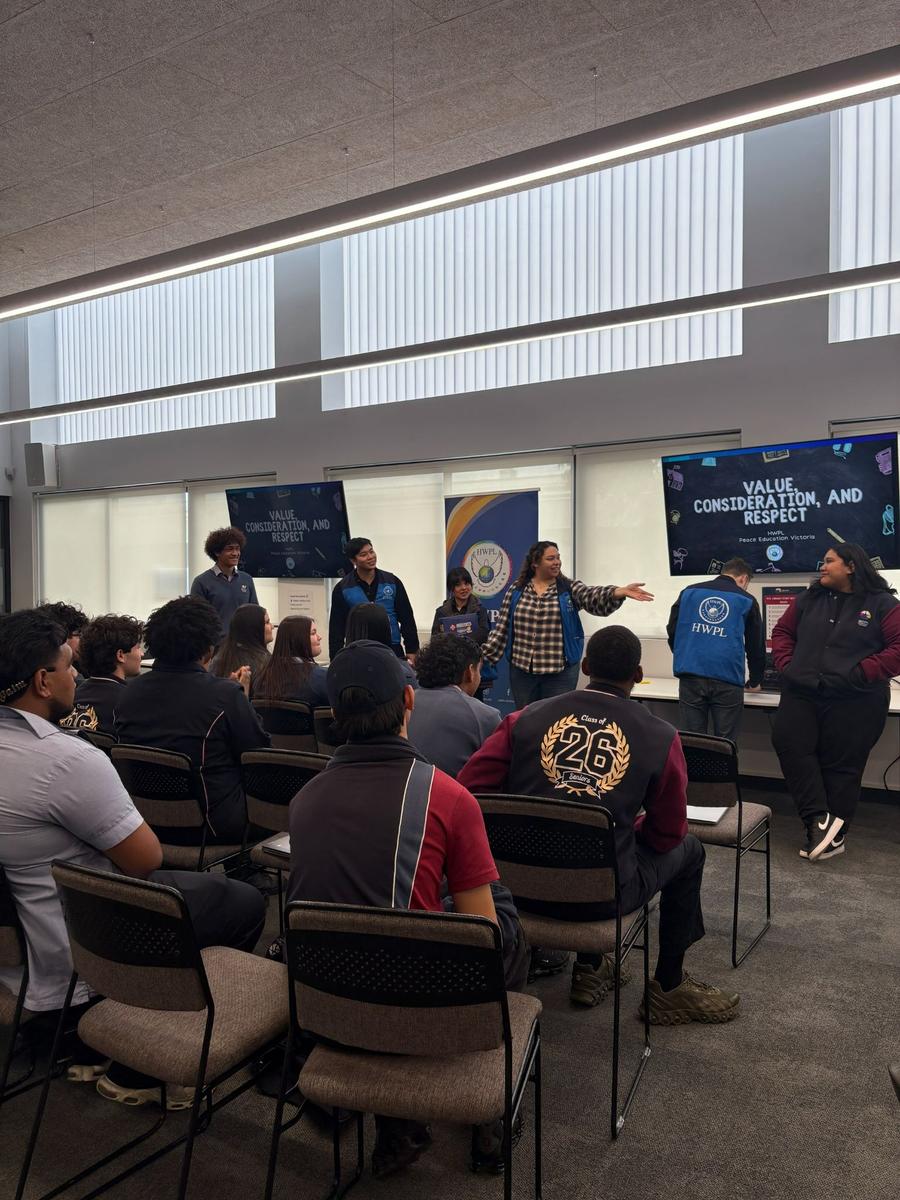
Students concluded Unit 3 Personal Development Skills by participating in a series of three engaging incursions, run by HWPL Victoria, designed to enhance their real-world understanding of teamwork, leadership, and personal development. Throughout the program, students completed a range of practical activities that encouraged self-reflection, collaboration, and a deeper understanding of themselves and the world around them. These incursions formed part of students' final assessment for Unit 3.
To finish Term 2, students commenced their final unit of work for Personal Development Skills. As part of this unit, students are learning how to plan, implement, and evaluate a complex community project. This term, students are focusing their efforts on supporting Foodbank through a community fundraising initiative aimed at addressing issues of food insecurity and the rising cost of living.
The fundraising campaign will continue into the beginning of Term 3, culminating in a visit to the Foodbank warehouse in Altona. During this excursion, students will donate the goods and funds collected and gain firsthand insight into the processes and systems involved in receiving, sorting, and distributing food to those in need across the community.
As part of their PDS studies, a number of students were outstanding ambassadors for the school's VCE Vocational Major (VM) program, generously volunteering their time to support the Year 10 Subject Expo evening. Students demonstrated initiative, maturity, and professionalism by assisting staff where needed and engaging positively with Year 10 students and their families.
Throughout the evening, students spoke confidently about their experiences in VCE VM, sharing insights into their learning, pathways, and the opportunities available through the program. Their willingness to answer questions and provide firsthand perspectives was invaluable in helping families gain a deeper understanding of the VCE VM pathway. We are incredibly proud of the way these students represented both themselves and the school community.
Literacy
In Literacy, students have continued to develop their own business ideas through the exploration of a range of workplace and business-related text types. As part of this unit of work, students analysed employee handbooks from well-known organisations to identify their purpose, structure, and key features. Students then applied this knowledge to create an employee handbook for their own business, demonstrating their understanding of workplace expectations, policies, and manual handling procedures.
Most recently, students have focused on advocacy and promotion, developing materials to market and support their business ideas. Using a range of traditional and digital media formats, students have created persuasive and informative content designed to engage their target audience and effectively communicate their business vision. This work has strengthened students’ written communication, creativity, and understanding of how different text types can be used to achieve specific purposes.
Work Related Skills
In Work Related Skills, students have been developing their understanding of workplace rights and responsibilities, effective communication, and collaboration in workplace settings. Students have also commenced a series of road safety incursions that will continue throughout Term 3. As part of this program, students are undertaking the Road Safety Skill Set, the only nationally recognised road safety program specifically designed for secondary school students. This learning supports students to become safer and more responsible road users, while also developing transferable skills that are relevant to future employment and community participation.
Elise Fisher
Instructional Leader