
Foundation News
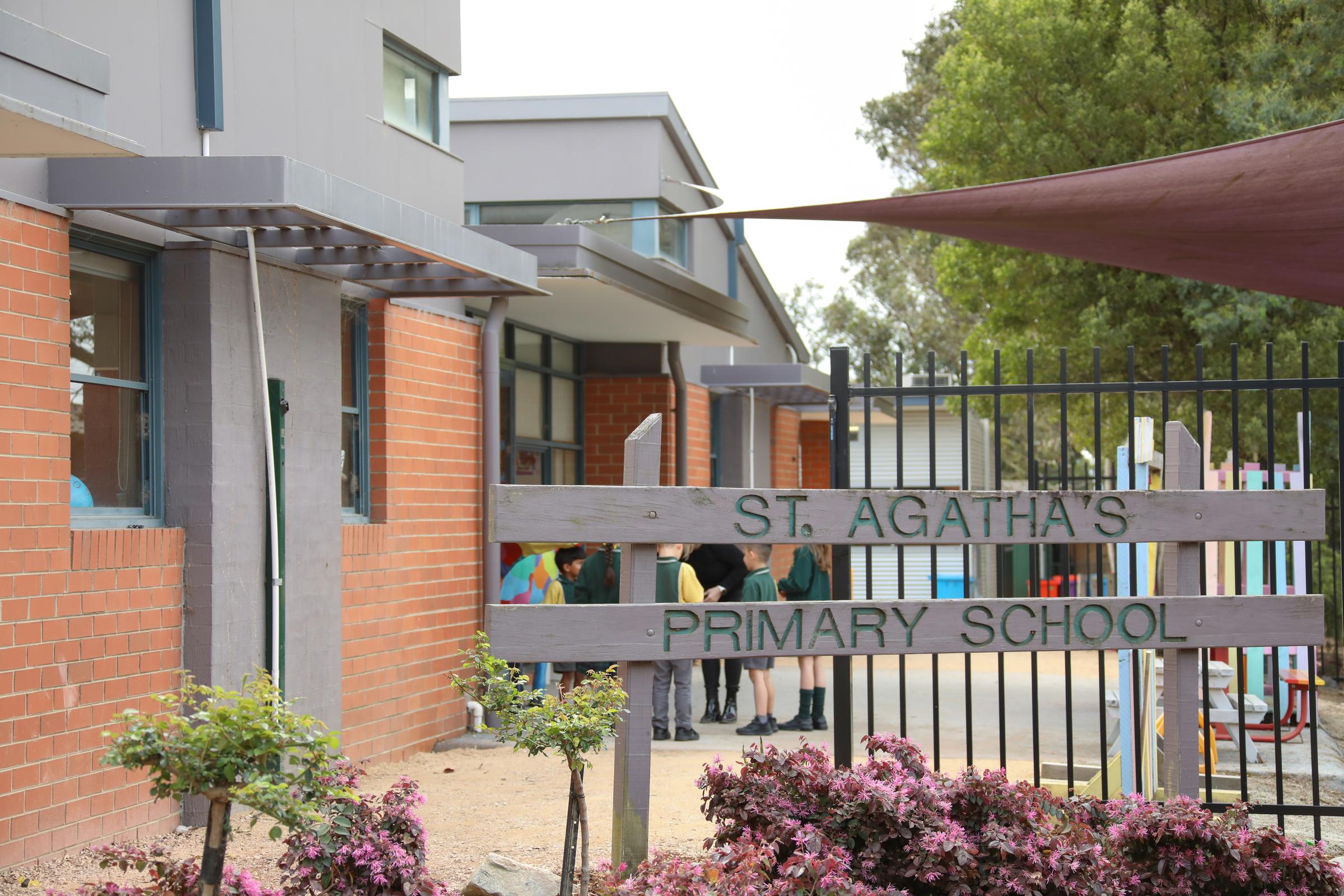
Welcome back to Term Two at St. Agatha’s!
We hope you enjoyed a restful break and are feeling refreshed for another exciting chapter in Foundation 2026. It has been wonderful to see the children return with growing confidence, stronger friendships, and a real enthusiasm for learning.
This term, we continue building on the strong foundations established in Term One. You’ll notice your child becoming more independent, more curious, and more engaged as they settle further into school life. Our Foundation team remains committed to supporting each child’s learning journey and ensuring they feel safe, valued, and ready to thrive.
We continue to value open communication and encourage you to reach out at any time. Working together helps us create the best possible learning environment for your child.
In this newsletter, you’ll find:
- Key dates and upcoming events for Term Two
- An overview of our learning focus areas
- Information on how to support learning at home
- Updates on classroom routines and celebrations
We’re looking forward to another term filled with growth, discovery, and joyful moments. Here’s to a fantastic Term Two ahead!
Important upcoming Dates
- 1st JUNE - Pupil Free Day
- 8th JUNE - King’s Birthday
- 19th JUNE - Foundation & Year 6 Mass
- 23rd JUNE - Early Finish & Parent Teacher Interviews
- 26th JUNE - Last Day of Term Two
- 13th JULY - Pupil Free Day
- 14th JULY - First Day of Term 3
What we’re learning
RELIGION
This term in Religion, our focus is the Triune God. Foundation students will continue learning to make the Sign of the Cross, understanding that God is Father, Son and Holy Spirit, and that God is experienced through the gift of creation.
Students will use our classroom prayer space to reflect, recognise special symbols and take part in simple prayer experiences that help them see God’s presence in kindness, relationships and the world around them.
We will also begin sending home Prayer Bags. Each child will have the chance to take one home to share with their family, say and write prayers together, and talk about their faith in a gentle, meaningful way
ENGLISH
This term, students will continue developing their early reading, writing, and speaking skills. Our focus areas include:
Phonics & Phonemic Awareness
- Learning more letter–sound relationships
- Blending and segmenting sounds to read and spell simple CVC words
- Recognising rhyming words, syllables, and beginning sounds
Naming all upper‑ and lower‑case letters
Reading
- Understanding how books and digital texts are organised
- Learning that sentences are groups of words that express ideas
- Noticing capital letters and punctuation in texts
- Reading decodable and simple authentic texts using developing phonics knowledge
Identifying different types of texts (stories, information texts)
Shared Reading & Literature
- Responding to stories by sharing thoughts and feelings
- Exploring poems, chants, rhymes, and songs
Building comprehension through discussion and reading strategies
Writing
- Practising correct letter formation
- Writing simple words and beginning sentences
- Using capital letters for names and sentence beginnings
- Using punctuation to end sentences
- Writing some high‑frequency and familiar words
MATHEMATICS
This term, students will continue building their early number skills through hands‑on activities and games. Our focus is on helping students understand how numbers work, compare quantities, and describe the world using mathematical language.
Number
- Count, recognise, and compare collections up to 20
- Explain how they know which group has more or fewer
- Subitise small collections (recognise amounts without counting)
Break numbers into parts and put them back together (part–part–whole)
Measurement
- Compare objects by length, capacity, mass, and duration
- Use everyday language such as longer/shorter, heavier/lighter, holds more/less
Explain their thinking when comparing objects
Time
- Sequence familiar daily events
- Use language such as morning, lunchtime, afternoon, and night‑time
Connect times of day to classroom routines
SUPPORTING LEARNING AT HOME
Small, consistent routines make a big difference. Here are some easy ways to support your child’s English development:
- Read together daily — even 5–10 minutes helps build vocabulary and confidence.
- Talk about the story — ask your child what they notice, predict, or enjoy.
- Practise letter names and sounds — point out letters in books, signs, or packaging.
- Play sound games — “I spy,” rhyming games, clapping syllables, or blending simple sounds.
- Encourage writing — let your child write their name, simple words, or labels for drawings.
Celebrate effort — focus on trying, not perfection, to build confidence.
Maths learning happens naturally in everyday routines. Here are simple ways to support number and measurement skills:
- Count everything — steps, toys, fruit, cars, anything!
- Compare objects — longer/shorter, heavier/lighter, holds more/less.
- Play with numbers to 20 — reading numbers on clocks, letterboxes, or calendars.
- Use real-life maths — setting the table, sorting laundry, matching pairs, sharing snacks.
- Talk about time — morning, lunchtime, afternoon, bedtime; link these to daily routines.
Play quick subitising games — show small groups of objects and ask “How many?” without counting.
HUMANITIES
This term in Humanities, we are exploring Geography. Students will learn to ask questions about the places that are important to them and notice how we are connected to the places where we live, learn and play. They will practise collecting information through simple observations, walks around the school and looking at maps and pictures.
We will explore the natural and built features of places—like trees, gardens, buildings and playgrounds—and talk about how these places can change and how we can help to care for them. Our learning will be hands‑on, curious and connected to the world around us.
PERSONAL AND SOCIAL CAPABILITIES
This term, students will continue developing important personal and social skills that help them build confidence, independence, and positive relationships at school.
Building Independence
Students will practise everyday routines that help them become more responsible and self‑reliant. This includes:
- unpacking their own bags
- organising their belongings
- completing simple tasks independently
These skills support a smooth start to the day and help children feel capable and confident.
Caring for Others & Belonging to Groups
Students will explore the different groups they belong to — their family, class, and school community. They will learn:
- how to include others
- how to show care and kindness
- how friendships are formed and maintained
This helps students understand the importance of connection and belonging.
Communication & Collaboration
Through role‑play, discussions, and group activities, students will practise:
- recognising verbal and non‑verbal communication
- responding respectfully to others
- working with peers to complete simple tasks
- using strategies to navigate social situations, including resolving small conflicts
These experiences help students develop strong social skills and positive relationships.
REMINDERS FOR TERM TWO
Uniform & Hats
- Students are required to wear their winter uniform this term, with black school shoes.
- On sports days and PMP days, students should wear the correct sports uniform.
All hats should be kept at home - washed and ready for Term 4.
Lunchboxes & Fruit Break
- Please pack nude‑food style lunchboxes with minimal packaging.
Include a piece of fruit or vegetables for our daily fruit break.
Label Everything
- Ensure all uniforms, lunchboxes, drink bottles, and personal items are clearly labelled.
Lost items can be checked at the student office.
Hair & Accessories
Hair longer than shoulder length must be tied back for safety and hygiene.
Toys & Personal Items
- Students are encouraged not to bring toys or personal items to school.
Comfort items are acceptable only if discussed with the classroom teacher.
Arrivals & Departures
- Please ensure students arrive on time to support a smooth start to the day.
If collecting your child early, please sign them out at the student office.
Independence
This term, we are continuing to encourage students to build their independence in their daily routines. To support this, we kindly ask parents to begin saying goodbye at the door, allowing children to settle into their morning routines on their own.
Successful independence looks like:
- Students walking themselves into the classroom
- Students unpacking their bags independently
- Students beginning their morning tasks without assistance
COMMUNICATION
We value open and clear communication with families to support your child’s learning journey.
To stay connected, we encourage you to:
Regularly check your emails, the school app, and SeeSaw for important updates, event details, and messages from teachers.
For specific inquiries:
To report an absence or for general inquiries, please contact the school office on 03 5996 2724. To reach your child’s teacher directly, you can use the email addresses listed.
Please note: SeeSaw is an informal communication platform intended for sharing learning activities and updates. For all inquiries, please use email to ensure they are received and addressed efficiently.
We’re here to help—don’t hesitate to reach out if you have any questions!
TEACHER CONTACTS
Casey Thomson (FT) cthomson@stacbourne.catholic.edu.au
Priscilla Maddelena (FM) pmaddelena@stacbourne.catholic.edu.au
Keely Deighton (FD) kdeighton@stacbourne.catholic.edu.au
Shevaun Lazarus (FL) slazarus@stacbourne.catholic.edu.au