Wellbeing

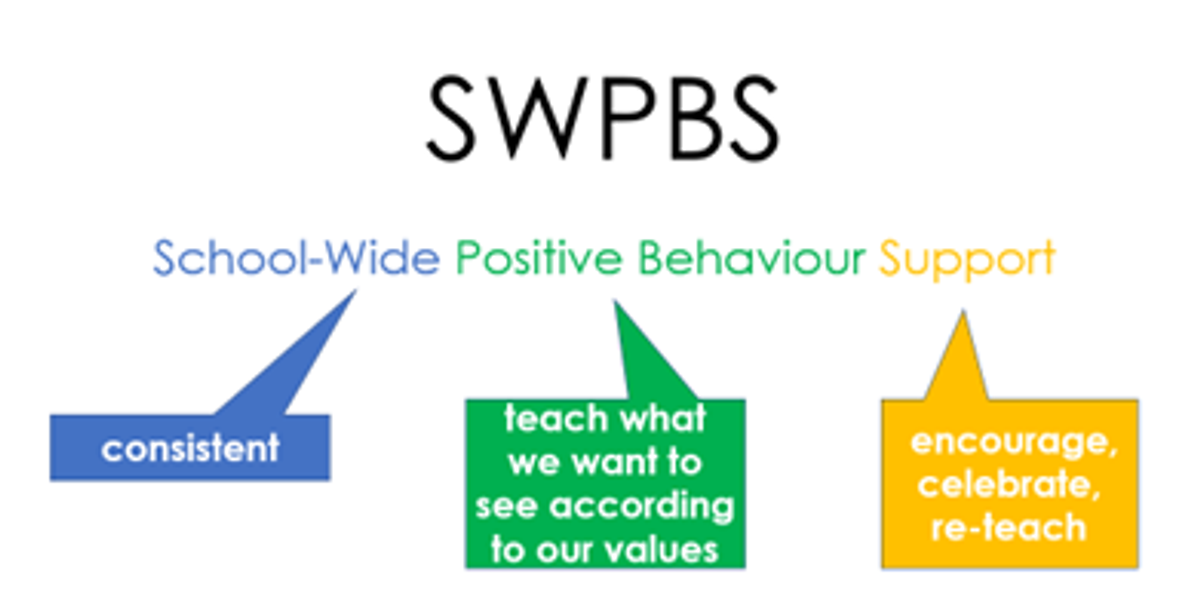
SWPBS Update
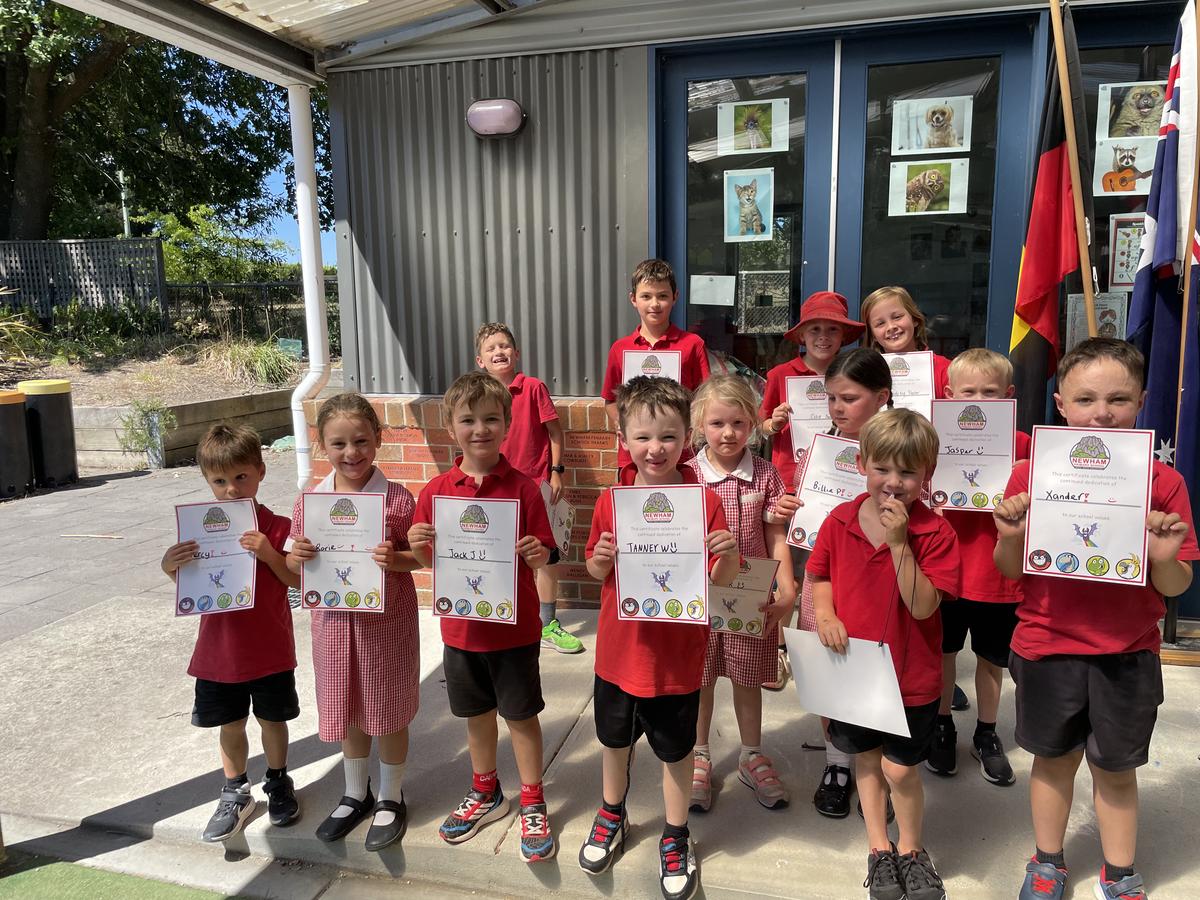
Bravo to the students who achieved a certificate at last week's assembly! Thanks for demonstrating our values. Foundation students are getting lots of positive reinforcement at the moment!
Focus on: Responsibility
Each newsletter this term, we'll zoom in on the expectations for one of our values. In class, students are clearly taught and given opportunities to practise these expectations. Teachers aim to use this language to praise and reinforce students following expectations, and to remind and reteach when students aren't.
This week, we're looking at the expectations for students demonstrating Responsibility.
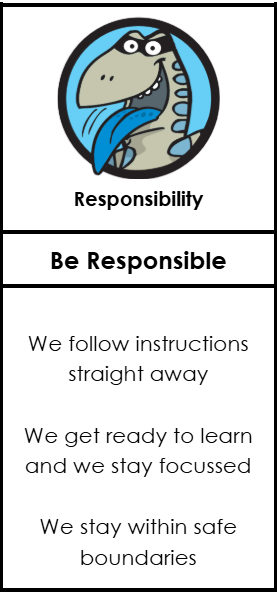
We follow instructions straight away...
- from any teacher or helper at school
- in the classroom, in the yard, on excursions
ask if you’re not sure
We get ready to learn and we stay focussedcan mean...
- Going to the toilet, getting a drink and eating at the right times
- Making the most of mindful time
- Avoiding distractions
- Sitting in a good spot
- Keeping what you’re saying and doing on the task
- Noticing and managing our emotions
- Using strategies to get ready to learn and stay focussed
- Talking with your teacher if you’re struggling to focus
We stay within safe boundaries can mean...
- Stick to safe places in the schoolyard
- Get permission before leaving the classroom or the class
- Stay where a teacher can see you outside - even when you need a moment
Child Development & Wellbeing Information
Each week I try to share some info and resource recommendations in the newsletter.
This week: School Attendance
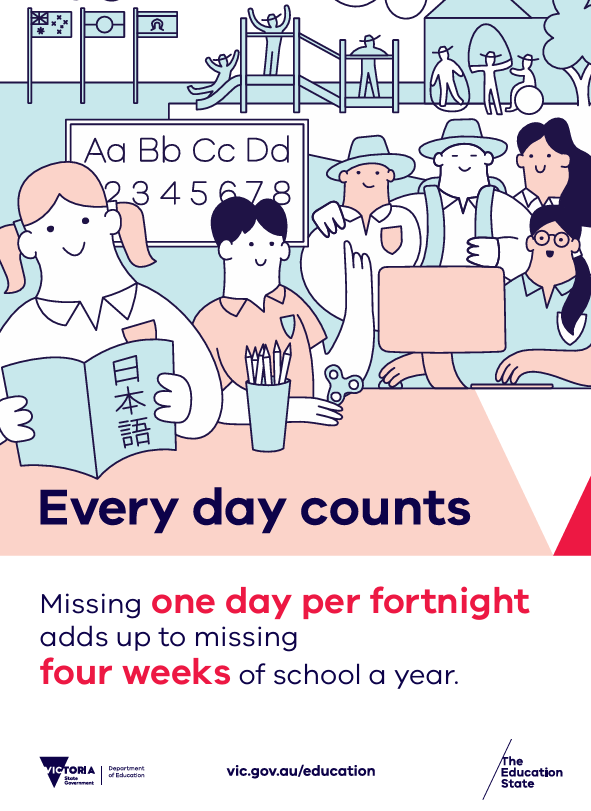
Every Day Counts
Going to school every day is an important part of your child’s education. Children and young people learn new things at school every day, connect with friends, have fun and develop good habits that help them to succeed.
There is no good number of days for missing school. Where possible, you should avoid your child missing school, for example, make appointments for your child outside of school hours and keep family holidays to outside term time.
Worries about Heading to School and School Refusal
It's normal for children to sometimes experience worries about going to school, and for them to say "I don't want to go to school!" some mornings. You've probably thought this sometimes about going to work as an adult too (I know I have)! These worries can flare when it's the start of a new year/term/week, when there's a different or special event, if there's been some friendship or classmate conflict, if there's test/assessments happening, if they're feeling like they're not keeping up with schoolwork, or if there's changes or difficulties at home (family illness, arguments, separation).
School refusal is a mental health concern which involves a student having a persistent strong negative emotional reaction to attending school and is distinct from truancy and other school attendance problems. School refusal is when children get extremely upset at the idea of going to school and often miss some or all of the school day. This distress doesn’t go away.
School refusal can mean that children have trouble going to school or trouble leaving home, so they might not go to school at all. Children who refuse to go to school usually spend the day at home with their parents’ knowledge, even though their parents try hard to get them to go.
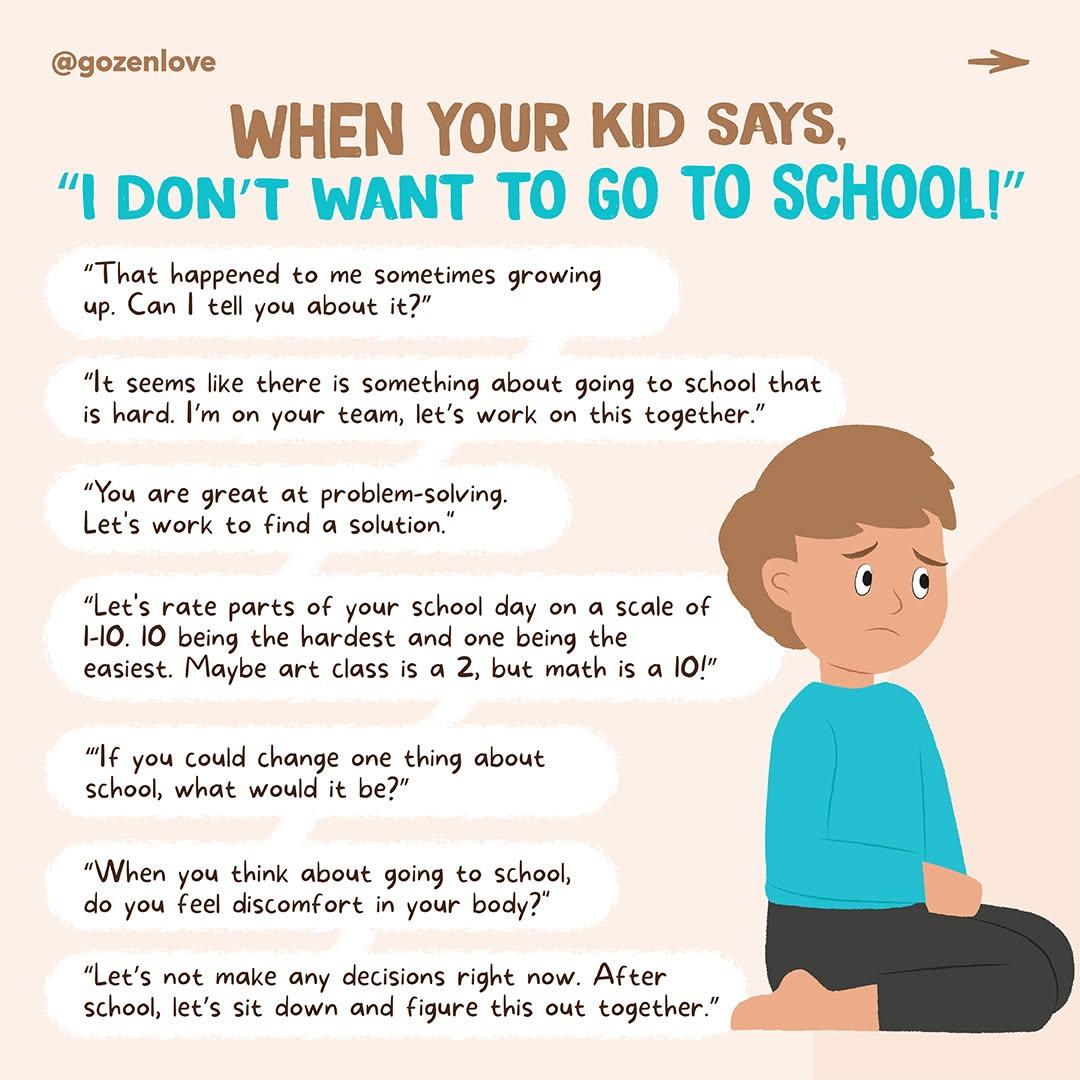
Supporting Children to Attend School
Here are a few key strategies that all parents might want in their toolkit to support children through worries about going to school:
- Show your child that you understand. For example, you could say, ‘I can see you’re worried about going to school. I know it’s hard, but it’s good for you to go. Your teacher and I will help you’.
- Use clear, calm statements that let your child know you expect them to go to school. Say ‘when’ rather than ‘if’. For example, ‘When you’re at school tomorrow ...’ instead of ‘If you make it to school tomorrow ...’.
- Show that you believe your child can go to school by saying positive and encouraging things. For example, ‘You’re showing how brave you are by going to school’. This will build your child’s self-confidence.
- Plan for a calm start to the day by having morning and evening routines. (See info below).
- Praise your child when they go to school. You could also reward them. For example, if your child goes regularly, they could earn bonus technology time, a special outing with a parent to their favourite park, or their favourite meal for dinner.
- Speak to us at school about persistent worries your child is experiencing about attending school and we will work as a team to support them.
Recommendations:
Read
DE Vic: Attendance and missing school
DE Vic: School refusal and anxiety about going to school
Raising Children Network: School refusal: children and teenagers

Listen
Parental as Anything: Back to School - Navigating school refusal
BONUS: Routines (repeat from Term 4 last year)
Setting kids up with consistent, predictable routines are the bedrock for calm in our classrooms. We absolutely rely on them here at school! When we teach kids routines and support them to work through them, they ultimately build independence, helpful habits and a strong sense of their own agency. They help reduce anxiety and stress for kids, and make life run more smoothly. Routines help children to feel safe and secure.
You could choose one routine or habit to change, teach and support. Make it something that matters to your family or that will just make life easier for your family. Start with something that will be easy or a big win.
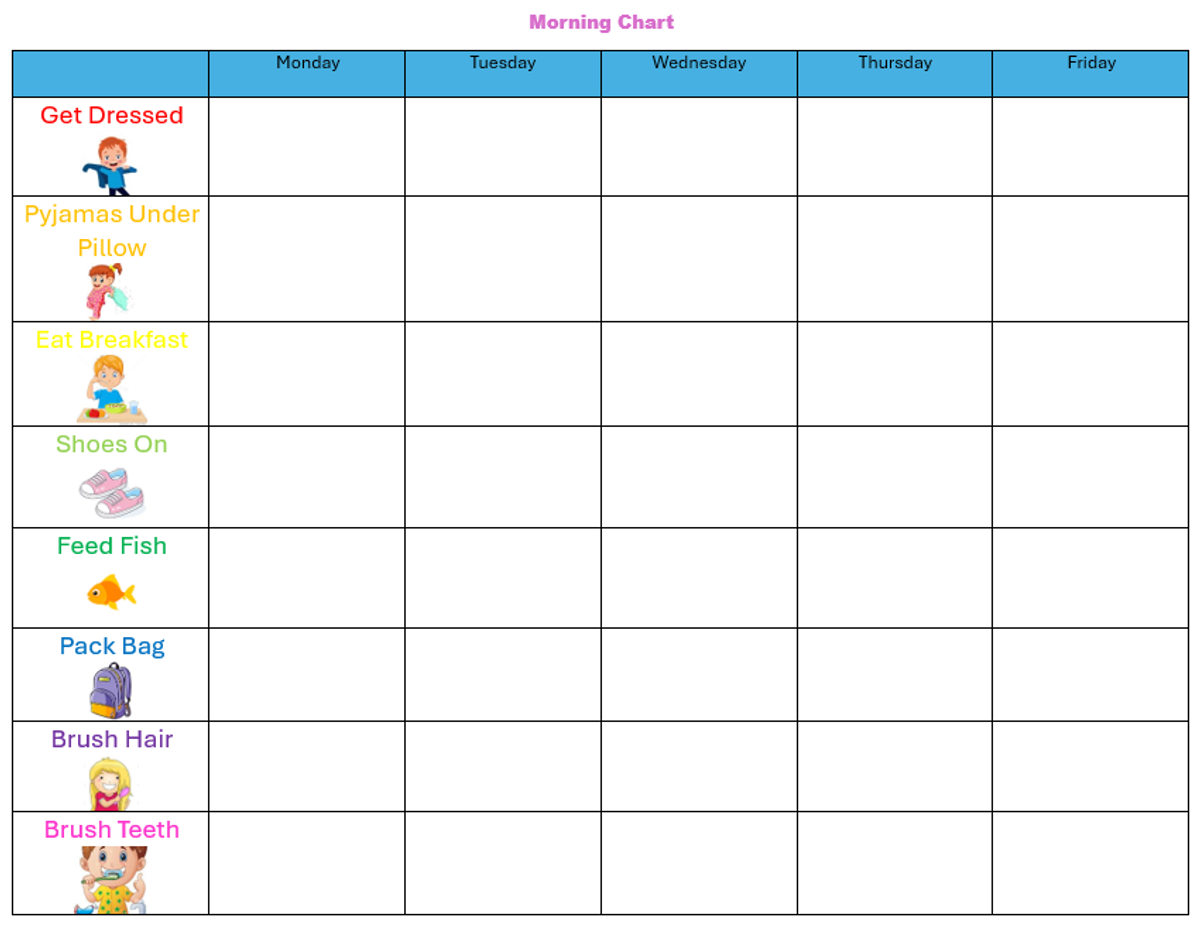
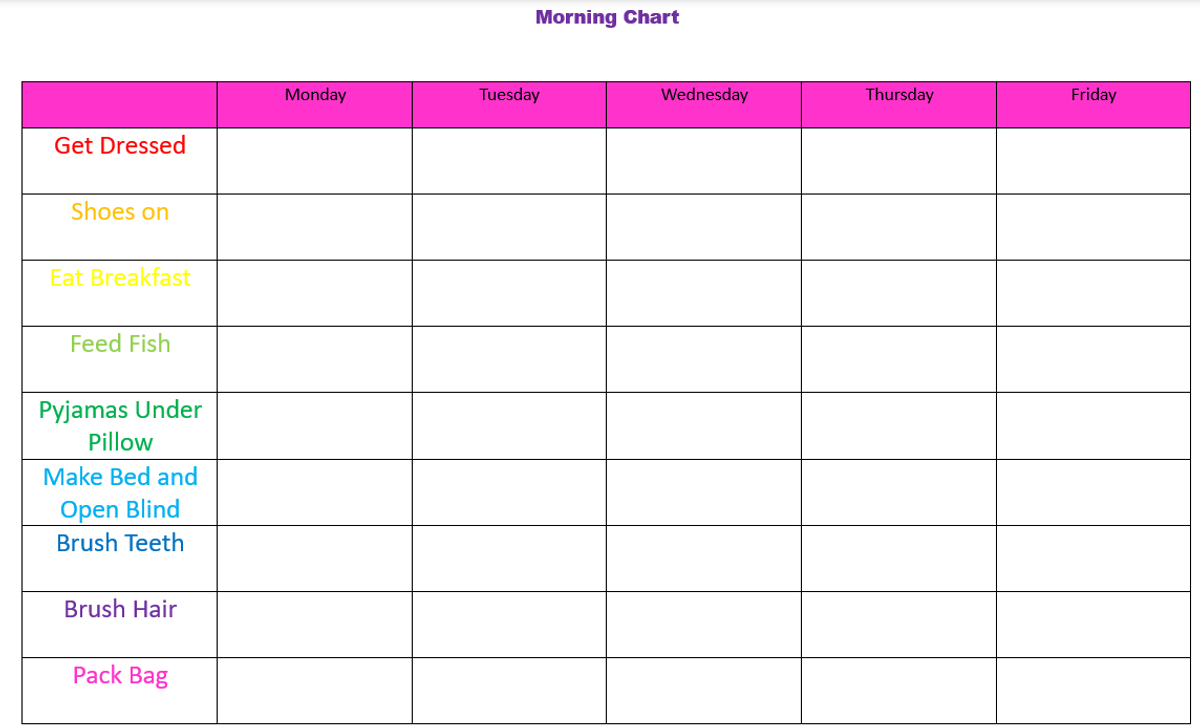
Here are some example morning routine charts for a younger and an older kid. Charts like this, with guiding visuals and steps, are important supports for children practising routines. A solid morning routine can really set children up for a good day, and can also help children who have difficulties getting to school.
Recommendations

Read: The Raising Children Network has some great explainers about setting up family routines...
- Routines for families: how & why they work | Raising Children Network
- How to make a routine for your family | Raising Children Network
Here's a good resource for preparing young people for changes and out-of-routine events. It focuses on supporting people with autism - but these are useful for any kid. There's a saying in the education world that strategies that are essential for some kids are beneficial for all...
Listen: Pop Culture Parenting episode 27 Karate Kid & Breaking Bad Habits (start 20 mins in if you want to skip pre-chat) and episode 28 Breaking Bad Habits part 2. These episodes explore the cue-behaviour-reward cycle to help children learn new habits that you as a family think matter. Honestly, good reflections for people wanting to build good habits at any age!!
Mental Health Support
If you or your child need confidential advice or someone to talk to, here are some readily available support services…
Kids Helpline
Call 1800 55 1800. Or webchat via kidshelpline.com.au
Kids Helpline is Australia’s free and confidential 24/7 online and phone counselling service for young people aged 5 to 25.
Beyond Blue
Call 1300 22 4636. Or webchat via www.beyondblue.org.au
Our free telephone and online counselling service is open 24/7 for everyone in Australia. No matter who you are, or how you're feeling, reach out to our free counselling services for support – we'll point you in the right direction so you can get the help you need.
MensLine Australia
Call 1300 78 99 78. Or webchat via mensline.org.au
MensLine Australia offers free professional 24/7 telephone counselling support for men with concerns about mental health, relationships, anger management, family violence (using and experiencing), stress, and suicidal thoughts.
Family Relationships Advice Line
Call 1800 050 321 Mon-Fri 8am to 8pm; Sat 10am- 4pm
Anyone can call the Advice Line, a national telephone service about family relationships. They help with strengthening family relationships, helping families stay together and assisting families through separation. More information here: www.familyrelationships.gov.au/talk-someone/advice-line