
Student Wellbeing and Learning

Term 2 HILATs - Using Feedback
We are excited to learn about how feedback can help our learning! A few years ago, we asked students what feedback was and a very confident student said feedback was that annoying noise that happened sometimes when you were listening to the radio! He was correct, but we have now moved on to learn what feedback is, not that noisy communication, but communication that helps us with our learning. (However, I know that feedback noise would totally distract me from any learning!!)
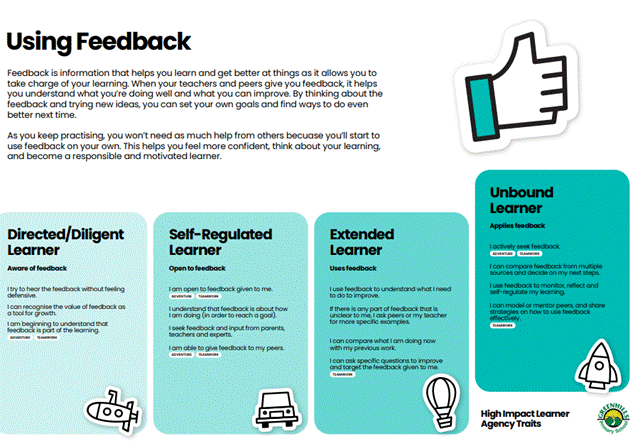
Using Feedback: The Power of Feedback in Learning
Feedback plays an important role in helping our students grow, improve, and take ownership of their learning. When used effectively, feedback is not just something students receive, it becomes something they actively engage with, reflect on, and apply. This process supports students in developing confidence, independence, and a strong growth mindset.
Effective feedback helps students take charge of their learning. By understanding and reflecting on feedback, they are able to set meaningful goals and develop strategies for improvement. Over time, they become less reliant on external guidance, applying feedback independently and building the skills needed to become motivated, responsible learners.
Greenhills Feedback Journey:
Students develop their ability to use feedback over time. We learn that effective feedback helps us grow as learners.
Our growth can be seen across four key stages:
Directed / Diligent Learner – Becoming Aware of Feedback
At this stage, students are beginning to understand what feedback is and why it matters. They work on listening to feedback without becoming defensive and start to recognise its value as a tool for growth. Importantly, they begin to see feedback as a normal and essential part of learning, rather than something to fear or worry about.
Extended Learner – Using Feedback
As students grow, they begin to actively use feedback to improve their work. They reflect on what they need to do next and are willing to ask questions when feedback is unclear. They compare their current work with previous efforts and seek specific feedback to help them improve. At this stage, feedback becomes a practical tool that guides their learning decisions.
Self-Regulated Learner – Being Open to Feedback
Students at this stage develop a deeper understanding of feedback as information about their progress toward a goal. They are open to receiving feedback and begin to actively seek it from teachers, peers and parents. They also develop the ability to give constructive feedback to others, strengthening both their own learning and that of their peers.
Unbound Learner – Applying Feedback
At the highest level, students take full ownership of feedback. They actively seek it out, compare feedback from multiple sources, and decide on their next steps. They use feedback to monitor, reflect on, and self-regulate their learning. These learners often become role models, mentoring others and sharing effective strategies for using feedback.
Linking to other HILATs:
Using feedback effectively is not always easy, it requires acting with courage. Students must be willing to hear suggestions, be reflective honestly on their work, and sometimes step outside their comfort zones. Seeking feedback means being open to new ideas and trying different approaches, even when it feels challenging.
Being Persistent is equally important. Acting on feedback often requires effort, practice, and resilience. Students may need to revisit their work multiple times, refine their thinking, and continue improving even when progress feels slow. It is through this persistence that real growth occurs.
How You Can Support Feedback at Home
Parents and caregivers play an important role in reinforcing the value of feedback beyond the classroom. By creating a supportive environment at home, you can help children see feedback as a positive and helpful part of learning.
One of the most effective ways you can help is by focusing on effort and improvement rather than just results. Asking questions like “What did you learn from this?” or “What could you try next time?” encourages children to reflect and think more deeply about their learning, and be open to trying something new.
It is also helpful for parents to model openness to feedback themselves. When children see adults listening, reflecting, and making changes based on feedback, they are more likely to adopt the same mindset.
Providing specific, constructive feedback at home, rather than general praise, can also make a big difference. For example, instead of saying “Good job,” a parent might say, “I like how you explained your thinking here, what could you add to make it even clearer?” This helps children understand how to improve.
Encouraging our children to be persistent with tasks, even when they are challenging, is another key factor. Parents can remind children that improvement takes time and that feedback is there to guide them. We have heard about many examples of persistence over the holidays, for example, learning how to ride a bike with 2 wheels! We are so proud of those persistent learners.
Finally, creating space for children to ask questions and seek clarification builds their confidence and independence. When parents support this process, you help children develop the courage to seek feedback and the resilience to act on it. I know I do this all the time as an adult!
Building Lifelong Learners
When students learn how to use feedback effectively, they develop skills that extend far beyond the classroom. They become reflective, self-motivated learners who are confident in their ability to improve. They understand that learning is a continuous journey, one that involves listening, adapting, and growing.
By using feedback we work closer to living our dreams of being: an AFL player, playing NBL basketball, being a scientist, being an author and most importantly, having the chance to live our dream. (Mine is being a professional traveller, which I am still working on….I am open to any feedback you can give me…)

Krysten O’Leary
Learning Specialist.