Grade 3/4 Bulletin
Learning Intention: To recognise and compare right angles and explain how we know an angle is a right angle.
Fluency: We began our maths session with a short fluency warm-up designed to strengthen students’ number confidence and accuracy. These fluency routines are an important part of our daily practice, as they help students activate prior knowledge, rehearse efficient strategies, and settle quickly into mathematical thinking. Examples of these can include a3 “drill and skill” sheets that focus on simple addition, subtraction and multiplication, times tables charts etc.
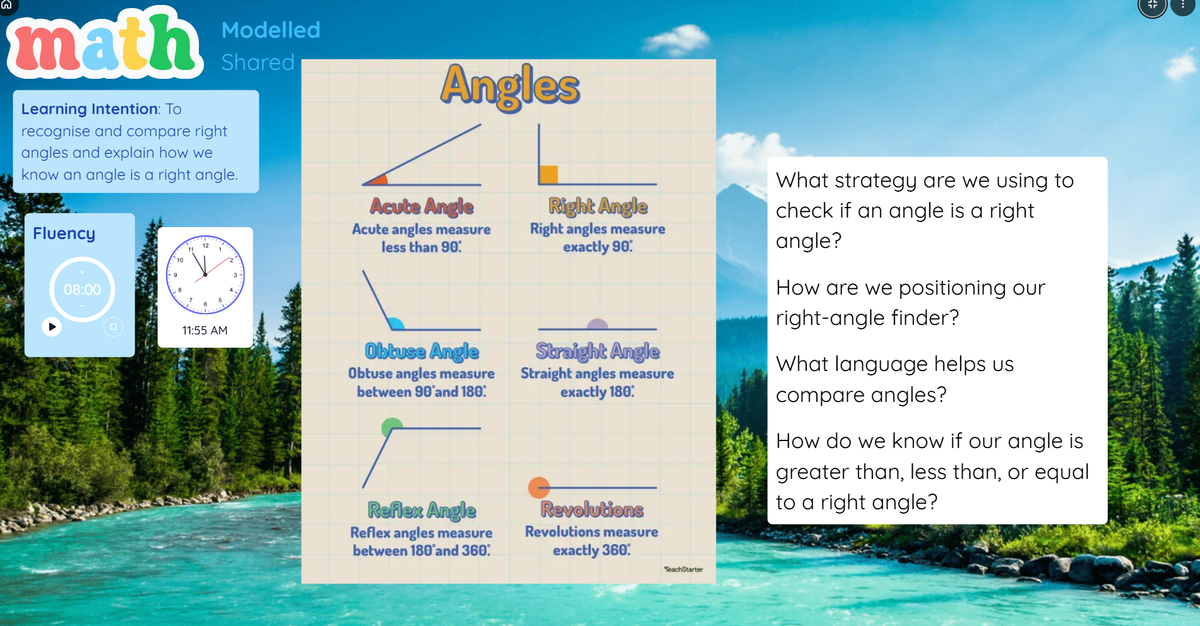
Modelled/Whole: Our whole-class learning centred on understanding what a right angle is and how we can identify one using a reliable strategy. The teacher had children sitting on the floor with a piece of paper, and the teacher had their own. Using explicit modelled language and the tasking questions below, teachers modelled how to use the piece of paper to recognise a right angle.
- What strategy are we using to check if an angle is a right angle?
- How are we positioning our right-angle finder?
- What language helps us compare angles?
- How do we know if our angle is greater than, less than, or equal to a right angle?
Students observed as the teacher modelled the process with several examples: lining up one edge of the paper tool along the baseline of an angle (for example in this case it was the corner of the TV, and the corner of the whiteboard) and checking whether the second side matched exactly.
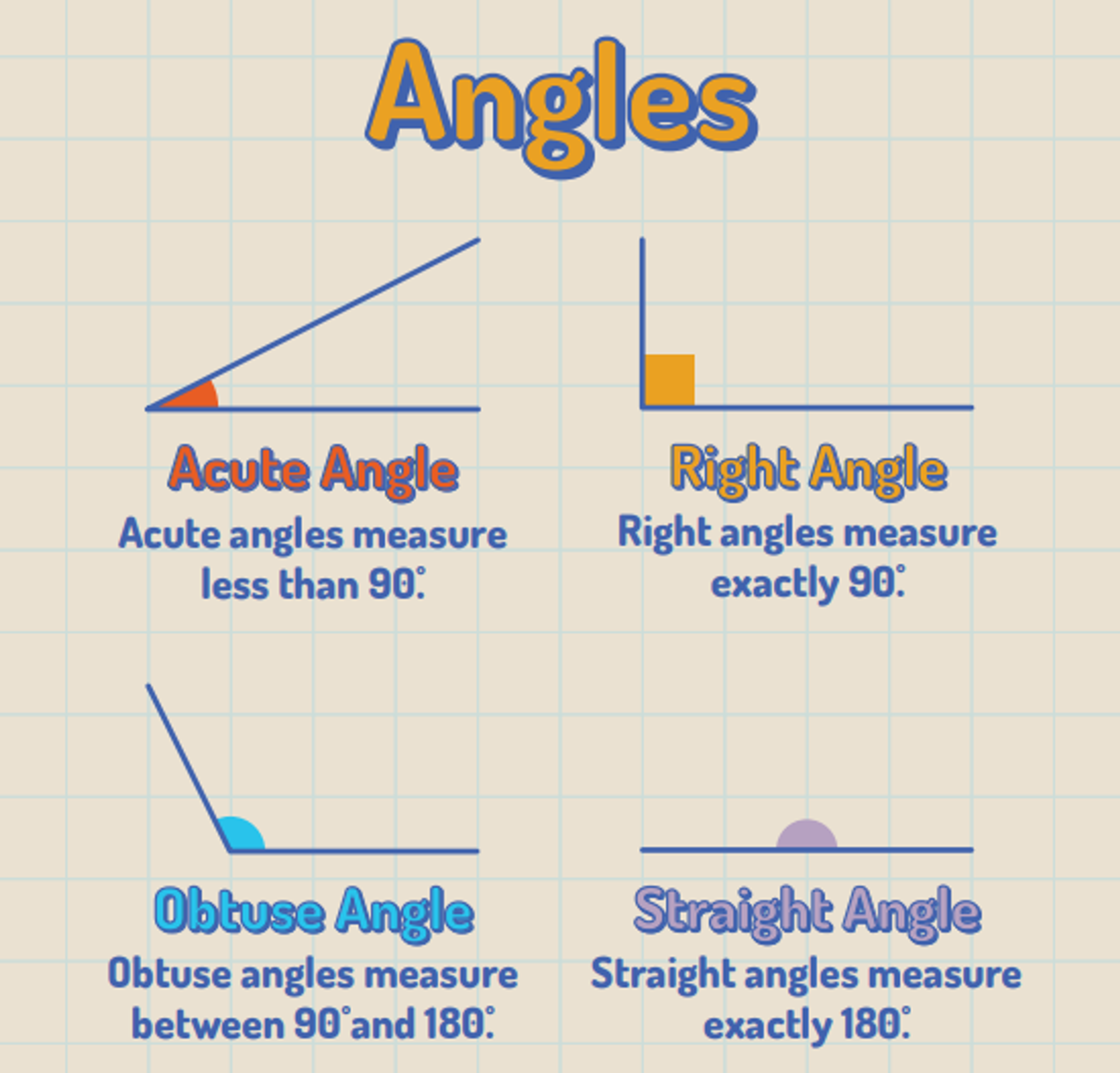
As a group, we unpacked the language that helps us compare angles and used the anchor chart below to help. Using specific mathematical terms such as right angle, acute, obtuse, greater than, less than, and equal to. Students were encouraged to look around the classroom and find right angles. Some noticed that above on the roof there is a perfectly slanted acute angle as part of a scalene triangle.
Small-Group / Independent Learning:
Students then applied their learning in an active, hands-on task around the classroom. With their right-angle finders in hand, they explored the room to locate real-world examples of angles. They recorded each angle they found and determined whether it was right, acute, or obtuse. This task encouraged students to connect their mathematical knowledge to everyday objects and reinforced that angles are all around us. This was located on books, windows, chairs, posters, and classroom furniture.
Enabling:
Use your right-angle finder (paper corner) to look around the classroom for right angles only. Check each angle carefully by lining up one side of your paper corner with the edge you’re testing. If the other side fits perfectly, it is a right angle.
Extension: Students who were ready for an additional challenge extended their understanding by exploring broader angle relationships. These students investigated two important ideas in geometry:
- that the angles inside any triangle add up to 180°, and
- that one full revolution measures 360°.
Allira, Richard, Cli
Year 3/4 Team